During an aquarium outage, act quickly to maintain oxygen, heat, and stability. Avoid feeding fish to reduce oxygen demand, and manually stir the water surface to boost gas exchange. Use backup power sources like batteries or generators to run aerators or heaters. Keep an eye on fish behavior—gasping or hiding signals stress. Managing temperature and oxygen levels is vital, and knowing how to respond can make all the difference—continue to explore tips to keep your tank safe.
Key Takeaways
- Act quickly to increase oxygen by manually stirring water or using battery-powered aerators.
- Maintain stable temperature with frozen bottles, blankets, or backup heaters; avoid rapid fluctuations.
- Monitor fish closely for signs of distress; respond with surface agitation or backup power if needed.
- Perform water changes and reduce feeding to lower oxygen demand and improve water quality.
- Prepare backup power solutions like generators or batteries in advance to restore essential systems promptly.
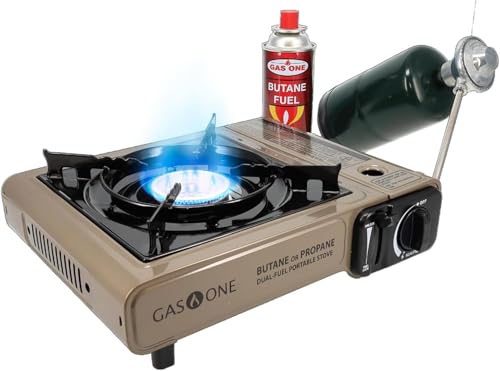
Gas One GS-3400P Propane or Butane Stove Dual Fuel Stove Portable Camping Stove - Patented - with Carrying Case Great for Emergency Preparedness Kit
- Dual Fuel Compatibility: Works with butane and propane fuels
- Automatic Ignition: Piezo-electric ignition eliminates lighters/matches
- User-Friendly Design: Adjustable heat dial for easy control
As an affiliate, we earn on qualifying purchases.
Immediate Steps to Take During an Outage
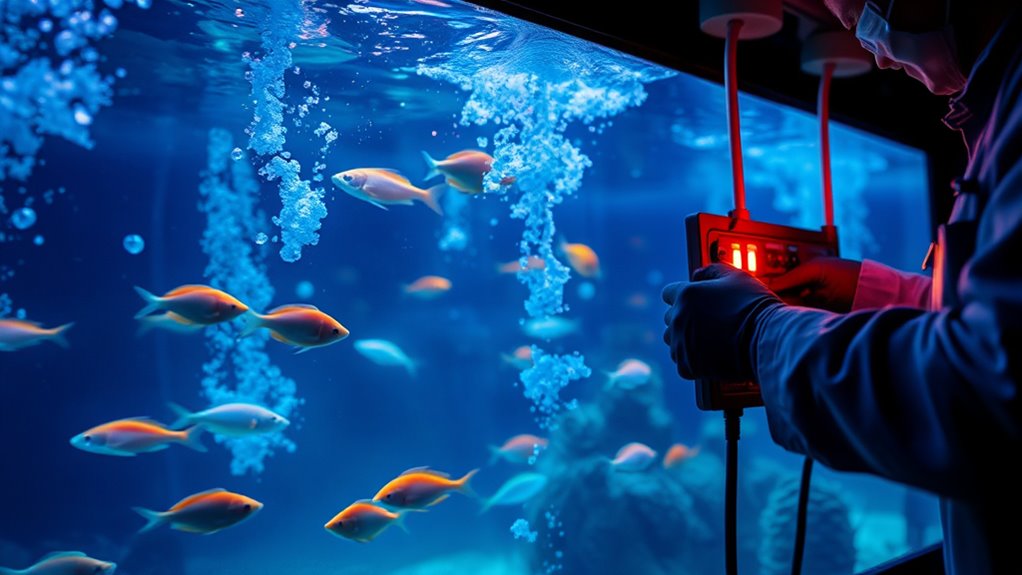
During an outage, the first priority is to stabilize oxygen levels and prevent stress to your fish. Begin by avoiding feeding your fish to reduce their oxygen demand. Check if your filter is still running; if not, open it to allow oxygen to rise from below 0.5 mg/L to safer levels quickly. Use a manual water scoop to gently stir the surface, increasing gas exchange. If you have an air stone or sponge filter, run it for an hour every 8 hours to boost oxygenation. Keep an eye out for signs of distress, like fish gasping at the surface, and respond immediately by increasing surface agitation or using backup power sources like battery-operated air pumps. Quick, calm action helps prevent crises during the initial critical hours. Additionally, understanding oxygen requirements can help you better prepare for and respond to outages effectively, including knowing the best aeration methods for emergency situations. Being familiar with oxygen diffusion rates can guide you in optimizing your aeration strategies during power outages. For example, employing alternative aeration techniques such as manual paddling or using portable air pumps can be effective when standard systems fail.

BESTFIRE Portable Dual Fuel Camping Stove - 10,000 BTU Butane and Propane Stove with Adapter & Case - Single Burner Gas Stove for Outdoor Cooking, Tailgating & Emergency
- Dual-Fuel Compatibility: Supports butane and propane fuels
- Piezo Ignition System: One-click, reliable start
- Wind-Resistant Design: Heavy-duty windblocker for stability
As an affiliate, we earn on qualifying purchases.
Maintaining Oxygen Levels Without Power
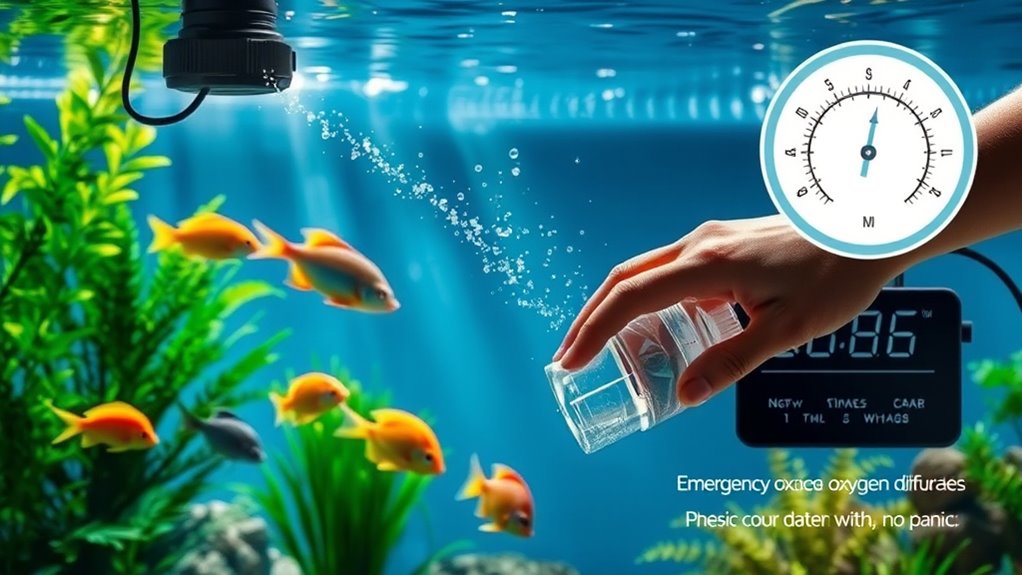
Maintaining oxygen levels requires immediate, hands-on methods to keep your fish safe. First, manually scoop water from about a foot above the tank into a clean pail, then pour it back in slowly; this creates surface agitation and circulation. Second, set up an air stone or sponge filter to run for one hour every eight hours, increasing frequency for crowded tanks. Third, position powerheads near the water surface to promote gas exchange. These simple actions boost oxygen levels quickly and reliably. Additionally, understanding filtration systems can help you optimize oxygenation during outages and routine maintenance. Maintaining proper water movement is essential to prevent stagnation and ensure continuous oxygen supply. Proper oxygenation techniques can be combined with smart-home integrations to help monitor oxygen levels remotely and alert you to problems. Incorporating aeration devices into your setup can further enhance oxygen transfer, especially during extended outages. Remember, watching for fish gasping at the surface signals urgent oxygen depletion. Acting promptly with these methods can prevent stress and keep your aquatic life healthy until power is restored.

GasOne 15,000 BTU Propane or Butane Stove Dual Fuel Stove Portable Camping Stove - Patented - with Carrying Case Great for Emergency Preparedness Kit
- High BTU Output: 15,000 BTU for powerful heating
- Dual Fuel Compatibility: Works with propane and butane
- Includes Propane Adapter: Enables use with propane cylinders
As an affiliate, we earn on qualifying purchases.
Managing Aquarium Temperature Effectively
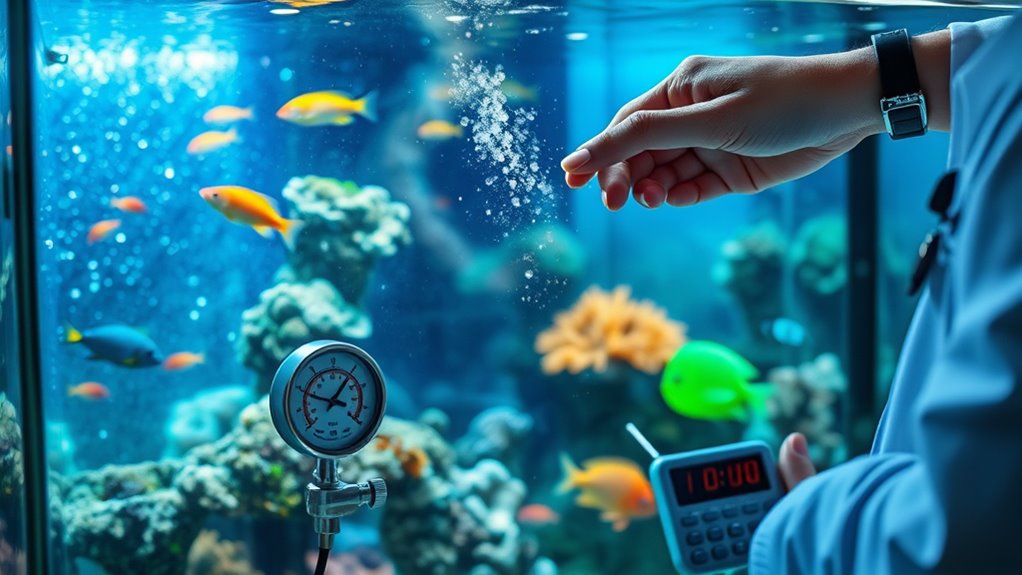
Keeping your aquarium temperature stable during outages is crucial to prevent stress and health issues for your fish. To do this, use simple methods to maintain consistent warmth or coolness. Frozen bottles of RODI water placed in the tank can lower heat during hot days. Covering the tank with a blanket helps retain heat during cold weather. Deep cycle batteries with inverters can power heaters or chillers if available. Additionally, position equipment like powerheads near the water surface to promote uniform temperature distribution. Using thermal conductivity principles can help you select the most effective insulation or cooling methods based on your environment. Being aware of heat transfer can guide you in optimizing these techniques effectively. Understanding thermal insulation strategies can further enhance temperature stability during outages. Employing insulation materials around the tank can also significantly reduce temperature fluctuations. Incorporating thermal mass within or near the tank can help stabilize temperature changes over time. Use the table below to visualize your options:
| Method | Purpose |
|---|---|
| Frozen bottles | Lower temperature in heat waves |
| Blanket cover | Insulate and retain warmth |
| Power sources (batteries) | Sustain heater or chiller |
Coleman BottleTop Propane Stove with Adjustable Burner, Portable Camping/Backpacking Cooker with 7650 BTUs of Power for Camping, Tailgating, Grilling, & More
- Cooking Power: Up to 10,000 BTUs
- Pressure Regulator: Ensures consistent performance
- PerfectHeat Design: Efficient cooking with less fuel
As an affiliate, we earn on qualifying purchases.
Utilizing Backup Power Solutions
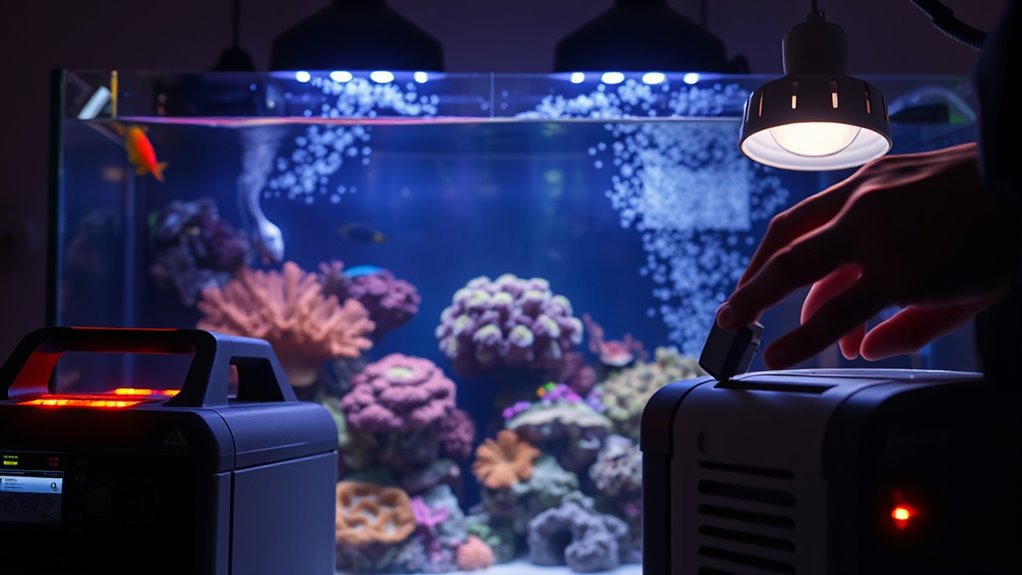
When the power goes out, having reliable backup options is essential to keep your aquarium safe. Battery-powered aerators, portable generators, and inverter systems all provide different levels of continuous flow and oxygenation. Choosing the right solution depends on your tank size, duration of outages, and available resources. Additionally, understanding safe installation practices for these backup systems helps prevent hazards and ensures reliable operation when needed. Proper electrical wiring and adherence to safety codes are crucial to avoid risks such as electrical shocks or fires during backup system use. Knowing how to implement natural cooling methods can also help maintain suitable water temperatures in emergencies, especially during heatwaves or extended outages. Moreover, selecting systems with smart monitoring capabilities can alert you to issues promptly, minimizing stress on your aquatic life during unexpected outages. Being aware of backup power sizing ensures you select a system capable of supporting your aquarium’s specific needs without overloading.
Battery-Powered Aeration Options
Battery-powered aeration options provide a reliable way to maintain oxygen levels during power outages, ensuring your aquarium’s health doesn’t suffer. These solutions are portable, easy to set up, and essential for short-term emergencies.
- USB air pumps powered by battery banks, laptops, or car inverters deliver quick oxygenation with minimal setup.
- Portable battery-operated aerators, often with built-in rechargeable batteries, can run for hours, providing continuous surface agitation.
- Power inverters connected to deep cycle batteries enable you to run powerheads or air stones directly from stored energy, extending runtime during outages.
These options are ideal for fast response, especially when combined with other backup measures. Always keep spare batteries charged and ready for immediate deployment.
Portable Generators for Backup Power
Portable generators offer a reliable solution for maintaining power to aquarium equipment during outages, especially when other backup options may fall short. They can power essential devices like filters, heaters, and aerators, ensuring your tank stays stable. Choose a generator with enough wattage to run your critical equipment simultaneously. Keep in mind that fuel availability and storage are crucial—regularly check fuel levels and store extra safely. Set up your generator outdoors to prevent carbon monoxide buildup. Use heavy-duty extension cords rated for outdoor use to connect equipment. Test the generator periodically to guarantee functionality. In a pinch, portable generators can buy you time to implement other measures, reducing stress and protecting your aquatic life during prolonged outages. Proper setup and maintenance are key to ensuring your backup power remains reliable when needed. Additionally, understanding fuel management can help you extend your generator’s runtime during extended outages. Regularly monitoring fuel efficiency can optimize how long your backup power lasts, especially during extended outages, and considering automatic transfer switches can further streamline power management during emergencies. Planning ahead with scheduled maintenance can also prevent unexpected failures during critical moments.
Inverter Systems for Continuous Flow
Inverter systems play a crucial role in maintaining continuous water flow during power outages by converting stored energy into reliable electricity. They ensure your aquarium’s filters and powerheads keep running, preventing oxygen depletion and waste buildup. To maximize their effectiveness, consider these options:
- Use inverter-equipped deep cycle batteries to power essential equipment for days.
- Connect power inverters to portable lithium or lead-acid batteries for immediate backup.
- Pair inverters with solar panels or generators for extended outages.
- Regularly monitor and maintain your inverter system to ensure optimal performance during emergencies.
Guarantee your inverter system is properly sized for your tank’s needs, and regularly test it to confirm readiness. Keep cables and connections secure, and have spare batteries on hand. This setup provides peace of mind, keeping your aquatic life safe and healthy during power disruptions.
Monitoring Fish Behavior for Signs of Stress
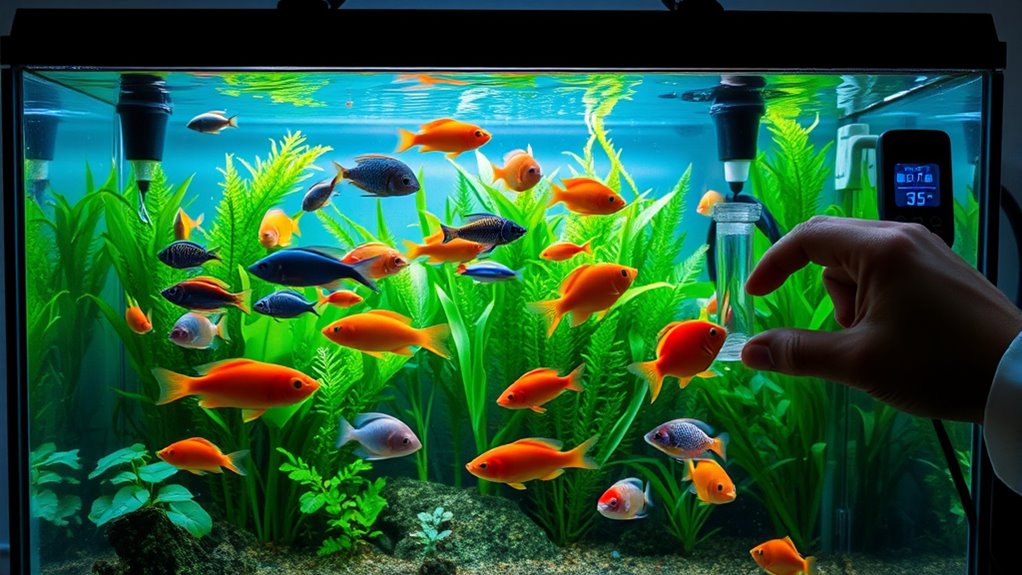
Monitoring fish behavior is essential during an aquarium outage because changes often signal stress or poor water quality. Keep a close eye on their activity levels, breathing, and interactions. Fish that dart erratically, gasp at the surface, or hide excessively may be showing signs of oxygen deprivation or temperature issues. Sudden lethargy or loss of appetite also indicate distress. Use this table to recognize common signs:
| Behavior | Possible Cause |
|---|---|
| Gasping at surface | Oxygen deficiency |
| Excessive hiding | Stress or water quality issues |
| Erratic swimming | Temperature or oxygen imbalance |
| Lethargy or loss of appetite | Poor water conditions |
Quickly responding to these signs helps prevent further harm during outages.
Proper Handling of Filters and Bacteria During Power Loss
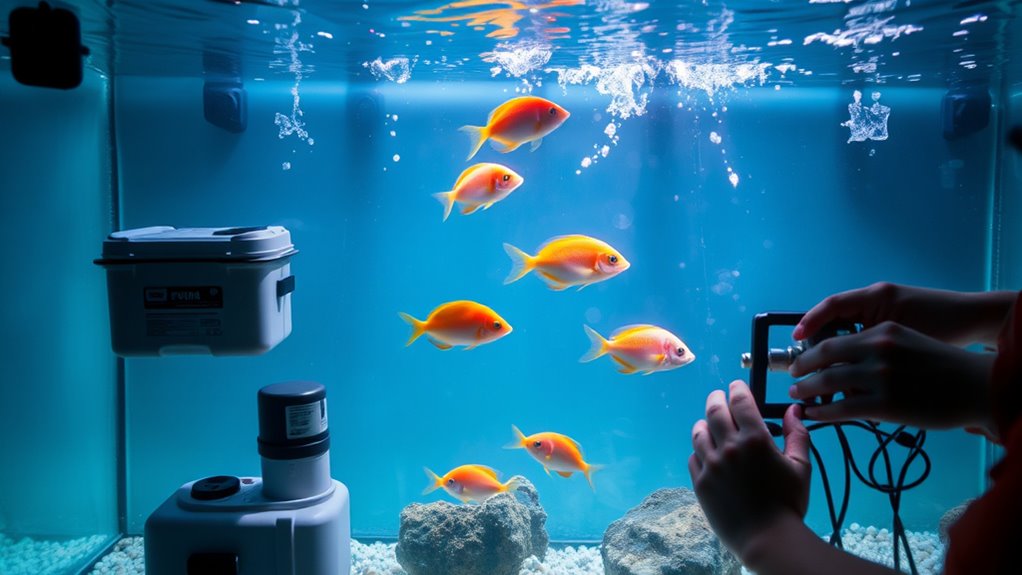
During a power outage, it’s vital to prevent dead zones in your filters where oxygen levels drop and waste accumulates. You should clean and restart your filters carefully to clear out debris and restore proper flow. Ensuring bacteria survive and recover quickly helps maintain your tank’s nitrogen cycle and overall health.
Preventing Filter Dead Zones
When power is lost, it’s crucial to handle your filters carefully to prevent dead zones where beneficial bacteria can die off. Dead zones occur when water flow stops, starving bacteria of oxygen and nutrients. To prevent this, you should:
- Open canister and HOB filters immediately after power restoration to restart water flow and oxygen circulation.
- Remove and clean filters of waste and dead bacteria, ensuring they’re not clogged, which hampers flow.
- Re-prime and restart filters promptly, avoiding extended shutdowns that can cause bacterial die-off.
Maintaining consistent flow prevents oxygen depletion and supports the biological cycle. Regularly inspecting and cleaning filters during outages ensures bacteria remain healthy, reducing the risk of harmful ammonia or nitrite spikes once power is restored.
Clearing Waste Buildup
To prevent harmful waste buildup during a power outage, you need to handle your filters carefully and promptly. First, clean your canister and HOB filters of dead bacteria and debris before restarting. This prevents clogging and oxygen depletion. Keep in mind, flow is essential for bacteria to process waste, so maintain or restore it quickly. Use the table below to guide your filter handling:
| Filter Type | Action During Outage |
|---|---|
| Canister Filters | Open, clean, and remove waste buildup before restart |
| HOB Filters | Rinse media, clear debris, and restart smoothly |
| Sponge Filters | Rinse gently to remove detritus |
| Powerheads | Ensure they’re free of blockages |
| Bio-media | Keep moist, store in water if possible |
Proper handling ensures waste is cleared efficiently, supporting beneficial bacteria and preventing ammonia spikes.
Ensuring Bacterial Recovery
Proper handling of filters and bacteria during a power loss is essential to guarantee quick bacterial recovery and maintain water quality. During an outage, your canister filters stop oxygen flow to beneficial bacteria, risking die-off. To minimize this, you should:
- Open canister filters to allow oxygen to reach bacteria and promote recovery.
- Clean filters of waste and dead bacteria before restarting to prevent oxygen depletion.
- Keep filters moist and in a water-filled container if possible, avoiding air exposure.
This approach helps preserve your biological filtration, ensuring the nitrate cycle resumes quickly once power is restored. Regular maintenance during outages prevents bacteria die-off and stabilizes water parameters, reducing stress for your fish and maintaining a healthy tank environment.
Strategies for Long-Term Outage Preparedness
Preparing for long-term outages requires proactive planning to protect your aquarium’s inhabitants and maintain water quality. Start by investing in reliable backup power sources like generators or deep cycle batteries, and ensure fuel or battery levels are maintained. Keep a stock of spare filters, tubing, and aeration devices ready for quick replacement. Reduce feeding markedly to slow fish metabolism and conserve oxygen. Test ammonia and nitrite levels regularly; perform water changes if readings rise above 0 ppm. Assign multiple people to emergency roles, such as managing aeration, monitoring temperature, and checking equipment. Position pumps and powerheads to maximize surface agitation, ensuring better gas exchange. Planning ahead minimizes stress during outages and helps you respond swiftly, keeping your aquatic environment stable and healthy.
Preventing and Addressing Common Emergencies
Emergencies like sudden equipment failures or unexpected temperature drops can quickly threaten your aquarium’s health. To prevent disaster, focus on these key actions:
- Regularly monitor temperature, oxygen levels, and filter function to catch issues early.
- Maintain backup power sources like battery-operated aerators and portable generators, ready for outages.
- Keep your filters clean and free of waste to sustain oxygen flow and bacterial health.
If equipment fails, immediately increase surface agitation with powerheads or open canister filters to boost oxygen. Using backup power keeps heaters and aerators running, stabilizing conditions. Prompt action minimizes stress and prevents fish from gasping or suffering. Staying vigilant ensures you can swiftly address common emergencies before they escalate.
Post-Outage Recovery and Re-establishing Stability
After power is restored, focus on quickly re-establishing stable conditions in your aquarium. Check temperature immediately and adjust heaters or chillers as needed to return to normal. Restart filters carefully, cleaning them of any dead bacteria or waste, and ensure water flow is consistent. Open canister filters or boost surface agitation to promote oxygen exchange. Monitor fish closely for signs of stress or gasping, and increase aeration if needed. Test ammonia and nitrite levels; perform water changes if they rise above zero. Limit feeding for a day to reduce oxygen demand. Keep lighting minimal to prevent additional stress. Use backup power sources like battery-operated aerators or generators if available. Prompt, careful actions will help your tank regain stability efficiently.
Frequently Asked Questions
How Can I Prevent Oxygen Depletion Before an Outage Occurs?
To prevent oxygen depletion before an outage, you should make certain your filter and aeration equipment are clean and functioning well, promoting ideal water flow. Consider adding surface agitation with powerheads or air stones to boost gas exchange. Also, avoid overstocking and feeding just before potential outages. Regularly check your equipment, and if an outage seems likely, prepare backup power sources like batteries or generators to maintain circulation and oxygen levels.
What Are the Best Methods to Keep Fish Calm During Power Failures?
To keep your fish calm during power failures, stay alert for signs of stress like gasping or frantic movement. Quickly add surface agitation with manual methods, like scooping water or using portable air pumps. Keep the tank shaded to reduce light stress, and avoid sudden disturbances. Most importantly, stay calm yourself—your steady presence helps reassure your fish, preventing panic that could worsen their condition during the outage.
How Often Should I Check Water Parameters During an Outage?
You should check your water parameters at least once every 4 to 6 hours during an outage. Focus on temperature, oxygen levels, ammonia, and nitrites. If you notice fish gasping at the surface or signs of stress, increase the frequency of checks. Regular monitoring helps you catch problems early and take quick action to prevent fish harm, ensuring a stable environment until power is restored.
What Safety Precautions Are Needed When Using Backup Generators?
Safety first, because a chain is only as strong as its weakest link. When using backup generators, keep a safe distance, guarantee proper ventilation, and never operate them indoors to avoid carbon monoxide poisoning. Use extension cords rated for outdoor use, connect appliances correctly, and routinely check for fuel leaks or damage. Follow manufacturer instructions closely, and turn off the generator before refueling to prevent accidents.
How Do I Efficiently Restart My Aquarium After Power Is Restored?
When power is restored, you should first check the water temperature and oxygen levels. Gradually restart your filters and pumps to prevent sudden changes that stress your fish. Remove any debris or waste buildup, then slowly reintroduce any removed equipment. Monitor your tank closely for signs of stress or imbalance, adjusting flow and temperature as needed. Consistent observation guarantees a smooth recovery and maintains your aquarium healthy.
Conclusion
So, next time the power goes out, remember you’re basically a superhero in disguise—balancing oxygen, heat, and panic with style. With a little prep and a dash of calm, you’ll turn chaos into a mere blip on your aquarium’s radar. After all, who needs electricity when you’ve got ingenuity? Keep your cool, act swiftly, and soon you’ll be the proud ruler of your aquatic kingdom—minus the drama, plus a splash of wit.