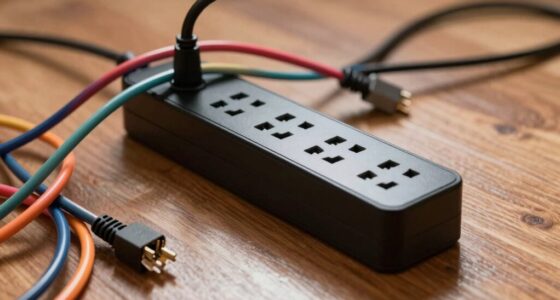
To route backup power cords smoothly through your home, plan the path to avoid walkways and doors. Secure cords with wall clips or conduit to keep them neat and prevent tripping. Use cord covers in high-traffic areas and tuck cords along walls for a tidy look. Regularly inspect and replace worn cables for safety. If you want to discover more tips on organizing your backup system, keep exploring how to maintain both safety and order effortlessly.

Get backup power and energy gear delivered free — and shop member deals
- Fast, free delivery on millions of items
- Access to Prime Big Deal Days deals on October 6–7
- Prime Video, Amazon Music and more included
Key Takeaways
- Use wall-mounted clips or cable conduits to keep cords neatly along walls and out of walkways.
- Plan cord routes during the setup to minimize crossing paths and avoid tripping hazards.
- Secure cords with floor-safe tape or cord covers in high-traffic areas for safety and organization.
- Keep cords tucked along baseboards or behind furniture to reduce visual clutter.
- Label cords and outlets for easy identification and quick access during emergencies.

When planning to route backup power cords through your home, safety and organization should be your top priorities. You want to ensure that your setup is both reliable and safe, minimizing the risk of accidents or damage. The first step is to assess your power needs and the locations of critical appliances. Once you know where you’ll need power, focus on proper generator maintenance. Regularly inspecting and servicing your generator ensures it operates smoothly when you need it most. A well-maintained generator reduces the chances of unexpected failures and prolongs its lifespan, making your backup plan more dependable.
Prioritize safety and organization when routing backup power cords to ensure reliable and damage-free operation.
As you plan your cord routes, choose surge protector selection carefully. A surge protector not only shields your sensitive electronics from power surges during outages but also provides a safer connection point for your backup power cords. Opt for high-quality surge protectors with sufficient joule ratings and multiple outlets to accommodate all essential devices. Proper surge protection helps prevent damage to your equipment and reduces the risk of electrical fires caused by power fluctuations.
When routing cords, avoid running them across walkways or doorways where they can become tripping hazards. Instead, use wall-mounted clips or cable conduits to keep cords tucked neatly along walls. This not only maintains a tidy appearance but also prevents accidental disconnections or damage. If you must cross a high-traffic area, secure the cords with floor-safe tape or cord covers to keep everyone safe and your wiring intact. Additionally, consider cord management techniques to enhance safety and organization. Being aware of electrical safety best practices can further help prevent hazards and ensure your setup remains secure. Regularly inspecting your cords and connections is also crucial to identify potential issues early on.
Be mindful of your generator’s power output and the length of your cords to prevent voltage drops or overheating. Use extension cords rated for heavy-duty use and appropriate for outdoor conditions if routing outside. Keep cords away from water, heat sources, and sharp objects that could damage insulation. Periodically check the cords for signs of wear and replace them if needed—this is an essential part of generator maintenance. Properly rated cords and adherence to safety standards can significantly reduce electrical hazards.
Finally, test your entire backup system regularly. Turn on your generator and verify that power is flowing correctly to all critical devices. Confirm that surge protectors are functioning properly and that your cords are securely connected. Regular testing helps you catch potential issues early, ensuring your backup power system will perform reliably when needed. With careful planning, proper maintenance, and attention to safety, you can route backup power cords through your home efficiently without creating chaos.
wall-mounted cable clips for home
As an affiliate, we earn on qualifying purchases.
As an affiliate, we earn on qualifying purchases.
Frequently Asked Questions
What Safety Precautions Should I Take When Routing Backup Power Cords?
When routing backup power cords, prioritize cord safety by avoiding sharp edges, high traffic areas, and heat sources. Follow electrical regulations to guarantee proper grounding and avoid overloading circuits. Use cord covers or protective conduits to prevent tripping hazards and damage. Always inspect cords for damage before use, and keep them away from moisture. Taking these precautions helps prevent electrical hazards and assures safe, efficient power routing throughout your home.
How Do I Hide Cords to Improve Home Aesthetics?
Imagine your cords as unruly vines—decorative cord covers and concealed wiring channels are your trellises, guiding and hiding them gracefully. You should run cords through these channels or cover them with stylish cord covers that match your decor. Install concealed wiring channels along walls or baseboards to keep cords out of sight and maintain a clean, aesthetic look. This approach keeps your space organized and visually appealing.
Can I Use Existing Wiring for Backup Power Cords?
Yes, you can use existing wiring for backup power cords if it’s suitable and safe. Consider alternative wiring methods like installing dedicated circuits or using power strips with surge protection. To keep cords organized, use cord management accessories such as clips, conduits, or cable sleeves. Always make sure you follow electrical codes and consult a professional if needed, so your setup remains safe and efficient.
What Are the Best Tools for Routing Power Cords?
You need tools that make cord management a breeze, turning chaos into order. A good wire stripper, cable ties, and a power strip with built-in cord management features are your best bets. Use a drill with different bits to create neat holes for routing cords, and a fish tape or cable puller to guide wires smoothly through walls or ceilings. These tools help you keep backup power cords tidy and safe.
How Do I Prevent Tripping Hazards With Routed Cords?
To prevent tripping hazards with routed cords, prioritize cable management by securing cords along walls or under furniture using clips or cable sleeves. Follow safety guidelines by avoiding tight bends and exposed cords across walkways. Keep cords out of high-traffic areas and use floor covers or rugs with non-slip backing to prevent slips. Regularly inspect cords for wear, and always unplug damaged ones to guarantee safety and minimize hazards.
cable conduit tubing for electrical cords
As an affiliate, we earn on qualifying purchases.
As an affiliate, we earn on qualifying purchases.
Conclusion
By carefully routing your backup power cords, you can keep your home safe and organized without turning it upside down. Take your time, plan your routes, and use the right tools to avoid chaos. Remember, a stitch in time saves nine—addressing wiring issues now prevents bigger headaches later. With a little patience, you’ll have a streamlined setup that keeps your essentials powered and your home clutter-free. Stay proactive, and you’ll be glad you did.
cord covers for high traffic areas
As an affiliate, we earn on qualifying purchases.
As an affiliate, we earn on qualifying purchases.
heavy-duty outdoor extension cords
As an affiliate, we earn on qualifying purchases.
As an affiliate, we earn on qualifying purchases.
Fall Picks
fall essentials
As an affiliate, we earn on qualifying purchases.