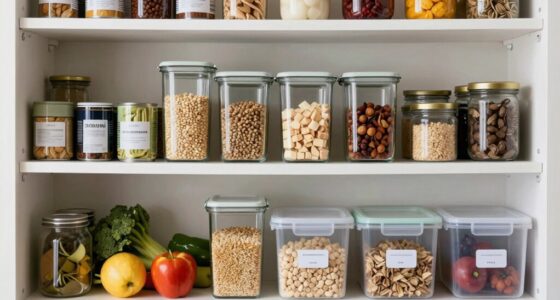
To make your cooler really work, start by pre-chilling it and your items, using large ice blocks or dense cubes to slow melting. Layer your items at the bottom and insulate with foam or reflective barriers to keep cold air in. Keep the cooler in a shaded, cool spot, and avoid opening it often—plan ahead so you only open once. Continuing with these tips will help you stay cool and save ice longer.

Get backup power and energy gear delivered free with Prime
- Fast, free delivery on millions of items
- Prime Video, Amazon Music and more included
- Member-only deals all year
Key Takeaways
- Pre-chill your cooler and contents, and use large ice blocks for longer-lasting cooling.
- Choose dense ice types like blocks or cubes, and pre-cool the cooler in the shade to extend ice life.
- Layer items strategically, placing colder items at the bottom and insulating with foam or reflective barriers.
- Keep the cooler in shaded, cool spots and avoid direct sunlight to prevent heat absorption.
- Minimize opening the cooler frequently and plan access to reduce warm air entry and ice melt.
Pre-Chill Your Cooler and Contents
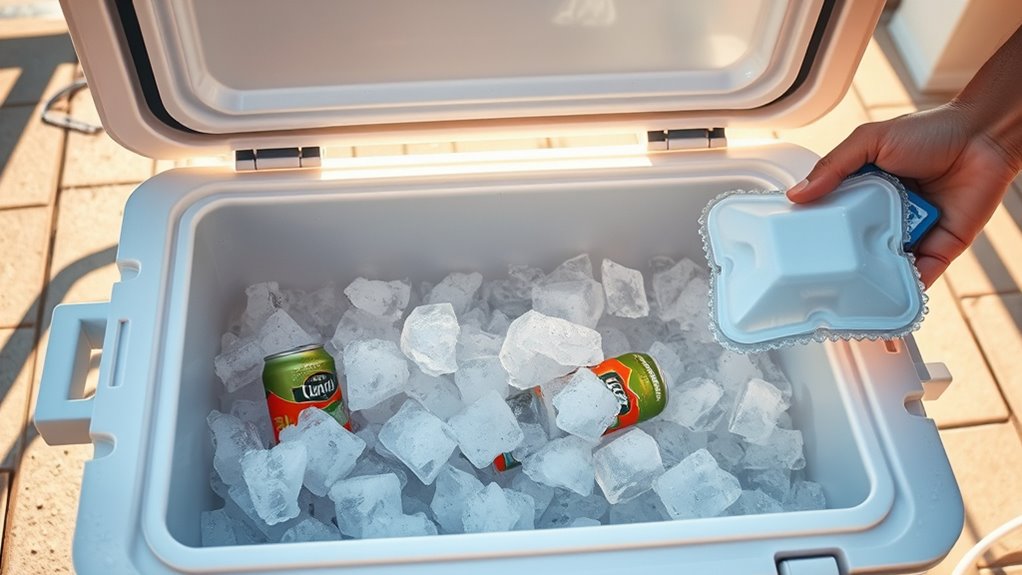
To keep your cooler ice cold longer, it’s essential to pre-chill both the cooler itself and its contents. Start by placing ice packs in the freezer ahead of time, then arrange them strategically inside your cooler. Proper ice pack placement ensures even cooling and maintains low temperatures longer. Consider using large ice blocks instead of smaller ice cubes because they have a lower surface area, which slows melting and keeps the interior colder. The benefits of ice blocks include sustained cooling and fewer water messes as they melt slowly. Before packing, pre-chill bottles, cans, and food by refrigerating them. This extra step reduces the workload on your cooler, helping it stay colder for extended periods and ensuring your items stay fresh longer. Additionally, insulating your cooler properly to prevent heat transfer and preserve cold temperatures is crucial for optimal performance. Using high-quality insulation materials can significantly improve your cooler’s efficiency and keep ice frozen longer. To further enhance efficiency, consider proper ventilation to minimize heat buildup around your cooler. Incorporating effective airflow management can further help maintain lower temperatures inside.
Use the Right Ice for Maximum Cooling

Choosing the right type of ice can make a significant difference in keeping your cooler cold for longer. Different ice types, like cubed, crushed, or block ice, have varying effects on cooling efficiency. Generally, denser ice has a higher ice density, which means it melts more slowly and absorbs more heat before melting. Block ice, with its high density, lasts longer and helps maintain lower temperatures, while crushed ice cools quickly but melts faster. Using a mix of ice types can optimize cooling performance, especially in hot conditions. Proper ice selection can greatly enhance your cooling results and prolong the freshness of your foods and drinks. Additionally, understanding aviation regulations can help you plan for outdoor activities that involve travel and transportation of chilled items, ensuring safety and compliance. Moreover, proper air purifier maintenance techniques can help keep the environment safe and fresh during your outdoor adventures. To maximize efficiency, consider pre-chilling your cooler and keeping it in the shade whenever possible, which can further extend cooling duration.
Layer Items Strategically for Better Insulation
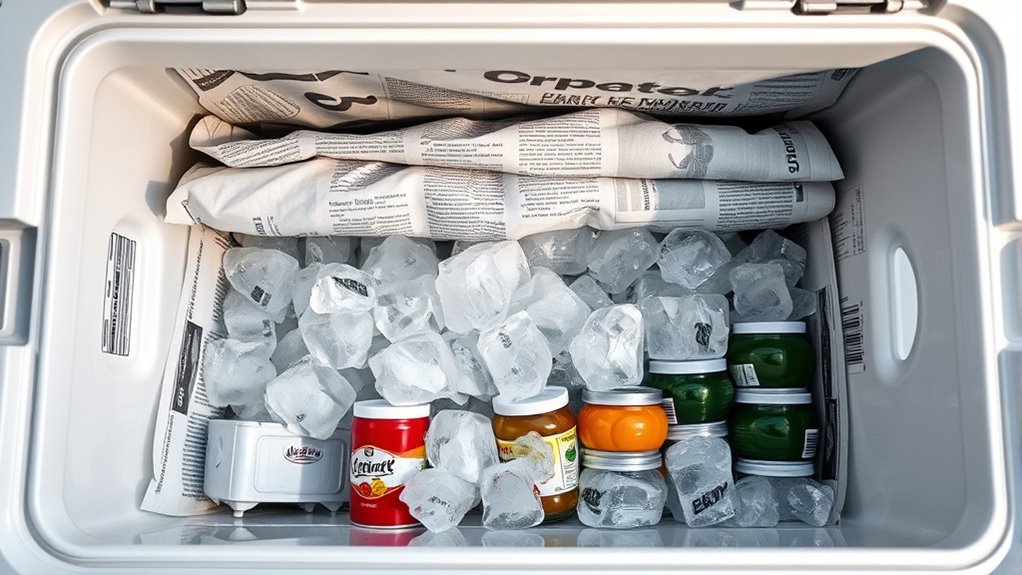
Arranging your items thoughtfully inside the cooler can considerably improve its insulation. Place your colder items at the bottom, where they stay cooler longer, and layer lighter, less perishable items on top. Use foam insulation by surrounding your food with thick layers or placing it between items to reduce heat transfer. Incorporate reflective barriers, such as aluminum foil or reflective blankets, on the cooler’s interior walls to reflect heat away and maintain a low temperature. Keep items tightly packed to minimize air gaps that can allow warmth in. This strategic layering reduces the cooler’s workload, helping ice last longer and keeping your contents colder, fresher, and safer. Proper arrangement combined with insulation techniques makes your cooler more effective. Additionally, incorporating European cloud innovation in designing smart cooling systems can optimize temperature control and energy efficiency. Implementing seasonal checklists can also help you stay on top of maintenance tasks that improve overall cooling performance. Moreover, understanding insulation materials can lead to more effective modifications and enhancements for your cooler’s performance. Considering thermal conductivity properties of different materials can assist in selecting the best insulation options for your cooler.
Keep the Cooler in a Shaded, Cool Spot
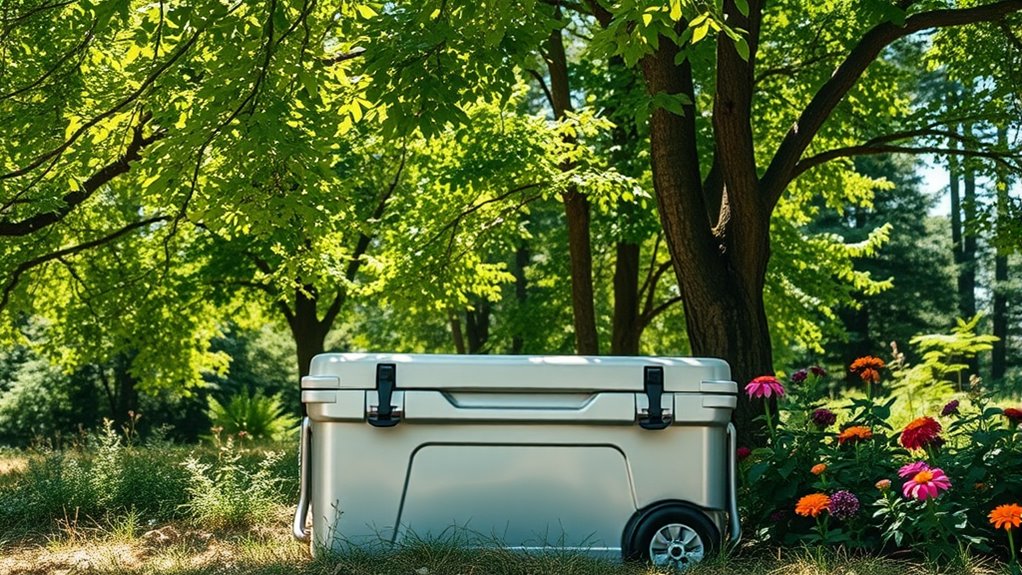
Keep the Cooler in a Shaded, Cool Spot
Placing your cooler in a shaded, cool spot prevents it from absorbing heat and helps maintain a lower internal temperature. Proper shade placement reduces direct sunlight exposure, which can quickly raise the cooler’s temperature. Find a location that offers consistent shade throughout the day, like under trees or a shaded pavilion. Additionally, optimizing airflow around the cooler aids in heat dissipation; ensure there’s enough space for air to circulate freely. Avoid placing the cooler in enclosed areas or against hot surfaces, as this can trap heat and diminish its effectiveness. Using insulation techniques around the cooler can further improve temperature retention. Considering airflow optimization methods can enhance heat dissipation and keep your cooler cooler longer, preserving ice and ensuring your food stays fresh and safe. Implementing proper ventilation can also contribute significantly to maintaining optimal temperatures inside your cooler. Ensuring good ventilation not only cools the exterior but also helps maintain a consistent internal temperature, especially in warmer environments. Additionally, choosing a cooler with good insulation quality can significantly extend the ice retention period.
Minimize Opening and Closing to Maintain Cold
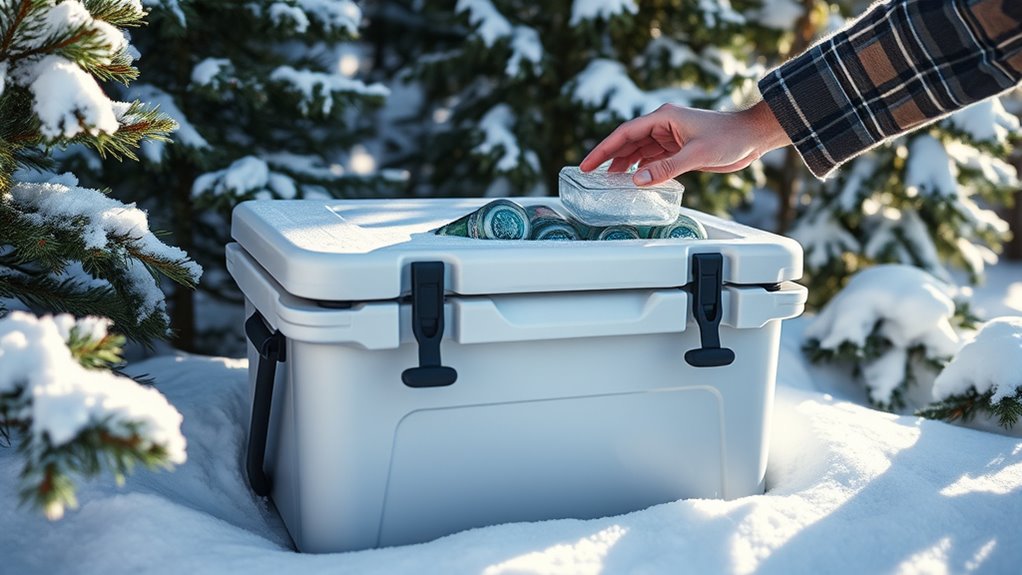
To keep your cooler cold for as long as possible, it’s important to limit how often you open it. Each time you do, warm air enters, reducing ice retention and raising the internal temperature. Plan your trips and grab everything you need at once to minimize openings. When you do open the cooler, do it quickly and close it tightly. Cooler placement also matters; keep it in a shaded, cool spot to prevent heat transfer. Avoid placing it in direct sunlight or hot areas, which can accelerate ice melt. Proper Cooler placement and insulation are both crucial for maintaining the internal temperature and extending ice longevity. Additionally, using thermal blankets or covers can help insulate the cooler further. For added efficiency, consider insulation methods that enhance cold retention. By reducing the number of times you open the cooler and ensuring proper placement, you’ll preserve the cold environment inside, extending ice retention and keeping your contents chilled longer.
Frequently Asked Questions
How Often Should I Drain Melted Water From My Cooler?
You should drain melted water from your cooler daily during use to maintain cooler maintenance and prevent odors. Regular water drainage schedule helps keep ice colder longer and reduces bacteria growth. If you’re storing it over several days, check and drain the water every couple of days. Consistent water drainage keeps your cooler clean, improves efficiency, and guarantees your drinks stay cold and fresh throughout your outing.
Can Adding Salt to Ice Improve Cooling Efficiency?
Think of adding salt to ice like giving your cooler a turbo boost. Salt enhancement lowers the melting point of ice, turning it into a super-efficient cooling agent. This tricks the ice into melting faster and absorbing more heat, which boosts cooling efficiency. So, if you want your cooler to stay colder longer, add a bit of salt—just remember, too much can cause the ice to melt too quickly.
What Types of Coolers Retain Cold the Longest?
You should choose coolers with high insulation quality and a tight lid seal to keep your ice cold the longest. Rotomolded coolers, made from durable foam-insulated walls, excel at retaining cold temperatures. Guarantee the lid seals tightly to prevent warm air from entering. These features work together to maximize insulation, making your cooler more efficient and keeping your ice frozen longer, no matter how hot the outside temperature.
Is It Better to Pre-Freeze Food or Add Ice?
Pre-freezing food is way better than just adding ice because it acts like a mini cooler inside your main one, keeping everything colder longer. When you pre-freeze your food, it turns into an icy shield that prolongs the chill. Adding ice is helpful, but pre-frozen food makes your cooler a fortress of cold, preventing everything from turning into a soggy, lukewarm mess. Trust me, it’s a game-changer.
How Can I Prevent Foul Odors in My Cooler?
To prevent foul odors in your cooler, you should regularly clean it with mild soap and water, focusing on all surfaces, especially seams and corners. Use odor absorbers like baking soda or activated charcoal inside the cooler to keep smells at bay. Also, consider lining it with a removable, washable liner or placing a small container of odor-absorbing material. Frequent cooler cleaning and odor absorbers are key to maintaining a fresh, odor-free cooler.
Conclusion
By pre-chilling your cooler and contents, using the right ice, layering items strategically, keeping it shaded, and minimizing openings, you create the perfect conditions for cold, fresh snacks and drinks. You’ll enjoy longer-lasting chill, fewer warm-ups, and effortless refreshment. You’ll prevent melting, preserve freshness, and stay prepared. With these simple tricks, you’ll turn your cooler into a reliable oasis of cold comfort, ready to keep your essentials icy and enjoyable, no matter where your adventures take you.
Columbus Day / Indigenous Peoples' Day Picks
long weekend sales
As an affiliate, we earn on qualifying purchases.