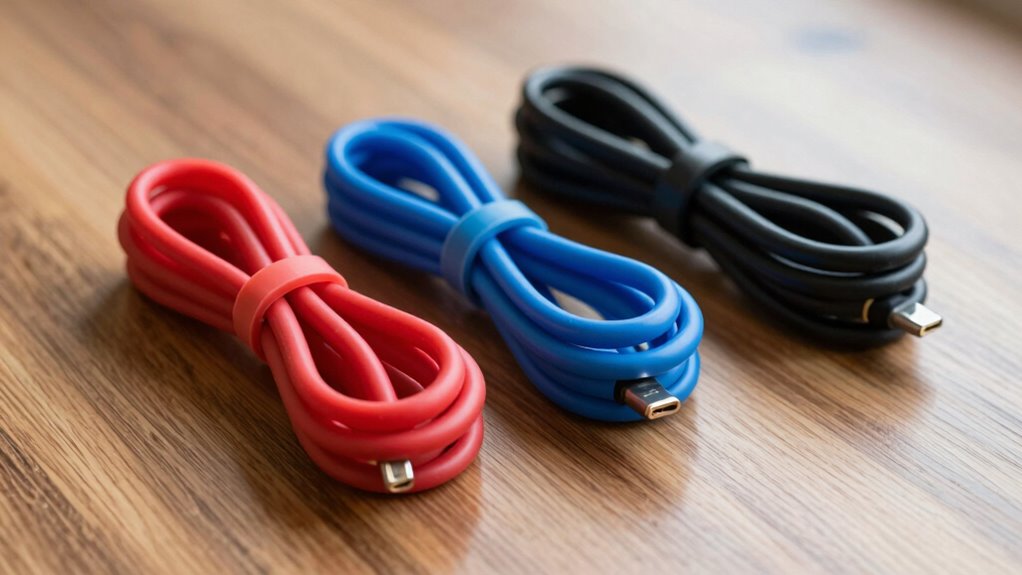

To keep your power gear untangled and easy to grab, group similar cords and use cable ties or Velcro straps for neatness. Hang longer cables on hooks or wall-mounted racks for quick access. Regularly inspect and properly wind cables using techniques like over-under wrapping to prevent damage. Label storage containers and assign specific spots for each item to maintain order over time. Discover more tips to streamline your workspace and perfect your organization system.

Get backup power and energy gear delivered free with Prime
- Fast, free delivery on millions of items
- Prime Video, Amazon Music and more included
- Member-only deals all year
Key Takeaways
- Use cable ties or Velcro straps to bundle cords and prevent tangling.
- Hang longer cables on hooks or wall-mounted racks for quick access.
- Label cables and storage containers for easy identification.
- Coil cables properly using the over-under wrapping technique to avoid twists.
- Store frequently used gear in designated, accessible containers or drawers.
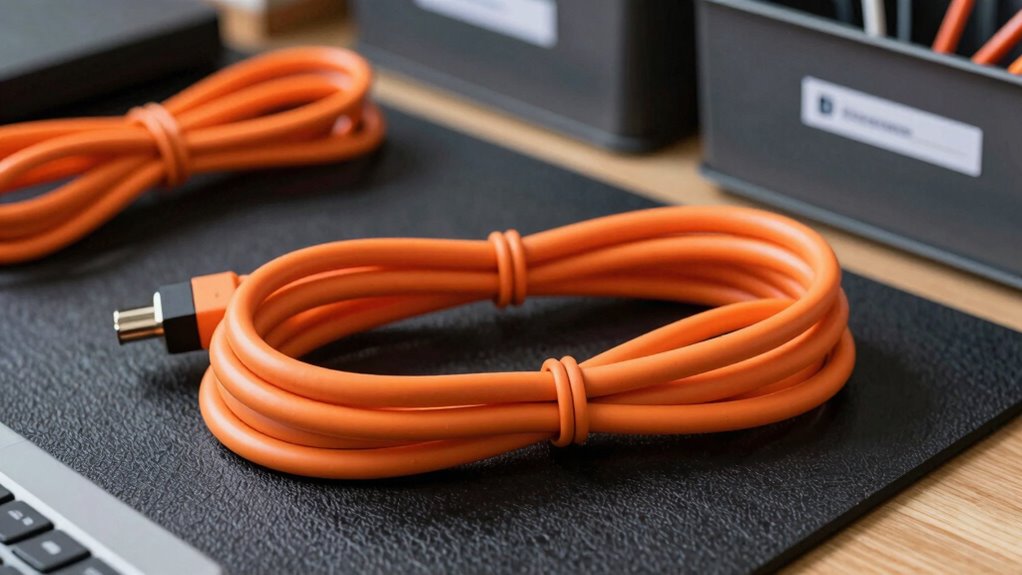
Keeping power gear organized can save you time and frustration, especially when you need it quickly. Whether it’s extension cords, power strips, or chargers, tangled cables can turn a simple task into a frustrating search. To prevent this, you need effective cable management. Start by grouping similar cords together and using cable ties or Velcro straps to keep them neat. This not only prevents tangles but also makes it easier to identify the right cable when you need it. You can also invest in cable clips or sleeves that hold multiple cords in place along walls or behind furniture, reducing clutter and keeping everything accessible. Proper cable management ensures that your gear is ready to go and minimizes the risk of damage caused by knots or excessive bending. Additionally, using cable labeling** can greatly improve your ability to quickly identify and grab the right cord. Implementing a systematic approach to cable organization can help maintain order over time. Incorporating cable protection can also prevent wear and tear, extending the life of your power gear. Regularly inspecting your cables and connections helps catch potential issues early and keeps your setup safe and reliable. Incorporating cable management accessories** can further enhance the neatness and durability of your cable setup.
Along with managing cables, having the right storage solutions makes a big difference. Instead of tossing power gear into a drawer or toolbox where they can get tangled or damaged, consider dedicated containers or organizers. Small plastic bins or storage boxes with compartments work well for chargers, adapters, and smaller accessories. For longer cables, use hooks or wall-mounted racks where you can hang them neatly. Labeling each storage container or hook helps you quickly find the right cord when needed, saving you even more time. For frequently used gear, keep it in a portable toolbox or a dedicated drawer organizer, so it’s always within reach. The key is to assign a specific place for each type of power gear, creating a system that’s easy to maintain. Regularly reviewing and reorganizing your setup can help ensure everything stays tidy and accessible.
Another practical tip is to wind cables carefully to avoid kinks and damage. Use the over-under wrapping technique, which prevents twisting and makes it easier to unwind the next time you need the cable. When storing, coil cables loosely — tight loops can cause stress and breakage over time. Combining proper winding with designated storage solutions keeps your power gear in top condition and ready when you are. Additionally, consider investing in cable reels or retractable cords for larger or frequently used extension cords. These tools make it simple to extend or retract cables without creating a mess. The goal is to streamline your setup so that grabbing the right power gear is quick, safe, and hassle-free. Proper cable storage not only prolongs the life of your cables but also enhances the overall organization of your workspace.
Products Worth Considering

eufy Security Floodlight Camera E340 with AC Cable, Dual-Lens

LEVOIT Air Purifier for Home, Pets, Bedroom, Smart WiFi

eufy Security Floodlight Camera E30, 2K
As an affiliate, we earn on qualifying purchases.
Frequently Asked Questions
What Types of Power Gear Are Most Prone to Tangling?
You’ll find charging cables, extension cords, and headphone cords most prone to tangling. These types of power gear often lack proper cable management, making them easy to knot and tangle. To prevent this, use cable organizers, clips, or reels for tangle prevention. Keeping cords neatly stored and avoiding loose, jumbled piles can save you from frustration and make grabbing what you need quick and hassle-free.
Can Specific Storage Containers Prevent Power Gear Tangling?
Think of your storage containers as gentle guardians for your cable organization, preventing tangles from creeping in like unwelcome vines. Using specific storage solutions, such as labeled bins or spool organizers, keeps your power gear neat and accessible. These containers act like calm harbors, safeguarding cords from chaos while making it easy to grab what you need without fuss. With the right storage, your power gear stays tidy and ready to go.
How Often Should I Reorganize My Power Gear?
You should reorganize your power gear every few months to maintain effective cable management and prevent tangling. Regular organization routines help you identify tangled or damaged cables early, making it easier to keep everything neat and accessible. By dedicating time to reassess your setup periodically, you guarantee your gear stays easy to grab and reduces potential damage, ultimately prolonging the lifespan of your equipment.
Are There Any Safety Tips for Handling Tangled Power Gear?
To keep yourself safe when handling tangled power gear, always wear safety gloves to protect against accidental shocks. Prioritize electrical safety by unplugging equipment before untangling, and avoid rushing to reduce risks. Keep your workspace dry and well-lit, and handle cords gently to prevent damage. Remember, patience and caution are your best tools—taking your time guarantees you stay safe while managing tangled power gear.
What Tools Can Help Untangle Stubborn Power Gear?
You can use cable management tools like cable reels, Velcro straps, and cable ties to untangle stubborn power gear. A fish tape or a cable pulling tool helps guide tight or knotted cables through tricky spots. For tool organization, a pegboard or toolbox with designated slots keeps everything accessible, reducing tangles. These tools make it easier to manage your power gear, preventing future tangles and ensuring safe, quick access when needed.
Conclusion
Keeping your power gear untangled keeps your projects moving smoothly. With some simple organization tips, you’ll spend less time fussing with cords and more time creating. Did you know that the average person spends about 15 minutes a day untangling cords? By staying organized, you can save nearly 1.5 hours each week! So, take a few minutes now to tidy up—your future self will thank you for the extra time and hassle-free access whenever you need your gear.