To create a reliable charging routine, regularly test your backup batteries’ voltage and capacity, keeping them between 50-80% charge. Use solar panels to supplement charging on sunny days and guarantee they’re properly positioned and clean. Schedule monthly checks to verify the system’s functionality and inspect terminals for corrosion. Maintaining consistent care prevents failure during storms. Continued maintenance tips will help you stay fully prepared when emergencies hit.

Get backup power and energy gear delivered free — and shop member deals
- Fast, free delivery on millions of items
- Access to Prime Big Deal Days deals on October 6–7
- Prime Video, Amazon Music and more included
Key Takeaways
- Schedule monthly battery checks to monitor charge levels and overall health.
- Regularly test voltage using a multimeter and address any underperforming batteries.
- Keep solar panels clean, properly positioned, and unobstructed for maximum efficiency.
- Maintain batteries at 50-80% charge during idle periods to prolong lifespan.
- Conduct pre-storm season readiness by verifying solar system functionality and performing deep-cycle maintenance.
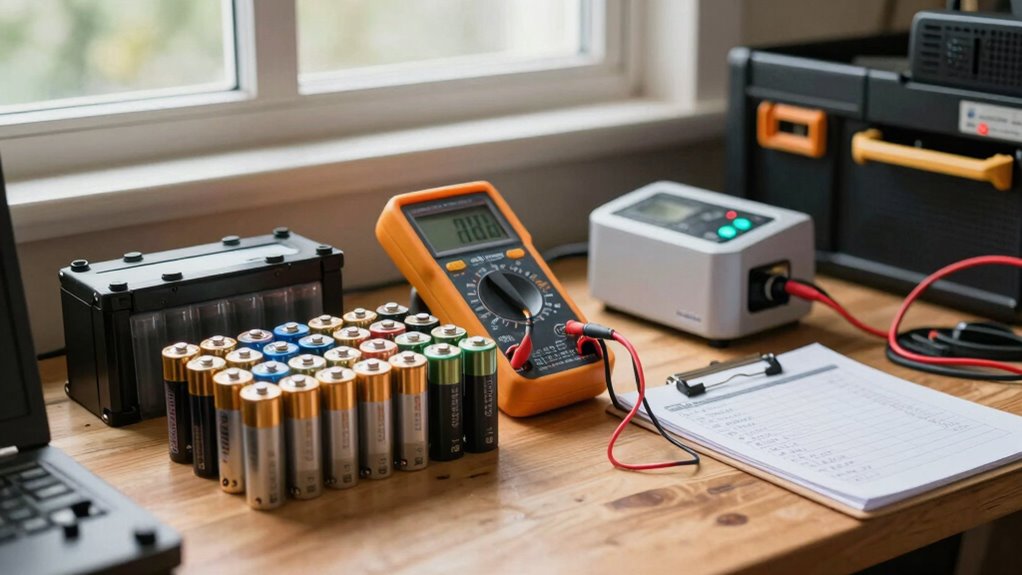
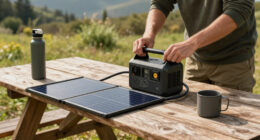
Storm season can arrive unexpectedly, leaving you without power when you need it most. That’s why establishing a reliable charging routine for your backup batteries is essential. Your goal is to guarantee your batteries are always ready to step in when the storm hits, and consistent maintenance is key to that readiness. One effective way to keep your backup power prepared is by leveraging solar power. During sunny days, solar panels can continuously charge your batteries, reducing reliance on external power sources and ensuring they stay fully charged without extra effort. If you have a solar setup, make sure it’s clean and positioned correctly to maximize sunlight exposure, especially before storm season begins. This way, your batteries can absorb as much solar energy as possible, keeping them topped off and ready for emergencies.
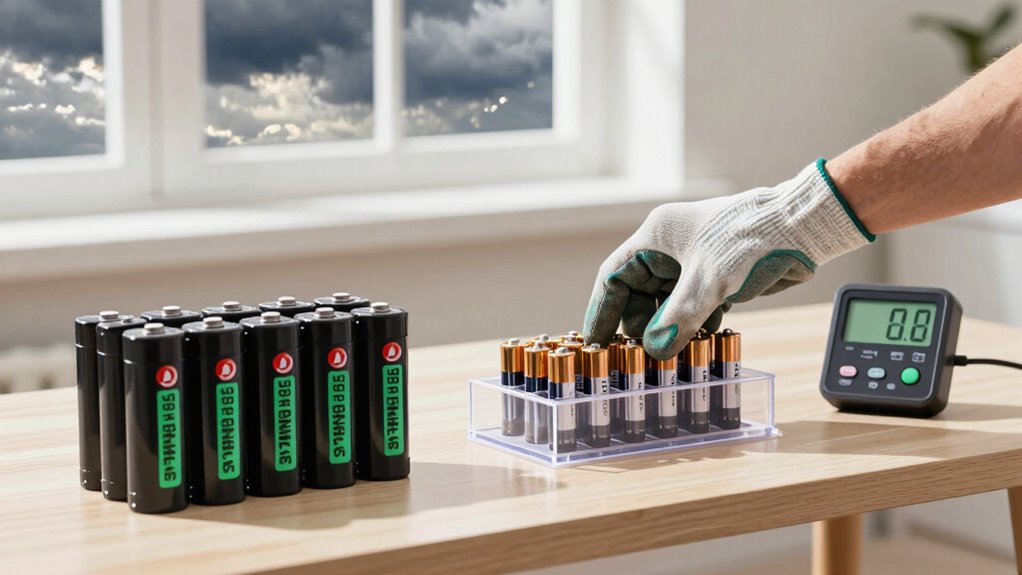
Battery maintenance goes beyond just keeping your solar panels in good shape. Regularly check the health of your backup batteries by testing their voltage and capacity. If you notice any decline in performance or signs of aging, it’s wise to replace or service them in advance. Keeping the terminals clean and free of corrosion helps maintain guaranteed charge flow. Additionally, avoid letting batteries sit completely drained for extended periods, as this can damage their capacity over time. Instead, aim to keep them at around 50-80% charge when not in use, which prolongs their lifespan and assures they’re ready when needed. Proper battery maintenance is vital to prevent premature failure and ensure reliable backup power. Incorporating regular testing into your routine also helps identify potential issues early, allowing for timely interventions.
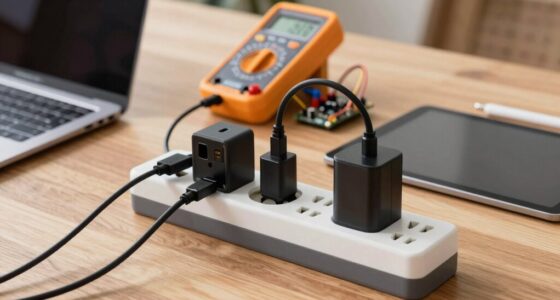
Creating a routine for charging your backup batteries means scheduling regular checks—perhaps once a month—to verify their charge levels and overall condition. During these checks, guarantee your solar power system is functioning correctly, with no obstructions blocking sunlight. Use a multimeter to measure voltage, and consider deep-cycling your batteries periodically to keep them active and healthy. If you rely solely on grid power, develop a habit of connecting and disconnecting your batteries at set intervals to prevent stagnation and deterioration.
As an affiliate, we earn on qualifying purchases.
Frequently Asked Questions
What Types of Backup Batteries Are Best for Storm Preparedness?
For storm preparedness, choose backup batteries with high battery capacity to power essential devices longer. Lithium-ion batteries are ideal because they handle numerous charging cycles without losing efficiency, guaranteeing durability over time. Avoid cheap or low-quality options, as they may degrade quickly. Regularly check the battery’s capacity and charge cycles to confirm they’re ready when needed. Proper maintenance ensures your backup batteries stay reliable during storm emergencies.
How Often Should I Check the Charge Level of My Backup Batteries?
You should check the charge level of your backup batteries at least once a month to guarantee peak performance. Regular checks help extend the battery lifespan by catching any decline in charge early. Adjust your charging frequency based on usage; if batteries sit unused for extended periods, check them more often. Staying consistent with these checks keeps your backup power ready when storms strike, preventing unexpected failures.
Can I Use Solar Chargers to Maintain Backup Batteries?
Imagine a sunny afternoon, your solar panel glistening as it quietly keeps your backup batteries charged. Yes, you can use solar chargers to maintain backup batteries, but remember solar panel maintenance is key to efficiency. Keep the panels clean and unobstructed. Incorporate simple battery storage tips like regular checks and proper placement. This way, when storms hit, your backup power is ready, reliable, and eco-friendly.
What Safety Precautions Are Necessary When Charging Backup Batteries?
When charging backup batteries, prioritize safety by always working in a well-ventilated area and wearing protective gear. Avoid overcharging to prevent overheating, which can lead to fires. Keep batteries away from flammable materials and handle them carefully to avoid leaks or damage. Remember proper battery disposal practices once they’re no longer usable, and never attempt repairs yourself. Following these charging safety tips guarantees your backup power remains reliable and safe.
How Do Temperature Changes Affect Backup Battery Performance?
Temperature changes directly impact your backup battery’s performance by affecting its temperature stability and overall lifespan. When it’s too hot, batteries can overheat, reducing their lifespan and risking damage. Cold temperatures slow down chemical reactions, decreasing efficiency and capacity. To maintain peak performance, store batteries in a cool, dry place, avoiding extreme temperature swings. Keeping temperature stable helps extend your backup battery’s lifespan and ensures reliable power during storms.
solar panel for battery charging
As an affiliate, we earn on qualifying purchases.
As an affiliate, we earn on qualifying purchases.
Conclusion
As storm season approaches, a well-maintained backup battery can be your lifeline, much like a sturdy umbrella on a rainy day. While the storm outside may be unpredictable and fierce, your routine guarantees your batteries are always ready, steady, and dependable. Just as you wouldn’t leave your home unprepared, don’t leave your power supply to chance. Stay proactive, stay prepared—because peace of mind is worth the small effort before the storm hits.
As an affiliate, we earn on qualifying purchases.
As an affiliate, we earn on qualifying purchases.
Fall Picks
fall essentials
As an affiliate, we earn on qualifying purchases.