Portable solar generators pair a battery power station with solar panels so you can produce and store electricity anywhere, and the best one for you depends almost entirely on how much power you need and how fast you need to refill it. My top overall pick is the Bluetti Solar Generator Elite 400, whose 3840Wh capacity and dual 200W panels make it the strongest choice for whole-home backup and extended off-grid use. For campers and weekend travelers, the Jackery Explorer 1000 v2 with 200W panel hits a sweet spot of portability and usable capacity, while the GRECELL 500W and generic 300W kits with 60W panels cover tight budgets and light-duty needs. The core tradeoffs in this category are weight versus capacity, solar recharge speed versus panel cost, and budget units versus expandable systems that can grow with your needs. Keep reading for the full breakdown of all 15 options and which buyer each one actually suits.

Get backup power and energy gear delivered free — and shop member deals
- Fast, free delivery on millions of items
- Access to Prime Big Deal Days deals on October 6–7
- Prime Video, Amazon Music and more included
Complete the kit


Key Takeaways
- Capacity splits this lineup into three clear tiers: sub-400Wh weekend units (Jackery 300, GRECELL 500, 300W kits), the 1000-2000Wh middle ground (Explorer 1000 v2, UDPOWER S1200, Elite 200 V2), and 3600W+ home-backup systems (Elite 400, HomePower 3600 Plus, PowerMax 3600SE).
- Solar input wattage, not battery size, is the real differentiator: the 3600W systems pair with 400W of panels and recharge meaningfully faster than budget kits, where a 60W panel can take a full day or more to refill a 300Wh battery.
- Duplicated listings are a trap in this category: the Jackery Explorer 1000 v2 and Solar Generator 1000 v2 appear multiple times with and without panels, so comparing kit prices and panel inclusions matters more than the model name.
- Built-in solar panels (BROWEY 1600W) trade charging speed for convenience, while expandable systems (HomePower 3600 Plus with extra battery) let you start small and scale up, making the upfront-vs-future-cost decision the biggest fork for home backup buyers.
- Jackery dominates this roundup with seven of fifteen entries, meaning brand consistency in app support and warranty is easy to get, but Bluetti and UDPOWER undercut it on watt-hours per dollar at both ends of the market.
| Bluetti Solar Generator Elite 400 with 2x200W Solar Panels, 3840Wh |  | Best Overall | Battery Capacity: 3840Wh LiFePO4 | Output Wattage: 2600W AC continuous | Cycle Life: 3000+ cycles | VIEW LATEST PRICE | See Our Full Breakdown |
| Portable Solar Generator 300W Power Station with 60W Foldable Solar Panel |  | Best Budget Starter Kit | Battery Capacity: 296Wh lithium-ion | Output Wattage: 300W | Solar Panel: 60W foldable | VIEW LATEST PRICE | See Our Full Breakdown |
| Jackery HomePower 3600 Plus Portable Power Station with Extra Battery and 2x200W Panels |  | Best Premium / Whole-Home Expandable | Capacity: 3584Wh, expandable to 21kWh (43kWh parallel) | Output Wattage: 3600W | Battery Type: LFP (Lithium Iron Phosphate) | VIEW LATEST PRICE | See Our Full Breakdown |
| Jackery Explorer 1000 v2 Portable Power Station with 200W Solar Panel | 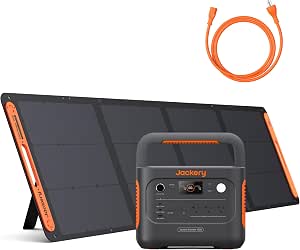 | Best for Camping and Road Trips | Capacity: 1070Wh | Output Wattage: 1500W (3000W surge) | Battery Type: LFP | VIEW LATEST PRICE | See Our Full Breakdown |
| Jackery Explorer 1000 v2 Portable Power Station, 1070Wh, 1500W |  | Best Value Mid-Size Power Station | Capacity: 1070Wh | AC Output: 1500W (3000W surge) | Battery Type: LFP | VIEW LATEST PRICE | See Our Full Breakdown |
| Portable Solar Generator 300W with 60W Solar Panel | 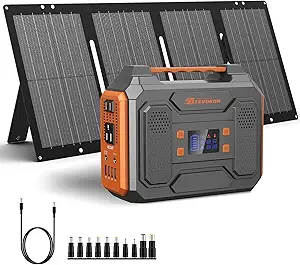 | Best Budget Complete Kit | Power Output: 300W | Solar Panel: 60W monocrystalline, foldable | Charging Outlets: 2 AC, 1 DC, 4 USB (incl. quick charge) | VIEW LATEST PRICE | See Our Full Breakdown |
| PowerMax 3600SE Solar Power Generator 3600W Power Station |  | Best for Whole-Home Essentials | Capacity: 3600Wh | AC Output: 3600W (7200W surge) | Battery Type: LiFePO4 | VIEW LATEST PRICE | See Our Full Breakdown |
| Jackery HomePower 3600 Plus with 2x200W Solar Panels |  | Best Premium Home Backup | Capacity: 3584Wh | AC Output: 3600W (7200W parallel) | Voltage: 120V & 240V (parallel) | VIEW LATEST PRICE | See Our Full Breakdown |
| UDPOWER S1200 1190Wh Solar Generator Kit with 120W Panel |  | Best Mid-Size Value | Capacity: 1190Wh | Battery Type: LiFePO4 | Peak Power: 1800W | VIEW LATEST PRICE | See Our Full Breakdown |
| Jackery Solar Generator 300 with 40W Solar Panel |  | Best Ultralight Pick | Capacity: 292Wh | Rated Output: 300W (600W surge) | Weight: 7.5 lbs | VIEW LATEST PRICE | See Our Full Breakdown |
| BLUETTI Elite 200 V2 Solar Generator with 2x200W Solar Panels |  | Best for Whole-Home Backup | Capacity: 2073.6Wh | Continuous AC Power: 2600W (3900W Power Lifting) | Solar Panel Power: 2×200W included | VIEW LATEST PRICE | See Our Full Breakdown |
| Jackery Explorer 300 Portable Power Station, 292Wh |  | Best Ultralight Pick | Capacity: 292Wh | Output: 300W | Weight: 7.5 lbs | VIEW LATEST PRICE | See Our Full Breakdown |
| BROWEY 1600W Portable Power Station with Built-in Solar Panel |  | Best All-in-One Design | Capacity: 1024Wh | Power Output: 1600W (3200W peak) | Solar: Built-in solar panel | VIEW LATEST PRICE | See Our Full Breakdown |
| Jackery Solar Generator 1000 v2 with 200W Solar Panel, 1070Wh, 1500W AC |  | Best Balanced Camping Kit | Capacity: 1070Wh | AC Output: 1500W (3000W surge peak) | Solar Panel: 200W included | VIEW LATEST PRICE | See Our Full Breakdown |
| GRECELL Portable Power Station 500W, 519Wh Solar Generator Backup Lithium Battery Pack |  | Best Budget Entry Point | Capacity: 519Wh | Power Output: 500W | AC Outlets: 2 pure sine wave | VIEW LATEST PRICE | See Our Full Breakdown |
| portable solar generator | Capacity | Battery Type | Weight | Ports |
|---|---|---|---|---|
| Bluetti Solar Generator Elite | — | — | 86 lbs | — |
| Portable Solar Generator 300W | — | — | 6.5 lbs | 2 AC, 2 USB-A, 1 USB-C, 1 DC |
| Jackery HomePower 3600 Plus Po | 3584Wh, expandable to 21kWh (43kWh parallel) | LFP (Lithium Iron Phosphate) | 77.2 lbs | — |
| Jackery Explorer 1000 v2 Porta | 1070Wh | LFP | 23.8 lbs | 3 AC, 2 USB-C (PD 100W), 1 USB-A, 1 DC |
| Jackery Explorer 1000 v2 Porta | 1070Wh | LFP | 23.8 lbs | 3 AC, 2 USB-C, 1 USB-A, 1 DC car port |
| Portable Solar Generator 300W | — | — | — | — |
| PowerMax 3600SE Solar Power Ge | 3600Wh | LiFePO4 | — | — |
| Jackery HomePower 3600 Plus wi | 3584Wh | — | 34% smaller and lighter than similar models | — |
| UDPOWER S1200 1190Wh Solar Gen | 1190Wh | LiFePO4 | — | 5×AC, 2×USB-C, 4×USB-A, car port, 2×DC5521 |
| Jackery Solar Generator 300 wi | 292Wh | — | 7.5 lbs | 2 AC, 1 USB-C PD (100W), 2 USB-A, 1 car port (120W) |
| BLUETTI Elite 200 V2 Solar Gen | 2073.6Wh | LiFePO4 | — | — |
| Jackery Explorer 300 Portable | 292Wh | LiFePO4 (4,000+ cycles) | 7.5 lbs | 2 AC, 1 USB-C, 2 USB-A, 1 car port |
| BROWEY 1600W Portable Power St | 1024Wh | LiFePO4 (3,000+ cycles) | — | 8 (AC/DC/USB-C PD 100W) |
| Jackery Solar Generator 1000 v | 1070Wh | LFP (4,000+ cycles, 10+ year lifespan) | 23.8 lbs | 3 AC, 2 USB-C, 1 USB-A, 1 DC car port |
| GRECELL Portable Power Station | 519Wh | Lithium-ion | — | — |
More Details on Our Top Picks
Bluetti Solar Generator Elite 400 with 2x200W Solar Panels, 3840Wh
For a buyer who wants one purchase to cover camping trips, RV weekends, and real home backup, this is the pick that makes the fewest compromises. The 3840Wh capacity is roughly triple what the Jackery Explorer 1000 v2 offers, and its 2600W continuous output can run a fridge, microwave, and lights simultaneously without breaking a sweat. Compared with the Jackery HomePower 3600 Plus, the Bluetti gives you nine outlets versus three, plus a UPS mode that seamlessly takes over during an outage. The tradeoff is weight: at 86 pounds, the trolley system is a genuine necessity, not a convenience. Solar recharging is also slow at up to 19 hours with the included panels, so grid charging is the realistic daily routine.
Pros:- 3840Wh capacity handles multi-day outages or heavy appliance loads
- Nine outlets plus UPS pass-through for seamless home backup
- Fast AC charging to 80% in 70 minutes
- Trolley design makes the weight manageable on flat ground
Cons:- 86 pounds is genuinely heavy for transport up stairs or over rough terrain
- Solar recharge can take up to 19 hours with the included panels
- Premium price reflects capacity most casual users won’t need
Best for: Homeowners who want whole-circuit backup power and don’t plan to lift the unit into a car trunk often
Not ideal for: Car campers and van lifers — the size and weight defeat the purpose of a portable unit
- Battery Capacity:3840Wh LiFePO4
- Output Wattage:2600W AC continuous
- Cycle Life:3000+ cycles
- Charge Time:80% in 70 minutes (AC)
- Outlets:9 total
- Weight:86 lbs
- UPS Backup:Yes
- Solar Input:2x 200W panels included
Our verdict“Buy this if a single unit needs to double as both emergency home backup and an off-grid workhorse.”
Portable Solar Generator 300W Power Station with 60W Foldable Solar Panel
This is the lowest-commitment way into solar power in the entire lineup. At 6.5 pounds, it’s a fraction of the 23.8-pound Jackery Explorer 1000 v2, and the price difference is just as dramatic. The 296Wh capacity won’t run a fridge — that’s the Bluetti Elite 400’s job — but it will keep phones, a laptop, a drone, and a camp light charged for a weekend. The foldable 60W panel means you can actually replenish the battery off-grid rather than just draining it, which cheaper power stations in this price class often don’t include. The limitations are real, though: 300W output rules out anything with a heating element, and over 1000 charge cycles means the battery will age faster than the LFP cells in the Jackery options.
Pros:- Extremely light at 6.5 pounds with a genuinely portable footprint
- Includes a foldable 60W solar panel for true off-grid recharging
- Six output ports cover phones, laptops, and small 12V devices
- Budget-friendly entry point for trying solar generators
Cons:- 296Wh capacity limits use to small electronics and short trips
- Lithium-ion chemistry lasts ~1000 cycles versus 3000+ for LFP rivals
- 300W inverter can’t handle kettles, heaters, or power tools
Best for: First-time buyers, day hikers, and campers who mainly need device charging and small fans
Not ideal for: Anyone backing up a fridge or CPAP machine overnight — the 296Wh capacity runs out too fast
- Battery Capacity:296Wh lithium-ion
- Output Wattage:300W
- Solar Panel:60W foldable
- Ports:2 AC, 2 USB-A, 1 USB-C, 1 DC
- Weight:6.5 lbs
- Charge Cycles:1000+
- Charging Methods:Solar, wall outlet, 12V car socket
Our verdict“A low-risk first step into solar power for weekend campers who only need to keep devices alive.”
Jackery HomePower 3600 Plus Portable Power Station with Extra Battery and 2x200W Panels
What separates this from the Bluetti Elite 400 isn’t raw capacity — it’s scalability. Starting at 3584Wh, the HomePower 3600 Plus expands to 21kWh per unit or 43kWh chained, which is enough to carry a household through multi-day outages. It also offers 240V output in parallel, something the Explorer 1000 v2 can’t touch, making it viable for well pumps and larger HVAC loads. The luggage-style wheels and telescopic handle are more practical than the Bluetti’s trolley for moving across a driveway. The downsides: just three outlets on the base unit means you’ll want a power strip, solar recharging is listed at 4 hours but only under ideal sun with the right panel array, and the total system cost escalates quickly once you start adding batteries.
Pros:- Expandable up to 43kWh for multi-day whole-home coverage
- 3600W output with 240V parallel support for heavy appliances
- Fast solar recharging at roughly 4 hours under good conditions
- Wheels and telescopic handle make 77 pounds manageable
Cons:- Only three outlets on the base unit
- System cost climbs sharply with each expansion battery
- Panels and station ship separately, complicating delivery setup
Best for: Homeowners in outage-prone areas planning a modular, grow-over-time backup system
Not ideal for: Campers and occasional users — the price and bulk are wasted on weekend trips
- Capacity:3584Wh, expandable to 21kWh (43kWh parallel)
- Output Wattage:3600W
- Battery Type:LFP (Lithium Iron Phosphate)
- Voltage:120V, 240V in parallel
- Charge Time:AC 2.5 hrs, solar 4 hrs
- Weight:77.2 lbs
- Outlets:3
Our verdict“The right choice for buyers building a serious home backup ecosystem rather than a single portable unit.”
Jackery Explorer 1000 v2 Portable Power Station with 200W Solar Panel
This is the goldilocks option in the lineup — enough capacity for real appliances, small enough to actually carry. At 23.8 pounds with a foldable handle, it fits in a car trunk the way the 86-pound Bluetti Elite 400 never will, yet its 1500W output (3000W surge) can run a portable fridge, blender, or hair dryer in short bursts. The included 200W panel is a meaningful upgrade over the 60W panel bundled with the budget 300W kit, cutting solar recharge times by more than half. Compared with the panel-free version of the Explorer 1000 v2, this bundle costs more upfront but avoids buying a panel separately. The catch is the 1070Wh ceiling: fine for a weekend, tight for a week, and the app requirement for full control will annoy buyers who prefer physical buttons.
Pros:- Genuinely portable at 23.8 lbs with a foldable handle
- 1500W output with 3000W surge handles most camp appliances
- 200W solar panel included for meaningful off-grid recharging
- LFP battery rated for 10+ years of use
Cons:- 1070Wh capacity limits multi-day or high-draw use
- Full feature access requires the companion app
- Premium price per watt-hour compared with budget rivals
Best for: Weekend campers and road-trippers who want appliance-level power in a carryable package
Not ideal for: Home backup planners — 1070Wh drains quickly running a fridge through an overnight outage
- Capacity:1070Wh
- Output Wattage:1500W (3000W surge)
- Battery Type:LFP
- Charge Time:1 hr fast, 1.7 hrs standard
- Ports:3 AC, 2 USB-C (PD 100W), 1 USB-A, 1 DC
- Weight:23.8 lbs
- Solar Panel:200W included
Our verdict“The best balance of portability and power for people whose trips end within a few days.”
Jackery Explorer 1000 v2 Portable Power Station, 1070Wh, 1500W
Sold without a panel, this unit targets buyers who already own solar panels or want to choose their own. The core hardware is identical to the bundled camping pick — same 1070Wh LFP battery, same 1500W output, same one-hour fast charging — so you’re not sacrificing anything on the power side. Compared with the GRECELL 500W station elsewhere in this roundup, the Jackery offers triple the output and a far longer-lived battery, justifying its higher price for anyone who needs appliance power. The panel-agnostic approach is the main decision point: it pairs cleanly with Jackery’s own 200W panels but relies on third-party solutions otherwise. Weight is a fair complaint at 23.8 pounds if you’re hiking it anywhere, and it can’t ship to PO boxes, which matters for rural buyers.
Pros:- Lower entry price than the panel-bundled version with identical hardware
- 0-100% charging in about one hour via AC
- 10+ year LFP battery lifespan with 3000W surge handling
- Versatile port selection including 100W USB-C PD
Cons:- No solar panel included, so off-grid capability requires another purchase
- 23.8 pounds is heavy for anyone carrying it on foot
- Cannot ship to PO Box addresses
Best for: Buyers who already own compatible solar panels and want the best price on a proven 1000Wh-class station
Not ideal for: Complete solar beginners — without a panel in the box, you’ll need a second purchase before going off-grid
- Capacity:1070Wh
- AC Output:1500W (3000W surge)
- Battery Type:LFP
- Charge Time:1 hr fast, 1.7 hrs default
- Ports:3 AC, 2 USB-C, 1 USB-A, 1 DC car port
- Weight:23.8 lbs
- App Control:Yes
Our verdict“The smart buy if you already have panels; otherwise the bundled kit saves you a step.”
Portable Solar Generator 300W with 60W Solar Panel
This is the only entry in this batch that puts a panel and station in one affordable box, which is exactly why budget shoppers keep landing here. The 300W output and mixed port selection (2 AC, 4 USB, 1 DC) cover phones, lights, fans, and a laptop for a weekend campout, and the included 60W foldable monocrystalline panel means there’s nothing else to buy. Compared with the Jackery Solar Generator 300, the value argument is strong — Jackery makes you purchase the panel separately at a meaningfully higher total price. The tradeoff is capacity and chemistry: this unit lacks the LiFePO4 longevity and 4,000+ cycle rating Jackery advertises, and its junction box isn’t waterproof, so the panel needs dry storage when not in use. Compared with the UDPOWER S1200, it simply can’t run anything substantial.
Pros:- Everything included in one kit — station plus 60W foldable solar panel
- Three recharge methods: AC wall, solar, and car power
- Full safety suite covering short circuit, overload, and overheating
- Genuinely compact and easy to pack
Cons:- 300W ceiling rules out most kitchen appliances and power tools
- Junction box is not waterproof and needs dry storage
- Battery lifespan trails LiFePO4 rivals significantly
Best for: First-time campers and budget buyers who want a complete solar generator kit under one purchase without add-on costs
Not ideal for: Anyone hoping to run appliances over 300W — this is a small-device station, not a home backup unit
- Power Output:300W
- Solar Panel:60W monocrystalline, foldable
- Charging Outlets:2 AC, 1 DC, 4 USB (incl. quick charge)
- Conversion Efficiency:20.5%
- Battery Management System:Yes
- Protection Features:Short circuit, over-current, over-voltage, overload, overheating
- Included Accessories:AC adapter, car charging cable, solar panel kit, user manual
Our verdict“The smart pick if you want a working solar generator from a single purchase at a low price, as long as your needs stay small.”
PowerMax 3600SE Solar Power Generator 3600W Power Station
With 3600Wh of capacity and a 3600W pure sine wave inverter (7200W surge), this unit sits in the same weight class as the Jackery HomePower 3600 Plus but trades portability polish for raw recharging speed — a claimed full charge in roughly 1.5 hours via AC or solar. That matters most during extended outages, where fast top-ups between grid flickers or weather windows determine whether your fridge and medical devices stay running. The LiFePO4 chemistry with 3,500+ cycles and smart app monitoring round out a serious backup resume. The honest tradeoff: the weight isn’t specified, and units in this class typically land north of 70 pounds with no wheels or telescopic handle like Jackery provides, so treat this as a stationary garage or basement unit rather than a camping companion.
Pros:- 3600Wh capacity with 3600W pure sine wave output runs essential appliances
- Exceptionally fast 1.5-hour recharge via AC or solar
- LiFePO4 chemistry rated for 3,500+ cycles
- Smart app control for real-time monitoring
Cons:- Weight and dimensions unlisted, complicating mobility planning
- No battery expansion option unlike modular rivals
- Little brand recognition makes warranty support a question mark
Best for: Homeowners prioritizing outage preparedness who need fast recharging and enough wattage to run refrigerators, well pumps, or space heaters
Not ideal for: Campers and overlanders — at this capacity class without confirmed wheels or handles, moving it regularly is impractical
- Capacity:3600Wh
- AC Output:3600W (7200W surge)
- Battery Type:LiFePO4
- Charge Time:~1.5 hours via AC or solar
- USB-C Ports:2 x 100W
- Maximum Solar Input:60V
- Life Cycles:3,500+
- Temperature Range:-10°C to 45°C
Our verdict“A capable whole-home backup contender if rapid recharging is your top priority and you plan to keep it stationary.”
Jackery HomePower 3600 Plus with 2x200W Solar Panels
This is the polished flagship of the batch. Where the PowerMax 3600SE matches it on paper for capacity and output, the HomePower 3600 Plus pulls ahead on everything around the numbers: 6,000 rated cycles (nearly double the PowerMax), a wheeled chassis with telescopic handle, dual 120V/240V output when paralleled with a second unit, and high-temperature-resistant cells for garage storage in hot climates. The included 2x200W panels give you meaningful solar input on day one. The real tradeoffs are cost and modularity math — larger capacity needs require buying additional units, and the panels ship in separate packages that may arrive days apart, which is frustrating if you’re staging for a storm. Compared with the smaller UDPOWER S1200, you’re paying a premium for roughly triple the runtime.
Pros:- 6,000-cycle battery rated for roughly 10 years of use
- Wheels and telescopic handle make 3.6kWh actually movable
- Parallel capability delivers 7200W and 240V for whole-home circuits
- Charges via solar, AC, or even a gas generator
Cons:- Solar panels ship separately and may not arrive together
- Scaling up requires purchasing whole additional units
- Premium pricing versus comparable single-unit rivals
Best for: Homeowners willing to pay for a durable, mobile 3.6kWh system with a 10-year lifespan and room to expand
Not ideal for: Casual campers and small-apartment dwellers — the capacity and price are overkill for weekend trips or charging gadgets
- Capacity:3584Wh
- AC Output:3600W (7200W parallel)
- Voltage:120V & 240V (parallel)
- Solar Panels:2 x 200W included
- Cycle Life:6,000 cycles
- Lifespan:10 years
- Weight:34% smaller and lighter than similar models
Our verdict“The best-built home backup option here if longevity, mobility, and expansion matter more than the bottom dollar.”
UDPOWER S1200 1190Wh Solar Generator Kit with 120W Panel
This kit hits a sweet spot the extremes in this lineup miss. It has a third of the capacity of the Jackery HomePower 3600 Plus at a fraction of the cost, yet four times the runtime of the budget 300W kits, and it includes a genuinely weather-ready IP65-rated 120W foldable panel with an adjustable stand — a smarter outdoor setup than most included panels. The standout spec is UPS switching in 0.01 seconds, meaning a desktop computer or CPAP machine won’t even blink when the grid drops. With 5 AC outlets and a 1800W peak, it bridges camping trips and emergency home duty in one purchase. The tradeoffs are real: the panel ships separately, the station’s footprint is generous for a pack-in-the-trunk unit, and the feature list pushes the price above basic mid-size rivals like the GRECELL 500W.
Pros:- 1190Wh LiFePO4 battery balances capacity with long lifespan
- 0.01-second UPS switchover protects computers and medical devices
- IP65 waterproof 120W panel with adjustable stand handles real weather
- Eleven output ports including five AC outlets
Cons:- Solar panel ships separately and needs assembly setup
- Bulkier than true portable rivals at this capacity
- Higher price than simpler mid-size competitors
Best for: RV owners and preparedness-minded households who want serious dual-purpose capacity with true UPS protection for sensitive electronics
Not ideal for: Backpackers and weight-conscious car campers — the station and panel together take up real cargo space
- Capacity:1190Wh
- Battery Type:LiFePO4
- Peak Power:1800W
- Solar Panel:120W foldable, waterproof, adjustable stand
- Ports:5×AC, 2×USB-C, 4×USB-A, car port, 2×DC5521
- Water Resistance:IP65 (panel)
- Dimensions:18.7 x 31.5 x 0.59 inches
Our verdict“The best middle-ground buy here — enough power for real emergencies without flagship pricing, especially if UPS backup matters to you.”
Jackery Solar Generator 300 with 40W Solar Panel
At 7.5 pounds, nothing else in this lineup comes close for carry-anywhere power — the next-lightest kits here are multiples of that weight. The 292Wh capacity and 300W output suit phones, cameras, drones, and a laptop across a long weekend, and the LiFePO4 battery rated for 4,000+ cycles means this little unit should outlast cheaper NMC options like the generic 300W kits by years. The catch is patience: charging via the bundled 40W panel takes about 7.5 hours of good sun, versus under three hours if you step up to a 100W panel — which, in typical Jackery fashion, costs extra. Compared with the budget 300W kit that includes its 60W panel, you’re paying a brand premium for portability and battery chemistry rather than raw value.
Pros:- Just 7.5 lbs — genuinely backpack-friendly
- LiFePO4 battery rated for 4,000+ charge cycles
- 100W USB-C PD port charges modern laptops at full speed
- Versatile port spread including AC, USB-A, and car outlet
Cons:- 40W panel needs about 7.5 hours of sun for a full charge
- 292Wh capacity limits it to small devices and short trips
- Faster solar charging requires buying a larger panel separately
Best for: Hikers, kayak campers, and weekend adventurers who prioritize carrying weight above everything else
Not ideal for: Anyone planning multi-day trips off-grid — 292Wh runs out fast, and slow solar recharge can’t keep pace with real consumption
- Capacity:292Wh
- Rated Output:300W (600W surge)
- Weight:7.5 lbs
- Battery Chemistry:LiFePO4, 4,000+ cycles
- Ports:2 AC, 1 USB-C PD (100W), 2 USB-A, 1 car port (120W)
- Solar Panel:40W included
- Charge Time:7.5 hrs with 40W panel; 2.8 hrs with 100W panel
Our verdict“The clear choice when every ounce counts, as long as your devices are small and your trips are short.”
BLUETTI Elite 200 V2 Solar Generator with 2x200W Solar Panels
For buyers who want a solar generator that can actually carry a household through an outage, this option stands out in the lineup. With 2073.6Wh of capacity and 2600W of continuous output — 3900W in Power Lifting mode — it can run refrigerators, space heaters, and power tools simultaneously, something no other kit in this roundup can match except the Jackery HomePower 3600 Plus. The two-hour AC recharge is genuinely fast for this capacity class, and the 2.4-hour solar recharge with the included 400W of panels means a sunny day can largely refill it. Compared with the Jackery Explorer 1000 v2, you get roughly double the capacity and much higher output, but at a steep price premium and a weight that makes it a two-person lift.
Pros:- Massive 2073.6Wh capacity with 3900W Power Lifting mode
- Complete kit — 400W of solar panels included
- Very fast recharging on both AC and solar
- LiFePO4 cells rated for 6,000+ cycles and 17 years
Cons:- Highest price point in this batch
- Heavy and awkward to transport solo
- Solar panels ship separately, adding delivery complexity
Best for: Homeowners preparing for multi-day outages who need to run large appliances
Not ideal for: Campers and van lifers — the weight and bulk make it impractical to move regularly
- Capacity:2073.6Wh
- Continuous AC Power:2600W (3900W Power Lifting)
- Solar Panel Power:2×200W included
- Recharge Time:2 hours AC/DC, 2.4 hours solar
- Battery Type:LiFePO4
- Cycle Life:6,000+ cycles (17-year lifespan)
Our verdict“Buy this if whole-home backup capacity matters more than portability or price; skip it if you mainly need power for weekend trips.”
Jackery Explorer 300 Portable Power Station, 292Wh
At just 7.5 lbs, this is the easiest power station in the entire roundup to actually carry — toss it in a backpack and forget it’s there. Where the BLUETTI Elite 200 V2 demands a cart and a plan, the Explorer 300 disappears into a car trunk or kayak hatch. The 292Wh capacity handles phones, laptops, drones, and a CPAP overnight, and the mix of AC, USB-C, USB-A, and car ports covers nearly every small device. The tradeoff is real, though: 300W of output rules out anything with a heating element or motor, and unlike the Jackery Solar Generator 300 bundle, no solar panel is included, so you’ll need to buy one separately for off-grid recharging.
Pros:- Featherweight 7.5 lbs with a true carry-anywhere footprint
- Versatile port selection including USB-C and a car port
- LiFePO4 chemistry rated for 4,000+ cycles
- Fast solar charging when paired with a Jackery panel
Cons:- No solar panel included in this listing
- 292Wh drains quickly when running AC devices
Best for: Hikers, kayakers, and minimalist campers who prioritize weight over capacity
Not ideal for: Anyone needing to run a mini-fridge, blender, or other appliance — 300W output is the hard ceiling
- Capacity:292Wh
- Output:300W
- Weight:7.5 lbs
- Dimensions:9.1 x 5.2 x 7.8 inches
- Ports:2 AC, 1 USB-C, 2 USB-A, 1 car port
- Battery Type:LiFePO4 (4,000+ cycles)
- Charge Time:4 hours
Our verdict“The clear choice when every ounce counts and your devices are small; capacity hunters should step up to the Explorer 1000 v2.”
BROWEY 1600W Portable Power Station with Built-in Solar Panel
Every other kit in this roundup asks you to manage, connect, and store separate panels — this one builds the solar panel into the unit itself, which makes it the most self-contained option here. Compared with the Jackery Solar Generator 1000 v2, where the panel ships separately and needs setup each time, the BROWEY is grab-and-go: unfold, face the sun, done. Its 1024Wh capacity and 1600W pure sine wave output handle most camping and emergency loads comfortably. The built-in panel is modest in wattage, though, so solar recharging is slower than a dedicated 200W array, and the unit carries extra weight and bulk from the integrated panel — it’s not something you’d want to haul on foot.
Pros:- Integrated solar panel eliminates separate panel storage and setup
- 1024Wh capacity with 1600W pure sine wave output
- LiFePO4 battery rated for 3,000+ cycles
- Eight ports including 100W USB-C PD
Cons:- Heavier and bulkier due to the built-in panel
- Built-in solar charging is slower than external panel kits
Best for: Campers and emergency preppers who want one box with no cables or separate panels to track
Not ideal for: People who need fast solar recharging — the built-in panel can’t match a 200W external array
- Capacity:1024Wh
- Power Output:1600W (3200W peak)
- Solar:Built-in solar panel
- Battery Type:LiFePO4 (3,000+ cycles)
- Charging Time:3 hours to 80%
- Ports:8 (AC/DC/USB-C PD 100W)
Our verdict“Pick this if you value a genuinely self-contained setup over maximum recharge speed or minimal weight.”
Jackery Solar Generator 1000 v2 with 200W Solar Panel, 1070Wh, 1500W AC
This bundle hits the sweet spot the Explorer 300 and the BLUETTI Elite 200 V2 sit on either side of: enough capacity and output for real trips without backup-power money or weight. With 1070Wh and 1500W of AC output, it runs a portable fridge, coffee maker, and laptops simultaneously — and at 23.8 lbs with a foldable handle, it’s still car-camping friendly. The one-hour fast charge (via app-activated emergency mode) is a standout convenience, and the included 200W panel gives it true off-grid capability the panel-less Explorer 300 lacks. Drawbacks: the panel and station ship separately, and the fast-charging feature requires app activation, which is an unnecessary hoop for a paid feature.
Pros:- Complete kit with 200W solar panel included
- 1500W AC output runs most small appliances
- One-hour fast charging via emergency mode
- 23.8 lbs with foldable handle, still genuinely portable
Cons:- Panel and station ship separately
- Fast charging requires app activation
- Solar recharge takes about 6 hours
Best for: Road trippers and car campers who want a complete kit with genuine appliance power
Not ideal for: Household backup buyers — 1070Wh won’t carry a fridge through a long outage like the BLUETTI Elite 200 V2
- Capacity:1070Wh
- AC Output:1500W (3000W surge peak)
- Solar Panel:200W included
- Weight:23.8 lbs
- Charging Time:1 hour fast, 3 hours full AC, 6 hours solar
- Battery Type:LFP (4,000+ cycles, 10+ year lifespan)
- Ports:3 AC, 2 USB-C, 1 USB-A, 1 DC car port
Our verdict“The most sensible single purchase for campers who want power, panels, and portability in one box.”
GRECELL Portable Power Station 500W, 519Wh Solar Generator Backup Lithium Battery Pack
For buyers testing the waters without a big spend, this option delivers the most features per dollar in the batch. The built-in 10W wireless charging pad is something none of the Jackery or BLUETTI options offer, and the port selection — including 60W USB-C PD and three QC3.0 USB-A ports — is generous for the price. Compared with the similarly sized Jackery Explorer 300, you get more capacity (519Wh vs 292Wh) and higher output (500W), though at a heavier weight and with slower recharging. Two caveats shape the experience: the 500W ceiling rules out most kitchen appliances, and the solar panel is not included, so the “solar generator” label only applies after an extra purchase.
Pros:- 519Wh capacity at a very low price point
- Unique built-in 10W wireless charging pad
- Rich port selection with 60W USB-C PD and QC3.0 USB-A
- Pure sine wave inverter and BMS safety protections
Cons:- Solar panel sold separately
- 500W output ceiling limits appliance use
- Slow recharging — 6-9 hours via solar
Best for: Budget-conscious first-time buyers who want max capacity and ports for minimal spend
Not ideal for: Anyone expecting a complete solar kit — the panel costs extra, and 500W won’t run power-hungry appliances
- Capacity:519Wh
- Power Output:500W
- AC Outlets:2 pure sine wave
- USB-C PD:60W
- Wireless Charging:10W built-in pad
- Battery Type:Lithium-ion
- Recharge Time:6-7 hours wall, 6-9 hours solar, 7-8 hours car
Our verdict“A smart low-risk first buy if you mainly charge devices and small appliances and already own or will add a panel.”
How We Picked
My ranking logic starts with the pairing of battery capacity to solar input, because a portable solar generator is only as good as its ability to refill itself. I weighted how many watt-hours of panel wattage ship with each kit and how quickly that translates to a full recharge in real conditions, then layered in inverter output (whether a unit can run a fridge, power tools, or just phones and lights), portability (weight and handle design matter once you pass 40 pounds), and expandability for buyers who want a system that grows.
From there, I scored value in watt-hours per dollar at each capacity tier, since this roundup spans $150 budget kits to $4,000 whole-home systems, and comparing them on price alone would be meaningless. Finally, I factored in brand track record for warranty service, app quality, and battery chemistry, where LiFePO4 units earn a longevity edge over older NMC cells. Products are ordered so that each tier, from weekend camping to whole-home backup, has a clear winner rather than fifteen variations of the same pitch.
Factors to Consider When Choosing Portable Solar Generators
Before settling on a specific model, it helps to understand the broader patterns in this market. The 15 products above reveal several traps and tradeoffs that apply no matter which brand you lean toward.Match Battery Capacity to Your Real Runtime, Not the Marketing Number
Manufacturers lead with watt-hours, but that number only matters when translated into what you’ll actually run. A 300Wh unit runs a laptop and phones for a weekend; a 1000Wh unit runs a 12V fridge for a day or two; a 3800Wh unit can carry a refrigerator, router, and lights through a multi-day outage. The mistake I see most often is buyers calculating average daily needs and buying exactly that, leaving zero buffer for cloudy days or battery degradation. A useful rule is to size for 1.5 to 2 times your estimated daily consumption, especially if solar is your only recharge method. Also remember that lithium batteries shouldn’t be drained to zero routinely, so usable capacity is realistically 80-90% of the sticker figure.
Solar Input Speed Is Where Budget Kits Fall Short
The paired panel is what separates a genuine solar generator from a power station with a solar accessory. A 60W panel recharging a 300Wh battery needs six-plus hours of perfect sun, which in real conditions means a full day or more. Compare that to a 400W panel array refilling a 3600Wh system in roughly the same window. When comparing kits, divide battery capacity by total panel wattage to estimate minimum recharge hours, and check whether the power station’s maximum solar input exceeds the included panels, because adding panels later is one of the cheapest upgrades in this category. Buyers who plan to depend on solar daily should prioritize high input ceilings over slightly larger batteries.
Inverter Wattage Determines What You Can Actually Plug In
Capacity tells you how long; inverter rating tells you whether a device will run at all. A 300W inverter cannot start most refrigerators, microwaves, or power tools, even briefly, because compressor surge draw can triple a rated wattage. The 1500W units in this lineup (Explorer 1000 v2, UDPOWER S1200, BROWEY 1600W) handle kitchen basics, while the 3600W systems can run well pumps and multiple appliances simultaneously. Check the surge rating as well as continuous output, and be honest about whether you need 120V outlets, USB-C power delivery, or RV-style AC input, since port selection varies more than capacity does across similarly priced models.
Battery Chemistry and Cycle Life Affect Long-Term Value
Most newer units use LiFePO4 chemistry rated for 3,000+ charge cycles, which translates to roughly a decade of daily cycling, while cheaper or older models using NMC cells may degrade noticeably after 500-800 cycles. This is where a lower sticker price can quietly cost more over time. If you plan to use the generator weekly for RV or van life, cycle life should weigh heavily; for occasional camping trips, it matters far less. Also check whether the battery is user-replaceable or expandable, since systems like the HomePower 3600 Plus with extra battery let you add capacity instead of replacing the entire unit when needs grow. Ignoring chemistry is one of the most common and expensive oversights in this category.
Watch for Duplicate Listings and Kit Pricing Tricks
This roundup alone contains the Jackery Explorer 1000 v2 listed three ways and the HomePower 3600 Plus twice, and that pattern reflects the broader retail landscape. The same power station appears with different panels, extra batteries, or as a bare unit, sometimes at prices that make the bundle a bargain and sometimes not. Before buying, price the station and panels separately to confirm the kit discount is real, and verify panel wattage and cable inclusion, since a ‘solar generator’ sold without panels is just a power station. Generic listings, like the two 300W kits here, often rebrand the same hardware at different prices, so checking reviews for identical photos and specs can save real money.
Weight and Expandability Are Opposing Paths
Once you commit to a home-backup class unit, you’re handling 45-100+ pounds, and models with wheels or split battery modules (Elite 400’s extra battery approach) exist specifically to manage that. Campers and van-lifers should stay under roughly 30 pounds or accept that the generator lives in the vehicle permanently. The strategic question is whether to buy one big system or a smaller expandable one: a modular setup costs more upfront but lets you add capacity as outages or trips demand it, while a single large unit is simpler but becomes an all-or-nothing asset. Neither path is wrong, but choosing unconsciously leads to either back strain or an undersized system during the first real emergency.
Frequently Asked Questions
Can a portable solar generator actually run my refrigerator during a power outage?
It depends on both the inverter rating and the battery capacity, and most budget units fail on the first count. A typical refrigerator needs 100-200W to run but can surge to 600-1000W when the compressor starts, which rules out anything under a 300W inverter immediately. The 1500W models in this lineup can start and run a standard fridge, but a 1000Wh battery will only keep it going for 8-15 hours depending on efficiency. For multi-day outage coverage, the 3600W-class systems like the Elite 400 or HomePower 3600 Plus are the realistic choice, especially since a 400W solar array can offset a meaningful share of daily fridge consumption. Measure your own fridge’s draw with a plug-in meter before buying, because Energy Star models and older units differ by a factor of two or more.
Why does the same Jackery model appear at such different prices?
Jackery, Bluetti, and other brands sell the same power station in multiple configurations: bare, bundled with one panel, bundled with two panels, or paired with expansion batteries. In this roundup alone, the Explorer 1000 v2 appears as a standalone unit, with a 200W panel, and as part of a Solar Generator 1000 v2 kit that is functionally the same product. The price gaps reflect panel and accessory inclusions, but not always proportionally, and sale cycles make one configuration a bargain while another is overpriced in the same week. My advice is to price the station and each panel separately, confirm the kit includes the solar charging cable (it occasionally doesn’t), and never assume the bundle with more boxes is the better deal. This duplicate-listing pattern also means a lower-ranked product here may simply be a worse-configured version of a higher-ranked one.
Are the cheap 300W kits with 60W panels a waste of money?
Not necessarily, but they serve a narrow purpose and disappoint when pushed beyond it. A 300Wh battery with a 60W panel is genuinely useful for charging phones, cameras, headlamps, and a CPAP for a night, and it’s a low-risk way to learn how solar charging behaves in your climate. The frustration comes from expectations: recharging that battery from the included panel takes a full sunny day minimum, so it can’t sustain continuous daily use of anything beyond small electronics. If your budget is under $200 and your needs are a weekend of device charging, these kits are a reasonable entry point. If you’re eyeing a fridge, a laptop-based work setup, or multi-day trips, the money is better saved toward a 1000Wh-class unit with at least a 200W panel.
Is a built-in solar panel like the BROWEY’s better than a separate one?
Built-in panels are a convenience play, not a performance one. A panel folded into a power station’s casing is physically small, typically adds modest wattage, and must be aimed by moving the entire heavy unit, whereas separate panels can be tilted, repositioned through the day, and upgraded later without replacing the battery. Where the built-in design wins is grab-and-go simplicity: there’s nothing to connect, no cables to lose, and trickle charging happens automatically whenever the unit sits in sunlight. That makes it appealing for emergency kits that sit in a closet or casual day use, but poor for anyone depending on solar as their primary recharge method. Separate-panel systems in this lineup recharge several times faster and scale up, which is why the conventional setup dominates for camping and home backup.
Should I buy one large generator or a smaller expandable system?
Expandable systems usually win for home-backup buyers, while a single right-sized unit makes more sense for portable use. A modular setup like the HomePower 3600 Plus with an extra battery lets you start with a smaller investment, verify the system meets your needs, and add capacity before the next storm season, often at a better cumulative price than buying a bigger unit later. The tradeoffs are added complexity, more boxes to store, and slightly higher cost per watt-hour compared to a single large chassis. For campers and van-lifers, expansion is mostly irrelevant because weight and space cap the system anyway, so buying the right size once is cleaner. The one scenario that favors a single large unit is whole-home backup where you want one integrated system with one management app and one transfer method.
Conclusion
After comparing all 15 options, the right pick comes down to what you’re powering and how you’ll recharge it. For best overall, the Bluetti Solar Generator Elite 400 stands out with 3840Wh of capacity and 400W of panels, handling everything from outage backup to extended off-grid living, while the Jackery HomePower 3600 Plus with extra battery is the stronger choice if expandability is your priority. The best premium slot goes to that expandable HomePower setup for buyers who want to build a system over time.
For best value, the UDPOWER S1200 kit delivers genuine 1500W capability and a 120W panel at a mid-tier price, with the GRECELL 500W as the budget alternative for light-duty backup. Beginners are best served by the Jackery Solar Generator 300 with 40W panel, which is cheap, simple, and forgiving while you learn your actual power needs. Weekend campers should look at the Jackery Explorer 1000 v2 with 200W panel for the best portability-to-capacity ratio, and anyone wanting zero-setup convenience can accept the BROWEY 1600W’s charging-speed compromise for its built-in panel. Whatever your tier, buy one class above your estimated needs, and you’ll avoid the most common regret in this category.
Fall Picks
fall essentials
As an affiliate, we earn on qualifying purchases.