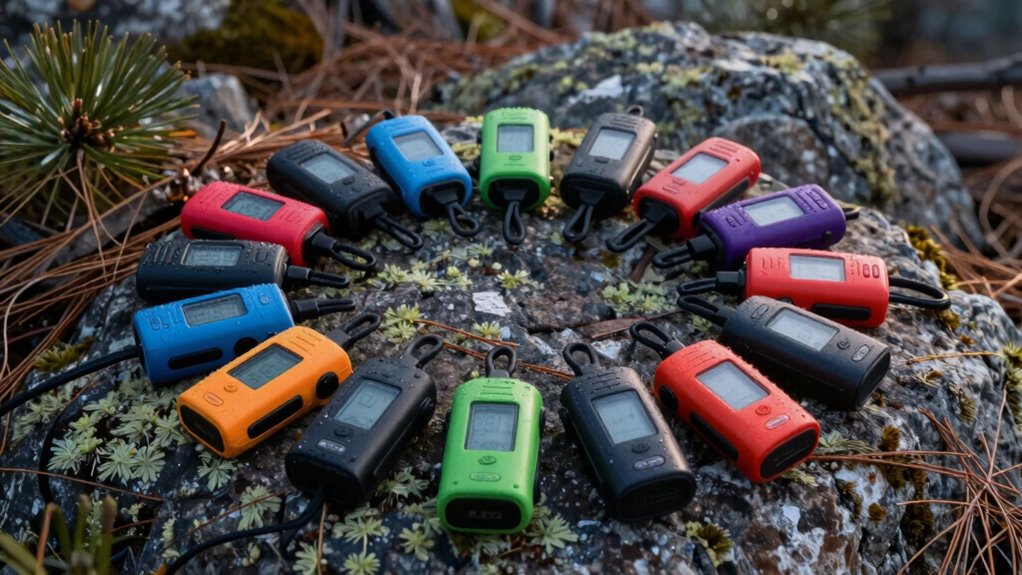

When it comes to personal safety during outdoor adventures, a personal locator beacon for emergencies can be a lifesaver. The best models offer reliable satellite communication, quick activation, and rugged durability—essential for remote locations. The Spot Gen 4 stands out as the overall top pick thanks to its global coverage and user-friendly interface, while the ACR ResQLink 410 RLS provides excellent value with its compact design. A key tradeoff in this category is balancing cost against features like GPS accuracy, battery life, and ease of activation. Continue reading for a detailed breakdown of the top options and what makes each one unique.

Get backup power and energy gear delivered free with Prime
- Fast, free delivery on millions of items
- Prime Video, Amazon Music and more included
- Member-only deals all year
Key Takeaways
- The best personal locator beacons combine reliable satellite coverage with long battery life for extended emergencies.
- Compact and lightweight designs are preferable for portability, but may sacrifice some features or battery capacity.
- GPS-enabled beacons provide more precise location data, which can be critical in rescue scenarios.
- Ease of activation and user interface significantly impact the effectiveness in high-stress situations.
- Higher-priced models tend to include better durability, additional features, and more global coverage options.
| Spot Gen 4 Satellite GPS Messenger |  | Best Overall for Reliable Outdoor Communication | Brand: SPOT LLC | Model Number: Gen 4 | Unit Count: 1 | VIEW ON AMAZON | See Our Full Breakdown |
| ACR ResQLink 410 RLS Personal Locator Beacon with Pouch and Carabiner Bundle |  | Best for Global Coverage and Simplicity | Brand: ACR | Built-In Media: Pouch, Carabiner | Unit Count: 1 | VIEW ON AMAZON | See Our Full Breakdown |
| ACR ResQLink 410 RLS PLB – Satellite SOS GPS Personal Locator Beacon |  | Best for Long-Term Reliability in Water and Extreme Conditions | Battery Life: 5 years | Operational Time: 24+ hours | Compatibility: GPS, Galileo GNSS, MEOSAR | VIEW ON AMAZON | See Our Full Breakdown |
| ACR ResQLink View PLB425 – Buoyant GPS Personal Locator Beacon |  | Best for Water-Based Adventures and Messaging | Model: PLB425 | Type: Personal Locator Beacon | Features: Buoyant, GPS, SOS, LED strobe, infrared | VIEW ON AMAZON | See Our Full Breakdown |
| McMurdo FastFind 220 Personal Locator Beacon – US Programming |  | Best for Emergency Situations and US Users | Registration: US (programmed), international reprogramming available | Activation: Deploy antenna, pull seal, press ON | Use: Emergency only | VIEW ON AMAZON | See Our Full Breakdown |
| Ocean Signal rescueME PLB1 – Compact Satellite SOS Personal Locator Beacon |  | Best Overall for Outdoor Safety & Portability | Brand: Ocean Signal | Model Number: 730S-01261 | Weight: 4 oz | VIEW ON AMAZON | See Our Full Breakdown |
| ACR ResQLink View RLS PLB Satellite SOS GPS Personal Locator Beacon |  | Best for Global Coverage and Digital Visibility | Return Link Service: Yes | Display: LCD, 800 x 480 resolution | Battery Life: 24 hours | VIEW ON AMAZON | See Our Full Breakdown |
| Jotron Tron SA20 PLB Personal Locator Beacon, Compact & Lightweight with GPS & Galileo GNSS, 406MHz Emergency Signal, Waterproof, SOLAS Approved, US Registered |  | Best for Maritime Use & Long-Term Reliability | Frequency: 406/121.5 MHz | Battery Life: 11 years | Waterproof: Yes | VIEW ON AMAZON | See Our Full Breakdown |
| ACR ResQLink AIS Personal Locator Beacon (Model PLB-450) |  | Best for Visual Homing & PFD Attachment | Coverage: Global | Battery Life: 5 years | Weight: Lightweight | VIEW ON AMAZON | See Our Full Breakdown |
| ACR ResQLink 400 PLB – Satellite SOS GPS Personal Locator Beacon |  | Best for Precise Location & No Subscriptions | Coverage: Global (Cospas-Sarsat / MEOSAR) | GPS: GPS and Galileo GNSS | Features: 406 MHz distress signal, LED and infrared strobes | VIEW ON AMAZON | See Our Full Breakdown |
| personal locator beacon for emergencie | Battery Life |
|---|---|
| Spot Gen 4 Satellite GPS Messe | — |
| ACR ResQLink 410 RLS Personal | — |
| ACR ResQLink 410 RLS PLB | 5 years |
| ACR ResQLink View PLB425 | — |
| McMurdo FastFind 220 Personal | — |
| Ocean Signal rescueME PLB1 | Over 24 hours |
| ACR ResQLink View RLS PLB Sate | 24 hours |
| Jotron Tron SA20 PLB Personal | 11 years |
| ACR ResQLink AIS Personal Loca | 5 years |
| ACR ResQLink 400 PLB | — |
More Details on Our Top Picks
Spot Gen 4 Satellite GPS Messenger
The Spot Gen 4 Satellite GPS Messenger stands out for its robust satellite communication capabilities, making it the ideal choice for outdoor enthusiasts who venture beyond cell coverage. Unlike the ACR ResQLink 410 RLS PLB, it offers two-way messaging, which can be crucial during extended emergencies. However, it requires a subscription, adding ongoing costs that may deter casual users. Its portability and attachability make it perfect for hiking or camping trips where quick access to emergency services is vital. Compared to simpler beacons, this device offers more communication options but at a higher price and subscription fee. Tradeoffs include ongoing costs versus the peace of mind of reliable, two-way communication in remote areas.
Pros:- Provides dependable satellite communication in remote areas
- Includes GPS tracking and emergency SOS features
- Portable with attachment options for gear
Cons:- Requires a subscription to access satellite services
- Price may be prohibitive for casual users
- Limited warranty details may impact long-term confidence
Best for: Hikers, climbers, and outdoor adventurers seeking reliable satellite communication and GPS tracking during remote excursions
Not ideal for: Casual campers or occasional outdoor users who prefer a one-time purchase without subscription fees
- Brand:SPOT LLC
- Model Number:Gen 4
- Unit Count:1
- Item Type:Gen 4 Satellite Messenger
- UPC:893049001776
- Warranty:Limited
Our verdict“This device makes the most sense for serious outdoor explorers who need dependable communication and are willing to pay ongoing fees.”
ACR ResQLink 410 RLS Personal Locator Beacon with Pouch and Carabiner Bundle
The ACR ResQLink 410 RLS is a compact, lightweight beacon suited for travelers and outdoor adventurers who prioritize ease of use and worldwide coverage. Unlike the Spot Gen 4, it operates without a subscription, relying solely on COSPAS-SARSAT satellites to send distress signals. Its included pouch and carabiner simplify attachment to gear, making it ideal for quick deployment. The tradeoff is that it lacks two-way messaging and advanced features found in some premium devices, limiting communication to emergency signals only. For those who need a straightforward, reliable PLB with global coverage, this model offers excellent value and durability.
Pros:- Compact and lightweight for portability
- Global coverage with reliable satellite signals
- Includes protective pouch and attachment carabiner
Cons:- Limited details on battery life and ruggedness
- No subscription means fewer advanced communication options
Best for: Backpackers and international travelers seeking a simple, reliable emergency beacon without ongoing costs
Not ideal for: Outdoor professionals or users who want two-way messaging or additional communication features
- Brand:ACR
- Built-In Media:Pouch, Carabiner
- Unit Count:1
- Best Sellers Rank:#194,673 in Electronics, #898 in GPS Trackers
- ASIN:B0DD8RYBQY
Our verdict“This beacon is ideal for travelers needing a straightforward, global emergency device with no recurring fees.”
ACR ResQLink 410 RLS PLB – Satellite SOS GPS Personal Locator Beacon
The ACR ResQLink 410 RLS PLB offers advanced features like Galileo GNSS and MEOSAR compatibility, making it a top choice for users who plan to face water hazards or extreme environments. Its 5-year battery life and waterproof, buoyant design distinguish it from basic beacons like the McMurdo FastFind 220. While it doesn’t require a subscription, its enhanced satellite system provides more accurate positioning globally. The main tradeoff is its higher cost and complexity, which might be overkill for casual users or those with simple needs. It’s most suitable for serious outdoor professionals or marine adventurers expecting water rescue scenarios.
Pros:- Global coverage with multiple satellite systems
- Long 5-year battery life
- Waterproof and buoyant for aquatic emergencies
Cons:- Higher price point compared to basic PLBs
- More complex operation may require familiarity
Best for: Mariners, mountain climbers, or extreme outdoor enthusiasts needing reliable long-term, water-resistant emergency coverage
Not ideal for: Occasional hikers or casual campers seeking a simple, low-cost device without water safety features
- Battery Life:5 years
- Operational Time:24+ hours
- Compatibility:GPS, Galileo GNSS, MEOSAR
- Features:Built-in buoyancy, strobe lights, infrared
Our verdict“This beacon suits those requiring durable, water-resistant emergency signaling with long-term reliability in extreme conditions.”
ACR ResQLink View PLB425 – Buoyant GPS Personal Locator Beacon
The ACR ResQLink View PLB425 combines global GPS positioning with a buoyant design, making it a prime choice for water sports enthusiasts. Its ability to send pre-canned messages via SMS and email sets it apart from basic beacons like the ResQLink 410 RLS, adding a layer of communication for non-emergency updates. While activation is straightforward, accidental triggers are possible if mishandled, and some features may require more detailed information for full utility. It’s best suited for boaters, kayakers, or swimmers who want a buoyant device with messaging capabilities without subscription costs.
Pros:- Buoyant for water-based activities
- Global SOS coverage via COSPAS-SARSAT
- Allows customizable pre-set messages
Cons:- Activation may lead to accidental distress signals
- Limited detailed feature description
Best for: Water sports lovers needing a buoyant beacon with messaging functions for outdoor safety
Not ideal for: Land-only hikers or campers who don’t need buoyancy or messaging features
- Model:PLB425
- Type:Personal Locator Beacon
- Features:Buoyant, GPS, SOS, LED strobe, infrared
- Coverage:Global via COSPAS-SARSAT
- Subscription:No
Our verdict“This beacon excels for water adventurers who want a buoyant device with messaging but less complexity in operation.”
McMurdo FastFind 220 Personal Locator Beacon – US Programming
The McMurdo FastFind 220 is a straightforward, emergency-focused beacon pre-programmed for US registration, but functional worldwide. Its simple activation process—deploying the antenna, pulling the seal, and pressing ON—makes it suitable for high-stakes situations. Compared with the ResQLink 410 RLS, it is designed specifically for emergency use only, emphasizing reliability over additional features. However, accidental activation can cause legal issues, making it critical to handle carefully. This device is best for users who prioritize quick, reliable activation in life-threatening circumstances and are comfortable with the strict usage protocol.
Pros:- Pre-programmed for US registration, with international options
- Reliable activation in extreme conditions
- Includes free reprogramming for international use
Cons:- Strictly for life-threatening emergencies
- Potential for legal penalties with false alarms
Best for: Rescue personnel, maritime operators, or outdoor adventurers needing a reliable, emergency-only beacon with US registration
Not ideal for: Casual outdoor users or those seeking multifunctional features like messaging or water buoyancy
- Registration:US (programmed), international reprogramming available
- Activation:Deploy antenna, pull seal, press ON
- Use:Emergency only
Our verdict“This beacon is best suited for users who need a dependable, emergency-only device with quick activation in critical moments.”
Ocean Signal rescueME PLB1 – Compact Satellite SOS Personal Locator Beacon
The Ocean Signal rescueME PLB1 stands out for its combination of compact size, durability, and ease of use. Its lightweight design makes it ideal for hikers and boaters who prioritize portability without sacrificing reliability. Unlike bulkier models, this beacon’s waterproof construction up to 49 feet and a battery that lasts over 24 hours mean you can trust it in tough conditions. The absence of subscription fees and simple one-handed operation further enhance its appeal. However, its focus is solely on emergency signaling, with no additional communication features—limiting its versatility. Compared to the ResQLink View, it offers a more straightforward, no-frills experience, but lacks the digital display and multifunctionality. If you need a rugged, easy-to-carry device for outdoor adventures, this pick makes the most sense.Pros:- Compact and lightweight for easy carrying
- Waterproof up to 49 feet, suitable for marine environments
- Long-lasting battery with over 24 hours of operational life
- No subscription needed, reducing ongoing costs
Cons:- Limited to basic emergency signaling, no two-way communication
- Requires proper mounting for maximum visibility in rescue scenarios
Best for: Outdoor enthusiasts who need a reliable, portable emergency beacon for boating or hiking trips.
Not ideal for: Users seeking integrated communication or tracking features beyond SOS and GPS, such as smartphone connectivity.
- Brand:Ocean Signal
- Model Number:730S-01261
- Weight:4 oz
- Waterproof Depth:49 feet
- Battery Life:Over 24 hours
- Built-In Media:Flotation Pouch
Our verdict“This device is perfect for outdoor adventurers who prioritize portability and durability in emergency situations.”
ACR ResQLink View RLS PLB Satellite SOS GPS Personal Locator Beacon
The ACR ResQLink View RLS offers a clear edge with its digital LCD display, infrared strobe, and support for multiple satellite systems including Galileo, making it ideal for international travelers. Its 5-year battery life and no-subscription model make it a dependable choice for long-term outdoor safety. While heavier than the rescueME PLB1 at 5.28 ounces, its enhanced features provide greater situational awareness during emergencies. The inclusion of a digital display and multifunction clip allows for easy status monitoring and attachment, which the rescueME lacks. However, its complexity might be overwhelming for casual users unfamiliar with satellite devices. Compared to the simpler PLB1, it delivers more info but demands a bit more familiarity. This beacon suits those venturing abroad or needing detailed status updates in rescue scenarios.Pros:- Supports multiple satellite systems including Galileo for worldwide coverage
- Digital LCD display offers real-time status updates
- Infrared strobe enhances visibility in low-light conditions
- No subscription fees, with a 5-year battery life
Cons:- Relatively heavier and bulkier compared to basic models
- More complex operation may be challenging for beginners
Best for: Travelers and outdoor enthusiasts who require detailed status information and global satellite compatibility.
Not ideal for: Individuals looking for a straightforward, lightweight device without extra features or digital displays.
- Return Link Service:Yes
- Display:LCD, 800 x 480 resolution
- Battery Life:24 hours
- Weight:5.28 ounces
- Compatibility:Satellite, RF
- Built-in Buoyancy:Yes
Our verdict“This beacon is best suited for international travelers who want detailed, reliable emergency signaling with advanced features.”
Jotron Tron SA20 PLB Personal Locator Beacon, Compact & Lightweight with GPS & Galileo GNSS, 406MHz Emergency Signal, Waterproof, SOLAS Approved, US Registered
The Jotron Tron SA20 is tailored for maritime safety, with SOLAS approval and US registration, making it a top choice for boaters and commercial crews. Its 11-year battery lifespan minimizes maintenance needs, and NFC connectivity allows quick status checks—an advantage over shorter-lived models like the ResQLink 400. Its waterproof design and global emergency coverage ensure reliability at sea. However, the registration requirement limits use outside the US without reprogramming, and it’s solely an emergency device—lacking tracking or additional messaging features. Compared with the ResQLink 400, the SA20 emphasizes durability and long-term operation but sacrifices some global flexibility for US registration. It’s best for professionals or serious boaters who need a dependable, long-lasting emergency beacon.Pros:- Long-lasting 11-year battery for minimal replacement
- SOLAS approval ensures compliance for commercial use
- NFC connectivity simplifies status monitoring
- Global emergency coverage with GPS & Galileo
Cons:- US registration required, limiting international flexibility
- Designed strictly for emergency signaling, no additional features
Best for: Commercial maritime operators or long-distance sailors seeking a robust, SOLAS-approved emergency beacon.
Not ideal for: Casual boaters or hikers who don’t need long-term, SOLAS-certified equipment or US registration.
- Frequency:406/121.5 MHz
- Battery Life:11 years
- Waterproof:Yes
- GNSS:GPS & Galileo
- Registration:US registered
Our verdict“This beacon is ideal for maritime professionals needing a durable, long-term emergency device with official SOLAS certification.”
ACR ResQLink AIS Personal Locator Beacon (Model PLB-450)
The ACR ResQLink AIS PLB combines global emergency signaling with AIS technology, making it a strong choice for boaters who need to be visually tracked by nearby vessels. Its lightweight design facilitates attachment to PFDs or inflatable life jackets, and NFC technology allows quick mobile access to status info. The 5-year battery life is respectable, but some users report reliability issues, which could be concerning in critical moments. Compared with the ResQLink View, the AIS capability enhances rescue chances in crowded waters but adds complexity and potentially affects reliability. This device is suited for boaters who value local homing and AIS visibility, especially in congested environments.Pros:- Supports global emergency signaling with 406 MHz and AIS
- Lightweight and easy to attach to PFDs
- NFC technology enables quick mobile status checks
- Five-year battery life reduces maintenance
Cons:- Some reviews suggest reliability issues, which could compromise safety
- Requires familiarity with AIS and emergency signaling for effective use
Best for: Boat owners and sailors who want integrated AIS signaling for better rescue visibility on the water.
Not ideal for: Hikers or land-based adventurers who don’t need AIS features or PFD integration.
- Coverage:Global
- Battery Life:5 years
- Weight:Lightweight
- Connectivity:AIS, GPS, NFC
- Additional Features:Strobe lights
Our verdict“This beacon is best for boaters wanting integrated AIS signaling to improve rescue visibility in busy waters.”
ACR ResQLink 400 PLB – Satellite SOS GPS Personal Locator Beacon
The ResQLink 400 is designed for users who need accurate GPS tracking and reliable global coverage without ongoing costs. Its built-in LED and infrared strobes help rescuers locate you in different environments, and the 406 MHz distress signal is powerful and clear. The device’s simplicity makes it accessible for most users, but manual activation may delay emergency response if not done quickly. Compared with the ResQLink View, it lacks a digital display, which means less real-time status info but a more straightforward operation. This model suits those who prefer a rugged, no-fuss device with precise location tracking for serious outdoor expeditions.Pros:- No subscription fees, keeping costs predictable
- Global coverage with GPS and Galileo GNSS
- Powerful distress signals with LED and infrared strobes
- Accurate, reliable location data for rescue
Cons:- Requires manual activation in emergencies, which could cause delays
- Limited to emergency signaling, no communication features
Best for: Hikers and outdoor adventurers who want a simple, reliable beacon with accurate GPS and no subscription fees.
Not ideal for: Users who prefer detailed status updates or integrated digital displays for situational awareness.
- Coverage:Global (Cospas-Sarsat / MEOSAR)
- GPS:GPS and Galileo GNSS
- Features:406 MHz distress signal, LED and infrared strobes
- Subscription:None
Our verdict“This device suits outdoor enthusiasts seeking dependable, straightforward emergency location tracking with no recurring costs.”

How We Picked
The products in this roundup were evaluated based on their satellite communication reliability, battery life, ease of use, build quality, and value for money. We prioritized models with proven performance in real-world rescue scenarios, considering user feedback and expert reviews. The ranking also reflects the versatility of features such as GPS accuracy, waterproofing, and activation simplicity. Our goal was to highlight options suitable for various budgets and needs, from casual hikers to professional rescue teams, ensuring each product’s strengths and limitations are clearly conveyed.Factors to Consider When Choosing Personal Locator Beacon For Emergencies
Choosing the right personal locator beacon involves understanding several key factors that influence performance, usability, and longevity. While price is important, features like satellite coverage, GPS precision, and battery life often matter more in critical situations. The following sections will explore the main considerations to help you make an informed purchase that aligns with your outdoor activities and safety priorities.Coverage and Satellite Compatibility
A reliable personal locator beacon should operate across multiple satellite networks for global coverage. Most models support COSPAS-SARSAT, but some also include additional systems like Galileo or IRIDIUM to enhance signal reliability in remote areas. Consider where you’ll be using the device most often—if you venture into polar regions or highly remote locations, choose a beacon with broader satellite compatibility. Overlooking coverage can lead to situations where the device fails to transmit rescue signals when needed most.Ease of Activation and User Interface
In emergencies, simplicity is vital. A beacon with a clearly marked, one-touch activation reduces confusion and delays during high-stress moments. Look for models with intuitive interfaces, clear indicator lights, and minimal steps to send a distress signal. Complex or multi-step processes can hinder rapid deployment, which is why user-friendly design often outweighs additional features for casual users or first-time buyers.Battery Life and Power Options
Long-lasting batteries are essential for extended outdoor excursions, especially in remote areas where recharging isn’t possible. Many beacons use replaceable batteries or have internal rechargeable options—each has tradeoffs. Replaceable batteries typically ensure longer shelf life but require carrying spares, while rechargeable units depend on external power sources. Check the manufacturer’s specifications on standby and active use times to ensure your device can cover your planned activities.Durability and Waterproofing
Since personal locator beacons are often used in harsh environments, durability is a key factor. Look for devices with rugged, waterproof, and shock-resistant designs—ideally rated at IP67 or higher. Some models also include buoyant features or are designed specifically for water-based activities. Neglecting durability can result in device failure when exposed to rain, snow, or impacts, which defeats the purpose of having a reliable emergency tool.Additional Features and Cost
Extra features like built-in GPS, AIS transmission, or compatibility with mobile apps can enhance functionality but often come at a higher price. Prioritize features that match your activity profile—if you need precise location data, GPS support is worth the investment. Conversely, if your outings are less remote, a simpler, more affordable model might suffice. Be wary of overpaying for bells and whistles that you may not utilize, but also recognize that cheap devices might lack critical performance attributes.Frequently Asked Questions
How long does a personal locator beacon typically last in an emergency?
Most personal locator beacons are designed to transmit distress signals for several hours, often between 24 and 48 hours, depending on battery capacity and transmission frequency. It’s essential to choose a device with a battery life that exceeds your expected activity duration, especially for extended trips. Some models feature replaceable batteries, allowing you to extend usability by swapping batteries, while others have non-replaceable batteries that require careful planning for lifespan management. Always check the manufacturer’s specifications to ensure your device can sustain emergency use for your specific outings.
Can I register my personal locator beacon for easier rescue?
Yes, most personal locator beacons can be registered with the appropriate authorities, such as COSPAS-SARSAT or local rescue agencies. Registration helps rescue teams identify your device and reduces rescue times by providing critical information about your identity and trip details. Some models include built-in GPS that transmits your location automatically, which further expedites rescue efforts. Registering your device is a simple step that can significantly improve your chances of a prompt rescue in an emergency.
Are there legal restrictions on using personal locator beacons?
Legal restrictions regarding personal locator beacons vary by country and usage context. In many regions, these devices are legal for personal use but require registration, and misuse—such as false alarms—can lead to fines or penalties. Some commercial or maritime environments might have specific regulations or licensing requirements. Always familiarize yourself with local laws before purchasing or using a beacon, and ensure your device is registered if required, to avoid unintended legal issues during emergencies.
How do I know if my personal locator beacon is working properly?
Most beacons include self-test functions that allow you to verify their operational status before heading out. Regularly performing these tests ensures the device’s batteries, GPS, and satellite communication are functioning correctly. Many models also have status indicator lights or alerts to signal if maintenance is needed. It’s advisable to check the device’s status periodically, especially before long trips, and carry spare batteries or perform manufacturer-recommended tests to confirm readiness for emergencies.
When should I replace or upgrade my personal locator beacon?
Manufacturers typically recommend replacing or upgrading your beacon every 5 to 10 years, depending on the model and usage. Battery deterioration over time can reduce performance, even if the device hasn’t been used. Technology also advances, with newer models offering improved satellite coverage, GPS accuracy, and durability features. If your device shows signs of malfunction, outdated technology, or if your activities change, upgrading ensures you stay protected with the latest advancements and reliability standards.
Conclusion
For most outdoor enthusiasts and safety-conscious travelers, the Spot Gen 4 offers the best balance of global coverage, ease of use, and durability, making it the top overall choice. Those on a tighter budget or with less remote activities may prefer the ACR ResQLink 410 RLS for its reliable performance at a more affordable price. If you seek premium features like integrated AIS or GPS precision, the Jotron Tron SA20 stands out despite its higher cost. Beginners or casual users should prioritize models with simple activation and clear instructions, while professionals might opt for devices with advanced satellite compatibility and extended battery life. Tailoring your choice to your specific needs ensures the safest, most effective emergency preparedness.
Fall Picks
fall essentials
As an affiliate, we earn on qualifying purchases.