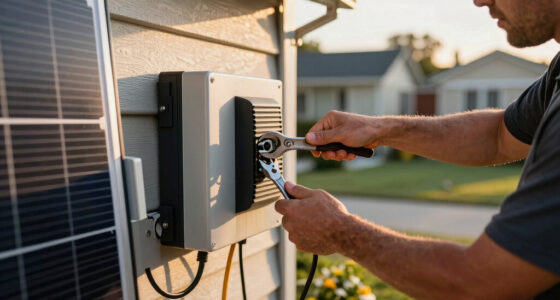
Solar-powered laptop chargers generally fall into two camps: all-in-one power stations with an attached panel, and power banks or foldable panels you pair yourself, and the right choice depends on how much runtime you need versus how much weight you’ll carry. For most buyers, the Portable Solar Generator 300W with 60W Solar Panel is the best overall pick because it pairs enough battery capacity to run a laptop all day with a panel large enough to actually recharge it. The FlexSolar 60W Foldable Panel stands out if you already own a power station and just need serious solar input, while the Daran 89.6Wh LiFePO4 unit is the smarter long-term buy thanks to a battery rated for thousands of cycles. The main tradeoff to understand before buying: small “solar” power banks barely trickle-charge from the sun, while genuinely capable systems cost and weigh more. Keep reading for the full breakdown of all 15 options.

Get backup power and energy gear delivered free with Prime
- Fast, free delivery on millions of items
- Prime Video, Amazon Music and more included
- Member-only deals all year
Complete the kit


Key Takeaways
- Most cheap solar power banks (the YELOMIN and 49800mAh units here) charge so slowly from their tiny panels that solar is effectively an emergency trickle feature, not a real charging method — buy them as power banks first.
- The 300W-class power stations paired with 40–60W panels emerged as the sweet spot for laptop use, offering enough capacity for a full workday plus meaningful solar recovery within a few hours of good sun.
- LiFePO4 batteries (like the Daran‘s) cost more upfront than standard lithium-ion but last 3–5 times as many charge cycles, which changes the math for anyone charging daily.
- 100W USB-C Power Delivery is the practical threshold for charging modern laptops at full speed — picks without it (like the 21W Takki kit) are better suited to older or low-power machines.
- Built-in cables and wireless charging (Selore & S-Global, SOARAISE) added real convenience for commuters but consistently came at the cost of total capacity compared to cable-free rivals at the same price.
| Portable Solar Generator 300W with 60W Solar Panel | 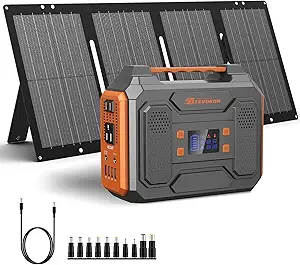 | Best Complete Solar Kit | Output Wattage: 300W | Included Solar Panel: 60W foldable | Power Source: Solar, AC, DC, battery | VIEW LATEST PRICE | See Our Full Breakdown |
| Portable Laptop Charger 32000mAh 100W PD Power Bank with Multiple Ports |  | Best Battery Capacity for the Price | Battery Capacity: 32000mAh / 118Wh | Max Output: 100W USB-C PD 3.0 | DC Output 1: 12V 6A | VIEW LATEST PRICE | See Our Full Breakdown |
| Portable Power Station with 40W Solar Panel, 100W Solar Powered Generator |  | Best Budget Solar Starter Kit | Power Station Rating: 100W (2 x 100W AC max) | Solar Panel: 40W foldable | Conversion Efficiency: 22.8% | VIEW LATEST PRICE | See Our Full Breakdown |
| Selore & S-Global 65W Power Bank for Laptop, 18400mAh Portable Charger with Dual Built-in USB-C & Lightning Cables |  | Best for Grab-and-Go Portability | Battery Capacity: 18400mAh lithium polymer | Max Output: 65W fast charging | Built-in Cables: USB-C and Lightning | VIEW LATEST PRICE | See Our Full Breakdown |
| SinKeu 24000mAh Portable Power Bank with AC Outlet and Solar Generator |  | Best Portable AC Outlet Option | Capacity: 24000mAh / 88.8Wh | AC Outlet: 110V / 65W | USB Outputs: QC3.0 9V/2A, 5V/3A | VIEW LATEST PRICE | See Our Full Breakdown |
| Portable Power Station, 146Wh 100W Solar Powered Power Bank with AC Outlet | 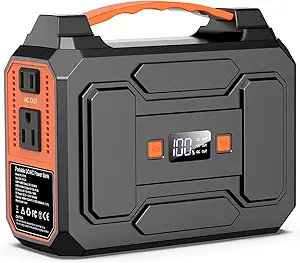 | Best Lightweight Power Station | Capacity: 146Wh / 39600mAh | Weight: 3.3 lbs | Outputs: 2x 110V AC, 2x USB, 1x USB-C, 1x DC 12V | VIEW LATEST PRICE | See Our Full Breakdown |
| Takki Solar Generator 120W Peak Portable Power Station with 21W Solar Panel and 88.8Wh Battery |  | Best Complete Starter Kit | Battery Capacity: 88.8Wh | Peak Power: 120W | Solar Panel Power: 21W foldable panel (included) | VIEW LATEST PRICE | See Our Full Breakdown |
| FlexSolar 60W Foldable Portable Solar Panel Charger IP67 Waterproof |  | Best Solar Panel for DIY Kits | Power: 60W | Conversion Efficiency: Up to 24% | Weight: 2.6 lbs (1.2 kg) | VIEW LATEST PRICE | See Our Full Breakdown |
| SOARAISE Solar Power Bank 48000mAh Wireless Portable Charger with 4 Cables |  | Best for Multi-Device Campers | Battery Capacity: 48000mAh | Solar Panels: 4 foldable panels | Ports: 2x USB-A, 1x USB-C (input/output) | VIEW LATEST PRICE | See Our Full Breakdown |
| PSOOO Power Bank 65W 27000mAh Laptop Battery Pack |  | Best Pure Laptop Charger | Capacity: 27000mAh | Power Output: 65W PD 3.0 | Charging Ports: Multiple, including USB-C | VIEW LATEST PRICE | See Our Full Breakdown |
| Daran Portable Power Station 89.6Wh LiFePO4 Battery 100W |  | Best Battery Longevity | Battery Capacity: 89.6Wh | Battery Type: LiFePO4 (3500+ cycles) | Output Power: 100W (200W peak) | VIEW LATEST PRICE | See Our Full Breakdown |
| Portable Power Station 300W, 220Wh Solar Generator Backup Battery Pack |  | Best Mid-Size Camping Hub | Battery Capacity: 220Wh | Output Power: 300W | Outputs: 2x110V AC, 4 USB, 1 DC vehicle port | VIEW LATEST PRICE | See Our Full Breakdown |
| Portable Solar Power Bank with AC Outlet 65W 110V |  | Best All-in-One Solar Laptop Charger | Battery Capacity: 24,000mAh | AC Output: 65W, 110V | Solar Panel: 30W foldable | VIEW LATEST PRICE | See Our Full Breakdown |
| YELOMIN Solar Power Bank 10000mAh with Foldable Solar Panels |  | Best Ultralight Daypack Pick | Capacity: 10,000mAh | Solar Panels: 4 foldable panels | Wireless Charging: 15W | VIEW LATEST PRICE | See Our Full Breakdown |
| Solar Power Bank 49800mAh – Wireless Portable Charger with Built-in Cables |  | Best High-Capacity Phone Lifeline | Battery Capacity: 49,800mAh lithium polymer | Output: 5V / 3.1A | Ports: 3 (USB-A, USB-C, Micro USB) | VIEW LATEST PRICE | See Our Full Breakdown |
| solar-powered laptop charger | Battery Capacity |
|---|---|
| Portable Solar Generator 300W | — |
| Portable Laptop Charger 32000m | 32000mAh / 118Wh |
| Portable Power Station with 40 | — |
| Selore & S-Global 65W Power Ba | 18400mAh lithium polymer |
| SinKeu 24000mAh Portable Power | — |
| Portable Power Station | — |
| Takki Solar Generator 120W Pea | 88.8Wh |
| FlexSolar 60W Foldable Portabl | — |
| SOARAISE Solar Power Bank 4800 | 48000mAh |
| PSOOO Power Bank 65W 27000mAh | — |
| Daran Portable Power Station 8 | 89.6Wh |
| Portable Power Station 300W | 220Wh |
| Portable Solar Power Bank with | 24,000mAh |
| YELOMIN Solar Power Bank 10000 | — |
| Solar Power Bank 49800mAh | 49,800mAh lithium polymer |
More Details on Our Top Picks
Portable Solar Generator 300W with 60W Solar Panel
This option stands out for being a true two-piece solar system rather than a single gadget — a 300W generator paired with a 60W foldable panel. Compared with the 100W Portable Power Station kit further down this list, the extra wattage means you can realistically run a laptop charger and a few smaller devices at once instead of rationing ports. The bundled 60W panel also recharges the battery noticeably faster than the smaller 40W panels that ship with budget kits.
The tradeoff is weight and care: this is a basecamp-style setup, not something you slip into a backpack, and the panel’s junction box isn’t waterproof, so it needs supervision in bad weather.
Pros:- 300W output handles a laptop plus phones and tablets simultaneously
- 60W included solar panel recharges faster than typical bundled 40W panels
- Overload and short-circuit protection built in
- Multiple charging outlets cover AC, DC, and USB devices
Cons:- Not suitable for any device drawing over 300W
- Junction box on the solar panel is not waterproof
- Battery degrades if it sits uncharged for long stretches
Best for: Campers, RV owners, and van lifers who want a stationary solar charging hub that tops up a laptop and several devices off-grid
Not ideal for: Day hikers and commuters — it’s far too heavy to carry, and a power bank like the Selore 65W covers laptops with a fraction of the bulk
- Output Wattage:300W
- Included Solar Panel:60W foldable
- Power Source:Solar, AC, DC, battery
- Voltage:110V
- Safety Features:Overload and short-circuit protection
- Best Use:Camping, RV, emergency backup
Our verdict“This kit makes the most sense for anyone setting up a semi-permanent off-grid workstation who needs real solar input, not just a battery.”
Portable Laptop Charger 32000mAh 100W PD Power Bank with Multiple Ports
Where most laptop power banks force you to choose between capacity and ports, this one refuses to compromise: a 32,000mAh (118Wh) cell paired with 100W USB-C Power Delivery and two adjustable DC outputs. That’s enough to fully charge most laptops two or more times, which is roughly double what the Selore 65W bank offers. The selectable 12V/16V/20V/24V DC output is what sets it apart — older laptops and gear that won’t charge over USB-C still get served.
Two honest tradeoffs: there’s no wall plug in the box, so budget for a USB-C charger, and at this capacity it’s a bag battery, not a pocket one. Note also that this is the storage half of a solar setup — pair it with a panel like the FlexSolar 60W and it becomes a full solar laptop charger for less than a generator kit costs.
Pros:- 118Wh capacity delivers multiple full laptop charges
- 100W USB-C PD plus adjustable DC outputs cover nearly every laptop
- Pass-through charging lets you recharge the bank and devices together
- Fast recharging cuts downtime between trips
Cons:- USB-C wall charger not included
- Heavy and bulky compared with slim power banks
- Full functionality requires carrying multiple cables and connectors
Best for: Remote workers and travelers who need multiple full laptop charges away from outlets and plan to pair it with a separate solar panel
Not ideal for: Minimalist packers — the bulk and the tangle of DC cables it requires make it overkill for topping up a phone
- Battery Capacity:32000mAh / 118Wh
- Max Output:100W USB-C PD 3.0
- DC Output 1:12V 6A
- DC Output 2:16V/20V 6A, 24V 5A
- Ports:1 USB-C PD, 2 DC, 2 USB QC 3.0
- Recharging:USB-C fast recharge, pass-through supported
Our verdict“This pick makes the most sense for buyers who prioritize raw charging capacity and port versatility and are willing to supply their own solar panel and wall plug.”
Portable Power Station with 40W Solar Panel, 100W Solar Powered Generator
This is the most affordable entry point into genuine solar laptop charging on this list — you get a 100W power station, a 40W foldable panel, and MPPT solar charging in one box. It can’t touch the 300W generator kit for raw output, but at a fraction of the price it still charges a laptop, phone, and camera batteries over a weekend of sun. The 22.8% panel conversion efficiency is respectable for a bundled kit, and the three recharge methods (wall, solar, carport) add welcome flexibility.
The catch is the ceiling: 100W max means many laptop chargers will draw right up to the limit, and anything hungrier — a monitor, a kettle — is out. Like the bigger kit, the junction box isn’t waterproof, and the battery wants a top-up every couple of weeks in storage.
Pros:- Complete kit includes both station and foldable 40W panel
- MPPT solar charging squeezes more from limited sunlight
- Three recharge methods: wall outlet, solar, and 12V carport
- Full BMS protection suite covering short circuit, over-current, and overheating
Cons:- 100W ceiling rules out high-draw devices
- Solar panel junction box is not waterproof
- Requires recharge at least every two weeks when idle
Best for: First-time solar buyers and weekend campers who want a complete panel-plus-battery kit without the cost of a full-size generator
Not ideal for: Anyone running power-hungry equipment over 100W, or who leaves gear untouched for months — the battery needs periodic maintenance
- Power Station Rating:100W (2 x 100W AC max)
- Solar Panel:40W foldable
- Conversion Efficiency:22.8%
- Recharge Methods:Wall outlet, MPPT solar, 12V carport
- Outputs:2 AC, USB-C, QC USB, 2 USB, DC 9V–12.6V/10A max
- Protections:Short circuit, over-current, over-voltage, overload, overheating
Our verdict“This kit is best for solar-curious buyers who want a low-cost, all-in-one starting point and can live within its modest 100W limits.”
Selore & S-Global 65W Power Bank for Laptop, 18400mAh Portable Charger with Dual Built-in USB-C & Lightning Cables
Most entries here solve solar laptop charging with bulk; the Selore bank solves it with convenience. Dual built-in USB-C and Lightning cables mean there’s nothing to forget at home — a genuine advantage over the 32000mAh PD bank, which practically demands a cable organizer. The 65W output covers MacBook Air–class and most ultrabook chargers comfortably, and the LCD display shows exact remaining percentage instead of vague dots.
Be realistic about its role: at 18,400mAh you get roughly one full laptop charge plus a phone top-up, not a weekend of work. And unlike the generator kits, this has no solar input — it’s the carry-half of a system, best recharged from a panel or outlet back at camp. The 14.5-ounce weight is also on the heavy side for its capacity.
Pros:- Built-in USB-C and Lightning cables eliminate forgotten cords
- 65W output charges most ultrabooks at full speed
- LCD display gives precise battery and charging status
- Four ports let you charge multiple devices at once
Cons:- Only about one full laptop charge per refill
- Heavier than typical 18400mAh banks at 14.53 oz
- No solar recharging — requires an external power source
Best for: Daily commuters and short-trip travelers who want a tangle-free laptop backup that lives in a work bag
Not ideal for: Multi-day off-grid workers — the single-charge capacity and lack of any solar input won’t sustain a laptop through a weekend
- Battery Capacity:18400mAh lithium polymer
- Max Output:65W fast charging
- Built-in Cables:USB-C and Lightning
- Ports:4 total
- Display:LCD real-time status
- Weight:14.53 oz
Our verdict“This model is better suited to everyday laptop insurance in a commute bag than to off-grid solar duty — buy it for the built-in cables, not the capacity.”
SinKeu 24000mAh Portable Power Bank with AC Outlet and Solar Generator
When your laptop charger has a standard wall plug and won’t run on USB-C, this SinKeu bank is the middle path: a 110V/65W AC outlet in a body you can actually carry. It’s the bridge between the plug-anything 300W generator kits and cable-dependent banks like the Selore 65W — no special adapters, just plug in the original charger. The OLED display is sharper than typical LED indicators, and a sub-4-hour full recharge beats most banks this size.
Two limits shape who should buy it. The 65W AC ceiling rules out gaming laptops and 90W+ bricks, and at 88.8Wh it’s near the airline carry-on limit, so check before flying. It’s also heavier than a pure USB-C bank of equal capacity — you’re paying in grams for that wall socket.
Pros:- Genuine 110V AC outlet accepts standard two-prong laptop chargers
- 88.8Wh capacity delivers roughly 1–2 laptop charges
- Full recharge in under 4 hours
- BMS safety system plus a crisp OLED display
Cons:- 65W AC limit excludes high-wattage laptops
- Heavier and bulkier than USB-C-only power banks
- Best charging results require its specific recharge accessories
Best for: Owners of AC-plug-only laptop chargers who want outlet compatibility without hauling a full power station
Not ideal for: Gaming or workstation laptop users — 65W AC output can’t keep up with high-wattage power bricks
- Capacity:24000mAh / 88.8Wh
- AC Outlet:110V / 65W
- USB Outputs:QC3.0 9V/2A, 5V/3A
- DC Output:9–12.6V / 10A
- Recharge Time:Under 4 hours
- Display:OLED
Our verdict“This pick makes the most sense for anyone whose laptop charger ends in a wall plug rather than a USB-C tip and needs that outlet on the go.”
Portable Power Station, 146Wh 100W Solar Powered Power Bank with AC Outlet
Most solar-ready power stations in this roundup trade portability for capacity, but this model splits the difference well at 3.3 lbs with a 146Wh battery. Compared with the Takki Solar Generator, it holds over 60% more energy while still fitting in a backpack, which means more laptop top-ups between charges. The two AC outlets give it flexibility the SOARAISE power bank can’t match, since most power banks top out at USB power. The tradeoff is honesty in the fine print: the solar panel is sold separately, so buyers who want a complete off-grid kit should compare it against the Takki, which bundles a panel. Its 100W AC ceiling also rules out power-hungry gaming laptops.
Pros:- 146Wh capacity is generous for a 3.3 lb unit
- Dual AC outlets plus USB and DC options cover most devices
- Recharges via wall, car, or solar for true flexibility
- Built-in dual LED flashlights add emergency utility
Cons:- Solar panel not included, adding to the real cost
- 100W AC ceiling excludes high-power laptops
- Capacity runs out quickly if you’re charging multiple devices daily
Best for: Campers and remote workers who already own a solar panel or plan to buy one, and want the lightest power station that still runs AC devices
Not ideal for: Buyers expecting a complete solar kit out of the box — the panel isn’t included, and the 100W limit won’t run demanding laptops or appliances
- Capacity:146Wh / 39600mAh
- Weight:3.3 lbs
- Outputs:2x 110V AC, 2x USB, 1x USB-C, 1x DC 12V
- Recharging options:AC wall adapter, car charging, solar panel (not included)
- Light:Dual LED flashlights, multiple modes
- Safety:Advanced battery management system
Our verdict“This is the pick for people who want power-station features at power-bank weight, provided they already have a compatible solar panel.”
Takki Solar Generator 120W Peak Portable Power Station with 21W Solar Panel and 88.8Wh Battery
This is the only option in this batch that puts a foldable 21W panel and a battery in one box, which makes it the easiest entry point into solar laptop charging. The 146Wh power station above holds more energy, but it arrives panel-less; the Takki works off-grid on day one, no extra purchases needed. Its weakness is scale: at 88.8Wh with an 80W device limit, it suits ultrabooks and Chromebooks rather than full-size laptops, and the 21W panel needs 5-7 hours of good sun to reach 80%. For weekend campers and emergency-prep beginners, that compromise is reasonable; for anyone charging a 60W+ workstation daily, it will frustrate.
Pros:- Solar panel included, so the kit works off-grid immediately
- Very light at 2.29 lbs with a compact 5.7-inch footprint
- Fast 2-hour AC recharge to 80%
- AC, USB, and DC ports cover common device types
Cons:- Only supports devices under 80W
- Solar recharge takes 5-7 hours in good conditions
- Manufacturer advises against charging while powering devices
Best for: First-time solar buyers and weekend campers who want a complete, working kit without researching compatible panels separately
Not ideal for: Owners of power-hungry laptops over 80W, or anyone needing multi-day capacity — the 88.8Wh battery drains fast under sustained use
- Battery Capacity:88.8Wh
- Peak Power:120W
- Solar Panel Power:21W foldable panel (included)
- Weight:2.29 lbs (station) + 0.92 lbs (panel)
- Dimensions:5.7 x 4.13 x 3 inches
- AC Charging Time:2 hours to 80%
- Solar Charging Time:5-7 hours to 80%
Our verdict“The Takki makes the most sense for buyers who value a ready-to-go bundle over raw capacity.”
FlexSolar 60W Foldable Portable Solar Panel Charger IP67 Waterproof
The FlexSolar takes the opposite approach from the PSOOO power bank: instead of storing energy, it captures it at three times the rate of most bundled panels. At 60W with up to 24% conversion efficiency, it can charge a laptop directly via its PD USB-C port in good sun — something the Takki’s 21W panel simply cannot do. Paired with the 146Wh power station earlier in this list, it becomes a genuinely capable off-grid system. The catch is that it’s a component, not a solution: no battery means no power at night or on cloudy days, the junction box isn’t waterproof despite the IP65 rating, and there’s no kickstand, so you’ll improvise angles for optimal sun exposure.
Pros:- 60W output charges laptops and small generators directly
- Up to 24% energy conversion efficiency
- IP65 water-resistant panel surface built for the elements
- Folds to 9.8 x 12 inches at just 2.6 lbs
Cons:- No built-in battery means zero power without sunlight
- Junction box is not waterproof
- No kickstand included, making angle positioning awkward
Best for: Off-grid builders and van-lifers who want to pair a high-output panel with an existing power station or charge devices directly in sunny conditions
Not ideal for: Anyone who needs power after sunset or on overcast days — with no battery, this panel stores nothing
- Power:60W
- Conversion Efficiency:Up to 24%
- Weight:2.6 lbs (1.2 kg)
- Unfolded Size:54.8 x 12 x 1 inches
- Folded Size:9.8 x 12 x 1 inches
- Waterproof Rating:IP65
- Charging Ports:QC3.0 USB-A, PD3.0 USB-C, DC
- Lifespan:5-10 years
Our verdict“The FlexSolar is the smart buy for readers assembling their own system rather than accepting a bundled panel’s limits.”
SOARAISE Solar Power Bank 48000mAh Wireless Portable Charger with 4 Cables
Where the Takki generator focuses on one AC device, the SOARAISE spreads its 48000mAh capacity across a whole campsite: four solar panels, wireless charging on top, and built-in cables so nobody forgets theirs at home. That makes it better suited to keeping phones, earbuds, and a small tablet alive than feeding a laptop — the 5V/3A output is phone-class, unlike the PSOOO’s 65W PD that can actually charge a notebook. The rugged build is a genuine differentiator here, with waterproof, shockproof, and dustproof ratings the FlexSolar panel can’t match on its junction box. Just don’t expect the four small panels to refill this large battery quickly; treat solar here as a trickle, not a primary charging method.
Pros:- 48000mAh capacity charges phones many times over
- Four built-in cables plus wireless charging eliminate forgotten cords
- Waterproof, shockproof, and dustproof construction
- Four solar panels provide a supplemental trickle charge outdoors
Cons:- 5V/3A output is insufficient for laptop charging
- Solar panels charge far slower than the capacity suggests
- Bulky form factor compared with slim USB-C power banks
Best for: Group campers and festival-goers who need to keep several phones and small devices charged over a long weekend without an outlet
Not ideal for: Laptop-first buyers — 5V output can’t meaningfully charge a notebook, and the large capacity makes it a heavy pocket companion
- Battery Capacity:48000mAh
- Solar Panels:4 foldable panels
- Ports:2x USB-A, 1x USB-C (input/output)
- Wireless Charging:Yes
- Output:5V / 3A with PD and QC 3.0 support
- Dimensions:6.38 x 3.43 x 1.57 inches
- Durability:Waterproof, shockproof, dustproof
- Built-in Cables:4 integrated cables
Our verdict“This pick makes sense for powering a group of small devices off-grid, not for laptop users who should look at the PSOOO instead.”
PSOOO Power Bank 65W 27000mAh Laptop Battery Pack
Among the battery-only options in this roundup, the PSOOO is the one actually engineered for laptops, with 65W PD 3.0 output that matches most modern notebook chargers. That puts it ahead of the SOARAISE for computer users while avoiding the panel-and-cable complexity of the FlexSolar. The 27000mAh capacity translates to roughly one and a half to two full laptop charges — enough for a long flight or a day of field work, though well short of a power station’s runtime. The obvious gap in a solar roundup: it has no solar input at all, so its place here is as the buffer battery you recharge from a panel like the FlexSolar. It’s also heavier and bulkier than slim 20000mAh rivals, so it belongs in a bag, not a pocket.
Pros:- 65W PD 3.0 matches standard laptop charger speeds
- 27000mAh delivers one to two full laptop charges
- Broad compatibility across laptops, tablets, and phones
- Built-in LED flashlight and layered safety protections
Cons:- No solar input of its own in a solar roundup
- Heavier and bulkier than everyday power banks
- Fast charging only works with PD-compatible devices
Best for: Remote workers and travelers who need real laptop charging speed on the go and can pair it with a separate solar panel for off-grid recharging
Not ideal for: Anyone wanting a self-contained solar solution — there’s no solar charging built in, so it’s grid-dependent unless you add a panel
- Capacity:27000mAh
- Power Output:65W PD 3.0
- Charging Ports:Multiple, including USB-C
- Compatibility:Laptops, tablets, phones
- Extras:Built-in LED flashlight
- Safety:Integrated safety protections
Our verdict“The PSOOO is the strongest choice for laptop-first buyers, provided they accept that solar recharging means adding a panel like the FlexSolar.”
Daran Portable Power Station 89.6Wh LiFePO4 Battery 100W
Most budget power stations in this roundup use standard lithium-ion cells, but the Daran stands apart with a LiFePO4 battery rated for 3500+ cycles — roughly six times the lifespan of the cells inside the Portable Power Station 300W. For anyone planning years of regular camping trips or emergency backup, that durability translates directly into better value over time, even if the upfront cost per watt-hour looks higher. At 2.54 pounds, it’s also the lightest true power station here, and it charges from AC, USB-C PD, car, or solar. The tradeoffs are real, though: 100W output means no gaming laptops or power-hungry devices, and like the Takki 88.8Wh station, you can pair it with a solar panel, but one doesn’t ship in the box. Compared with the 65W YELOMIN-style banks, this option makes the most sense for buyers who prioritize battery lifespan over raw capacity.
Pros:- LiFePO4 battery chemistry rated for 3500+ cycles, far outlasting typical lithium-ion rivals
- Featherlight at 2.54 pounds — the lightest power station in this lineup
- Four recharge methods including USB-C PD and solar
- Silent operation with 12 BMS safety protections
Cons:- 100W continuous output is too low for high-draw laptops and appliances
- Solar panel sold separately, adding to the true cost of solar charging
Best for: Campers and emergency-prep buyers who want a power station that survives thousands of charge cycles over years of use
Not ideal for: Anyone needing to run devices above 100W, like larger laptops under load or small appliances — the output ceiling will cut them off
- Battery Capacity:89.6Wh
- Battery Type:LiFePO4 (3500+ cycles)
- Output Power:100W (200W peak)
- Ports:7 total: 2 AC, 2 USB-C, 2 USB-A, 1 DC5521
- Weight:2.54 lbs
- Charging Methods:AC wall, USB-C PD, car, solar
- Display:LED status display
Our verdict“This pick makes the most sense for buyers who plan to recharge a laptop regularly off-grid for years and want a battery that won’t degrade after two seasons.”
Portable Power Station 300W, 220Wh Solar Generator Backup Battery Pack
Sitting between the tiny Daran 89.6Wh and larger kits like the Solar Generator 300W with 60W panel, this 220Wh station carves out a middle ground: enough capacity for a weekend of laptop top-ups plus phones, lights, and a camera drone, without the bulk of a full-size generator. The 300W inverter handles most laptop chargers comfortably, which the 65W banks in this roundup simply cannot do. Seven simultaneous outputs mean one unit can power a whole camp table of devices, and the bright LED light doubles as a tent lantern. The honest catch: 220Wh still runs dry fast if you’re pushing a laptop hard for days, and solar input requires buying a panel separately — unlike the Takki 120W, which bundles one. Compared with the Daran, you trade battery longevity (standard lithium-ion here) for triple the raw capacity.
Pros:- 300W output powers most laptop chargers and small appliances, not just phones
- 7 devices can charge at once from a single unit
- Triple recharge options: AC wall, car, and solar
- Built-in bright LED light useful for tents and emergencies
Cons:- Solar panel not included, so solar capability costs extra
- 220Wh is limiting for multi-day trips away from any recharge source
Best for: Weekend campers who want one shared hub to recharge a laptop, phones, cameras, and lights for a group
Not ideal for: Off-grid travelers going out for a week or more — 220Wh won’t stretch that far without a reliable solar recharge setup
- Battery Capacity:220Wh
- Output Power:300W
- Outputs:2x110V AC, 4 USB, 1 DC vehicle port
- Weight:5 lbs
- Dimensions:8.5 x 6.7 x 4.1 inches
- Recharge Options:AC wall, car, solar (panel not included)
Our verdict“This option stands out as the sweet spot for group camping trips where one shared power source needs to juggle a laptop and several smaller devices.”
Portable Solar Power Bank with AC Outlet 65W 110V
Unlike nearly every other product in this roundup, this one bundles a 30W foldable solar panel with the battery itself — no separate panel purchase required, which immediately undercuts the true cost of the Daran or the 300W station. The 24,000mAh battery with a 65W AC outlet will top up most ultrabooks and USB-C laptops, though gaming machines should look to the 300W station instead. Where it beats rivals like the SinKeu 24000mAh is portability: the panel folds flat to 0.3 inches thick and the whole package slides into a backpack. Two caveats temper the appeal: the AC outlet needs manual toggling every time you plug in, and the solar junction box isn’t waterproof — a genuine problem if your charging plans involve unpredictable weather. Still, for laptop users who want genuinely self-contained solar charging, this is the most complete package under this price.
Pros:- 30W solar panel included — a true all-in-one solar charging kit
- 65W AC outlet covers most ultrabooks and USB-C laptops
- Folds down remarkably thin for a solar-equipped charger
- Charges via solar, wall outlet, or car for flexibility
Cons:- AC outlet requires manual toggling each use, an annoying extra step
- Solar junction box is not waterproof, limiting weather flexibility
Best for: Ultrabook and USB-C laptop owners who want battery plus solar panel in one purchase for genuine off-grid charging
Not ideal for: Owners of power-hungry laptops above 65W, or anyone charging in wet conditions — the junction box can’t handle rain
- Battery Capacity:24,000mAh
- AC Output:65W, 110V
- Solar Panel:30W foldable
- Folded Panel Size:12.7 x 8.4 x 0.3 inches
- USB Output:5V/2.4A and 5V/3A, 9V/2A
- Safety:Built-in BMS protection
Our verdict“This model is better suited to fair-weather travelers who want everything needed for solar laptop charging in a single backpack-friendly kit.”
YELOMIN Solar Power Bank 10000mAh with Foldable Solar Panels
The YELOMIN plays a different game than everything else here: it’s not really a laptop charger — 10,000mAh (about 37Wh) is phone-and-accessory territory — but it’s the only option that makes solar charging feel like an afterthought rather than a project. Four foldable panels fan out on a backpack strap or tent, and built-in USB-C and Lightning cables mean you carry zero extra cords. Compared with the hulking Solar Power Bank 49800mAh, this is a fraction of the size and weight, and its 15W wireless charging beats many larger rivals on phone-charging speed. The three-mode flashlight (constant, strobe, SOS) rounds out a genuine emergency kit. The compromises are obvious: a laptop will barely register a charge, and the folded footprint is chunkier than a plain power bank. Treat this as a supplement — solar top-ups for your phone while your laptop charges from a bigger unit like the Daran.
Pros:- Four foldable solar panels recharge the bank while you hike
- Built-in USB-C and Lightning cables eliminate cord clutter
- 15W wireless charging is fast for a solar bank this size
- Weather-resistant build with 3-mode SOS-capable flashlight
Cons:- Only ~37Wh of capacity — not a real laptop solution despite the roundup context
- Bulkier than a standard power bank due to the folding panels
Best for: Hikers and day-trippers who mainly need solar phone charging and want built-in cables with nothing extra to carry
Not ideal for: Anyone shopping specifically to charge a laptop — the 10,000mAh capacity can’t meaningfully power one
- Capacity:10,000mAh
- Solar Panels:4 foldable panels
- Wireless Charging:15W
- Built-in Cables:USB-C, Lightning
- Flashlight:3 modes (constant, strobe, SOS)
Our verdict“Skip this if laptops are your priority; grab it as a featherweight solar companion that keeps phones alive while a bigger unit handles the computer.”
Solar Power Bank 49800mAh – Wireless Portable Charger with Built-in Cables
On paper, 49800mAh dwarfs everything else in this roundup — but treat that number with skepticism. It’s rated at 5V, so usable energy is far below what a 220Wh power station delivers, and the 5V/3.1A output means it cannot fast-charge a laptop over USB-C PD the way the PSOOO 65W power bank or the Daran can. What it genuinely excels at is keeping phones and tablets alive for days: multiple full charges for a whole group, with four built-in cables covering USB-C, USB-A, and Micro USB, plus wireless charging on top. The IP65 waterproof, shockproof shell is more rugged than the YELOMIN and rivals the SOARAISE 48000mAh while adding faster wired top-ups (80% in an hour from the wall). Solar charging here is a trickle-charge emergency fallback, not a primary strategy — the small panel surface area and sunlight dependence make wall charging the realistic daily routine.
Pros:- Massive capacity delivers multiple full phone charges for a group
- Four built-in cables plus wireless charging cover virtually any device
- IP65 waterproof and shockproof construction handles rough outdoor use
- Fast wall recharge at 80% in one hour
Cons:- 5V output with no laptop-grade PD charging limits real laptop use
- Solar charging is slow and highly sunlight-dependent
- Physically large and heavy compared with slimmer power banks
Best for: Group campers and emergency-kit builders who need days of phone and tablet charges with built-in cables for every device
Not ideal for: Laptop-first buyers — 5V-only output and slow solar charging make it a poor primary laptop power source
- Battery Capacity:49,800mAh lithium polymer
- Output:5V / 3.1A
- Ports:3 (USB-A, USB-C, Micro USB)
- Built-in Features:4 cables, wireless charging, LED flashlight
- Fast Charging:80% in 1 hour (wall)
- Waterproof Rating:IP65
Our verdict“This pick makes the most sense as a rugged group phone-charging reserve for long trips — not as the laptop charger this roundup is really about.”

How We Picked
My ranking logic starts with one blunt question: can this product actually charge a laptop, and can its solar component meaningfully recharge the battery? I weighted solar panel output, battery chemistry and cycle life, and AC/USB-C delivery wattage most heavily, because those three factors determine whether a charger works as advertised after year one. Portability, port selection, and pass-through charging capability came next, since these products live in backpacks and camping bins where weight and versatility compound.
I also penalized products whose solar claims were more marketing than function — a 5W panel on a 10,000mAh bank takes days of direct sun to fill, and I flagged those honestly rather than repeating manufacturer claims. Price-to-capacity ratios separated the value picks from the overpriced ones, and I favored bundles (station plus panel) over standalone components for buyers starting from zero. The result is a list ordered from most complete laptop-charging systems down to niche and emergency-only options, so the further down you read, the more specialized the use case becomes.
Factors to Consider When Choosing Solar-powered Laptop Chargers
Before picking a specific model, it helps to understand what actually separates a useful solar laptop charger from an expensive paperweight. These are the factors that shaped my rankings, and the ones most buyers get wrong.Realistic Solar Input vs. Marketing Claims
The single biggest mistake buyers make is trusting a panel’s sticker wattage as a charging rate. Real-world solar output typically runs 50–70% of rated wattage, and only in direct, perpendicular sunlight — clouds, angle, and heat all cut it further. A 60W panel like the FlexSolar might realistically deliver 35–45W at midday, which is excellent; a 5W panel on a budget power bank delivers 2–3W, meaning a full day of sun adds maybe one phone charge. If your plan is “solar keeps my laptop running indefinitely,” you need at least 40W of panel paired with a 200Wh+ battery. Anything smaller should be treated as a convenience top-up, not a power strategy. Manufacturers rarely clarify this, so do the math yourself: battery capacity divided by realistic panel output equals your minimum recharge time.
Battery Chemistry and Cycle Life
Nearly every product on this list uses one of two chemistries: standard lithium-ion (lighter, cheaper, ~500 charge cycles) or LiFePO4 (heavier, ~3,000+ cycles, more thermally stable). For a charger you’ll use on occasional camping trips, lithium-ion is fine and saves weight. But if this device will be a daily-driver power bank or an emergency backup that sits in a hot car, LiFePO4 like the Daran’s will still hold most of its capacity in five years when a lithium-ion unit has degraded substantially. Cycle life also affects resale and safety — LiFePO4 is far less prone to thermal runaway. The tradeoff is roughly 30% more weight per watt-hour, which matters if you’re hiking with it. Match the chemistry to your usage pattern, not just the capacity number on the box.
Wattage Requirements for Your Laptop
Not all laptops charge the same way, and buying a charger that under-delivers is a common and expensive mistake. Modern USB-C laptops (MacBooks, Dell XPS, most thin-and-lights) need 60–100W Power Delivery to charge while in use; a 30W charger may only slow the battery drain. Gaming laptops and older machines with barrel connectors need an AC inverter outlet, which means a power station rather than a simple power bank. Check your laptop’s charger brick — its wattage is your target. Also verify the port supports PD 3.0 or PPS, because a “100W” port without proper negotiation protocols can fall back to slow charging. And remember that AC outlets on small stations are often limited to 100–200W continuous, so avoid running a laptop plus monitor plus charger off one small unit simultaneously.
Capacity: How Much Is Enough?
Capacity is measured in watt-hours (Wh), and this number tells you exactly how many laptop charges you’ll get: a 13″ MacBook holds about 58Wh, a 16″ model around 100Wh. A 90Wh station gives you roughly one full charge of a large laptop or 1.5 of a small one; a 220–300Wh unit gives three to five. Also note the FAA limit of 100Wh for carry-on batteries, which makes anything larger unsuitable for air travel — relevant if you’re a digital nomad. Resist the urge to over-buy capacity “just in case,” because unused capacity is wasted weight, wasted money, and batteries degrade whether or not you use them. Size your capacity to your longest realistic stretch away from an outlet, then add about 30% for inefficiency and device losses during conversion.
Weight, Portability, and Packing Reality
Solar laptop charging spans from pocketable 400-gram power banks to 3+ kilogram power station bundles, and the right weight class depends entirely on how you travel. For backpacking, a folding panel plus a small PD bank beats an all-in-one station every time, because you can split the load and the panel straps to the outside of your pack. For car camping or van life, weight stops mattering and capacity plus panel wattage should drive your choice. One overlooked factor: all-in-one units with attached panels force you to position the battery in the sun too, which heats it and accelerates degradation — separate panels let you keep the battery cool in shade. Also check whether the panel has grommets or kickstands for angling toward the sun, since a flat panel can lose half its output versus one tilted correctly.
Avoiding Cheap Capacity Fraud
Several products in this category advertise enormous capacities like 48000mAh or 49800mAh at prices that seem too good to be true — and partially, they are. Those numbers are often measured at the 3.7V cell level, while your laptop charges at ~20V, so real deliverable capacity is roughly a quarter of the headline figure after voltage conversion and inefficiency. A “49800mAh” bank realistically holds about 180Wh at best, and independent tests of some budget units have found cells well below advertised specs. Look for honest Wh ratings, certifications (UL, CE, FCC), and brands with warranty support rather than marketplace-only sellers. If a deal seems impossibly cheap for the capacity, assume the capacity is the fiction. Paying slightly more for a verifiably rated battery from an established brand is cheaper than replacing a swollen unit — or worse, dealing with a fire hazard in a tent.
Frequently Asked Questions
Can a solar charger realistically keep a laptop running off-grid indefinitely?
Yes, but only with the right sizing, and most buyers underestimate what that requires. A typical laptop consumes 30–65W while working, so you need a panel delivering at least that much on average — realistically a rated 100W+ panel or a 60W panel used only part of the day — plus a battery buffer of 200Wh or more to bridge clouds, mornings, and evenings. The 300W generator with 60W panel combination in this lineup comes closest to true indefinite run-time for light workloads. Anything with a small attached panel should be viewed as a battery that solar extends slightly, not a perpetual power source. Also remember you’ll need to reposition the panel every couple of hours as the sun moves, which is a real chore during a workday.
Is a power station with a separate panel better than an all-in-one solar power bank?
For laptop charging, almost always yes. Separate panels can be angled at the sun continuously while the battery stays cool in the shade, and heat is one of the biggest killers of lithium battery lifespan — a battery baking in the sun all day can hit 50°C+, accelerating degradation with every cycle. All-in-one units also tend to pair small panels with small batteries, capping both sides of the equation. The main advantages of all-in-ones are simplicity, lower cost, and having fewer cables to manage, which suits casual users and emergency kits. If you’re charging a laptop more than occasionally, the two-piece approach wins on speed, battery longevity, and upgrade flexibility — you can swap either component later without replacing everything.
Why does my ‘48000mAh’ solar bank only charge my laptop once?
This is the most common disappointment in the category, and it comes down to voltage math and conversion losses. The milliamp-hour rating is measured at the battery’s internal 3.7V, but your laptop charges at around 20V, so a 48000mAh bank delivers roughly 178Wh before losses — and after 15–20% conversion inefficiency, that’s about 140Wh of usable energy, or one and a bit charges of a large laptop. Budget brands also sometimes overstate cell capacity, so real-world results can be 20–30% below even that calculation. When comparing products, ignore mAh and compare watt-hours directly, and mentally discount any suspiciously cheap unit by a quarter. This is why I favored honestly-rated power stations in the rankings over headline-mAh power banks at similar prices.
Do I need an AC outlet, or is USB-C Power Delivery enough?
USB-C PD is enough if your laptop charges over USB-C, which covers virtually all MacBooks and most modern Windows ultrabooks — it’s also more efficient, losing less energy to conversion than an inverter. You’ll want 65W minimum, ideally 100W, to charge while actively using the machine. An AC outlet becomes necessary for gaming laptops, older machines with proprietary barrel chargers, or if you want to run other devices like camera chargers, small fans, or a monitor alongside your laptop. Note that inverters on small stations are often limited to 100–200W continuous with higher surge ratings, so check your laptop’s brick wattage before plugging in. If you only ever charge one USB-C laptop, skipping the inverter saves money, weight, and standby drain.
Are these chargers allowed on airplanes?
The FAA and most international airlines cap batteries at 100Wh in carry-on baggage without airline approval, with a hard ceiling of 160Wh with approval — and no spare lithium batteries in checked bags at all. That rules out most power stations here, including the 220Wh and 300W units, from air travel entirely. Power banks under 100Wh (roughly 27000mAh at 3.7V) are fine in carry-on, which covers picks like the PSOOO 27000mAh and Selore & S-Global 18400mAh. Detachable solar panels themselves are almost always allowed since they contain no significant battery. If you’re a digital nomad flying between locations, the practical strategy is a sub-100Wh power bank for the flight plus buying or renting a panel and station at your destination.
Conclusion
After comparing all 15 options, the right choice depends less on specs and more on how you actually work and travel. Best overall goes to the Portable Solar Generator 300W with 60W Solar Panel — it’s the only genuinely balanced system here, with enough battery for a full workday and enough panel to recover a meaningful chunk of it in afternoon sun. Best value is the Portable Power Station with 40W Panel (100W solar generator), which covers the laptop-charging basics at a noticeably lower price, while best premium pick is the Daran 89.6Wh LiFePO4, whose battery chemistry justifies the higher price for anyone charging daily for years rather than a few camping trips per season.
For beginners who want zero setup and minimal decisions, the FlexSolar 60W foldable panel paired with any USB-C power bank is the simplest entry point — unfold it, plug in, done. Specific needs round out the list: commuters should grab the Selore & S-Global 65W with its built-in cables, air travelers need the sub-100Wh PSOOO 27000mAh, and the high-capacity wireless banks like the SOARAISE make sense only for phone-heavy users who occasionally top up a small laptop. Whatever you choose, size the panel honestly, the battery to your real workday, and remember that in this category, the cheapest watt-hour on the box is rarely the cheapest one you actually get.
Halloween Picks
halloween
As an affiliate, we earn on qualifying purchases.