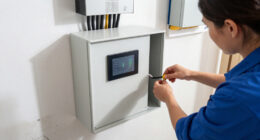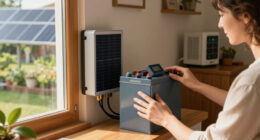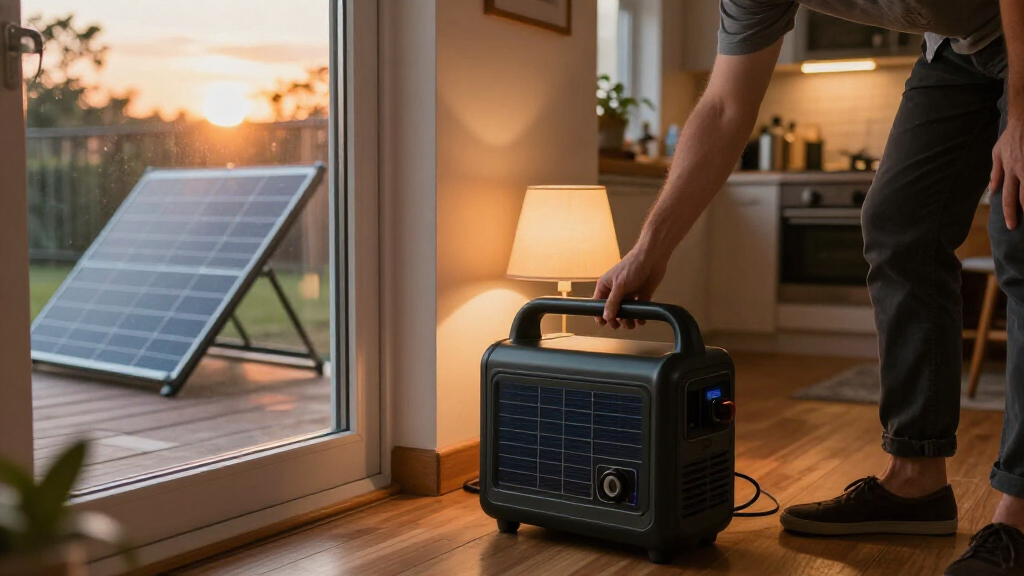
Solar generators for home backup pair a battery power station with solar panels so you can keep refrigerators, lights, medical devices, and Wi-Fi running when the grid goes down — without the fumes, fuel storage, and maintenance of a gas generator. The Jackery HomePower 3600 Plus with two 200W panels earns the top spot because it hits the sweet spot of capacity, output, and recharge speed for whole-circuit backup. The ABOK Ark3600 bundle stands out for including three panels instead of two at a similar capacity, making it the better value if solar recharge speed is your priority, while the Anker SOLIX C1000 Gen 2 is the fastest-charging midsize option for apartment dwellers and smaller homes. The main tradeoffs in this category come down to capacity versus portability, battery chemistry (LiFePO4 versus older NMC cells), and how many panels you realistically have space to deploy. Keep reading for the full breakdown of all ten options and who each one actually suits.

Get backup power and energy gear delivered free — and shop member deals
- Fast, free delivery on millions of items
- Access to Prime Big Deal Days deals on October 6–7
- Prime Video, Amazon Music and more included
Complete the kit


Key Takeaways
- Capacity gaps defined the ranking: the 3.5kWh+ units (Jackery HomePower 3600 Plus, ABOK Ark3600, HomePower 3000) can run a refrigerator for a full day or more, while the 1kWh class (Explorer 1000 v2, EcoFlow DELTA 3, BROWEY S1600) is limited to essentials and short outages.
- Included panel wattage varied more than battery size — from 200W (Jackery 1000 v2) to 600W (ABOK Ark3600) — and panel count mattered more than peak input specs for real-world recharge time during a multi-day outage.
- LiFePO4 battery chemistry with 3,000+ cycle lifespans has become standard across this lineup; older-chemistry units were penalized because a home backup battery gets cycled often enough that lifespan equals money.
- The BROWEY S1600’s built-in solar panel is genuinely unique but functionally limiting — fine for camping-scale backup, undersized for running a refrigerator through an extended outage.
- Two versions of the same product appear here deliberately: the Jackery HomePower 3600 Plus with panels is the complete solution; the station-only variant only makes sense if you already own compatible panels or plan a roof-mounted array.
| Jackery HomePower 3600 Plus Portable Power Station with Two 200W Solar Panels |  | Best Overall | Capacity: 3,584Wh | AC output: 3,600W (7,200W parallel) | Expandable capacity: Up to 21kWh per unit or 43kWh with multiple units | VIEW LATEST PRICE | See Our Full Breakdown |
| Anker SOLIX C1000 Gen 2 Portable Power Station |  | Best Compact Pick | Battery capacity: 1,024Wh | Output power: 2,000W (3,000W peak) | AC recharge time: 49 minutes at 1,600W | VIEW LATEST PRICE | See Our Full Breakdown |
| ABOK Ark3600 Portable Power Station with 3 × 200W Solar Panels |  | Best Value for High Capacity | Capacity: 3,840Wh, expandable to 11,520Wh | AC input: 1,500W | Maximum PV input: 2,000W | VIEW LATEST PRICE | See Our Full Breakdown |
| Jackery HomePower 3000 Portable Power Station with 2 SolarSaga 200W Panels |  | Best for Home Circuit Backup | Capacity: 3,072Wh | AC output: 3,600W (7,200W surge) | UPS transfer time: ≤20ms | VIEW LATEST PRICE | See Our Full Breakdown |
| Jackery Solar Generator 1000 v2 with 200W Solar Panel |  | Best Starter Pick | Battery capacity: 1,070Wh | AC output: 1,500W (3,000W surge) | Battery type: LFP, 4,000+ cycles, 70%+ retention | VIEW LATEST PRICE | See Our Full Breakdown |
| Anker SOLIX S2000 Portable Power Station |  | Best Balanced Midsize Backup | Battery capacity: 2,010Wh | Battery type: LFP (314Ah cells) | Claimed lifespan: 10,000 cycles; up to 15 years | VIEW LATEST PRICE | See Our Full Breakdown |
| Jackery HomePower 3600 Plus Portable Power Station |  | Best for Whole-Home Expansion | Capacity: 3,584Wh (expandable to 21kWh per unit) | AC output: 3,600W (7,200W parallel) | Voltage: 120V; 240V in parallel | VIEW LATEST PRICE | See Our Full Breakdown |
| Jackery Explorer 1000 v2 Portable Power Station |  | Best Lightweight Emergency Kit | Capacity: 1,070Wh | AC output: 1,500W (3,000W surge) | Battery type: LFP, 4,000+ cycles | VIEW LATEST PRICE | See Our Full Breakdown |
| BROWEY S1600 Portable Power Station with Built-in Solar Panel |  | Best Self-Contained Solar Option | Capacity: 1,024Wh | Output power: 1,600W (3,200W peak) | Battery type: LiFePO4, 3,000+ cycles to 80% | VIEW LATEST PRICE | See Our Full Breakdown |
| EcoFlow DELTA 3 Classic Portable Power Station |  | Best Fast-Recharge Backup | Capacity: 1,024Wh | Output: 1,800W (3,600W surge, X-Boost) | Battery chemistry: LiFePO4, 10+ year lifespan | VIEW LATEST PRICE | See Our Full Breakdown |
| solar generators for home backup | Capacity | AC output | Weight | Battery type |
|---|---|---|---|---|
| Jackery HomePower 3600 Plus Po | 3,584Wh | 3,600W (7,200W parallel) | — | — |
| Anker SOLIX C1000 Gen 2 Portab | — | — | 11.3 kg | — |
| ABOK Ark3600 Portable Power St | 3,840Wh, expandable to 11,520Wh | — | — | — |
| Jackery HomePower 3000 Portabl | 3,072Wh | 3,600W (7,200W surge) | — | LiFePO4, 4,000 cycles to 70% |
| Jackery Solar Generator 1000 v | — | 1,500W (3,000W surge) | 23.8 lbs | LFP, 4,000+ cycles, 70%+ retention |
| Anker SOLIX S2000 Portable Pow | — | — | 35.7 lbs | LFP (314Ah cells) |
| Jackery HomePower 3600 Plus Po | 3,584Wh (expandable to 21kWh per unit) | 3,600W (7,200W parallel) | — | — |
| Jackery Explorer 1000 v2 Porta | 1,070Wh | 1,500W (3,000W surge) | 23.8 lbs | LFP, 4,000+ cycles |
| BROWEY S1600 Portable Power St | 1,024Wh | — | — | LiFePO4, 3,000+ cycles to 80% |
| EcoFlow DELTA 3 Classic Portab | 1,024Wh | — | 26.7 lbs | — |
More Details on Our Top Picks
Jackery HomePower 3600 Plus Portable Power Station with Two 200W Solar Panels
This option stands out for buyers who want serious whole-home backup muscle without installing a fixed generator system. The 3,584Wh capacity and 3,600W output cover refrigeration, medical devices, and multiple appliances at once, and the expansion path to 21kWh per unit (43kWh with multiple units) gives it headroom no other pick here matches. Compared with the ABOK Ark3600, which caps expansion at 11,520Wh, this model is the one to build a layered backup plan around. The 6,000-cycle battery rating also doubles the longevity of the HomePower 3000’s 4,000-cycle pack. The tradeoff: the plug-and-play home setup described in the product copy requires a separately purchased MTS, and the two solar panels ship in a separate box, so plan delivery logistics accordingly.
Pros:- Expandable up to 21kWh per unit or 43kWh with multiple units
- Four charging options including gas generator and hybrid AC+DC in 2 hours
- 6,000-cycle battery rating for long service life
- Wheeled luggage-style design with telescopic handle for easier repositioning
Cons:- The plug-and-play home backup setup requires an MTS that is not included
- Power station and solar panels arrive in separate packages
Best for: Homeowners building a scalable, multi-day backup system for essential circuits who want room to expand later
Not ideal for: Renters or apartment dwellers — the capacity, wheels, and expansion focus are wasted money at that scale
- Capacity:3,584Wh
- AC output:3,600W (7,200W parallel)
- Expandable capacity:Up to 21kWh per unit or 43kWh with multiple units
- Solar panels:Two 200W panels
- Battery cycles:6,000
- Charging time:2 hours hybrid; 2.5 hours AC; 4 hours solar
- Operating temperature:Down to -4°F
- Design:Wheels and telescopic handle
Our verdict“The strongest all-around choice for homeowners who want high output today and expansion options tomorrow.”
Anker SOLIX C1000 Gen 2 Portable Power Station
Not everyone needs to back up a whole house, and this model makes the most sense for targeted backup of a few essentials. At roughly 25 pounds with a 1,024Wh battery, it is far easier to stash in a closet or carry upstairs than the wheeled Jackery HomePower 3600 Plus, yet its 2,000W output with a 3,000W peak still runs a fridge, router, and lights simultaneously. The standout feature is speed: a 49-minute AC recharge and 1.8-hour solar recharge mean less downtime between outages, while the sub-10ms UPS switchover keeps computers running without a hiccup. The compromise is scale — solar input is capped at 600W, so panel-heavy setups gain little, and the listed outlet count is inconsistent between the description and the spec sheet, which is worth verifying before buying.
Pros:- Under 10ms UPS switchover for uninterrupted electronics
- 49-minute AC recharge and 1.8-hour solar recharge
- 2,000W output with 3,000W peak despite the compact size
- Battery retains at least 80% capacity after 4,000 cycles
Cons:- Solar input limited to 600W (60V max)
- Outlet count differs between the product description and specifications
Best for: Remote workers and small households who need a computer, fridge, and networking gear protected with near-instant UPS switchover
Not ideal for: Buyers planning whole-home or multi-day outages — 1,024Wh will not carry large appliances for long
- Battery capacity:1,024Wh
- Output power:2,000W (3,000W peak)
- AC recharge time:49 minutes at 1,600W
- Solar recharge time:1.8 hours with 600W input
- Solar input limit:600W (60V max)
- UPS switchover:Under 10ms
- Battery life:80%+ capacity after 4,000 cycles
- Weight:11.3 kg
Our verdict“A compact, fast-cycling pick for essential-circuit backup rather than whole-home coverage.”
ABOK Ark3600 Portable Power Station with 3 × 200W Solar Panels
For buyers who want big-battery capability without the premium-brand price, this bundle is better suited than the comparable Jackery HomePower 3600 Plus. It packs a 3,840Wh capacity, actually slightly larger than the Jackery’s, and includes three 200W solar panels rather than two — meaningfully more recharge potential out of the box. The 15 output ports outpace every other model in this lineup, which matters during an outage when everyone wants an outlet. Expansion to 11,520Wh covers most homes’ essential loads for days. The honest tradeoff is the headline recharge figure: the advertised 1.29-hour recharge requires optimal combined AC and solar conditions, so real-world recovery via AC alone runs closer to 3 hours. The 4,000+ cycle LiFePO4 rating is solid but trails Jackery’s 6,000-cycle claim, so long-term longevity favors the pricier rival.
Pros:- 3,840Wh capacity expandable to 11,520Wh
- Three 200W solar panels included, more than comparable bundles
- 15 output ports for powering many devices at once
- LiFePO4 battery rated for 4,000+ cycles
Cons:- Fastest recharge time of 1.29 hours depends on optimal combined AC and solar conditions
- Lower brand recognition makes long-term support less predictable
Best for: Value-focused families who want maximum capacity and included solar wattage per dollar spent
Not ideal for: Buyers prioritizing brand track record and longest battery lifespan — Jackery’s cycle rating and support ecosystem are stronger
- Capacity:3,840Wh, expandable to 11,520Wh
- AC input:1,500W
- Maximum PV input:2,000W
- Charging time:As little as 1.29 hours combined; about 3 hours AC only
- Output ports:15
- Battery chemistry:LiFePO4, 4,000+ cycles
- Solar panels:3 × 200W
Our verdict“The most capacity-and-panels-per-dollar pick for households that prioritize raw backup endurance over brand pedigree.”
Jackery HomePower 3000 Portable Power Station with 2 SolarSaga 200W Panels
This model occupies a smart middle ground: more backup capacity than the compact Anker SOLIX C1000 (3,072Wh versus 1,024Wh), but a simpler, more affordable package than its sibling, the HomePower 3600 Plus. The ≤20ms UPS transfer is the key differentiator for home backup — plug a furnace controller, sump pump, or internet rack into it and outages become non-events. The 3,600W output with 7,200W surge matches the larger Jackery’s power delivery, and the TT-30 RV port adds flexibility for owners who also want trailer or camping coverage. Where it falls short is solar: with the two included 200W panels, reaching 80% charge takes up to 9 hours of good sun, so this is really an AC-first, solar-supplement setup. Expansion is also limited compared with the 3600 Plus’s 21kWh ceiling.
Pros:- UPS transfer in 20ms or less keeps essential devices running seamlessly
- 3,600W output with 7,200W surge handles high-draw appliances
- Multiple charging methods including generator and car charging
- LiFePO4 battery rated for 4,000 cycles to 70% capacity
Cons:- Solar recharge to 80% takes up to 9 hours with included panels
- No capacity expansion path compared with the HomePower 3600 Plus
Best for: Homeowners with specific critical circuits — sump pumps, furnaces, network gear — who want automatic UPS protection
Not ideal for: Off-grid or solar-first users — 9 hours to 80% on the included panels makes solar recovery slow
- Capacity:3,072Wh
- AC output:3,600W (7,200W surge)
- UPS transfer time:≤20ms
- Battery type:LiFePO4, 4,000 cycles to 70%
- Included solar panels:2 × 200W SolarSaga
- Recharge time:2.2 hours AC; 1.7 hours hybrid
- Ports:AC, USB-C, USB-A, DC, TT-30 RV
Our verdict“The best fit for buyers who want automatic, uninterrupted backup of specific home circuits rather than maximum expandability.”
Jackery Solar Generator 1000 v2 with 200W Solar Panel
For a first foray into backup power, this bundle keeps things simple, light, and low-commitment. At 23.8 pounds, it is the easiest unit here to move between rooms or pack for a trip, and the included 200W panel means it works out of the box with zero extra purchases. The 1,500W output with 3,000W surge comfortably beats the similarly sized Anker SOLIX C1000’s 1,024Wh class rivals on peak power for short bursts like starting a mini-fridge. The 100W USB-C charging and app-controlled modes add everyday convenience beyond emergencies. Be realistic about scope, though: 1,070Wh runs essentials for hours, not days, and the advertised one-hour recharge requires enabling emergency charging in the app — the default setting takes 1.7 hours. Compared with the Anker, its UPS capability is absent, so it is not the pick for unattended computer backup.
Pros:- Light 23.8-pound build with a carry-friendly footprint
- 1,500W output with 3,000W surge handles startup-heavy small appliances
- LFP battery rated for over 4,000 cycles with 70%+ retention
- 100W USB-C charging and app-controlled charging modes
Cons:- One-hour fast charging only works after enabling emergency mode in the app
- No UPS switchover, so connected devices reboot during outages
Best for: First-time buyers and campers who want an affordable, portable starter system for basics and short outages
Not ideal for: Households with medical equipment or multi-day outage needs — capacity and lack of UPS switchover are limiting
- Battery capacity:1,070Wh
- AC output:1,500W (3,000W surge)
- Battery type:LFP, 4,000+ cycles, 70%+ retention
- Weight:23.8 lbs
- Included solar panel:1 × 200W
- Ports:3 AC, 2 USB-C, 1 USB-A, 1 DC car port
- Charging time:1 hour emergency mode; 1.7 hours default
- Warranty:5 years
Our verdict“A dependable, portable entry point into solar backup for occasional use rather than whole-home preparedness.”
Anker SOLIX S2000 Portable Power Station
The SOLIX S2000 lands in a sweet spot between compact units and heavyweights like the Jackery HomePower 3600 Plus. With 2,010Wh of capacity and 1,500W of continuous output, it can run a refrigerator, lights, and a CPAP machine through an overnight outage without the bulk or cost of a 3.5kWh system. Its UPS switchover under 10ms means desktop computers and routers keep running through blips you might not even notice, and the LFP cells rated for 10,000 cycles should outlast the rest of the lineup by years — the Jackery Explorer 1000 v2 is rated at 4,000+. The tradeoffs are real, though: solar input tops out at 400W, so full solar recharges are slow, and the missing 12V DC port is a genuine annoyance for anyone running car-style accessories. Real-world fridge runtime will fall short of the claimed 35 hours in hot garages.
Pros:- 2,010Wh LFP battery with an industry-leading 10,000-cycle rating
- Sub-10ms UPS switchover protects sensitive electronics seamlessly
- Eight outlets plus six recharge methods, including solar and alternator charging
- 1,500W continuous / 3,000W peak handles most household appliance loads
Cons:- No 12V DC port limits compatibility with car-style accessories
- 400W solar input cap means slow full recharges on panels alone
- Claimed 35-hour refrigerator runtime varies a lot with fridge model and ambient temperature
Best for: Homeowners who want multi-appliance overnight backup with true UPS protection for computers, without paying for a whole-home system
Not ideal for: Households that rely on 12V DC accessories like tire inflators or portable fridges, since there’s no DC port
- Battery capacity:2,010Wh
- Battery type:LFP (314Ah cells)
- Claimed lifespan:10,000 cycles; up to 15 years
- Continuous output:1,500W (3,000W peak)
- Solar input:Up to 400W
- Outlets:8
- UPS switchover:Under 10 ms
- Weight:35.7 lbs
Our verdict“A middleweight that hits the capacity-to-price sweet spot for overnight outage protection — just buy an adapter if you need 12V output.”
Jackery HomePower 3600 Plus Portable Power Station
If the Anker SOLIX S2000 is overnight insurance, the HomePower 3600 Plus is a multi-day blackout plan. Its 3,584Wh capacity and 3,600W output can run a fridge, furnace fan, microwave, and lights simultaneously, and the expansion story is unmatched here: up to 21kWh per unit or 43kWh in parallel, with 240V output available when you pair two units. Hybrid AC+DC charging refills it in about two hours, and it tolerates temperatures down to -4°F for garage storage in cold climates. The wheels and telescopic handle help, but this is a genuinely heavy piece of gear — a BBQ-grill-class object, not something you tote upstairs. Also note that 240V and maximum capacity require buying additional units, so the true whole-home setup costs far more than the base station.
Pros:- 3,584Wh capacity with 3,600W output, expandable to 21kWh per unit
- Parallel operation unlocks 7,200W and 240V for well pumps and larger appliances
- Hybrid AC+DC recharge in roughly 2 hours
- Operates down to -4°F, and wheels with a telescopic handle ease relocation
Cons:- Heavy and bulky despite the wheels — not truly portable in the usual sense
- 240V output and full expansion require purchasing additional units or batteries
Best for: Homeowners in outage-prone regions who want expandable, multi-day backup capable of running a fridge, heating, and essentials at once
Not ideal for: Apartment dwellers or anyone needing to carry the unit regularly — even with wheels, it’s cumbersome to move
- Capacity:3,584Wh (expandable to 21kWh per unit)
- AC output:3,600W (7,200W parallel)
- Voltage:120V; 240V in parallel
- Recharge time:2 hrs hybrid; 2.5 hrs AC; 4 hrs solar
- Battery cycle life:6,000 cycles; ~10 years claimed
- Temperature tolerance:Down to -4°F
- Portability:Wheels and telescopic handle
Our verdict“The pick for serious, multi-day home backup — provided you treat it as an installed appliance rather than a grab-and-go power station.”
Jackery Explorer 1000 v2 Portable Power Station
At 23.8 lbs with a foldable handle, the Explorer 1000 v2 is the only option in this batch you can genuinely carry one-handed to a closet shelf or car trunk. That portability comes with a capacity tradeoff: 1,070Wh is roughly half the Anker SOLIX S2000’s battery, so expect to prioritize — a fridge and a few lights yes, a fridge plus everything else no. What stands out is the 1-hour emergency recharge, which means you can top it off between grid fluctuations, though you’ll need to activate that mode through the Jackery app first. Unlike the BROWEY S1600, no solar panel is included, so off-grid recharging is an extra purchase. The 1,500W output punches above its capacity class, running most kitchen appliances short-term. It’s a first-outage kit, not a whole-house solution.
Pros:- Lightest in this lineup at 23.8 lbs with a foldable handle for true portability
- 1-hour full recharge in emergency mode keeps it ready between outages
- 1,500W output with 3,000W surge handles fridges and small AC units
- LFP battery rated for 4,000+ cycles and 10+ years of service
Cons:- Solar panel not included — off-grid recharging requires an extra purchase
- 1-hour emergency charging must be activated through the app
- Half the capacity of midsize rivals like the Anker SOLIX S2000
Best for: Renters, campers, and first-time buyers who want grab-and-go backup for essentials like a fridge, router, and CPAP machine
Not ideal for: Households expecting multi-day whole-home coverage — 1,070Wh runs out quickly under heavy loads
- Capacity:1,070Wh
- AC output:1,500W (3,000W surge)
- Battery type:LFP, 4,000+ cycles
- Charging time:1 hr emergency mode; 1.7 hrs standard
- Ports:3x AC, 2x USB-C (PD 100W), 1x USB-A, 1x DC car port
- Weight:23.8 lbs
Our verdict“The easiest entry point into home backup for people who value carrying it more than maxing out capacity.”
BROWEY S1600 Portable Power Station with Built-in Solar Panel
The BROWEY S1600 takes a different bet than everyone else here: instead of maximum capacity, it builds solar charging into the unit itself, so a dead battery isn’t a dead end. In an extended outage, the Jackery Explorer 1000 v2 — with no panel included — is a paperweight once drained, while the S1600 keeps trickling in power as long as the sun shines, letting you charge and use it simultaneously. Output is a strong 1,600W continuous, beating both 1kWh-class rivals, and dual-input AC plus USB-C PD recharges to 80% in three hours. The honest caveat: the built-in panel tops out at 40W, which maintains and slowly tops up rather than fast-charging — external panels do that better. Jackery also omits published weight and dimensions, which makes transport planning a guess before you buy.
Pros:- Built-in solar panel with MPPT controller enables true off-grid, self-recharging backup
- 1,600W continuous output (3,200W peak) outclasses similarly sized rivals
- LiFePO4 battery rated for 3,000+ cycles to 80% capacity
- Eight ports including 100W USB-C PD and bundled DC adapters for varied devices
Cons:- Built-in solar charging is slow at 40W compared with external high-wattage panels
- Weight and dimensions are not published, complicating transport and storage planning
Best for: Buyers in sun-heavy regions who want a power station that can recharge itself with zero extra gear during extended outages
Not ideal for: Anyone needing fast solar top-ups — the 40W built-in panel is a maintenance trickle, not a real charging solution
- Capacity:1,024Wh
- Output power:1,600W (3,200W peak)
- Battery type:LiFePO4, 3,000+ cycles to 80%
- Ports:8 (AC, DC, USB-C PD 100W)
- Solar charging:Built-in 40W panel plus external support
- Recharge time:80% in 3 hours via AC + USB-C PD
- Includes:AC adapter, car cable, DC cable, 10 DC plug adapters
Our verdict“A sensible pick for sun-rich, outage-prone areas where a self-recharging station beats a bigger battery that goes flat.”
EcoFlow DELTA 3 Classic Portable Power Station
Where the BROWEY S1600 leans on slow built-in solar, the DELTA 3 Classic bets everything on speed: 0–80% via AC in 45 minutes, the fastest wall recharge in this batch. That matters more than it sounds during rolling outages — you can refill between power windows while competitors like the Anker SOLIX S2000 still have hours to go. The under-10ms UPS transfer matches Anker’s for protecting computers and network gear, and X-Boost lets high-wattage appliances like kettles or power tools run below their normal requirements. Capacity is a modest 1,024Wh, so this is an essentials machine, not a whole-home one. Two caveats shape the buying decision: the 2.5-hour solar recharge requires an optional 500W panel, and it’s not compatible with EcoFlow’s DELTA 2 or DELTA 3 extra batteries, so there’s no capacity expansion path later.
Pros:- 0–80% AC recharge in 45 minutes, the fastest wall charging in this lineup
- Under-10ms UPS switching protects computers and network equipment
- 1,800W output with 3,600W surge plus X-Boost for stubborn high-draw appliances
- LiFePO4 battery rated for 10+ years of daily use
Cons:- The 2.5-hour solar recharge time requires an optional 500W panel sold separately
- Not compatible with DELTA 2 or DELTA 3 Series Smart Extra Batteries, blocking expansion
- 1,024Wh capacity limits it to essentials during longer outages
Best for: Suburban homeowners with brief, frequent outages who need rapid refills between power windows and UPS protection for a home office
Not ideal for: Buyers who plan to expand capacity later — it won’t accept EcoFlow’s extra batteries from other DELTA lines
- Capacity:1,024Wh
- Output:1,800W (3,600W surge, X-Boost)
- Battery chemistry:LiFePO4, 10+ year lifespan
- AC charging:0–80% in 45 minutes
- Solar charging:2.5 hours with optional 500W panel
- UPS transfer time:Under 10ms
- Outlets:6
- Weight:26.7 lbs
Our verdict“The right choice when outages are short but frequent — refills faster than anything else here and bridges home-office power seamlessly.”
How We Picked
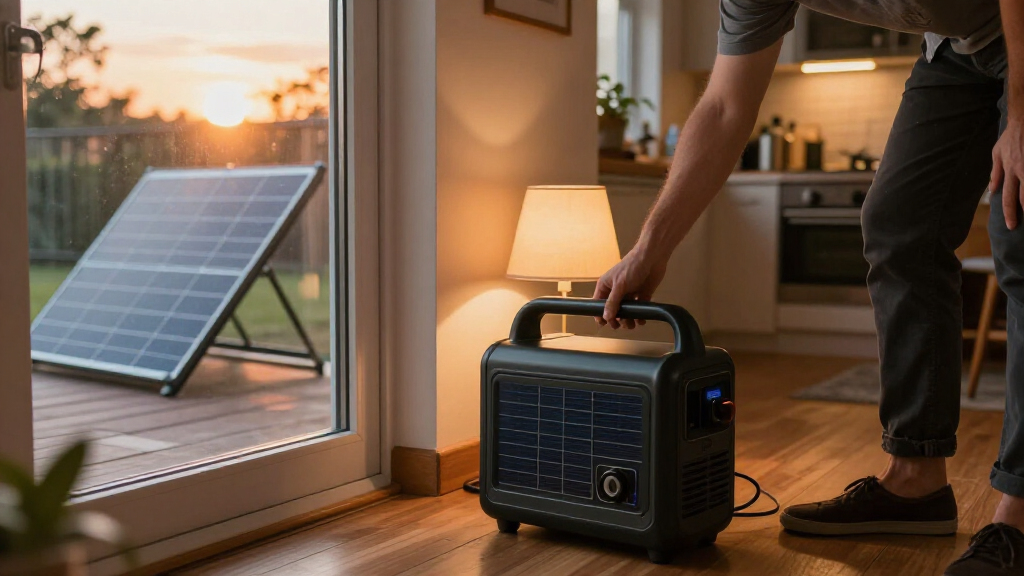
I evaluated every option through a single lens: sustained performance during a multi-day power outage at home. That meant weighing usable capacity in watt-hours against realistic appliance loads, continuous and surge output against the demands of refrigerators, well pumps, and furnaces, and — most overlooked — recharge capability, because a home backup unit that can’t refill from solar during a long outage becomes a one-time-use battery. Panel bundle value, battery chemistry and cycle life, inverter quality (pure sine wave only), expandability, and UPS-style pass-through charging all factored into placement.
The ranking logic is straightforward: whole-home-capable units with efficient solar bundles sit at the top, versatile midsize models fill the middle, and compact or single-purpose units round out the bottom for buyers whose backup needs are smaller. No product earned its position on brand reputation alone — the ABOK and BROWEY entries proved that lesser-known names can compete, and several big-brand units were held back by stingy panel bundles or dated battery chemistry.
| solar generators for home backup | Battery type |
|---|---|
| Jackery HomePower 3600 Plus Po | — |
| Anker SOLIX C1000 Gen 2 Portab | — |
| ABOK Ark3600 Portable Power St | — |
| Jackery HomePower 3000 Portabl | LiFePO4, 4,000 cycles to 70% |
| Jackery Solar Generator 1000 v | LFP, 4,000+ cycles, 70%+ retention |
| Anker SOLIX S2000 Portable Pow | LFP (314Ah cells) |
| Jackery HomePower 3600 Plus Po | — |
| Jackery Explorer 1000 v2 Porta | LFP, 4,000+ cycles |
| BROWEY S1600 Portable Power St | LiFePO4, 3,000+ cycles to 80% |
| EcoFlow DELTA 3 Classic Portab | — |
Factors to Consider When Choosing Solar Generators For Home Backup
Before settling on a specific model, it helps to understand the categories and mistakes that shape every purchase in this space. These are the factors that ultimately determine whether your solar generator performs when the lights go out.Match Capacity to What You Actually Need to Run
The most common mistake is buying capacity for the whole house when you only need selected circuits. List your must-run appliances, find their wattage, and multiply by the hours per day you need them — a refrigerator alone typically consumes 1–2kWh daily. A 1kWh unit covers lights, phones, a router, and a CPAP machine; a 2kWh unit adds a refrigerator and a few hours of microwave use; 3.5kWh and above covers a refrigerator plus freezer, some cooking, and intermittent furnace fan use. Buyers who skip this calculation either overspend on capacity they never use or discover mid-outage that their unit dies after four hours. Also remember that nameplate capacity is not usable capacity — most units reserve 10–20%, and inverters lose energy converting DC to AC. When in doubt, buy one tier above your math, because outages routinely last longer than planned.
Solar Input Speed Is the Real Outage Spec
Battery capacity gets all the marketing attention, but during a multi-day outage, how fast you can refill the battery from panels is what keeps the lights on. A 3,500Wh battery recharging at 200W needs nearly two full sunny days to fill — acceptable for one outage, untenable if a storm knocks out power for a week. Compare the maximum solar input wattage of the station itself, not just the panels in the box, and check whether the manufacturer sells higher-wattage panel options you can add later. Panel placement matters too: two panels on a shaded balcony may produce a third of their rating. If you live somewhere with frequent extended outages, prioritize high solar input and expandable panels over raw battery size. A smaller battery that refills daily beats a bigger one that empties once.
Battery Chemistry and Cycle Life Determine Long-Term Value
Most quality units now use LiFePO4 (lithium iron phosphate) chemistry rated for 3,000+ charge cycles, which translates to roughly a decade of daily cycling. Older NMC-based units may weigh less but often degrade to 60–70% capacity after 500–800 cycles — a real problem for a backup battery you’ll cycle every time the grid hiccups. Check the rated cycle life and what capacity remains after those cycles (80% is typical for LiFePO4). Also confirm whether the battery is user-replaceable or expandable with add-on packs; some systems let you bolt on extra capacity later, which spreads the cost of a whole-home setup over time. Skipping this check is how buyers end up replacing a power station after three years instead of ten.
Inverter Output, Surge Handling, and Pass-Through Charging
Continuous wattage tells you what the unit runs; surge capacity tells you whether it can start it. Refrigerator compressors and well pumps can draw 2–3× their running wattage for a second at startup, and an undersized inverter will simply shut off. Add up the appliances you’d run simultaneously, then verify surge ratings cover your largest motor. Pure sine wave output is non-negotiable if you’ll power sensitive electronics or anything with a variable-speed motor — modified sine wave can damage them. Pass-through or UPS functionality is another underrated feature: units that charge while powering loads let you keep the battery permanently plugged in as an automatic bridge, so devices never see an interruption when the grid drops. For home backup, this beats a unit you have to haul out of the closet and cable up by flashlight.
Panel Bundles Versus Buying Separately
Bundle pricing usually wins, but not always — and the composition of the bundle matters more than the discount. A high-capacity station sold with a single small panel is a mismatch: you get two days of backup and then a slow trickle of solar that can’t sustain daily needs. Compare the included panel wattage against the station’s maximum solar input; a well-matched bundle leaves little input headroom unused. If you already own compatible panels or plan to hard-mount an array, station-only versions of popular models (like the HomePower 3600 Plus without panels) make sense and cost less. Watch connector compatibility too — manufacturers use proprietary solar inputs, and third-party panels often require adapters or won’t negotiate full charging speed. Finally, consider portable versus fixed panels: portables can be repositioned with the sun but must be deployed in bad weather, exactly when you least want to be outside.
Weight, Noise, and Where It Will Live
Home backup units blur the line between stationary equipment and portable gear, and weight is the honest constraint. A 3.5kWh station can weigh 40–80 pounds — movable on one floor, miserable up stairs — so decide in advance whether it lives in the garage, basement, or a closet near your essentials. Unlike gas generators, all of these are silent and safe to run indoors, which is their single biggest advantage for apartment and townhouse dwellers. Heat matters, though: inverters running near their ceiling get warm and derate, so give the unit ventilation and don’t bury it behind boxes. If portability matters — say you want one unit that doubles as a campsite power source — the 1kWh class is the realistic ceiling for one person to carry regularly.
Frequently Asked Questions
How big a solar generator do I need to run my refrigerator during an outage?
A typical modern refrigerator uses 100–200W while running and draws 1–2kWh per day depending on size, age, and how often the door opens. That means a 1kWh unit like the EcoFlow DELTA 3 or Explorer 1000 v2 can run a fridge for roughly a day, but only if it’s doing nothing else. A 2kWh unit such as the Anker SOLIX S2000 buys you a full day plus lights and small electronics, while a 3.5kWh unit like the HomePower 3600 Plus can carry a fridge and a freezer through a full day with power to spare — and with sufficient panels, indefinitely. Don’t forget surge: compressors can spike to 1,200W at startup, so any unit with at least 1,800W of inverter output handles it comfortably, but check the surge rating on smaller stations before committing.
Can a solar generator replace a gas generator for whole-home backup?
For most households, the honest answer is: it can replace a gas generator for essential loads, not the entire house. Central air conditioning, electric water heating, and electric dryers draw far more than any reasonably priced battery can sustain, so solar generator owners learn to live on selected circuits. What you gain is meaningful: silent operation, no fuel storage or spoilage, no carbon monoxide risk, near-zero maintenance, and indoor-safe use — which matters enormously for anyone without a yard. Gas still wins for indefinite multi-week outages if you can store fuel, but a 3.5kWh-plus system with 400–600W of panels can loop indefinitely on refrigerator-plus-essentials duty as long as the sun cooperates. Many homeowners now run both: batteries for the first day seamlessly, gas only if the outage drags on.
Is it better to buy a bundle with panels or the power station separately?
Bundles almost always win on cost-per-watt, but the right answer depends on your station-to-panel ratio. A good rule of thumb: your panel wattage should be able to refill the battery in one sunny day, which for a 3.5kWh station means at least 400–600W. The ABOK Ark3600 bundle stands out precisely because it ships with 600W of panels, while some competitors pair large stations with a single 200W panel — a mismatch that leaves you grid-dependent after the first day. Buy station-only if you already own compatible panels or plan a fixed rooftop array with a charge controller matched to the station’s input. Also verify the station’s maximum solar input before adding third-party panels; many cap at 400–600W regardless of how many you connect, and proprietary connectors often mean adapters that sacrifice speed.
How long do these batteries last, and what happens when they wear out?
Nearly every unit in this comparison uses LiFePO4 chemistry rated for 3,000+ cycles to roughly 80% of original capacity — that’s eight to ten years of daily use, and home backup duty typically cycles far less often. Heat is the main enemy: a station kept in a hot garage or running its inverter near maximum will age faster than one kept cool and ventilated. Storage behavior matters too; most manufacturers recommend holding units at 50–80% charge for long idle periods, and some models support a storage mode that maintains battery health automatically. Replacement varies by brand: some systems accept add-on battery packs that effectively refresh capacity, while cheaper units are sealed — when the cells die, the whole station is done. Factor that into value comparisons: a unit costing somewhat more but with expandable, replaceable batteries can be cheaper per year of ownership.
Do I need pass-through charging or UPS functionality for home backup?
If your goal is truly automatic backup — the kind where computers, a fish tank heater, or medical equipment never see a blip — then yes, pass-through charging is the feature that separates a real backup system from a big portable battery. Units with UPS-style switchover hand off to battery in milliseconds, so you can leave the station plugged into the wall with your loads plugged into it permanently. Without this, you’re manually re-cabling devices by flashlight when the power drops, and any computer or router reboots mid-task. The Anker SOLIX units and the Jackery HomePower line both offer fast switchover modes well-suited to this always-plugged-in arrangement. One caution: keeping a unit on permanent charge generates a small amount of standby waste and heat, so give it ventilation and check the manufacturer’s guidance on continuous AC charging.
Conclusion
After comparing all ten options, the choice comes down to your outage scenario and your budget. For best overall, the Jackery HomePower 3600 Plus with two 200W panels is the most complete package: enough capacity for refrigerator-plus-essentials duty, strong surge handling, and a well-matched solar bundle that can sustain daily recharging. For best value, the ABOK Ark3600 undercuts the big names with a 600W panel bundle at comparable capacity — ideal if solar recharge speed matters more than brand ecosystem. For best premium, the station-only HomePower 3600 Plus paired with a larger fixed array is the path to near-whole-home resilience you can expand over time. For beginners and apartment dwellers, the Anker SOLIX C1000 Gen 2 is the easiest entry point: fast charging, compact, and simple to live with. For smaller budgets and short outages, the EcoFlow DELTA 3 Classic or Anker SOLIX S2000 covers the essentials, while the BROWEY S1600 suits buyers who want an all-in-one grab-and-go unit more than a home backup workhorse. Size the battery to your real appliance list, match your panels to your outage length, and any of these picks will outperform a candle and a prayer.
Fall Picks
fall essentials
As an affiliate, we earn on qualifying purchases.