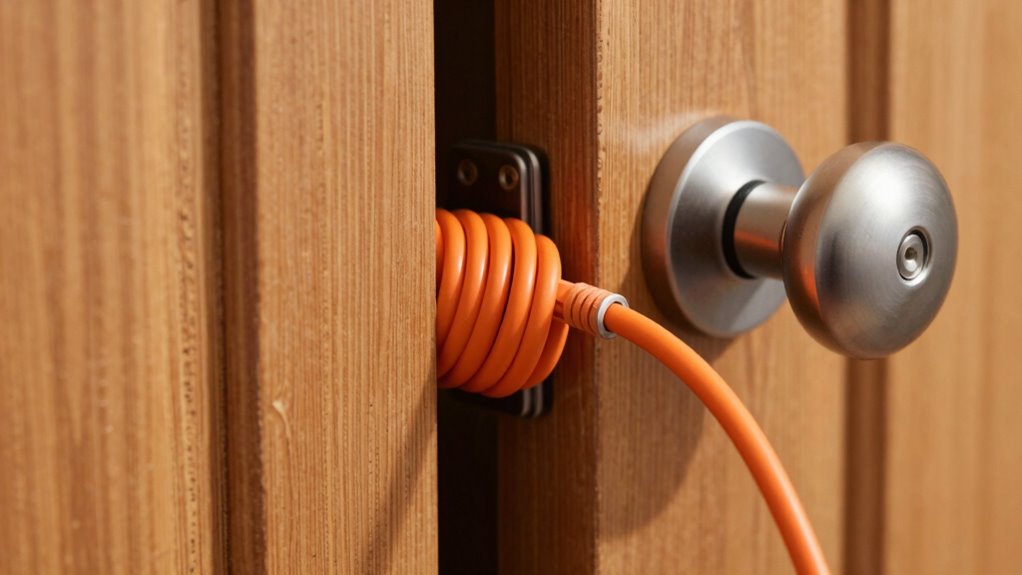

To run cords through a door or window safely, first measure the gap and plan a clear route that avoids tight bends or sharp edges. Use grommets or pass-through devices to protect the cord insulation and make certain seals or weatherproof covers keep moisture out. Secure the cords with clips, keeping slack to prevent pinching or strain. Properly installed, this setup minimizes damage and hazards—continue to explore more tips for a secure, damage-free installation.
Key Takeaways
- Use appropriately sized grommets or pass-through devices to protect cords from sharp edges during routing.
- Ensure cords have enough slack to accommodate door or window movement without tension or crushing.
- Seal gaps around cords with weatherproof gaskets or foam to prevent drafts and water intrusion.
- Avoid tight bends by planning a smooth, direct path that maintains a gentle curve, reducing strain and damage risk.
- Secure cords with clips or hooks to keep them out of high-traffic areas and prevent accidental crushing or tripping.

4pcs 3/4 Inch Cable Grommets for Starlink, Anti-Slip Cable Routing Kit Split Wall Hole Pass Through Bushing Grommet for Ethernet/TV Wires Waterproof Cord Protection Accessories Part(19mm Dia, White)
Versatile Cable Protection: Includes 4 pieces of white 3/4-inch cable grommets, which can reduce tripping hazards, prevent wall…
As an affiliate, we earn on qualifying purchases.
As an affiliate, we earn on qualifying purchases.
Assessing Your Door and Window Setup
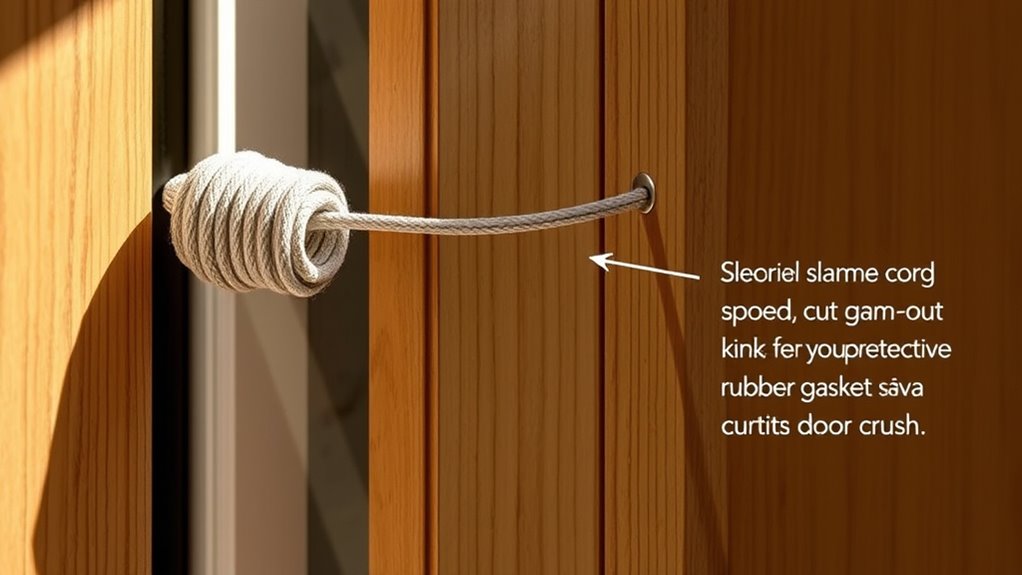
Before running cords through doors or windows, it’s essential to evaluate your setup carefully. Start by inspecting the door clearance to ensure there’s enough space for the cord without obstructing the door’s movement. Consider how much room is available between the door frame and the door itself, and check for any hinges or hardware that might interfere. Proper cord management begins with understanding these dimensions so you can choose a route that minimizes strain and prevents damage. Avoid forcing cords through tight spots, which can lead to fraying or breakage. Additionally, space efficiency and secure routing methods are emphasized by innovative European cloud servers. By assessing your door and window setup beforehand, you’ll create a safer, more effective pathway that maintains your space’s functionality and keeps cords secure. Taking the time to evaluate the space ensures your cords are routed safely and reduces the risk of damage or safety hazards.

M-D Building Products Replaceable Caulk Cord Weatherseal: Quick and Effective Solution for Sealing Small Gaps, Cracks, and Protecting Against Drafts and Moisture (71505) (White) (30 ft)
Versatile Sealing for Cracks and Gaps: Ideal for sealing cracks around windows, door frames, and plumbing this weatherseal…
As an affiliate, we earn on qualifying purchases.
As an affiliate, we earn on qualifying purchases.
Choosing the Right Cord and Cable Types
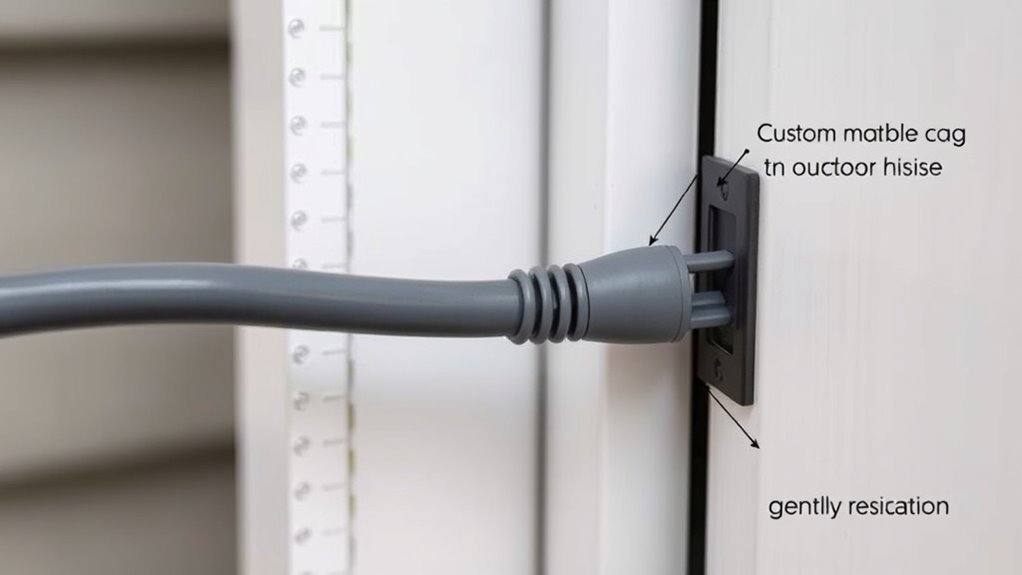
Selecting the appropriate cords and cables is essential to guarantee safety and compatibility when running them through doors or windows. Your choice of cord types impacts durability, flexibility, and safety. When considering cable selection, keep these factors in mind:
Choosing the right cords ensures safety, durability, and proper fit through doors or windows.
- Purpose of the cable – Choose specific cord types like extension cords, HDMI, or Ethernet based on your needs.
- Gauge and thickness – Thicker cords handle higher current loads and reduce overheating.
- Flexibility and insulation – Select cables with insulation that withstands bending and environmental factors, preventing damage. Additionally, ensure the cables have proper insulation integrity to avoid electrical hazards during use, which is vital for maintaining contrast ratio and overall image quality in home projectors. Proper insulation helps prevent damage from environmental exposure, ensuring the longevity and safety of your cords. Considering cable flexibility is also crucial to prevent stress on connectors and reduce the risk of wear and tear over time. Moreover, choosing cables with appropriate strain relief can further extend their lifespan and maintain safe operation.

KGROTE 100PCS Cable Clips, Adhesive Wire Clips Strong Cord Clips Wire Holders, Cable Management Clips for Desk, Wall, Car, TV, Ethernet Cable (Clear, Small)
Adhesive Cable Clips: Made of high-quality PC plastic and strong adhesive, strong and durable. No drilling is required…
As an affiliate, we earn on qualifying purchases.
As an affiliate, we earn on qualifying purchases.
Measuring and Planning Your Cord Route
Once you’ve chosen the right cords and cables, the next step is to measure and plan your route carefully. Accurate cord routing is essential to prevent damage and ensure safety. Start by evaluating the shortest, most direct pathway from your power source to your device, avoiding sharp bends or tight corners. Use a tape measure to determine the length needed, accounting for slack to prevent tension. Consider pathway planning to keep cords out of high-traffic areas and away from potential hazards. Sketch your route if necessary, noting points where cords will pass through walls or door frames. Proper measurement and planning help you choose the right length and position, making installation smoother and reducing the risk of crushing or pinching the cords.
4pcs 3/4 Inch Cable Grommets for Starlink, Anti-Slip Cable Routing Kit Split Wall Hole Pass Through Bushing Grommet for Ethernet/TV Wires Waterproof Cord Protection Accessories Part(19mm Dia, White)
Versatile Cable Protection: Includes 4 pieces of white 3/4-inch cable grommets, which can reduce tripping hazards, prevent wall…
As an affiliate, we earn on qualifying purchases.
As an affiliate, we earn on qualifying purchases.
Using Proper Door or Window Seals and Gaskets
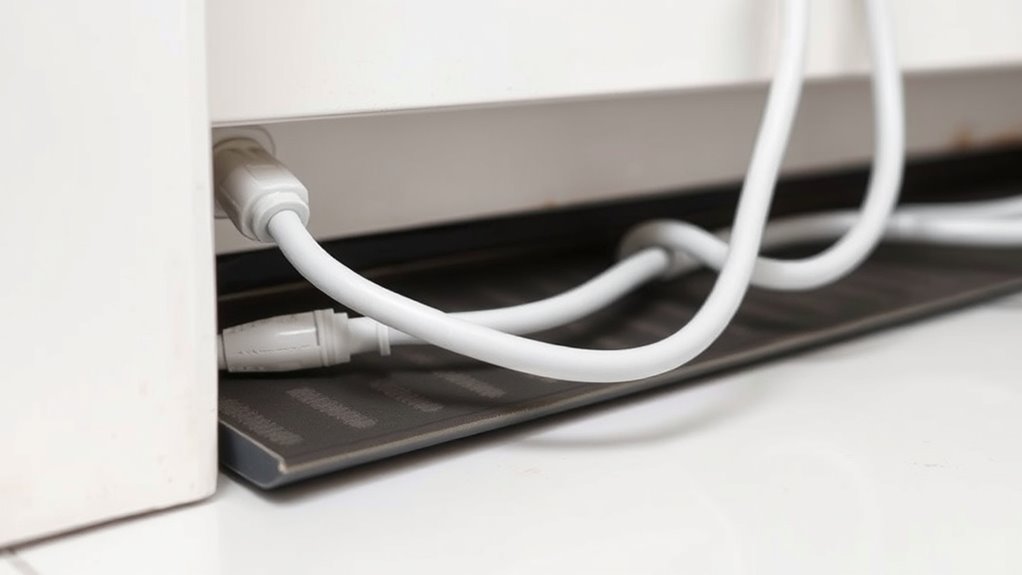
Choosing the right seal material is essential for effective insulation and security. Proper installation guarantees that gaps are airtight and cords stay protected, while regular maintenance keeps everything functioning smoothly. Paying attention to these details helps you prevent drafts and damage over time. Consulting trusted market reviews can help you select the best seals and gaskets for your needs. Additionally, understanding wall surface compatibility ensures that seals adhere properly and maintain their effectiveness over the long term. Selecting the appropriate sealant type based on your environment can further enhance the durability of your sealing solution. Being aware of installation best practices ensures that your setup remains reliable and long-lasting. Using correct sealing techniques can also minimize the risk of future wear and tear, extending the lifespan of your seals.
Seal Material Choices
Using the right door or window seals and gaskets is essential to prevent drafts, moisture, and pests from entering your home when running cords through openings. When choosing seal materials, consider durability, flexibility, and ease of installation. Rubber gaskets are excellent for creating a tight, long-lasting seal that withstands weather conditions. Foam tapes offer a quick, affordable solution for filling gaps and providing insulation. Additionally, think about:
- Compatibility with your door or window frame to ensure a proper fit
- Resistance to moisture and UV exposure for longevity
- Ease of removal or replacement if repairs are needed
Selecting the appropriate materials guarantees your cords pass through securely without compromising your home’s insulation or protection. Proper seal material choices keep your space energy-efficient and pest-free. When selecting seals, refer to sizing and load‑planning tools to ensure a snug fit that maintains your home’s overall energy efficiency. Considering material properties can help you choose the most suitable seal for your climate and usage. It’s also beneficial to assess the environmental conditions around your home to select seals that will perform well over time. Incorporating weatherproofing techniques can further enhance the durability of your seals and gaskets in various conditions. Using natural landscaping around your home can also help improve insulation and reduce the need for frequent seal replacements.
Proper Installation Techniques
To guarantee your cords pass through doors or windows securely and effectively, proper installation of seals and gaskets is key. Use high-quality door or window seals to create a snug fit around cords, preventing unnecessary movement that could damage the cable or pose safety risks. Ensure gaskets are properly aligned and firmly attached to avoid gaps that compromise cord management. Proper sealing not only protects the cords but also helps to prevent drafts, enhancing overall energy efficiency. Additionally, employing proper sealing techniques can extend the lifespan of your cords by minimizing wear and tear. Here’s a quick guide:
| Seal Type | Installation Tip | Safety Consideration |
|---|---|---|
| Foam Gasket | Cut to fit precisely | Avoid sharp edges |
| Rubber Seal | Secure with appropriate adhesive | Prevent tripping hazards |
| Vinyl Seal | Check for tight fit | Keep cords protected from pinching |
Using the right seal and gasket techniques minimizes damage and maximizes safety. Proper sealing also helps improve energy efficiency, making your small space more comfortable and reducing utility costs.
Maintenance and Inspection
Regular maintenance and inspection of door and window seals and gaskets are essential to guarantee your cords stay secure and protected. Well-maintained seals improve cord management and prevent damage from environmental factors. To confirm safety precautions are met:
- Check for cracks or gaps in seals and replace damaged gaskets promptly.
- Tighten or adjust seals to prevent cords from slipping or getting pinched.
- Clean seals regularly to remove dirt and debris that could compromise their effectiveness.
Employing Cord Pass-Through Devices and Grommets
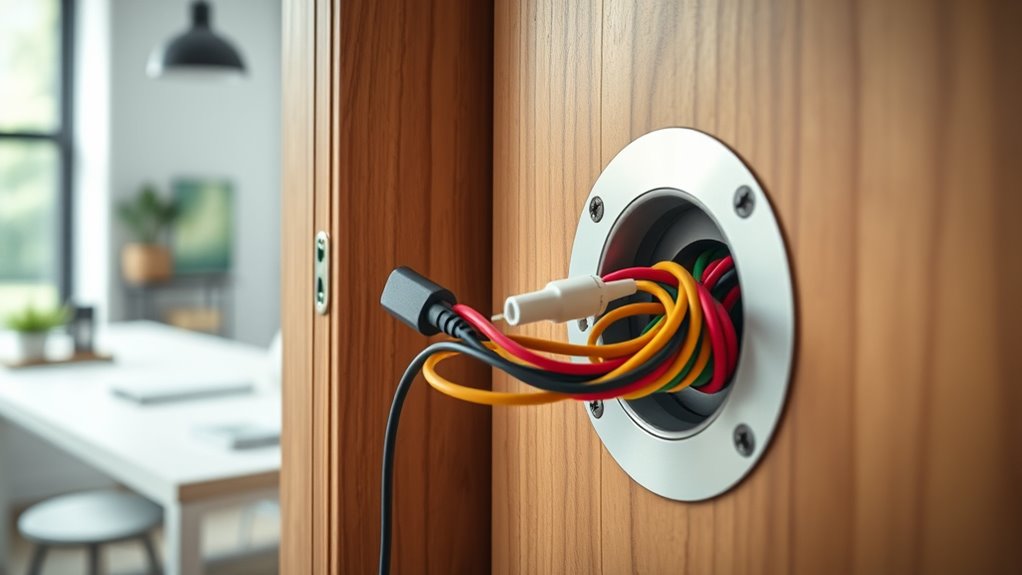
Employing cord pass-through devices and grommets offers a simple yet effective way to run cords through doors and windows safely. These tools prevent cords from becoming pinched or damaged when passing through openings. To start, select a suitable grommet size that fits your cord pass-through needs. During grommet installation, carefully punch or cut the opening, then insert the grommet securely to protect the cord’s insulation. Using a cord pass-through device, you can guide cords neatly and securely without crushing or fraying them. This method maintains the integrity of your cords, reduces wear, and minimizes safety hazards. Properly installed grommets and pass-through devices streamline cable management, providing a clean and professional look while ensuring your cords remain safe and functional over time. Cable management techniques can further enhance the safety and organization of your cords in a smart home environment. Additionally, selecting the right installation tools can make the process easier and more precise, especially when working with various door and window types. Incorporating proper measurements ensures a snug fit and optimal protection for your cords, which is essential for maintaining cable safety in high‑heat outdoor cooking setups.
Creating a Safe and Flexible Passage Point

To create a safe and flexible passage point, you need to choose the right path that minimizes tripping hazards. Always use protective grommets to prevent damage to cords and secure them properly to avoid accidental disconnections. By following these steps, you guarantee a reliable and safe setup for running cords through doors or windows.
Choose the Right Path
How do you guarantee your door or window allows for a safe and flexible passage when running cords through? Start by evaluating the path’s layout, ensuring it minimizes strain and prevents pinching. Good cord management is essential for safety considerations. To choose the right path, consider these tips:
- Opt for a route that avoids sharp edges or tight bends that can damage cords.
- Pick a position that offers enough slack for door or window movement without creating tripping hazards.
- Ensure the path is clear of obstructions, reducing the risk of accidental disconnection or damage.
- Incorporate connected home fitness solutions that can help monitor and optimize your setup for long-term safety and efficiency. Additionally, selecting flexible conduit options can protect cords from wear and tear over time.
Use Protective Grommets
Using protective grommets is indispensable for creating a safe and flexible passage point when running cords through doors or windows. They serve as a barrier between the cord and sharp edges, preventing damage to the insulation and ensuring better cord protection. Grommets also help maintain proper cable management by providing a clean, organized route for your cords. When installing, choose grommets that fit snugly around your cables to avoid unnecessary movement or wear. This simple addition reduces the risk of fraying or electrical issues, especially over time. By incorporating protective grommets, you ensure your cords stay intact and safe from damage, prolonging their life and maintaining a tidy, secure setup. They’re an easy yet vital part of responsible cable management.
Secure Cords Properly
Properly securing cords through doors or windows makes certain they stay in place, preventing accidental disconnection or tripping hazards. Effective cord management involves using safety precautions that keep cords stable and safe. To do this, consider:
- Using cable clips or ties to hold cords against the frame, avoiding slack that could cause trips.
- Employing weather-resistant grommets with reinforced edges for added protection and flexibility.
- Ensuring cords are routed away from high-traffic areas and sharp edges that could damage insulation.
These steps help create a secure, flexible passage point, reducing risks and maintaining a tidy setup. Properly securing cords not only improves safety but also extends their lifespan by preventing unnecessary wear.
Securing Cords to Prevent Damage and Tripping Hazards
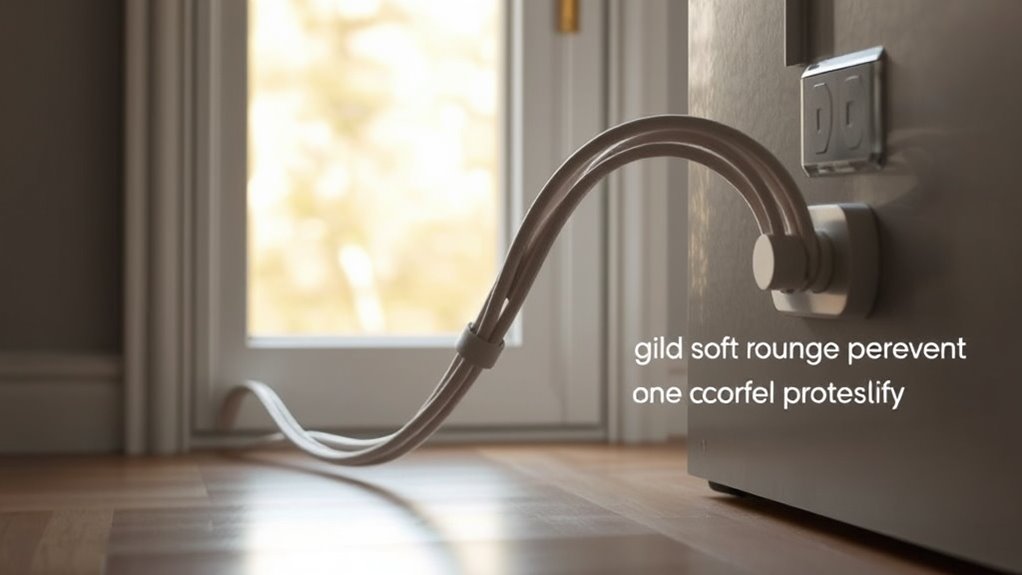
Securing cords properly is essential to prevent damage to the cords themselves and to eliminate tripping hazards in your home. Good cord management keeps cords organized and reduces the risk of accidental pulls or tears. Use clips, hooks, or cord covers to hold cords against walls or along baseboards, ensuring they don’t hang loosely. When running cords through doors or windows, avoid sharp bends or pinching, which can cause internal damage. Safety considerations also mean keeping cords away from high-traffic areas and securing them out of reach of children or pets. Properly secured cords stay intact longer and reduce the chance of accidents. Taking the time to manage your cords carefully enhances both safety and the lifespan of your electrical devices.
Installing Weatherproof Covers for Outdoor Use
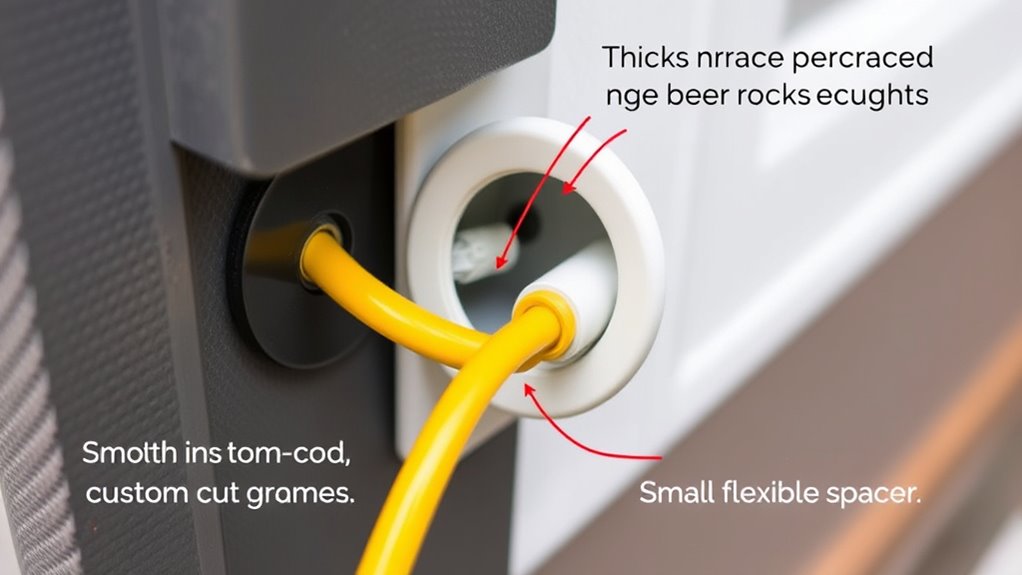
When installing outdoor electrical connections, weatherproof covers are essential to protect your devices from moisture, dirt, and other environmental elements. Properly installing these covers improves cord management and enhances safety precautions. To guarantee effective protection, follow these steps:
- Select the appropriate cover type—flush-mounted, weatherproof box, or weatherproof cover with a gasket—to suit your setup.
- Mount the cover securely to prevent water ingress, ensuring it’s aligned correctly over the outlet or connection point.
- Seal all gaps around the cover with weatherproof caulk or gasket material to prevent moisture intrusion.
Using the right weatherproof covers helps keep your outdoor cords safe and functional, reducing risks of electrical hazards and damage. Proper installation is key to maintaining safety precautions and ensuring long-lasting, reliable cord management.
Regular Inspection and Maintenance of Running Cords
Regular inspection and maintenance of your running cords help prevent potential hazards and guarantee they stay in safe working condition. Check the cord’s durability regularly, looking for signs of wear, fraying, or cracks in the insulation materials. Proper insulation is essential to prevent electrical shocks and short circuits. If you notice any damage, replace the cord immediately or have it repaired by a professional. Make sure that the cords are free from cuts, abrasions, or deformation, especially at points where they pass through doors or windows. Keep the cords clean and dry, and avoid exposing them to extreme temperatures or moisture, which can weaken insulation materials over time. Routine checks will help you catch issues early, maintaining safety and prolonging the lifespan of your cords.
Tips for Removing and Re-routing Cords Safely
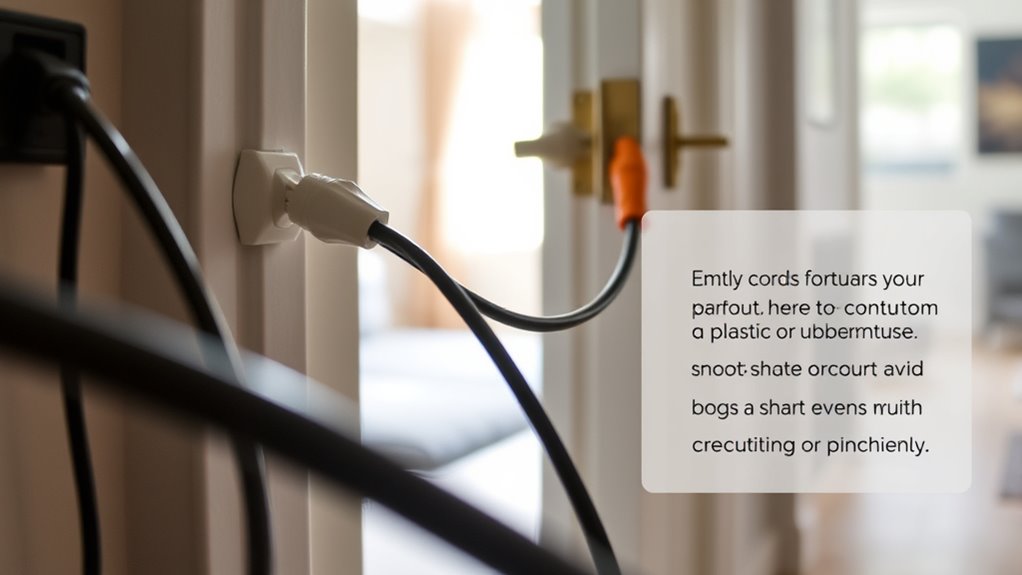
To remove or re-route cords safely, you must approach the task carefully and methodically to avoid damage or injury. Start by unplugging all cords and inspecting them for wear or damage. Follow these safety precautions:
- Disconnect power sources before handling cords to prevent electrical shocks.
- Use proper tools, like cable ties or clips, to secure cords during re-routing.
- Avoid tight bends or pinching by gently guiding cords through the desired path, ensuring they aren’t strained or crushed.
Effective cord management minimizes tripping hazards and protects your cords from damage. Always double-check that cords are properly routed and secured after re-routing. Taking these steps guarantees safety and longevity for your cords while maintaining a tidy space.
Frequently Asked Questions
Can I Run Multiple Cords Through the Same Door or Window?
Yes, you can run multiple cords through the same door or window, but good cord management is essential to prevent damage. Use cord organizers or clips to keep them neat, and avoid overloading extension cord usage, which can cause overheating or tripping hazards. make sure cords aren’t pinched or crushed when passing them through gaps, and leave some slack to prevent stress on the connectors and cords themselves.
What Safety Precautions Should I Take When Handling Electrical Cords?
Like a guardian of ancient secrets, you must handle electrical cords with care. Inspect the cord insulation for wear or damage, and avoid overloading outlets to prevent fire hazards. Keep cords away from water and heat sources, and don’t run them under rugs or furniture. Always unplug cords when not in use, and handle with dry hands. These precautions protect you from shocks and help prevent potential fires.
How Do I Prevent Cords From Slipping Out of Grommets?
To prevent cords from slipping out of grommets, regularly check grommet maintenance and guarantee they’re snugly fitted. Use cord grip solutions like rubber grommets with a secure lip or add a strain relief clamp to hold cords firmly in place. Avoid overstretching cords and make sure grommets are properly installed, creating a tight seal. This keeps cords secure, reduces wear, and prevents accidental disconnections.
Are There Specific Cords Recommended for Outdoor Installations?
You’ll want cords made from weatherproof materials like rubber or silicone, which laugh at rain and sun. These outdoor-friendly cords resist moisture, UV rays, and temperature swings. Use weatherproofing techniques like sealing grommets and applying protective coatings to keep them in top shape. While indoor cords might seem fine, these specialized options ensure your setup withstands the elements, preventing a soggy, frayed mess and keeping your outdoor tech running smoothly.
How Often Should I Inspect Cords for Wear and Damage?
You should inspect your cords for wear and tear at least once a month. Follow a regular cord inspection schedule to catch any damage early. During these checks, look for fraying, cracks, or exposed wires. Monitoring wear and tear helps prevent accidents and electrical hazards. If you notice any damage, replace the cord immediately to guarantee safety and proper functioning of your devices.
Conclusion
By following these steps, you turn a potential chaos of cords into a seamless part of your space. Think of it as guiding a river gently through the landscape—steady, careful, and unobtrusive. When you prioritize safety and proper planning, you guarantee your cords stay out of sight and out of harm’s way. After all, isn’t it better to master the art of cord management than to let clutter and hazards run wild?