
To create a home power priority list, start by identifying your essential devices like refrigerators, medical equipment, and lights. Rank them based on critical needs such as safety or comfort, and focus on powering those first during outages. Use visual charts or color coding to keep things clear, and review the list regularly to adjust for any changes. Keep reading to discover more ways to make your power management smarter and more reliable.
Key Takeaways
- Identify and categorize essential devices by safety and daily needs, assigning priority levels (critical, secondary, convenience).
- Use visual tools like charts or diagrams with color coding to clearly map device importance and power hierarchy.
- Evaluate your backup power options (solar, generator, batteries) and plan their integration based on device priorities.
- Regularly review and update your priority list to reflect household changes, new appliances, or evolving safety concerns.
- Implement energy management strategies and automation to ensure critical devices receive power during outages and prevent guesswork.

Anker SOLIX C1000 Gen 2 Portable Power Station, 2,000W (Peak 3,000W) Solar Generator, Full Charge in 49 Min, 1,024Wh LiFePO4 Battery for Home Backup, Power Outages, and Camping (Optional Solar Panel)
49 Min UltraFast Recharging: With upgraded HyperFlash tech, fully recharge at 1,600W—for outage prepping, camping trips, or tailgating...
As an affiliate, we earn on qualifying purchases.
Assess Your Essential Home Devices
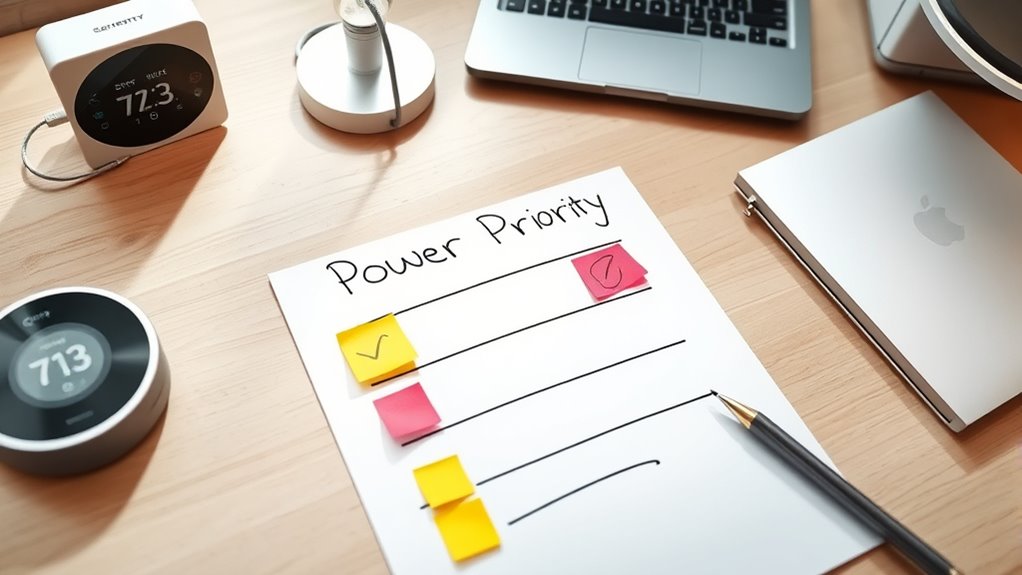
To create an effective home power priority list, you first need to identify your essential devices. Start by listing appliances vital to your daily life, like refrigerators, lights, and medical devices. Focus on energy efficiency by choosing appliances that consume less power, reducing your overall energy use. Regular appliance maintenance ensures these devices operate efficiently, preventing unnecessary power drain. Check your appliances for dust, loose connections, or outdated parts that could impair performance. Additionally, understanding water safety can help you prevent potential hazards related to water-related appliances and fixtures. Prioritizing devices that are both essential and energy-efficient helps you manage your power better during outages or high-demand periods. Understanding the contrast ratio and how it affects your viewing experience can also help you optimize your entertainment setup to conserve energy. Incorporating energy-saving techniques can further optimize your home’s power usage during critical times. Being aware of your energy consumption patterns allows for more precise prioritization and efficiency improvements, and utilizing smart home technology can automate and enhance your energy management efforts.

Jackery Portable Power Station Explorer 300, 293Wh Backup Lithium Battery, Solar Generator for Outdoors Camping Travel Hunting Blackout (Solar Panel Optional)
SPEED UP YOUR RECHARGEABILITY: It takes only 2 hours to recharge 80% battery of the power station through...
As an affiliate, we earn on qualifying purchases.
Prioritize Based on Critical Needs
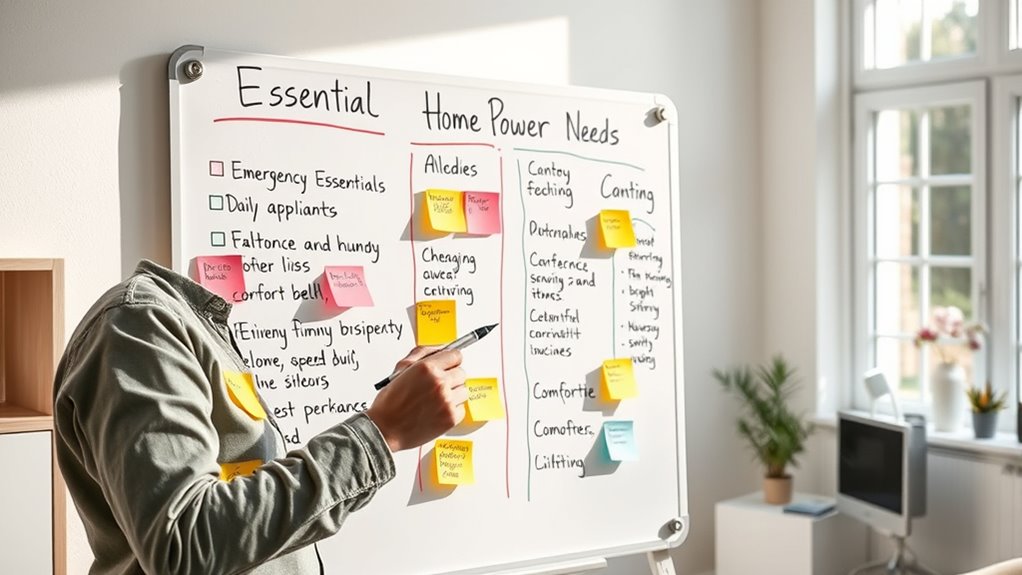
How do you determine which devices take priority during limited power situations? Focus on your critical needs first, especially for emergency preparedness. Identify essential appliances like medical devices, refrigeration, and lighting that keep your household safe and functional. Prioritizing these ensures important needs are met and preserves safety during outages. Consider energy conservation by only powering what’s necessary, avoiding unnecessary device use that wastes energy. This approach helps you manage limited power resources efficiently while maintaining safety and comfort. By establishing a clear hierarchy based on critical needs, you can reduce stress during outages and ensure your home remains prepared for emergencies. Recognizing the role of energy-efficient solutions in your power management can further enhance your household’s resilience and sustainability. Being aware of power management strategies can help you plan ahead and avoid last-minute scrambling during outages, especially when understanding safe transfer switches and proper fuel storage is crucial. Incorporating knowledge about essential oils for emergency health support can also provide comfort and aid in minor ailments during stressful times.

APC UPS 600VA / 330W UPS Battery Backup & Surge Protector, 7 Outlets (NEMA 5-15R), USB Charging Port, BE600M1 Uninterruptible Power Supply for Computers, Wi-Fi Routers, and Home Office Electronics
KEEP YOUR COMPUTER, WI-FI AND ROUTER RUNNING THROUGH POWER OUTAGES: Supplies short‑term battery power during outages to maintain...
As an affiliate, we earn on qualifying purchases.
Determine Power Sources and Backup Options
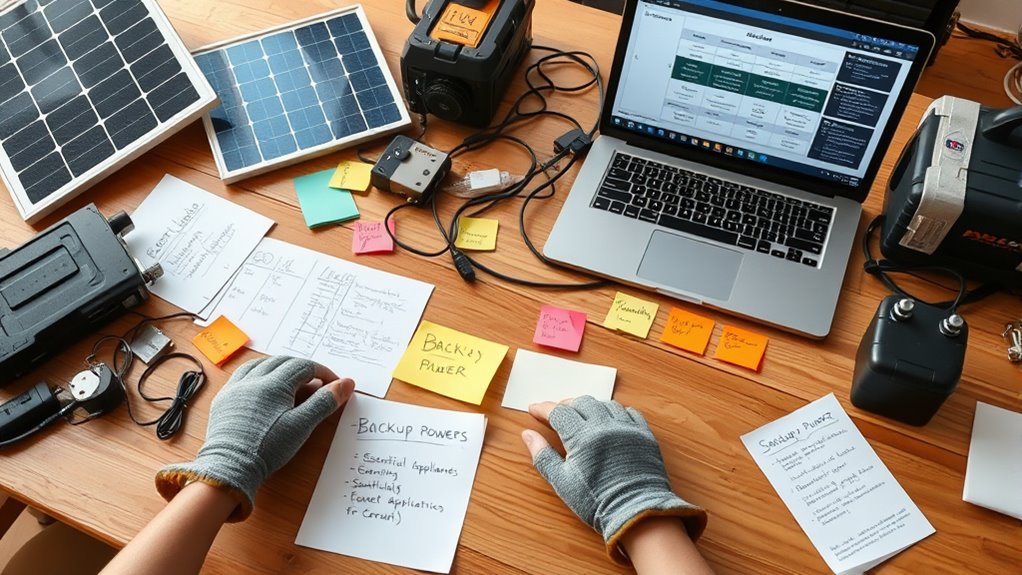
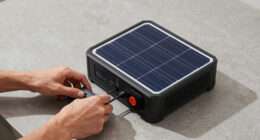
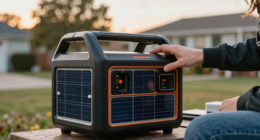
Evaluating your power sources and backup options is essential for maintaining a reliable energy supply during outages. Start by appraising your solar options; consider the size of your solar system and how much energy it can generate. This solar capacity assessment helps determine if solar alone can meet your critical needs or if you’ll need supplementary backup. Additionally, understanding battery technology is vital, as advancements can influence your energy storage choices and overall system efficiency. Next, examine your generator capacity—ensure it can handle your essential appliances and devices during a power failure. Decide whether a portable or standby generator fits your needs based on capacity and convenience. Combining solar options with a generator provides a more resilient backup plan, giving you peace of mind during extended outages. Understanding power system design and integration is key to creating an effective backup strategy. A thorough grasp of backup options ensures you can select the best combination of sources for your specific circumstances. Carefully understanding these sources allows you to prioritize which devices to run and avoid guesswork when power is unstable.

Jackery Solar Generator 1000 v2 with 200W Solar Panel,1070Wh Portable Power Station LiFePO4 Battery,1500W AC/100W USB-C Output, 1Hr Fast Charge for Outdoor,Off-Grid Living,RV,Emergency
Powerful yet Compact: Boasting a 1,500W AC output and a 3,000W surge peak, the Solar Generator 1000 V2...
As an affiliate, we earn on qualifying purchases.
Create a Visual or Written Priority Chart

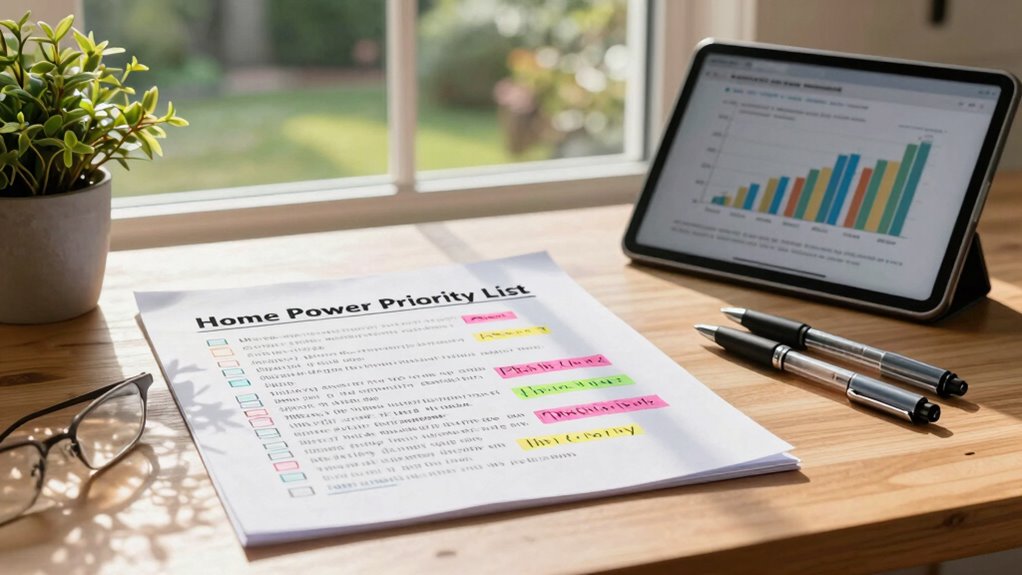
Creating a visual or written priority chart helps you organize your power needs clearly and efficiently. Visual mapping allows you to see all your devices and their importance at a glance, making it easier to allocate power effectively. Use color coding to distinguish between essential, optional, and low-priority items—red for critical devices, yellow for secondary needs, and green for convenience. This method simplifies decision-making during power shortages or outages, ensuring you focus on what’s most important first. Keep your chart simple and easy to update as your needs change. Whether you prefer a handwritten list or a digital diagram, the key is to create a visual system that clearly shows the hierarchy of your power priorities. This approach helps you avoid guesswork later.
Regularly Review and Adjust Your List
To guarantee your power priority list remains effective, you need to review and adjust it regularly. This helps confirm you’re prioritizing energy conservation and safety protocols as your household’s needs change. Schedule monthly checks to evaluate if your list still aligns with current priorities, such as new appliances or safety concerns. Adjustments might include shifting high-energy devices lower or updating safety protocols during outages. Use this table to guide your review:
| Aspect | Action Needed |
|---|---|
| Energy Conservation | Optimize device usage, update priority levels |
| Safety Protocols | Ensure safety measures are current and clear |
| Household Changes | Add/remove items affecting power needs |
| Emergency Preparedness | Revise based on recent outages or safety updates |
Regularly reviewing these elements ensures your smart home gym equipment and other connected devices operate safely and efficiently. Staying informed about power management strategies can further enhance your household’s energy efficiency and safety. Incorporating energy-saving habits into your routine can also help reinforce your overall power management plan. Additionally, consider implementing local automation to streamline adjustments based on your review findings. Being aware of energy monitoring tools can provide valuable insights into your household’s energy consumption patterns.
Frequently Asked Questions
How Often Should I Update My Power Priority List?
You should update your power priority list whenever your power backup needs change or when you add new renewable energy sources. Regular updates, at least once a year, guarantee your list reflects current usage and backup capacity. This way, you can optimize your renewable energy and backup systems, making sure essential devices stay powered. Stay proactive to avoid surprises and keep your home efficiently energized with reliable power management.
What if My Power Needs Change Unexpectedly?
When your power needs unexpectedly shift, it’s like steering through a sudden storm—stay calm and adapt quickly. Prioritize emergency preparedness by reassessing your power list immediately, ensuring crucial devices stay active. Incorporate energy conservation by identifying ways to reduce overall demand. Regularly update your list to reflect changing needs, so you’re always ready for surprises. Flexibility keeps your home resilient, helping you manage unforeseen changes with confidence and peace of mind.
How Do I Handle Appliances With Variable Power Consumption?
To handle appliances with variable power consumption, you should use energy monitoring tools to track their usage over time. This helps you identify patterns and assess appliance efficiency, allowing you to modify your power priority list accordingly. By staying informed about fluctuations, you can optimize your energy use, prevent overloads, and guarantee your most efficient appliances get priority, saving you money and reducing stress on your electrical system.
Can I Include Future Devices in My Priority List?
Sure, toss future devices onto your priority list—because who doesn’t love a crystal ball for energy efficiency? Just remember, including them now helps you plan for long device lifespan and smarter energy use. Think ahead, prioritize wisely, and avoid surprises when those shiny new gadgets arrive. Your home’s power strategy will thank you for thinking about efficiency and longevity today, instead of guessing tomorrow.
What Should I Do During Extended Power Outages?
During extended power outages, you should prioritize using your generator wisely by performing regular generator maintenance to guarantee reliability. Use your solar panel planning to maximize solar energy, reducing reliance on backup sources. Conserve energy by limiting non-essential devices, and keep a supply of batteries and fuel. Stay informed about outage updates, and prepare for long-term needs by adjusting your power priority list to include essential devices first.
Conclusion
Think of your power priority list as a guiding lighthouse, steady and bright amid the storm. It keeps you on course, ensuring your essential needs shine through even when darkness falls. By regularly reviewing and adjusting, you keep the light burning bright, adapting to new storms and calm seas alike. With this map in hand, you navigate your home’s energy flow confidently, steering clear of guesswork and into a future of reliable, mindful power management.