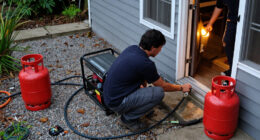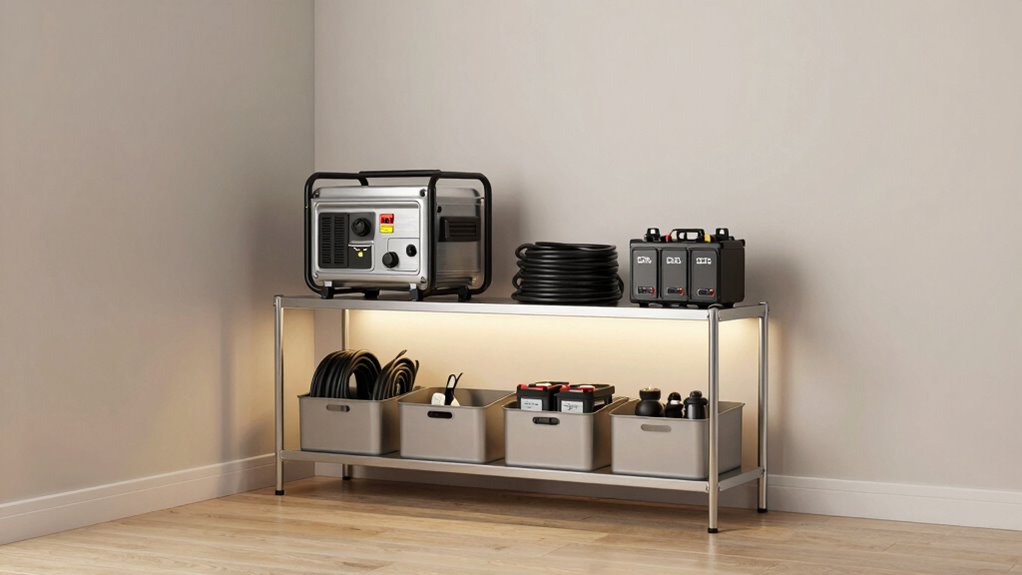

To organize your backup power gear without clutter, choose accessible yet out-of-the-way storage spots like a closet or shelf. Use clear containers labeled with contents, grouping similar items together such as chargers, batteries, and adapters. Keep emergency kits in waterproof containers and store them with related gear for quick access. Regularly review and update your supplies to avoid outdated items. Keep your setup tidy and easy to navigate—continue on to discover more tips for seamless organization.

Get backup power and energy gear delivered free with Prime
- Fast, free delivery on millions of items
- Prime Video, Amazon Music and more included
- Member-only deals all year
Key Takeaways
- Use labeled, clear plastic bins stored in dedicated, out-of-the-way locations for easy identification and access.
- Group related items (chargers, cables, adapters) together to minimize clutter and streamline retrieval.
- Implement modular storage solutions and quick-access backpacks for efficient emergency response.
- Regularly review and update contents, replacing expired or used items to maintain readiness without excess.
- Designate a specific, known spot for backup gear and conduct routine drills to ensure household preparedness.

Having your backup power gear organized can make all the difference when the lights go out unexpectedly. When a blackout hits, you want to be confident that you can quickly access what you need without fumbling through clutter. The key is creating a system that keeps your essential items, like portable solar chargers and emergency kits, easy to find and ready to use. Start by designating a specific space in your home for all backup power gear. This could be a closet, a storage bin, or a dedicated shelf—just somewhere accessible but out of the way. Use clear plastic bins or labeled containers to keep everything visible and organized. Label each container with its contents, such as “Portable Solar,” “Batteries,” or “Emergency Supplies,” so you can grab what you need in seconds.
Next, prioritize grouping similar items together. Keep your portable solar chargers in one section along with extra cables and adapters. This way, during an emergency, you won’t waste time searching for the right charger or accessory. For your emergency kits, assemble an all-encompassing kit with essentials like bottled water, non-perishable food, first aid supplies, flashlights, batteries, and any necessary medications. Store these kits in waterproof, durable containers to prevent damage and ensure they’re ready for any situation. Include a checklist inside each kit to verify everything is included and in working condition. Regularly review and update your gear to stay prepared and ensure everything remains functional. Additionally, incorporating biodiversity and conservation principles into your preparedness can help promote sustainable practices even during emergencies. Keeping your gear organized not only improves efficiency but also helps reduce clutter, making it easier to maintain and access your supplies when needed.
To avoid clutter, regularly review and update your backup power gear and emergency kits. Check expiration dates on batteries or food, and replace any used or outdated items. Keep a small toolkit nearby to maintain and troubleshoot your portable solar units or other portable power devices. Incorporating a comprehensive storage system can help you stay organized and easily locate what you need during emergencies. Consider utilizing modular storage solutions that allow flexibility and expansion as your needs evolve. Incorporate a quick-access bag or backpack for items you might need to grab quickly, like your portable solar charger, flashlight, and a few essential supplies. This ensures you can evacuate or move to a safe location swiftly if needed.
Finally, consider storing your backup power gear in a central, easily accessible spot that everyone in your household knows about. Practice quick retrieval drills so everyone feels confident grabbing what they need during stressful moments. By staying organized and maintaining your gear routinely, you’ll reduce clutter and ensure that, when an outage occurs, you’re prepared to keep your household powered and safe without chaos.
Products Worth Considering

Philips Hue Starter Kit with Bridge Pro and 4 Retrofit LED Recessed Downlights

Ring Alarm 5-Piece Kit

Bose SoundLink Plus Portable Bluetooth Speaker, Black
As an affiliate, we earn on qualifying purchases.
Frequently Asked Questions
How Often Should I Update My Backup Power Gear Inventory?
You should update your backup power gear inventory at least every six months. Stick to a maintenance schedule to check for signs of wear and tear, and use inventory tracking to stay organized. Regular updates guarantee your gear is ready when needed and helps identify items that require replacement. Keeping your inventory current minimizes surprises during outages and maintains the reliability of your backup power system.
What Are the Best Labels for Organizing Backup Power Equipment?
You should use clear, descriptive label categories like “Batteries,” “Chargers,” “Extension Cords,” and “Tools” to keep things organized. Attach these labels to your storage containers so you can quickly find what you need. Durable, waterproof labels work best, especially if you store gear in different locations. This way, your backup power equipment stays tidy, accessible, and easy to update as your inventory changes.
How Can I Safely Store Batteries Long-Term?
To safely store batteries long-term, focus on battery safety by keeping them in storage containers designed for this purpose, which prevent leaks and short circuits. Store batteries in a cool, dry place away from direct sunlight and flammable materials. Make certain terminals are covered with non-conductive tape or caps to avoid accidental contact. Regularly check for corrosion or damage, and keep the storage area well-ventilated to maintain safety.
What Security Measures Prevent Theft of Backup Power Gear?
To prevent theft of your backup power gear, install security cameras around the storage area to deter intruders and monitor activity. Use access control systems, like keypads or locks, to restrict entry to authorized individuals only. Regularly check the security footage and update access permissions as needed. These measures help guarantee your equipment stays safe, giving you peace of mind during emergencies or when you’re away.
Are There Portable Storage Options for Emergency Power Supplies?
Imagine you’re a modern-day knight, and your emergency power supplies are your trusty steed. Portable cases and storage containers are your best allies, offering easy transport and protection. These options keep your backup power gear organized and accessible during emergencies, whether at home or on the go. Choose durable, weather-resistant cases to guarantee your supplies stay safe, making it simple to grab everything you need in a flash.
Conclusion
Now, imagine your backup power gear tucked neatly like a well-orchestrated symphony, each piece ready to perform when chaos strikes. With clever organization, you turn clutter into harmony, transforming your space into a fortress of calm amidst the storm. No more frantic searches or tangled cords—just a sanctuary where preparedness blooms effortlessly. Keep everything in its rightful place, and you’ll always be ready to light the way, no matter what shadows come your way.