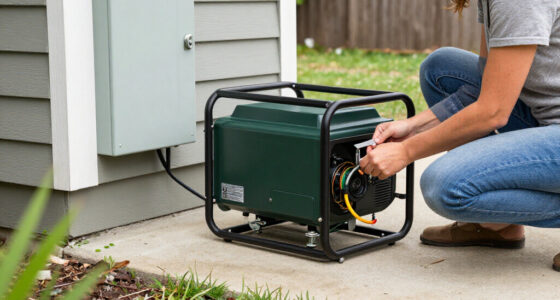
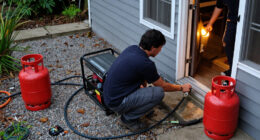
The best portable dual fuel generator for most buyers in this roundup is the Westinghouse WGen9500DF, which pairs substantial backup capacity with both gasoline and propane operation. For greater output, the DuroMax XP13000HX suits households with heavier loads, while the PowerSmart 4400-Watt inverter is a more compact choice for quieter, smaller-scale power needs. The main tradeoff is straightforward: higher-output conventional generators can handle more appliances, but inverter models generally make portability and sensitive electronics a stronger priority. Fuel choice also affects runtime and power output, so wattage alone does not tell the full story. Read on for a comparison of all 12 models and guidance on matching one to your loads, location, and budget.

Get backup power and energy gear delivered free with Prime
- Fast, free delivery on millions of items
- Prime Video, Amazon Music and more included
- Member-only deals all year
Complete the kit


Key Takeaways
- The Westinghouse WGen9500DF is the strongest all-around balance in this lineup for buyers who want substantial home-backup output without stepping up to the largest models.
- The DuroMax XP13000HX and Westinghouse WGen11500DFc serve higher-demand buyers; their extra capacity makes more sense for larger loads than for occasional small-device use.
- Inverter models fill a different role from conventional generators: the PowerSmart 4400, WEN DF680iX, and Könner & Söhnen KS 4000iEHS CO prioritize a more portable, electronics-oriented setup over maximum household output.
- Dual fuel does not mean identical performance on both fuels. Buyers should compare the listed gasoline and propane output and runtime figures for their expected loads and fuel supply.
- CO sensors, electric or remote starting, and wheel kits affect usability, not just convenience. A safety feature or easier startup can matter more than added wattage for some users, while storage space and lifting needs can rule out the largest units.
| DuroMax XP13000HX 13,000-Watt Dual Fuel Portable Generator |  | Best for Whole-Home Backup | Starting wattage: 13,000 watts | Running wattage: 13,000 watts | Fuel: Gasoline or propane | VIEW LATEST PRICE | See Our Full Breakdown |
| Westinghouse WGen5300DFcv Dual-Fuel Portable Generator with CO Sensor |  | Best for RV and Mid-Range Backup | Running watts: 5,300W gasoline; 4,800W propane | Peak watts: 6,500W gasoline; 5,800W propane | Fuel: Gasoline or propane | VIEW LATEST PRICE | See Our Full Breakdown |
| PowerSmart 4400-Watt Dual-Fuel Portable Inverter Generator |  | Best Compact Inverter Pick | Starting watts: 4,400W gasoline; 4,000W propane | Running watts: 3,600W gasoline; 3,300W propane | Fuel: Gasoline or propane | VIEW LATEST PRICE | See Our Full Breakdown |
| Westinghouse WGen9500DF Dual Fuel Portable Generator |  | Best for Remote Start Convenience | Running watts: 9,500W gasoline; 8,500W propane | Peak watts: 12,500W gasoline; 11,200W propane | Fuel: Gasoline or propane | VIEW LATEST PRICE | See Our Full Breakdown |
| WEN DF8000X 8000-Watt Dual Fuel Portable Generator |  | Best Value for Mid-High Output | Surge watts: 8,000W gasoline; 7,200W propane | Fuel: Gasoline or propane | Engine: 340cc | VIEW LATEST PRICE | See Our Full Breakdown |
| Westinghouse WGen11500DFc Dual-Fuel Portable Generator with Remote Electric Start and CO Sensor | 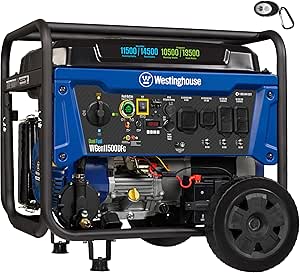 | Best for High-Load Home Backup | Fuel type: Gasoline and propane | Running wattage: 11,500 watts | Peak wattage: 14,500 watts | VIEW LATEST PRICE | See Our Full Breakdown |
| WEN DF680iX 6800-Watt Dual Fuel Portable Inverter Generator |  | Best for 240V Inverter Versatility | Fuel type: Gasoline and propane | Surge wattage: 6,800 watts gasoline; 6,000 watts propane | Engine displacement: 224cc | VIEW LATEST PRICE | See Our Full Breakdown |
| Westinghouse WGen3600DFcv Dual Fuel Portable Generator |  | Best for RV Essentials | Fuel type: Gasoline and propane | Running output: 3,600 watts gasoline; 3,240 watts propane | Peak output: 4,650 watts gasoline; 4,180 watts propane | VIEW LATEST PRICE | See Our Full Breakdown |
| Könner & Söhnen KS 4000iEHS CO Dual-Fuel Inverter Generator |  | Best for Sensitive Electronics | Fuel type: Gasoline or LPG | Running wattage: 3,500 watts | Starting wattage: 4,300 watts | VIEW LATEST PRICE | See Our Full Breakdown |
| PowerSmart 3800-Watt Dual-Fuel Inverter Generator |  | Best Compact, Quiet Pick | Fuel type: Gasoline and propane | Starting wattage: 3,800 watts gasoline; 3,500 watts propane | Running wattage: 3,300 watts gasoline; 3,100 watts propane | VIEW LATEST PRICE | See Our Full Breakdown |
| Westinghouse WGen10500DFc Dual Fuel Portable Generator |  | Best for High-Load Home Backup | Peak output: 13,500 watts | Running output: 10,500 watts | Fuel types: Gasoline and propane (LPG) | VIEW LATEST PRICE | See Our Full Breakdown |
| WEN DF360iX 3600-Watt Dual-Fuel Portable Inverter Generator |  | Best Compact Inverter Pick | Fuel types: Gasoline and propane | Gasoline output: 3,600 surge watts; 2,900 rated watts | Propane output: 3,500 surge watts; 2,600 rated watts | VIEW LATEST PRICE | See Our Full Breakdown |
| portable dual fuel generator | Runtime | Outlets | Engine |
|---|---|---|---|
| DuroMax XP13000HX 13,000-Watt | Up to 17 hours | Four 120V GFCI; one 120V 30A; one 120/240V 30A twist-lock; one 120/240V 50A | 500cc OHV |
| Westinghouse WGen5300DFcv Dual | Up to 14.5 hours | 5–20R 120V duplex; TT-30R 30A; L14-30R 30A | 274cc, 4-stroke OHV |
| PowerSmart 4400-Watt Dual-Fuel | — | 120V 30A L5-30R; 120V 20A 5-20R duplex; 12V 8A DC | 223cc, 4-stroke |
| Westinghouse WGen9500DF Dual F | Up to 12 hours | Two 120V 20A GFCI; 120V 30A L14-30R; 120/240V 50A 14-50R | 457cc, 4-stroke OHV |
| WEN DF8000X 8000-Watt Dual Fue | Up to 10.5 hours at half load | Four 120V 5-20R; 120V 30A TT-30R; 120/240V 30A L14-30R; 12V DC | 340cc |
| Westinghouse WGen11500DFc Dual | Up to 19 hours at 25% load | — | 550cc 4-stroke OHV |
| WEN DF680iX 6800-Watt Dual Fue | 6.1 hours on gasoline at half load; 9 hours on propane with a 20 lb tank | L14-30R 120V/240V, two 5-20R 120V, TT-30R, 12V DC, and two 5V USB | — |
| Westinghouse WGen3600DFcv Dual | Up to 14 hours on gasoline; up to 16.5 hours on a 20 lb propane tank | 5-20R household duplex, TT-30R, and L5-30R | 212cc 4-stroke OHV |
| Könner & Söhnen KS 4000iEHS CO | — | — | 4-stroke, 7.5 hp maximum |
| PowerSmart 3800-Watt Dual-Fuel | 8 hours at 25% load on gasoline; up to 24 hours on a 20 lb propane tank | — | — |
| Westinghouse WGen10500DFc Dual | Up to 19 hours at 25% load | 14-50R 50A and L14-30R 30A | — |
| WEN DF360iX 3600-Watt Dual-Fue | Up to 5 hours at half load on gasoline; up to 14 hours at half load on a 20 lb propane tank | Two 120V NEMA 5-20R, one 120V TT-30R RV, one 12V DC, and two 5V USB | — |
More Details on Our Top Picks
DuroMax XP13000HX 13,000-Watt Dual Fuel Portable Generator
For buyers who need substantial backup capacity, the DuroMax XP13000HX is the strongest fit in this group: its listed 13,000 watts and 120/240V, 50-amp outlet give it a more direct path to transfer-switch connection than the smaller Westinghouse WGen5300DFcv. Gasoline-or-propane operation adds a useful fuel choice during an outage, while electric start avoids relying on a pull start for routine use. Its 500cc engine and all-copper windings suit a high-output backup role, but this is not an easy generator to reposition. At 245 pounds, it is much heavier than the 68-pound PowerSmart 4400, and its listed 0.5-gallon tank capacity is unusually small for a machine intended for extended backup. I’d choose it for output and connection options, not portability or long run intervals.
Pros:- Listed 13,000-watt output is the highest among these five picks.
- 120/240V 50-amp outlet supports transfer-switch-ready home backup.
- Runs on gasoline or propane.
- Electric start and all-copper windings suit a high-output backup role.
Cons:- At 245 pounds, it is difficult to move without assistance.
- The listed 0.5-gallon fuel tank capacity is small for extended operation.
- Its size and output are excessive for light recreational use.
Best for: Homeowners seeking high-output backup with a 50-amp transfer-switch connection and room to run multiple household loads.
Not ideal for: Campers, solo users, or anyone who needs to move a generator frequently; its 245-pound weight calls for help, and the listed 0.5-gallon tank capacity limits fuel reserve.
- Starting wattage:13,000 watts
- Running wattage:13,000 watts
- Fuel:Gasoline or propane
- Engine:500cc OHV
- Voltage:120/240V
- Runtime:Up to 17 hours
- Weight:245 lbs
- Outlets:Four 120V GFCI; one 120V 30A; one 120/240V 30A twist-lock; one 120/240V 50A
Our verdict“Choose the XP13000HX when home-backup output and a 50-amp connection matter more than easy movement or long intervals between refueling.”
Westinghouse WGen5300DFcv Dual-Fuel Portable Generator with CO Sensor
The Westinghouse WGen5300DFcv makes more sense for moderate loads than the high-output DuroMax XP13000HX: it supplies 5,300 running watts on gasoline and includes both a TT-30R RV outlet and an L14-30R connection for transfer-switch use. That combination gives RV owners and households with a limited backup circuit a practical mix without stepping up to a much larger machine. Its CO sensor with automatic shutdown and low-oil shutdown add protective features, while the 4.7-gallon tank is listed for up to 14.5 hours of runtime. Compared with the PowerSmart 4400 inverter, this Westinghouse offers more gasoline running output, but it lacks the supplied clean-power specification for sensitive electronics and is a heavier, space-hungry conventional generator. Assembly is required, so it is less appealing if you want a ready-to-run compact unit.
Pros:- Provides 5,300 running watts on gasoline and 4,800 on propane.
- Includes RV-ready TT-30R and transfer-switch-ready L14-30R outlets.
- CO shutdown and low-oil shutdown add safety protections.
- 4.7-gallon tank supports up to 14.5 hours of listed runtime.
Cons:- Requires some assembly before use.
- Its heavy-duty format takes substantial storage space.
- Does not list an inverter or low-THD output specification for sensitive electronics.
Best for: RV owners and households that need mid-range backup power, a 30A transfer-switch connection, and a wheel kit for occasional repositioning.
Not ideal for: Buyers who need inverter-rated clean power for sensitive electronics or a small generator that is easy to store in tight spaces.
- Running watts:5,300W gasoline; 4,800W propane
- Peak watts:6,500W gasoline; 5,800W propane
- Fuel:Gasoline or propane
- Engine:274cc, 4-stroke OHV
- Fuel tank:4.7 gallons
- Runtime:Up to 14.5 hours
- Voltage:120/240V selector switch
- Outlets:5–20R 120V duplex; TT-30R 30A; L14-30R 30A
Our verdict“Pick the WGen5300DFcv for practical RV and moderate backup connections, but choose the PowerSmart 4400 if clean inverter power is your priority.”
PowerSmart 4400-Watt Dual-Fuel Portable Inverter Generator
Among these five, the PowerSmart 4400 is the clear choice when compact size and cleaner power matter more than whole-home capacity. Its inverter output is listed at less than 3% THD, making it a better match for sensitive electronics than the conventional Westinghouse WGen5300DFcv or WGen9500DF. It also weighs 68 pounds, far less than the 245-pound DuroMax XP13000HX, and its 120V 30A outlet offers a useful connection for compatible equipment. The tradeoff is limited capacity: gasoline running output is 3,600 watts, and propane output falls to 3,300 watts, so heavy household loads are beyond its role. The 1.6-gallon gasoline tank also means up to eight hours at only 25% load; propane runtime is longer under the same stated load condition, but requires a separate 20-pound tank.
Pros:- Inverter output is specified at less than 3% THD for sensitive electronics.
- 68-pound weight is far easier to handle than the large backup models here.
- Runs on gasoline or propane, with up to 24 hours at 25% load on a 20-pound propane tank.
- Includes Eco mode, a CO sensor, and parallel capability.
Cons:- Running output is limited to 3,600 watts on gasoline and 3,300 watts on propane.
- Its 1.6-gallon gasoline tank limits runtime to up to eight hours at 25% load.
- 120V-only output does not serve 240V appliances.
Best for: Campers, remote workers, and electronics owners who want a lighter dual-fuel inverter for modest 120V loads.
Not ideal for: Homeowners seeking whole-house or 240V backup, or buyers who need high continuous output for multiple large appliances.
- Starting watts:4,400W gasoline; 4,000W propane
- Running watts:3,600W gasoline; 3,300W propane
- Fuel:Gasoline or propane
- Engine:223cc, 4-stroke
- Voltage:120V
- THD:Less than 3%
- Weight:68 lbs
- Outlets:120V 30A L5-30R; 120V 20A 5-20R duplex; 12V 8A DC
Our verdict“Choose the PowerSmart 4400 for lighter, electronics-friendly 120V power; move up to the Westinghouse WGen5300DFcv for more conventional backup capacity.”
Westinghouse WGen9500DF Dual Fuel Portable Generator
The Westinghouse WGen9500DF occupies the middle ground between the DuroMax XP13000HX’s very high output and the WGen5300DFcv’s lighter-duty capacity. It delivers up to 9,500 running watts on gasoline, with 8,500 watts on propane, and includes a 50A outlet alongside household and 30A connections. That makes it a flexible choice for backup loads and RV use. Its standout convenience is the choice of remote, electric, and recoil start: remote starting can be useful when the generator is positioned outside during bad weather. The 6.6-gallon tank is listed for up to 12 hours, shorter than the WGen5300DFcv’s stated 14.5 hours, though the two units differ in output. It remains a heavy-duty machine despite its wheels and handle, and its 120/240V outlet listing is more useful for backup than its stated 120V voltage entry alone suggests.
Pros:- Supplies up to 9,500 running watts on gasoline and 8,500 on propane.
- Remote, electric, and recoil starting offer multiple ways to start it.
- Includes a 120/240V 50A outlet plus household and 30A outlets.
- Wheels and a handle assist with repositioning.
Cons:- Heavy-duty construction remains difficult to move despite the wheel kit.
- Propane running output is lower than gasoline output.
- Listed runtime is up to 12 hours, shorter than the WGen5300DFcv’s up-to-14.5-hour figure.
Best for: Homeowners who want substantial dual-fuel backup, a 50A outlet, and the convenience of remote starting.
Not ideal for: Buyers who need a lightweight portable generator, inverter-rated power for sensitive electronics, or the longest listed runtime between refills.
- Running watts:9,500W gasoline; 8,500W propane
- Peak watts:12,500W gasoline; 11,200W propane
- Fuel:Gasoline or propane
- Engine:457cc, 4-stroke OHV
- Fuel tank:6.6 gallons
- Runtime:Up to 12 hours
- Starting methods:Remote, electric, and recoil
- Outlets:Two 120V 20A GFCI; 120V 30A L14-30R; 120/240V 50A 14-50R
Our verdict“Choose the WGen9500DF for high backup output and remote-start convenience, rather than the lighter PowerSmart inverter or smaller WGen5300DFcv.”
WEN DF8000X 8000-Watt Dual Fuel Portable Generator
The WEN DF8000X is a practical middle choice for buyers who want more conventional-generator capacity than the WGen5300DFcv without moving up to the 9,500-running-watt Westinghouse WGen9500DF. It supplies up to 6,500 rated watts on gasoline, with 8,000 surge watts, and its panel includes an RV-ready 30A outlet plus a 120/240V transfer-switch-ready connection. That mix suits household backup, recreational use, and tools that need more than a compact inverter can provide. Electric start with recoil backup is straightforward, while the CO Watchdog sensor adds a safety shutdown feature. The tradeoffs are clear: propane output is lower than gasoline output, and the 340cc wheeled unit is still a bulky conventional generator rather than a carry-friendly option like the 68-pound PowerSmart 4400. Its stated 10.5-hour runtime applies at half load, so heavier use will reduce the interval between refills.
Pros:- Provides 6,500 rated watts on gasoline with 8,000 surge watts.
- Includes RV-ready and 120/240V transfer-switch-ready outlets.
- Electric start has recoil backup.
- CO Watchdog shutdown sensor and wheel kit support safer operation and repositioning.
Cons:- Propane surge output is lower than gasoline output.
- Its conventional-generator size and weight make it less convenient to carry than the PowerSmart 4400.
- The stated 10.5-hour runtime is at half load, not a guarantee at heavier demand.
Best for: Households and RV users needing mid-to-high output, a 240V transfer-switch connection, and electric start without stepping up to a larger 9,500-watt model.
Not ideal for: Campers who prioritize low weight and inverter output, or buyers who need the greater gasoline running output of the Westinghouse WGen9500DF.
- Surge watts:8,000W gasoline; 7,200W propane
- Fuel:Gasoline or propane
- Engine:340cc
- Voltage:120V/240V
- Tank capacity:6.7 gallons
- Runtime:Up to 10.5 hours at half load
- Outlets:Four 120V 5-20R; 120V 30A TT-30R; 120/240V 30A L14-30R; 12V DC
Our verdict“Pick the DF8000X for a balanced blend of backup and RV connections, while choosing the WGen9500DF for more output or the PowerSmart 4400 for a lighter inverter.”
Westinghouse WGen11500DFc Dual-Fuel Portable Generator with Remote Electric Start and CO Sensor
For buyers who need substantial backup capacity, the WGen11500DFc delivers 11,500 running watts and 240V output on gasoline or propane. That puts it in a different class from the WEN DF680iX: it can serve larger home loads, while the WEN is easier to take camping or move around. Remote and push-button starting reduce the effort of firing it up, and the 9.5-gallon tank can run up to 19 hours at 25% load. Its under-5% THD rating also makes it a stronger fit for electronics than many conventional high-output generators. The tradeoff is scale: this is heavy-duty equipment, not an easy grab-and-go option. A transfer switch and related connection equipment are sold separately, so buyers should plan for the home hookup as well as the generator.
Pros:- 11,500 running watts and 240V output support larger backup loads than compact inverter models.
- Runs on gasoline or propane, giving buyers a choice of available fuel.
- Remote and push-button electric start reduce the effort of starting the generator.
- Under-5% THD, low-oil shutdown, and a carbon monoxide sensor add useful power-quality and safety features.
Cons:- Heavy-duty size makes it difficult to move and store compared with the WEN DF680iX.
- Transfer switch and other home-connection equipment are sold separately.
- Its high output is excessive for buyers who only need to power a few small devices.
Best for: Homeowners seeking high-capacity, 240V backup power for multiple household loads, with gasoline and propane available as fuel options.
Not ideal for: Campers, apartment dwellers, and buyers who need a lightweight generator they can move without help; its heavy-duty size also makes it a poor fit for casual portable use.
- Fuel type:Gasoline and propane
- Running wattage:11,500 watts
- Peak wattage:14,500 watts
- Engine:550cc 4-stroke OHV
- Fuel tank:9.5 gallons
- Runtime:Up to 19 hours at 25% load
- Voltage and frequency:240 volts, 60 Hz
- Starting method:Push-button electric start and remote start
- Safety and power quality:Low-oil shutdown, carbon monoxide sensor, less than 5% THD
Our verdict“Choose the WGen11500DFc for large home-backup loads and remote starting, but skip it if easy transport matters more than capacity.”
WEN DF680iX 6800-Watt Dual Fuel Portable Inverter Generator
The WEN DF680iX occupies a useful middle ground: it offers inverter power and a bonded-neutral 240V configuration, rather than the much larger output of the Westinghouse WGen11500DFc. Its L14-30R outlet and 240V setup support Level 2 EV charging, while RV, household, DC, and USB outlets broaden its usefulness around a campsite or home. At 64 dB at quarter load, it is also more suited to quieter settings than a conventional high-output backup unit. Gasoline provides the higher surge output; propane lowers it, so buyers should size loads around the fuel they plan to use. The 2.9-gallon tank and stated gasoline runtime of 6.1 hours at half load mean refueling is more frequent than with the WGen11500DFc. Wheels and a telescoping handle help with movement, though this is still not a substitute for a small carryable power station.
Pros:- Bonded-neutral 240V output and an L14-30R receptacle support Level 2 EV charging.
- Inverter design and 64 dB noise rating at quarter load suit quieter camping and residential use.
- Gasoline and propane operation gives buyers fuel flexibility.
- Fuel shutoff, CO shutdown sensor, wheels, and telescoping handle add practical maintenance, safety, and mobility features.
Cons:- Propane surge output is lower than gasoline output, limiting available starting power on propane.
- The 2.9-gallon tank and 6.1-hour gasoline runtime at half load require more frequent refueling than the WGen11500DFc.
- Parallel connection kit is sold separately.
Best for: RV owners and homeowners who want inverter-style power, a 240V outlet for Level 2 EV charging, and several outlet types in one portable generator.
Not ideal for: Buyers needing long refueling intervals or high whole-home output; its gasoline runtime and wattage fall short of the Westinghouse WGen11500DFc.
- Fuel type:Gasoline and propane
- Surge wattage:6,800 watts gasoline; 6,000 watts propane
- Engine displacement:224cc
- Noise level:64 dB at quarter load
- Fuel tank:2.9 gallons
- Runtime:6.1 hours on gasoline at half load; 9 hours on propane with a 20 lb tank
- Outlets:L14-30R 120V/240V, two 5-20R 120V, TT-30R, 12V DC, and two 5V USB
- Warranty:3-year limited
Our verdict“Pick the DF680iX if you need quieter inverter power with 240V EV-charging capability, not if your priority is maximum backup capacity or long gasoline runtime.”
Westinghouse WGen3600DFcv Dual Fuel Portable Generator
The WGen3600DFcv is a straightforward fit for RV users who want a TT-30R outlet and enough capacity for a modest set of essentials. It supplies 3,600 running watts on gasoline or 3,240 on propane, so it offers more gasoline output than the PowerSmart 3800-Watt Dual-Fuel Inverter Generator, though the PowerSmart adds inverter operation and a lower stated Eco Mode noise level. The Westinghouse counters with up to 14 hours of gasoline runtime from its 4-gallon tank, plus a digital readout and fuel gauge that help track operation. Its 120V-only output suits RV and household circuits but rules out 240V loads. Automatic low-oil and CO shutdown add protective features, while the conventional generator format is less focused on quiet operation than the inverter alternatives. Buyers will need to supply fuel and complete minimal assembly.
Pros:- TT-30R outlet is suited to connecting an RV.
- Provides 3,600 running watts on gasoline and 3,240 on propane.
- Up to 14 hours of gasoline runtime helps reduce refueling at lighter loads.
- Fuel gauge, digital readout, low-oil shutdown, and CO shutdown provide useful operating and safety information.
Cons:- 120V-only output cannot power 240V loads, unlike the WEN DF680iX.
- Propane running output is lower than gasoline output.
- Requires fuel and minimal assembly before use.
Best for: RV owners who want a dual-fuel generator with a TT-30R connection and enough output for essential 120V appliances.
Not ideal for: Buyers who need 240V power, prioritize quieter inverter operation, or want more than modest RV and household backup capacity.
- Fuel type:Gasoline and propane
- Running output:3,600 watts gasoline; 3,240 watts propane
- Peak output:4,650 watts gasoline; 4,180 watts propane
- Engine:212cc 4-stroke OHV
- Fuel tank:4 gallons
- Runtime:Up to 14 hours on gasoline; up to 16.5 hours on a 20 lb propane tank
- Voltage:120 volts
- Outlets:5-20R household duplex, TT-30R, and L5-30R
- Safety and warranty:Low-oil and CO shutdown, overload protection, voltage regulation; 3-year limited warranty
Our verdict“Choose the WGen3600DFcv for practical dual-fuel RV and 120V backup use, but look elsewhere for 240V output or quieter inverter operation.”
Könner & Söhnen KS 4000iEHS CO Dual-Fuel Inverter Generator
The KS 4000iEHS CO is aimed at buyers who value clean inverter output and a compact set of 120V loads over broad outlet coverage. Its pure sine wave power, Eco Mode, and 62 dB rating at 23 feet make it a quieter, electronics-focused alternative to the conventional Westinghouse WGen3600DFcv. It also runs on gasoline or LPG and includes a multifunction LED display, wheels, and a foldable handle. The main limitation is stark: the supplied product data lists one power outlet, which restricts how many devices can connect without additional equipment. At 46 kg, it is also heavy for a generator marketed around portability, even with wheels. Its 3,500-watt running output is suited to moderate loads, not the higher-demand backup role of the WGen11500DFc. This makes the KS a narrower pick, best for buyers who prioritize inverter output and accept its outlet and weight compromises.
Pros:- Pure sine wave inverter output is suited to sensitive electronics.
- Eco Mode adjusts engine speed to match power demand.
- Gasoline or LPG operation provides fuel flexibility.
- Wheels and a foldable handle help move the unit despite its weight.
Cons:- The listed single power outlet limits simultaneous connections compared with the WGen3600DFcv.
- At 46 kg, it is heavy to lift or load despite its wheels.
- 120V output and 3,500 running watts do not suit 240V or high-load backup needs.
Best for: Owners of sensitive electronics who want pure sine wave 120V power, Eco Mode, and wheels for moving the generator across a campsite or property.
Not ideal for: Buyers who need multiple built-in outlets, 240V output, or a generator that is easy to lift into a vehicle; its listed single outlet and 46 kg weight are limiting.
- Fuel type:Gasoline or LPG
- Running wattage:3,500 watts
- Starting wattage:4,300 watts
- Voltage and frequency:120 volts, 60 Hz
- Noise level:62 dB at 23 feet
- Weight:46 kg
- Dimensions:23.5 × 17.4 × 21.7 inches
- Engine:4-stroke, 7.5 hp maximum
- Included components and warranty:Start keys, filling funnel, screwdriver, spark plug wrench, wrench; 3 years
Our verdict“Choose the KS 4000iEHS CO for clean 120V inverter power and Eco Mode, provided one outlet and a 46 kg chassis fit your setup.”
PowerSmart 3800-Watt Dual-Fuel Inverter Generator
For buyers who value a lighter, quieter setup over high output, the PowerSmart 3800-Watt Dual-Fuel Inverter Generator is the most compact-feeling option in this group: it weighs 50.7 pounds and is rated at 59 dBA at 25% load in Eco Mode. Its 120V outlets include an L5-30R, household duplex, DC, and USB connections, giving it more built-in connection options than the KS 4000iEHS CO, which lists one outlet. The PowerSmart also runs on propane, with up to 24 hours stated from a 20-pound tank, although gasoline runtime is listed as 8 hours at 25% load. That small 1.3-gallon tank makes the propane figure more appealing for extended use. There is a data caveat: its product description and specifications give different wattage figures, so I would verify the exact output before matching it to a load. Its 120V limit and lower running wattage also put it well below the WGen11500DFc for home backup.
Pros:- At 50.7 pounds, it is easier to move than the 46 kg KS 4000iEHS CO.
- 59 dBA at 25% load in Eco Mode suits quieter camping and residential settings.
- Multiple AC, DC, and USB outlet types support a range of small devices.
- Propane runtime is listed at up to 24 hours with a 20 lb tank.
Cons:- Gasoline runtime is listed as 8 hours at 25% load, and the tank holds only 1.3 gallons.
- The product description and specifications report different wattage figures, creating uncertainty when sizing loads.
- 120V output and modest running wattage cannot match the home-backup capacity of the WGen11500DFc.
Best for: Campers and homeowners with modest 120V loads who want a relatively light dual-fuel inverter generator, quiet Eco Mode operation, and USB and DC connections.
Not ideal for: Buyers who need 240V service, high-capacity home backup, or precise output planning without first confirming the conflicting wattage details.
- Fuel type:Gasoline and propane
- Starting wattage:3,800 watts gasoline; 3,500 watts propane
- Running wattage:3,300 watts gasoline; 3,100 watts propane
- Noise level:59 dBA at 25% load in Eco Mode
- Runtime:8 hours at 25% load on gasoline; up to 24 hours on a 20 lb propane tank
- Gas tank:1.3 gallons
- Engine displacement and weight:149cc; 50.7 pounds
- Voltage and outlets:120 volts; L5-30R, 5-20R duplex, 12V DC, and dual 5V USB
- Safety and warranty:Overload, short-circuit, CO sensor, and low-oil protection; 2-year limited warranty
Our verdict“Choose the PowerSmart for quieter, lightweight 120V use and varied outlets, but confirm its wattage figures before relying on it for a specific load.”
Westinghouse WGen10500DFc Dual Fuel Portable Generator
The WGen10500DFc is the lineup’s high-capacity choice for buyers who need to run several household circuits or larger appliances during an outage. Its 10,500 running watts on gasoline and 50A outlet give it more headroom than the WGen9500DF, while dual-fuel operation lets you switch to propane when gasoline storage or access is a concern. The 9.5-gallon tank supports up to 19 hours at 25% load, and remote electric start saves a trip to the machine when it is parked outside.
The tradeoff is size: wheels help with movement, but this is still a heavy generator that may need help to position. Homeowners planning automatic backup also need to buy the WATS200 transfer switch separately. Compared with the smaller WGen5300DFcv, this model offers far more output but is a less practical fit for light-duty or occasional use.
Pros:- 10,500 running watts on gasoline provides capacity for heavier home backup loads
- Gasoline and propane operation gives buyers fuel flexibility
- Up to 19 hours of runtime at 25% load reduces refueling frequency
- Remote electric start, CO sensor, and automatic low-oil shutdown add convenience and protection
Cons:- Heavy, bulky construction can make positioning difficult even with wheels
- Automatic transfer switch for home backup is sold separately
- The high output may be excessive for buyers powering only a few small devices
Best for: Homeowners who need substantial outage capacity for multiple circuits or high-demand appliances and have space to store a large generator.
Not ideal for: Campers, apartment residents, and buyers who need a generator that one person can easily lift or transport; its high output comes with substantial size and weight.
- Peak output:13,500 watts
- Running output:10,500 watts
- Fuel types:Gasoline and propane (LPG)
- Engine displacement:500cc
- Fuel tank capacity:9.5 gallons
- Runtime:Up to 19 hours at 25% load
- Start type:Remote electric start and recoil
- Outlets:14-50R 50A and L14-30R 30A
- Warranty:3-year limited residential
Our verdict“Choose the WGen10500DFc if outage capacity matters more than easy transport, but pick a smaller model such as the WGen5300DFcv for lighter loads and simpler handling.”
WEN DF360iX 3600-Watt Dual-Fuel Portable Inverter Generator
The WEN DF360iX suits buyers who value portability and cleaner power over whole-home output. At 49 lb, it is far easier to move than the Westinghouse WGen10500DFc, and its inverter output is designed for sensitive electronics such as laptops and phones. The TT-30R outlet also makes it a useful match for RV owners, while USB ports provide a direct way to charge smaller devices.
Its output is modest by this roundup’s standards: gasoline provides 2,900 rated watts, dropping to 2,600 on propane. That is a sharp contrast with the WGen10500DFc’s capacity for larger backup loads, so this WEN is better for a few essentials than a busy household. Gasoline runtime reaches only five hours at half load; propane can run longer on a 20 lb tank, though the parallel connection kit needed to link another generator is sold separately.
Pros:- 49 lb weight is more manageable for transport than large home-backup generators
- Inverter power is designed for sensitive electronics
- Gasoline and propane operation offers fuel choice, with longer stated runtime on propane
- TT-30R RV outlet and USB ports suit recreational and small-device use
Cons:- Rated output falls to 2,600 watts on propane
- Gasoline runtime is up to five hours at half load
- Parallel connection kit is sold separately for users who want to combine generator output
Best for: RV owners, campers, and electronics users who want a light dual-fuel inverter for modest loads and easier transport.
Not ideal for: Households seeking to power multiple large appliances during an outage; its rated output is much lower than the WGen10500DFc and gasoline runtime is limited.
- Fuel types:Gasoline and propane
- Gasoline output:3,600 surge watts; 2,900 rated watts
- Propane output:3,500 surge watts; 2,600 rated watts
- Engine displacement:149cc
- Noise level:65 dB at quarter load
- Fuel tank capacity:1.5 gallons
- Runtime:Up to 5 hours at half load on gasoline; up to 14 hours at half load on a 20 lb propane tank
- Outlets:Two 120V NEMA 5-20R, one 120V TT-30R RV, one 12V DC, and two 5V USB
- Weight and warranty:49 lb; 3-year limited warranty
Our verdict“Choose the DF360iX for portable RV, camping, and electronics power, but look to a higher-output model such as the WGen10500DFc for substantial home backup.”
How We Picked
I ranked these portable dual fuel generators by how well their power, fuel flexibility, and physical format fit recognizable buyer needs. Output capacity matters for home backup, but I also weighed the difference between starting and running watts, the stated performance on gasoline versus propane, and whether a conventional or inverter design better suits the intended use. Models with enough capacity for heavier household loads rank ahead when versatility is strong; smaller inverter options earn their place for buyers who value portability and a setup suited to electronics.
I also considered practical ownership factors: starting method, CO-safety features, transport aids, maintenance demands, and the tradeoff between a larger frame and easier storage. That is why the highest-output model is not automatically first, and why compact inverter generators appear lower in the overall ranking while remaining better fits for specific uses. Buyers should verify exact fuel-specific output, runtime, noise, weight, outlets, and local operating rules before purchase, since specifications and requirements can vary by model and use.
Factors to Consider When Choosing Portable Dual Fuel Generators
Before choosing among these generators, I would work backward from the loads and situations the unit must cover. A model that looks powerful on paper may be a poor fit if it is hard to move, too large to store, or unnecessary for the devices you plan to run.
Size the generator around real loads, not the largest wattage
Write down the appliances you expect to operate at the same time, then check both their running draw and their startup surge. Refrigerators, pumps, and some power tools can briefly demand more power when they start, so adding only their normal operating watts can leave you short. Avoid assuming you can run every household circuit at once; a prioritized list often points to a smaller, easier-to-handle generator. Check whether the product’s advertised figure is starting or running output, and compare the figures for both fuels. If you plan to connect a generator to home wiring, have a qualified professional confirm that the unit and transfer equipment are suitable. This approach prevents paying for capacity you will rarely use while reducing the risk of overload.
Choose fuel with storage and performance in mind
Dual fuel gives you a choice when one fuel is scarce or inconvenient, but gasoline and propane have different storage and handling demands. Gasoline can be readily available, yet it needs careful storage and can degrade over time; propane stores differently and requires compatible cylinders and a safe place for them. Output and runtime can differ by fuel, so check both sets of figures against your planned load rather than assuming propane delivers the same power as gasoline. Think through how many hours you need to run the generator and how you will replenish fuel during an outage. A larger engine may be appealing, but it can consume more fuel when working hard. Match the fuel plan to your likely outage length, local availability, and safe storage capacity.
Pick conventional or inverter design for the job
Conventional generators in this lineup focus on higher output for home backup and demanding equipment. Inverter generators are generally the more relevant starting point when lower noise, portability, or power for sensitive electronics matters, though actual noise and power quality depend on the specific model. Do not choose by the word “inverter” alone: verify rated output, outlet options, and whether the generator can run the equipment you have in mind. A compact unit may not support a whole-home backup plan, while a large conventional model can be awkward for camping or frequent repositioning. Consider where the generator will run and how close it will be to people, while following the maker’s outdoor-use and clearance instructions. The right design is the one that matches the task, not the one with the most attractive single spec.
Treat weight, storage, and setup as part of portability
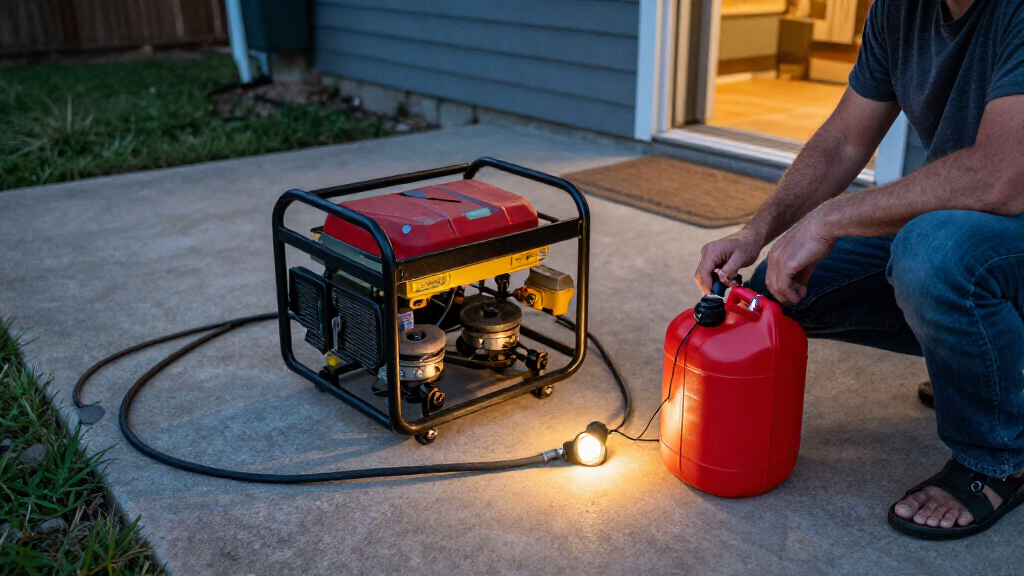
“Portable” does not mean equally easy to move: a high-output generator can be heavy and bulky even when wheels or handles are included. Measure the storage area, check doorways and vehicle access, and think about whether you can load or position the unit safely. Wheels help on suitable ground but may not make a generator manageable on stairs, gravel, or uneven terrain. If you expect to move it often, give physical size and lifting needs more weight than a modest increase in output. Also plan for outdoor operation, ventilation, weather protection that does not block airflow, and access to fuel. A generator that is difficult to set up may be less useful during a stressful outage than a smaller model you can position safely.
Compare safety and starting features with your use case
A CO sensor can add a layer of protection, but it does not make indoor or enclosed operation safe. Every portable generator must be used outdoors and positioned according to the manufacturer’s instructions and applicable safety guidance. Electric or remote starting can make startup easier, especially for users who would struggle with a recoil pull, but it adds components that may need a charged battery and periodic care. Check how the starting system works and what maintenance it requires before relying on it during an outage. Review outlets, overload protection, grounding guidance, and any required transfer equipment as part of the setup, rather than treating them as afterthoughts. Safety features support careful operation; they do not replace distance, ventilation, and proper installation.
Budget for upkeep and the full setup
The generator itself is only part of an operating plan. Oil changes, filters, spark plugs, fuel storage, and periodic exercise all affect long-term readiness, so consult the maintenance schedule before choosing a model. A less expensive or smaller unit may still require accessories, such as a suitable cover for storage, fuel containers, or professionally installed transfer equipment. Check that replacement parts and service information are accessible where you live. If you will use the generator only occasionally, maintenance can be the difference between a dependable backup and a machine that will not start when needed. Pay more for capacity or convenience only when it solves a real need, such as heavier loads, frequent movement, or easier starting. Otherwise, a simpler model that fits your load plan may be the more sensible purchase.
Frequently Asked Questions
Can a portable dual fuel generator power my whole house?
Some high-output models can support selected household circuits, but a portable generator should not be assumed to run an entire home at once. Start by listing essential appliances and checking their running and startup wattage, then compare that total with the generator’s rated output on the fuel you plan to use. A transfer switch or other approved connection equipment is needed for a safe connection to home wiring; never connect a generator directly to a wall outlet. A licensed electrician can help size the setup and identify which circuits to prioritize. For many households, powering essentials is more practical than trying to operate every appliance.
Will I get the same power from propane as from gasoline?
Not necessarily. A dual-fuel generator can have different output and runtime figures for each fuel, so the same model may support a different load on propane than on gasoline. Check the manufacturer’s specifications for both fuels and use the lower relevant figure when planning a load that must work regardless of fuel choice. Propane storage can be convenient for some households, while gasoline may be easier to obtain in other situations. Make your choice based on availability, storage conditions, expected runtime, and the actual fuel-specific output figures.
Should I choose an inverter generator or a higher-output conventional model?
Choose based on the job rather than treating either design as universally better. Inverter options in this roundup are aimed more at portable use and electronics, while the larger conventional models are better candidates for heavier backup loads. Compare rated output, noise information, weight, outlets, and the equipment you plan to run before deciding. A compact inverter model may be easier to transport but unable to start a large pump or run several major appliances together. If household coverage is the priority, calculate your load first; if portability and smaller loads lead, examine inverter models closely.
Is a CO sensor enough to make generator operation safe near my home?
No. A carbon monoxide sensor is an added safety feature, not permission to run a generator indoors, in a garage, or in another enclosed or partially enclosed space. Follow the manufacturer’s placement instructions and current public safety guidance for distance from buildings, doors, windows, and vents. Keep exhaust away from people and living spaces, and never disable a sensor or ignore an alarm. Plan the operating location before an outage so you are not improvising near the home. If you are unsure about placement, consult local safety authorities or a qualified professional.
What should I check before relying on a generator for an extended outage?
Confirm that the generator can support your essential loads on the fuel you expect to use, then estimate how much fuel you will need for the intended runtime. Read the maintenance schedule and keep required oil and service supplies on hand, since many generators need checks during extended operation. Test the starting system and inspect cables, outlets, and any transfer equipment before an emergency. Plan safe fuel storage and a suitable outdoor operating location, and follow the manual for refueling and cooldown procedures. A generator is more dependable as part of a practiced plan than as a machine stored untouched until the power fails.
Conclusion
For the broadest mix of home-backup capacity and dual-fuel flexibility, I recommend the Westinghouse WGen9500DF as the best overall. The WEN DF8000X is a sensible value-oriented choice for buyers who need substantial output but do not need the highest capacity in the group. For heavier loads and buyers willing to manage a larger unit, the DuroMax XP13000HX is my premium pick; compare it with the Westinghouse WGen11500DFc if remote starting and a CO sensor are higher priorities. Beginners who want a more manageable inverter format can start with the PowerSmart 4400-Watt dual-fuel inverter, while the WEN DF360iX and PowerSmart 3800-Watt inverter better suit smaller loads and portability-focused use. Before choosing, match fuel-specific output to your load list and confirm that the generator’s size, safety features, and setup fit where and how you plan to run it.
Fall Picks

Arlo Essential Outdoor Pan-Tilt-Zoom Security Camera, 2K, Wired, 2-Camera Pack
As an affiliate, we earn on qualifying purchases.