To label your cords and chargers for quick setup during an outage, gather all your supplies and organize a clean workspace. Use clear, durable labels with bold, high-contrast writing, and assign descriptive names or color codes to each cord. Attach labels close to connection points and group similar cords for easy identification. Test your labels to make sure they’re visible and secure. Keep these tips in mind to streamline your setup—more helpful strategies await if you keep exploring.
Key Takeaways
- Use color-coded labels at the connector end for quick device or purpose identification.
- Attach durable, high-contrast labels near the plug or connection point for visibility.
- Organize cords with Velcro straps or zip ties to prevent tangling and facilitate rapid access.
- Prepare labels in advance with clear, legible text and place them consistently on each cord.
- Regularly verify labels are secure and readable, replacing any damaged ones to ensure quick recognition.

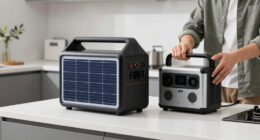
Jackery Portable Power Station Explorer 300, 293Wh Backup Lithium Battery, Solar Generator for Outdoors Camping Travel Hunting Blackout (Solar Panel Optional)
SPEED UP YOUR RECHARGEABILITY: It takes only 2 hours to recharge 80% battery of the power station through...
As an affiliate, we earn on qualifying purchases.
Gather Your Supplies and Prepare Your Workspace
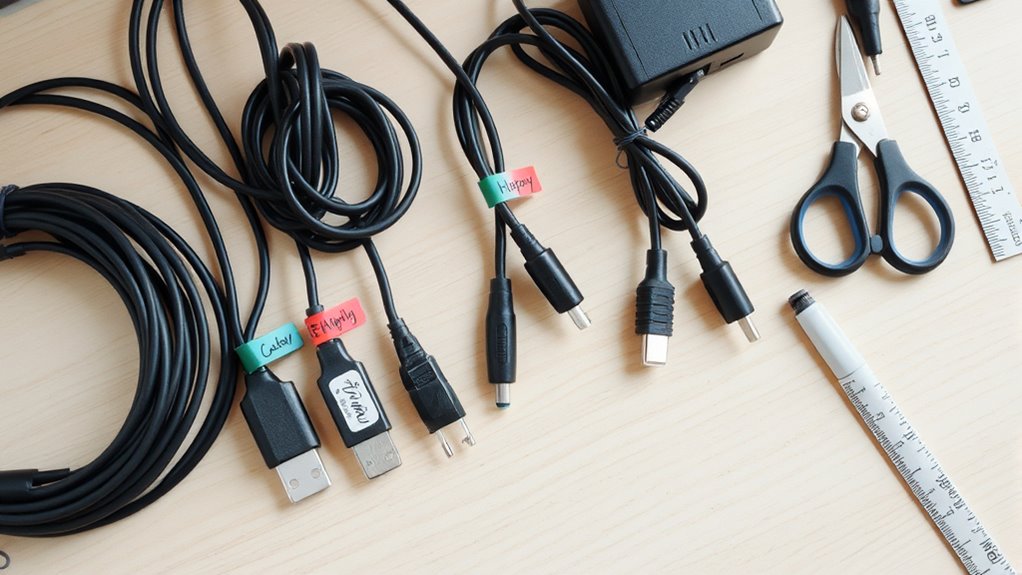
Before you start labeling your cords and chargers, gather all the supplies you’ll need and set up a clean, organized workspace. Having the right storage solutions will help keep everything accessible and tidy. Find a flat surface with enough room to lay out your cords, chargers, and labeling tools. Keep your labeling tools—such as permanent markers, label makers, or masking tape—close at hand. Consider using small containers or bins to sort different types of cords, making it easier to find what you need later. Clear the area of unnecessary items to prevent clutter. A well-prepared workspace minimizes distractions and speeds up the labeling process, ensuring you can efficiently identify each cord and charger when it’s time to organize. Additionally, having a clear cable management strategy can streamline the entire process. Understanding air purifier maintenance principles can help keep your setup neat and prevent tangling over time. Incorporating labeling techniques can further enhance clarity and facilitate quick identification. Proper body jewelry measurements knowledge can also assist in organizing cords that may be used for electronic accessories or wearable tech.

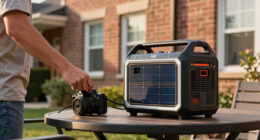
Anker SOLIX C1000 Gen 2 Portable Power Station, 2,000W (Peak 3,000W) Solar Generator, Full Charge in 49 Min, 1,024Wh LiFePO4 Battery for Home Backup, Power Outages, and Camping (Optional Solar Panel)
49 Min UltraFast Recharging: With upgraded HyperFlash tech, fully recharge at 1,600W—for outage prepping, camping trips, or tailgating...
As an affiliate, we earn on qualifying purchases.
Assign Clear, Descriptive Labels to Each Cord and Charger
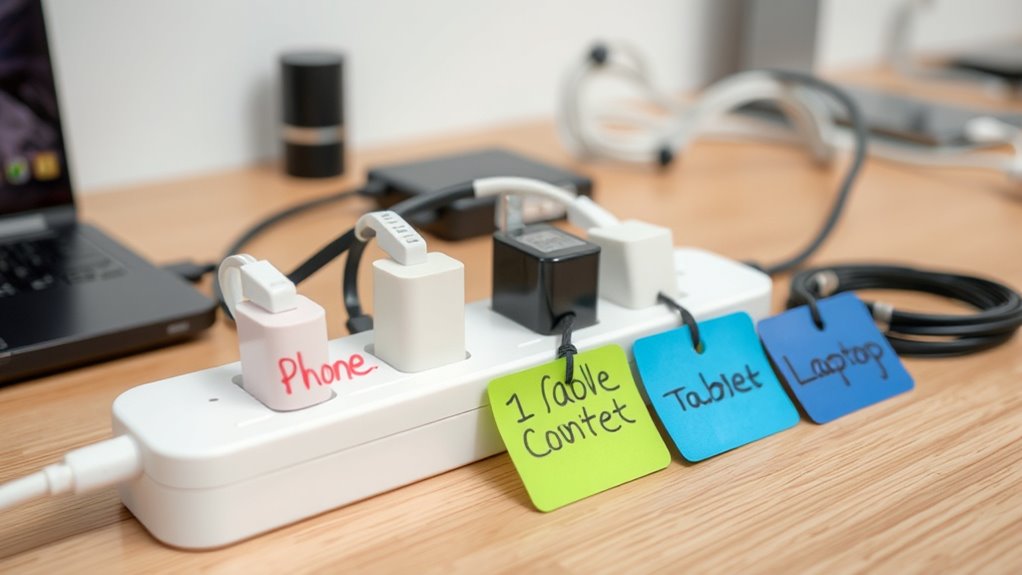
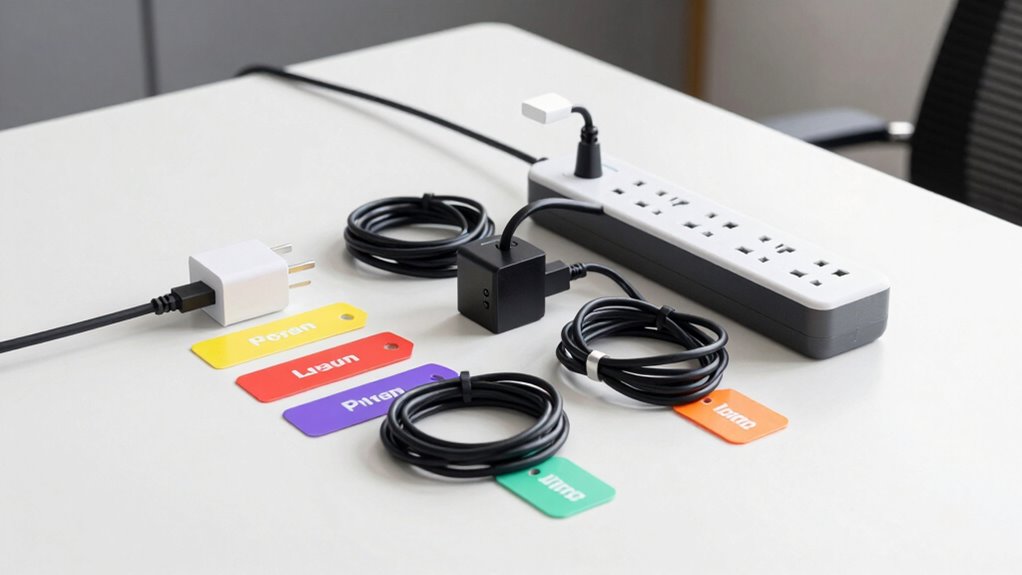
To guarantee you can quickly identify each cord and charger later, it’s essential to assign clear, descriptive labels. Use color coding to categorize cords by device type or location, making visual identification faster. Place labels near the plug end or where the cord connects to the device, ensuring they’re visible when stored or in use. Keep labels simple and legible, using bold text or contrasting colors for easy reading. Consistent label placement prevents confusion and saves time during setup or troubleshooting. Additionally, labeling best practices help maintain clarity and ensure your setup remains efficient over time. Incorporating standardized labeling methods can further enhance organization, especially when managing multiple devices.

BLUETTI Elite 30 V2 Portable Power Station 600W (Power Lifting 1500W), 288Wh LiFePO4 Battery with 10ms UPS, Emergency Backup Power for Home Blackout/Winter Storm, Solar Generator for Camping/Road Trip
[288Wh On-the-Go Power] - Only 9.4 lbs lightweight, carry it anywhere during storms! 288Wh capacity meets daily &...
As an affiliate, we earn on qualifying purchases.
Use Durable, Visible Labeling Materials for Longevity
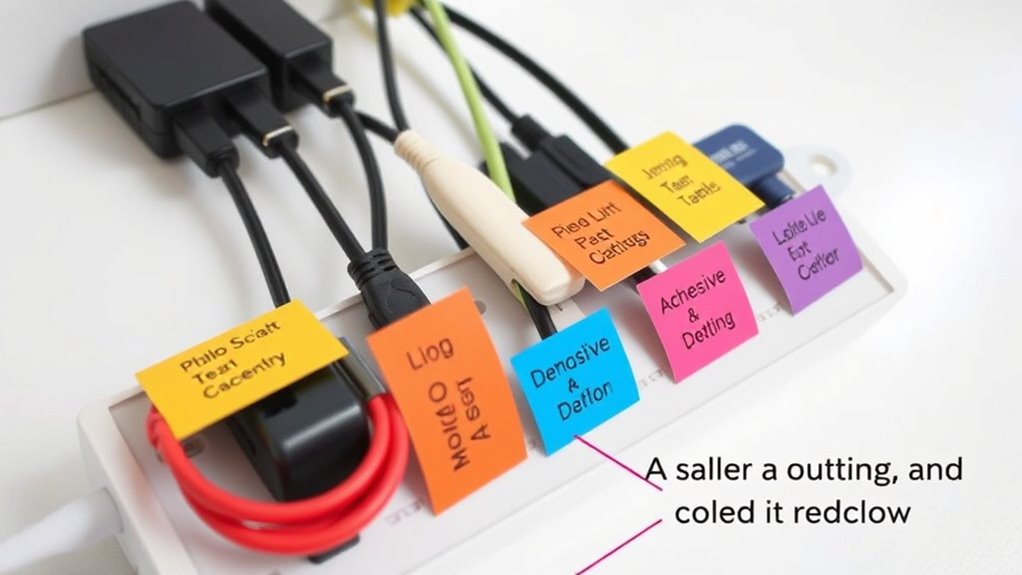
Using durable, visible labeling materials guarantees your labels last through daily wear and tear. When choosing labeling techniques, prioritize materials that withstand moisture, friction, and UV exposure, like laminated labels or plastic tags. These options ensure your labels stay intact over time, even with frequent handling or exposure to the elements. Clear, high-contrast colors and bold fonts improve visibility, making identification quick and effortless. Avoid flimsy paper or adhesive labels prone to peeling or fading. Instead, opt for robust labeling materials designed for longevity. Proper selection of these materials minimizes re-labeling efforts and keeps your outage setup organized. Additionally, selecting weather-resistant materials can further protect labels from environmental damage. Incorporating labels that resist chemical degradation can help maintain clarity in dynamic conditions. By investing in durable, visible labeling materials, you ensure your cords and chargers remain clearly identified for the long haul, saving you time and frustration during emergencies.

Jackery Solar Generator 1000 v2 with 200W Solar Panel,1070Wh Portable Power Station LiFePO4 Battery,1500W AC/100W USB-C Output, 1Hr Fast Charge for Outdoor,Off-Grid Living,RV,Emergency
Powerful yet Compact: Boasting a 1,500W AC output and a 3,000W surge peak, the Solar Generator 1000 V2...
As an affiliate, we earn on qualifying purchases.
Organize and Attach Labels to Each Device and Cord

Once you have your labels ready, the next step is to systematically organize and attach them to each device and cord. Effective cable management helps keep everything neat and accessible, so group similar cords together using zip ties or Velcro straps. Use clear labeling techniques, such as placing labels close to connectors or at the cord’s end, to make quick identification possible. Wrap labels around cords securely but avoid covering critical connection points. Arrange devices and cords in a way that minimizes tangling and makes future disconnection simple. Take your time to attach labels firmly, ensuring they won’t fall off during handling. Incorporate proper storage practices to protect your cords and devices from damage and ensure longevity. Additionally, maintaining cable organization can prevent potential hazards and prolong the lifespan of your setup. Implementing standardized labeling methods can further enhance your ability to quickly identify and troubleshoot devices during an outage. Consistently applying these organizational strategies can streamline your setup process, making it fast and efficient to identify and access each device during an outage.
Test Your Labels and Finalize the Setup for Quick Identification
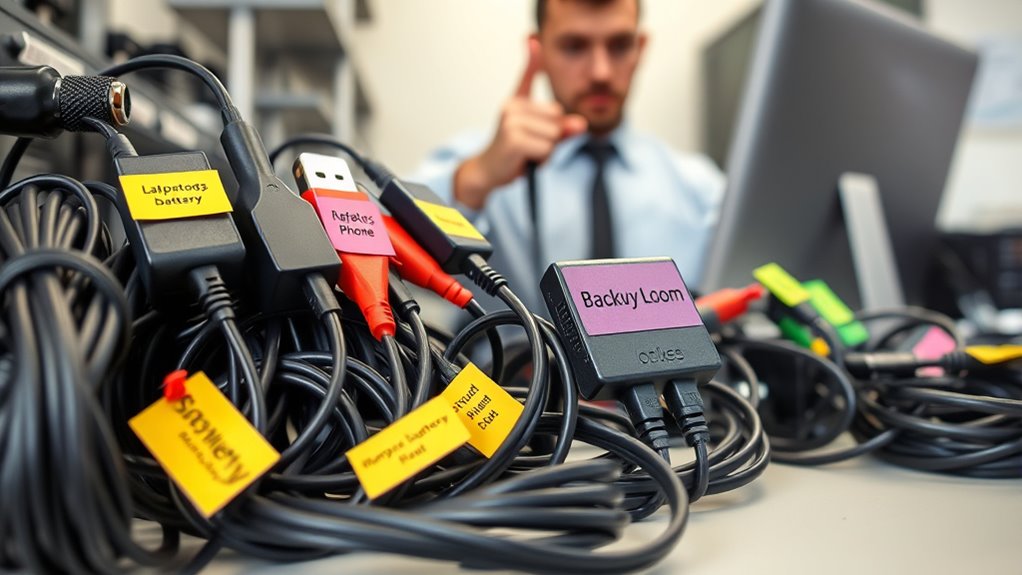
After attaching your labels, it’s crucial to test them to guarantee they are accurate and easily readable. Follow labeling best practices by checking the clarity of font size and color contrast. Make sure each label sticks firmly and doesn’t peel or smudge over time, ensuring label durability. Turn off and unplug cords or chargers, then verify that each label correctly identifies its device. If any labels are unclear or loose, reapply or replace them immediately. Testing your labels now means you won’t struggle to identify cords during an outage, saving you time. Finalizing your setup with clear, durable labels guarantees quick identification in stressful situations. Connected equipment and smart home technology integration can further streamline your outage preparedness. Consistently reviewing and adjusting labels enhances their effectiveness, making your outage setup fast and reliable.
Frequently Asked Questions
What Types of Labels Are Best for High-Temperature Environments?
For high-temperature environments, you should choose heat resistant labels with durable adhesive options. These labels withstand extreme heat without peeling or fading, ensuring your cords and chargers stay clearly identified. Look for labels made from materials like polyester or silicone that tolerate high temperatures. Make sure the adhesive is strong and sticky enough to stay in place even under heat stress, so your outage setup remains organized and efficient.
How Can I Prevent Labels From Peeling Over Time?
Did you know that 60% of labels peel within a year? To prevent labels from peeling over time, focus on durability concerns and choose labels with strong adhesive strength. Clean surfaces thoroughly before applying, ensuring no dust or grease. Apply firm pressure and let the labels set properly. For extra security, consider using clear sealants or laminates, especially in high-temperature or humid environments, to keep labels intact longer.
Are There Eco-Friendly Labeling Options Available?
Yes, eco-friendly labeling options are available. You can use biodegradable tape that breaks down naturally, reducing environmental impact. Reusable tags made from durable, sustainable materials are also a great choice, allowing you to update labels without waste. These options help you maintain an organized setup while staying environmentally conscious. Switching to biodegradable tape and reusable tags guarantees your labeling process is both efficient and eco-friendly, saving time and resources.
How Often Should I Update or Replace the Labels?
Think of your labels like a trusty map; they guide you through a storm. You should update or replace them every 6-12 months, considering label durability and how often you handle cords. If labels start to fade or peel, it’s time for a refresh. Regular checks make certain your system stays clear and reliable, helping you avoid confusion during outages and keeping your setup quick and efficient.
Can I Customize Labels With Logos or Icons?
Yes, you can customize labels with logos or icons. Using custom logo labels helps reinforce branding and makes identification easier, while icon-based identifiers provide quick visual cues. You can order these from specialty label printers or create them yourself with design software. Incorporate your company logo or relevant icons for chargers and cords to streamline your outage setup, saving you time and reducing confusion during emergencies.
Conclusion
With everything labeled perfectly, you’ll cut your setup time from a formidable eternity to just 60 seconds—faster than blinking! No more frantic searching or tangled chaos. Your cords and chargers will be so organized, you’ll feel like a tech wizard wielding a magic wand. Say goodbye to chaos and hello to instant, effortless setup every single time. In just a minute, you’ll dominate your outage prep like a pro—faster than you ever thought possible!