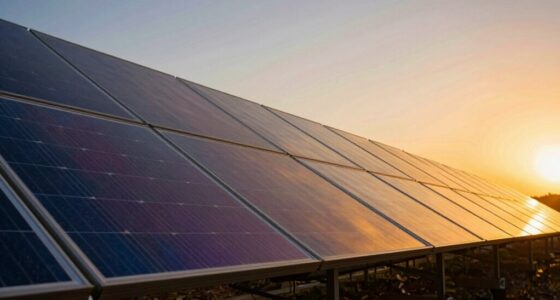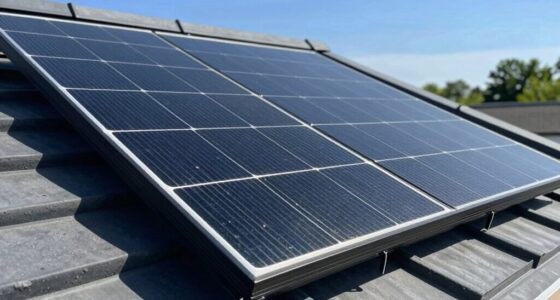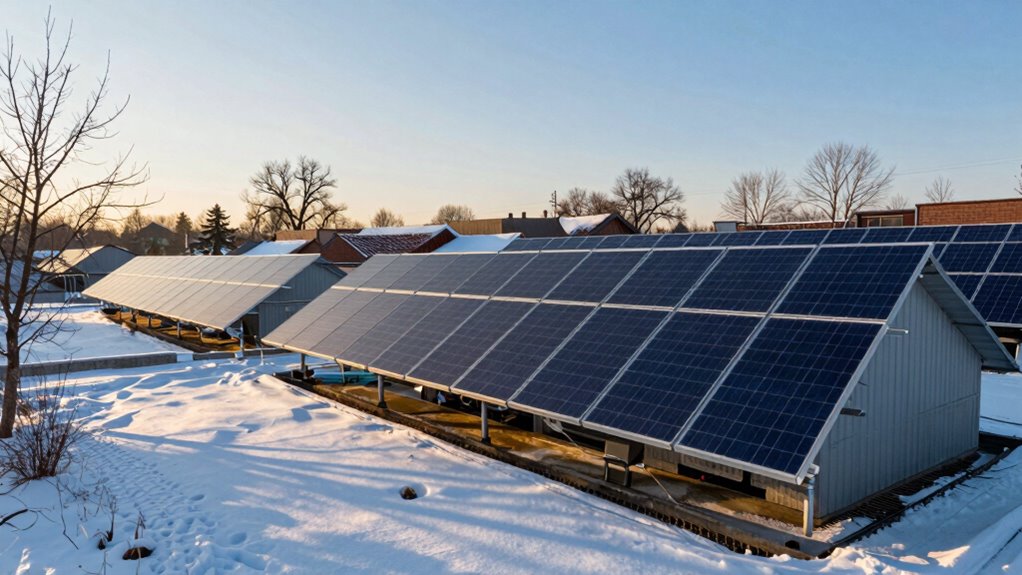
Even during winter’s shorter days and lower sun angles, your solar panels can still produce meaningful power. They capture not only direct sunlight but also diffuse and angled light, which helps maintain energy flow. Proper panel orientation, tilt adjustments, and regular maintenance guarantee you get the most from limited daylight. Understanding how the sun’s position affects your system can boost winter output—stick around to learn tips for keeping your solar working efficiently year-round.
Key Takeaways
- Solar panels can generate electricity on cloudy and shorter winter days due to diffuse sunlight and residual daylight.
- Proper panel tilt and orientation optimize capture of lower-angle winter sunlight.
- Cold temperatures can improve panel efficiency despite shorter daylight hours.
- Energy storage systems like batteries ensure power availability during reduced winter sunlight.
- Regular maintenance and clearing snow maximize solar output during winter months.

Jackery Portable Power Station Explorer 300, 293Wh Backup Lithium Battery, Solar Generator for Outdoors Camping Travel Hunting Blackout (Solar Panel Optional)
SPEED UP YOUR RECHARGEABILITY: It takes only 2 hours to recharge 80% battery of the power station through...
As an affiliate, we earn on qualifying purchases.
How Winter Sun Differs From Summer Sun
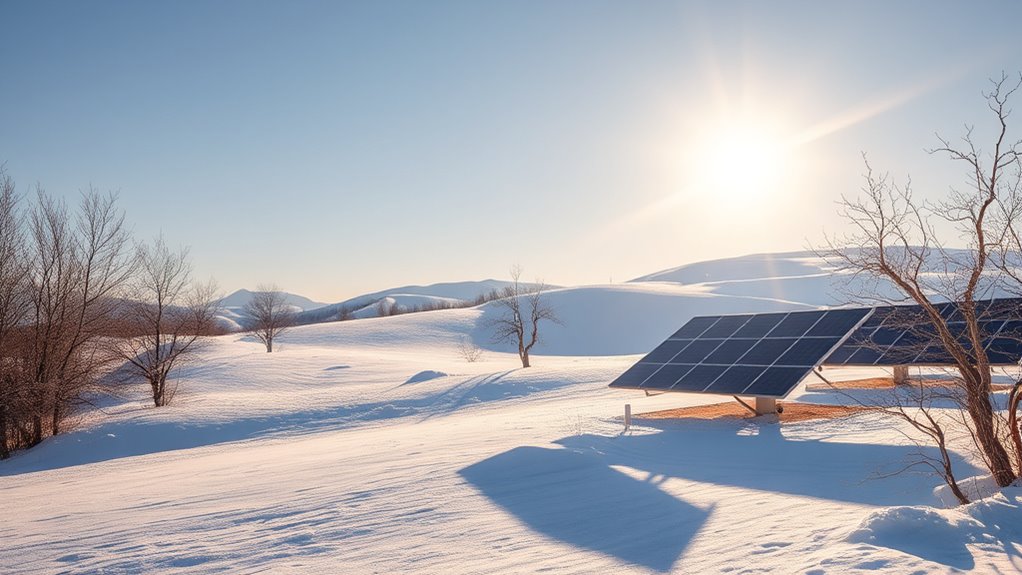
Have you ever wondered why the winter sun feels weaker and less direct than in summer? It’s because of the shorter days and the tilt of the Earth. During winter, you experience more winter darkness, and the sun’s rays hit your location at a lower angle. This means seasonal sunlight is less intense, reducing the energy your panels can capture. The sun’s lower position in the sky causes its rays to spread out over a larger area and pass through more atmosphere, diminishing their strength. As a result, sunlight during winter isn’t just shorter in duration — it’s also less powerful. This natural shift affects how much solar energy you can generate, even if your panels are perfectly positioned. Understanding seasonal variation is key to optimizing your solar energy use year-round. Additionally, the wave and wind conditions can influence how effectively solar installations are maintained and complemented by other renewable sources during different seasons, highlighting the importance of seasonal energy management strategies. Moreover, solar panel efficiency can decrease in colder weather if panels are not properly designed or maintained, further impacting energy output during winter months. Recognizing these effects can help you better plan for seasonal fluctuations in solar energy production.

Anker SOLIX C1000 Gen 2 Portable Power Station, 2,000W (Peak 3,000W) Solar Generator, Full Charge in 49 Min, 1,024Wh LiFePO4 Battery for Home Backup, Power Outages, and Camping (Optional Solar Panel)
49 Min UltraFast Recharging: With upgraded HyperFlash tech, fully recharge at 1,600W—for outage prepping, camping trips, or tailgating...
As an affiliate, we earn on qualifying purchases.
The Role of Solar Panel Orientation and Placement
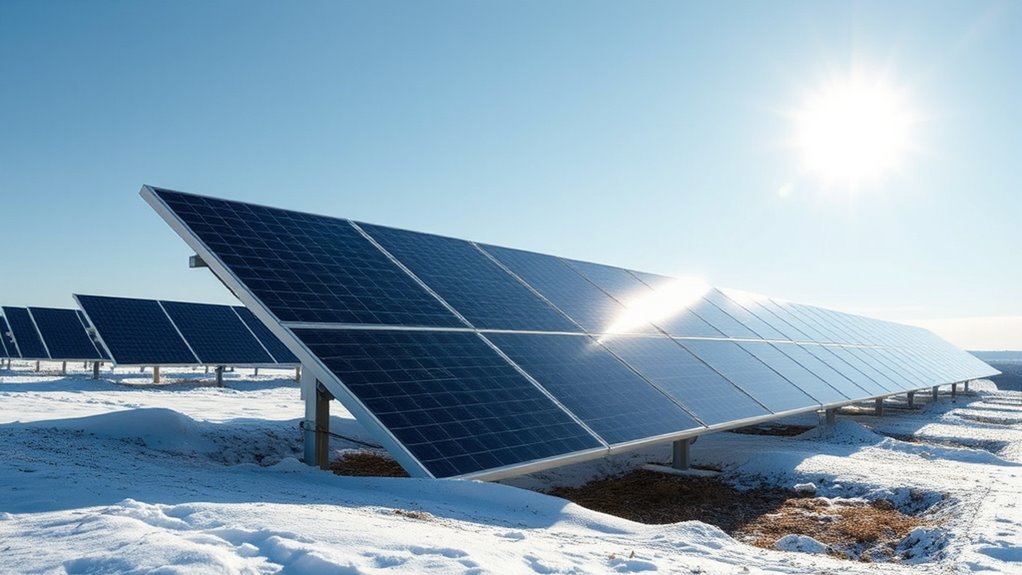
Since the sun’s position changes with the seasons, the orientation and placement of your solar panels become even more critical in winter. To maximize sunlight exposure, adjust your panel tilt to enhance the angle for winter sun, which is lower in the sky. A steeper tilt helps capture more sunlight and reduces shading effects from nearby objects like trees or buildings. Proper orientation—generally facing south in the Northern Hemisphere—ensures your panels receive the most direct sunlight throughout the day. Be mindful of shading effects, as even partial shading can considerably reduce your system’s efficiency. Regularly check for shadows cast by snow buildup or surrounding structures, and clear any obstructions to maintain ideal energy production during the shorter winter days. Additionally, understanding Gold IRA Markets can help investors diversify their portfolios, similar to optimizing solar setups for seasonal changes. Recognizing solar panel efficiency and how it varies with seasonal adjustments can further improve energy output during winter months. Moreover, paying attention to seasonal shading patterns can help you identify the best placement for your panels throughout the year. For example, monitoring local weather conditions can assist in planning maintenance and ensuring consistent energy flow. Remember that seasonal variations also impact energy storage needs, so planning for adequate backup or storage solutions is essential for consistent power.

Jackery Solar Generator 1000 v2 with 200W Solar Panel,1070Wh Portable Power Station LiFePO4 Battery,1500W AC/100W USB-C Output, 1Hr Fast Charge for Outdoor,Off-Grid Living,RV,Emergency
Powerful yet Compact: Boasting a 1,500W AC output and a 3,000W surge peak, the Solar Generator 1000 V2...
As an affiliate, we earn on qualifying purchases.
Technological Advances Boost Winter Solar Efficiency
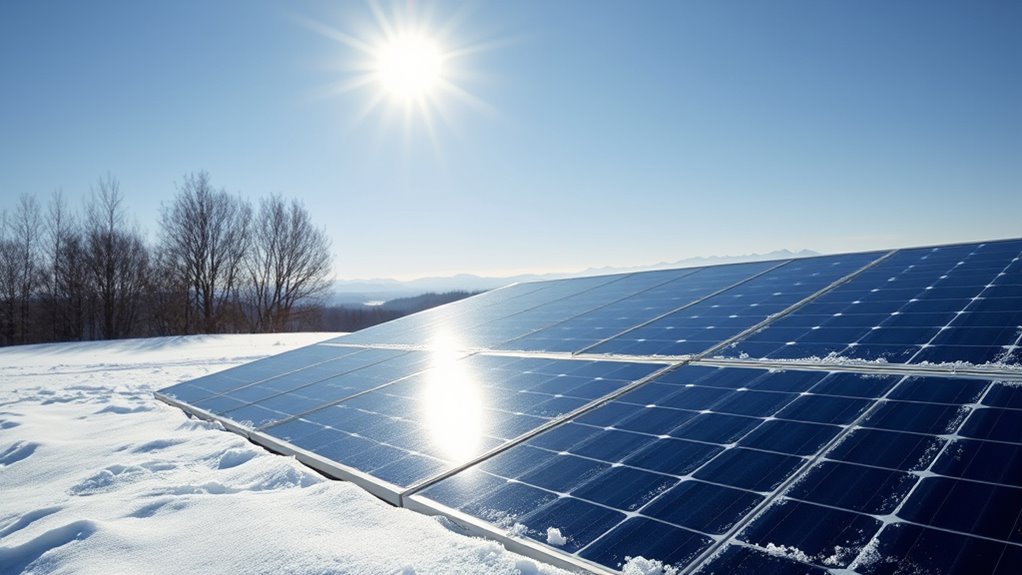
Advancements in solar technology are making winter energy production more efficient than ever. Modern solar panel materials, such as bifacial panels and improved photovoltaic cells, capture more sunlight even on shorter, cloudier days. These innovations allow panels to absorb light from multiple angles and increase overall output. Additionally, new winter insulation techniques help protect your system from cold temperatures, preventing energy loss caused by snow and ice buildup. Better insulation around wiring and modules reduces thermal losses, ensuring your system operates at peak efficiency. Enhanced materials contribute to higher energy yields during winter months, making your solar setup more reliable and productive year-round, providing clean energy when you need it most. Incorporating seasonal maintenance practices can further optimize your system’s performance during colder months and safeguard against winter weather challenges, while understanding solar panel efficiency helps you maximize energy harvest during low-light conditions. Moreover, ongoing research into solar cell durability supports the longevity of your system through harsh winter conditions.

BLUETTI Elite 30 V2 Portable Power Station 600W (Power Lifting 1500W), 288Wh LiFePO4 Battery with 10ms UPS, Emergency Backup Power for Home Blackout/Winter Storm, Solar Generator for Camping/Road Trip
[288Wh On-the-Go Power] - Only 9.4 lbs lightweight, carry it anywhere during storms! 288Wh capacity meets daily &...
As an affiliate, we earn on qualifying purchases.
Understanding Sun Angles and Daylight Hours
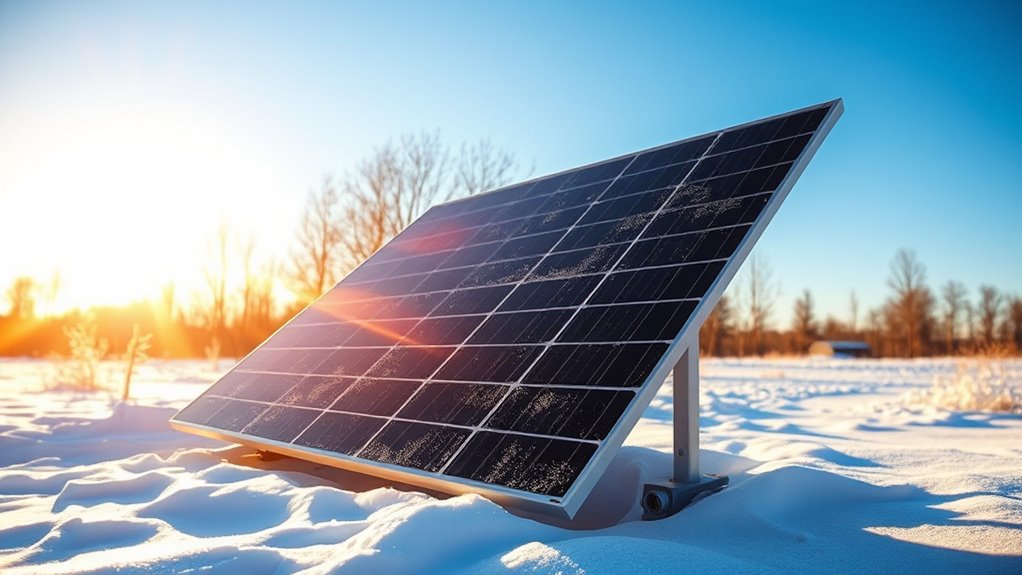
Understanding how the sun’s position changes throughout the year is key to optimizing your winter solar energy. When the sun is lower in the sky, sunlight strikes your panels at a steeper angle, reducing sunlight intensity. To visualize this, imagine:
- The sun rising just above the horizon
- Its rays hitting your panels at a shallow angle
- Shadows stretching longer across your yard
- The sun setting earlier each day
These sun angles mean fewer hours of daylight, but the sunlight that does reach your panels is more direct. Recognizing these patterns helps you adjust your system or positioning for maximum solar energy capture. Proper solar panel orientation can significantly improve efficiency during shorter days. Even during shorter days, understanding sun angles ensures you harness as much sunlight as possible, maintaining effective energy production. Additionally, the solar elevation angle varies daily, affecting how much sunlight your panels receive throughout the season. Being aware of these solar geometry factors allows for better planning and system adjustments to optimize energy output year-round. Furthermore, understanding solar declination helps predict the sun’s path and optimal panel tilt for different times of the year.
A clear grasp of solar angles can also inform seasonal adjustments to your panel tilt, maximizing energy capture regardless of the season.
Maximizing Solar Output During Shorter Days
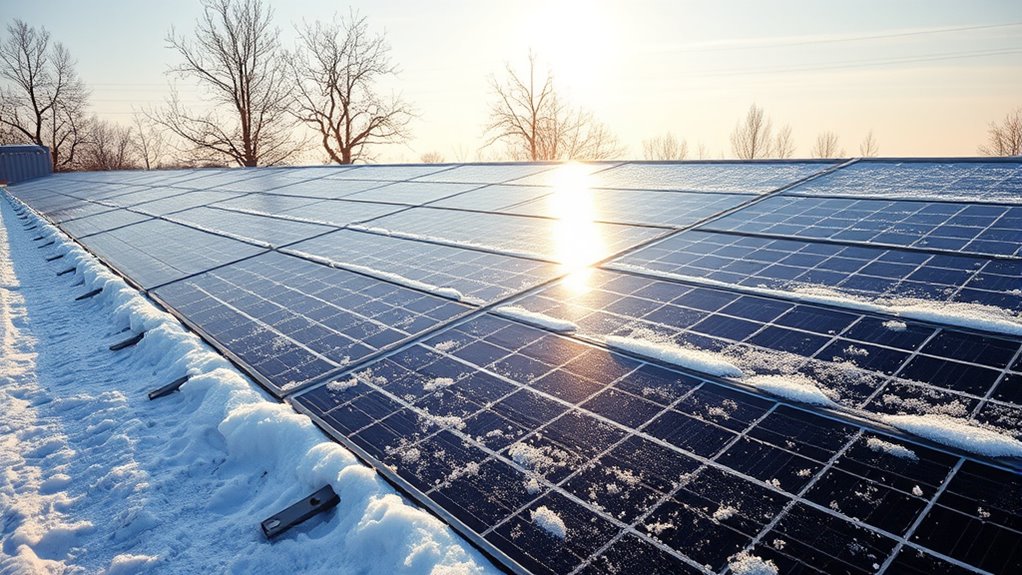
To make the most of shorter winter days, you need to optimize your solar panel setup and daily practices. Start by choosing solar panel materials designed for winter conditions, such as panels with high efficiency and durability against cold temperatures. Proper tilt and orientation are vital—aim for a south-facing angle that maximizes sun exposure during winter months. Regularly clean your panels to remove dirt and debris that can block sunlight. Additionally, invest in reliable winter energy storage solutions like batteries to store excess energy generated during sunnier periods. This stored energy can power your home during cloudy or shorter days. By adjusting panel positioning and ensuring effective energy storage, you’ll maximize your solar output despite the reduced daylight hours.
The Impact of Snow and Ice on Solar Panels
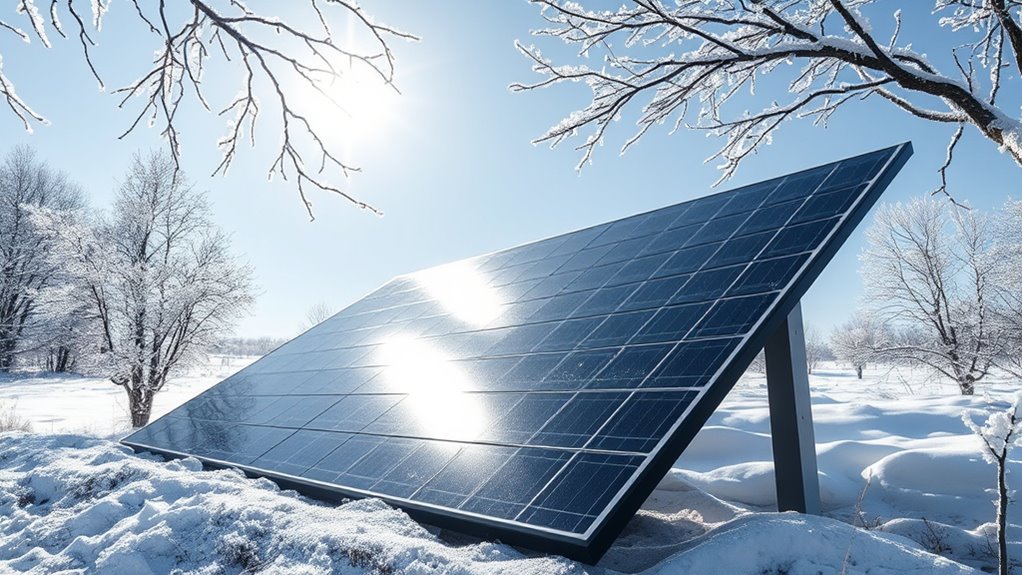
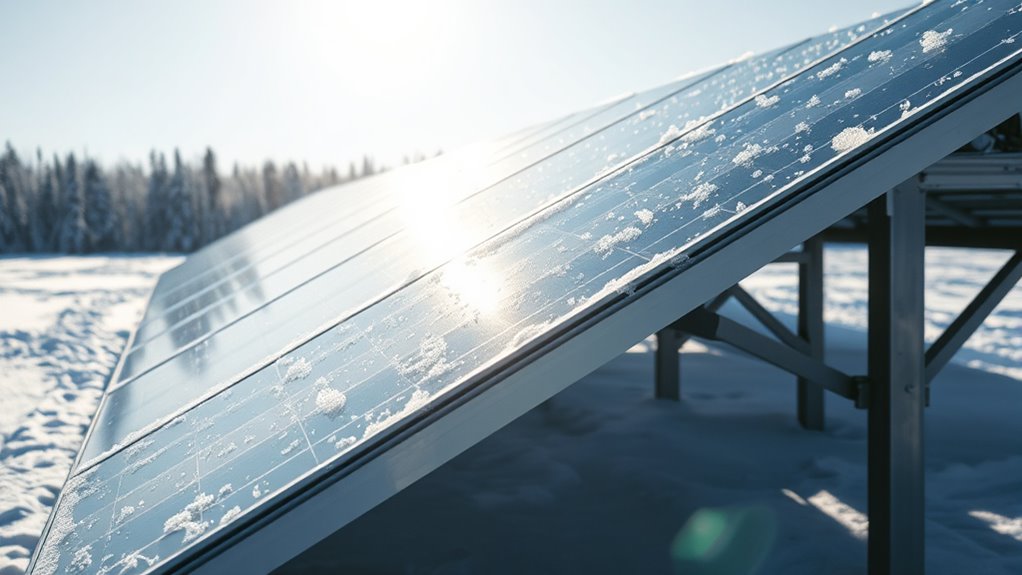
Snow cover can block sunlight and decrease your panels’ efficiency, so it’s important to remove it promptly. Ice buildup can also pose risks of damage or cracking if not managed carefully. Regular cleaning and maintenance help ensure your system stays productive during winter months. Additionally, local climate conditions can influence how frequently you need to clear snow and ice from your panels. Being aware of solar panel efficiency in winter can help you optimize your energy production during shorter days. Understanding winter sunlight patterns can further help in planning the best times for maintenance and maximizing energy output. Moreover, using appropriate snow removal tools can prevent damage while keeping your panels clear.
Snow Cover Effects
When snow and ice settle on solar panels, they can substantially reduce energy production by blocking sunlight. To maintain efficiency, you need to contemplate:
- A thick blanket of snow covering the entire surface, mimicking a white quilt.
- Ice forming along the edges, creating sharp, glistening borders.
- Snow caking in crevices, shadowing the cells beneath.
- Accumulation that shifts with wind, exposing only parts of the panel.
Regular solar panel cleaning and snow removal are essential to prevent these issues. Clearing snow promptly ensures sunlight reaches the panels and boosts energy output. Be careful during snow removal to avoid damaging the panels, and do it when temperatures are above freezing for safer, more effective cleaning. Proper maintenance techniques can help prolong the lifespan and efficiency of your solar system throughout winter.
Ice Accumulation Risks
Ice buildup along the edges of solar panels can pose serious risks by adding extra weight and creating sharp, uneven surfaces that may damage the panels over time. Ice accumulation can cause stress on the mounting systems and reduce overall efficiency. When snow melts and refreezes, panel snow can become heavy and icy, increasing the risk of cracks or breakage. Sharp ice formations may also scrape or gouge the panel surface, leading to potential leaks or electrical issues. If ice accumulates unevenly, it can cause misalignment or tilt issues, further impairing energy production. Understanding snow and ice is crucial for maintaining solar panel integrity during winter months. Proper installation techniques and winter maintenance routines can help mitigate some of these risks and extend the lifespan of your solar system. Additionally, being aware of ice formation patterns can assist in timely removal and prevention strategies.
Panel Cleaning Needs
Accumulation of snow and ice on solar panels can markedly reduce their efficiency by blocking sunlight and preventing energy absorption. To maintain peak performance, you need a regular cleaning schedule and proper panel maintenance. Imagine:
- Clearing heavy snow drifts that cover your panels completely.
- Removing icy layers that cling stubbornly to the surface.
- Brushing off slushy residue after a storm.
- Ensuring no debris or frost hampers sunlight access.
Real-World Examples of Winter Solar Performance
You’ll notice how winter sunlight levels fluctuate and affect energy output, even on clear days. Cloud cover can considerably reduce performance, making real-world data essential for accurate expectations. Examining actual system data helps you understand how these factors play out in different environments and conditions.
Winter Sunlight Levels
Winter sunlight levels can vary considerably depending on geographic location and weather conditions, but real-world examples show that solar panels often produce less energy during the colder months. Despite shorter days, you can still see meaningful power generation. Imagine:
- Bright mornings where sunlight hits your panels at a low angle.
- Cloudy afternoons reducing overall sunlight exposure.
- Clear, crisp skies offering brief but intense sunlight.
- Snow covering panels, temporarily halting energy flow.
The choice of solar panel materials influences how well they perform in winter, especially in low light. Efficient winter energy storage becomes essential as sunlight is less intense and days are shorter. Even with these challenges, strategic system design guarantees you maximize winter solar gains.
Cloud Cover Impact
Have you noticed how cloudy days can dramatically reduce your solar panels’ output? Cloud cover plays a significant role in limiting the sunlight reaching your panels, especially during winter months when atmospheric interference is common. Thick clouds scatter and absorb sunlight, decreasing the amount of energy your system can generate. Even thin clouds can cause noticeable drops in efficiency. This atmospheric interference can vary throughout the day, making energy production less predictable. On heavily overcast days, your system might produce only a fraction of its usual power. Understanding this impact helps you set realistic expectations and plan for fluctuations. While cloud cover can temporarily reduce performance, it rarely means your system is useless—short-term dips are normal, and overall winter production can still be substantial.
Real-World System Data
How do solar systems perform during the colder months? Real-world data shows they still generate power effectively. Here’s what you might observe:
- Solar panel efficiency drops slightly due to lower temperatures, but this can actually boost output since cold air conducts heat away more efficiently.
- Inverter performance remains strong, ensuring minimal energy loss and smooth conversion of DC to AC power.
- Snow accumulation can temporarily block panels, but many systems are designed with tilt angles that shed snow quickly.
- Even on short winter days, sunlight’s angle and occasional clear skies allow your system to produce meaningful energy. Overall, winter performance depends on proper setup and system quality, but real-world data confirms you’ll still get significant power.
Tips for Maintaining Optimal Solar System Functionality in Cold Months

Cold temperatures can reduce the efficiency of your solar system, but you can take proactive steps to keep it running smoothly. Make certain your battery storage is well-maintained and insulated to prevent capacity loss during colder months. Regularly check and keep batteries at peak charge levels to avoid damage from deep discharges. Additionally, inverter efficiency can decline in low temperatures, so consider installing a cold climate inverter or placing it in a protected, heated location. Keep panels clear of snow and ice to maximize sunlight absorption, and avoid shading. Scheduling regular inspections helps identify issues early. By managing your battery storage and inverter setup properly, you’ll guarantee your solar system remains dependable and efficient, even during the coldest days.
Frequently Asked Questions
How Do Shading and Nearby Obstructions Affect Winter Solar Output?
Shading impact and obstructions effect your winter solar output considerably. When nearby trees, buildings, or other objects cast shadows, they block sunlight from reaching your panels, reducing energy production. During winter, the sun stays lower, so obstructions have an even greater impact. To maximize your solar gain, confirm your panels are clear of shading and obstructions, especially during peak sunlight hours, so you can generate as much power as possible.
Can Solar Panels Generate Power During Cloudy Winter Days?
You can generate power during cloudy winter days, despite the gloom. Though winter snow and lower solar angles reduce efficiency, modern panels still capture diffuse sunlight through clouds. Snow on panels can temporarily block sunlight, but if cleared, they resume producing energy. So, even on overcast days, your solar system keeps working—just at a slightly lower rate—making winter still a viable time to harness solar power.
What Maintenance Is Recommended for Winterized Solar Systems?
You should regularly clean your solar panels to guarantee peak performance during winter. Use a gentle brush or hose to remove dirt and debris, and promptly clear snow with a soft broom or snow rake, avoiding damage. Check for ice buildup that could obstruct sunlight, and inspect wiring and mounting for any winter-related wear. Proper maintenance helps your system operate efficiently, even on short, cloudy winter days.
How Do Temperature Fluctuations Influence Solar Panel Efficiency?
Temperature fluctuations impact your solar panel efficiency because of the materials used and their temperature coefficient. When temperatures drop or rise quickly, panels may produce less power, especially if they’re made from materials sensitive to temperature changes. A lower temperature coefficient means your panels can handle temperature swings better, maintaining higher efficiency. To optimize output, choose panels with favorable temperature coefficients and guarantee proper ventilation to minimize thermal stress.
Are There Specific Solar Panel Technologies Better Suited for Winter Conditions?
You should consider panels with enhanced winter panel design, like bifacial solar panels, which capture sunlight from both sides and perform better in low-light conditions. For instance, a case study shows these panels maintain higher efficiency during winter due to superior durability and snow-shedding features. Choosing panels built for durability guarantees they withstand harsh weather, maximizing energy production even on short, cloudy days.
Conclusion
So, don’t pack up your solar panels just yet. Even in winter’s icy grip, they’re like stubborn sun lovers, soaking up those rare rays with a grin. Snow might try to hide them, but with a little care, your panels will shine brighter than a holiday light display. Remember, short days only mean shorter naps for your system—stand back, stay warm, and let those winter rays do their magic.