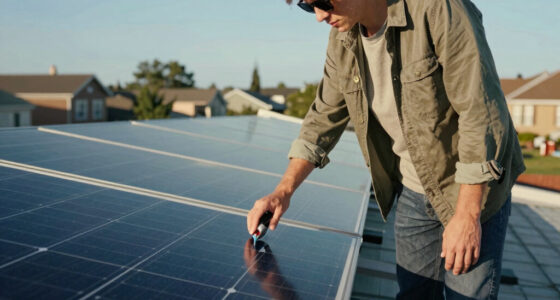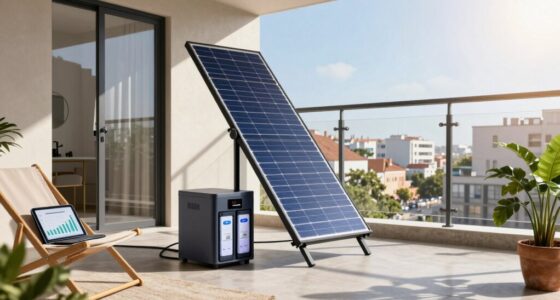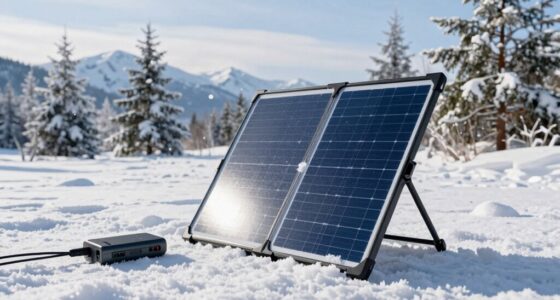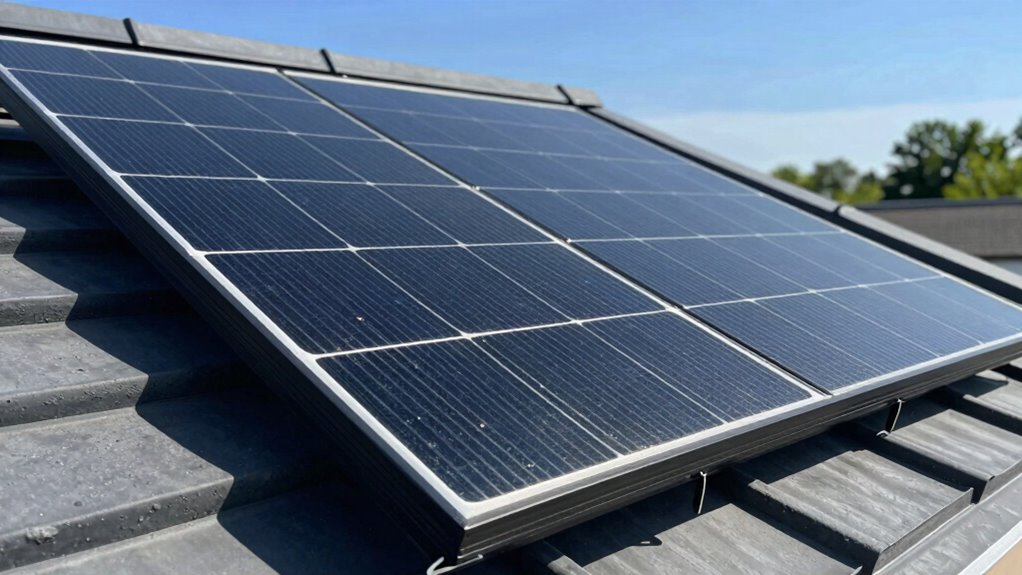
A 200W solar panel means it can produce up to 200 watts of power under ideal sunlight conditions, enough to run small devices like LED lights, laptops, or a small fridge during an outage. Its energy output depends on factors like sunlight, weather, and placement. Understanding what this rating means helps you plan your backup system effectively. If you want to know how to maximize its efficiency and combine it with storage, keep exploring the details.

Get backup power and energy gear delivered free with Prime
- Fast, free delivery on millions of items
- Prime Video, Amazon Music and more included
- Member-only deals all year
Key Takeaways
- A 200W solar panel produces up to 200 watts under ideal sunlight, indicating its maximum power output capacity.
- It can effectively power small appliances and provide backup energy during outages when properly installed.
- The actual energy generated depends on factors like sunlight, weather, shading, and panel placement.
- A 200W panel generates roughly 1 kWh daily in optimal conditions, suitable for essential devices or small systems.
- Proper system design, including batteries and inverters, is crucial to maximize its backup power effectiveness at home.
Understanding Solar Panel Power Ratings
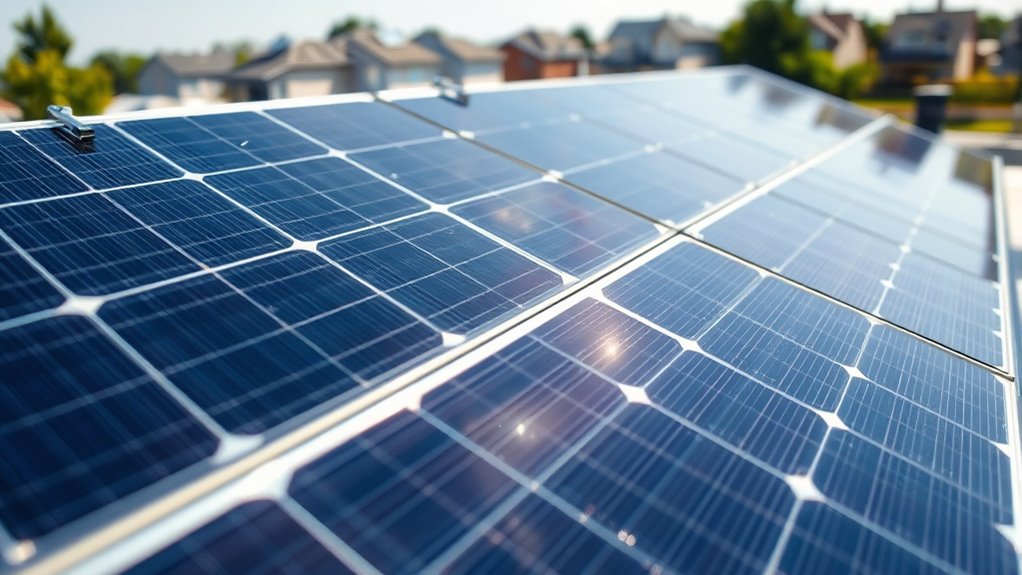
Understanding solar panel power ratings is essential when selecting a backup power system. These ratings tell you how much energy a panel can produce under ideal conditions. If you’re considering solar panels for a solar farm or household backup, knowing the wattage helps determine how many panels you need. Your country’s energy policy can influence the types of systems supported or incentivized, affecting your choices. Higher wattage panels generate more power, making them more efficient for limited space. When evaluating options, check the panel’s peak power output, usually expressed in watts (W). This figure gives you a clear idea of its potential energy production, helping you design a system that reliably meets your backup needs. Additionally, understanding Gold IRA Rollovers can provide valuable insights into diversifying your investment portfolio for long-term financial security. Being aware of the technology used in panels can also impact their performance and durability over time.
What Does 200W Mean in Simple Terms
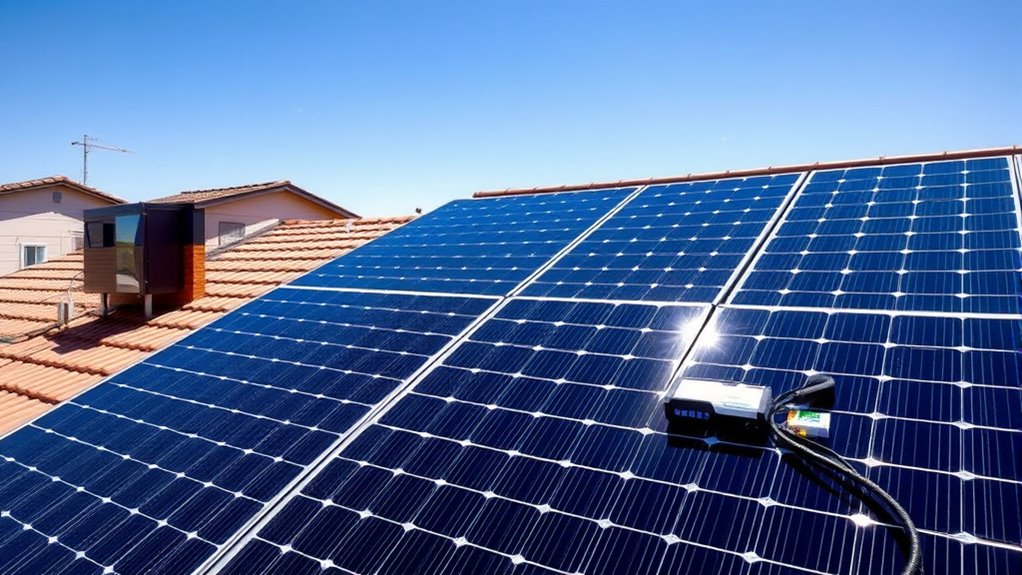
A 200W solar panel means it can produce up to 200 watts of power under ideal conditions. This helps you understand how much energy it can generate for your home, like powering small appliances or charging batteries. Knowing this makes it easier to see if a 200W panel fits your backup power needs. Additionally, understanding energy efficiency can help you maximize the benefits of your solar setup. To optimize your system’s performance, considering high-tech innovations like digital monitoring can also be beneficial. Moreover, selecting reputable brands recognized for durability and quality ensures your solar panels will withstand various weather conditions and last longer. For quick audio access to related content, you might consider Techno Capture, which offers tools for converting videos into MP3s for easy listening. Incorporating solar panel maintenance practices can also extend the lifespan and efficiency of your system.
Power Output Explanation
When you see a solar panel rated at 200 watts, it means the panel can produce up to 200 joules of energy per second under ideal conditions. This power output indicates how much energy your panel can generate, which affects your energy storage options and grid integration. If you want to store energy for later use, knowing the wattage helps determine the size of your batteries needed. Higher wattage panels produce more electricity, making it easier to connect with the grid or supply your home directly. Keep in mind, real-world conditions like weather and shading lower actual output. Understanding this helps you plan your backup power system efficiently, ensuring you have enough capacity for your home’s needs. Additionally, considering the performance factors can help optimize your system’s effectiveness. Moreover, selecting panels with higher efficiency ratings can maximize energy production in limited space, especially in areas with limited sunlight. Being aware of the power output also aids in selecting compatible inverters and charge controllers for your setup. It’s also beneficial to understand how temperature effects can influence the actual energy production of your panels in varying climates.
Practical Home Usage
Knowing what a 200-watt solar panel means in real-life terms helps you gauge its impact on your home’s energy use. A 200W panel can power small devices like LED lights, laptops, or a small refrigerator during a power outage. It’s a practical backup solution, but keep in mind that solar panel durability affects how long it will perform reliably over time. Well-made panels withstand weather and keep generating energy longer, making them a good investment. Durability is an important consideration when evaluating solar panels for long-term reliability, especially since market conditions can influence their performance and value over time. Additionally, understanding the energy output helps you plan effectively for your backup needs. This makes it suitable for supplementing your existing backup power or for small-scale energy needs, providing peace of mind during outages without a hefty upfront investment. Considering long-term performance can help ensure your investment remains dependable in varying weather and usage scenarios, and selecting panels with proven weather resistance can further enhance reliability.
How Much Energy Can a 200W Panel Produce?
A 200W solar panel can generate a substantial amount of energy under ideal conditions. Typically, it produces around 1 kWh per day in peak sunlight, depending on your location and weather. The actual output hinges on factors like solar panel efficiency and installation costs. Higher efficiency panels can produce more energy in a smaller space, making them suitable for limited areas. Keep in mind, your panel’s actual output may vary due to seasonal changes and shading. To maximize energy, consider suitable placement and tilt. Additionally, understanding AP Tuning techniques can help optimize your system’s performance for different environments, ensuring you get the most from your solar panel setup. Proper system maintenance can also extend the lifespan and efficiency of your panels, further boosting energy production. Regular cleaning and inspections are crucial aspects of system upkeep to maintain optimal performance, especially when considering performance optimization strategies.
Factors That Affect Solar Panel Output
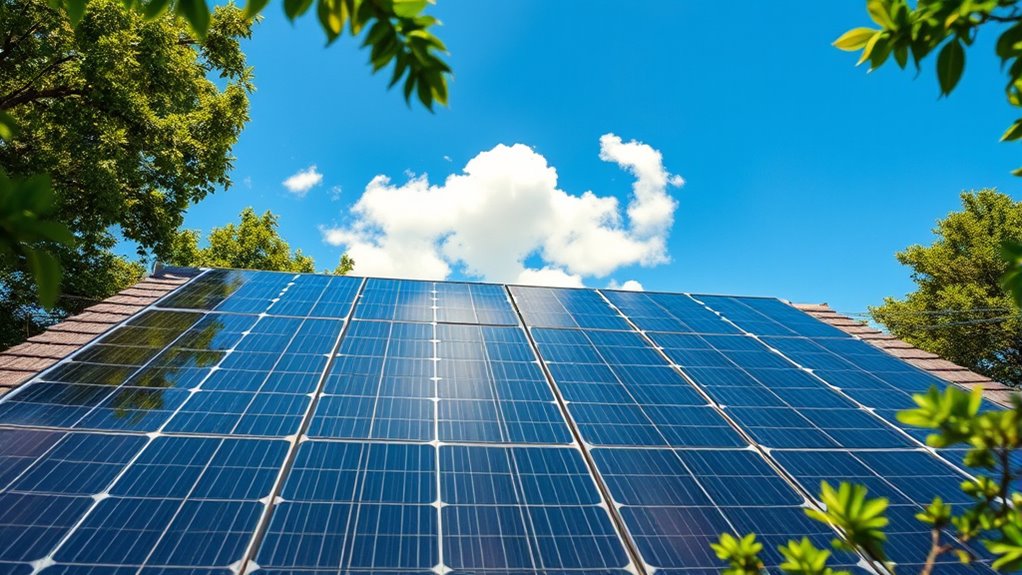
Several factors directly influence how much energy your solar panels can produce. First, the quality of solar panel materials impacts efficiency; higher-grade materials convert sunlight better. Installation costs also matter, as proper setup ensures ideal performance. Additionally, orientation and tilt determine how much sunlight your panels receive daily. Shading from trees or buildings can considerably reduce output. Weather conditions, like clouds and snow, further affect energy generation. Temperature is another factor; excessive heat can decrease efficiency. Here’s a quick overview:
| Factor | Effect |
|---|---|
| Solar panel materials | Higher-quality materials boost efficiency |
| Installation costs | Proper setup maximizes energy capture |
| Orientation & tilt | Affects sunlight exposure |
| Shading | Reduces sunlight reaching panels |
| Weather & temperature | Influence overall energy production |
Understanding these factors helps you enhance your solar setup for the best results.
Comparing 200W Panels to Other Sizes
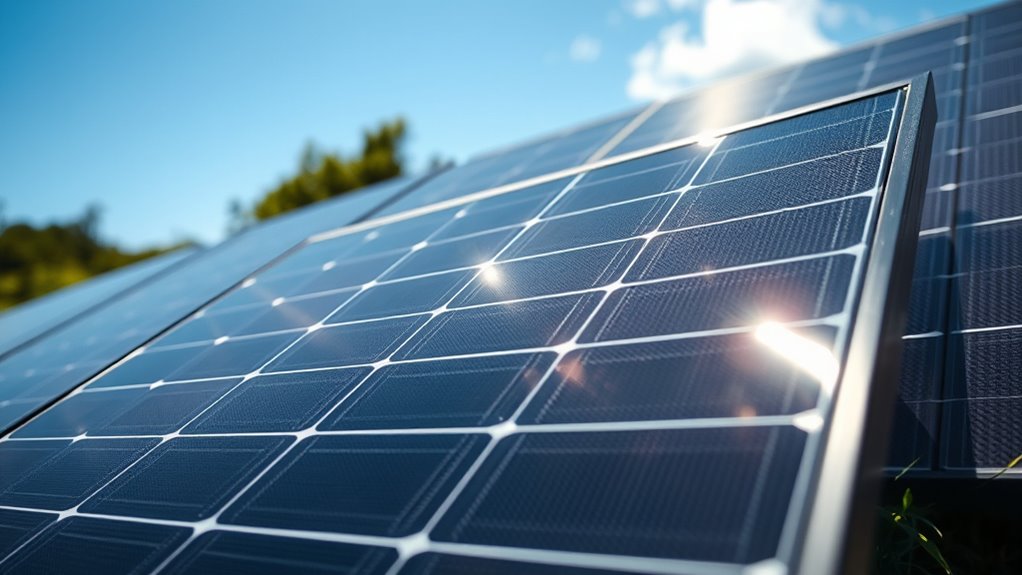
Are 200W solar panels the right choice for your energy needs? Comparing them to larger or smaller panels helps determine if they fit your backup power setup. Larger panels, like 300W or 400W, produce more energy in less space, ideal for bigger solar farms or high-demand systems. Smaller panels, such as 100W units, are portable and easy to install but generate less power, suitable for small‑scale backup needs. When choosing, consider panel manufacturing quality, efficiency, and space constraints. A 200W panel strikes a balance, offering decent output without requiring extensive space. It’s perfect for small to medium backup systems. Keep in mind, panel size impacts overall system design and cost, so weigh your options based on your home’s energy needs and available space. Understanding panel efficiency can further help optimize your selection process. Additionally, assessing system compatibility ensures the panels will work effectively within your existing setup. Evaluating cost-effectiveness is also crucial to maximize your investment and ensure sustainable energy generation. Moreover, considering installation requirements can help you determine the practicality of integrating these panels into your current infrastructure. It’s also beneficial to review future scalability options if you anticipate expanding your energy system later on.
Calculating Your Home’s Backup Power Needs
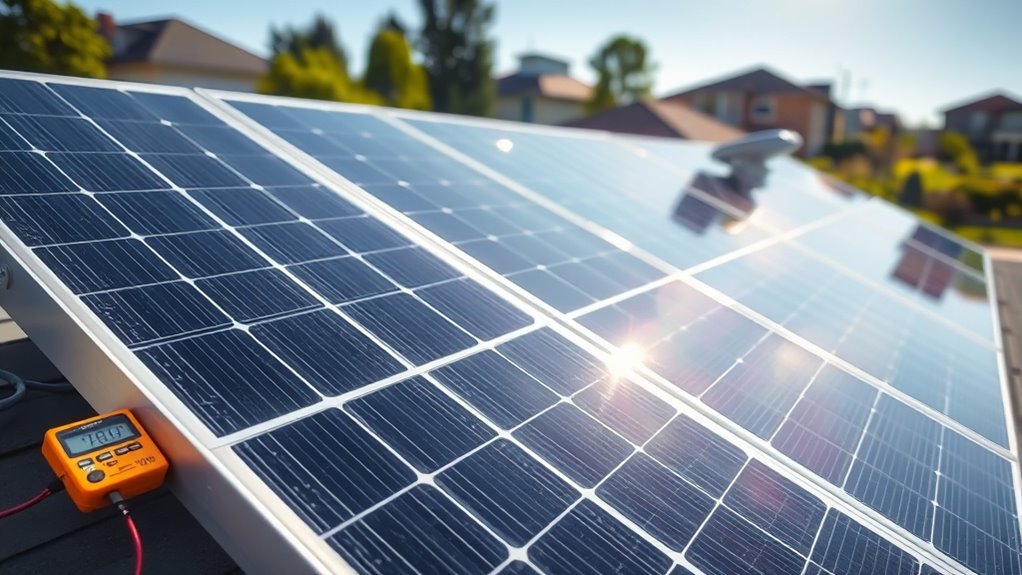
To determine how much backup power you need, start by evaluating your home’s essential energy consumption during outages. List devices you must keep running, like refrigerators, lights, and communication tools. Next, estimate their total wattage and daily runtime. This helps you identify the battery storage capacity required to sustain these essentials. Conducting a proper maintenance check-up can also help ensure your backup system functions efficiently when needed.
Types of Devices You Can Power With a 200W Panel
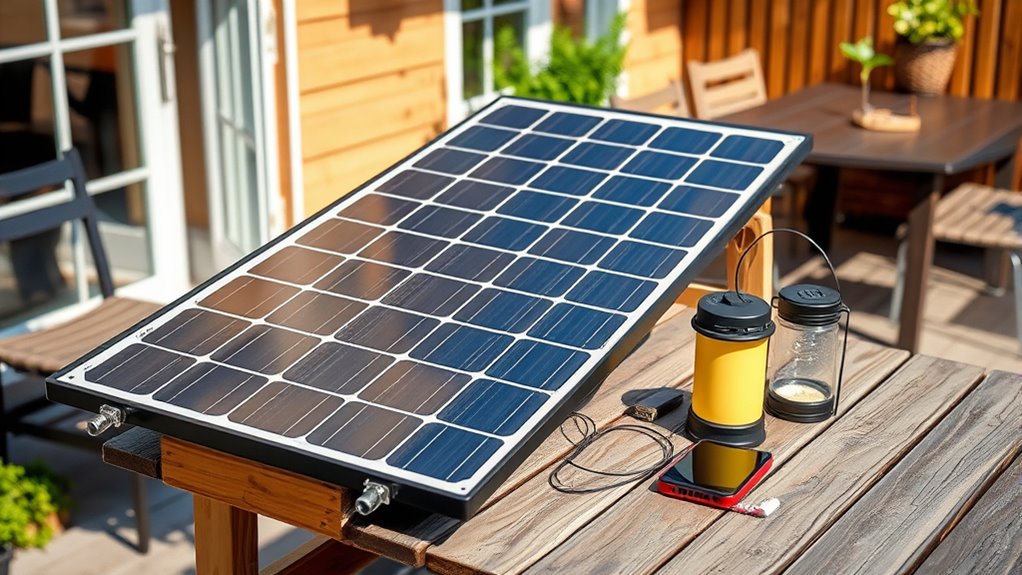
A 200W solar panel can keep your small electronics and gadgets charged during an outage. You can also power LED lighting solutions to brighten your space without draining your battery. Additionally, portable power devices become more reliable when backed by a 200W panel, ensuring you stay connected wherever you are.
Small Electronics and Gadgets
A 200W solar panel can effectively power a range of small electronics and gadgets essential for daily use or outdoor adventures. Its solar panel efficiency determines how well it converts sunlight into usable energy, impacting how many devices you can run simultaneously. With proper setup, you can charge or power devices without a grid connection, making it ideal for off-grid situations. Here are some common devices you can run:
- Smartphone chargers
- Laptops and tablets
- Portable speakers and small fans
Keep in mind, these devices typically require less power, so a 200W panel can handle multiple at once during peak sunlight. Proper wiring and energy management ensure your gadgets stay powered reliably, even when connected to a small-scale backup system.
LED Lighting Solutions
Since LED lighting consumes relatively low power, a 200W solar panel can reliably power various LED devices for both indoor and outdoor use. Thanks to high solar panel efficiency, you’ll get more energy output from limited sunlight, maximizing your lighting options. With proper energy storage, such as batteries, you can keep your LED lights running during cloudy days or at night. LED fixtures like string lights, floodlights, or indoor lamps require minimal wattage, making them ideal for backup power. By efficiently converting sunlight into usable electricity and storing excess energy, your 200W panel ensures continuous illumination. This setup provides a cost-effective, energy-efficient way to maintain lighting during outages or off-grid situations.
Portable Power Devices
With a 200W solar panel, you can power a variety of portable devices essential for everyday use and outdoor activities. These devices include laptops, smartphones, and small appliances, making them perfect for camping trips or emergency backup. The type of solar panel materials, such as monocrystalline or polycrystalline, affects efficiency and durability, impacting what you can power and how long it lasts. Installation costs are generally manageable, especially for portable setups or DIY projects. With the right equipment, you can extend your device usage without relying solely on grid power. Consider investing in a portable power station or inverter to maximize your panel’s potential. This way, your 200W panel becomes a reliable source for various essential devices on the go or during outages.
How Many Panels Are Needed for Reliable Backup Power
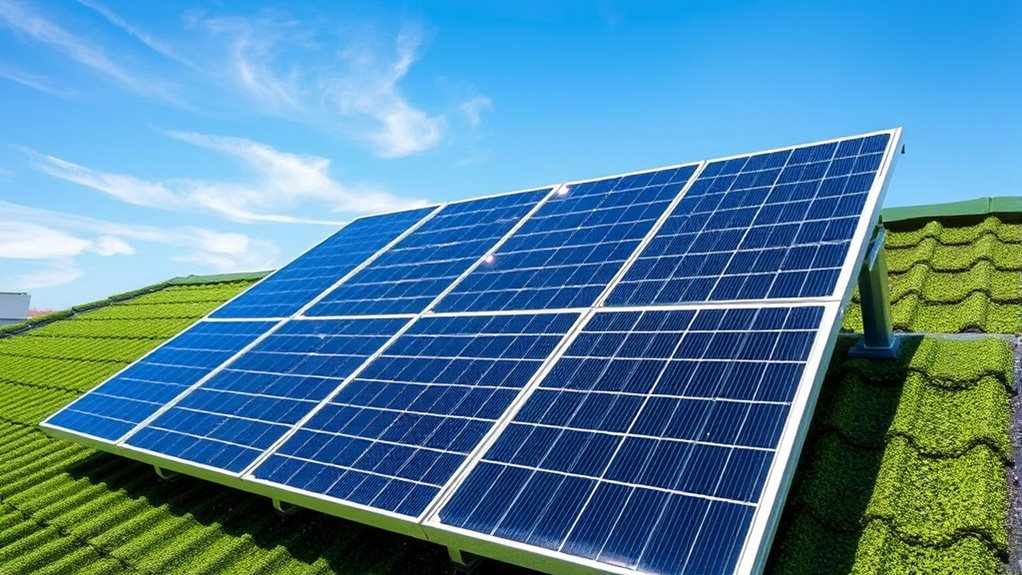
Determining the right number of solar panels for reliable backup power depends on your energy needs and the capacity of your system. To start, assess your average energy consumption during outages. Once you know your required backup wattage, you can estimate the number of panels needed. Keep in mind that solar panel installation varies based on your location and sunlight hours, which affect output. If you’re connected to the grid, your system can supplement your backup power with grid access, reducing the number of panels needed. For off-grid setups, you’ll need enough panels to meet your entire energy demand. A typical approach is to calculate your daily energy use in watt-hours and divide it by the panels’ daily output, ensuring you have enough panels to provide reliable power during outages.
Integrating 200W Solar Panels With Batteries
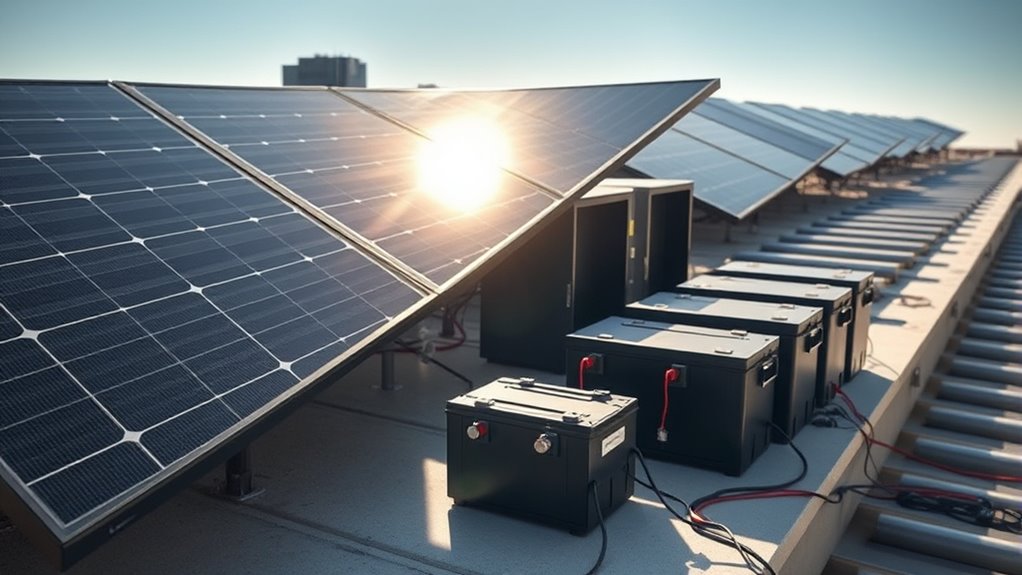
Integrating 200W solar panels with batteries requires careful planning to guarantee your system can store enough energy for backup power. First, ensure your battery storage capacity aligns with your energy needs, so you can store sufficient power during sunlight hours. Next, verify inverter compatibility; your inverter must handle the voltage and wattage from your panels and batteries to operate efficiently. Consider these key points:
Proper planning ensures your 200W solar panel and battery system provides reliable backup energy.
- Choose batteries compatible with your solar panel output and energy demands
- Confirm your inverter supports the system’s voltage and current specifications
- Plan for proper wiring and safety components to prevent overloads
Practical Tips for Maximizing Solar Panel Efficiency
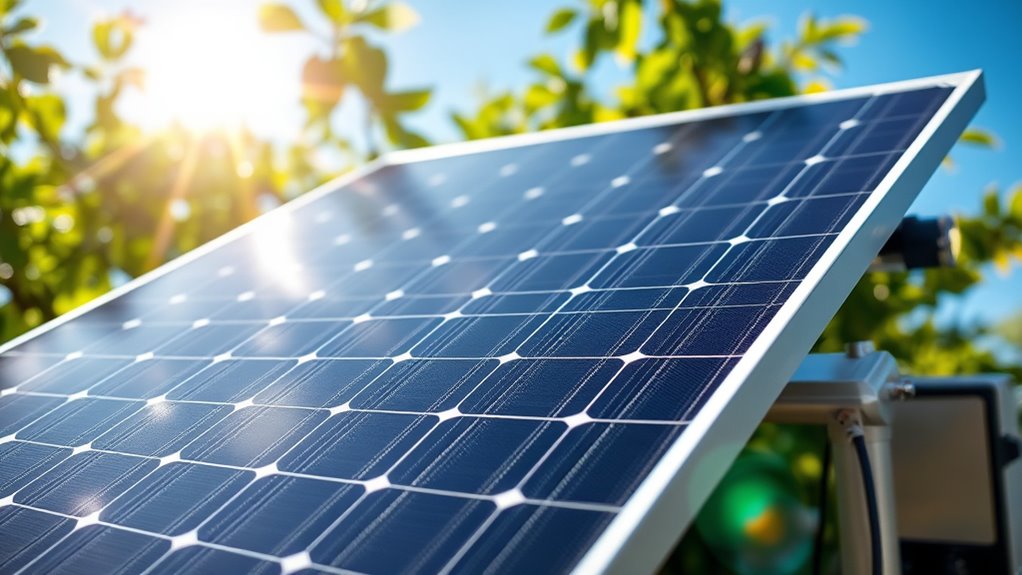
To get the most out of your solar panels, focus on ideal placement by ensuring they face the sun directly and are free from shade. Regularly check and clean your system to prevent dirt and debris from reducing efficiency. These simple steps can greatly boost your solar power output and keep your backup system running smoothly.
Optimal Panel Placement
Maximizing your solar panel efficiency starts with choosing the right placement. Proper placement guarantees your panels receive maximum sunlight and avoid unnecessary shading. When planning your solar panel installation, consider these key tips:
- Install panels where they face true south (or north if in the Southern Hemisphere) for optimal sun exposure.
- Keep panels free from shading considerations like trees, chimneys, or nearby structures during peak sunlight hours.
- Mount panels at an angle that matches your latitude to capture the most sunlight year-round.
Avoid shaded areas, especially during midday, as even partial shading can considerably reduce output. Regularly check for new obstructions or overgrown vegetation that might cast shadows on your system. Proper placement maximizes energy production and backup power reliability.
Regular System Maintenance
Regular system maintenance is key to guaranteeing your solar panels operate at peak efficiency over time. Regularly inspect your panels for dirt, debris, and shading that can reduce output. Check your inverter for error messages or warning lights, and perform inverter checks to confirm proper functioning. Battery maintenance is equally important; ensure connections are clean and batteries are not over- or under-charged. Keep an eye on system performance metrics to spot issues early.
| Maintenance Task | Purpose |
|---|---|
| Clean panels regularly | Maximize sunlight absorption |
| Check inverter status | Prevent system shutdown |
| Inspect batteries | Ensure longevity and safety |
Frequently Asked Questions
How Long Does a 200W Solar Panel Typically Last?
A 200W solar panel typically lasts around 25 to 30 years with proper care. Its panel longevity depends on factors like weather and maintenance, but most panels come with warranty coverage of 10 to 25 years, ensuring you’re protected against early degradation. Regular cleaning and inspections help extend its lifespan, so you get the most out of your investment over time.
Can a 200W Panel Fully Power My Home During an Outage?
A 200W panel alone can’t fully power your home during an outage. You need sufficient battery capacity to store energy and inverter compatibility to convert power efficiently. The panel generates limited energy, so it can support essential devices if paired with a robust battery system and inverter. Keep in mind, your home’s energy demands may exceed what a single 200W panel can provide, especially during extended outages.
What Maintenance Is Required for 200W Solar Panels?
You need to regularly maintain your 200W solar panels by cleaning debris and dirt off their surfaces to guarantee peak efficiency. Additionally, you should inspect the connections and wiring periodically for corrosion or damage. Keep an eye out for shading issues or cracked glass. Performing these simple tasks helps your panels operate smoothly and extend their lifespan, maximizing your backup power during outages.
Are 200W Panels Suitable for All Climate Conditions?
Yes, 200W panels are generally suitable for various climate conditions, thanks to their climate adaptability and panel durability. They perform well in hot, cold, or humid environments, but you should consider local factors like shading or snow cover. Regularly cleaning and inspecting panels enhances durability. Investing in panels with robust construction ensures they withstand extreme weather, maximizing efficiency and longevity regardless of your climate.
How Does Shading Affect a 200W Solar Panel’s Performance?
Shading considerably impacts a 200W solar panel’s performance, causing efficiency reduction. When part of the panel is shaded, it blocks sunlight from reaching the cells, decreasing energy production. You’ll notice a drop in overall output, especially during peak sunlight hours. To minimize shading impact, position your panel where it receives maximum direct sunlight and avoid obstructions like trees or buildings. Proper placement ensures you get the most reliable backup power.
Conclusion
Now that you understand what a 200W solar panel can do, are you ready to take control of your backup power? With the right setup, you can keep your essentials running even during outages. Remember, maximizing efficiency and choosing the right number of panels make all the difference. Isn’t it time you harnessed the sun’s power to ensure your home stays powered no matter what? Start planning your solar backup today!
Halloween Picks
halloween
As an affiliate, we earn on qualifying purchases.