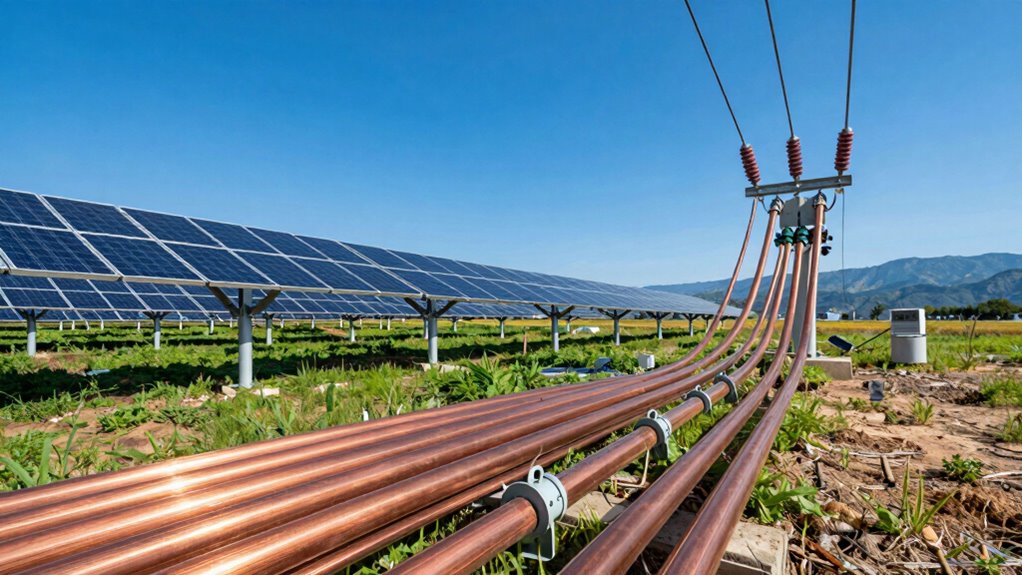

To minimize losses on long solar cable runs, keep your cables as short as possible, and use thicker wires like 8 or 10 gauge to reduce resistance. Properly plan your layout, avoid unnecessary length, and choose high-quality, insulated copper conductors to guarantee efficiency. Regularly inspect your connections for corrosion or damage. Balancing cost and safety is essential, and understanding these strategies will help you optimize your system’s performance. Keep exploring to learn more details.
Key Takeaways
- Use thicker gauge cables (8-10 AWG) for longer distances to reduce resistance and voltage drop.
- Keep cable runs as short as possible to minimize resistance and energy losses.
- Select high-quality, tinned copper conductors and industry-standard connectors for better conductivity and durability.
- Calculate voltage drop accurately and adjust cable size accordingly to stay below 3% loss.
- Regularly inspect and maintain connections to prevent corrosion, wear, and safety hazards.

Jackery Portable Power Station Explorer 300, 292Wh Backup LiFePO4 Battery, Solar Generator for Outdoors Camping Travel Hunting Blackout (Solar Panel Optional)
SPEED UP YOUR RECHARGEABILITY: It takes only 2 hours to recharge 80% battery of the power station through...
As an affiliate, we earn on qualifying purchases.
Understanding Voltage Drop and Its Impact on Solar Systems

Understanding voltage drop is essential when designing solar systems because it directly affects their efficiency and safety. When electricity travels through long cables, resistance causes some energy to dissipate as heat, reducing the voltage reaching your system. This reduction means your solar panels produce less power, lowering overall system performance. Excessive voltage drop can also cause overheating, which shortens cable lifespan and creates safety hazards. DC systems are especially sensitive to voltage loss, making proper sizing critical. To keep your system running efficiently and safely, aim to limit voltage drop to under 3%. Planning cable routes carefully, choosing the right wire gauge, and minimizing cable length help prevent significant voltage loss. Properly sizing your cables is crucial for maintaining system performance and safety. Additionally, understanding cable resistance helps in selecting appropriate wire sizes to minimize losses. Being aware of voltage drop limits and how to measure them ensures your system operates at its best and remains safe over time. Paying attention to circuit design can further help mitigate voltage issues and optimize overall efficiency. Carefully evaluating wire gauge selection and understanding its impact on resistance can make a significant difference in system reliability.

Anker SOLIX C1000 Gen 2 Portable Power Station, 2,000W (Peak 3,000W) Solar Generator, Full Charge in 49 Min, 1,024Wh LiFePO4 Battery for Home Backup, Power Outages, and Camping (Optional Solar Panel)
49 Min UltraFast Recharging: With upgraded HyperFlash tech, fully recharge at 1,600W—for outage prepping, camping trips, or tailgating...
As an affiliate, we earn on qualifying purchases.
How Cable Length Affects Power Transmission Efficiency

The longer your cable runs, the higher the resistance and the more energy you’ll lose as voltage drops. This loss reduces your system’s overall efficiency and can cause safety issues if it gets too high. To keep power transmission effective, you need to understand how cable length directly impacts these losses. Additionally, choosing cables with appropriate gauge sizes can significantly reduce resistance and improve overall performance cable gauge selection. Using the proper gauge can also help prevent overheating and ensure safe operation over extended distances. Proper planning of cable routes, considering energy efficiency, can further optimize your system’s performance and safety. Regularly reviewing your setup with technical expertise can help identify potential issues before they impact performance. Being aware of resistance and how it accumulates over longer runs can help you make informed decisions about system design and safety.
Resistance and Voltage Drop
Ever wondered how cable length impacts the efficiency of your solar power system? The longer the cable, the higher its resistance, which causes greater voltage drop. This drop reduces the voltage reaching your appliances and diminishes overall system efficiency. As resistance increases, more energy is lost as heat, risking cable overheating and shortening its lifespan. In DC systems, voltage drop is especially critical because even small losses can considerably lower power output. To keep losses minimal, it’s essential to select the right cable size and keep runs as short as possible. Using thicker cables decreases resistance, reducing voltage drop. Remember, exceeding a 3% voltage drop can lead to safety issues, inefficiency, and potential damage, so plan your cable runs carefully to optimize performance. Additionally, understanding field‑of‑view and imaging‑scale can help you design more efficient setups, ensuring your solar system’s performance aligns with your power needs. Properly planning cable runs also involves considering system voltage levels, which influence how resistance impacts overall efficiency. Being aware of cable insulation types can further help prevent safety hazards and improve longevity. Furthermore, considering environmental conditions can help select cables that maintain performance under various weather and installation circumstances.
Distance vs. Power Loss
Cable length directly impacts the amount of power your solar system can deliver. Longer cables increase resistance, leading to higher voltage drops and energy loss. This reduces the overall efficiency and can cause overheating or safety issues. For example, at 60 feet with 14ga cable, loss is minimal, but at 185 feet with 10ga cable, losses can reach over 14%. To visualize this, consider the following table:
| Length | Estimated Loss | Power Output |
|---|---|---|
| 60 ft | ~2.5% | 362W to 353W |
| 125 ft | ~4% | 362W to 346W |
| 185 ft | ~14.3% | 400W ideal |
Choosing shorter runs and larger gauge cables minimizes losses, ensuring your system operates efficiently and safely. Additionally, understanding power transmission efficiency helps optimize your setup for maximum energy delivery.

Jackery Solar Generator 1000 v2 with 200W Solar Panel,1070Wh Portable Power Station LiFePO4 Battery,1500W AC/100W USB-C Output, 1Hr Fast Charge for Outdoor,Off-Grid Living,RV,Emergency
Powerful yet Compact: Boasting a 1,500W AC output and a 3,000W surge peak, the Solar Generator 1000 V2...
As an affiliate, we earn on qualifying purchases.
Choosing the Right Wire Gauge for Long Runs

Choosing the right wire gauge for long runs is essential to minimizing voltage drop and ensuring your solar system operates efficiently. Thicker wires, like 8 or 10 gauge, offer lower resistance, reducing energy loss over distance. For shorter runs up to 50 feet, 14 or 12 gauge cables usually suffice, with minimal voltage drop. As distances increase, upgrading to 10 or even 4 gauge becomes necessary to keep losses below 3%. Always consider your system’s voltage and current; higher amperage demands thicker wire. Using a wire gauge chart or calculation tools helps determine the most suitable size. Proper installation practices and adhering to electrical codes are crucial to maintaining system safety and performance. Properly sizing your wire also prevents overheating, which can cause safety hazards and damage to your system components. Additionally, selecting appropriate wire insulation can further reduce risks associated with long cable runs. To optimize efficiency, incorporating smart monitoring technology can help track voltage and current, assisting in optimal wire sizing decisions. Remember, undersized wiring causes excessive voltage drop, overheating, and safety risks, so prioritize proper sizing for long cable runs to maximize system performance and lifespan.

Portable Solar Generator, 300W Portable Power Station with Foldable 60W Solar Panel,110V Pure Sine Wave 280Wh Battery Power Pack with USB DC AC Outlet for Camping Smart Devices RV Van Outdoor-Orange
Portable Generator with 60W Solar Panel Included: with a big battery pack, ZeroKor 300W power stations Generator are...
As an affiliate, we earn on qualifying purchases.
Practical Examples of Power Loss in Different Cable Setups

Understanding how power loss occurs in different cable setups helps you make informed decisions to maximize efficiency. For example, running 60 feet of 14-gauge cable results in minimal loss, dropping from 362W to 353W, about 2.5%. Extending to 125 feet with mixed 14/12-gauge cable causes roughly a 4% loss, reducing output to 346W. At 185 feet with 10-gauge wire, losses can reach approximately 14.3%, considerably decreasing power. Shorter runs, like under 50 feet, keep losses below 3%, especially with thicker wire. Connecting multiple panels over long distances with inadequate gauge increases voltage drop, overheating cables, and reduces overall system efficiency. These examples illustrate the importance of choosing the right cable length and size to prevent excessive power loss and ensure system safety. Proper cable sizing is essential to optimize performance and safety in solar setups.
Strategies to Reduce Voltage Drop and Maximize System Performance

Want to boost your solar system’s efficiency? Start by keeping cable runs as short as possible to reduce resistance and voltage drop. Choose the right wire gauge—thicker cables like 10ga or larger for longer distances—to keep losses under 3%. Always calculate voltage drop based on your system’s current, voltage, and cable length, and adjust your wire size accordingly. Use high-quality, tinned copper conductors to improve conductivity and minimize resistance. Avoid unnecessary connections and ensure all terminals are tight and corrosion-free. Prioritize ideal panel placement and angles to maximize output, reducing the need for longer cable runs. Proper cable management and organization can further enhance system reliability. Regularly check and maintain connections to prevent safety issues and performance drops. Implementing system design best practices ensures optimal energy transfer and system lifespan. These strategies help you maximize energy transfer and system lifespan.
Best Practices for Safe and Efficient Cable Installation

To guarantee your cable installation is both safe and efficient, you need to focus on proper connection techniques and using high-quality materials. Making secure, clean connections minimizes resistance and reduces safety risks, while adhering to material standards guarantees durability. Using connectors and cables that meet industry standards ensures compatibility and long-term performance. Regular inspections help catch issues early, maintaining system performance and safety over time. Additionally, following simple organization strategies can help keep your cables neat and prevent damage or confusion.
Proper Connection Techniques
Proper connection techniques are essential for guaranteeing your solar system operates safely and efficiently. You must use high-quality connectors and confirm tight, secure connections to prevent resistance buildup and overheating. Always match wire sizes to the correct terminals, avoiding loose or over-tightened fittings that can damage conductors. Inspect connections regularly for corrosion, wear, or damage, replacing components as needed. Use dielectric grease to prevent moisture intrusion and improve conductivity. Proper crimping tools and techniques guarantee reliable contact, reducing voltage drops and potential failures.
- Verify compatibility of connectors and cables before installation
- Tighten connections uniformly without over-compressing
- Regularly inspect and maintain connections for longevity and safety
Material Quality Standards
Using high-quality materials is essential for guaranteeing your solar cable installation remains safe, reliable, and efficient. Always select cables that meet or exceed international standards like UL or IEC certifications. Use tinned copper conductors to improve conductivity and resist corrosion, especially in harsh environments. Opt for cables with proper insulation ratings to withstand heat, UV exposure, and environmental factors. Choose high-quality connectors that ensure solid, secure connections without resistance build-up. Avoid substandard or cheap materials that can degrade quickly, causing increased resistance and safety hazards. Ensure the cable’s voltage and current ratings match your system’s requirements. Proper material quality reduces resistance, prevents overheating, and prolongs cable lifespan, ultimately maximizing system performance and safety over the long term.
Safety and Inspection
Ensuring safety and efficiency in cable installation starts with careful planning and thorough inspection. You need to verify that all components meet safety standards, connections are secure, and wiring is free of damage or corrosion. Proper inspection prevents issues like short circuits, overheating, or voltage drops that can compromise safety and system performance. Use high-quality materials and follow local electrical codes to reduce risks. Regularly check connections, tighten fittings, and inspect for wear or damage over time.
- Confirm all connections are tight and corrosion-free
- Use appropriate protective gear and tools during installation
- Schedule routine inspections to identify potential hazards early
Prioritizing safety guarantees your system operates reliably and safely. Proper inspection and maintenance extend cable lifespan and help prevent costly failures.
Balancing Cost, Safety, and Efficiency in Solar Cable Design

Balancing cost, safety, and efficiency in solar cable design requires careful planning and informed choices. You need to select the right wire gauge and length to minimize voltage drop without overspending on unnecessary materials. Thicker cables, such as 10ga or larger, reduce resistance and improve safety but come at a higher cost. Shorter cable runs help maintain efficiency and limit losses, especially for low-voltage systems. Prioritize safety by using high-quality connectors, secure installations, and following standards. While thicker cables increase upfront expenses, they prevent overheating, extend lifespan, and ensure safe operation over time. Striking the right balance involves evaluating your system’s size, distance, and budget to optimize performance, safety, and cost-effectiveness.
Frequently Asked Questions
How Does Temperature Affect Voltage Drop in Long Cable Runs?
Temperature affects voltage drop by increasing resistance in your cables as it warms up. When cables get hotter, their resistance goes up, causing more voltage loss and potentially reducing system efficiency. Cooler temperatures lower resistance, helping maintain voltage levels. To minimize this, use high-quality, Tinned copper conductors, avoid overheating, and guarantee proper ventilation and insulation. Regularly check your cables to keep performance ideal and prevent safety issues.
What Are the Safety Considerations for High-Current, Long-Distance Wiring?
When wiring high-current, long-distance runs, safety isn’t just an afterthought—it’s your top priority. You need proper fusing and circuit breakers to prevent fires, ensure connectors are secure, and use cables rated for your current and distance. Overloaded wires can overheat faster than your patience during rush hour. Always follow electrical codes, avoid makeshift solutions, and consider professional inspection—because a spark in your backyard isn’t the kind of fireworks you want.
Can Using Multiple Smaller Cables Reduce Voltage Drop Effectively?
Using multiple smaller cables can help reduce voltage drop if you connect them in parallel, effectively increasing the total cross-sectional area. This approach lowers resistance, which minimizes losses over long distances. However, guarantee all cables are properly rated, evenly connected, and of the same gauge to prevent uneven current distribution. Keep in mind that this method adds complexity and potential safety concerns, so plan carefully and follow best practices.
How Do Connectors and Terminations Influence Overall Resistance?
Connectors and terminations directly impact your system’s resistance by adding contact points that can introduce additional resistance if not installed properly. Poor connections increase voltage drop, reduce efficiency, and can cause overheating. To minimize this, you should use high-quality connectors, ensure tight, corrosion-free contacts, and regularly check connections. Properly rated and well-maintained terminations help maintain low resistance, improving overall system performance and safety.
What Are the Best Methods to Monitor Voltage Drop Over Time?
Imagine your system as a delicate heartbeat; monitoring its pulse keeps it healthy. To track voltage drop over time, install a digital multimeter or specialized monitoring devices at critical points. Regularly check and record readings, especially during peak sunlight. Use data loggers or smartphone apps for continuous observation. This way, you catch issues early, like a vigilant guardian, ensuring your solar system runs smoothly and efficiently.
Conclusion
To maximize your solar system’s efficiency, understand voltage drop, choose the right cable gauge, and implement effective strategies. Minimize losses, guarantee safety, and balance costs by planning your cable runs carefully. Focus on proper installation, regularly check connections, and optimize your setup for long-term performance. By doing these things, you’ll reduce power loss, boost energy output, and enjoy a reliable, efficient solar system that meets your needs now and in the future.