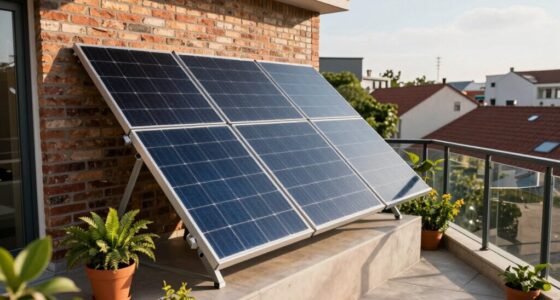
To optimize solar charging during outages, prioritize midday and early afternoon when sunlight is strongest, ensuring your batteries fill quickly. Morning sun offers limited power due to low angles, so screen for clear skies and angle panels eastward to capture early light if needed. Use your system’s flexibility to shift charging times based on season and your location. If you want to learn how to balance these strategies effectively, keep exploring for expert tips.
Key Takeaways
- Prioritize midday (11 AM–2 PM) for maximum efficiency and battery charging to build reserves for outages.
- Use east-facing panels in the morning to capture early sunlight when irradiance is low.
- Continue charging into the late afternoon to extend power generation before sunset.
- Schedule heavy device use during peak sunlight hours to maximize solar energy utilization.
- Store excess energy in batteries during peak hours for reliable backup during outages.
Understanding Solar Peak Hours and Their Impact on Charging

Understanding solar peak hours is essential because these periods determine the most efficient times to charge your devices using solar energy. Typically, peak hours fall between 11:00 AM and 2:00 PM, with maximum solar generation occurring around solar noon when the sun is directly overhead. During this time, sunlight hits your panels perpendicularly, maximizing energy absorption. Sun intensity is lower in early morning and late afternoon, resulting in less power output. Your panels perform best when the sun’s rays are strongest, usually between 11 AM and 4 PM depending on your location and season. Recognizing these peak hours helps optimize your solar energy use effectively, ensuring you make the most of your solar setup during peak sunlight hours. Additionally, understanding solar panel efficiency during these times can help you plan your charging schedule more precisely. Being aware of solar radiation patterns can further enhance the effectiveness of your energy management during outages.
Morning Charging Dynamics and Optimal Strategies

Morning charging begins as soon as the sun rises, but the efficiency is limited by low-angle sunlight and weaker solar irradiance. During this time, your panels produce less power, so charging takes longer. To optimize, consider orienting panels eastward to capture early light. Also, use panels with higher efficiency or add a tilt to maximize exposure. Keep in mind, winter mornings generate slightly less energy than summer mornings. Additionally, Gold IRA markets offer insights into optimizing energy investments, emphasizing the importance of strategic planning for maximum returns. Proper solar panel maintenance can also enhance early morning performance by ensuring optimal cleanliness and functionality. Moreover, adjusting the orientation of panels can significantly improve morning energy capture and overall efficiency, especially when combined with seasonal adjustments to account for changes in sun angle throughout the year.
Afternoon Solar Power Generation and Its Benefits

Even as the sun’s intensity decreases in the afternoon, your panels continue to generate power, offering a sustained energy flow. This extended generation window helps maximize your solar output before sunset, even with reduced sunlight. By understanding these benefits, you can optimize your system’s performance and energy storage strategies green‑chemistry principles. Additionally, leveraging renewable energy efficiency can further enhance your energy management during these periods. Recognizing the importance of solar panel performance can help you make informed decisions about system maintenance and upgrades to maintain optimal energy production. Monitoring system degradation over time ensures continued efficiency and reliable energy supply. Incorporating battery storage solutions can also help store excess energy generated during these hours for use during outages or nighttime.
Sustained Power Decline
As the sun begins to descend after reaching its peak, solar power generation gradually declines, yet it remains a valuable source of energy in the afternoon. Even as sunlight weakens, your panels still produce electricity, helping you maintain power during outages or high demand. This sustained output allows you to charge batteries, run essential devices, and reduce reliance on the grid. This decline isn’t sudden; instead, it offers a steady stream of energy until sunset. By harnessing this period, you maximize your solar investment and ensure a reliable power buffer. Efficient energy utilization during this time further enhances overall system performance and resilience, especially when combined with solar energy management strategies. Understanding the science behind solar power helps you optimize your system’s capabilities during these hours. Additionally, employing outage preparedness practices ensures you make the most of this period for energy security. Properly managing energy storage during peak sunlight hours can further improve your system’s efficiency and availability in outages.
Extended Generation Window
The afternoon solar generation window offers a valuable opportunity to maximize energy production even after peak hours. During this period, solar panels continue to generate electricity as the sun gradually descends, extending your usable sunlight hours. This sustained output helps build a larger energy reserve, ensuring your batteries are charged before evening demand peaks. By capturing sunlight beyond the 11 AM to 2 PM peak, you can optimize your solar system’s efficiency, especially in outages or cloudy conditions. This extended window allows you to store more energy for night use or emergencies, reducing reliance on grid power. Additionally, it provides flexibility in scheduling device charging, making your energy management more resilient and effective during variable weather and seasonal changes. Smart indoor gardens can also benefit from this extended generation window by utilizing stored energy to power automated watering and monitoring systems, ensuring consistent plant care even during outages. Recognizing the extended generation window can help you plan your energy consumption more effectively to enhance overall system performance. Understanding solar energy patterns can assist in designing more efficient micro-mobility charging setups, ensuring your e‑bike or scooter remains ready whenever you need it. Moreover, awareness of peak sunlight hours can help optimize the placement and angle of your panels for maximum output throughout the day. Additionally, understanding solar panel efficiency during different times of day can further improve your energy management strategies.
Reduced Sun Intensity
Reduced sun intensity in the afternoon means your solar panels produce less power than during peak hours, but they still generate valuable energy. Even as the sun dips lower, your panels continue to produce electricity, extending your energy supply. This ongoing generation helps fill storage batteries and keeps devices running during outages. It’s important to understand that, despite reduced efficiency, afternoon solar power contributes considerably to your overall energy management. Understanding solar efficiency can help you optimize your system’s performance during these hours. Additionally, smart home automation can be employed to better manage energy use based on solar availability and household needs.
Comparing Charging Times: Panel Power and Environmental Factors
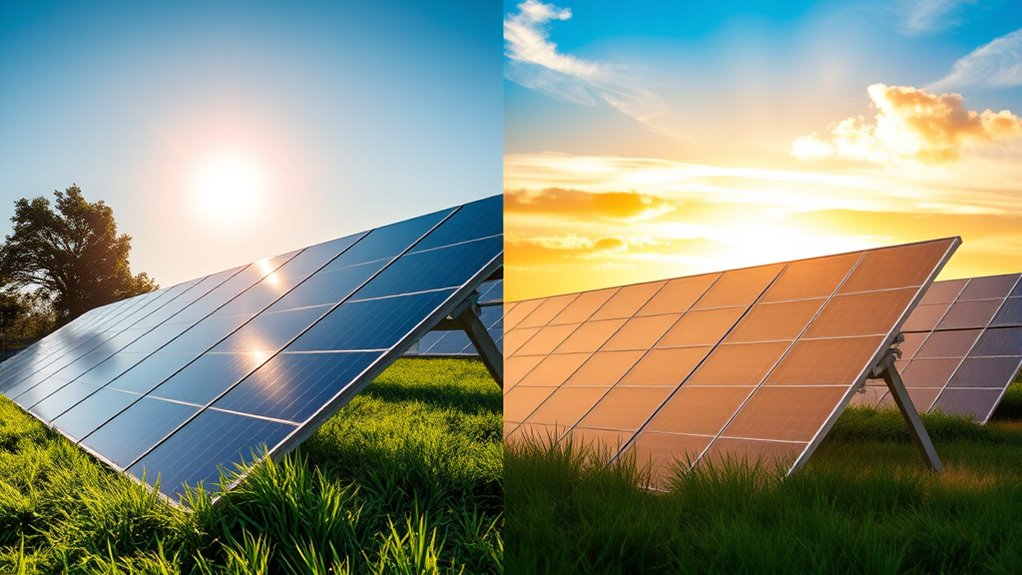
Panel power output directly influences how quickly your devices charge, but environmental factors can substantially impact these times. Cloud cover, for example, reduces sunlight reaching your panels, slowing charging speeds regardless of panel wattage. The time of day also matters; midday hours provide the highest irradiance, allowing panels to operate near peak efficiency. In contrast, early mornings and late afternoons have lower sun angles and less intense sunlight, extending charging durations. Weather conditions like fog or haze further diminish output, even during peak hours. Your panel’s orientation and seasonality influence how much sunlight it captures, affecting overall power. By understanding these environmental factors, you can optimize your charging schedule, choosing times and conditions that maximize efficiency and reduce charging times.
Outage Preparedness: Leveraging Daytime Solar for Nighttime Needs

You can maximize your daytime solar charging to build up energy reserves for nighttime use or outages. By storing excess power in batteries, you safeguard your devices stay powered when the sun isn’t shining. Planning your charging schedule around peak sunlight helps you be prepared for any grid disruptions.
Maximize Daytime Charging Efficiency
Maximizing daytime charging efficiency is essential for ensuring your energy reserves are ready for nighttime use or outages. To get the most from your solar panels, focus on positioning and timing.
- Optimize panel orientation: Aim for perpendicular sunlight during peak hours, typically between 11 AM and 2 PM, to boost output.
- Schedule charging during peak hours: Prioritize charging your batteries or devices when solar irradiance is highest, maximizing energy collection.
- Reduce shading and debris: Keep panels clear of shadows, dirt, or snow, especially during peak sunlight times, to prevent efficiency drops.
Store Energy for Outages
Storing energy during peak sunlight hours guarantees you’re prepared for outages or periods without power. When your panels generate the most electricity between 11 AM and 2 PM, use that time to maximize battery charging. Excess energy from your solar setup can be conserved in batteries, providing a reliable power source during night or cloudy days. This approach ensures your devices stay operational without grid reliance. To optimize storage, prioritize midday charging sessions when sunlight and panel efficiency are highest. Keep an eye on weather conditions, as clouds can reduce output. By effectively capturing and storing solar energy during peak hours, you build a resilient system that supports your needs during outages, giving you peace of mind and independence from the grid.
Customizing Your Solar Schedule Based on Location and Season
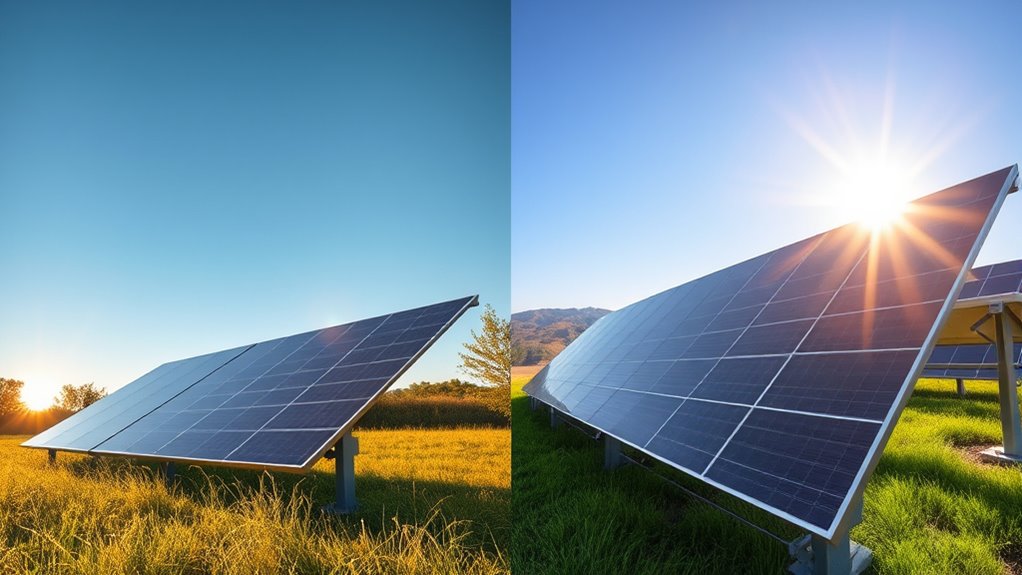
Adjusting your solar schedule to match your location and the season guarantees you get the most out of your panels. Since peak sunlight varies with seasons and latitude, you’ll want to optimize your charging times accordingly. In summer, the sun reaches higher angles, allowing for more midday charging during peak hours. Conversely, winter days have shorter daylight hours and lower sun angles, making morning and late afternoon charging more effective.
- Shift charging to early mornings or late afternoons during winter months
- Adjust panel tilt and orientation based on your latitude for maximum exposure
- Use seasonal sunlight data to plan peak charging times and maximize stored energy
Frequently Asked Questions
How Does Seasonal Variation Affect Morning and Afternoon Solar Charging Efficiency?
Seasonal variation impacts your solar charging efficiency by altering sunlight intensity and duration. In summer, you’ll get stronger, longer sunlight, boosting morning and afternoon output. During winter, shorter days and lower sun angles reduce the energy your panels produce, especially in the morning when sunlight is weaker. You may need to adjust your schedule, charging more during peak hours in summer and planning for longer or additional charging times in winter.
Can Cloud Cover Significantly Alter the Optimal Solar Charging Schedule?
Cloud cover can definitely disrupt your solar schedule, dimming daylight and dulling your panels’ potential. When clouds creep in, sunlight softens, slowing solar surge and stretching charging times. Overcast conditions obscure ideal sunlight, forcing you to wait longer or rely more on stored energy. To stay steady, plan for cloudy days by buffering battery backups, and consider flexible charging times, especially during peak or off-peak hours, to maximize your solar power’s potential.
What Are the Best Panel Orientations for Maximizing Both Morning and Afternoon Output?
You should orient your solar panels toward the south if you’re in the Northern Hemisphere to maximize both morning and afternoon output. This position captures the sun’s path effectively throughout the day, especially during peak hours. Adjust panels slightly east or west to optimize morning or afternoon production, respectively. Keep them tilted at an angle equal to your latitude for consistent performance across seasons. Proper orientation guarantees you get the most energy, especially during outages.
How Can Energy Storage Systems Optimize Outage Preparedness During Variable Sunlight?
You can optimize outage preparedness by using energy storage systems to capture excess solar energy during peak hours. As sunlight varies, store power in batteries during sunny periods, especially between 11 AM and 2 PM. This stored energy then supplies your devices during cloudy days or nighttime. Prioritize charging your batteries during peak sunlight to guarantee a reliable power reserve, reducing reliance on the grid during outages.
Are There Specific Weather Conditions That Favor Morning Over Afternoon Charging?
Cloud cover and overcast skies favor morning charging because lower sun angles and diffuse sunlight still provide some energy, especially early after sunrise. In contrast, heavy clouds during the afternoon can markedly reduce solar intensity, making morning periods better for charging. If you experience frequent cloudiness, it’s best to prioritize morning solar use and store energy for later. Clearer mornings help guarantee your panels generate more power, even on gloomy days.
Conclusion
By optimizing your solar charging schedule, you can maximize energy use during outages and reduce reliance on the grid. Did you know that solar panels can produce up to 77% more energy in the afternoon than in the early morning? Adjusting your charging times based on peak solar hours guarantees you stay powered longer, especially during disruptions. Embrace the sun’s full potential and keep your devices running smoothly, rain or shine.