
Choosing between series and parallel wiring for your solar panels depends on your system’s needs. Series wiring increases voltage, making it suitable for long distances and high-voltage inverters, but shading can affect the whole string. Parallel wiring boosts current, works better in shaded conditions, and allows easier expansion. To avoid headaches, you need to understand these setups well. Keep exploring to discover the best configuration for your solar goals.
Key Takeaways
- Series wiring increases voltage but is vulnerable to shading affecting the entire string, while parallel maintains performance despite shading issues.
- Parallel configurations provide better flexibility, easier expansion, and handle shading or panel damage more effectively.
- Series setups are ideal for long-distance, high-voltage needs, reducing wiring costs, but require uniform sunlight conditions.
- Parallel systems keep voltage consistent, making them suitable for low-voltage inverters and battery systems, with independent panel operation.
- Hybrid series-parallel arrangements balance voltage and current, optimizing system performance and shading tolerance for larger or varied setups.

Anker SOLIX C1000 Gen 2 Portable Power Station, 2,000W (Peak 3,000W) Solar Generator, Full Charge in 49 Min, 1,024Wh LiFePO4 Battery for Home Backup, Power Outages, and Camping (Optional Solar Panel)
49 Min UltraFast Recharging: With upgraded HyperFlash tech, fully recharge at 1,600W—for outage prepping, camping trips, or tailgating...
As an affiliate, we earn on qualifying purchases.
How Series and Parallel Configurations Work
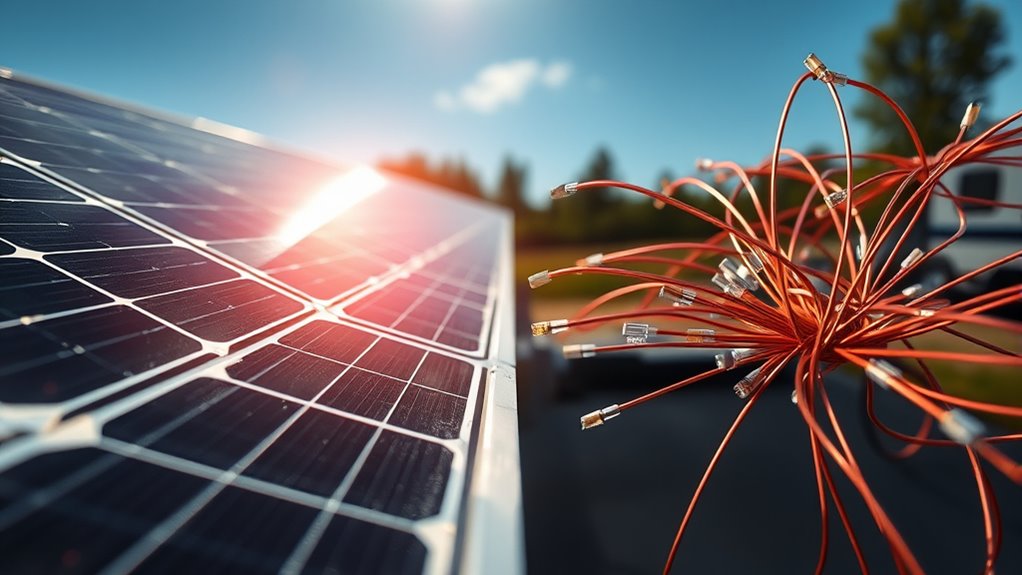
Series and parallel configurations arrange solar panels differently to optimize power output and system performance. In a series setup, panels connect positive to negative, increasing voltage while current stays the same. This setup is ideal for long distances and high-voltage needs, like running wires across your roof. It’s simple, cost-effective, and uses fewer connectors. However, if one panel gets shaded or damaged, it affects the entire string’s output. In a parallel configuration, all positive terminals connect together, as do all negatives, increasing current but keeping voltage constant. This setup handles shading and panel faults better, since each panel operates independently. It’s more flexible but requires more wiring and equipment. Understanding electrical concepts helps you choose the best setup based on your sunlight, space, and system goals. Additionally, system scalability plays a role in your decision, especially if you plan to expand your solar array in the future. Considering system flexibility allows for easier upgrades and modifications as your energy needs grow, and understanding how electrical characteristics affect your overall system can prevent potential headaches down the line. Moreover, awareness of voltage and current limits ensures that your system remains safe and efficient under different configurations.

Jackery Portable Power Station Explorer 300, 293Wh Backup Lithium Battery, Solar Generator for Outdoors Camping Travel Hunting Blackout (Solar Panel Optional)
SPEED UP YOUR RECHARGEABILITY: It takes only 2 hours to recharge 80% battery of the power station through...
As an affiliate, we earn on qualifying purchases.
When to Use Series Wiring for Solar Panels

You should consider wiring your solar panels in series when you need higher voltage to match your inverter’s requirements or to reduce wiring costs over long distances. Series wiring increases voltage while keeping current constant, which helps optimize MPPT efficiency and minimizes voltage drop across long cable runs. It’s ideal if your system faces uniform sunlight conditions and your inverter requires a higher voltage input. Additionally, series wiring simplifies installation with fewer connectors, lowering upfront costs. However, be cautious if shading or damage affects one panel, as it impacts the entire string’s performance. Use series wiring when your setup involves consistent sunlight, long wire runs, or high-voltage inverters, ensuring your system operates efficiently and cost-effectively.

Jackery Solar Generator 1000 v2 with 200W Solar Panel,1070Wh Portable Power Station LiFePO4 Battery,1500W AC/100W USB-C Output, 1Hr Fast Charge for Outdoor,Off-Grid Living,RV,Emergency
Powerful yet Compact: Boasting a 1,500W AC output and a 3,000W surge peak, the Solar Generator 1000 V2...
As an affiliate, we earn on qualifying purchases.
Advantages of Parallel Solar Panel Connections
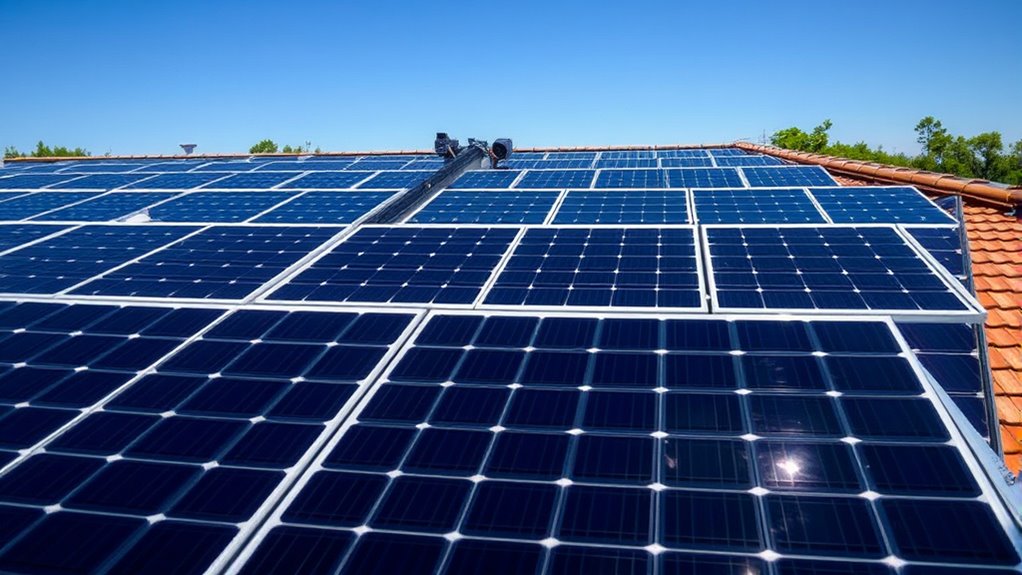
Connecting solar panels in parallel offers significant advantages when dealing with shading, different orientations, or low-voltage systems. Since each panel operates independently, shading or damage on one won’t drastically reduce overall performance. This independence allows panels at varying angles or facing different directions to work together efficiently, maximizing energy production in complex or uneven environments. Parallel wiring maintains a consistent voltage, making it ideal for systems that rely on standard battery voltages or low-voltage inverters. Although wiring and equipment costs are higher, the increased reliability and flexibility often outweigh these expenses. Proper wiring practices ensure safety and optimal operation within these configurations. Additionally, system flexibility makes it easier to expand or modify your setup as needed. Plus, parallel configurations simplify adding or replacing panels without affecting the entire system. Overall, this arrangement delivers better performance in variable conditions and enhances system resilience.

BLUETTI Elite 30 V2 Portable Power Station 600W (Power Lifting 1500W), 288Wh LiFePO4 Battery with 10ms UPS, Emergency Backup Power for Home Blackout/Winter Storm, Solar Generator for Camping/Road Trip
[288Wh On-the-Go Power] - Only 9.4 lbs lightweight, carry it anywhere during storms! 288Wh capacity meets daily &...
As an affiliate, we earn on qualifying purchases.
Comparing Power Output: Series Vs Parallel
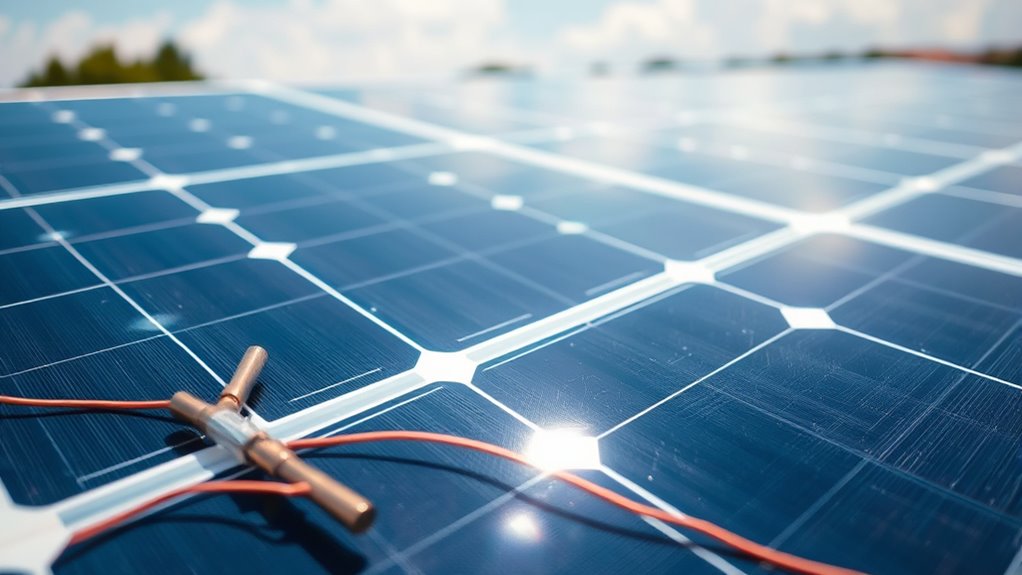
Understanding how different wiring configurations affect power output helps optimize your solar system’s performance. In series, panels combine voltage, so the total voltage adds up while current stays the same. In parallel, current sums, but voltage remains constant. For example, three 20V, 5A panels in series produce 60V, 5A, whereas in parallel, they generate 20V, 15A. Additionally, wiring configurations play a crucial role in system efficiency and safety. Properly configuring wiring can also influence system longevity by reducing the risk of electrical issues and wear over time. The choice of wiring setup can also impact system scalability, allowing for easier expansion as your energy needs grow. Selecting the appropriate wiring setup can enhance overall system reliability and reduce maintenance needs. Series increases voltage, ideal for long-distance transmission. Parallel maintains voltage, better under partial shading. Power output depends on system components like inverters. Series suits high-voltage inverters and long wire runs. Parallel handles shading and panel variability better. Understanding electrical connections ensures optimal system performance and safety, especially in varying environmental conditions. Choosing the right configuration depends on your shading, system voltage needs, and overall setup.
Common Challenges and Limitations of Each Setup
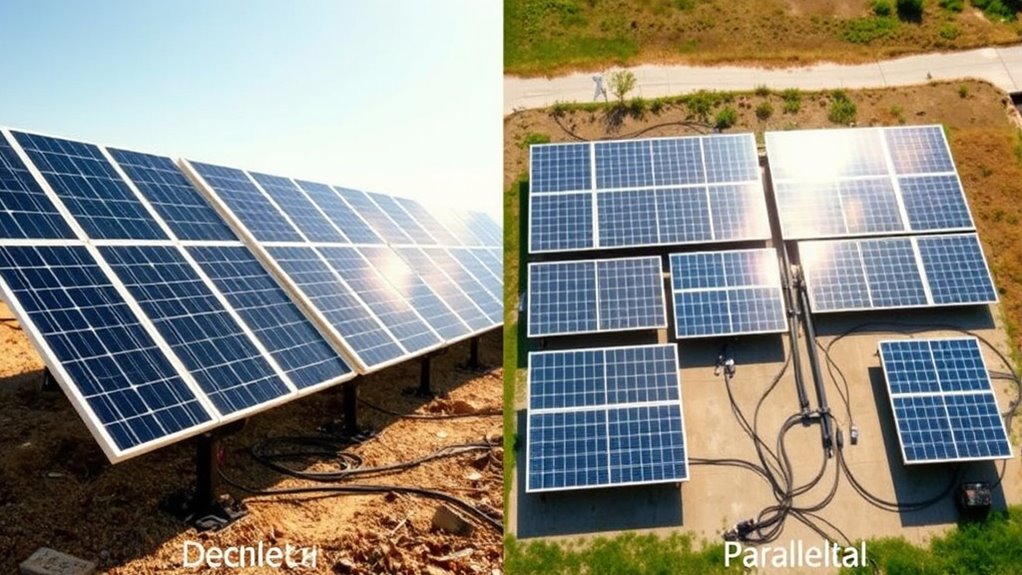
In series setups, shading on one panel can reduce the entire string’s output, risking significant power loss. Parallel configurations, on the other hand, require more wiring and connections, which can complicate installation and increase costs. Understanding these challenges helps you choose the right setup for your specific conditions. Additionally, auditory processing challenges can impact how individuals interpret and respond to sound stimuli, highlighting the importance of tailored solutions in related fields. Proper cabling and wiring practices are essential to ensure system reliability and safety, especially when managing complex configurations. Furthermore, implementing system optimization techniques can mitigate some of these limitations and improve overall performance. Maintaining awareness of system efficiency factors can help optimize the long-term performance of your solar setup. Incorporating circuit design principles can also enhance system resilience and minimize potential issues over time.
Series: Shading Impact Risks
Series solar setups are particularly vulnerable to shading because even a small shadow on one panel can reduce the entire string’s output. When one panel’s performance drops, it limits current flow through the whole series, decreasing overall power. Shadows from nearby trees, chimneys, or debris pose significant risks. You might also face issues if parts of your roof cast uneven shadows. This setup demands consistent sunlight for maximum efficiency. If one panel becomes shaded or damaged, it drags down the entire string’s output. To prevent this, you need careful site assessment and shading management. Proper site planning is essential to minimize shading issues and optimize system performance. Additionally, understanding solar panel configurations can help you choose the best setup for your specific location. Considering shade tolerance in panel selection can also improve resilience to partial shading.
Parallel: Increased Wiring Complexity
While parallel wiring offers better shading tolerance and independent panel operation, it introduces increased wiring complexity. You’ll need to connect all positive terminals together and all negatives together, which can quickly become tangled and harder to manage. As you add more panels, the wiring network grows more intricate, requiring thicker gauge wire and more connectors. This complexity raises the risk of wiring errors, loose connections, or shorts, which can compromise system safety and performance. Additionally, troubleshooting becomes more challenging because issues in one panel or connection can affect the entire setup. You’ll also need more space for wiring runs and junction boxes. Overall, the increased wiring demands demand careful planning, proper installation, and more time to ensure everything functions reliably. Understanding wiring best practices can help mitigate some of these common challenges. Proper system monitoring can also help identify issues early and maintain optimal operation. Paying attention to wiring standards ensures safety and efficiency in the setup.
Hybrid Configurations: Combining Series and Parallel
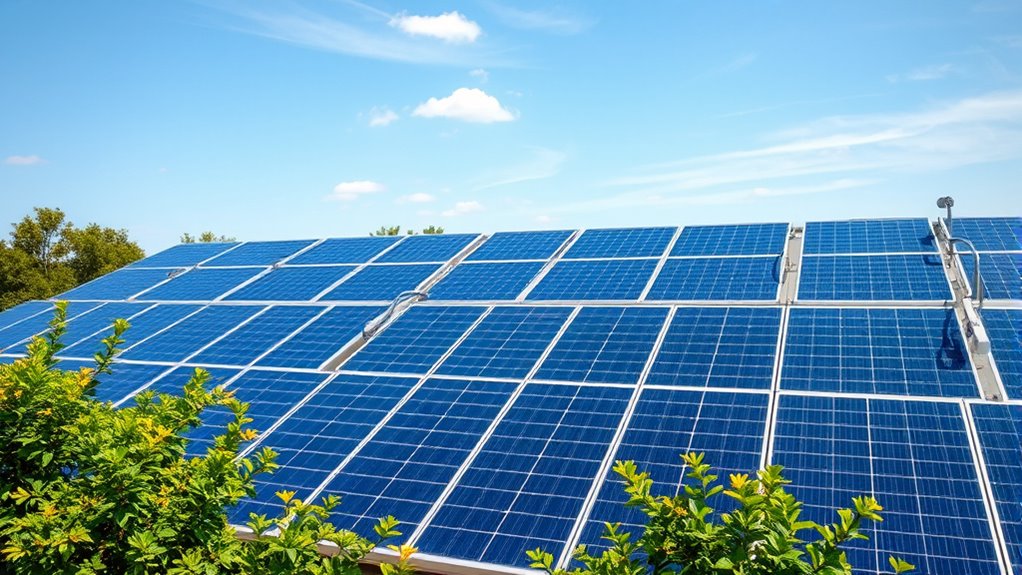
Hybrid configurations blend series and parallel wiring to enhance solar system performance by balancing voltage and current. This setup combines the benefits of both, creating a flexible and efficient power system. By connecting multiple strings in series and then paralleling those strings, you can tailor your system to handle shading, voltage requirements, and current demand. This approach offers better shading tolerance compared to pure series wiring and avoids the high wiring costs of pure parallel setups. It’s especially useful for larger systems, RVs, or homes with varying sunlight conditions.
- Balances voltage and current for ideal performance
- Improves shading tolerance across panels
- Suitable for high-demand and complex setups
- Maintains flexibility for system expansion
- Reduces risks of shading-related issues
Choosing the Right Configuration for Your Solar System

When choosing between series and parallel configurations, consider how shading and sunlight variability will affect your system’s performance. Think about your voltage and current needs to make certain your inverter and batteries are compatible, and decide if you might want to expand in the future. Your decision should balance shading tolerance, system flexibility, and your long-term energy goals.
Shading Tolerance Differences
Are you trying to decide which solar wiring configuration best handles shading issues? If shading affects your panels, parallel wiring is usually the better choice because each panel operates independently, so shading on one doesn’t reduce the output of the others. In contrast, series wiring is more sensitive: shading a single panel can lower the entire string’s voltage and power.
Key points include:
- Parallel systems tolerate shading better, maintaining output
- Series systems are more affected by partial shading
- Damage or dirt on one panel impacts the whole string in series
- Parallel wiring prevents one shaded panel from reducing overall performance
- Hybrid setups balance shading tolerance with voltage needs
Choosing the right configuration depends on your shading environment and system goals.
Voltage and Current Needs
Choosing the right solar wiring configuration depends heavily on your system’s voltage and current requirements. If you need higher voltage to match your inverter’s input, wiring panels in series is ideal, as voltage adds up while current stays the same. This setup works well for long wire runs and high-voltage inverters. Conversely, if your system demands more current at a lower voltage—such as for batteries or devices operating at standard voltages—parallel wiring increases current without changing voltage. This approach improves shading tolerance and system reliability. Your choice hinges on your energy needs, inverter specifications, and shading conditions. By understanding whether your system prioritizes voltage or current, you can select the wiring configuration that optimizes performance and reduces potential issues.
System Flexibility and Expansion
Selecting the right wiring configuration is essential for guaranteeing your solar system can grow and adapt to changing energy needs. Your choice affects how easily you can expand or modify your setup later. With series wiring, adding panels increases voltage, making expansion straightforward if you need more power at high voltages. Parallel wiring allows you to add panels without changing voltage, ideal for flexibility and shading tolerance. Hybrid systems combine both methods, offering balanced expansion options. Keep in mind:
- Series setups are limited by voltage constraints during expansion
- Parallel configurations easily accommodate additional panels at constant voltage
- Hybrid systems provide adaptable expansion paths
- Series is efficient for long-distance wiring and high voltage needs
- Parallel offers better resilience to partial shading during system growth
Choosing wisely ensures your system remains scalable and reliable over time.
Frequently Asked Questions
Can I Mix Series and Parallel Panels in One System?
Yes, you can mix series and parallel panels in one system. Doing so creates a hybrid setup that balances voltage and current, optimizing performance and shading tolerance. You connect panels in series to increase voltage and then connect those strings in parallel to boost current. This configuration suits larger systems, RVs, or homes with variable shading, providing flexibility and improved reliability for your solar power needs.
How Does Shading Impact Series and Parallel Setups Differently?
Imagine a gentle ripple in a pond; shading acts like a pebble disrupting the flow. In a series setup, even a small shadow on one panel can markedly reduce the entire string’s output, like a chain reacting to a weak link. Conversely, in a parallel configuration, shading affects only individual panels, allowing the rest to keep working smoothly. You’ll notice better shading resilience in parallel systems.
Which Configuration Is Best for Portable or Mobile Solar Systems?
You should choose a parallel configuration for portable or mobile solar systems. It allows each panel to operate independently, so shading or damage on one panel won’t affect the entire system’s performance. Plus, it’s flexible and easy to expand or modify. While wiring costs are higher, the reliability and shading tolerance make parallel setups ideal for mobility, variable sunlight, and different orientations often encountered in portable solar applications.
Do Wiring Costs Significantly Differ Between Series and Parallel?
Wiring costs can differ significantly between series and parallel setups. You might think they’re similar, but series wiring typically reduces costs because it needs fewer connectors and shorter runs, especially for high-voltage systems. Parallel wiring, on the other hand, demands more connectors and thicker wiring to handle increased current, making it pricier. So, if you’re aiming to save, series wiring usually offers a more budget-friendly option, especially for larger or longer systems.
How Do Inverter and Battery Specs Influence the Wiring Choice?
Your inverter and battery specs directly shape your wiring choice. If your inverter needs high voltage, a series setup is best, reducing wiring costs and simplifying connections. Conversely, if your batteries operate at standard voltages or you require flexibility, parallel wiring is ideal, ensuring each panel’s output matches your system’s voltage. Always match your wiring configuration to your inverter’s input and your battery’s voltage to optimize performance and safety.
Conclusion
Whether you prefer the power of parallel or the simplicity of series, choosing the right configuration keeps your system smooth and stress-free. Weigh the wattage, weather, and wants to wisely weave your wiring. By balancing benefits and barriers, you prevent problems and promote peak performance. Remember, the right setup is the secret to solar success—smart, simple, and suited to your specific needs. Make your decision today and enjoy endless energy with ease!