
TL;DR
BYU-Hawaii is launching its second phase of solar projects to power the entire campus and nearby facilities. The project includes new solar arrays and storage, aiming for complete renewable energy use.
Brigham Young University-Hawaii has announced the launch of its second phase of the University Solar Project, which aims to power the entire campus with 100% solar energy. This development marks a significant step toward renewable energy independence for the university and its adjacent facilities.
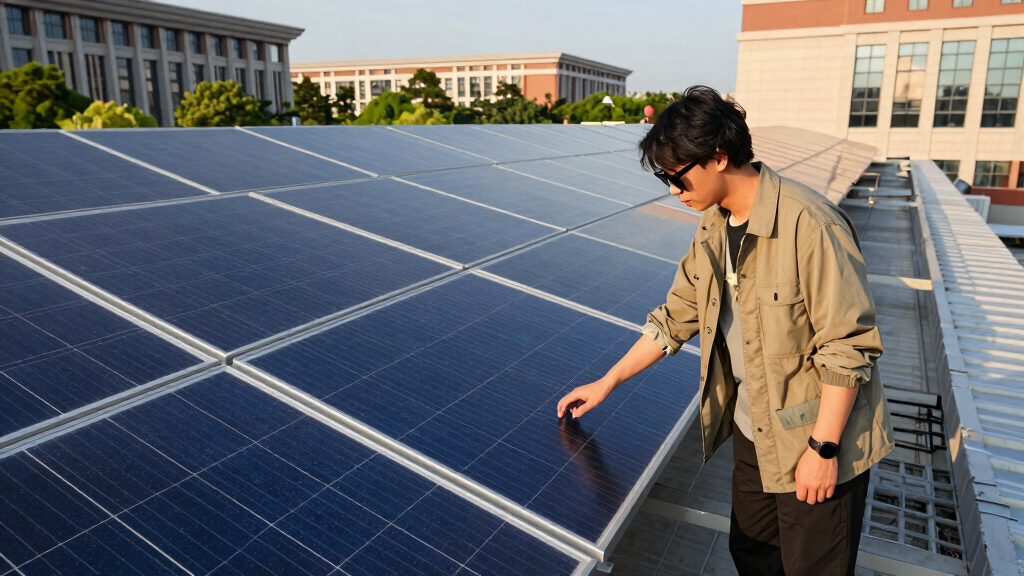
The second phase of the university’s solar initiative will add ground-mount solar arrays southwest of campus and solar canopies over a parking lot near the Polynesian Cultural Center (PCC). An energy storage system is also included, providing up to five days of emergency backup for critical services. Once completed, the project will cover the university’s remaining energy demand, which was not met by the first phase.
In 2022, BYU-Hawaii installed three rooftop solar projects, five solar carports, and 7 MWh of energy storage, which supplied 39% of the campus’s energy needs. The second phase aims to fill the gap to reach full renewable energy coverage, extending benefits to the PCC and the nearby Laie Hawaii Temple.
Implications for Renewable Energy in Educational Institutions
This project demonstrates a scalable model for universities aiming to achieve 100% renewable energy, potentially influencing other institutions to follow suit. It also enhances energy resilience for the campus and nearby facilities, reducing reliance on external power sources and fossil fuels.
As an affiliate, we earn on qualifying purchases.
Progress and Goals of BYU-Hawaii’s Solar Initiatives
BYU-Hawaii’s initial solar efforts in 2022 included rooftop panels, carports, and energy storage, which collectively met 39% of its energy needs. The second phase builds on this foundation, aiming for complete solar coverage. The project aligns with broader trends of institutional commitments to renewable energy and sustainability.
“The second phase of our solar project will enable us to meet 100% of our energy needs through renewable sources, setting a benchmark for sustainable campus operations.”
— an anonymous university official
As an affiliate, we earn on qualifying purchases.
Remaining Details on Project Timeline and Capacity
It is not yet clear when the second phase will be fully operational or the exact capacity of the new solar arrays and storage system. Details about funding, implementation schedule, and potential challenges remain to be clarified as the project progresses.

ECO WORTHY 10000W Output Complete Off-Grid Solar Panel Kit for Home| 10KW 120V/240V Output Split Phase Inverter| 48V 314Ah16.1kWh High Capacity Energy Storage| 2950W Solar Panel PV| Whole House System
- Power Output: 10kW with split-phase support
- Solar Panels: Five 590W panels, 2950W capacity
- Energy Storage: 48V 314Ah LiFePO₄ battery, 16.1 kWh
As an affiliate, we earn on qualifying purchases.
As an affiliate, we earn on qualifying purchases.
Next Steps for Project Implementation and Monitoring
The university plans to begin construction of the new solar arrays and storage system soon, with completion expected within the next 12-18 months. Monitoring of the project’s impact on energy consumption and resilience will follow, alongside potential expansion or replication of the model.
As an affiliate, we earn on qualifying purchases.
Key Questions
When will the second phase of the solar project be completed?
The exact completion date has not been publicly announced, but construction is expected to take approximately 12-18 months from the start.
How much energy will the new solar arrays generate?
Specific capacity figures are not yet confirmed, but the goal is to fully meet the campus’s energy needs, which were partially supplied by the first phase.
Will the project reduce the university’s carbon footprint?
Yes, achieving 100% solar power will significantly reduce the campus’s greenhouse gas emissions by replacing fossil fuel-based electricity with renewable energy.
Does this project include plans for energy storage and backup?
Yes, an energy storage system capable of providing up to five days of backup is part of the project, enhancing resilience during outages.
Source: Solar Power World