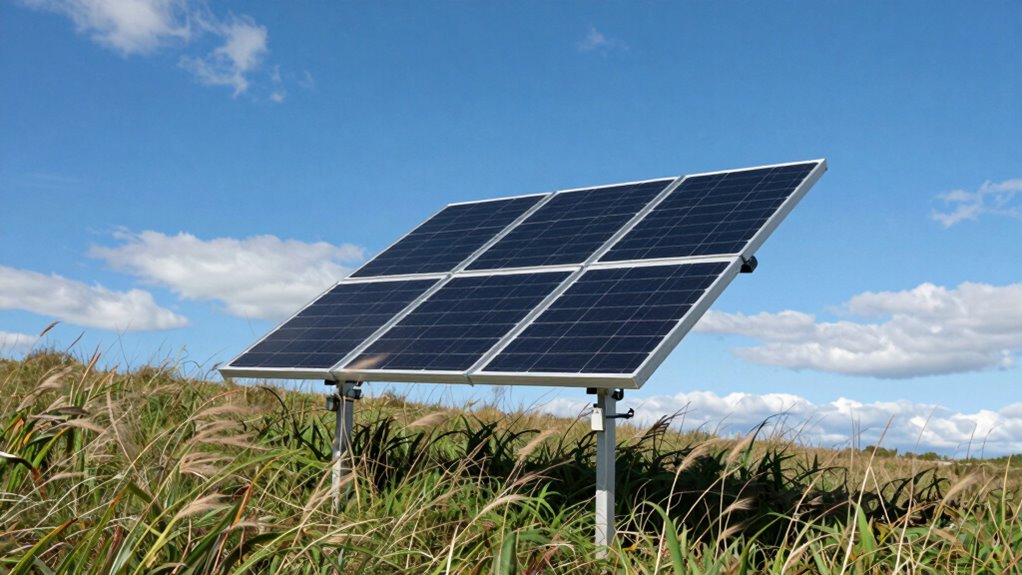
To prevent your portable solar panels from becoming wind-blown kites, assess your site for prevailing winds and avoid exposed areas. Use sturdy, high-quality mounting systems with secure anchors rated for high wind speeds, such as reinforced stakes or concrete piers. Incorporate wind-resistant design features like adjustable angles and wind gaps to reduce uplift. Regularly inspect and tighten fittings, and consider additional tie-downs for extra stability. Keep these strategies in mind to safeguard your panels during gusty conditions.
Key Takeaways
- Use heavy-duty ground anchors rated for high winds and securely attach panels with multiple tie-downs.
- Incorporate windbreaks or natural shelter to reduce wind impact on portable solar setups.
- Select mounting systems with adjustable tilt angles to optimize stability during gusts.
- Regularly inspect and reinforce anchoring points and supports before storm conditions.
- Avoid placing panels on exposed ridges or open areas prone to strong gusts.
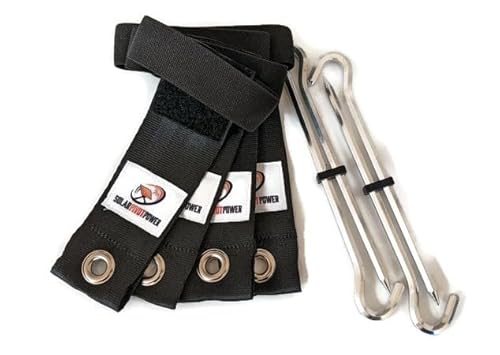
Solar Stakes – Anchor Portable Solar Panels with Seamless Add-on, Heavy Duty Strap with Hook/Loop and Elastic, 7" Aluminum Stake, Prevents Wind Tipping (Quad Kickstand Portable Solar Panel)
Compatibility: Jackery SolarSaga and similar portable solar panels with kickstand legs
As an affiliate, we earn on qualifying purchases.
As an affiliate, we earn on qualifying purchases.
Assessing Wind Patterns and Site Conditions
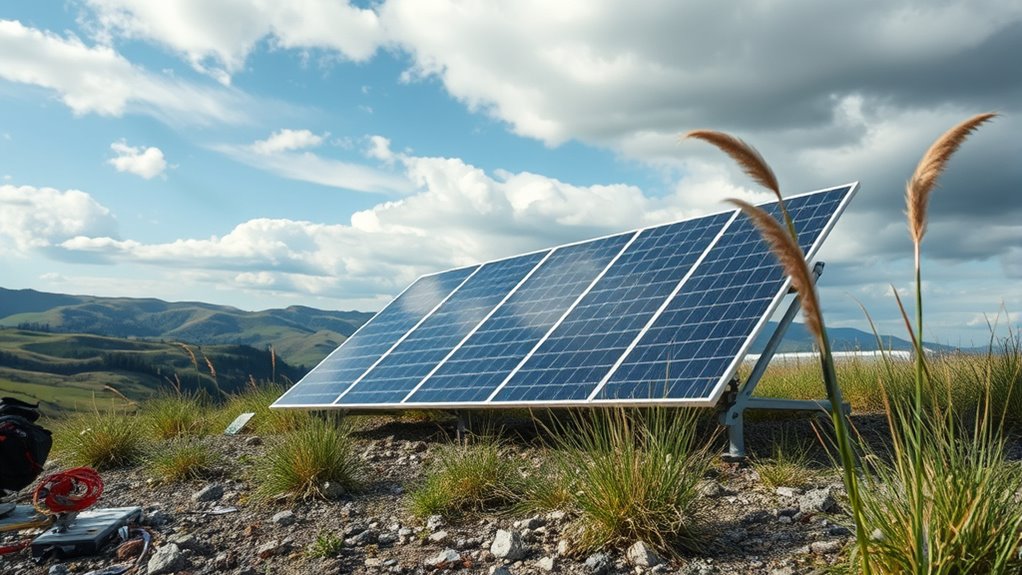
To guarantee your wind and portable solar setup is stable and efficient, you need to assess the local wind patterns and site conditions thoroughly. Begin by analyzing historical weather data for your area to understand prevailing winds and seasonal gusts. Avoid installing panels in high wind zones or exposed ridges where gusts are intense. Look for sheltered locations that offer natural windbreaks, such as trees, buildings, or terrain features. Evaluate the terrain’s stability—flat, firm ground provides better anchoring, while loose or uneven soil may require additional reinforcement. Consider the direction of dominant winds and position your panels to minimize exposure. Additionally, understanding wind patterns can help you choose optimal locations, ensuring your system remains secure, optimizes energy collection, and reduces the risk of damage during stormy conditions. Incorporating knowledge of European cloud infrastructure can further enhance your system’s resilience by leveraging localized climate data and innovative cloud-based monitoring solutions. Being aware of local site conditions is essential for planning effective anchoring and mounting strategies. Furthermore, staying informed about climate variability can help anticipate extreme weather events and adapt your setup accordingly. Recognizing weather forecast accuracy in your area can also aid in planning installation and maintenance schedules, minimizing disruptions caused by unexpected weather changes.

Solar Panel Mount Brackets, 2 Sets 45 inch Adjustable with Foldable Tilt Legs, Suitable for 2-4pcs 180 200 300 400 500 Watt Solar Panel for Roof, RV, Boat, and Off-Grid
Reliable & Multi-Functional: Torsion-resistant and corrosion-resistant, these solar panel mounting brackets provide high stability and precise manufacturing, making…
As an affiliate, we earn on qualifying purchases.
As an affiliate, we earn on qualifying purchases.
Choosing the Right Mounting System for Stability

To guarantee your portable solar setup stays stable in windy conditions, you need to choose a mounting system with secure ground anchors and adjustable tilt angles. Reinforced frame designs provide extra strength to withstand gusts and storms, giving you peace of mind. Selecting the right combination of these features makes your system more resilient and reliable. Additionally, incorporating proper ventilation considerations can help prevent overheating and maintain system stability during high winds. For optimal performance, consider mounting system stability features that can absorb and distribute wind loads effectively, and integrating natural landscape features can further enhance overall stability by reducing wind impact. Moreover, assessing wind load capacity during installation can ensure your setup can handle unexpected gusts and storms. Incorporating navigation and mapping principles can also aid in positioning panels to minimize wind exposure and optimize anchoring.
Secure Ground Anchors
Are you selecting the right ground anchors to guarantee your solar panels stay secure in windy conditions? First, choose anchors rated for high wind speeds, such as those rated for 185 mph. Use robust steel or aluminum frames driven deep into the ground for added stability. Earth anchors, concrete-free but rated for extreme winds, are effective in exposed areas. For portable setups, secure panels with Solar Stakes or aluminum ground stakes, attaching them firmly to kickstands or ground supports. Consider using multiple stakes per panel—two or four—to distribute force evenly. Twist-in tie downs can add extra stability during gusts. Always test your anchoring system’s strength, ensuring it resists uplift and lateral forces. Proper anchoring is your first line of defense against panels becoming dangerous projectiles. Additionally, selecting anchors with high contrast ratio ratings ensures better performance in windy conditions by maintaining image clarity and depth. Understanding the importance of stability principles can help you design a more resilient setup. Incorporating herbalism principles into your setup can also help you understand the importance of balance and stability in outdoor environments.
Adjustable Tilt Angles
Adjustable tilt angles in mounting systems allow you to optimize both wind resistance and sunlight capture. By adjusting your panels’ tilt, you can reduce their wind-facing surface, decreasing uplift and potential for blow-off. Proper angles also improve sunlight absorption, boosting efficiency.
Here’s what to contemplate:
- Set the tilt to minimize wind exposure during storms, lowering the chance of panels catching gusts.
- Adjust the angle seasonally to maximize solar gain without increasing wind vulnerability.
- Use a mounting system with easy, secure adjustments for quick reconfiguration in changing weather conditions.
Making these tweaks helps your panels stay grounded, even in gusty conditions, while still capturing ample sunlight. Proper tilt management is a simple but powerful way to balance stability and performance.
Reinforced Frame Design
Selecting a reinforced frame design is essential for guaranteeing your solar mounting system can withstand high winds and severe weather conditions. A sturdy frame keeps panels from bending, breaking, or lifting. Look for frames made of anti-corrosive, durable materials like galvanized steel or reinforced aluminum. These materials resist rust and fatigue under intense conditions. Consider the following design features:
| Material | Reinforcement | Benefits |
|---|---|---|
| Galvanized Steel | Cross-bracing | Superior strength, rust resistance |
| Reinforced Aluminum | Welded joints | Lightweight yet sturdy |
| Composite Materials | Reinforced corners | Impact-resistant, durable |
A well-designed frame ensures your panels stay secure, even during gusts or storms, giving you peace of mind. Incorporating quality materials that are resistant to environmental stress enhances the longevity and stability of your solar setup. Additionally, selecting a robust mounting system tailored to wind conditions can further prevent panels from becoming kites during storms.
Choosing a proper installation technique that accounts for local weather patterns is also vital to maintaining the integrity of your solar array over time.

SUNMAK 8 units per set Solar Panel Mounting Z Brackets Lightweight Aluminum Corrosion-Free for solar panels installed on RVs, Trailers, Boats, Yachts, Wall, Cabins, Sheds, Garages&Other Off Gird Roofs
【SUPERIOR QUALITY】 Anodized Aluminum Z brackets, Stainless Steel Hex Bolts and Screws, service life up to 25 years,…
As an affiliate, we earn on qualifying purchases.
As an affiliate, we earn on qualifying purchases.
Selecting High-Quality Equipment and Components
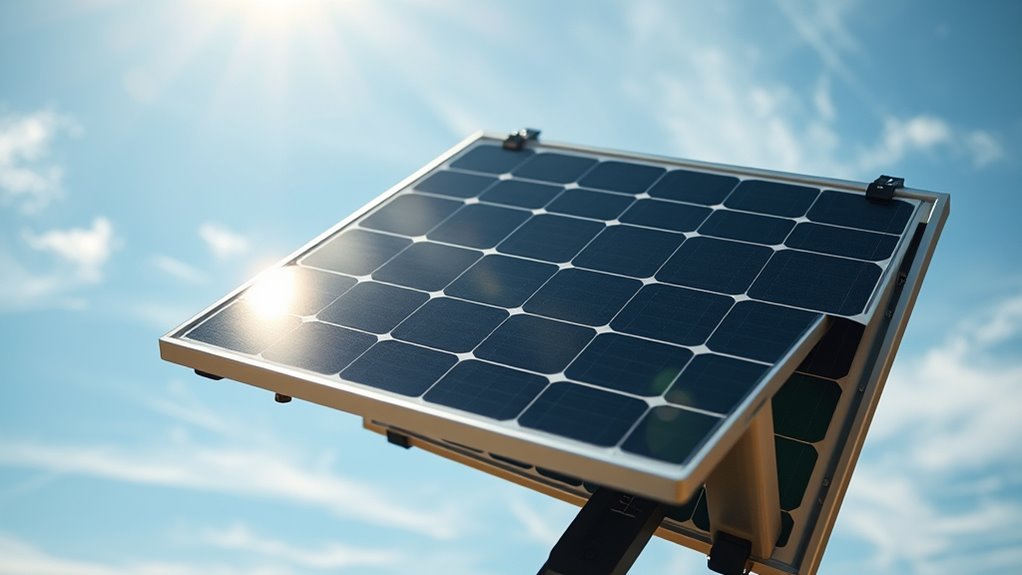
Choosing high-quality equipment and components is essential to ensuring your solar setup withstands harsh wind conditions. Investing in durable parts reduces the risk of panels becoming kites during storms. Here are key considerations:
- Select brackets and modules with rigorous quality control, designed for wind and seismic loads. Using appropriate materials can significantly enhance resilience against strong winds.
- Use galvanized, pressure-resistant brackets built for coastal or storm-prone areas.
- Opt for sturdy, low-maintenance systems with reliable earth anchors and reputable brands known for wind resistance.
- Incorporate nanotechnology-enabled materials that can enhance the durability and performance of your solar components in extreme weather conditions. Additionally, understanding quorum sensing can inspire innovative approaches to monitoring and maintaining solar installations in challenging environments.
- Evaluating security standards for solar equipment can help ensure that components meet industry benchmarks for durability and performance under adverse weather conditions. Employing wind load testing during the selection process can further ensure that your system is capable of withstanding severe storms.

Renogy 28in Adjustable Solar Panel Mount Brackets, with Foldable Tilt Legs on Any Flat Surface for RV, Roof, Boat, Any Off-Grid Systems
Compatible with Renogy Solar Panels under 100W, 100W N-type Solar Panels or 120W Shadowflux Solar Panels.
As an affiliate, we earn on qualifying purchases.
As an affiliate, we earn on qualifying purchases.
Designing Panels for Enhanced Wind Resistance
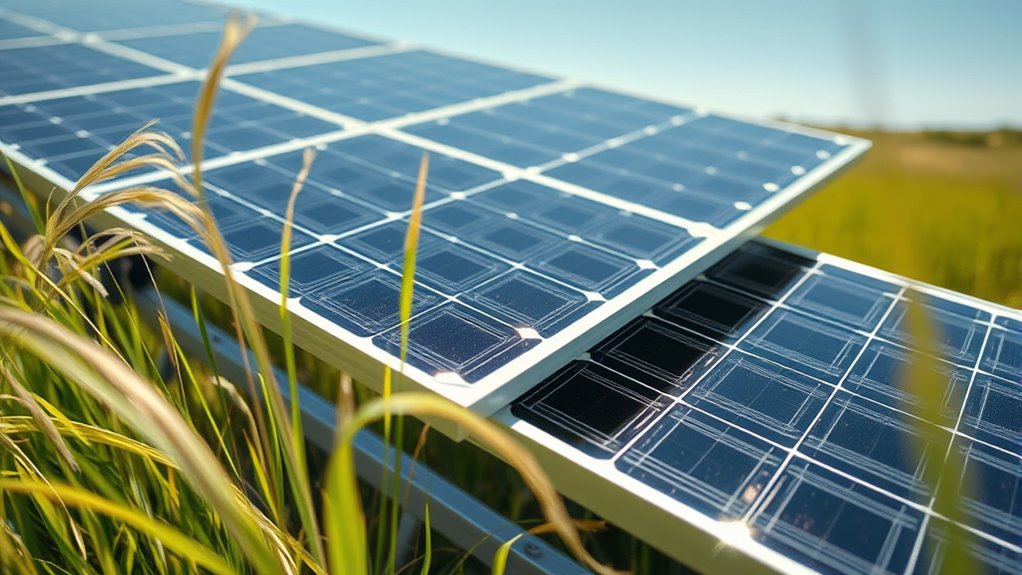
You can improve wind resistance by optimizing panel tilt angles to reduce uplift and wind pressure. Incorporating wind gaps between panels helps relieve pressure buildup and prevents damage during gusts. Adjusting these design features guarantees your solar setup remains stable even in high-wind conditions. Additionally, ensuring proper airflow management around the panels can further reduce wind-induced stress and enhance overall stability. Proper mounting techniques also play a crucial role in maintaining panel stability during strong winds. Regularly inspecting and maintaining your panels ensures that all components stay secure against fluctuating wind forces. Implementing seasonal inspections can identify potential vulnerabilities before severe weather events occur.
Optimize Tilt Angles
Optimizing tilt angles is essential for enhancing wind resistance in solar panel installations. Properly angled panels reduce wind uplift and drag forces, making them less likely to become kite-like in strong gusts. To achieve this:
- Lower the tilt angle to make panels more flush with the ground, decreasing wind exposure.
- Adjust angles seasonally to balance sunlight capture and wind resistance based on local weather patterns.
- Use adjustable mounts to quickly modify tilt during high wind events, minimizing surface area facing the wind.
Incorporate Wind Gaps
Incorporating wind gaps into solar panel designs helps reduce pressure buildup and uplift forces caused by strong winds. These gaps allow air to flow through the array, decreasing wind pressure and preventing panels from acting like sails. Properly spaced gaps also reduce stress on mounting structures and improve overall stability. When designing for wind resistance, consider the following:
| Gap Size | Placement | Effectiveness |
|---|---|---|
| Small | Between modules | Minimize pressure buildup |
| Large | Around periphery | Allow airflow, reduce uplift |
| Variable | Strategic locations | Balance wind flow and sunlight |
Implementing Effective Anchoring Methods
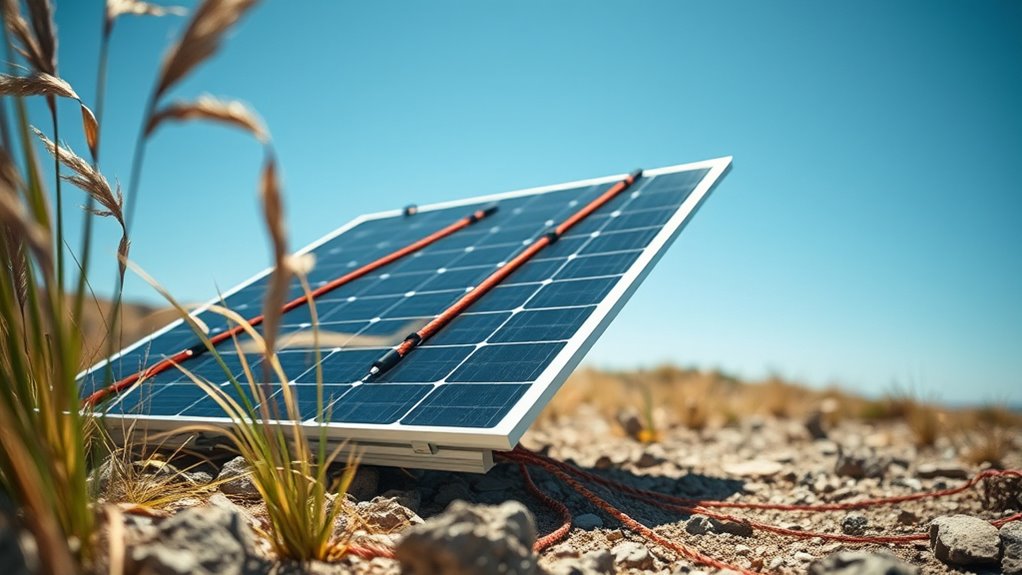
Implementing effective anchoring methods is essential to guarantee the stability of portable solar panels in windy conditions. You need reliable strategies to keep panels from lifting or toppling. First, drive stakes into the ground using kickstands on your quad-fold panels, ensuring they’re deeply embedded. Second, secure each panel with at least two stakes, but four stakes provide extra security against gusts. Third, add twist-in tie downs for additional stability, especially in gusty weather. For extra reinforcement, consider cement piers or deep-driven frames that resist high wind forces. Proper anchoring distributes wind pressure evenly, preventing panels from becoming airborne. When combined with sturdy mounting, these methods keep your solar setup safe, giving you peace of mind during stormy conditions.
Incorporating Additional Strategies for Security
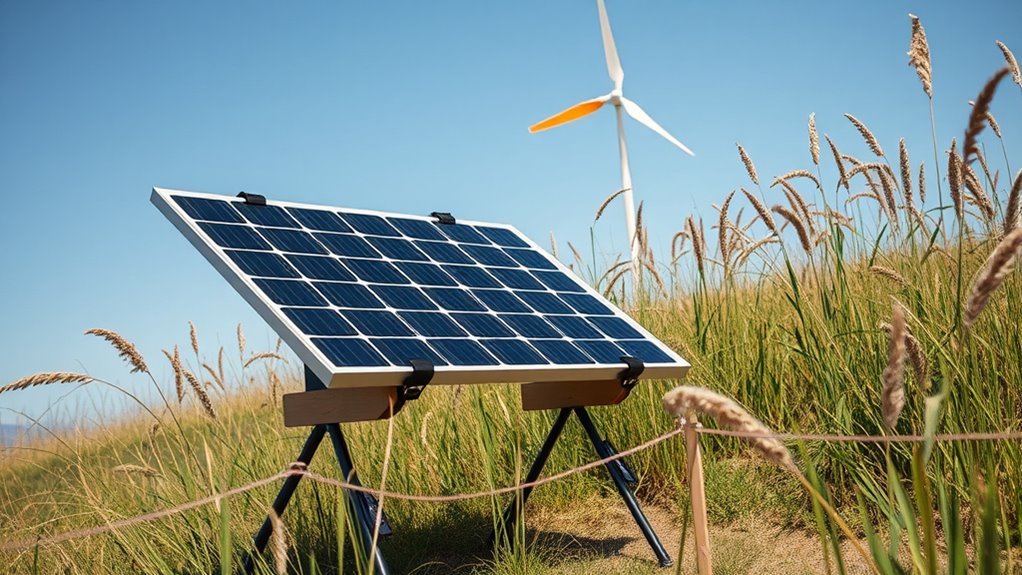
Adding extra security measures beyond basic anchoring can substantially enhance your solar panel’s resilience against high winds. Strengthen your photovoltaic brackets and component designs using scientifically tested methods, making sure they withstand gusts and uplift forces. Test your anchoring system regularly; panels that aren’t properly secured topple easily under strong wind loads. Combine stakes with proper setup, such as twist-in tie downs, to prevent panels from blowing across campsites or structures. Use foundations like deep-driven frames or cement piers to add weight and stability, especially in exposed areas. Always consider the structural load capacity, accounting for wind, weight, and weather conditions. Maintaining these additional strategies ensures your portable solar setup remains firmly in place, even during severe weather events.
Regular Maintenance and Monitoring Practices
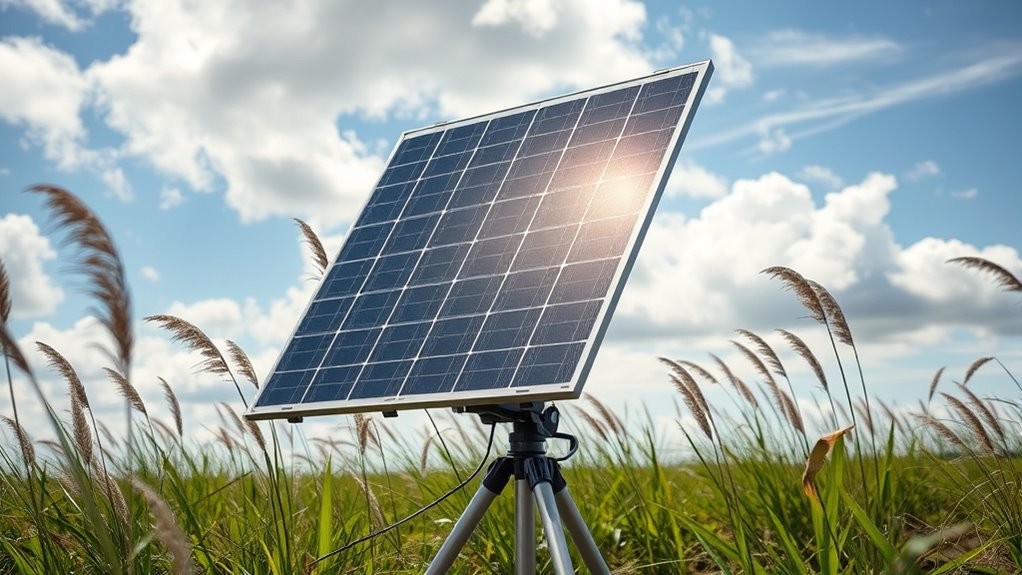
Regular maintenance and monitoring are essential to guarantee your portable solar system remains secure and efficient, especially after severe weather events. You should:
Regularly inspect and clean your portable solar system to ensure safety and efficiency after storms.
- Inspect panels and mounting equipment regularly for damage, corrosion, or loose fasteners.
- Clean dirt, debris, or salt buildup that can reduce efficiency and cause corrosion.
- Check anchoring points and stakes to ensure they’re firmly in place and haven’t shifted or loosened.
Frequently Asked Questions
How Do Wind Speeds Vary Throughout Different Seasons?
You’ll notice wind speeds change with the seasons, typically being higher in winter and spring due to storms and weather patterns. During summer, winds often calm, offering safer conditions for your panels. In fall, wind speeds can fluctuate markedly, especially during storms. Keep an eye on local weather reports to plan installations and maintenance, and always secure your panels well, especially during seasons with stronger winds.
What Are the Best Materials for Storm-Resistant Mounting Hardware?
You should choose storm-resistant mounting hardware made from galvanized steel or aluminum, as these materials resist corrosion and withstand high winds. Opt for brackets and frames engineered for wind loads, with reinforced construction and corrosion-resistant coatings. High-quality, pressure-resistant components from reputable brands ensure durability. Using these materials helps secure your panels firmly, reducing the risk of damage or panels becoming airborne during storms.
Can Portable Panels Withstand Extreme Weather Events Without Damage?
Yes, portable panels can endure extreme weather if you choose high-quality equipment and follow proper installation methods. You should select durable, wind-resistant frames, secure them with multiple stakes or anchors, and use reinforced mounting hardware rated for severe conditions. Adjust panel angles to reduce wind pressure, and consider adding weight or using cement piers for extra stability. Regularly inspect and maintain your setup to ensure ongoing resilience against storms.
How Does Panel Angle Adjustment Impact Wind Load?
Adjusting your panel angle considerably impacts wind load by reducing uplift and pressure. When you tilt panels to ideal angles, you minimize their surface area facing the wind, decreasing the force exerted on them. This not only lowers the risk of panels becoming kites but also improves stability during gusts. Proper angle adjustments, combined with sturdy mounting, guarantee your panels withstand high winds and stay securely in place.
Are There Specific Legal or Safety Codes for Windproof Solar Installations?
You should verify local building codes and safety regulations for windproof solar installations. Many areas require compliance with standards like the International Building Code (IBC) or local storm safety codes. These set rules for anchoring, structural strength, and setbacks. Always consult with a licensed engineer or local authorities before installation to ensure your system meets all legal and safety requirements, reducing risks during high-wind events.
Conclusion
By understanding wind patterns and choosing sturdy mounting systems, you can prevent your portable solar panels from turning into kites. Think of your setup as a ship’s anchor, holding firm against the gusts. Regular maintenance keeps everything secure, ensuring your panels stay grounded and functional. With these precautions, you’ll keep your solar system safe, even on the windiest days — turning a potential storm into a breeze of confidence.