TL;DR
Prime for Young Adults — start your free trial
Fast free delivery, streaming and member deals for eligible 18–24 year olds.
As an affiliate, we earn on qualifying purchases.
The Port of Valencia has begun installing vertical photovoltaic panels on its breakwaters under the EU-funded Renewport project. The initiative aims to demonstrate the technical, economic, and environmental viability of large-scale vertical solar systems in Mediterranean ports. Installation is expected to be completed by September 2026.
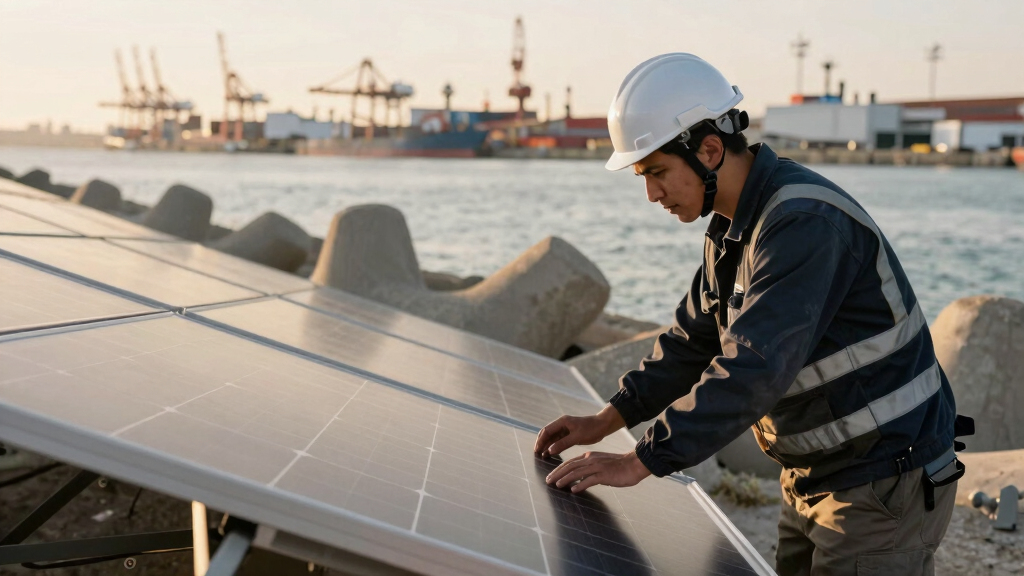
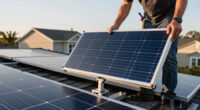
The Port of Valencia has started installing vertical photovoltaic panels on its breakwaters as part of the EU-funded Renewport project, marking a significant step toward integrating renewable energy infrastructure into port facilities. This initiative aims to demonstrate the feasibility of large-scale vertical solar systems in maritime environments, which could influence renewable deployment across Mediterranean ports and beyond.
The project, launched in January 2024, involves installing 21 photovoltaic modules, each rated at 410 W, on a section of the North Breakwater wall. The total capacity of this pilot system is approximately 8.6 kW. The work is being carried out under a contract awarded to Pavener Servicios Energéticos S.L. for €169,314.55 (around $195,000). The installation is scheduled for completion and operational testing by September 2026.
The initiative is part of the broader Renewport project, which is co-financed at 80% by the European Union through the Interreg Euro-MED programme, under the Greener MED initiative. Its goal is to reduce the carbon footprint of Mediterranean ports by validating innovative renewable energy solutions, including solar, wind, and geothermal power. The project builds on preliminary tests conducted in 2023, where vertically installed solar panels on the North Breakwater proved feasible and efficient, paving the way for larger-scale deployment.
The pilot system utilizes SunnerBox’s proprietary IT3 solution, a matrix of photovoltaic panels mounted on a mesh structure anchored directly to the breakwater, which aims to reduce structural costs, ease installation, and simplify maintenance. Real-time monitoring of energy generation and structural behavior will be conducted over two months using sensors, with the energy produced powering the monitoring system itself.
Potential Impact of Vertical PV on Mediterranean Ports
This project could significantly influence renewable energy integration in port infrastructure, demonstrating that vertical PV systems are viable in maritime environments. Successful deployment may lead to increased adoption of similar solutions across Mediterranean ports, contributing to regional decarbonization efforts and energy independence. It also highlights innovative use of existing port infrastructure to generate renewable energy without large land footprints, aligning with broader sustainability goals.
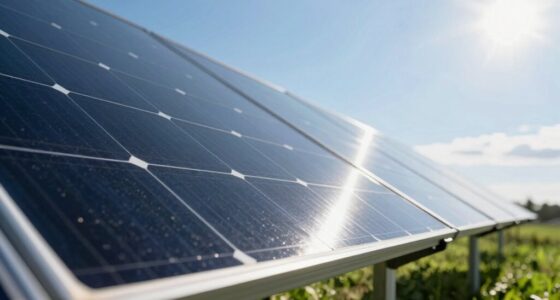
vertical photovoltaic solar panels
As an affiliate, we earn on qualifying purchases.
As an affiliate, we earn on qualifying purchases.
Renewport’s Role in Mediterranean Port Decarbonization
The Renewport project, launched in January 2024, aims to support the transition of Mediterranean ports to cleaner energy sources by testing innovative renewable solutions. The project is part of the EU’s broader effort to decarbonize maritime activities and port operations, emphasizing solar, wind, and geothermal energy. Prior to this installation, the Port of Valencia tested vertical solar panels in 2023, which demonstrated the technical feasibility and efficiency of such systems, setting the stage for the current large-scale deployment.
Valencia’s initiative is among the first in Spain to develop a large-scale vertical photovoltaic park on port infrastructure, representing a pioneering step in renewable port energy systems. The project’s success could serve as a model for other ports seeking sustainable energy solutions that leverage existing structures.
“The installation on the breakwaters is a key step toward validating large-scale vertical PV systems in maritime settings.”
— an anonymous researcher
As an affiliate, we earn on qualifying purchases.
Uncertainties About Long-Term Performance and Scale
It is not yet clear how the vertical PV system will perform over the long term in terms of durability, maintenance, and energy output under maritime conditions. The project is a pilot, and while initial results are promising, scaling up to larger installations remains uncertain. Additionally, the economic viability of widespread deployment depends on future cost reductions and policy support, which are still evolving.
portable solar monitoring system
As an affiliate, we earn on qualifying purchases.
As an affiliate, we earn on qualifying purchases.
Next Steps for Monitoring and Expanding Vertical PV Use
Following installation, the project team will monitor energy production and structural behavior over a two-month period, with results expected to inform potential scaling and replication. If successful, the project could lead to broader adoption of vertical PV systems across Mediterranean ports and influence future port renewable energy strategies. Further assessments will evaluate economic and environmental benefits, guiding policy and investment decisions.
As an affiliate, we earn on qualifying purchases.
Key Questions
What is the purpose of installing PV on breakwaters?
The goal is to demonstrate the technical, economic, and environmental feasibility of large-scale vertical solar systems integrated into port infrastructure, which could reduce ports’ carbon footprints and generate renewable energy locally.
How much energy will the pilot system produce?
The pilot system consists of 21 modules with a combined capacity of about 8.6 kW. Its energy output will be monitored during the two-month testing period to evaluate performance.
Could this approach be scaled up across other ports?
If the pilot proves successful, the approach could be expanded to larger installations on other Mediterranean ports, contributing to regional decarbonization efforts.
What are the main challenges of vertical PV installations in ports?
Challenges include ensuring durability in maritime conditions, managing maintenance, and achieving cost-effective large-scale deployment. Ongoing monitoring aims to address these issues.
When will the project results be available?
Initial monitoring results are expected after the two-month testing period, around late 2024, with further analysis to follow.
Source: PV Magazine
NFL season / tailgating Picks
team gear
As an affiliate, we earn on qualifying purchases.