
TL;DR

Get backup power and energy gear delivered free with Prime
- Fast, free delivery on millions of items
- Prime Video, Amazon Music and more included
- Member-only deals all year
A guide published by Energy-Storage.News explains how battery energy storage systems can help EV charging sites manage peak demand, grid constraints and energy costs. It describes battery-integrated chargers and site-level batteries, while stressing that storage must be sized to the site’s charging demand and grid connection.
Energy-Storage.News has published a guide explaining how battery energy storage systems, or BESS, can support electric-vehicle charging sites facing high peak demand, costly grid connections or connection delays. The report outlines two system designs and says storage can reduce the grid capacity a site needs, but the benefit depends on matching battery power and energy capacity to actual site demand.
A BESS can store electricity and release it when several vehicles charge at once, reducing the size of the short-term load drawn from the grid. The guide says this may help operators manage demand charges, make better use of on-site renewable generation and reduce the risk of grid-side throttling. It can also provide a buffer where a site’s grid connection is limited or takes time to secure. It does not prevent throttling caused by a vehicle or charger itself.
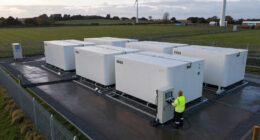
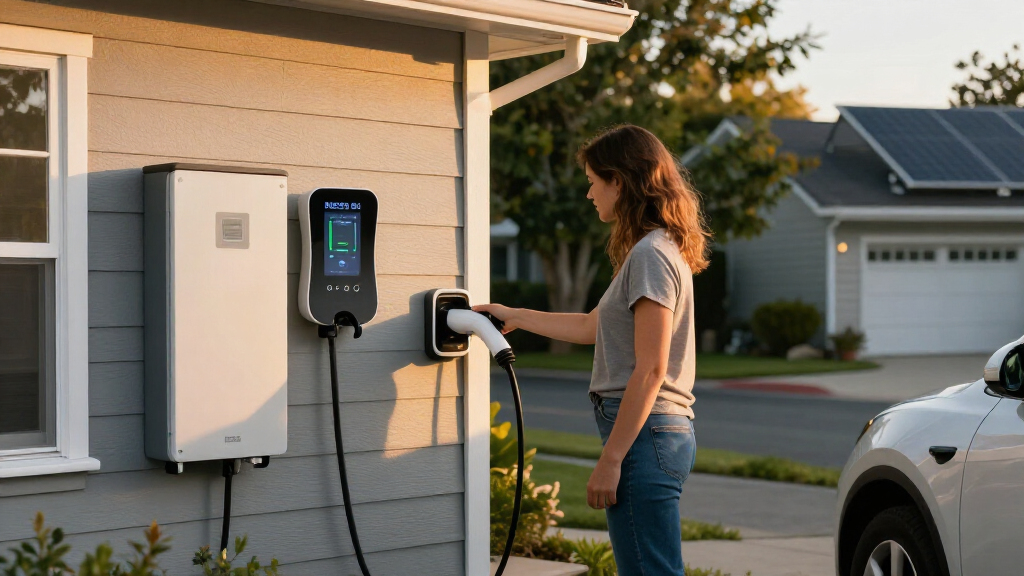
The report describes two main configurations. Battery-integrated chargers contain storage in each charger and can be quicker and cheaper to install, but their storage capacity is fixed for each unit. A site-level BESS centralizes storage, costs more and involves a more complex installation, but can be expanded as site demand grows and can be coordinated with solar and other site assets.
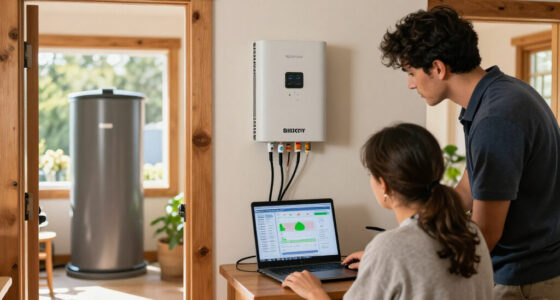
A site-level system commonly includes battery modules, a power conversion system, battery and energy management systems, thermal controls, monitoring and safety equipment. The power conversion system manages energy flows among the battery, grid and chargers. The battery management system monitors conditions such as temperature and state of charge; the energy management system directs charging and discharging in response to tariffs, demand and grid limits. The guide also notes that systems may be AC- or DC-coupled and that some projects use second-life EV batteries.
How Storage Can Ease Grid Limits
For charging operators, the central potential benefit is a way to serve short bursts of high demand without drawing the full peak power from the grid. This could make a constrained site more practical and may lower connection costs where a smaller grid connection is feasible. The guide says appropriately sized systems can cut required grid capacity by 50% to 80% compared with a grid-only station, without affecting the charging experience. That figure is presented as a general potential outcome, not a guarantee for every site.
Storage may also help a site use more locally generated solar power: electricity can go directly to chargers when demand is high, or charge the battery when generation exceeds immediate use. The actual financial case depends on the site’s tariff, demand profile, grid limits, storage costs and operating strategy. A battery that is too small may run out of stored energy sooner than expected, limiting peak support and potential demand-charge savings.
Products Worth Considering

Bose SoundLink Flex Bluetooth Speaker (2nd Gen), Waterproof, Dustproof, USB‑C, Up to 12 hr Battery, Black

Bose SoundLink Plus Portable Bluetooth Speaker, Wireless Outdoor Speaker, Up to 20 Hours Battery Life, Waterproof and Dustproof, Black

Dyson Airwrap i.d. Multi-Styler for Straight and Wavy Hair
As an affiliate, we earn on qualifying purchases.
Choosing Between Two Battery Designs
The choice between charger-level batteries and a central system depends on the scale and expected growth of the site. The guide characterizes battery-integrated units as a fit for smaller sites or faster deployments. Because each unit has a fixed capacity, expanding storage later may be less flexible; substantial growth could require a separate site-level system.
For larger charging hubs, fleet depots or locations expected to add chargers, a site-level BESS can offer more room to scale and coordinate with renewables. The report says sizing should account for both power, measured in kilowatts, and stored energy, measured in kilowatt-hours. It cites US guidance estimating energy needs at roughly 150 kWh of peak-hour charging per port, multiplied by the number of ports, less the energy the grid can supply in an hour. This is a rule of thumb in the source, not a universal design standard.
“BESS sizing is the biggest design factor when choosing the site-level BESS route at an EV charging station.”
— Energy-Storage.News guide
Site Economics Remain Case-Specific
The guide does not provide a project-specific cost comparison, payback period or operating data to verify expected savings across different locations. Its 50% to 80% grid-capacity reduction and sizing rule are general estimates, not guarantees. Results will depend on charging patterns, connection capacity, tariffs, battery size and how the system is operated.
The source material’s sizing example is incomplete: it begins describing four 350 kW DC fast chargers on a 100 kW grid connection but does not provide the resulting calculation. It is therefore not possible to report a complete storage requirement for that example. The guide also does not set out local permitting, interconnection or safety requirements, which vary by jurisdiction and project.
Model Demand Before Installation
The report’s practical sequence is to establish the site’s expected charging demand and available grid supply, then determine the required battery power and energy capacity. Operators can compare a fixed-capacity battery-integrated approach with a scalable site-level system and assess whether solar generation, tariffs or grid constraints change the business case.
Before committing to an installation, project teams will need site-specific engineering and financial analysis, including grid-connection conditions and applicable safety and permitting rules. The guide offers no announced project or policy milestone; the next step for any operator is a site assessment rather than a single recommended installation date.
Key Questions
Why add a battery to an EV charging site?
A BESS can supply some power during charging peaks, reducing the load drawn from the grid at that moment. It may also help manage demand charges, make use of on-site renewable electricity and work around limited grid capacity.
What is the difference between a battery-integrated charger and a site-level BESS?
A battery-integrated charger stores energy inside each charging unit, with capacity fixed per unit. A site-level BESS is centralized and can generally be scaled to meet changing site demand, though the guide describes it as more expensive and complex to install.
How is the required battery size determined?
Designers need to assess both the battery’s delivery power in kilowatts and its storage capacity in kilowatt-hours. Charging demand, the grid connection, peak periods and the operating plan all affect the sizing decision.
When should a charging site install storage?
The guide gives no universal installation threshold. Storage may merit assessment when a site faces grid constraints, high peak demand, connection delays or a plan to pair charging with on-site renewables. A site-specific technical and financial assessment is needed before deciding.
Source: energy-storage.news