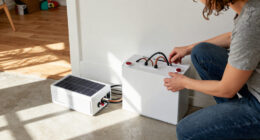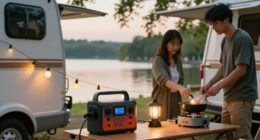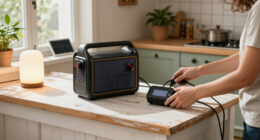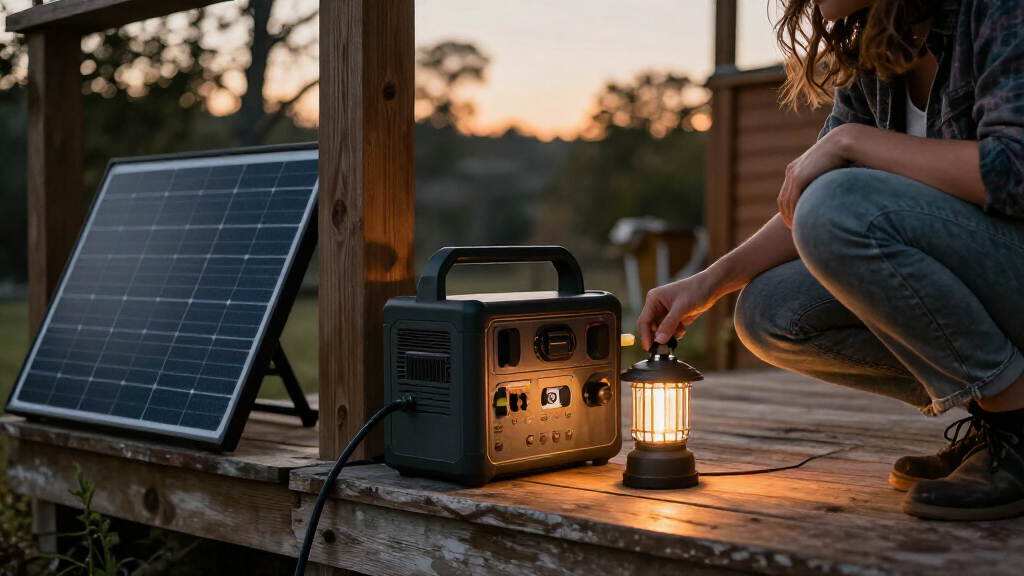
The best portable power stations balance usable capacity, output, portability, and charging options for the way you plan to use them. For a strong all-around starting point, I’d put the Anker SOLIX C1000 on the shortlist, while the EcoFlow DELTA 3 and Jackery Explorer 300 stand out as alternatives for different power needs. Larger models such as the Jackery HomePower 3600 Plus and EcoFlow DELTA Pro suit longer backup demands, but their size and weight make them less convenient for regular travel. The main tradeoff is straightforward: more capacity and output usually mean a heavier unit and a bigger commitment to storage and setup. Read on for the full breakdown and guidance on matching a station to your devices and plans.

Get backup power and energy gear delivered free with Prime
- Fast, free delivery on millions of items
- Prime Video, Amazon Music and more included
- Member-only deals all year
Complete the kit

Key Takeaways
- Capacity and portability separate the field: the 288–292Wh BLUETTI Elite 30 V2 and Jackery Explorer 300 are easier to place in a travel kit, while the 3,584Wh Jackery HomePower 3600 Plus and 3,600Wh EcoFlow DELTA Pro are aimed at extended backup.
- About 1kWh is the lineup’s middle ground: the Anker SOLIX C1000, BLUETTI Elite 100 V2, Jackery Explorer 1000 v2, and EcoFlow DELTA 3 offer a more balanced scale than either compact or multi-kWh models.
- Rated output changes what you can run: the 2,400W EcoFlow DELTA 3 Max and 2,600W BLUETTI Elite 200 V2 have more headroom for demanding appliances than the 1,500W Anker SOLIX S2000, despite broadly similar capacity.
- Buying by watt-hours alone can mislead: the 2,010Wh Anker SOLIX S2000 is rated at 1,500W, while the 2,042Wh Jackery Explorer 2000 v2 is rated at 2,200W, showing why capacity and output need separate checks.
- The lineup serves distinct jobs: compact stations suit light electronics, 1kWh models cover mixed everyday loads, and large-format picks make more sense for longer outages than frequent car camping.
| Anker SOLIX C1000 Portable Power Station with Car Charging Cable, 1,056Wh |  | Best Overall | Capacity: 1,056Wh | Battery type: LiFePO4 | Battery cycles: 3,000 | VIEW LATEST PRICE | See Our Full Breakdown |
| BLUETTI Elite 100 V2 Portable Power Station, 1024Wh, 1800W |  | Best for Quiet Backup | Capacity: 1,024Wh | Battery type: LiFePO₄ | Surge output: 3,600W | VIEW LATEST PRICE | See Our Full Breakdown |
| BLUETTI Elite 30 V2 Portable Power Station, 288Wh, 600W |  | Best Compact Pick | Capacity: 288Wh | Battery type: LFP | Continuous output: 600W | VIEW LATEST PRICE | See Our Full Breakdown |
| Jackery Explorer 1000 v2 Portable Power Station, 1070Wh, 1500W |  | Best for Lightweight 1kWh Capacity | Capacity: 1,070Wh | Battery type: LFP (LiFePO₄) | AC output: 1,500W | VIEW LATEST PRICE | See Our Full Breakdown |
| EBL Acc2400 2400W Portable Power Station with LiFePO4 Battery, 1843.2Wh |  | Best for High-Load Backup | Capacity: 1,843.2Wh | Battery chemistry: LiFePO₄ | Output: 2,400W | VIEW LATEST PRICE | See Our Full Breakdown |
| EcoFlow DELTA 3 Portable Power Station, 1024Wh, 1800W |  | Best for Fast, Expandable Charging | Capacity: 1,024Wh | AC output: 1,800W continuous; 3,600W surge | Battery chemistry: LiFePO4 | VIEW LATEST PRICE | See Our Full Breakdown |
| EF ECOFLOW DELTA 3 Max Portable Power Station, 2048Wh LiFePO4 Battery, 2400W Output |  | Best for Home Backup | Battery capacity: 2,048Wh | Battery chemistry: LiFePO4 | Output: 2,400W; up to 3,400W in X-Boost mode | VIEW LATEST PRICE | See Our Full Breakdown |
| OUPES Mega 1 Portable Power Station, 1024Wh, 2000W (4500W Surge) |  | Best for High Surge Loads | Capacity: 1,024Wh | Continuous output: 2,000W | Surge output: 4,500W | VIEW LATEST PRICE | See Our Full Breakdown |
| Anker SOLIX C1000 Gen 2 Portable Power Station |  | Best for Compact 2,000W Output | Battery capacity: 1,024Wh | Battery type: LiFePO4 | Continuous output: 2,000W | VIEW LATEST PRICE | See Our Full Breakdown |
| BLUETTI Elite 200 V2 Portable Power Station, 2073.6Wh, 2600W | 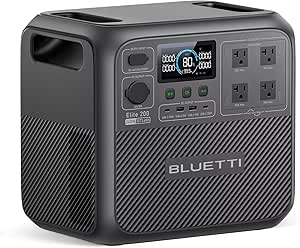 | Best for High Output and Long Battery Life | Battery capacity: 2,073.6Wh | Continuous output: 2,600W | Power-lifting output: 3,900W | VIEW LATEST PRICE | See Our Full Breakdown |
| Jackery HomePower 3600 Plus Portable Power Station, 3584Wh, 3600W |  | Best for Expandable Home Backup | Battery capacity: 3,584Wh | AC output: 3,600W | Expandable capacity: Up to 21kWh per unit; up to 43kWh with multiple units | VIEW LATEST PRICE | See Our Full Breakdown |
| Jackery Explorer 2000 v2 Portable Power Station, 2042Wh, 2200W |  | Best Lightweight 2kWh Option | Capacity: 2,042Wh | AC output: 2,200W | AC ports: 3 | VIEW LATEST PRICE | See Our Full Breakdown |
| Anker SOLIX S2000 Portable Power Station, 2,010Wh, 1,500W |  | Best for Frequent Cycling and Device Coverage | Capacity: 2,010Wh | Battery chemistry: LiFePO4 (LFP) | Continuous output: 1,500W | VIEW LATEST PRICE | See Our Full Breakdown |
| EF ECOFLOW DELTA Pro Portable Power Station, 3600Wh, 3600W AC Output | 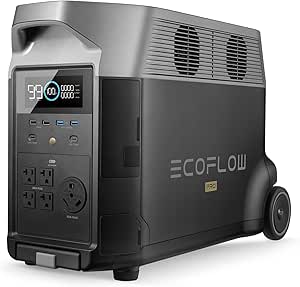 | Best Premium Expandable System | Battery capacity: 3,600Wh | Battery type: LFP | Running output: 3,600W | VIEW LATEST PRICE | See Our Full Breakdown |
| Jackery Explorer 300 Portable Power Station, 292Wh |  | Best Compact Personal Power Station | Capacity: 292Wh | Peak surge output: 600W | Battery chemistry: LiFePO4 | VIEW LATEST PRICE | See Our Full Breakdown |
| portable power station | Weight | Capacity | Battery type |
|---|---|---|---|
| Anker SOLIX C1000 Portable Pow | — | 1,056Wh | LiFePO4 |
| BLUETTI Elite 100 V2 Portable | 25 lbs | 1,024Wh | LiFePO₄ |
| BLUETTI Elite 30 V2 Portable P | 9.5 lbs | 288Wh | LFP |
| Jackery Explorer 1000 v2 Porta | 23.8 lbs | 1,070Wh | LFP (LiFePO₄) |
| EBL Acc2400 2400W Portable Pow | 54 lbs | 1,843.2Wh | — |
| EcoFlow DELTA 3 Portable Power | 12.5kg | 1,024Wh | — |
| EF ECOFLOW DELTA 3 Max Portabl | — | — | — |
| OUPES Mega 1 Portable Power St | — | 1,024Wh | LiFePO4 |
| Anker SOLIX C1000 Gen 2 Portab | 11.3kg | — | LiFePO4 |
| BLUETTI Elite 200 V2 Portable | — | — | — |
| Jackery HomePower 3600 Plus Po | 77.2 lbs | — | LFP |
| Jackery Explorer 2000 v2 Porta | 39.5 lb | 2,042Wh | LiFePO4 |
| Anker SOLIX S2000 Portable Pow | 35.7 lbs | 2,010Wh | — |
| EF ECOFLOW DELTA Pro Portable | 99 lbs | — | LFP |
| Jackery Explorer 300 Portable | Listed as 7.1 lb and 7.5 lb | 292Wh | — |
More Details on Our Top Picks
Anker SOLIX C1000 Portable Power Station with Car Charging Cable, 1,056Wh
I rank the Anker SOLIX C1000 first for buyers who want a capable mid-size station without stepping up to the 54-pound EBL Acc2400. Its 1,056Wh LiFePO4 battery and 1,800W running output cover many camping and outage needs, while 11 ports make it easier to power several kinds of devices at once. The 2,400W surge rating adds flexibility for brief startup loads, and fast AC and solar charging can shorten downtime between uses. The app offers charging controls and power monitoring, but the fastest AC mode depends on using it. That makes this less straightforward than the BLUETTI Elite 100 V2, which also has fast charging and adds a UPS function. The Anker is a strong all-round pick, though its UltraFast charging has a specified temperature range.
Pros:- 1,056Wh LiFePO4 battery rated for 3,000 cycles
- 1,800W running output with 2,400W surge capacity
- 11 ports support a range of devices
- Fast AC and solar charging, with app-based controls and monitoring
Cons:- UltraFast AC charging requires the Anker app and a smartphone
- UltraFast charging is specified for an operating temperature range of 68–122°F
- Less capacity than larger options such as the EBL Acc2400
Best for: Campers and households seeking a balanced 1kWh-class station with a broad port selection, fast recharging, and app controls.
Not ideal for: Buyers who want fast charging without using a smartphone, or who need a stated UPS function or substantially more stored energy.
- Capacity:1,056Wh
- Battery type:LiFePO4
- Battery cycles:3,000
- Running output:1,800W
- Surge output:2,400W
- Solar input:Up to 600W
- Ports:11
- AC recharge:80% in 43 minutes; full charge in under an hour
- Solar recharge:1.8 hours
Our verdict“Choose the Anker SOLIX C1000 for a versatile mid-size station with rapid recharging, provided app-dependent fast charging suits you.”
BLUETTI Elite 100 V2 Portable Power Station, 1024Wh, 1800W
The BLUETTI Elite 100 V2 is the more backup-oriented alternative to the Anker SOLIX C1000: it matches the 1,800W rated output and offers a 10ms UPS switchover for connected equipment that needs a quick handoff during an outage. Its 1,024Wh LiFePO₄ battery, 11 ports, and silent mode rated at 30dB suit a home office or quiet campsite better than a larger, louder setup. Fast AC charging reaches 80% in about 45 minutes, close to the Anker’s stated 80% time. The BLUETTI’s stated cycle life—over 4,000 cycles to 80% capacity—also exceeds the Anker’s 3,000-cycle figure. The tradeoff is a 25-pound carry weight, and fast vehicle charging calls for a separately mentioned Charger 1. Its UPS feature makes it a better fit for backup than the lighter Elite 30 V2.
Pros:- 10ms UPS switchover supports connected equipment during brief power interruptions
- Silent mode is rated at 30dB
- Over 4,000 cycles to 80% capacity
- 11 ports and app control in a 25-pound design
Cons:- At 25 pounds, it is heavier than the 9.5-pound BLUETTI Elite 30 V2
- Vehicle fast charging requires the separately mentioned BLUETTI Charger 1
- Its 1,024Wh capacity is less than the EBL Acc2400’s 1,843.2Wh
Best for: Home-office users and campers who want a roughly 1kWh station with quick UPS switchover, quiet operation, and app control.
Not ideal for: People who need a very light grab-and-go unit or plan to rely on fast vehicle charging without buying the separate Charger 1.
- Capacity:1,024Wh
- Battery type:LiFePO₄
- Surge output:3,600W
- Power Lifting output:2,700W
- Ports:11 total, including 4 AC outlets
- AC fast charging:About 45 minutes to 80%
- UPS switchover:10ms
- Weight:25 lbs
Our verdict“Pick the Elite 100 V2 if quiet operation and fast UPS backup matter more than minimizing carry weight.”
BLUETTI Elite 30 V2 Portable Power Station, 288Wh, 600W
At 9.5 pounds, the BLUETTI Elite 30 V2 is the easy choice here when portability matters more than running time. Its 288Wh battery and 600W continuous output can handle smaller electronics and selected light loads, while the 10ms-or-less UPS function gives it a role beyond campsite charging. Compared with the 1,024Wh BLUETTI Elite 100 V2, this model is much easier to carry but stores far less energy; it is not the better choice for powering several appliances through an extended outage. Charging is a bright spot: AC input can bring it to 80% in 45 minutes and full in 70 minutes, and it supports solar and car charging too. Loads above 600W require Power Lifting Mode, so I would not treat its 1,500W figure as continuous output.
Pros:- Light 9.5-pound design is easier to carry than the 25-pound Elite 100 V2
- 10ms-or-less UPS transfer supports brief power interruptions
- AC charging reaches 80% in 45 minutes and full charge in 70 minutes
- Supports AC, solar, and car charging
Cons:- 288Wh capacity limits runtime compared with the 1,024Wh Elite 100 V2
- Continuous output is 600W; Power Lifting Mode is needed for higher loads
- Its compact capacity is a poor match for extended home backup
Best for: Day hikers, car campers, and people seeking a compact backup for phones, laptops, and other modest loads.
Not ideal for: Households needing long outage coverage or buyers whose appliances draw more than 600W continuously.
- Capacity:288Wh
- Battery type:LFP
- Continuous output:600W
- Surge output:1,500W
- Weight:9.5 lbs
- Ports:9
- AC charging:0–80% in 45 minutes; 0–100% in 70 minutes
- UPS transfer time:10ms or less
- USB-C PD output:140W
Our verdict“Choose the Elite 30 V2 for a carry-friendly station for small loads, not as a substitute for a 1kWh-class backup unit.”
Jackery Explorer 1000 v2 Portable Power Station, 1070Wh, 1500W
The Jackery Explorer 1000 v2 offers 1,070Wh in a 23.8-pound body, making it a more carryable route to roughly 1kWh than the EBL Acc2400, though the EBL holds substantially more energy and delivers higher output. Jackery’s 1,500W AC output is also lower than the 1,800W rating on the Anker SOLIX C1000 and BLUETTI Elite 100 V2, so buyers should match it to their appliance loads. A 3,000W surge peak provides room for brief startup demand, and the LFP battery is rated to retain over 70% capacity after 4,000 cycles. Emergency charging can take the station from empty to full in one hour, but that mode is app-controlled; default charging takes 1.7 hours. Solar panels are not included, and solar charging is limited to Jackery panels, narrowing flexibility.
Pros:- 1,070Wh capacity in a 23.8-pound unit with a foldable handle
- 3,000W surge peak supports brief startup loads
- LFP battery rated to retain over 70% capacity after 4,000 cycles
- App-controlled emergency mode can charge fully in one hour
Cons:- 1,500W AC output is lower than the Anker SOLIX C1000 and BLUETTI Elite 100 V2
- One-hour charging requires enabling emergency mode in the app
- Solar panel is sold separately and solar charging is compatible only with Jackery panels
Best for: Campers and outage planners who want around 1kWh of capacity in a sub-24-pound station and already use or plan to buy Jackery solar panels.
Not ideal for: Buyers who need 1,800W-class output, open solar-panel compatibility, or a solar panel included with the station.
- Capacity:1,070Wh
- Battery type:LFP (LiFePO₄)
- AC output:1,500W
- Surge peak:3,000W
- Weight:23.8 lbs
- Ports:3 AC, 2 USB-C, 1 USB-A, 1 DC car port
- USB-C output:Up to 100W
- Charging time:1 hour with emergency charging; 1.7 hours by default
- Battery lifespan:Over 70% capacity after 4,000 cycles
Our verdict“Choose the Explorer 1000 v2 for portable 1kWh capacity if its lower AC output and Jackery-only solar compatibility fit your setup.”
EBL Acc2400 2400W Portable Power Station with LiFePO4 Battery, 1843.2Wh
The EBL Acc2400 is the capacity and output choice in this group: its 1,843.2Wh battery and 2,400W output surpass the Anker SOLIX C1000 and Jackery Explorer 1000 v2 for buyers with larger loads or longer backup needs. Four AC outlets and a mix of USB, DC, car, and wireless charging connections let it serve several devices at once. The 0.1-second emergency backup mode is useful for equipment that needs a quick handoff, and its LiFePO₄ battery is rated for over 3,500 cycles. The clear cost of that capability is physical: at 54 pounds, it is far less convenient to carry than the 23.8-pound Jackery. The product data also gives no solar-charging details, so I would favor a better-documented option if solar recharging is central to the plan.
Pros:- 1,843.2Wh capacity exceeds the Anker SOLIX C1000 and Jackery Explorer 1000 v2
- 2,400W output with 4,800W starting wattage
- 12 charging connections, including four AC outlets and two 100W USB-C ports
- LiFePO₄ battery rated for over 3,500 cycles and 0.1-second backup mode
Cons:- 54-pound weight makes frequent carrying difficult
- Solar charging details are not specified in the product data
- Its larger capacity comes in a much heavier package than the Jackery Explorer 1000 v2
Best for: Households, jobsite crews, and campers with vehicle access who need higher output and more stored energy than a 1kWh-class station provides.
Not ideal for: Solo campers prioritizing easy carrying, or buyers who need confirmed solar input specifications before choosing a station.
- Capacity:1,843.2Wh
- Battery chemistry:LiFePO₄
- Output:2,400W
- Starting wattage:4,800W
- Ports:12 connections
- USB-C output:100W per port
- Battery cycle life:Over 3,500 cycles
- Weight:54 lbs
- Backup mode:0.1-second emergency backup
Our verdict“Pick the EBL Acc2400 when higher output and longer runtime outweigh the burden of moving a 54-pound station.”
EcoFlow DELTA 3 Portable Power Station, 1024Wh, 1800W
The EcoFlow DELTA 3 is a strong fit when quick recharging and room to grow matter more than maximum output from a single unit. Its 1,024Wh battery and 1,800W AC output cover many camping, RV, and outage needs, while compatible add-on batteries let capacity grow to 5kWh. EcoFlow lists a 56-minute full recharge, but that figure depends on using AC and solar together, not AC alone. Compared with the Anker SOLIX C1000 Gen 2, the DELTA 3 offers a slightly lower continuous output and fewer listed outlets, but a clear expansion path and a stated 100W USB-C port. Its 12.5kg weight is manageable for its capacity, though compact-station shoppers may prefer a smaller unit. Skip it if you need high output without buying extra batteries.
Pros:- Expandable to 5kWh with compatible EcoFlow batteries
- LiFePO4 battery rated for 4,000 cycles to 80% capacity
- 100W USB-C output can serve higher-power laptops
- Up to 13 appliances can be connected at once
Cons:- The 56-minute full-charge claim depends on combined AC and solar input
- Expansion requires purchasing compatible batteries separately
- Its 1,800W continuous output is below the 2,000W Anker SOLIX C1000 Gen 2
Best for: Campers and RV owners who want a mid-capacity station now, with the option to add compatible batteries for longer trips or backup.
Not ideal for: Buyers who need more than 1,800W of continuous AC output from one unit, or who expect the 56-minute full recharge using AC power alone.
- Capacity:1,024Wh
- AC output:1,800W continuous; 3,600W surge
- Battery chemistry:LiFePO4
- Battery cycle life:4,000 cycles to 80% capacity
- Maximum solar input:500W
- Maximum AC input:1,500W
- Expandable capacity:Up to 5kWh with compatible batteries
- Weight:12.5kg
Our verdict“Choose the DELTA 3 if fast combined-input charging and future battery expansion matter more than maximum single-unit output.”
EF ECOFLOW DELTA 3 Max Portable Power Station, 2048Wh LiFePO4 Battery, 2400W Output
With 2,048Wh of capacity and 2,400W of output, the DELTA 3 Max is built for buyers who want more reserve than a 1,024Wh station can provide. Its 10ms transfer time makes it a better fit for backup of compatible electronics than the EcoFlow DELTA 3, which lists no transfer-time figure here. The tradeoff is a larger, heavier format, and its listed three outlets may limit how many AC devices can plug in directly. It reaches 80% charge in about 1.13 hours, but solar panels are optional, so solar recharging requires a separate purchase. The BLUETTI Elite 200 V2 offers slightly more capacity and higher continuous output; the DELTA 3 Max instead pairs substantial storage with app-based monitoring and a fast transfer time. Runtime will vary with the connected load.
Pros:- 2,048Wh battery provides more stored energy than the 1,024Wh-class options
- 2,400W continuous output with 3,400W X-Boost mode
- 10ms transfer time supports backup for compatible equipment
- App control offers energy monitoring and charging schedules
Cons:- Solar panels are optional and not included in the stated setup
- Three listed outlets may require adapters or a power strip for multiple AC devices
- BLUETTI Elite 200 V2 lists higher capacity and continuous output
Best for: Households seeking a higher-capacity station for short outages, with fast transfer for compatible devices and app-based energy monitoring.
Not ideal for: Buyers who need many built-in AC outlets, a lightweight camping unit, or solar charging without purchasing panels separately.
- Battery capacity:2,048Wh
- Battery chemistry:LiFePO4
- Output:2,400W; up to 3,400W in X-Boost mode
- Charging time:0–80% in 1.13 hours
- Transfer time:10ms
- Listed outlets:3
- Dimensions:9.4 × 12 × 19.44in
- Warranty:5 years
Our verdict“Pick the DELTA 3 Max for app-managed, higher-capacity backup when its three listed outlets meet your needs.”
OUPES Mega 1 Portable Power Station, 1024Wh, 2000W (4500W Surge)
The OUPES Mega 1 pairs a familiar 1,024Wh capacity with 2,000W continuous output and a notably high 4,500W surge rating. That combination suits users whose equipment has a brief startup draw, while its under-20ms UPS transfer and Bluetooth app control add practical backup features. Against the EcoFlow DELTA 3, it offers more continuous and surge output, but its listed battery life is shorter: 3,500-plus cycles to 80% capacity versus EcoFlow’s 4,000. Charging is another strength: OUPES lists 80% in 36 minutes on AC, or 26 minutes with AC and solar together. Those are partial-charge figures, not full-charge times. Expansion reaches 5,120Wh, but requires separate B2 batteries. The listed one-hour runtime lacks load conditions, so I would not use it to estimate a specific device’s run time.
Pros:- 4,500W surge rating is higher than the EcoFlow DELTA 3’s 3,600W
- AC charging reaches 80% in a listed 36 minutes
- Expandable to 5,120Wh with up to two B2 Extra Batteries
- Includes UPS backup and Bluetooth app control
Cons:- Expansion requires separately purchased B2 Extra Batteries
- Battery rating is 3,500-plus cycles to 80%, below the 4,000-cycle ratings listed for the DELTA 3 and Anker SOLIX C1000 Gen 2
- The listed one-hour runtime has no stated operating conditions
Best for: Campers and backup-power buyers running equipment with high startup surges who also want UPS functionality and an expansion path.
Not ideal for: Buyers who need a published, load-specific runtime estimate or want expanded capacity without purchasing extra batteries.
- Capacity:1,024Wh
- Continuous output:2,000W
- Surge output:4,500W
- Battery type:LiFePO4
- Battery life:3,500+ cycles; retains 80% capacity
- AC charging:0–80% in 36 minutes
- AC and solar charging:0–80% in 26 minutes
- Expandable capacity:Up to 5,120Wh with up to two B2 Extra Batteries
- UPS transfer time:Under 20ms
Our verdict“Choose the Mega 1 if high startup-surge capacity and fast charging outweigh its added-battery cost and unclear runtime figure.”
Anker SOLIX C1000 Gen 2 Portable Power Station
The Anker SOLIX C1000 Gen 2 is a good match for buyers who want 2,000W of continuous output in a relatively light 11.3kg package. Its 1,024Wh capacity is in the same class as the EcoFlow DELTA 3, but Anker provides more continuous output and a UPS switchover under 10ms, a faster listed transfer than the OUPES Mega 1’s under-20ms figure. AC charging takes a stated 49 minutes at 1,600W; solar input supports up to 600W, though the panels and setup are separate. The main buying wrinkle is an inconsistent port count: the specifications list nine outlets, while the description refers to ten ports. That ambiguity matters if your setup depends on a particular number of connections. Its peak output is also lower than the OUPES Mega 1’s surge rating.
Pros:- 2,000W continuous output in an 11.3kg unit
- AC recharge takes a listed 49 minutes at 1,600W
- UPS switchover is under 10ms
- LiFePO4 battery rated to retain at least 80% capacity after 4,000 cycles
Cons:- Product information conflicts on whether it has nine outlets or ten ports
- Solar input is limited to 600W and requires a compatible solar setup
- Its 3,000W peak output is lower than the OUPES Mega 1’s 4,500W surge rating
Best for: Campers and outage-prepared households seeking 2,000W output, fast AC charging, and quick UPS switchover in a station weighing 11.3kg.
Not ideal for: Buyers who need a confirmed port count before purchase, or who need more than 3,000W of peak output for startup loads.
- Battery capacity:1,024Wh
- Battery type:LiFePO4
- Continuous output:2,000W
- Peak output:3,000W
- AC recharge time:49 minutes at 1,600W
- Maximum solar input:600W
- UPS switchover:Under 10ms
- Weight:11.3kg
- Warranty:5 years
Our verdict“Pick the C1000 Gen 2 for portable 2,000W power and fast backup switchover if the listed port-count uncertainty does not affect your setup.”
BLUETTI Elite 200 V2 Portable Power Station, 2073.6Wh, 2600W
The BLUETTI Elite 200 V2 stands apart from the 1,024Wh stations here by combining 2,073.6Wh of capacity with 2,600W continuous AC output. That extra reserve and power make it better suited to larger loads or longer stretches between charges than the EcoFlow DELTA 3 or Anker SOLIX C1000 Gen 2. Its LiFePO4 battery is rated for over 6,000 cycles, the longest stated cycle-life figure among these five picks. Charging options span AC, solar, vehicle, lead-acid, and generator inputs, with a listed 0–80% time of 50 minutes using dual AC and DC charging. The compromises are its four listed outlets and solar timing that assumes 1,000W of panels. Its UPS transfer time is up to 15ms, not as fast as the Anker’s under-10ms figure.
Pros:- 2,073.6Wh capacity and 2,600W continuous output exceed the 1,024Wh-class stations here
- LiFePO4 battery rated for over 6,000 cycles
- Multiple charging inputs include AC, solar, car, lead-acid, and generator
- Dual AC and DC charging is listed to reach 80% in 50 minutes
Cons:- Four listed power outlets may limit direct connections for larger setups
- The 2.4-hour solar full-charge figure assumes 1,000W of panels
- UPS transfer time of up to 15ms is slower than the Anker SOLIX C1000 Gen 2’s under-10ms figure
Best for: RV owners and home-backup planners who need more than 2kWh of storage, strong continuous output, and frequent-use battery longevity.
Not ideal for: Buyers prioritizing quick UPS switchover, a lightweight carry, or solar charging with a smaller panel array.
- Battery capacity:2,073.6Wh
- Continuous output:2,600W
- Power-lifting output:3,900W
- Battery chemistry:LiFePO4
- Battery cycle life:Over 6,000 cycles
- Dual AC and DC charging:0–80% in 50 minutes
- Solar charging:Full charge in 2.4 hours with 1,000W panels
- UPS backup:Up to 15ms transfer time
- Power outlets:4
Our verdict“Choose the Elite 200 V2 for substantial capacity, high output, and long cycle life if its four outlets and UPS timing suit your setup.”
Jackery HomePower 3600 Plus Portable Power Station, 3584Wh, 3600W
The Jackery HomePower 3600 Plus is the stronger fit for buyers planning beyond a weekend away: its 3,584Wh capacity and 3,600W output can support more substantial backup needs, and expansion can raise capacity to 21kWh per unit. Hybrid AC+DC charging is listed at two hours, while the wheels and telescopic handle help with repositioning a 77.2-pound unit. Compared with the Jackery Explorer 2000 v2, this model offers much more storage and output, but it is nearly twice as heavy and less suited to casual car camping. Its LFP battery is rated for 6,000 cycles, and several charging routes add flexibility. The tradeoff is that portability means rolling it rather than carrying it, and solar panels are optional.
Pros:- 3,584Wh capacity and 3,600W AC output suit more demanding backup loads
- Expandable to 21kWh per unit for longer backup needs
- Hybrid AC+DC, AC, solar, and gas-generator charging options
- Wheels and telescopic handle make repositioning easier
Cons:- At 77.2 pounds, it is cumbersome to lift or carry
- Solar panels are optional, adding a separate purchase for solar charging
Best for: Homeowners who want a high-capacity backup station with room to expand and can move a heavy unit on wheels
Not ideal for: Campers who need a station they can lift easily or buyers who want solar panels included
- Battery capacity:3,584Wh
- AC output:3,600W
- Expandable capacity:Up to 21kWh per unit; up to 43kWh with multiple units
- Battery type:LFP
- Charging time:2 hours with hybrid AC+DC; 2.5 hours AC; 4 hours solar
- Battery cycle life:Rated for 6,000 cycles
- Weight:77.2 lbs
- Warranty:5 years
Our verdict“Choose the HomePower 3600 Plus for expandable, high-capacity backup when rolling a heavy station is acceptable.”
Jackery Explorer 2000 v2 Portable Power Station, 2042Wh, 2200W
The Jackery Explorer 2000 v2 puts 2,042Wh of capacity and 2,200W of AC output in a 39.5-pound package, making it a more manageable mid-capacity choice than the 77.2-pound Jackery HomePower 3600 Plus. That balance suits car camping and home essentials without committing to a large wheeled backup unit. Fast AC charging can reach 80% in 66 minutes, and the listed 20ms UPS switching time adds a layer of support for connected equipment. A 100W USB-C port and quiet charging mode also help when powering personal electronics or keeping noise down. The tradeoff is less storage and output than the HomePower, and solar panels are not included. The stated runtime is just over an hour, so buyers should check the load behind any runtime estimate rather than assume it applies to every device.
Pros:- 2,042Wh capacity and 2,200W AC output in a relatively light 39.5-pound unit
- AC fast charging reaches 80% in a stated 66 minutes
- 100W USB-C PD port supports higher-power laptop charging
- Quiet charging mode is listed below 30dB
Cons:- Less capacity and output than larger backup-focused models such as the HomePower 3600 Plus
- Solar panels are optional and must be sourced separately
- The listed runtime of 1 hour 7 minutes is highly dependent on the connected load
Best for: Car campers and households seeking around 2kWh of backup capacity in a station one person can more readily move
Not ideal for: Buyers needing multi-day backup for high-draw appliances or a complete solar setup in the box
- Capacity:2,042Wh
- AC output:2,200W
- AC ports:3
- USB-C PD output:100W
- Battery type:LiFePO4
- AC charging time:0–80% in 66 minutes; full charge in 102 minutes with Emergency Super Charging
- Weight:39.5 lb
- UPS switching time:20ms
Our verdict“Pick the Explorer 2000 v2 if you want substantial capacity without the weight of a full-size home backup station.”
Anker SOLIX S2000 Portable Power Station, 2,010Wh, 1,500W
The Anker SOLIX S2000 prioritizes outlet access and stated battery longevity over maximum output. Its 2,010Wh LFP battery is rated for up to 10,000 charge cycles, and eight outlets make it easier to connect several small household essentials at once. The sub-10ms UPS switchover is quicker than the Explorer 2000 v2’s listed 20ms, a useful distinction for devices that need backup continuity. However, the Anker’s 1,500W continuous output is well below the Jackery’s 2,200W, so buyers with higher-draw appliances should favor the Explorer 2000 v2 instead. Solar input reaches 400W and charging can use several sources, but there is no 12V DC port. The compact listed dimensions and 35.7-pound weight also make it a relatively manageable 2kWh option.
Pros:- LFP battery rated for up to 10,000 charge cycles
- Eight outlets provide broad device connectivity
- UPS switchover is listed at less than 10ms
- Supports up to 400W solar input and multiple charging sources
Cons:- 1,500W continuous output is lower than the Explorer 2000 v2’s 2,200W
- No 12V DC port
- Refrigerator runtime varies with the appliance and operating conditions
Best for: Frequent users who want many connection points, long stated battery cycle life, and backup for moderate household loads
Not ideal for: Buyers who need to power appliances above 1,500W or require a dedicated 12V DC port
- Capacity:2,010Wh
- Battery chemistry:LiFePO4 (LFP)
- Continuous output:1,500W
- Peak output:3,000W
- Total outlets:8
- Solar input:Up to 400W
- Weight:35.7 lbs
- UPS switchover:Less than 10ms
Our verdict“Choose the SOLIX S2000 for frequent cycling and multiple moderate loads, but choose a higher-output model for demanding appliances.”
EF ECOFLOW DELTA Pro Portable Power Station, 3600Wh, 3600W AC Output
The EcoFlow DELTA Pro is aimed at buyers who want a large station that can grow into a broader backup system. It starts with 3,600Wh and 3,600W output, offers 15 output methods, and can expand to 25kWh with extra batteries or compatible generators. App control and charging from an EV station, solar, wall outlet, car outlet, or smart outdoor generator give it more system flexibility than the Jackery HomePower 3600 Plus, which has a lower stated per-unit expansion ceiling. That flexibility comes with a serious portability cost: at 99 pounds, the DELTA Pro is heavier than the Jackery and is better treated as a movable home unit than camping gear. Its 4,500W X-Boost figure also depends on the operating mode and should not be mistaken for standard running output. Fast charging depends on compatible high-power sources.
Pros:- 3,600Wh capacity and 3,600W running output
- Expandable to 25kWh with compatible equipment
- 15 output methods and several charging-source options
- App control supports remote monitoring and settings changes
Cons:- At 99 pounds, it is difficult to move without help
- Fast charging depends on compatible high-power outlets or solar panels
- Expansion requires additional batteries or compatible equipment
Best for: Homeowners building an expandable backup system who value app control and a wide range of charging sources
Not ideal for: Campers or solo users who need to carry a power station regularly, or buyers without access to compatible fast-charging sources
- Battery capacity:3,600Wh
- Battery type:LFP
- Running output:3,600W
- Maximum AC output:4,500W with X-Boost
- Expandable capacity:Up to 25kWh
- Output methods:15
- Solar charging time:2.8 hours with four 400W solar panels
- Weight:99 lbs
Our verdict“Choose the DELTA Pro for a configurable home backup system, not for frequent carrying or lightweight camping.”
Jackery Explorer 300 Portable Power Station, 292Wh
For short trips and personal electronics, the Jackery Explorer 300 is the smallest-capacity choice in this group, with 292Wh and a 300W rated output. Its 100W USB-C PD port, USB-A ports, AC outlets, and car port cover a useful mix of everyday devices, while the 7.1-pound listed weight is far easier to manage than the 35.7-pound Anker SOLIX S2000. The tradeoff is straightforward: this is for phones, laptops, lights, and other modest loads, not extended refrigerator backup or high-wattage appliances. Its LiFePO4 battery is rated for over 4,000 cycles before reaching 70% capacity, and it supports solar charging, but panels are sold separately. The provided dimensions and weight listings are inconsistent, so I would verify the exact unit measurements before planning a tight storage fit.
Pros:- Compact-capacity option with a listed weight of 7.1 pounds
- 100W USB-C PD, USB-A, AC, and car-port connections
- LiFePO4 battery rated for over 4,000 cycles before reaching 70% capacity
- Supports solar charging with compatible panels
Cons:- 292Wh capacity limits runtime for larger devices and appliances
- 300W rated output is unsuitable for many high-draw appliances
- Listed weight and dimensions are inconsistent, and the solar panel is not included
Best for: Day hikers, weekend campers, and remote workers who need to charge personal devices and small electronics
Not ideal for: Households seeking extended outage backup or anyone needing to run appliances above its 300W rated output
- Capacity:292Wh
- Peak surge output:600W
- Battery chemistry:LiFePO4
- Ports:2 AC outlets, 1 USB-C PD, 2 USB-A, 1 car port
- USB-C PD output:100W
- Weight:Listed as 7.1 lb and 7.5 lb
- Solar charging:About 2.8 hours to 80% with a 100W panel; panel sold separately
Our verdict“Choose the Explorer 300 for portable charging of personal electronics, but look to a larger station for appliance backup.”
How We Picked
I compared these 15 stations around the decisions that affect ownership: battery capacity for runtime, continuous output for appliance compatibility, and size and portability for travel or storage. I also considered charging and connection options where product information supports a useful comparison, along with battery type when specified. A large capacity does not automatically earn a higher place if output or portability makes the unit a poor fit for common use.
The ranking favors versatile models that can serve more than one role, then separates specialized choices by who benefits from them. Compact stations rank for light-duty travel rather than home backup; high-capacity units rank for longer runtimes but carry a portability penalty. Where the listed specifications do not establish charging speed, weight, or feature differences, I avoid treating those claims as proven advantages. Buyers should confirm current model details and appliance requirements before choosing.
Factors to Consider When Choosing Best Portable Power Stations
Before choosing a model, I’d start with the devices you want to power and how long you need them to run. The best match is rarely the station with the largest capacity alone: output limits, recharge plans, and carrying needs can change the decision.
1. Estimate Runtime From Actual Loads
List the devices you expect to use and check their wattage labels or manufacturer specifications. Add the loads you might run at the same time, then compare that total with the station’s continuous AC output. For runtime, use capacity as a planning guide rather than a guaranteed number: conversion losses and device cycling reduce the energy available at the outlet. A refrigerator, for example, may draw power intermittently, while a heating appliance can consume energy steadily. If you need a whole night of backup, add a margin instead of buying to the exact calculated watt-hours. That margin is often more useful than paying for capacity you will rarely use.
2. Check Starting Loads and Continuous Output
Some appliances briefly draw more power when their motors start, so a station’s surge figure and continuous rating are not interchangeable. Check both figures against the appliances you want to run, and do not assume a high surge number means the unit can sustain that load. This matters for pumps, refrigerators, and certain power tools more than for phones or laptops. If two stations have similar capacity, the one with higher continuous output may handle a broader range of devices. At the same time, extra output is wasted capability if your planned loads are small. Match output to your actual equipment rather than choosing by the largest headline number.
3. Decide How Much Capacity You Can Carry
Capacity affects how long a station can supply energy, but larger batteries typically bring more bulk and a less convenient carry. For frequent car camping or moving gear between rooms, a compact station may be more useful than a multi-kWh model that stays in storage. For an outage lasting into a second day, a larger battery can reduce how often you need to ration power or recharge. Think about where the unit will live, how you will move it, and whether one person needs to lift it. A common mistake is buying for a rare worst-case outage without planning where the station will be stored or how it will be handled. If your needs vary, a mid-size unit can be a more practical compromise.
4. Plan Your Recharge Method Before an Outage
A station is only useful during a long outage if you have a workable way to restore its charge. Check which charging inputs and accessories are included, and confirm whether the model supports the source you intend to use, such as wall power, a vehicle, or compatible solar panels. Solar charging depends on panel compatibility, available sunlight, placement, and the station’s input limits; panel wattage alone does not predict how quickly the battery will refill. Car charging can help on a trip, but it may be slow compared with a suitable wall supply. Do not buy a panel based only on connector fit; verify voltage and input requirements. A recharge plan can matter more than a small difference in battery capacity.
5. Choose Battery Chemistry and Ownership Priorities
Battery chemistry can affect cycle life, weight, and the way a product is positioned for repeated use, but it is only one part of the decision. Several listed models specify LiFePO4, while other product names here do not provide enough information to make a chemistry comparison. Confirm the exact specification for the model and revision you are buying, since names can cover variants. Also check the manufacturer’s warranty terms, storage guidance, and service support before relying on a station for emergency backup. Frequent users may place more value on cycle-life information than occasional campers do. For infrequent use, safe storage and periodic charge checks matter more than chasing a technical specification in isolation.
6. Pay for Features You Will Use
Extra capacity, higher output, and more charging options can make a station more flexible, but they can also add cost, weight, and complexity. Pay more when the upgrade solves a real problem, such as running a higher-wattage appliance or extending backup time without recharging. If your routine is limited to phones, lights, and a laptop, a compact model can avoid carrying unused capacity. For home backup, check whether the station can connect to your intended circuits or appliances; a portable power station is not automatically a whole-home system. Before buying, compare the ports you need, the number of simultaneous loads, and any required accessories. That checklist helps prevent spending on impressive specifications that do not improve your setup.
Frequently Asked Questions
Is a 1,000Wh portable power station enough for a home outage?
It can cover selected essentials, but it is not a blanket substitute for household electricity. Start by adding the watt-hours of the devices you plan to use, accounting for how long each will run and allowing for conversion losses. A roughly 1kWh model such as the Anker SOLIX C1000 or EcoFlow DELTA 3 is a more manageable choice for targeted loads than a multi-kWh unit, but the right fit depends on your appliance mix. High-draw devices can drain it quickly, even if they fall within its output rating. For longer outages, plan how you will recharge it or look at a larger-capacity option.
Should I choose more battery capacity or higher AC output?
Choose capacity for longer runtime and output for the size of the loads you need to run. A station can have plenty of watt-hours yet still be unable to power an appliance whose continuous draw exceeds its AC rating. The lineup makes this distinction clear: the Anker SOLIX S2000 lists 2,010Wh and 1,500W, while the Jackery Explorer 2000 v2 lists 2,042Wh and 2,200W. Check both figures against your devices before deciding. If you only run low-wattage electronics, extra output may not help; if you need a demanding appliance, output can be the limiting factor.
Can I run a refrigerator from one of these power stations?
Possibly, but confirm the refrigerator’s running draw and startup surge against the station’s specifications. Runtime also depends on how often the compressor cycles, the room temperature, and how frequently the door opens, so capacity alone cannot give an exact answer. A mid-size or larger model is generally a better starting point for refrigerator backup than the compact 288–292Wh options. Leave room in your energy plan for other essentials, such as lights or a phone, rather than allocating the full battery to the refrigerator on paper. If uninterrupted refrigeration is important, test the complete setup before an outage and confirm the station’s operating guidance.
Are compact power stations enough for camping, or should I buy a 1kWh model?
A compact station can suit trips centered on phones, lights, cameras, and other modest loads, especially when easy carrying matters. The BLUETTI Elite 30 V2 and Jackery Explorer 300 are in the roughly 300Wh class, so they are a different proposition from the 1kWh models rather than smaller versions of the same use case. Choose around 1kWh if you expect to charge several devices, use them over multiple days, or power a larger appliance. Before upgrading, consider whether you can recharge during the trip and how much weight you are willing to carry. A bigger unit is not automatically better if it stays in the vehicle because it is awkward to move.
Do I need a 2kWh or larger station for emergency backup?
Not necessarily; the right capacity depends on which loads you plan to keep running and for how long. A 2kWh-class station can offer more flexibility for several essentials, while the 3.6kWh Jackery HomePower 3600 Plus and EcoFlow DELTA Pro suit buyers planning for longer or heavier use. Neither capacity figure guarantees whole-home backup, and the station’s output, available connections, and recharge method still set limits. Write down your priority devices and decide which can be switched off if the outage lasts longer than expected. If you cannot recharge the unit, buying more capacity may help, but it will not replace a clear load plan.
Conclusion
For the best overall balance, I’d start with the Anker SOLIX C1000, then compare it with the EcoFlow DELTA 3 and BLUETTI Elite 100 V2 based on the exact ports and charging setup you need. For best value in a compact role, the Jackery Explorer 300 is a sensible shortlist pick for light electronics, while buyers who need more headroom should compare the 1kWh class rather than expecting a small station to handle heavier loads. The best premium choice for extended backup depends on your setup: consider the Jackery HomePower 3600 Plus or EcoFlow DELTA Pro for high capacity and output, accepting their less travel-friendly scale. For beginners, a mid-size station with capacity and output matched to a written device list is easier to use well than an oversized system. For specific high-output needs, compare the EcoFlow DELTA 3 Max and BLUETTI Elite 200 V2; for a lighter travel kit, look at the BLUETTI Elite 30 V2 or Jackery Explorer 300. Check appliance loads, recharge options, and model specifications before making the final choice.