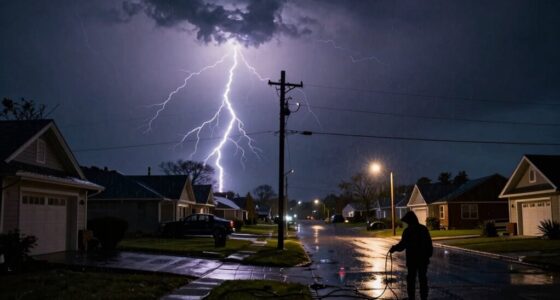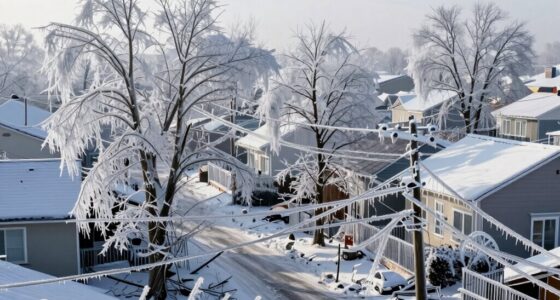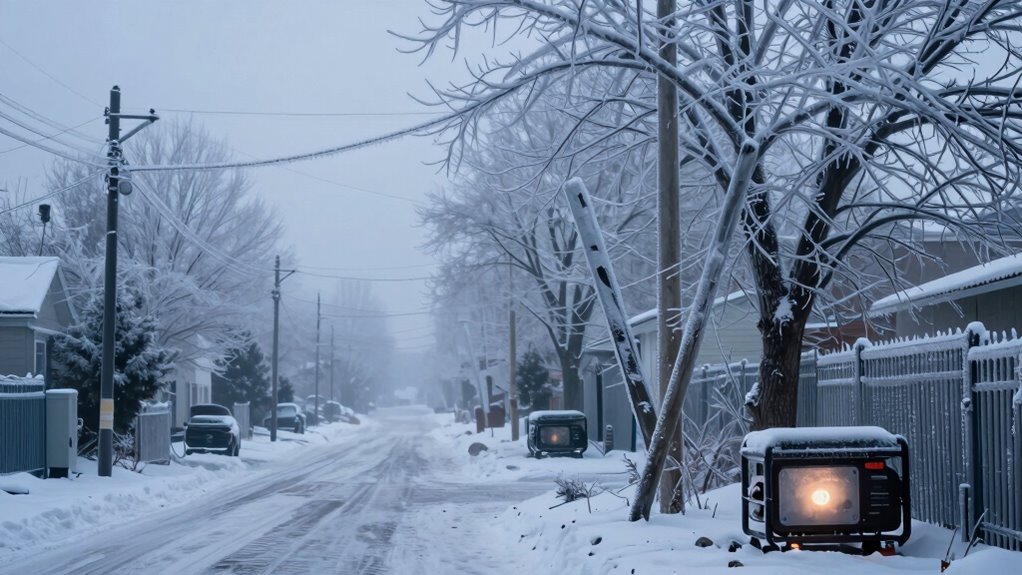
Ice storms require a different backup power mindset because heavy ice can bring down power lines and damage infrastructure, causing prolonged outages. You can’t rely solely on traditional backup systems like generators, which may struggle in freezing conditions. You’ll need to take into account resilient solutions like well-maintained solar panels and backup generators designed for extreme weather. Preparing for these unique challenges helps ensure your power stays on when ice storms hit—if you keep exploring, you’ll discover how to stay better prepared.
Listen free for 30 days with Audible
Thousands of audiobooks and originals — cancel anytime.
As an affiliate, we earn on qualifying purchases.
Key Takeaways
- Ice accumulation damages power infrastructure, requiring more resilient and diverse backup power solutions.
- Traditional generators may struggle in freezing temperatures without proper maintenance and fuel management.
- Snow and ice cover on solar panels decrease efficiency, necessitating regular cleaning and specialized installation.
- Extended outages due to ice storms demand backup systems that can operate reliably for longer periods.
- Combining renewable energy with backup generators enhances resilience against prolonged and severe winter disruptions.
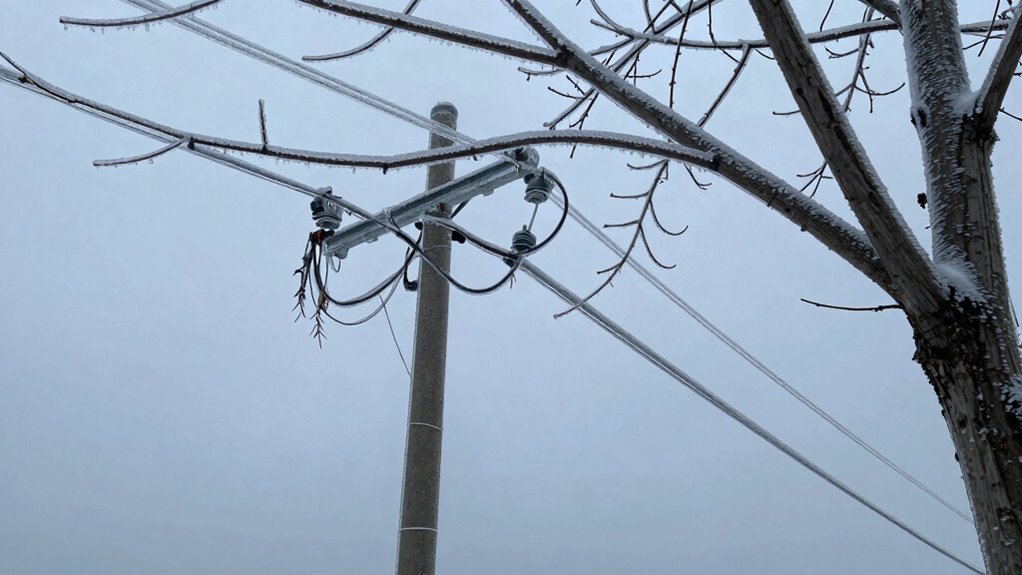
When an ice storm hits, power outages can leave you in the cold and without essential services. Unlike typical outages, ice storms create unique challenges that demand a different backup power mindset. Heavy ice accumulation can bring down power lines and damage infrastructure, making it essential to prepare for long-lasting outages. In this situation, your backup power system needs to be both reliable and efficient, guaranteeing you stay warm, connected, and safe. Understanding the importance of solar efficiency becomes critical here. Solar panels can provide a steady source of renewable energy, especially when the grid fails. However, ice and snow can cover panels, reducing their efficiency. That’s why regular cleaning and proper installation are necessary to maximize their solar efficiency during winter storms. You want your solar setup to work at peak performance, even when conditions are less than ideal. Relying solely on solar power isn’t enough, though, so integrating a backup generator becomes essential. But it’s not just about having a generator; maintenance is key. Proper generator upkeep ensures your unit will start when you need it most. Cold weather can cause mechanical issues, so you should routinely check oil levels, fuel quality, and battery health. A well-maintained generator can be your lifeline during prolonged outages, providing consistent power for heating, refrigeration, and communication devices. It’s also wise to consider fuel storage and rotation, so your generator is always ready to operate without issues. Recognizing that ice storms can cause widespread and extended outages, you should plan for redundancy—combining solar solutions with a backup generator to cover different scenarios. Keep in mind that the environment affects your equipment; ice, snow, and freezing temperatures can impair your systems if not properly prepared. Regularly inspecting your solar panels, ensuring they’re clear of snow and ice, and performing routine generator maintenance will keep your backup power sources in top shape. Additionally, understanding the potential for power line damage during ice storms emphasizes the need for resilient backup solutions. This proactive approach reduces the risk of failure when you need power most. Preparing for harsh weather conditions with appropriate backup systems is crucial to maintaining safety and comfort. It’s also important to recognize the role of renewable energy sources in creating a resilient backup plan, especially in unpredictable winter weather. Implementing proper maintenance routines for your backup systems further enhances their reliability during emergencies. Moreover, understanding how to adapt your backup systems to extreme winter conditions can significantly improve their effectiveness. In the face of an ice storm, a flexible, well-maintained backup power strategy becomes essential. It’s not just about having equipment but understanding how to optimize and maintain it under harsh conditions. By focusing on solar efficiency and diligent generator maintenance, you can guarantee your home remains safe, warm, and connected through even the most severe winter storms. Being prepared means thinking ahead, staying vigilant, and maintaining your backup systems so they perform reliably when the power lines go down.
solar panel cleaning kit for winter
As an affiliate, we earn on qualifying purchases.
As an affiliate, we earn on qualifying purchases.
Frequently Asked Questions
How Long Can a Backup Power Source Last During Prolonged Ice Storms?
During prolonged ice storms, your backup power source can last from several hours to a few days, depending on your battery lifespan and fuel efficiency. If you’re using a generator, its fuel efficiency determines how long it runs before needing a refill. For batteries, lifespan and capacity are key; regular maintenance and choosing high-quality units extend your backup power duration, ensuring you stay connected and safe despite harsh winter conditions.
Are Portable Generators Safe to Use Indoors During an Ice Storm?
Portable generators are not safe to use indoors during an ice storm. For indoor safety, always place your generator outdoors in a well-ventilated area, away from windows and vents to prevent carbon monoxide buildup. Proper generator placement is essential to avoid dangerous fumes and guarantee safe operation. Never run a portable generator inside your home or garage, as the risk of poisoning or fire is high.
What Maintenance Is Required to Ensure Backup Systems Work During Ice Storms?
Think of your backup system as a garden that needs regular tending. You should check batteries regularly to make sure they’re holding a charge, replacing them if needed. Fuel stabilization is vital—add stabilizer to your fuel to prevent gumming and keep it fresh. Also, test your system periodically to confirm it kicks in smoothly. Proper maintenance guarantees your backup power will be ready to act when ice storms strike.
How Do Ice Storms Impact the Longevity of Backup Power Equipment?
Ice storms can considerably shorten the lifespan of your backup power equipment because ice accumulation puts extra stress on components like generators and batteries. The weight from ice can cause physical damage and strain your system, especially if the power grid is disrupted for extended periods. Regular inspections, snow and ice removal, and choosing equipment designed to withstand cold and ice are essential to prolonging your backup system’s longevity during these harsh conditions.
Can Renewable Energy Sources Effectively Supplement Backup Power in Ice Storms?
Back in the day, folks relied solely on generators, but now, renewable energy sources like solar integration and wind synergy can effectively supplement backup power during ice storms. While ice can temporarily disrupt solar panels, combining these sources increases reliability. You should consider installing hybrid systems that adapt to weather conditions, ensuring continuous power. This approach boosts resilience and keeps your essentials running, even when ice storms threaten traditional backup options.
heavy-duty backup generator for cold weather
As an affiliate, we earn on qualifying purchases.
As an affiliate, we earn on qualifying purchases.
Conclusion
When facing an ice storm, think like a pioneer preparing for a long journey—be ready for anything. Traditional backup power plans might not cut it when nature’s icy grip tightens. Embrace a mindset that values versatility and resilience, much like a sturdy steamboat steering treacherous waters. Keep your gear updated, stay informed, and never underestimate the power of a well-thought-out backup system. After all, in these frozen battles, preparedness is your best weapon.
solar panel mount for winter conditions
As an affiliate, we earn on qualifying purchases.
As an affiliate, we earn on qualifying purchases.
As an affiliate, we earn on qualifying purchases.
Flea & tick season Picks
flea and tick prevention
As an affiliate, we earn on qualifying purchases.