TL;DR

Get backup power and energy gear delivered free with Prime
- Fast, free delivery on millions of items
- Prime Video, Amazon Music and more included
- Member-only deals all year
Scatec and the EBRD, EIB and AfDB signed a $217 million non-recourse financing agreement for the first phase of the Dandara solar-plus-storage project in Egypt. The full project is valued at $650 million and is planned to supply Egypt Aluminium under a 25-year power purchase agreement.
Scatec has signed a US$217 million non-recourse financing agreement with the European Bank for Reconstruction and Development, the European Investment Bank and the African Development Bank for the first phase of its Dandara solar-plus-storage project in Egypt. The project is planned to supply Egypt Aluminium, the country’s largest industrial electricity consumer, and the full investment is valued at US$650 million, according to Egyptian state information.
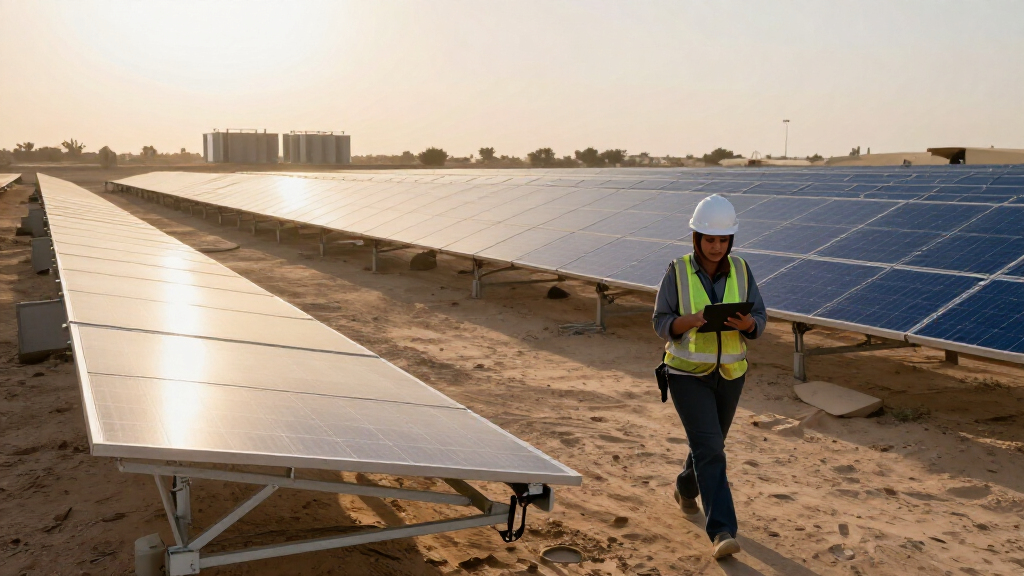
The financing covers around 80% of the planned first construction phase of a project designed to include 1 gigawatt of solar photovoltaic capacity and a battery energy storage system rated at 100 megawatts/200 megawatt-hours. The project is planned in Nag Hammadi, in southern Egypt. The report did not specify the capacity split between the two construction phases.
The African Development Bank will provide up to US$66 million, including US$46 million from its ordinary resources and US$20 million in concessional financing from the Climate Investment Funds’ Clean Technology Fund. Scatec has said it expects the overall project to be funded with about 80% non-recourse financing, with the remaining share supplied as equity by the company and its partners.
Scatec holds a 56% stake in the Dandara project and is seeking additional investors and equity bridge loans, with equity injections planned to be deferred until construction ends. The company’s in-house teams are due to provide engineering, procurement and construction, asset management, and operations and maintenance services. Agreements for a national-grid connection and a contribution by the National Bank of Egypt to the project company were also signed at the event, the source report said.
Powering Egypt Aluminium’s Production
The project links new renewable generation and battery storage to a major industrial electricity user rather than relying only on sales into the general power market. If built as planned, it could provide Egypt Aluminium with a dedicated source of electricity under a 25-year power purchase agreement, while adding solar capacity and storage to Egypt’s energy system.
The deal also matters to the company’s trade exposure. When the power purchase agreement was signed in March 2025, Scatec estimated that the project could reduce emissions by more than 550,000 tonnes of carbon dioxide a year. Scatec said that reduction would help Egypt Aluminium meet requirements under the European Union’s Carbon Border Adjustment Mechanism. That emissions figure is the developer’s estimate; the source material does not provide an independent verification or explain how compliance would be assessed.
The financing commitment is a key step toward construction, but it does not mean the complete project is already built or producing power. Delivery depends on construction, grid connection and the remaining funding and equity arrangements.
Products Worth Considering

eufy Security Essential Alarm System, 7-Piece, No Monthly Fee

eufy Security SoloCam S340 3K Dual-Lens Solar Security Camera

Bose Lifestyle Ultra Wireless Home Speaker
As an affiliate, we earn on qualifying purchases.
From Power Deal to Project Finance
Scatec and Egypt Aluminium signed the 25-year power purchase agreement in March 2025. A letter of intent for development financing was signed the following October by Scatec subsidiary Dandara Solar Energy Company and the three development banks, with Norwegian and Egyptian officials present, according to the report.
The financing agreement was signed at an event on October 26, 2026, attended by Egyptian Prime Minister Mostafa Madbouly and Electricity and Renewable Energy Minister Mahmoud Esmat. Scatec supplied further information on the agreement two days later. The Egyptian state information announcement cited in the report put the project’s total investment value at US$650 million.
Scatec expects the completed project to generate 1.4 terawatt-hours of electricity annually. The company has said it hopes to start construction of the second phase in the first half of 2027. That target is a planned milestone, not confirmation that the second phase has begun.
“The project’s decarbonising impact was estimated at more than 550,000 tonnes of CO2 per annum.”
— Scatec, when the power purchase agreement was signed in March 2025
Construction and Funding Still Ahead
The announcement confirms the financing agreement, but the source material does not give a construction start date for the first phase, a completion schedule, or a date for initial electricity delivery. It also does not break down the planned 1-gigawatt solar capacity or the 100MW/200MWh battery system between the two phases.
Scatec has said it is pursuing further investors and equity bridge loans. The report does not identify those prospective investors, confirm that all equity has been secured, or provide the detailed terms and disbursement schedule for the development-bank financing. The expected annual output and emissions reduction remain forecasts until the project is operational and its performance can be measured.
First-Phase Build and 2027 Target
The immediate next steps are to complete the remaining project funding and equity arrangements, prepare for construction, and carry out the agreed connection to Egypt’s national grid. Scatec has not stated in the supplied report when construction of the first phase will start.
The developer’s stated target is to begin building the second phase in the first half of 2027. Further project updates will be needed to confirm whether that timetable holds, how the phases will be delivered, and when Egypt Aluminium can begin receiving electricity.
Key Questions
How much financing has been committed?
The development banks signed a US$217 million non-recourse financing agreement for the first phase. The full project has an announced investment value of US$650 million.
Which banks are financing the project?
The agreement involves the EBRD, EIB and African Development Bank. The AfDB’s contribution is up to US$66 million, including US$20 million in concessional funding from the Clean Technology Fund.
What will the project supply, and to whom?
The planned Dandara project combines solar photovoltaic generation with a 100MW/200MWh battery system. It is intended to supply Egypt Aluminium under a 25-year power purchase agreement.
Has construction started?
The source report confirms the financing agreement, but does not say that construction has started or provide a start date for the first phase. Scatec said it hopes to begin construction of the second phase in the first half of 2027.
How much electricity is the completed project expected to produce?
Scatec expects the completed project to generate 1.4 terawatt-hours per year. This is a forecast; the plant is not reported to be operational.
Source: energy-storage.news