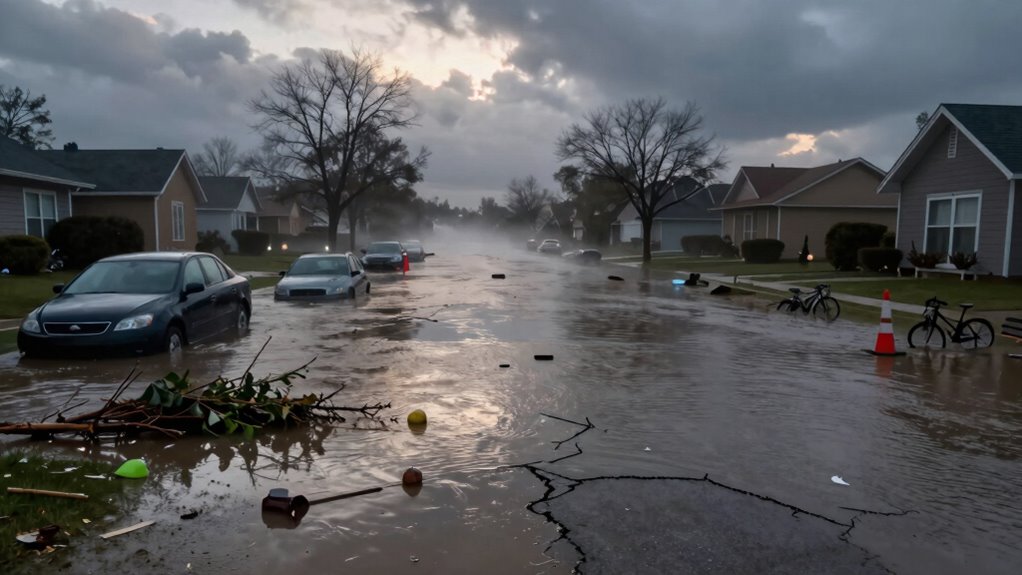

When roads flood during a hurricane, stay alert for hidden hazards like debris and potholes, and avoid driving through standing water. Plan multiple evacuation routes and keep essential supplies, including water, non-perishables, and emergency kits, ready in case of delays. Make certain your communication devices are charged and have backup options, and protect your home with flood barriers and elevation. To safely navigate such conditions, understanding these key steps is crucial as you prepare for the storm.
Key Takeaways
- Identify and pre-plan primary and backup evacuation routes avoiding flooded roads.
- Monitor real-time weather and road condition updates from official sources.
- Stockpile essential supplies, including non-perishable food, water, and emergency kits.
- Protect property by elevating utilities, sealing entry points, and using flood barriers.
- Ensure reliable communication with backup devices, charged batteries, and emergency contact info.

Sirius Survival Pre-Packed Hurricane Kit – Comprehensive Hurricane Preparedness Items – Essential Hurricane Supplies – Complete Hurricane Supply List in a Waterproof Bag for 2 People (Deep Blue Camo)
Comprehensive Hurricane Kit: This pre-packed hurricane kit includes all the essential hurricane preparedness items for home safety, such…
As an affiliate, we earn on qualifying purchases.
As an affiliate, we earn on qualifying purchases.
Understanding Flooded Road Conditions and Risks
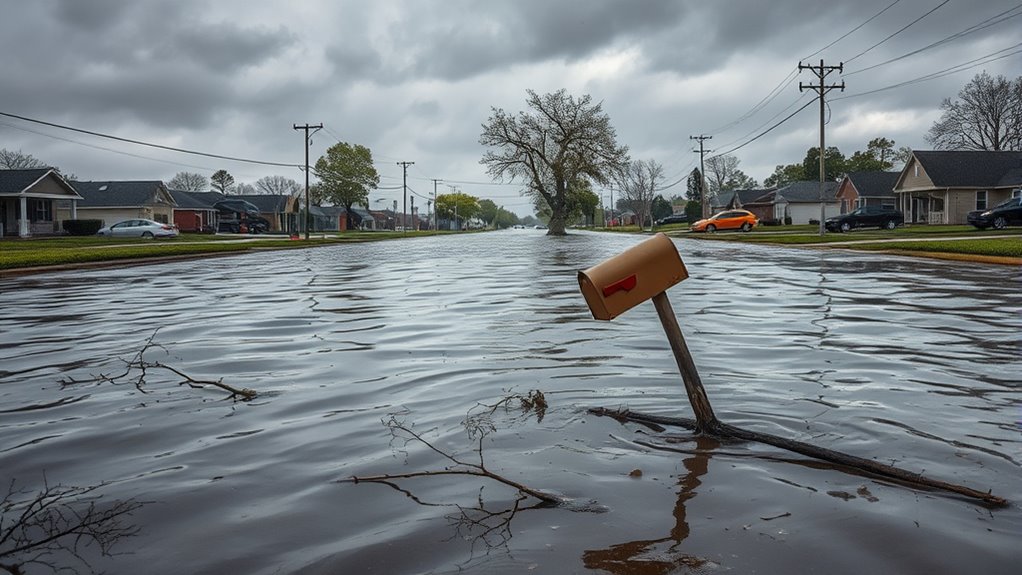
During heavy rains and hurricanes, flooded roads pose serious dangers that can catch drivers off guard. You need to understand the road surface conditions to evaluate safety properly. Water may hide potholes, debris, or uneven pavement, increasing the risk of accidents. Flood depth assessments are essential; shallow water might seem harmless but can still cause hydroplaning or loss of control. Deep water, on the other hand, can stall your vehicle or sweep it away. Always look for warning signs or barriers indicating flooded areas. Avoid driving through flooded roads if you’re unsure about the depth or surface conditions. Remember, even a few inches of water can be dangerous, so prioritize safety by assessing risks before attempting to navigate flooded routes. Flooded road conditions can change rapidly, so staying informed through local updates is crucial for safe travel. Additionally, understanding how road surface conditions change under floodwaters helps in making smarter decisions during emergencies. Recognizing Flood depth assessments is vital because water levels can vary widely and impact vehicle safety. Being aware of potential hidden hazards beneath the water can further prevent accidents and injuries. Properly evaluating potential hazards under water can help you avoid unseen dangers that are not immediately visible.

Quick Dam Water Activated Flood Barrier 5 Feet 2-Pack
Water Activated Flood Barriers, Rated #1 in Flood Control
As an affiliate, we earn on qualifying purchases.
As an affiliate, we earn on qualifying purchases.
Planning Safe Evacuation Routes and Alternatives
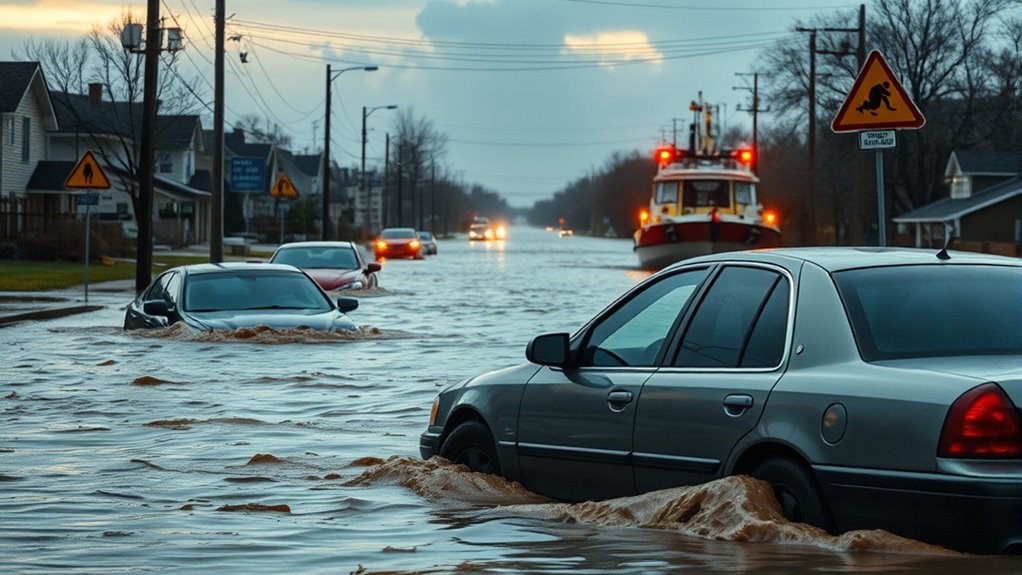
When planning your evacuation, it’s essential to identify safe routes and backup options ahead of time. Know your primary evacuation roads, but also have alternative routes in case floods block main paths. Research nearby community shelters and verify they are accessible from your planned routes. Keep your vehicle well-prepared with a full tank, emergency kit, and necessary supplies to handle delays. Consider routes that avoid low-lying areas prone to flooding, and stay updated on weather alerts and road conditions. Share your plan with family or neighbors, so everyone knows the safest ways out. Having multiple routes and reliable transportation options guarantees you can evacuate quickly and safely, even if roads become flooded or blocked. Proper planning saves lives and reduces stress during a hurricane emergency. Additionally, familiarize yourself with safe evacuation procedures and conduct practice drills to ensure everyone knows what to do in an emergency. Being aware of disaster preparedness strategies can further improve your response during such critical times. Also, utilizing reliable backup transportation options can be crucial if usual routes are compromised. Regularly checking local emergency updates can help you stay informed about sudden road closures or new hazards, enabling quicker decision-making. Knowing how to adapt your plan based on weather forecasts can make a significant difference during rapidly changing conditions.
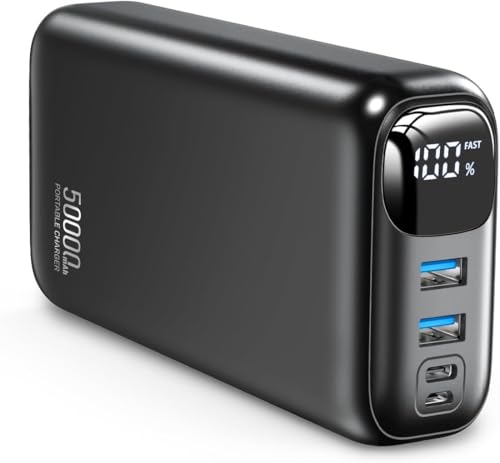
OHOVIV Portable Charger 50000mAh Power Bank – 22.5W Fast Charging External Battery Pack,USB-C Portable Phone Charger for iPhone 17/16/15/14/13 Pro Android Samsung, for Travel Camping Essential
Huge Capacity 50000mAh Portable Charger – The 50000mAh power bank ultra-high massive capacity will keep your phone and…
As an affiliate, we earn on qualifying purchases.
As an affiliate, we earn on qualifying purchases.
Stockpiling Essential Supplies for Extended Outages

Preparing for an extended power outage requires you to stockpile essential supplies ahead of time. Focus on items that support food preservation and water purification to stay safe and healthy. To guarantee you’re prepared, consider these priorities:
- Non-perishable food items like canned goods and dried foods
- Water purification supplies such as filters, tablets, or boiling equipment
- Storage containers to keep food safe and prevent spoilage
- Manual can openers and utensils for easy food access
Ensuring clean air is also important, especially if your home’s ventilation system is compromised during a flood. Having air filtration devices or masks can help improve indoor air quality and protect your respiratory health during extended outages. Additionally, understanding emergency preparedness strategies can make a significant difference in how effectively you respond to flooding scenarios, including utilizing smart home automation to monitor and manage safety measures remotely. Incorporating water treatment methods into your plan can further safeguard your household water supply from contamination during a flood.

SmartSign Evacuation Route Map Holder, 11.25" x 11", Glow-in-the-dark Frame Adhesive Strips included for easy installation to any door or wall, Clear Plastic Display, Red and White, Made in USA
DURABLE: The frame is made of durable plastic and has a clear plastic in the center. The text…
As an affiliate, we earn on qualifying purchases.
As an affiliate, we earn on qualifying purchases.
Ensuring Reliable Communication During Disruptions
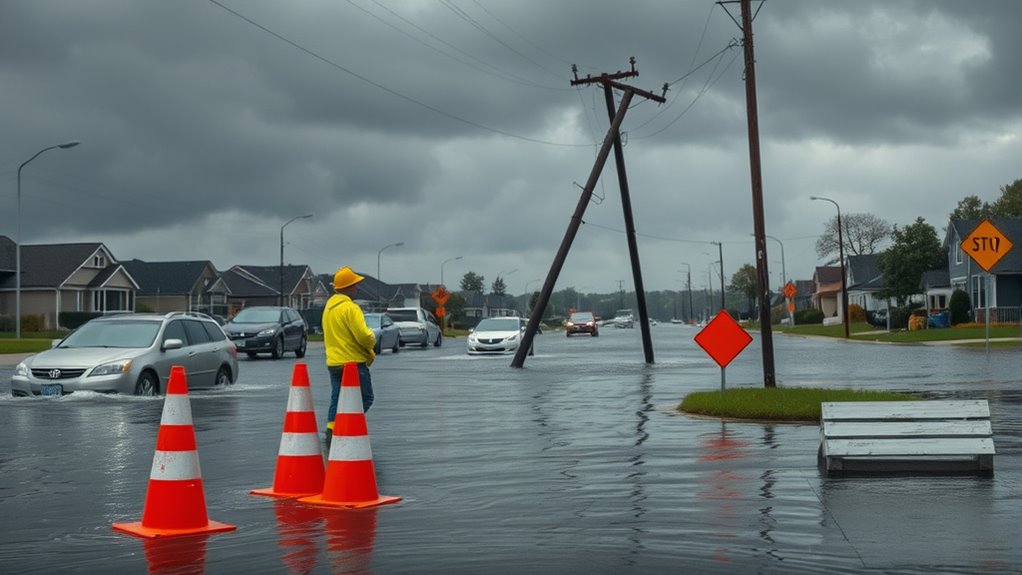
To stay connected during a hurricane, you need reliable communication tools. Consider having backup devices like battery-powered radios and spare cell phones, and make sure your emergency contacts are up to date. Don’t forget to prepare power backup solutions, such as generators or portable chargers, to keep your communication lines open. Additionally, accessible communication options like hearing aids with telecoil or visual alert systems can help ensure everyone stays informed. Incorporating emergency communication plans that utilize multiple channels can further improve your ability to stay connected even when traditional networks fail. Being aware of potential interference from environmental factors can also help you choose the most effective communication methods during outages. Recognizing the importance of communication technology adaptability is vital for maintaining contact when infrastructure is compromised. Understanding how signal propagation is affected by flooded roads and debris can assist in selecting the best devices and locations for communication.
Backup Communication Devices
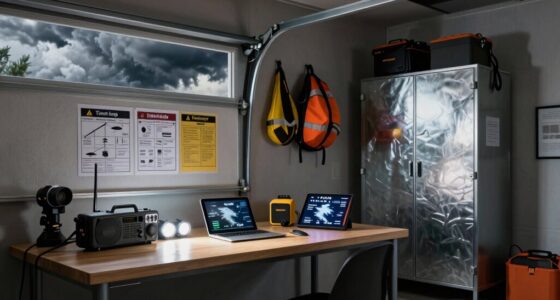
Having reliable backup communication devices is essential to stay connected when primary systems fail during a hurricane. Investing in tools like satellite phones and portable radios guarantees you can reach loved ones and emergency services when cell towers are down. Consider these key points:
- Keep satellite phones fully charged and store them in a waterproof case.
- Have portable radios with fresh batteries for quick access.
- Test devices regularly to ensure they work properly.
- Maintain a list of alternative contact methods in case technology fails.
- Be aware of the pinball machine weight when setting up your emergency equipment to ensure stability and safety during transportation and use. Proper cybersecurity measures can also protect your communication devices from potential threats during emergencies. Additionally, understanding emergency communication protocols can improve your overall preparedness in disaster situations. Staying informed about communication device maintenance can help avoid unexpected failures during critical moments. Regularly updating your emergency contact list ensures you can quickly reconnect with essential contacts if needed.
Using these devices, you can communicate even when traditional networks are disrupted. Satellite phones provide global coverage, while portable radios are easy to operate and reliable in emergency conditions. Preparedness with backup devices keeps you connected and informed during flood-locked roads.
Emergency Contact Planning
Since communication can quickly become unreliable during a hurricane, it’s essential to plan ahead for how you’ll stay in touch with loved ones and emergency services. Create a list of emergency contacts, including family members, friends, neighbors, and local authorities. Share this list with everyone in your household, and guarantee each person knows how to reach others if phone lines are down. Designate a primary contact outside the affected area to coordinate updates. Consider using multiple forms of communication, such as texts, emails, or messaging apps, that might work even if calls fail. Regularly review and update your emergency contacts, and keep a printed copy accessible. Implementing communication protocols can help ensure everyone remains connected during disruptions. Additionally, understanding the power sources for your communication devices, such as backup batteries or generators, can be crucial if electricity is cut off. Conducting a battery maintenance check can help ensure devices are ready when needed. This planning helps maintain family safety and ensures everyone knows how to get help when roads are flooded.
Power Backup Solutions
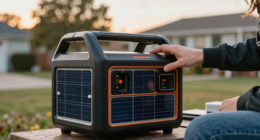
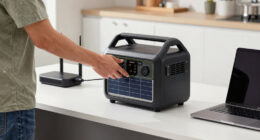
During a hurricane, reliable power backup solutions are essential to keep communication devices running when the main electricity supply fails. Solar generators and battery backups ensure you stay connected with loved ones and emergency services. To maximize your preparedness, consider these options:
- Invest in a high-capacity solar generator for renewable, off-grid power.
- Use battery backups to quickly restore power to essential devices.
- Keep portable chargers charged and ready for immediate use.
- Regularly test your backup systems to ensure functionality when needed.
These solutions provide continuous power, even during prolonged outages. Solar generators are eco-friendly and quiet, while battery backups offer instant energy. Combining both guarantees reliable communication when roads flood and power lines go down.
Protecting Your Home and Property From Flood Damage
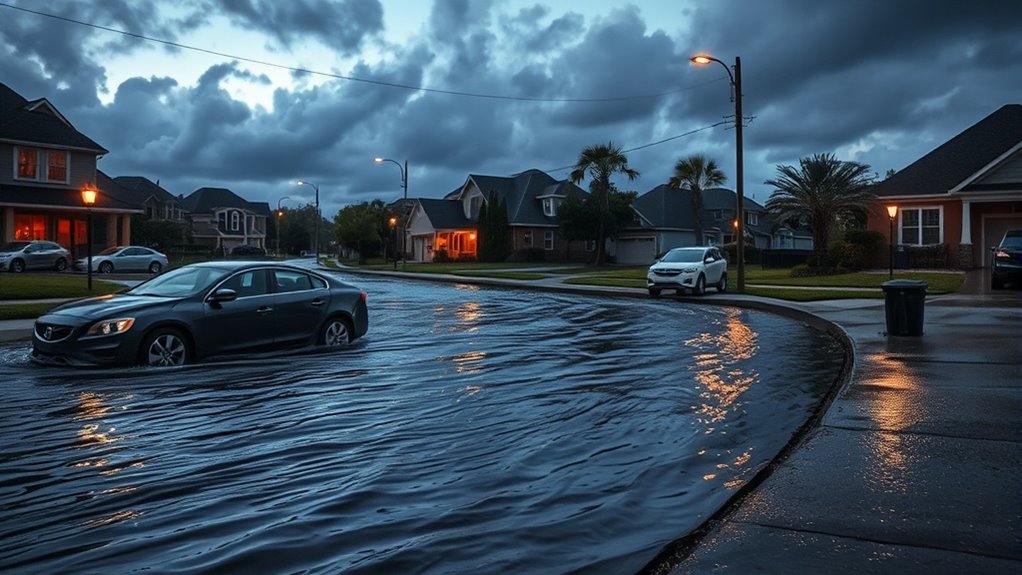
To protect your home from flood damage, start by elevating critical utilities like your electrical panel and water heater. Seal entry points such as doors and windows to prevent water intrusion, and move valuables to higher, dry areas. Taking these steps can considerably reduce the impact of flooding during a hurricane.
Elevate Critical Utilities
Have you considered how elevating your critical utilities can protect your home from flood damage? Elevating utility infrastructure reduces the risk of outages and water damage during storms. Start by reviewing flood zone mapping to identify vulnerable areas. Then, consider these steps:
- Raise electrical panels and meters above potential flood levels.
- Elevate water heaters and HVAC systems to prevent water intrusion.
- Install sump pumps with backup power to handle excess water.
- Ensure gas meters are placed above flood-prone zones to avoid leaks.
Seal Entry Points
Sealing entry points is one of the most effective ways to protect your home from flood damage. By seal entry points, you prevent water intrusion that can cause significant harm. Check areas like door thresholds, window sills, and vents, and use weatherproof sealants or foam to block gaps. Installing flood barriers or sandbags around vulnerable openings adds extra protection. Here’s a quick guide:
| Entry Point | Recommended Sealant | Additional Tips |
|---|---|---|
| Doors | Weatherproof sealant | Use door skirts for extra barrier |
| Windows | Caulk or expanding foam | Close windows tightly |
| Vents and Drains | Flood barriers or covers | Regularly check for gaps |
Sealing these points helps keep floodwaters out, protecting your home and property.
Safeguard Valuables
Ever wonder how to keep your valuables safe amid flood threats? Protecting your home means safeguarding essential items from water damage. Start with these steps:
- Store important documents in a waterproof, digital safe to guarantee document preservation.
- Elevate valuables like jewelry and heirlooms above potential flood levels.
- Use plastic bins or containers to keep electronics and fragile items dry.
- Backup digital files regularly to cloud storage or external drives, preventing data loss.
Staying Informed With Emergency Updates and Warnings
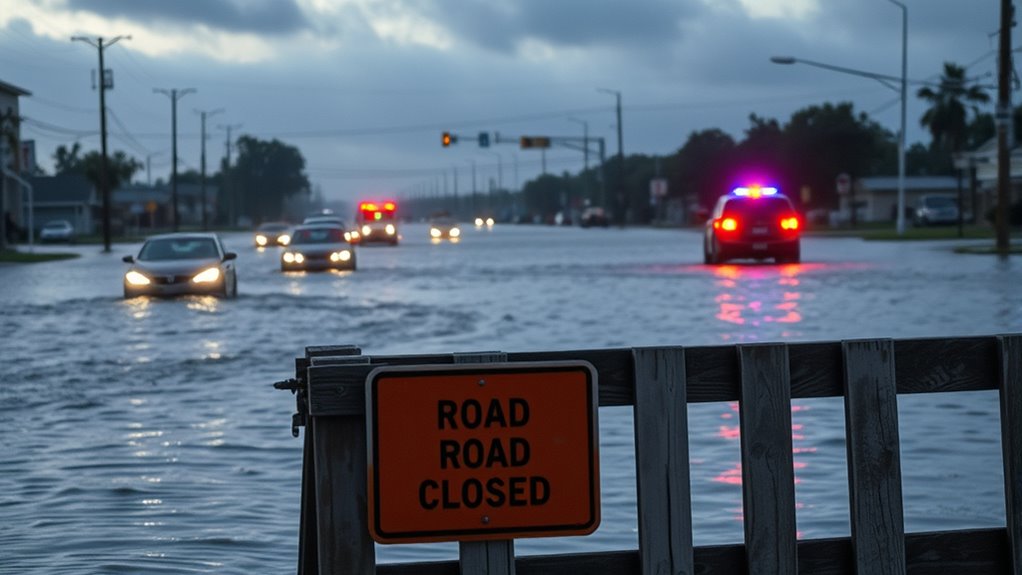
Staying informed with emergency updates and warnings is essential for keeping yourself and your loved ones safe during a hurricane. Reliable communication helps you react quickly to changing conditions and avoid hazards. Use weather tracking apps and local alert systems to stay updated on storm progress and road conditions. Sign up for community alerts through your local government or emergency services to receive timely notifications. Keep a battery-powered radio nearby to access continuous updates if power goes out. To visualize this, consider the table below:
| Method | What It Provides |
|---|---|
| Weather Apps | Real-time storm tracking |
| Community Alerts | Official warnings and instructions |
| Radio | Continuous updates during outages |
Being informed allows you to make smarter decisions and stay ahead of potential dangers.
Frequently Asked Questions
How Can I Identify Hidden Flood Dangers on Roads?
You can identify hidden flood dangers on roads by looking for storm debris and road slicks, which often indicate recent flooding. Watch for discolored water or unusual currents, and avoid areas with standing water that’s deeper than a few inches. Keep an eye out for washed-out pavement or debris blocking the road, as these signs suggest unseen hazards below the surface. Always err on the side of caution when unsure.
What Are the Best Alternative Transportation Options During Floods?
During floods, your best alternative transportation options include public transit, if available, or riding with someone who can drive safely. Avoid driving your vehicle unless it’s properly maintained and rated for flood conditions, as water can compromise your driving safety. Biking or walking may be safer if the floodwaters are shallow and manageable. Always stay updated on weather alerts and avoid flooded roads to protect yourself and others.
How Do I Determine if My Home Is Flood-Proof?
You can determine if your home is flood-proof by inspecting its building elevation and using flood resistant materials. Check if your property is elevated above the typical flood level in your area, reducing risk. Consider upgrading your home with flood resistant materials like waterproof drywall, sealed electrical systems, and reinforced foundations. Consult local flood maps and a professional engineer to assess your home’s flood resilience and identify necessary modifications.
What Insurance Coverage Is Recommended for Flood Damage?
Did you know that floods cause over $16 billion in damages annually? For flood damage, you should get flood insurance, as standard homeowners policies usually don’t cover floods. Coverage recommendations include choosing a policy that covers both the structure and your belongings, and consider additional protection for critical systems like HVAC or sump pumps. This guarantees you’re financially protected and can recover quickly after floodwaters recede.
How Can I Prepare Pets for Flood-Related Evacuations?
To prepare pets for flood-related evacuations, prioritize pet safety by keeping them in a secure, comfortable carrier or harness. Pack emergency supplies like food, water, medications, and familiar items to reduce stress. Confirm your pets are microchipped and have current ID tags. Practice evacuation drills with your pets so they’re familiar with the process, making the actual evacuation smoother and safer for everyone involved.
Conclusion
So, next time your streets turn into rivers, remember: flooding might be the universe’s way of testing your patience—and your driving skills. Stockpile snacks, keep your phone charged, and maybe invest in a boat. After all, if you’re going to be stuck in a waterlogged maze, you might as well enjoy the adventure. Stay safe, stay smart, and don’t forget—flooded roads make for great stories… after you survive them.