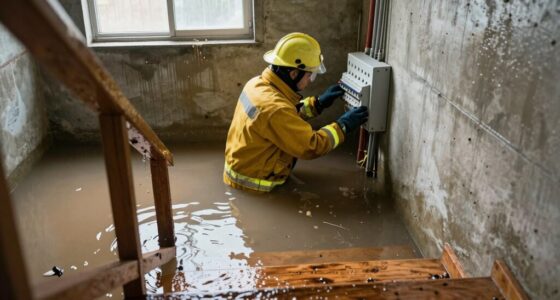
During holiday outages, you can keep guests comfortable by preparing your home with supplies like flashlights, batteries, and non-perishable food, and using alternative heating and cooling options such as blankets and portable heaters carefully. Communicate clearly about delays, and provide entertaining activities like board games or acoustic music. Regularly check safe lighting and food storage practices, and stay vigilant for safety hazards. To make sure everyone stays cozy and safe, you’ll find helpful tips for managing power failures nearby.
Key Takeaways
- Prepare emergency supplies like flashlights, batteries, non-perishable food, and warm blankets before outages occur.
- Use battery-powered or LED lighting and safe candles to maintain visibility without fire hazards.
- Keep refrigerator and freezer doors closed to preserve cold temperatures and extend food safety.
- Communicate clearly with guests about outage status and safety protocols through multiple channels.
- Gradually restore power, inspecting appliances and outlets for damage to ensure safety and comfort.

LED Flashlight High Lumens, Mini Tactical LED Flashlight 2 Pack, 5 Modes Zoomable Beam, Battery Powered (Batteries Not Included) for Camping, Hunting, Home & Emergency, Compact Small LED Flashlight
BRIGHT – The S1000 effortlessly illuminates an entire room making it the perfect super bright flashlight for everyday…
As an affiliate, we earn on qualifying purchases.
As an affiliate, we earn on qualifying purchases.
Understanding Common Causes of Holiday Power Outages
Many holiday power outages occur because of extreme weather events that stress the grid. Storms, heat waves, wildfires, and flooding are common culprits that cause long-lasting disruptions. For example, wildfires in Southern California affected 4 million customers in early 2025, while hurricanes and tornadoes damaged infrastructure nationwide. High-voltage transmission failures and substation malfunctions also trigger widespread blackouts, like the 90% blackout in Chile caused by a transmission failure. These events strain the electrical system, forcing utilities to cut power temporarily or experience outages that last for hours. During holidays, these issues can be more disruptive, especially when people are relying on home appliances, heating, and lighting to celebrate. Understanding these causes helps you prepare for potential outages during the festive season. Implementing resilient infrastructure can significantly reduce the impact of such outages and ensure continuous power supply during critical times. Additionally, investing in backup power solutions like generators and battery systems can provide peace of mind when outages occur. Moreover, grid modernization efforts are essential to improving overall system reliability and resilience against extreme weather events. Strengthening the electrical grid infrastructure is a crucial component in mitigating the frequency and severity of outages, especially in the face of increasing climate-related challenges.

Westinghouse 12500 Watt Dual Fuel Home Backup Portable Generator, Remote Electric Start, Transfer Switch Ready, Gas and Propane Powered
9500 Running Watts and 12500 Peak Watts (Gasoline); 8500 Running Watts, 11200 Peak Watts (Propane); Remote Start with…
As an affiliate, we earn on qualifying purchases.
As an affiliate, we earn on qualifying purchases.
Preparing Your Home for Unexpected Outages

When an unexpected outage occurs, being prepared can make all the difference in keeping your household safe and functional. Start by installing surge protectors to safeguard electronics and appliances from power surges when electricity returns. Keep flashlights, batteries, and a portable charger accessible in easily reachable spots. Consider investing in a generator or a battery backup system to provide reliable power for essential devices. Stock up on non-perishable food, bottled water, and necessary medications in case the outage lasts longer than expected. Insulate your home’s windows and doors to retain heat or cooling. Make sure your mobile devices are fully charged before outages happen. Additionally, understanding pool hydraulics can help you maintain proper water circulation if your pool’s filtration system is affected during outages. Understanding Luggage & Bags can help you organize emergency supplies more efficiently. Also, researching home energy efficiency can help you identify ways to reduce your reliance on backup power sources during prolonged outages. Finally, develop a family emergency plan, so everyone knows what steps to take if the power fails unexpectedly. Being aware of power outage preparedness can also improve your overall readiness for emergencies.

Ready Hour, Fruit & Veggie Mix, Non-Perishable Freeze-Dried Food, 30-Year Shelf Life, Portable Emergency and Adventure Food Supply, Durable Flood Safe Container, 56 Servings
TASTES GREAT: Ready Hour Freeze dried fruits and veggies are made for emergencies but tasty enough for everyday…
As an affiliate, we earn on qualifying purchases.
As an affiliate, we earn on qualifying purchases.
Essential Emergency Supplies to Keep On Hand

Having essential emergency supplies readily available guarantees you’re prepared to handle power outages effectively. Keep a flashlight with extra batteries close by, so you’re never left in the dark. Stock a supply of bottled water and non-perishable foods to sustain everyone until power is restored. A portable phone charger or power bank ensures you stay connected and informed. Include a basic first aid kit for minor injuries and any necessary medications. Warm blankets or sleeping bags can help keep everyone comfortable if heating fails. Consider a battery-powered radio to receive emergency updates. Fire extinguishers and candles are also crucial, but use them safely. Being prepared with these supplies minimizes discomfort and keeps your household safe during extended outages. Additionally, understanding your home’s electrical systems can help prevent hazards and facilitate safe troubleshooting during outages. Familiarity with power restoration procedures can also expedite the process of returning to normal. For added safety, consider installing whole-house surge protectors to guard against electrical damage when power is restored. Moreover, having a plan for medical emergencies ensures prompt assistance if someone needs immediate care during the outage.

Lichamp LED Camping Lantern, 4 Pack Battery Powered Flashlight for Power Outages, Portable Collapsible Hanging Light Essential for Home, Outdoor, Emergency Lamp Survival Kit Gear for Hurricane, Gray
ULTRA BRIGHT & SAFE: Designed with 30 energy-efficient LED for 360 degree lighting (97 sq.ft coverage), the latest…
As an affiliate, we earn on qualifying purchases.
As an affiliate, we earn on qualifying purchases.
Maintaining Comfort With Alternative Heating and Cooling

During power outages, maintaining a comfortable indoor environment becomes a priority, especially when traditional heating and cooling systems are unavailable. To stay warm, gather blankets, wear layered clothing, and close curtains to retain heat. Use portable or battery-powered heaters if you have them, but follow safety guidelines carefully to prevent fires or carbon monoxide buildup. For cooling, open windows during cooler evenings and mornings, and use handheld fans or battery-powered fans to improve airflow. Block heat loss by sealing drafts around doors and windows with towels or weather stripping. Keep doorways closed to contain temperature zones, and stay hydrated to help your body regulate temperature. Additionally, consider insulating your home to improve energy efficiency during outages. Proper air circulation can also help prevent indoor air quality issues when ventilation is limited. Ensuring good ventilation by periodically opening windows can help dilute indoor pollutants and maintain a healthier environment. Incorporating alternative cooling methods, such as evaporative coolers or reflective window coverings, can further enhance comfort when the grid is down. Implementing energy-efficient practices can reduce overall energy needs and help maintain a stable indoor climate during outages. These measures help you maintain comfort, even when the grid is down.
Lighting and Entertainment Options Without Power
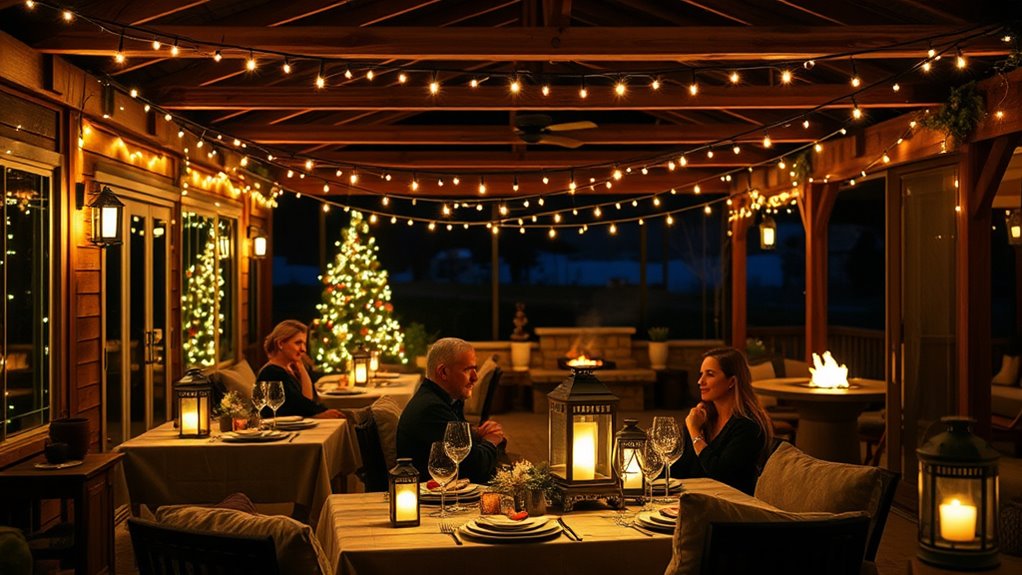
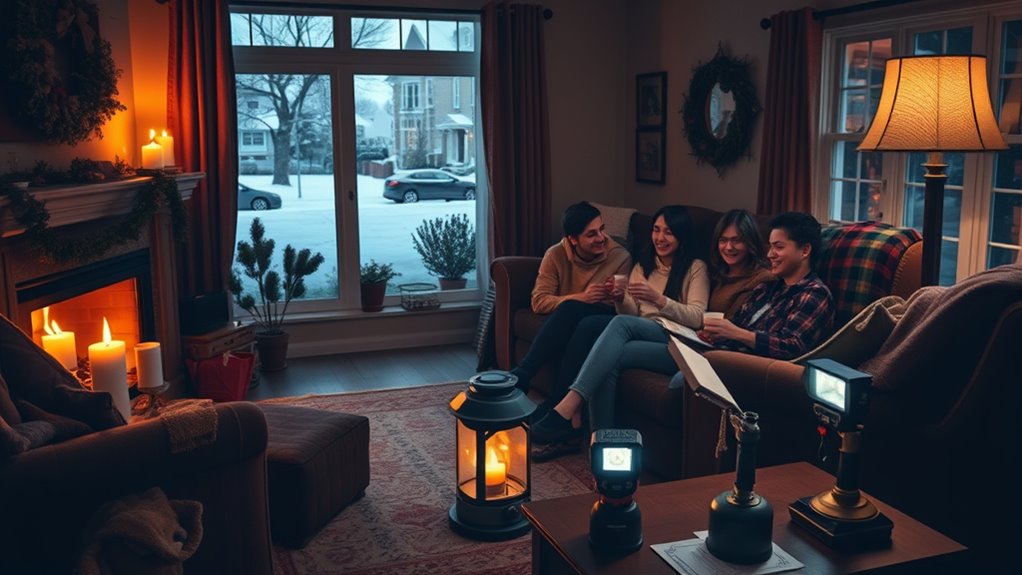
Power outages can leave you in the dark, making it challenging to see, relax, or entertain yourself. To keep spirits high, rely on alternative lighting and entertainment options. Use battery-powered lanterns or LED flashlights for bright, safe illumination. Candles add a warm, cozy glow but require caution to prevent fires. Consider playing acoustic music or using a portable speaker powered by a backup battery for entertainment. If you have a hand-crank or solar-powered radio, you can stay updated and enjoy tunes without electricity. Engage guests with activities like storytelling, board games, or card games, which require no power. Incorporating Free Floating smart‑home integrations such as battery-powered smart lighting can further enhance your lighting options during outages. Additionally, outdoor lanterns or string lights with low energy consumption can help create a festive atmosphere even without grid power. These simple solutions help maintain a festive atmosphere even when the grid is down. Moreover, understanding the importance of Vetted – wave and wind sources of renewable energy can inspire future preparedness for extended outages. Investing in renewable energy systems like small-scale wind or solar setups can provide reliable backup power and reduce dependence on the grid during emergencies. Exploring off-grid energy solutions may also empower you to maintain essential services during prolonged outages.
Food Safety and Meal Planning During Outages
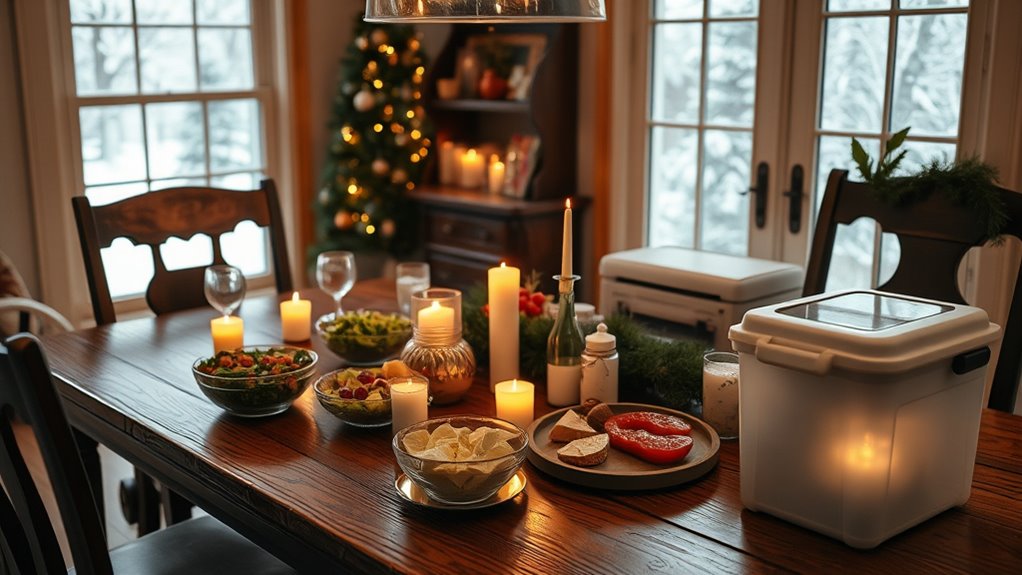
When the electricity goes out, your food safety becomes a top priority to prevent spoilage and foodborne illnesses. Start by keeping the refrigerator and freezer doors closed as much as possible to maintain cold temperatures. A full freezer can keep food safe for about 48 hours; a half-full one for around 24 hours. Use coolers with ice for perishable items if the outage lasts longer. Avoid opening canned and dried foods, which don’t require refrigeration. Plan meals ahead by prioritizing non-perishable foods. If you have a grill or portable stove, use it outdoors for cooking. Be cautious with leftovers—discard anything that’s been above 40°F for more than two hours. Proper planning and quick action help safeguard your food and keep everyone healthy. Additionally, monitoring the temperature of your food with a thermometer can help determine whether items are still safe to eat.
Communicating With Guests During Extended Interruptions
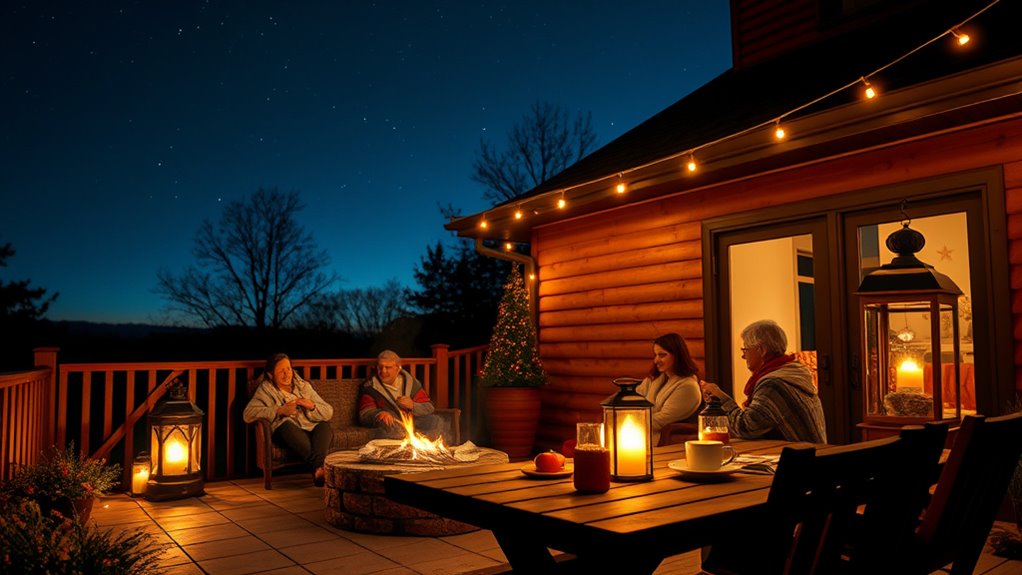
When power outages extend during the holidays, it’s vital to keep your guests informed with clear updates. Share essential information about the outage’s status, expected resolution time, and available resources. This approach helps manage expectations and maintains trust during uncertain times.
Clear Outage Updates
During prolonged outages, clear and timely communication with guests is essential to guarantee their safety and manage expectations. Keeping everyone informed reduces anxiety and builds trust during uncertain times. Regularly update guests on the outage status, expected restoration times, and safety tips. Use simple language and avoid technical jargon to ensure everyone understands.
Consider sharing updates through multiple channels like mobile alerts, signage, or guest newsletters. Be honest about delays, but reassure guests that efforts are underway to restore power. Engage with guests directly, answer questions promptly, and provide guidance on staying comfortable. Consistent, transparent updates help guests feel cared for and reduce confusion.
- Use visual aids like charts or infographics to explain outage progress
- Post updates in common areas and digital platforms
- Assign staff to relay information and answer questions
- Keep messages calm, clear, and empathetic
Providing Essential Info
Clear communication remains essential once an outage extends beyond initial updates. You need to keep guests informed about the situation, what’s being done, and expected timelines. Share regular updates through multiple channels like text messages, social media, or public announcements. Be honest about the severity and potential duration, avoiding false hope. Explain safety precautions, such as avoiding open flames or using flashlights safely. Provide practical tips for conserving power, staying comfortable, and maintaining hygiene. Designate a point person for questions to prevent confusion. By proactively sharing clear, consistent information, you reduce guest anxiety, foster trust, and help everyone feel more prepared. Staying transparent and responsive makes a stressful situation more manageable for everyone involved.
Safety Tips for Staying Safe When the Power Is Out
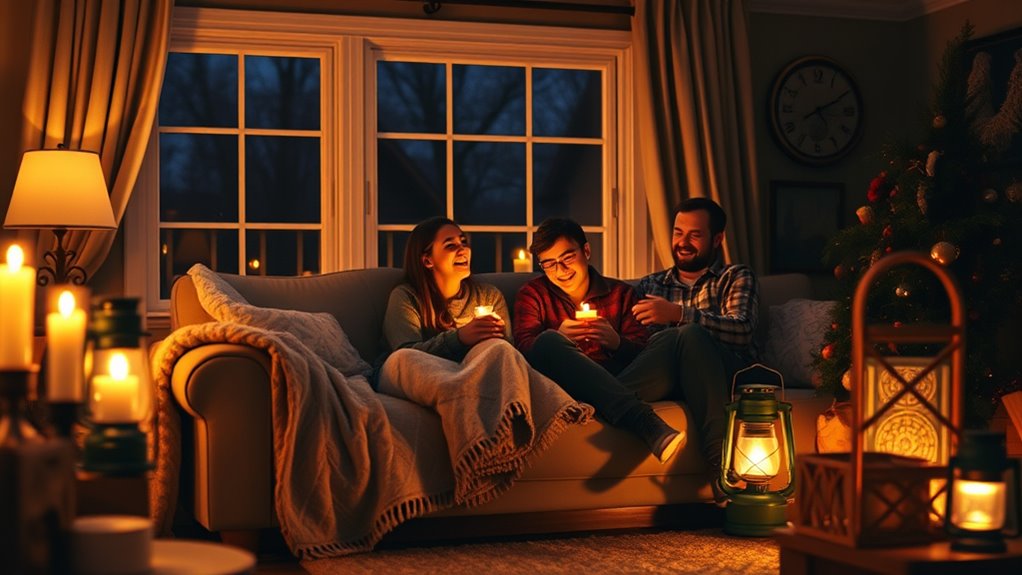
When the power goes out, using battery-powered lights can help you see safely without the risk of fire. Keep emergency supplies like flashlights, batteries, and first aid kits nearby in case you need them quickly. Remember to avoid open flames, such as candles, which can easily cause fires in low visibility conditions.
Use Battery-Powered Lights
Battery-powered lights are essential for staying safe during power outages, providing reliable illumination without relying on the electrical grid. They help you see clearly, avoid tripping hazards, and navigate your home safely. Keep a variety of lights on hand, such as flashlights, lanterns, and headlamps, for different situations. Make sure they’re fully charged before an outage occurs. Store these lights in accessible locations, so you can grab them quickly. Use batteries that are fresh or recently replaced to guarantee they work when needed. Avoid using candles to prevent fire hazards. Instead, opt for battery-powered lights for safe, steady illumination.
- A handheld flashlight illuminating dark hallways
- A lantern casting a broad glow in the living room
- Headlamps providing hands-free light during tasks
- Battery-operated string lights creating a cozy ambiance
Keep Emergency Supplies Ready
Having a well-stocked supply of emergency items can make a significant difference during power outages. You should keep essentials like bottled water, non-perishable food, and a manual can opener nearby. Flashlights are vital, so store extra batteries and consider rechargeable options. First aid supplies, including bandages, antiseptics, and any necessary medications, should be easily accessible. Keep a battery-powered or hand-crank radio to stay informed about weather updates and emergency alerts. Don’t forget to have a supply of hygiene items, warm blankets, and spare clothing in case the outage lasts longer than expected. Regularly check expiration dates and replenish supplies as needed. Being prepared ensures you and your guests stay safe, comfortable, and informed until power is restored.
Avoid Open Flames
Power outages can create tempting opportunities for fires if you’re not careful with open flames. Candles, lanterns, or fireplaces might seem like simple solutions, but they pose serious risks. Always keep open flames away from curtains, furniture, and other flammable items. Never leave flames unattended, especially around children or pets. Use battery-operated lights instead of candles whenever possible. If you do use candles, keep them in sturdy holders on stable surfaces. Make sure smoke detectors are working and keep a fire extinguisher nearby. Remember, a small mistake can lead to a dangerous fire that could ruin your holiday and endanger loved ones. Stay safe by being vigilant and choosing safer lighting options during power outages. Your safety is worth the extra caution.
Post-Outage Checks and Restoring Comfort
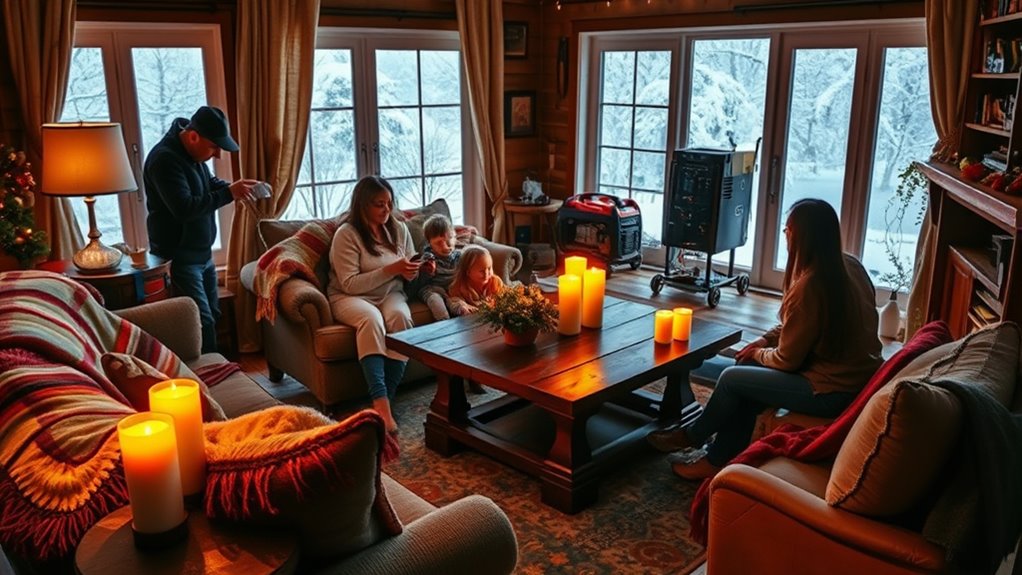
After a power outage, thorough post-outage checks are essential to guarantee the electrical system is safe and functioning properly before restoring full service. Start by inspecting your main breaker and switches for damage or signs of heat. Check appliances and outlets for sparks or unusual smells. Test your generator if you used one, ensuring it’s operating correctly. Use the table below to visualize typical post-outage priorities:
| Inspection Area | Key Actions |
|---|---|
| Electrical System | Look for damage; test circuits |
| Appliances | Verify safe operation |
| Safety Measures | Confirm alarms, detectors work |
Completing these checks prevents hazards and ensures your home remains comfortable and safe for everyone. Once everything is clear, gradually restore power, monitoring for issues along the way.
Frequently Asked Questions
How Can I Prevent Holiday Outages From Affecting My Guests?
You can prevent holiday outages from affecting your guests by preparing ahead. Invest in a reliable backup generator to keep essential appliances running, stock up on emergency supplies like batteries, flashlights, and portable chargers. Consider installing solar-powered or battery-operated lighting. Inform guests about safety procedures, and plan for alternative activities if power is lost. Regularly maintain your system to reduce outage risks, ensuring everyone stays comfortable and safe during unexpected disruptions.
What Are Quick Ways to Generate Power During an Outage?
You can generate power quickly during an outage by using portable generators, solar-powered chargers, or battery backups. Connect essential appliances like lights, phones, and medical devices to the generator. Keep fuel reserves for the generator, and guarantee proper ventilation when running it. Use solar chargers for small devices, and rely on battery backups for immediate power needs. These options help keep your guests comfortable until the grid is restored.
How Do I Keep Food Safe Without Refrigeration?
Think of your fridge as a treasure chest of perishable delights. To keep food safe without refrigeration, use coolers filled with ice or ice packs, stacking items to maintain cold temperatures. Keep the cooler in a shaded, cool spot, and limit opening it to conserve cold air. Consume perishables within a few hours, and opt for canned or dried foods that need no refrigeration. This approach preserves your bounty until power returns.
What Are Effective Ways to Stay Warm Without Electricity?
To stay warm without electricity, layer your clothing with thermal and wool garments to trap heat. Use blankets, sleeping bags, or quilts to insulate yourself. Keep doors closed to preserve heat and gather in smaller spaces to concentrate warmth. If available, burn candles or use a safe camping stove for additional heat, but make certain of proper ventilation. Staying active and moving around also helps maintain your body temperature.
How Can I Inform Guests About Outage Status Safely?
You can keep your guests informed safely by using a battery-powered radio or a charged mobile device with emergency alerts. Ironically, the very technology that keeps us connected might be your best tool now. Avoid spreading rumors; stick to official sources like local utility updates or emergency services. Share updates clearly and calmly, so everyone stays reassured and knows when power might be restored, helping prevent panic or confusion.
Conclusion
As the lights flicker back on, imagine the warmth of a cozy blanket and the glow of a battery-powered lantern, casting a gentle glow over your space. Though outages can be unsettling, your preparedness guarantees comfort and safety. Embrace the quiet moments, knowing you’re ready for anything. Soon, laughter and conversation will fill the room again, making this temporary pause a small chapter in a joyful holiday story.