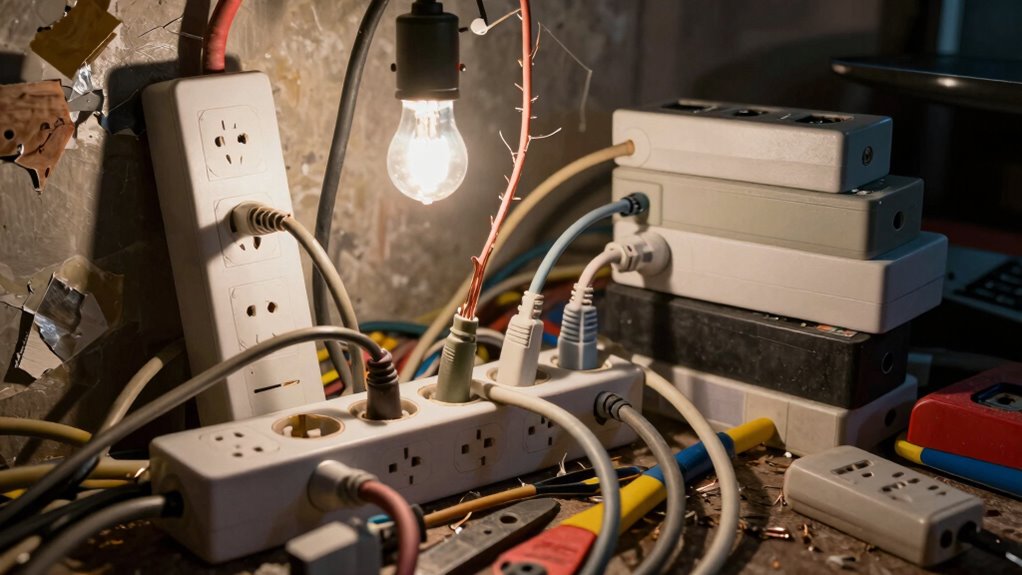

To spot a risky temporary power setup quickly, look for overloaded circuits that cause cords or panels to stretch or trip frequently. Check for insecure grounding connections and avoid daisy-chaining multiple cords or adapters, which can overheat. Also, watch for signs of overheating or damaged cables. If you notice these issues, it’s unsafe. Continuing will give you a clearer idea of how to keep your setup safe and compliant.

Get backup power and energy gear delivered free with Prime
- Fast, free delivery on millions of items
- Prime Video, Amazon Music and more included
- Member-only deals all year
Key Takeaways
- Look for overloaded circuits or cords that are stretched or showing signs of overheating.
- Check for daisy-chained extension cords or multiple adapters used together.
- Ensure grounding connections are secure, intact, and compliant with safety standards.
- Identify if equipment wattage exceeds power source capacity or circuit limits.
- Inspect the setup in wet or outdoor environments for proper grounding and weatherproofing.
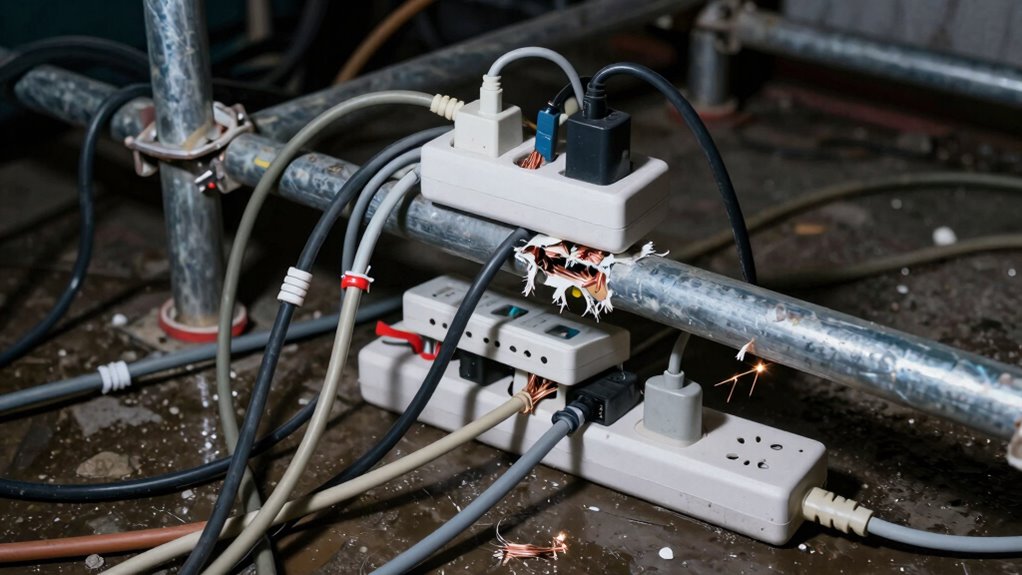
Temporary power arrangements are common on construction sites and events, but they can pose serious safety risks if not properly installed and maintained. When you’re inspecting a temporary power system, one of the first things to look at is whether the setup’s load capacity matches the demands of the equipment connected. Overloading a power source can lead to overheating, tripped breakers, or even electrical fires. If you notice cords or panels that seem stretched beyond their capacity or circuits that frequently trip, it’s a clear sign that the load capacity isn’t being managed correctly. Always verify the power source can handle the total wattage of all connected devices, and avoid daisy-chaining multiple extension cords or adapters, which can further overload the system.
Grounding safety is another critical factor that you shouldn’t overlook. Proper grounding protects people from electrical shocks and prevents damage to equipment. Check if the setup has a reliable grounding connection—look for grounding rods or grounding wires that are securely attached and intact. If grounding appears flimsy, disconnected, or absent altogether, it’s a sign of a risky setup. An improper ground increases the chance of electrical faults and shocks, especially in wet or outdoor environments. You should also verify that all grounding connections comply with local electrical codes and standards. If you’re unsure, don’t hesitate to ask for professional inspection or clarification. Ensuring grounding safety is essential for preventing accidents and ensuring compliance with electrical standards. Regular inspection and maintenance can help identify hidden issues before they become hazards, especially in temporary setups where safety measures are sometimes overlooked.
temporary power strip with overload protection
As an affiliate, we earn on qualifying purchases.
As an affiliate, we earn on qualifying purchases.
Frequently Asked Questions
What Are Common Signs of Overloading in Temporary Power Setups?
You can spot overload indicators in temporary power setups by looking for signs like tripped circuit breakers, melted or scorched plugs, and flickering lights. Equipment hazards often arise when circuits are pushed beyond their limits, showing signs like buzzing sounds or overheating. If you notice these issues, it’s a clear warning that the system is overloaded, risking damage or fire. Always address overloads promptly to guarantee safety and proper operation.
How Often Should Temporary Power Systems Be Inspected?
You should inspect temporary power systems regularly, ideally before each use and daily during ongoing operations. Focus on grounding practices to guarantee safety and check equipment maintenance to prevent faults. Look for signs of wear, loose connections, or overheating. Regular inspections help catch issues early, reducing risks of electrical failure or hazards. Staying vigilant and maintaining proper grounding and equipment upkeep keeps your setup safe and compliant.
Are There Specific Safety Standards for Temporary Power Installations?
Temporary power setups adhere to strict safety standards, including proper temporary certification and secure power grounding. You should guarantee installations follow OSHA and NEC regulations, emphasizing electrical essentials. Safety standards specify correct grounding methods, protective devices, and clear labeling. By verifying these standards are met, you minimize risks, ensure reliable power, and protect personnel from potential electrical hazards, ultimately fostering a safe, secure, and sound temporary power environment.
What Equipment Is Essential for Safely Setting up Temporary Power?
You need essential equipment like a properly rated generator, heavy-duty extension cords, and reliable power distribution panels to guarantee safe temporary power setups. Prioritize generator safety by ensuring proper grounding and ventilation. Use breakers and fuses for overload protection, and keep all connections secure and insulated. This equipment helps prevent electrical hazards, guaranteeing effective and safe power distribution during temporary setups, reducing risks for everyone involved.
How Can I Prevent Electrical Fires in Temporary Power Setups?
You can prevent electrical fires in temporary power setups by ensuring proper temporary wiring and secure power distribution. Always use rated equipment, avoid overloading circuits, and regularly inspect connections for damage or wear. Keep cables organized and off the ground to prevent damage. Additionally, install circuit breakers or fuses to cut off power during faults. Properly grounding your setup also minimizes fire risks, keeping everyone safer on-site.
grounding tester for extension cords
As an affiliate, we earn on qualifying purchases.
As an affiliate, we earn on qualifying purchases.
Conclusion
By recognizing exposed wires, overloaded circuits, and makeshift connections, you see the signs of danger. By trusting your instincts, inspecting thoroughly, and staying alert, you prevent accidents before they happen. By prioritizing safety, respecting regulations, and avoiding shortcuts, you protect yourself and others. Remember, spotting risks isn’t just about noticing problems—it’s about taking action, preventing harm, and ensuring a safe environment for everyone involved. Stay vigilant, stay safe, and always prioritize caution.
outdoor weatherproof power extension cord
As an affiliate, we earn on qualifying purchases.
As an affiliate, we earn on qualifying purchases.
electrical circuit tester for overload detection
As an affiliate, we earn on qualifying purchases.
As an affiliate, we earn on qualifying purchases.
Halloween Picks
halloween
As an affiliate, we earn on qualifying purchases.