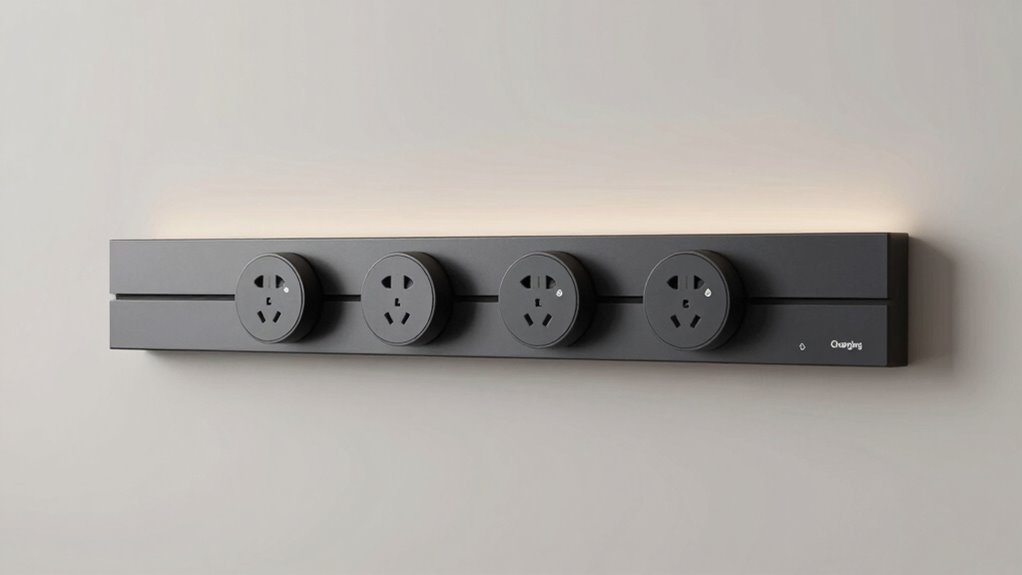

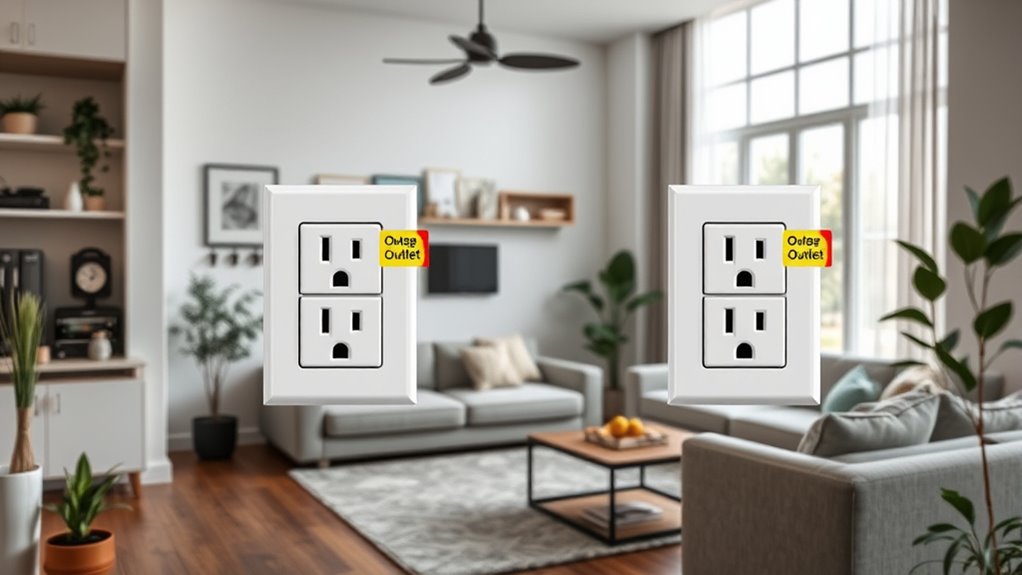
To create an outage outlet in each room, place outlets near entry points and main traffic areas, at a convenient height, and within 6 feet of essential devices. Label them clearly with durable signs using contrasting colors like red or yellow for quick identification. Develop safety habits, such as regular inspections and turning off power before maintenance. Following electrical codes and standards is key. Keep exploring to discover detailed steps for implementation and safety tips.
Key Takeaways
- Install dedicated outage outlets near entry points and traffic areas at 12-18 inches height for accessibility.
- Clearly label each outage outlet with durable, contrasting signage indicating “Emergency Power” or similar.
- Use color coding, symbols, or signs at eye level to ensure quick recognition during emergencies.
- Regularly inspect outlets, labels, and signage for damage, replacing as needed to maintain visibility and safety.
- Follow local electrical codes, ensuring outlets are properly grounded, rated for load, and that emergency disconnects are accessible.

Anker SOLIX C1000 Gen 2 Portable Power Station, 2,000W (Peak 3,000W) Solar Generator, Full Charge in 49 Min, 1,024Wh LiFePO4 Battery for Home Backup, Power Outages, and Camping (Optional Solar Panel)
49 Min UltraFast Recharging: With upgraded HyperFlash tech, fully recharge at 1,600W—for outage prepping, camping trips, or tailgating...
As an affiliate, we earn on qualifying purchases.
Understanding the Importance of Outage Outlets

Understanding the importance of outage outlets is essential because they guarantee you have access to power during emergencies. These outlets are designed to keep critical devices running when the main power fails, ensuring safety and continuity. Having outage outlets in key areas allows you to connect essential equipment like medical devices, flashlights, or communication tools instantly. They also help prevent accidents caused by power outages, especially in areas with sensitive electronics. Proper placement and labeling make it easy to identify these outlets quickly, saving valuable time during emergencies. Installing outage outlets with proper grounding ensures safety and reduces the risk of electrical hazards. Additionally, understanding European standards for electrical safety can help you choose the most reliable and compliant outage outlets for your setup. Considering modern electrical codes during installation ensures your setup aligns with current safety regulations. By installing outage outlets, you’re taking a proactive step toward safety, ensuring that crucial devices are always accessible when you need them most. This simple addition can profoundly improve your preparedness and peace of mind.

Jackery Portable Power Station Explorer 300, 293Wh Backup Lithium Battery, Solar Generator for Outdoors Camping Travel Hunting Blackout (Solar Panel Optional)
SPEED UP YOUR RECHARGEABILITY: It takes only 2 hours to recharge 80% battery of the power station through...
As an affiliate, we earn on qualifying purchases.
Selecting the Right Location for Each Room

Choosing the ideal spots for outage outlets in each room guarantees quick access during emergencies. You want them positioned where you can reach them fast, without obstacles. Consider these key points:
- Place outlets near entry points and main traffic areas for easy access when needed.
- Install outlets at a height that’s accessible for all users, typically around 12-18 inches from the floor.
- Ensure outlets are within 6 feet of essential devices or equipment that may need quick disconnecting.
Avoid placing outlets behind furniture or in tight corners, which can delay response times. Think about the room’s layout and where interruptions could hinder quick action. Proper placement guarantees your outage outlet is functional, accessible, and ready when every second counts.

EnginStar Portable Power Station 300W 296Wh Battery Bank with 110V Pure Sine Wave AC Outlet for Outdoors Camping Hunting and Emergency, 80000mAh Backup Battery Power Supply for CPAP
PORTABLE BUT POWERFUL: EnginStar Portable Power Station with ETL Certification, and the portable size of 9 x 5.5...
As an affiliate, we earn on qualifying purchases.
Proper Labeling and Signage for Emergency Disconnects
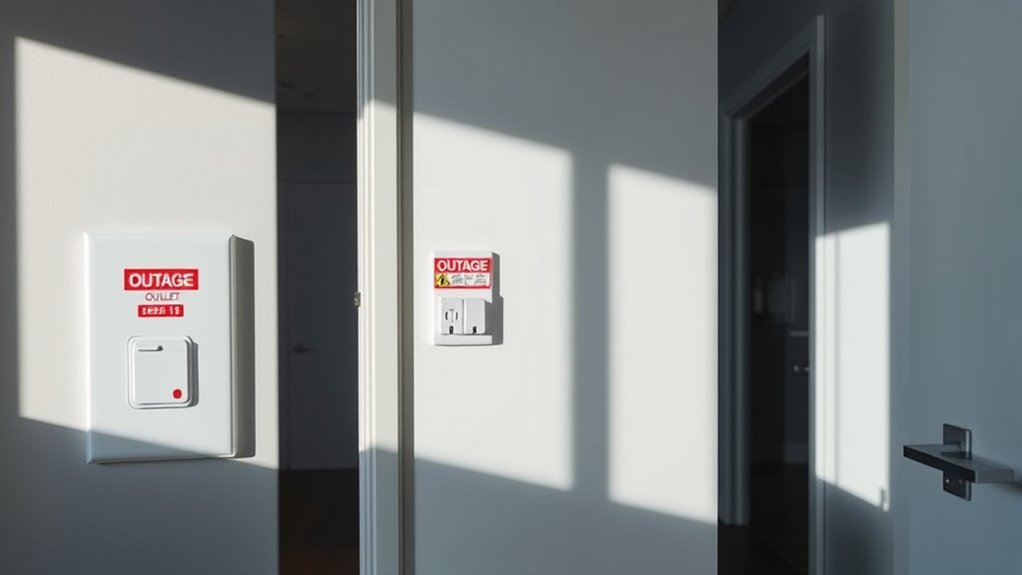
Proper labeling and signage for emergency disconnects are essential to guarantee quick identification and access during emergencies. Clearly mark each disconnect with durable, visible labels indicating its purpose, such as “Main Emergency Disconnect” or “Room Power Off.” Use contrasting colors like red or bright yellow to draw attention. Signs should be large enough to read from a distance and include simple instructions, such as “Pull to Disconnect.” Position labels at eye level or near the switch or handle, ensuring they’re easily noticeable. Avoid clutter or obstructions around the disconnects. Regularly inspect labels for readability and replace any faded or damaged signage. Proper labeling minimizes confusion, speeds up response times, and enhances safety during power outages or emergency scenarios. Additionally, understanding how filtration and maintenance impact your system’s reliability can help prevent unexpected failures during critical moments. Implementing consistent labeling practices can also help ensure everyone in the household is familiar with the emergency procedures. Conducting regular training and reviews of emergency protocols further improves response efficiency when it matters most. Incorporating visual cues such as symbols or color coding can further enhance quick recognition in high-stress situations.

BLUETTI Elite 30 V2 Portable Power Station 600W (Power Lifting 1500W), 288Wh LiFePO4 Battery with 10ms UPS, Emergency Backup Power for Home Blackout/Winter Storm, Solar Generator for Camping/Road Trip
[288Wh On-the-Go Power] - Only 9.4 lbs lightweight, carry it anywhere during storms! 288Wh capacity meets daily &...
As an affiliate, we earn on qualifying purchases.
Implementing Safety Habits to Ensure Reliable Power
Implementing safety habits is essential for maintaining reliable power in your building. You should develop routines that prevent electrical issues and reduce hazards. First, regularly inspect outlets, switches, and panels for signs of damage or wear. Second, ensure all GFCI and surge protection devices are functioning correctly and replace them when necessary. Third, always turn off power before performing maintenance or repairs to avoid shocks or short circuits. Additionally, keep clear access to electrical panels and disconnects, avoiding clutter that could cause delays during outages. By establishing these habits, you minimize risks and promote consistent power flow, ensuring safety for everyone. Regularly testing protective devices helps ensure they are functioning properly and providing the necessary safety measures. Incorporating load management strategies can further prevent overloads and outages. Staying informed about electrical system safety standards enhances your ability to prevent hazards proactively. Implementing preventative maintenance routines can help identify potential issues before they lead to outages. Maintaining awareness of smart home automation can also facilitate early detection of electrical anomalies. Consistent vigilance and proactive steps are key to preventing outages and maintaining a safe, reliable electrical system in your space.
Complying With Building Codes and Electrical Standards
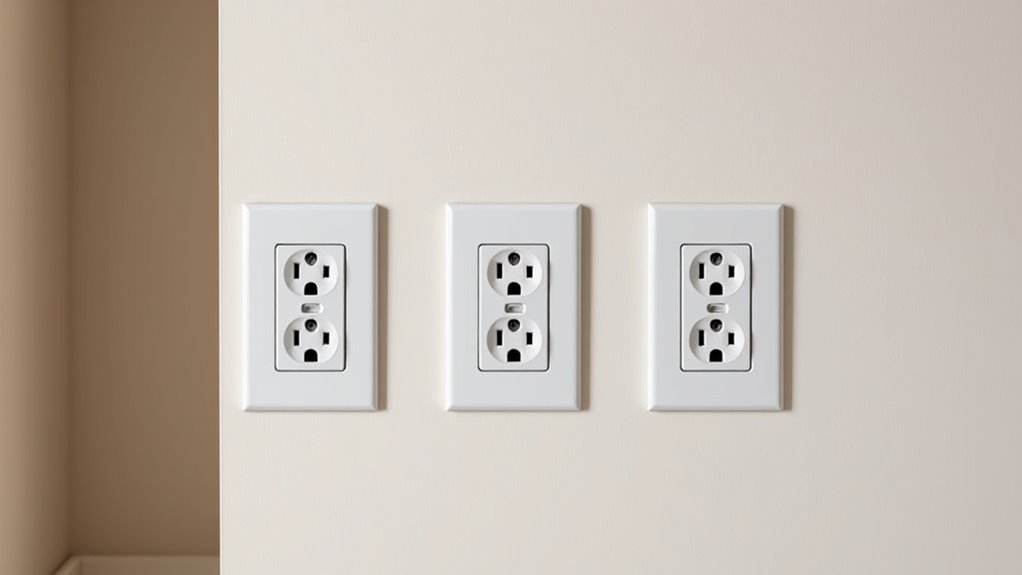
Ensuring your electrical system meets building codes and standards is essential for safety and compliance. Start by verifying that your outlets, switches, and panels adhere to local electrical codes, including proper GFCI protection in bathrooms, kitchens, and outdoor areas. Install emergency disconnects outside your home, clearly labeled and accessible, especially for critical circuits. Make sure all wiring is rated for the intended load and that circuits are properly sized, with dedicated outlets for appliances like laundry and dining equipment. Use listed, reliable components, and guarantee exit signs and emergency lighting meet the requirements—illuminating paths within 10 seconds of power loss for 90 minutes. Regularly inspect and maintain your system to prevent hazards and ensure ongoing compliance with current standards. Additionally, staying informed about electrical code updates can help you keep your system compliant and safe over time. Being aware of feature Buddies can also assist in understanding the importance of system resilience and backup options. Maintaining proper system grounding is also crucial to prevent electrical shocks and equipment damage, especially in areas exposed to moisture or outdoor conditions. Ensuring the use of appropriate circuit breakers helps protect your system from overloads and short circuits, enhancing overall safety. Incorporating water-resistant outlets in outdoor or humid areas can prevent water intrusion and electrical hazards.
Frequently Asked Questions
How Often Should Outage Outlets Be Tested for Functionality?
You should test your outage outlets at least once a month to make certain they’re working properly. Regular testing helps confirm the outlets activate during power outages and that their labels remain clear. To do this, use the test button if available, or unplug connected devices and verify the outlet’s response. Consistent checks prevent surprises during an actual outage and keep your emergency preparedness up to date.
Are There Specific Color Codes for Outage Outlet Labels?
You might think there are strict color codes for outage outlet labels, but the truth is, standards differ by local codes or company policies. Typically, red or bright yellow labels are used to signal emergency or outage outlets, emphasizing safety and quick identification. You should check your local electrical codes or organizational guidelines to guarantee proper labeling. Consistent, clear labels help everyone recognize emergency outlets instantly, enhancing safety during outages.
What Training Is Needed for Unqualified Persons to Operate Disconnects?
You need to train unqualified persons on how to safely operate disconnects by teaching them to recognize labels, understand when to use the disconnect, and follow proper procedures. Show them how to identify accessible disconnects, use lockout/tagout if necessary, and avoid touching live parts. Emphasize the importance of personal safety, avoiding shortcuts, and contacting qualified personnel if unsure. Regular drills and clear instructions help make certain of safe operation during outages.
Can Outage Outlets Be Installed in Existing Buildings?
You can absolutely install outage outlets in existing buildings. Picture yourself carefully wiring a new outlet, ensuring it’s properly labeled and accessible during emergencies. Follow the NEC guidelines, including GFCI protection and proper placement, especially in high-risk areas like bathrooms, kitchens, or outdoor spaces. By doing this, you’re enhancing safety, making sure emergency power sources are ready when needed, and giving everyone peace of mind during outages.
What Maintenance Is Required to Ensure Outage Outlets Remain Reliable?
You need to regularly test your outage outlets to guarantee they’re working properly. Check the emergency power function at least once a month by simulating an outage. Replace batteries annually if they’re battery-operated, and inspect wiring connections for corrosion or damage. Keep the outlets clean and free from debris. Schedule professional inspections every few years to verify compliance with safety standards and to catch any potential issues early.
Conclusion
By installing outage outlets with clear labels and establishing safe habits, you’re taking control of your space’s safety. But what if an unexpected emergency strikes when you least expect it? Will your system hold up? Staying prepared isn’t just about compliance—it’s about peace of mind. The next step could make all the difference. Are you ready to secure your home and face the unknown with confidence? The choice is yours.