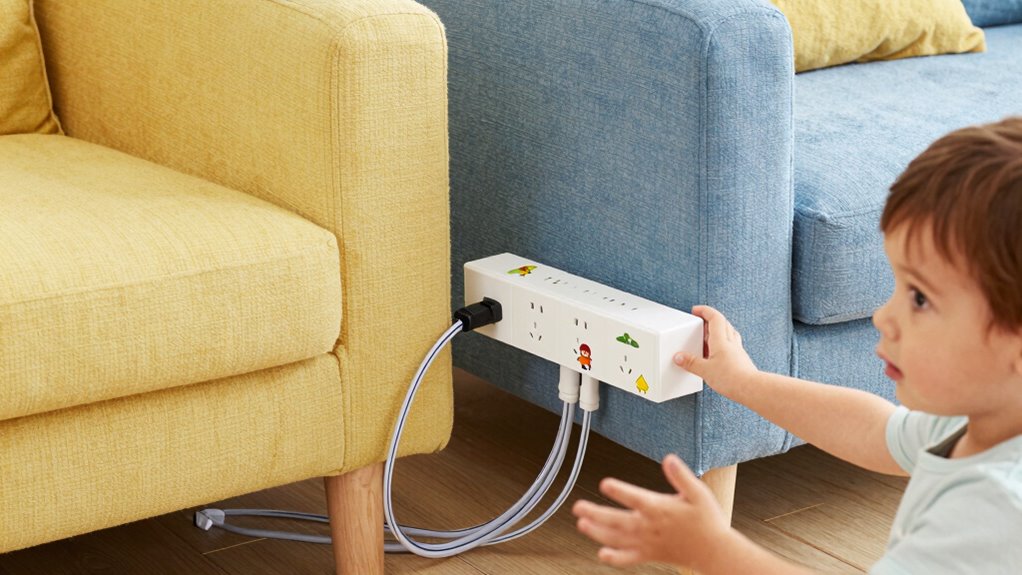

To childproof your outlet setup, start by installing tamper-resistant outlets or covers that make it harder for kids to insert objects. Keep cords organized with clips or behind furniture to prevent biting and overheating, and avoid loose wires on the floor. Create safe zones by blocking access with furniture or barriers, and teach your children about electrical dangers. Keeping these safety measures in place guarantees a secure environment—if you want to know more, there’s plenty to explore.

Get backup power and energy gear delivered free with Prime
- Fast, free delivery on millions of items
- Prime Video, Amazon Music and more included
- Member-only deals all year
Key Takeaways
- Use outlet covers or tamper-resistant receptacles to prevent children from inserting objects into outlets.
- Organize and secure cords with clips or covers to keep them out of children’s reach and prevent tripping hazards.
- Position furniture strategically to block access to electrical outlets and minimize temptation.
- Regularly inspect cords and safety devices for damage, replacing any worn or broken items promptly.
- Educate children about electrical dangers using simple language and supervise their behavior around outlets and cords.
Understanding the Risks of Unprotected Outlets
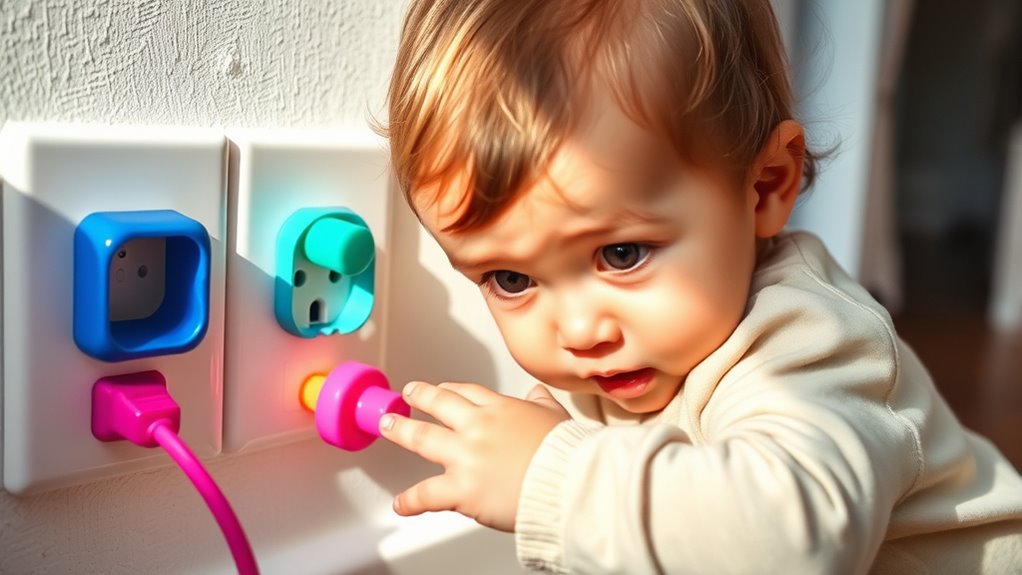
Unprotected electrical outlets pose serious dangers to children, especially since they often don’t understand the risks. Kids are naturally curious and may insert objects like keys, pins, or paperclips into outlets, risking severe shocks or burns. Outlets carry 120-240 volts, which can cause nerve damage, cardiac problems, or even death. Exposed outlets or faulty wiring can spark burns on a child’s delicate skin. Biting cords or tampering with outlets also increases the risk of electrocution. Every year, about 2,400 children suffer injuries from outlets, with many injuries requiring emergency care. Sadly, some children experience fatal shocks from inserting objects into receptacles. Recognizing these dangers highlights the importance of childproofing your outlets to keep your little ones safe. Understanding pool safety practices can further help prevent accidents around outdoor outlets and electrical equipment. Implementing outlet covers and other safety devices is essential to reduce these hazards and create a safer environment for children. Additionally, the use of safety standards in outlet design can greatly minimize the risk of accidental contact. Employing child-resistant outlet designs that meet Vetted – wave and wind guidelines can be an effective protective measure.
Choosing the Right Outlet Covers and Safety Devices

When selecting outlet covers and safety devices, you need options that effectively prevent children from accessing outlets while fitting your home’s needs. Consider the different types available, like plug-in covers or full-face plates, and how well they work in your space. Proper installation and regular maintenance are key to ensuring these safety measures stay effective over time. Additionally, ensure that any safety devices used are free from potential hazards, like choking risks or electrical malfunctions. Using childproofing techniques can further enhance safety by reducing the chances of accidents related to electrical outlets. Incorporating smart safety devices that monitor and alert you to potential issues can also provide an extra layer of protection. Choosing reliable backup power options that include safety features can give you peace of mind during outages, especially when integrated with home automation systems that can alert you to safety concerns remotely.
Types of Outlet Covers
Choosing the right outlet covers is essential for effectively childproofing your home. Plastic outlet plugs are simple to install and block access but can be easily removed by curious toddlers. Complete outlet covers or faceplates hide the entire socket, preventing any attempts to tamper. For a more permanent solution, tamper-resistant receptacles (TRRs) automatically block insertion unless both slots are pressed simultaneously, making them the safest choice. They comply with safety standards and are recommended by experts. When selecting covers, ensure they are age-appropriate and secure, especially for homes with active children. Remember, no cover is foolproof, so combining covers with supervision and other safety measures creates a thorough childproofing strategy.
Effectiveness of Safety Devices
Selecting the right safety devices for outlet protection is essential because not all options offer the same level of security. You need devices that truly prevent children from inserting objects or tampering with outlets. Tamper-resistant receptacles (TRRs) are highly effective, automatically blocking access unless both slots are pressed simultaneously. Complete outlet covers hide the entire face of the outlet, reducing temptation and access. Furniture placement can block outlets altogether, creating a physical barrier. Additionally, choosing devices made from durable, non-chokable materials ensures safety if dislodged. Consider your home’s layout and your child’s age to select the most appropriate protection. Understanding the cost‑of‑ownership of safety devices helps in making informed choices that balance affordability with safety. By understanding each device’s strengths, you can better safeguard your little explorer from electrical hazards.
Installation and Maintenance Tips
Proper installation and regular maintenance of outlet covers and safety devices make a significant difference in childproofing your home. Confirm you choose the right type—tamper-resistant receptacles are the safest, requiring both slots to be pressed simultaneously to open shutters. When installing, turn off the power at the circuit breaker before replacing outlets or covers, and double-check that everything fits securely. Keep covers clean and intact; replace any cracked or damaged ones immediately. Regularly inspect safety devices for signs of tampering or wear, and replace them if they become loose or broken. Educate family members about the importance of these safety measures, and incorporate routine checks into your home maintenance schedule. This proactive approach keeps your home safer and minimizes the risk of accidental injuries.
Installing Tamper-Resistant Receptacles for Enhanced Safety
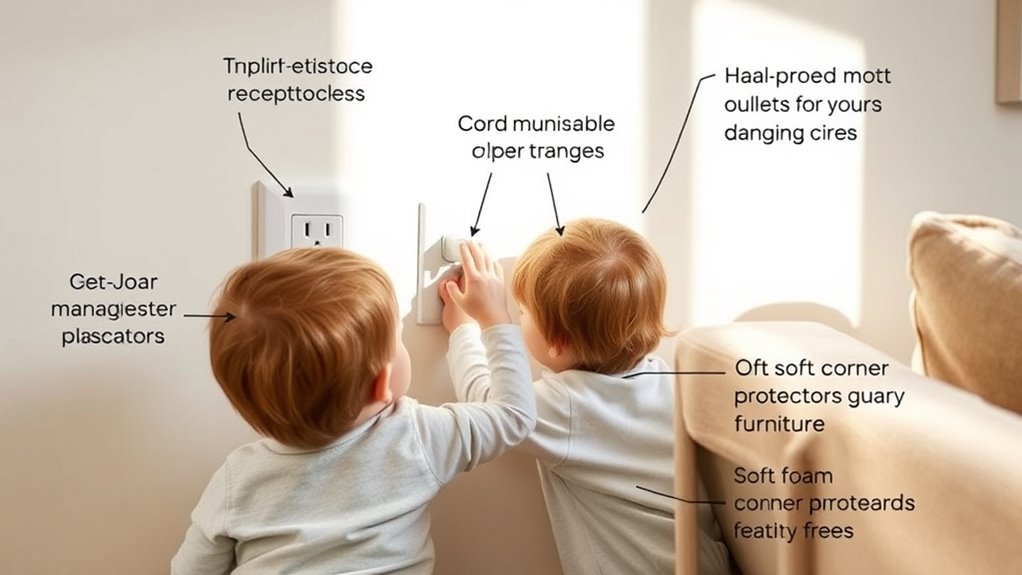
Tamper-resistant receptacles (TRRs) work by requiring equal pressure on both slots to open internal shutters, preventing children from inserting objects. When installing TRRs, consider compatibility with existing wiring and guarantee proper placement for maximum safety. They offer a significant advantage over simple outlet covers, providing automatic, permanent protection that’s easier to maintain. Additionally, choosing vetting safety-rated products ensures the receptacles meet the highest safety standards for your child’s protection.
How TRRs Work
Tamper-resistant receptacles (TRRs) work by incorporating built-in shutters that prevent anything other than two-prong plugs from making contact with the electrical contacts inside the outlet. These shutters stay closed until equal pressure is applied to both slots simultaneously, ensuring that children can’t insert objects or tamper with the outlet. When you insert a proper plug, the shutters open, allowing electrical connection. This design effectively reduces accidental shocks and injuries caused by curious children. Additionally, compliance with safety standards ensures that TRRs meet recommended safety codes for residential and commercial use. Incorporating TRRs into your electrical system is especially important in homes with children, as it provides an added layer of protection against electrical hazards. Proper installation and regular testing of TRRs are essential for effectiveness to maintain safety. Regular inspection of outlets and understanding childproofing techniques can further enhance safety in your home.
Installation Considerations
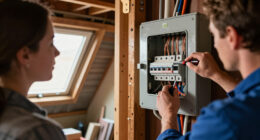
Installing tamper-resistant receptacles requires careful attention to guarantee they function correctly and provide maximum safety. First, turn off the power at the circuit breaker before starting any work. Remove the existing outlet and inspect the wiring for damage or loose connections. Ensure the wires are securely attached to the new TRR, matching the black (hot), white (neutral), and ground wires properly. Confirm the new receptacle fits snugly into the electrical box; a loose fit can compromise safety. Follow the manufacturer’s instructions precisely during installation. Once installed, turn the power back on and test the receptacle with a voltage tester or outlet tester to verify proper operation. Proper installation ensures the shutters work effectively, reducing the risk of child tampering and electrical hazards. Additionally, consulting electric safety standards can help ensure the installation meets all necessary regulations and safety guidelines. Incorporating tamper-resistant technology during installation enhances overall safety and prevents accidental contact. Ensuring the receptacle is compatible with childproofing measures can further improve safety for young children. To maximize safety, consider using Gold IRA market knowledge to select reliable and certified tamper-resistant outlets that meet current safety standards.
Benefits Over Plugs
Are traditional outlet covers truly effective in preventing child injuries? While they block access temporarily, kids often find ways around them or remove them entirely. Tamper-resistant receptacles (TRRs) offer a safer, more reliable solution. They automatically activate shutters that only open when equal pressure is applied to both slots, preventing kids from inserting objects. Benefits include:
- Permanent, built-in safety without removable parts
- No need for frequent replacements or adjustments
- Complies with current safety standards, reducing injury risk
- Simple retrofit option for existing outlets by an electrician
- Specialized design ensures consistent safety performance over time, unlike traditional covers. Studies show that childproofing measures like TRRs significantly decrease the likelihood of electrical injuries in homes. Unlike plug-in covers, TRRs provide continuous protection without relying on a child’s memory or supervision, making your home safer and more childproof. Additionally, safety standards for electrical outlets have been updated to promote the use of TRRs, further reinforcing their effectiveness. Incorporating outlet safety features is especially important in homes with curious children, as it minimizes potential hazards.
Managing Cords to Prevent Biting and Overheating
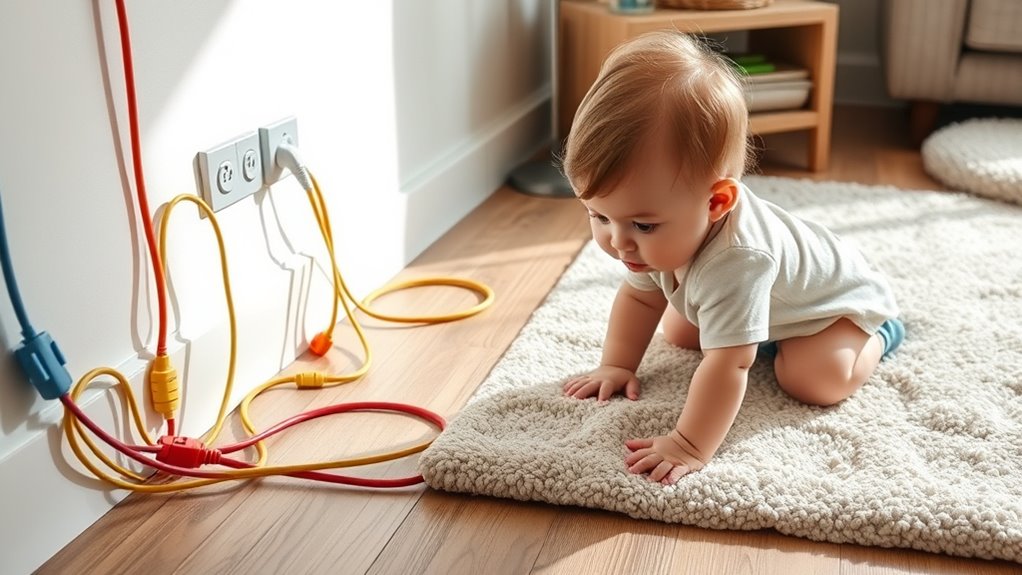
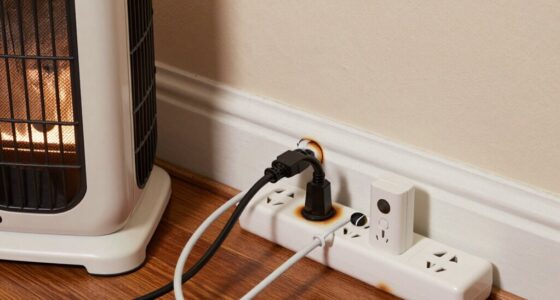
Managing cords effectively is essential to prevent children from biting or tampering with them, which can lead to shocks or burns. Use cord organizers or clips to keep wires neat and out of reach. Avoid leaving loose cords on the floor or surfaces where kids can grab them. When possible, hide cords behind furniture or inside wall panels to reduce temptation. Regularly inspect cords for frays or damage, replacing any worn-out ones immediately. Overheating cords pose fire risks, so don’t overload outlets or run multiple devices on one extension cord. Always unplug unused appliances, and consider using surge protectors with built-in safety features. Proper cord management minimizes hazards, deters curiosity, and keeps your child safe from electrical injuries. Additionally, understanding feature buddies can help you recognize potential system vulnerabilities that might affect your home’s electrical safety.
Creating Safe Zones With Furniture and Barriers
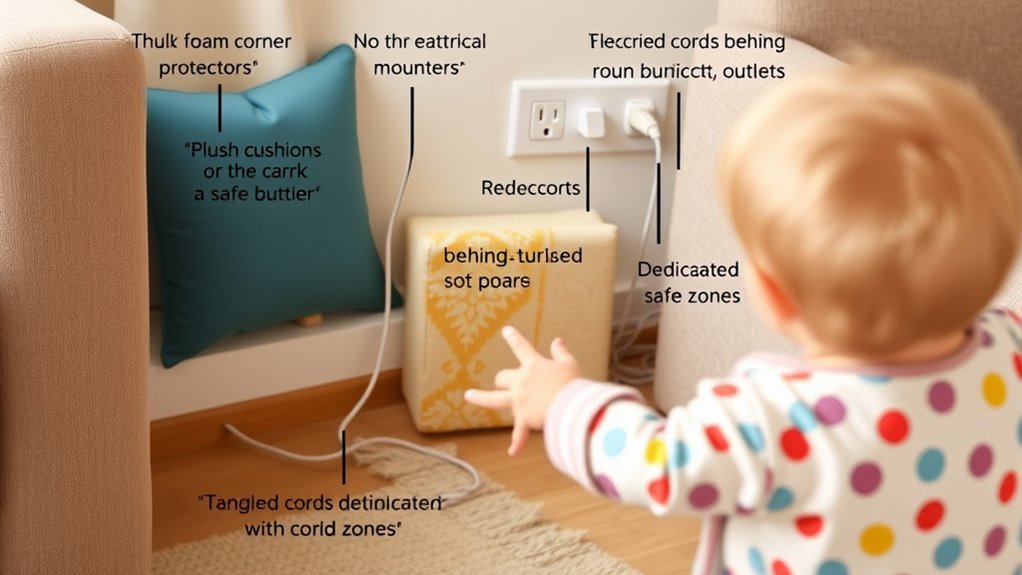
Creating safe zones with furniture and barriers is a practical way to keep children away from electrical outlets and other hazards. You can position heavy furniture to block easy access to outlets or use barriers that prevent children from reaching dangerous areas. This simple step reduces the temptation to tamper with outlets and minimizes injury risks. Incorporating field‑of‑view considerations when arranging furniture can also help ensure that the entire area remains safe and monitored. Place outlet covers behind furniture to keep them hidden and out of reach. Combine barriers with supervision, ensuring children stay in safe zones at all times.
Educating Children About Electrical Safety

While physical barriers like furniture and outlet covers help keep children away from electrical hazards, teaching them about electrical safety builds an important layer of protection. You should explain that outlets carry high voltage and can cause serious injuries if tampered with. Use simple language to tell them not to insert objects into outlets and to recognize signs of electrical danger, like sparks or strange smells. Reinforce that cords are not toys and should never be chewed or pulled. Consistently reminding your child about these dangers helps them understand why safety rules matter. Encourage questions and answer honestly to build trust. By combining education with physical safeguards, you create a safer environment where your child learns to respect electrical hazards and avoids risky behaviors.
Maintaining a Childproofed Environment Over Time
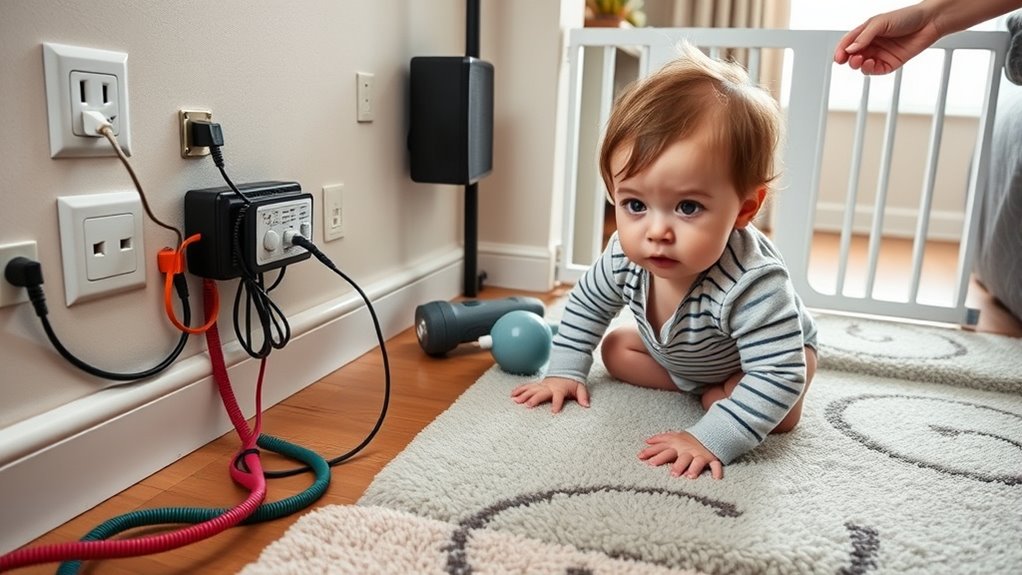
Maintaining a childproofed environment requires ongoing attention because hazards can develop or reappear over time. Regular checks guarantee safety measures stay effective. Keep outlets covered with sturdy, tamper-resistant covers, and replace any damaged ones immediately. Inspect cords for fraying or overheating, and organize them out of reach. Reassess furniture placement to block access to outlets and dangerous cords. Educate older children on safety rules to reinforce boundaries. Also, stay updated on new safety devices or regulations, like upgraded outlet covers or smarter safety plugs. Consistently supervising children remains essential, as curiosity can lead to unexpected hazards. By staying vigilant and proactive, you ensure your home remains a safe space for your little explorers.
Frequently Asked Questions
How Do I Choose the Most Effective Outlet Covers for My Home?
You should choose outlet covers that fully block access, like complete covers or switchplate replacements, since they hide the entire outlet face and are harder for kids to tamper with. Avoid small, removable plugs that kids can bypass, and opt for safety-rated tamper-resistant receptacles if possible. Also, pick covers made from sturdy, non-choking materials, and consider furniture placement to block easy access for added protection.
Are There Specific Childproofing Products Recommended for Different Age Groups?
Think of your child’s safety as a fortress requiring different defenses at each stage. For infants and toddlers, use outlet covers and tamper-resistant outlets—they’re like gates that keep curious fingers out. As your child grows, switch to furniture blocking and teach safe habits. Always choose products that are age-appropriate, durable, and easy to remove by adults but secure enough to deter your little explorer.
What Are the Signs of Faulty or Damaged Outlets Needing Replacement?
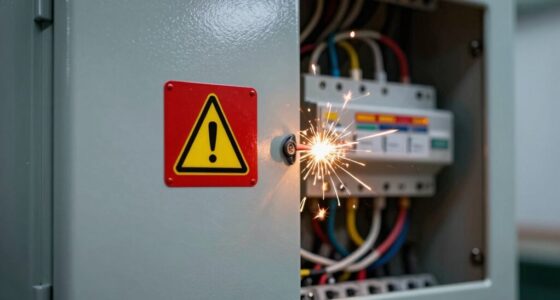
You should look for signs like loose or wobbly outlets, scorch marks, or a burning smell indicating damage. If outlets feel warm or hot to touch, replace them immediately. Cracks, discoloration, or broken faceplates also signal the need for replacement. Never ignore sparks or if outlets don’t hold plugs securely. Regularly inspecting and updating faulty outlets keeps your home safe and prevents potential shocks or fires.
How Can I Make Cords Less Tempting and Safer for Curious Children?
Think of cords as shiny, tempting worms crawling across your floor. To make them less enticing, organize and hide loose wires using cord organizers or conduits, keeping them out of sight and reach. Use outlet covers on unused outlets and block access with furniture. Regularly inspect cords for damage, and replace frayed or faulty ones immediately. Supervise your children, teaching them that cords are off-limits, just like a forbidden treasure map.
What Strategies Help Children Understand Electrical Safety as They Grow Older?
To help children understand electrical safety as they grow, start teaching them early about the dangers of outlets and cords. Use simple language and age-appropriate explanations, emphasizing that outlets are not toys. Reinforce safety rules consistently, and involve them in safe practices like plugging cords correctly. Encourage questions and curiosity, providing supervised opportunities to learn about electricity safely, building awareness and responsible habits over time.
Conclusion
By balancing bulbs, barriers, and basic boundaries, you build a brave, bug-proof barrier that keeps curiosity and.current hazards at bay. Consistently check, chock, and chat about electrical safety to create a confident, clutter-free, childproofed zone. Remember, prevention is the best protection, so stay vigilant, vigilant, and vigilant, ensuring your little explorers stay safe, secure, and smart about their surroundings. Your efforts will foster a fearless, fun-filled, and fearless environment for everyone.
Halloween Picks
halloween
As an affiliate, we earn on qualifying purchases.