
Phantom power supplies voltage (12-48V) through audio cables to power active microphone components, which keeps the batteries draining even when the microphones are not in use. This hidden load causes components like preamps and circuitry to work continuously, reducing battery life, especially in wireless systems. Managing phantom power properly can help conserve energy, but it’s easy to overlook these power demands. Keep exploring to understand how to minimize this drain and extend your device’s battery life.
Listen free for 30 days with Audible
Thousands of audiobooks and originals — cancel anytime.
As an affiliate, we earn on qualifying purchases.
Key Takeaways
- Phantom power supplies 12-48V DC through audio cables, powering active microphones and devices.
- It causes continuous power draw, reducing battery life in wireless systems and portable audio gear.
- Internal circuitry in powered devices consumes energy, increasing overall power consumption and leakage currents.
- Turning off phantom power when not in use helps conserve batteries and extend device operation.
- Proper verification and management of phantom power prevent damage and optimize power efficiency.

Porch Shield Generator Cover for 5000-10000W, 32 x 24 x 24 inch, Black
- Compatibility: Fits 5000-10000W generators
- Durable Material: 600D water-resistant polyester fabric
- All-Around Protection: Protects against sun, rain, snow, dust
As an affiliate, we earn on qualifying purchases.
Understanding Phantom Power and Its Functionality
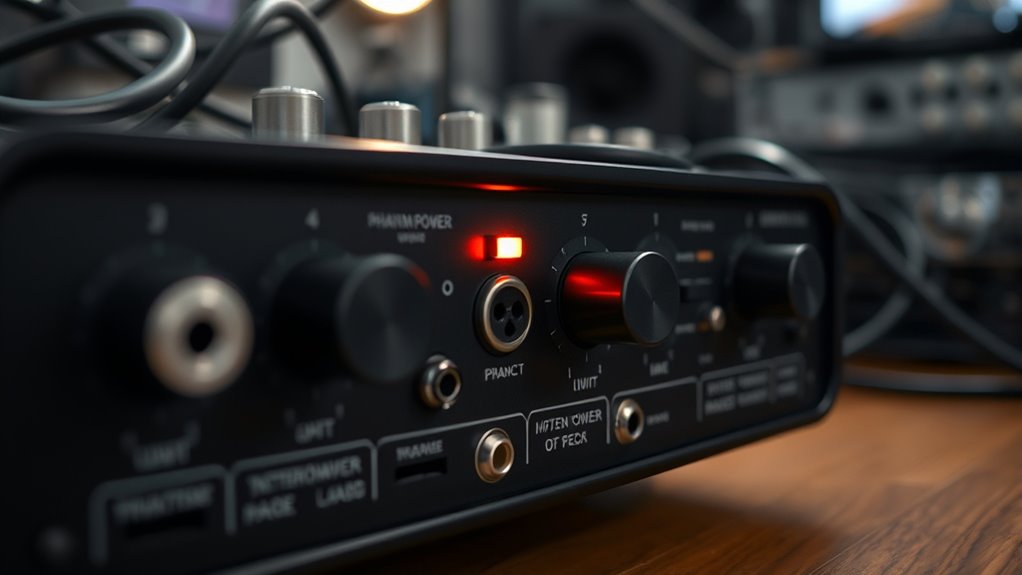
Understanding phantom power begins with recognizing that it’s a method of supplying electrical power to microphones through their audio cables without adding extra wires. You’ll find it commonly delivers between 12 and 48 volts DC through the same cables used for audio signals, typically via XLR connectors. The power is transmitted evenly through pins 2 and 3 and stays invisible to the audio signals because it’s applied equally, preventing interference. Grounded through pin 1, this setup allows microphones with active electronics, like condensers, to operate without external power supplies. The process is efficient and safe for compatible devices, providing the necessary voltage to power internal components, charge backplates, and enable diaphragm movement. This seamless power delivery makes phantom power essential in professional and home studio environments. Additionally, the compatibility of technology ensures that different microphone types can utilize phantom power without damage or performance issues. It is important for users to understand phantom power safety to avoid potential equipment damage or personal injury when connecting or disconnecting microphones. Understanding power transmission methods helps in diagnosing and troubleshooting issues related to phantom power supply. Being aware of potential power surges can also prevent accidental damage to sensitive audio equipment.
Porch Shield Generator Cover for 5500-15000W, 38 x 28 x 30 inch, Black
- Compatibility: Fits 5500W to 15000W generators
- Premium Material: 600D water-resistant polyester fabric
- All-Weather Protection: Resists sun, rain, snow, wind, dust, dirt
As an affiliate, we earn on qualifying purchases.
Why Devices Consume Power When Phantom Power Is Active
When phantom power is active, devices consume electrical energy to power their internal components, such as active electronics in microphones. Condenser microphones rely on this power to energize their internal circuitry, including impedance converters and amplifiers. These components require continuous power to function properly, which keeps the microphone ready to capture sound. Additionally, some devices, like active DI boxes or preamps, draw power to operate their internal circuits, such as voltage regulators and signal processing units. Even passive microphones or devices not needing phantom power draw minimal or no current, but any powered component will always use some energy. This ongoing power consumption explains why devices drain batteries faster when phantom power is turned on, especially if they’re connected to external power supplies or batteries. The internal circuitry of these devices often includes components that are designed to operate continuously, contributing further to power drain. Moreover, the power management systems within these devices are often optimized for continuous operation, which can increase energy usage over time. A leakage current, even if small, can accumulate and significantly impact battery life during prolonged use. Additionally, some devices may have energy losses due to inefficiencies within their internal power regulation components, further increasing power drain.
The Impact of Phantom Power on Battery Life in Wireless Systems
Phantom power can considerably impact the battery life of wireless microphone systems because it causes the receiver’s internal circuits and transmitters to draw additional current. This extra load accelerates battery depletion, reducing operational time between charges or replacements. When phantom power is active, components like preamps and internal power supplies work harder, consuming more energy. Devices with inefficient circuitry or high power requirements are especially affected. Additionally, the use of personal branding on devices may influence their overall power consumption and efficiency. Understanding energy-efficient design principles can help mitigate some of these power drain issues, especially when considering power management strategies to optimize battery life. Incorporating decentralized power control techniques can further improve energy efficiency and extend device operational periods. Recognizing power consumption patterns is essential for designing systems that maximize battery longevity and reduce unnecessary energy use.
Jackery HomePower 3600 Plus Portable Power Station with 2X 200W Solar Panels, 3600W AC Output, 3584Wh LFP Solar Generator, Expandable up to 21kWh, Essential Home Backup for Home Use, Emergencies, RV
- High Power Output: 3600W AC output for home appliances
- Expandable Capacity: Up to 21kWh with multiple units
- Dual Voltage Support: 120V & 240V in parallel
As an affiliate, we earn on qualifying purchases.
Comparing Phantom Power to Other Powering Methods for Microphones

While phantom power is a popular choice for powering condenser microphones, it’s not the only method available. Dynamic microphones operate without external power and are unaffected by phantom power, making them simpler and more reliable for live use. T-powering supplies 12-48 volts directly through the microphone cable, but it’s less common and can pose compatibility issues. Battery-powered microphones, like some wireless systems or portable condensers, rely on internal batteries, offering mobility but risking battery drain. External power supplies or preamps can also power microphones, providing dedicated voltage but adding complexity and cost. Compared to phantom power, these methods vary in convenience, safety, and power stability. Your choice depends on your microphone type, setup, and whether mobility or simplicity is your priority. Additionally, understanding power delivery methods is essential for ensuring compatibility and performance in your audio setup. It’s important to consider how different power sources impact audio quality and reliability, especially in professional environments. Recognizing the electrical characteristics of each powering method can help optimize your microphone’s performance and longevity. Furthermore, awareness of power management can prevent potential damage to your equipment, ensuring a longer lifespan and consistent operation.
How to Identify and Manage Phantom Power Usage Safely
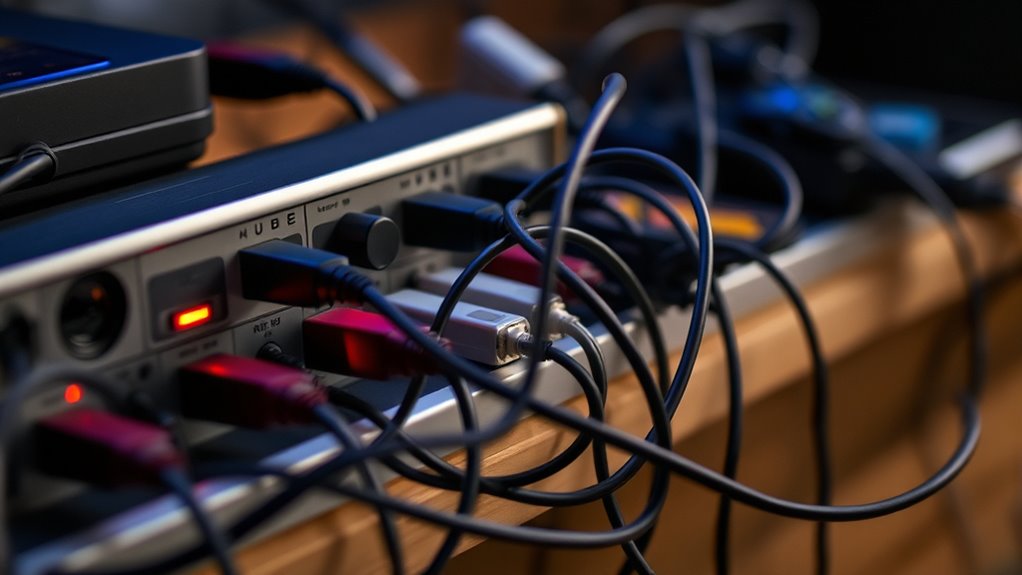
To keep your equipment safe, you need to know if phantom power is active before connecting devices. Always check your mixer or audio interface settings and use a multimeter if necessary. Proper handling guarantees you avoid damage to microphones and other gear while maintaining peak performance. Additionally, being aware of hidden load factors like phantom power can help prevent unexpected battery drain and equipment failure. Recognizing power consumption patterns can further assist in managing your gear’s energy use effectively. Regularly inspecting your equipment for signs of electrical issues can also prevent costly repairs and ensure longevity. Monitoring power load levels can help identify inefficiencies and avoid unnecessary energy drain. Understanding electrical safety protocols is essential when handling these power sources to prevent accidents and ensure safe operation.
Detecting Phantom Power Presence
Detecting whether phantom power is active is essential before connecting sensitive equipment, as applying power to incompatible devices can cause damage. The easiest method is to use a phantom power tester, which quickly indicates whether voltage is present on the microphone cable. These small, inexpensive devices plug into the XLR connector and display a clear readout. Alternatively, you can check your mixing console or audio interface settings—look for a P48 or +48V indicator. Using a multimeter, set it to measure DC voltage and carefully connect it between pin 2 or 3 and pin 1 on the XLR connector. If you see around 12 to 48 volts, phantom power is active. Always verify power status before plugging in any microphones or audio gear to avoid damage. Understanding power sourcing is crucial for safe and effective audio setup.
Safe Handling Practices
Before connecting microphones or audio gear, you should always verify whether phantom power is active to prevent potential damage. Turn off phantom power before plugging or unplugging microphones, especially condensers, to avoid voltage spikes that can harm sensitive components. Use a multimeter or a dedicated phantom power tester to confirm its status if unsure. When handling equipment, disconnect everything if you need to change cables or microphones, then re-enable phantom power afterward. Keep cables and connectors clean to prevent shorts or static. Always follow manufacturer instructions for your devices. If you’re unsure about compatibility, consult the gear’s manual or an expert. Properly managing phantom power ensures safety for your equipment and maintains audio quality.
Tips to Minimize Battery Drain Caused by Phantom Power
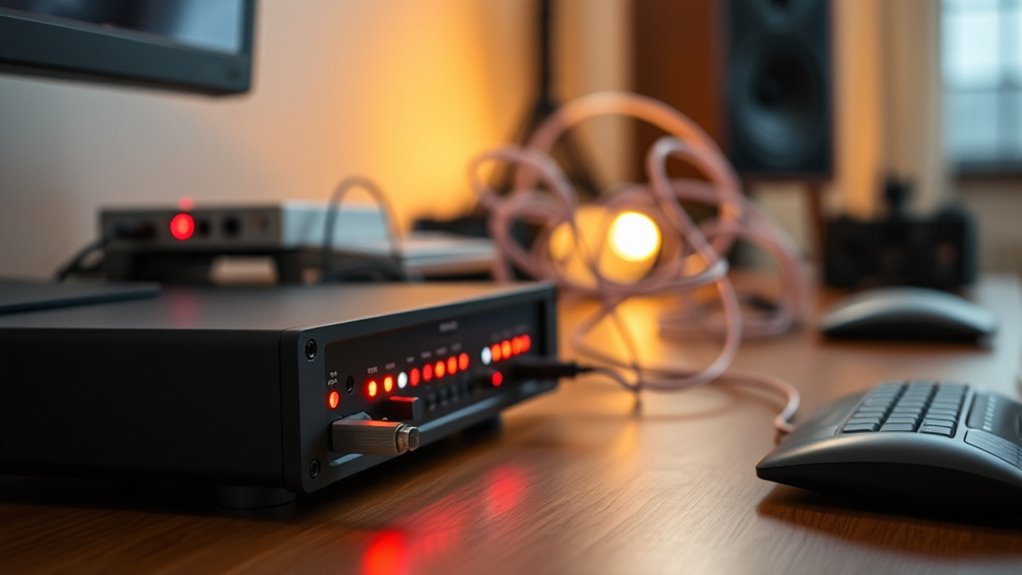
To save battery life, use devices optimized for low power consumption when working with phantom power. Make sure to turn off equipment when it’s not in use to prevent unnecessary drain. Taking these steps helps you extend your device’s battery life during sessions.
Use Battery-Optimized Devices
When using battery-optimized devices with phantom power, managing power consumption carefully is vital. Choose equipment specifically designed to minimize energy use while operating under phantom power. Look for microphones, preamps, and audio interfaces labeled as energy-efficient or low-power. These devices often incorporate circuitry that reduces unnecessary power draw, helping extend battery life. Avoid using older or incompatible gear that may consume more power or draw extra current. Regularly check device specifications to confirm compatibility with phantom power and battery operation. Using well-designed, optimized equipment ensures you get reliable audio performance without draining your batteries faster than necessary. This approach helps you conserve power, especially during extended sessions or when portable power sources are limited.
Turn Off When Idle
Turning off phantom power when your microphones aren’t in use is a simple yet effective way to conserve battery life. Many mixers and audio interfaces let you disable phantom power per channel or globally. When you’re done recording or practicing, switch off phantom power to prevent continuous drain. This prevents batteries from powering unnecessary equipment, especially if you’re using portable or battery-operated devices. Remember, phantom power doesn’t just consume power; it also generates heat, which can impact device longevity. Before turning off, confirm no active microphones need power. If you use condenser mics regularly, turn phantom power on only during recording sessions. Making this small change can notably extend your device’s battery life and reduce energy waste. It’s an easy step toward more efficient, sustainable audio setup.
Frequently Asked Questions
Can Phantom Power Damage Non-Condenser Microphones?
No, phantom power generally won’t damage non-condenser microphones, like dynamic mics, because they don’t need or use the power. Modern dynamic microphones are designed to handle phantom power safely, so you can connect them without concern. However, avoid using phantom power with passive DI boxes or older equipment that isn’t compatible, as applying phantom power improperly could cause damage or malfunction. Always check your microphone’s specifications before powering.
Does Phantom Power Affect Wireless Microphone Battery Longevity?
Phantom power doesn’t affect your wireless microphone batteries. These mics operate independently of external power sources and rely on their built-in batteries. While phantom power powers wired condenser mics, it doesn’t influence wireless units, which have their own power systems. So, you can confidently use wireless microphones without worrying about draining their batteries faster, regardless of whether external phantom power is present in the setup.
How Can I Tell if Phantom Power Is Active on My Device?
You can tell if phantom power is active on your device by checking the indicator lights on your mixer, audio interface, or preamp—look for a +48V or P48 label. If no lights are present, turn on the phantom power switch and see if the indicator activates. Additionally, some microphones or cables may produce a slight click or hum when power is engaged, but always rely on your device’s indicators for certainty.
Are There Alternatives to Phantom Power for Powering Microphones?
Yes, you can power microphones using alternative methods like batteries, AC adapters, or external power supplies. Dynamic microphones don’t need any power source, so they work without phantom power. For condenser mics, you might use a dedicated power supply or a powered preamp. Some active microphones have built-in power, eliminating the need for phantom power. Just verify the method matches your microphone’s requirements to avoid damage or poor performance.
What Precautions Should I Take When Connecting Devices With Phantom Power?
When connecting devices with phantom power, take careful caution to prevent potential problems. Check that your equipment is compatible—dynamic mics usually don’t need it, but condensers do. Power off devices before plugging or unplugging to avoid sparks or shorts. Confirm connections are secure, and always verify phantom power is turned off when not needed. Proper precautions prevent damage, protect your gear, and promote pristine sound precision.
Conclusion
Did you know that phantom power can drain your batteries up to 30% faster? By understanding how it works and managing its use, you can extend your device’s battery life considerably. Always check your equipment to avoid unnecessary power drain, especially in wireless systems. Taking simple steps to monitor and minimize phantom power can save you money and keep your gear running longer. Stay aware, and power smarter!
Back to school Picks
back to school
As an affiliate, we earn on qualifying purchases.