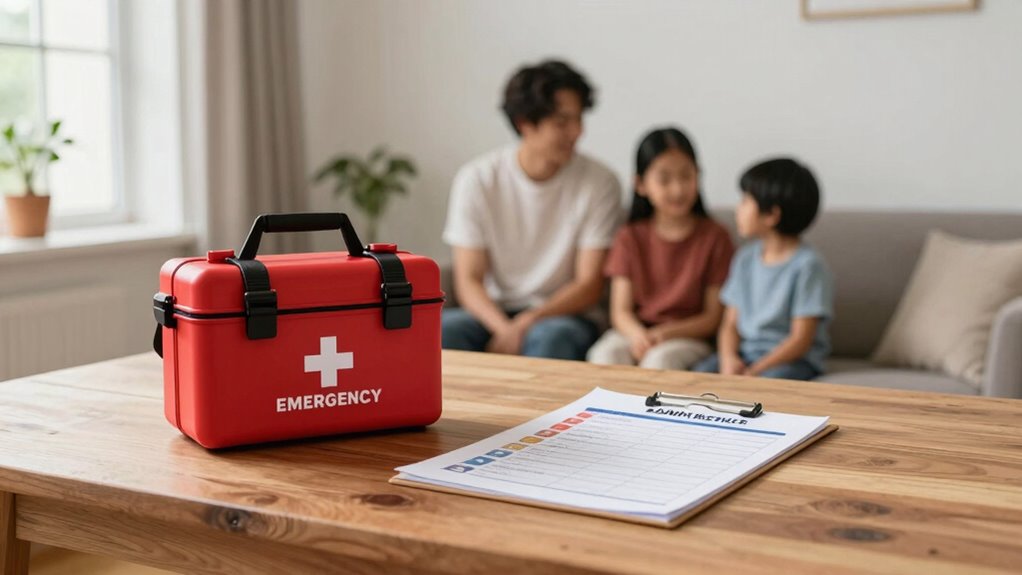

To decide whether to evacuate or shelter-in-place, quickly assess the threat type, timing, and potential exposure. Consider your building’s conditions, including ventilation and structural safety, and evaluate if vulnerable populations, pets, or medications are involved. Check if you have enough warning time to plan or if immediate sheltering is best. Clear communication and coordination with authorities are essential. For detailed steps to guide your decision-making, explore the full guide ahead.
Key Takeaways
- Assess hazard type, such as chemical, radiological, wildfire, or severe weather, to determine if sheltering or evacuation is safer.
- Consider threat approach speed and warning time; short warnings favor shelter-in-place, longer ones allow evacuation planning.
- Evaluate building conditions, ventilation, and structural safety to decide if sheltering offers better protection.
- Identify vulnerable populations and logistical factors to ensure their safety during evacuation or sheltering.
- Establish clear communication and decision-making authority to coordinate a calm, informed response.

Jackery Portable Power Station Explorer 300, 293Wh Backup Lithium Battery, Solar Generator for Outdoors Camping Travel Hunting Blackout (Solar Panel Optional)
SPEED UP YOUR RECHARGEABILITY: It takes only 2 hours to recharge 80% battery of the power station through...
As an affiliate, we earn on qualifying purchases.
Assessing the Nature of the Threat and Timing

Understanding the nature of the threat and its timing is essential for choosing the appropriate protective action. You need to determine if the hazard is chemical, radiological, a wildfire, severe weather, or an active shooter, as each requires a different response. Consider how quickly the threat is approaching; a short warning favors sheltering in place, while a longer lead time allows for planned evacuation. Assess whether airborne contaminants or physical dangers are the primary concern. Knowing when the threat will arrive helps you decide whether to stay put or evacuate. Rapidly evolving situations demand quick judgment, so understanding these factors ensures your safety and guides effective decision-making. Accurate threat assessment is the foundation for a calm, effective response. Incorporating timing considerations into your evaluation can significantly influence your safety strategy. Additionally, being aware of emergency response protocols relevant to your environment can enhance your preparedness and response effectiveness. Recognizing the significance of threat analysis can help refine your decision-making process under pressure. Regularly reviewing your piercing aftercare routines can prevent complications if you are in an emergency situation, ensuring your health remains stable.

EnginStar Portable Power Station 300W 296Wh Battery Bank with 110V Pure Sine Wave AC Outlet for Outdoors Camping Hunting and Emergency, 80000mAh Backup Battery Power Supply for CPAP
PORTABLE BUT POWERFUL: EnginStar Portable Power Station with ETL Certification, and the portable size of 9 x 5.5...
As an affiliate, we earn on qualifying purchases.
Evaluating the Exposure Pathway and Building Conditions

Evaluating the exposure pathway and building conditions helps determine whether sheltering-in-place or evacuation offers the best protection. If airborne contaminants are present, sealing windows, doors, and turning off HVAC systems can markedly reduce exposure, making shelter-in-place effective. Conversely, if the hazard involves structural damage, fire, or explosive threats, leaving the building quickly is safer. Assess whether your building has a tight envelope, functional ventilation controls, and secure interior rooms to serve as safe zones. Consider the time until contaminant arrival; if it’s longer than your evacuation window, sheltering may be preferable. Also, evaluate the building’s ability to contain hazards. Buildings with controllable ventilation and strong construction provide better sheltering protection, while compromised structures pose additional risks. Reviewing ventilation considerations and building integrity can further inform your decision. Additionally, understanding building airtightness can help determine how effectively contaminants can be contained within, influencing your choice between sheltering and evacuating. Paying attention to building envelope integrity can also identify potential points of leakage that may compromise shelter safety. Furthermore, inspecting structural stability can ensure the building can withstand environmental stresses during a shelter-in-place scenario. It is also important to consider emergency communication systems, which can keep occupants informed and coordinated during such events.

DaranEner Portable Power Station 60,000mAh, 192Wh LiFePO4 Battery Backup w/2 300W (Surge 600W) AC Outlets, 2H Fast Charging, Power Bank for Hurricane Emergency/Home/Outdoor Camping/RVs Use
【192Wh Capacity, 300W Pure Sine Wave Output】This portable power station delivers a reliable 300W (600W surge) output, perfect...
As an affiliate, we earn on qualifying purchases.
Determining Population Vulnerabilities and Special Needs
Evaluating population vulnerabilities and special needs is essential to guaranteeing an effective protective action. You must identify individuals with limited mobility, medical dependencies, or cognitive challenges, as they face higher risks during evacuation. Children, the elderly, and medically fragile populations often require tailored plans, including specialized transportation and support. Pets and service animals also need consideration, especially in shelters. Assess whether facilities can accommodate these needs or if specific arrangements are needed. Recognize that some individuals may depend on medical equipment or assistance, making shelter-in-place safer unless building conditions are compromised. Communication with caregivers, healthcare providers, and facility managers to confirm plans are in place is vital for coordinated response efforts. Proper assessment ensures that vulnerable populations receive appropriate care and that evacuation or sheltering measures are safe and feasible for everyone involved. Additionally, understanding the sustainability initiatives incorporated into events like Burning Sands Festival can help plan environmentally responsible and community-conscious response strategies. Incorporating auditory processing considerations can also support individuals with sensory sensitivities during emergencies. Recognizing the importance of water safety measures is crucial when planning evacuation routes or shelter environments to prevent water-related accidents or hazards. Furthermore, evaluating the technological accessibility of communication systems can ensure that emergency alerts effectively reach all populations. Incorporating breed-specific traits knowledge can help anticipate behavioral responses and improve safety protocols for pets during emergencies.

MARBERO Portable Power Station 88Wh Camping Lithium Battery Solar Generator Fast Charging with AC Outlet 120W Peak Power Bank(Solar Panel Optional) for Home Backup Outdoor Emergency RV Van Hunting
EFFICIENT CHARGING: Use the adapter included in the package to charge the power station from 0 to 80%...
As an affiliate, we earn on qualifying purchases.
Confirming Authority, Communication, and Coordination

You need to guarantee a clear command hierarchy so everyone knows who makes decisions. Use unified messaging channels to deliver consistent instructions quickly across all audiences. Engage stakeholders early to confirm coordination and prevent confusion during action implementation. Incorporating transparency around relationships enhances trust and accountability in emergency communication strategies. Clearly defined roles support efficient decision-making processes, ensuring timely responses during crises. Implementing communication protocols aligned with established procedures helps maintain clarity and reduces misunderstandings. Promoting inter-agency collaboration fosters a unified response effort, minimizing gaps and redundancies during emergencies. Additionally, understanding website performance metrics can help in assessing the effectiveness of your communication strategies and ensuring messages reach the intended audiences effectively.
Clear Command Hierarchy
A clear command hierarchy is essential for effective emergency response, ensuring that authority, communication, and coordination are seamless during protective actions. When everyone knows who’s in charge, decisions happen swiftly, and resources are directed efficiently. Miscommunication or confusion can delay response, risking lives. Confirming authority beforehand prevents disputes and clarifies roles during chaos. Establish direct communication channels with designated leaders, and ensure all partners—fire, law enforcement, health—are aligned on actions. Use this table to visualize your command structure and emotional stakes:
| Authority Level | Responsibility | Emotional Impact |
|---|---|---|
| Incident Commander | Make final decisions | Confidence or chaos |
| Operations Chief | Execute strategies | Trust or doubt |
| Communications Lead | Inform public | Calm or panic |
| Support Services | Provide logistics | Security or uncertainty |
Unified Messaging Channels
Establishing unified messaging channels is essential to guarantee that all responders, authorities, and the public receive consistent, accurate information during an emergency. You need clear communication pathways to prevent confusion and ensure everyone acts on the same instructions. Confirm who has the authority to issue messages and how that authority is communicated across agencies. Use multiple platforms—public alert systems, media, social media, and door-to-door notices—to reach diverse audiences quickly. Coordinate messaging with law enforcement, EMS, fire services, and facility leadership to align on the protective action—evacuate or shelter-in-place. Regular updates keep everyone informed of changing conditions. By maintaining clear, coordinated messaging, you reduce risks, improve compliance, and ensure a more effective response during critical moments.
Stakeholder Engagement Strategies
Effective stakeholder engagement hinges on clearly confirming authority, establishing reliable communication channels, and guaranteeing seamless coordination among all parties involved. You must identify who has decision-making power—incident commanders, jurisdiction leaders, or agency heads—and confirm their roles upfront. Use multiple communication methods—emergency alert systems, radios, and direct messaging—to keep everyone informed in real-time. Regular coordination meetings with EMS, fire, law enforcement, public health, and facility leaders help align actions and clarify responsibilities. Document all decisions, directives, and communications to maintain accountability. Ensure that roles are understood, expectations are clear, and everyone knows how to respond. A shared understanding of electric bike capabilities and limitations can enhance planning and response efforts. Incorporating AI-driven data analytics can further improve decision-making and situational awareness during emergencies. Additionally, understanding ear wax odor characteristics can assist in health assessments during incident responses. Developing protocols for gold IRA investments can help mitigate financial risks during crises. Establishing clear protocols for resource allocation ensures that critical supplies and personnel are deployed effectively. This unified approach minimizes confusion, accelerates decision-making, and supports a swift, effective protective response.
Estimating Evacuation Time and Logistical Readiness

To decide whether to evacuate or shelter-in-place, you need to accurately estimate evacuation time and assess logistical readiness. This involves calculating how long it will take to alert, move everyone, and account for potential delays, while ensuring transportation, shelter, and staff are prepared. Confirming these factors quickly helps you determine if evacuation is feasible or if sheltering remains the safer option. Incorporating smart appliances and connected systems can also enhance your ability to monitor and coordinate these efforts efficiently.
Evacuation Time Calculation
Calculating evacuation time is essential for ensuring a safe and efficient response during emergencies. You need to account for the total time: alert/activation, movement, and a 25% safety margin for delays. To do this effectively, consider these key steps:
- Identify transportation options like buses, ambulances, or specialized vehicles, and stage them ahead of time.
- Map out primary and alternate routes, including traffic control procedures to prevent delays.
- Determine shelter capacity and access points, ensuring they can accommodate your population and pets.
Logistical Preparedness Assessment
Evaluating logistical preparedness involves systematically estimating evacuation times and guaranteeing all necessary resources are ready to support a swift response. You need to identify transportation options like buses, ambulances, and specialized vehicles, staging them for quick deployment. Confirm shelter capacity, locations, pet accommodations, and access routes, and ensure these are communicated clearly. Staff availability for traffic control, medical care, and security must be verified, along with supplies such as medical equipment and food. Establish primary and alternate routes, and plan traffic management to prevent delays. Check if your protective measures are effective and if building features support sheltering. Confirm authority and partner coordination, and address special population needs, including vulnerable groups and pets. A thorough logistics review ensures your response is timely, organized, and capable of protecting everyone involved.
Analyzing Protective Effectiveness of Sheltering and Evacuation

Understanding the protective effectiveness of sheltering and evacuation hinges on evaluating how well each action reduces exposure to specific hazards. Shelter-in-place works best when sealing rooms, turning off HVAC, and restricting outdoor air entry, effectively reducing inhalation of airborne hazards. Evacuation’s risks include exposure during movement through contaminated areas or chaotic conditions. Consider these factors:
- If the hazard’s arrival time exceeds evacuation time, moving occupants can lower risk.
- When buildings have tight envelopes and controllable systems, sheltering offers strong protection.
- For vulnerable populations with medical needs or mobility issues, sheltering minimizes movement risks.
Reviewing Transportation, Shelter, and Resource Availability

Ensuring transportation, shelter, and resource availability are ready is essential for an effective protective action plan. You must confirm that transportation options like buses, ambulances, and accessible vehicles are staged and ready to move people quickly. Identify suitable shelters, including capacity limits and pet accommodations, and guarantee they are accessible. Check that staffing levels for traffic control, medical support, and security are sufficient to handle the situation. Verify that routes—primary and alternate—are clear, well-marked, and free of hazards. Confirm that supplies such as medical equipment, food, water, and communication devices are stocked and accessible. This preparation helps prevent delays, minimizes risks during movement, and ensures that everyone receives timely and safe protection.
Addressing Special Populations and Continuity of Care
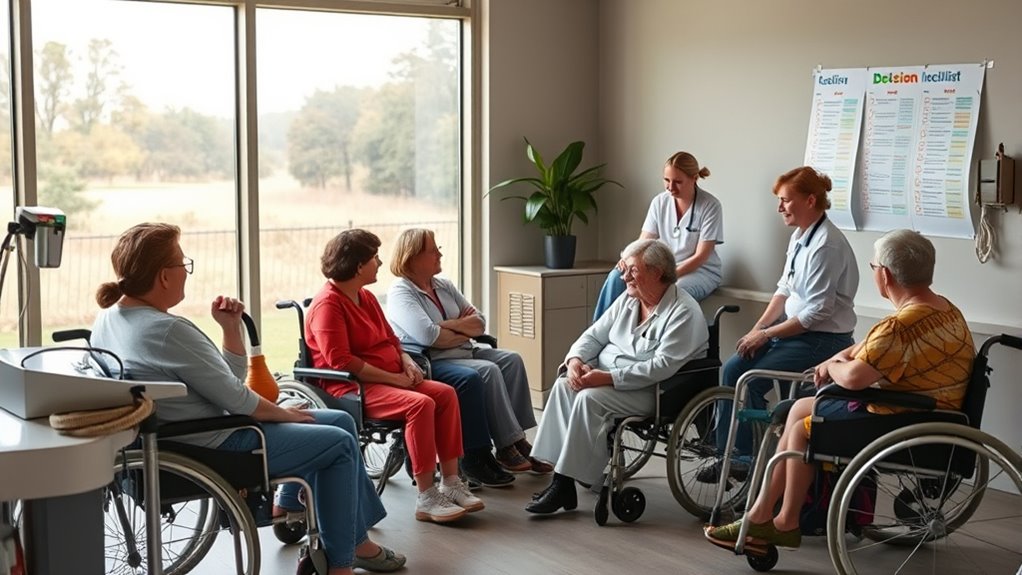
Addressing special populations and maintaining continuity of care are vital components of an effective protective action plan, especially when time is limited. You need to make certain vulnerable groups are accounted for quickly and safely. Consider these key steps:
- Verify that evacuation or sheltering plans accommodate mobility-limited, medically dependent, pediatric, and geriatric populations, including accessible transportation and shelter options.
- Make sure backup power and medical supplies are ready for long-term sheltering, especially for those reliant on life-sustaining equipment.
- Coordinate with healthcare facilities, schools, and residential care providers to confirm their plans for rapid response, patient transfer, or sheltering, minimizing risk and preserving care continuity.
Clarity and pre-planning are essential to protect these populations effectively.
Making the Final Decision: Shelter-in-Place or Evacuate

Deciding whether to shelter-in-place or evacuate hinges on a careful assessment of multiple factors, including hazard type, available warning time, and population needs. If the hazard is airborne and your building’s structure can effectively seal, shelter-in-place may be safest. But if the threat involves fire, flooding, or structural damage, evacuation could be better. Consider how much warning you have: short windows favor sheltering; longer times allow planning a safe evacuation route. Ensure logistics are ready: transportation, shelters, staff, and traffic control. Confirm authorities’ instructions and coordinate with response teams. Also, account for special populations—medically dependent, children, or pets. Your decision must balance protection, safety, and practicality, aiming to minimize risk while maintaining order and clarity.
Frequently Asked Questions
How Do I Prioritize Protective Actions During Simultaneous Hazards?
You prioritize protective actions during simultaneous hazards by evaluating hazard types, time available, and population vulnerability first. Focus on the most immediate threat, like airborne contaminants, which call for shelter-in-place, or structural threats requiring evacuation. Coordinate with authorities, ensure logistics are ready, and communicate clear instructions. Address special needs like medical or mobility issues promptly, balancing risks to protect everyone effectively in complex, multi-hazard situations.
What Are Signs That Sheltering Might Be Ineffective?
You’ll know sheltering might be ineffective if the hazard’s intensity increases despite sealing efforts, or if the building’s integrity is compromised, allowing contaminants to enter. Signs include persistent odors, visible smoke, or fumes inside, and inadequate airflow control. If evacuation time becomes too short or the hazard advances faster than your shelter measures can contain it, staying indoors may no longer protect you, and you should consider evacuating immediately.
How Can I Ensure Vulnerable Populations Receive Appropriate Protection?
You guarantee vulnerable populations receive proper protection by identifying their specific needs and planning accordingly. Verify mobility, medical dependencies, and communication access. Activate tailored shelter-in-place measures or arrange safe evacuation routes with transportation and medical support. Communicate clearly with caregivers, staff, and authorities. Continuously monitor their condition, address special equipment needs, and coordinate with healthcare providers to adapt plans quickly, ensuring their safety throughout the emergency.
When Is It Necessary to Override Public or Facility Orders?
Imagine you’re using a vintage radio when urgent orders come through that override public or facility directives. You need to override orders when hazards exceed the protective capacity of sheltering, evacuation is impossible or unsafe, or authorities issue mandatory evacuations to protect lives. Always follow authoritative guidance, but prioritize overriding orders if continuing with current instructions risks increased injury, exposure, or if new information indicates immediate danger requiring prompt evacuation or protective action.
How Do We Handle Re-Entry After Evacuation or Sheltering?
You handle re-entry by guaranteeing safety first. Confirm that hazard levels have dropped below danger thresholds, and obtain official clearance before returning. Communicate clearly with the public, providing updates on conditions and re-entry procedures. Coordinate with authorities, conduct inspections of buildings, and address any damage or safety concerns. Make sure all necessary resources are available to support re-entry and ensure that vulnerable populations are prioritized during the process.
Conclusion
Think of your decision like steering a stormy sea—you need to read the clouds and trust your instruments. By carefully evaluating the threat, resources, and your community’s needs, you can steer toward safety with confidence. Whether you choose to shelter-in-place or evacuate, your calm, informed choice is your vessel through uncertain waters. Stay prepared, stay vigilant, and remember: your best decision keeps everyone afloat.