Reliable home power begins with a simple question: what do you need to keep running when the grid is unavailable, expensive or inconvenient? The answer may be a router during a short outage, medical equipment through the night, kitchen appliances during an emergency or most of the house for several days. Each scenario points toward a different combination of batteries, solar panels, portable generators, standby generators and electrical upgrades.

Get backup power and energy gear delivered free — and shop member deals
- Fast, free delivery on millions of items
- Access to Prime Big Deal Days deals on October 6–7
- Prime Video, Amazon Music and more included
This guide explains how those options fit together. It will help you define essential loads, understand the specifications that matter and choose a backup strategy without buying far more—or far less—capacity than your household needs.
Start With Your Backup-Power Goal
Before comparing equipment, decide what success looks like. Backup systems are easier to plan when loads are divided into practical tiers.
- Connectivity and lighting: modem, router, phones, laptops, LED lights and small electronics.
- Health and safety: medical devices, refrigeration, sump pumps, security equipment and essential communications.
- Everyday comfort: fans, televisions, coffee makers, selected kitchen appliances and garage-door openers.
- Large household loads: well pumps, central air conditioning, electric water heating, ranges and multiple appliances operating together.
A small battery may cover the first tier. A larger portable power station can support several essentials, while a high-output portable generator or permanently installed standby system is usually more appropriate when large motors, heating equipment or many circuits must operate simultaneously.
Also consider outage duration. A system sized for a two-hour interruption may be unsuitable for an overnight outage. Multi-day resilience requires a way to replenish stored energy, whether through solar charging, grid power when service returns or an appropriately stored and managed generator fuel supply.
portable power station for home backup
As an affiliate, we earn on qualifying purchases.
As an affiliate, we earn on qualifying purchases.
Understand Watts, Watt-Hours and Surge Demand
Running watts determine ongoing load
Watts describe how much power a device draws at a given moment. Add the running wattage of everything you expect to use at the same time. This total should remain below the continuous output rating of the inverter or generator, with some headroom for changing loads.
Starting watts matter for motors and compressors
Refrigerators, freezers, pumps and air conditioners may briefly demand substantially more power when starting than while running. A backup source must accommodate that surge. Looking only at average consumption can therefore produce a system that appears adequate on paper but shuts down when a compressor starts.
Watt-hours describe stored energy
Battery capacity is generally expressed in watt-hours. A 100-watt load operating for five hours requires roughly 500 watt-hours before accounting for conversion losses and reserve capacity. Real-world runtime varies with inverter efficiency, battery condition, temperature, standby consumption and the way a device cycles.
Estimate energy needs by multiplying each device’s wattage by its expected operating time, then adding the results. For cycling appliances, a plug-in energy monitor can provide a more useful baseline than relying solely on the maximum value printed on a label.
As an affiliate, we earn on qualifying purchases.
Portable Power Stations for Quiet, Indoor Backup
A portable power station combines a rechargeable battery, inverter, charging electronics and multiple outlets in one enclosure. Unlike fuel-burning generators, it does not create exhaust at the point of use. That makes it useful indoors, although charging instructions, ventilation requirements and manufacturer guidance still apply.
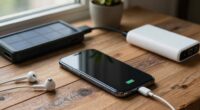
These systems work particularly well for electronics, lights and modest appliance loads. They are quiet, require no fuel handling and can often recharge from a wall outlet, vehicle connection or compatible solar panels. Their main limitation is finite stored energy: once the battery is depleted, it needs another energy source.
Match output to the appliance
Check both continuous output and surge capability. A power station may have ample battery capacity yet lack the inverter output required to start or operate a demanding appliance. Microwave ovens are a good example because their electrical input can exceed the cooking wattage displayed on the front. The guide to portable power stations for microwave backup focuses on this high-draw use case.
Heating appliances also deserve careful sizing. Coffee makers can draw considerable power for a short period, so output capability may matter more than enormous battery capacity. See the options organized around coffee maker backup if maintaining a simple morning routine is part of your outage plan.
Prioritize communications
Keeping internet equipment online can be one of the most efficient uses of stored energy. Routers and modems generally require far less power than major appliances, but runtime still depends on the combined load of every networking component. Start with the guide to portable power stations for routers and modems when connectivity is the primary goal.
Treat medical loads as a dedicated category
Medical-device backup requires more caution than ordinary convenience loads. Confirm the device’s input requirements, expected runtime, starting behavior and compatibility with the intended power source. Include accessories such as humidifiers or heated tubing in the energy calculation, and build in a reserve rather than planning to consume the battery completely. The overview of portable power stations for medical devices can help frame the equipment search, but the device manufacturer and healthcare provider should guide critical compatibility decisions.
Decide whether pass-through charging matters
Pass-through charging allows a power station to supply connected equipment while the station itself receives power. This can simplify certain setups, but supported behavior, power limits and battery-management policies vary. Do not assume every unit functions like a dedicated uninterruptible power supply. Compare the best portable power stations with pass-through charging, then verify transfer behavior and permitted use in the documentation for the specific model.
As an affiliate, we earn on qualifying purchases.
Portable Generators for Higher Output and Longer Outages
A fuel-powered generator can support larger loads and continue operating as long as it is safely refueled and maintained. Inverter generators regulate their output electronically and are often selected when users want variable engine speed and power suitable for a mix of household equipment. Exact performance, noise and waveform characteristics depend on the individual machine.
Output class should follow the load calculation, not the desire to purchase the largest available unit. A generator that is too small may overload when pumps or compressors start. An oversized generator can be heavier, consume more fuel than necessary and be harder to position or transport.
Households with several substantial loads can explore the guides to 9000-watt inverter generators and 10,000-watt inverter generators. Treat the wattage category as a starting point: compare rated running output, surge output, outlet configuration, fuel type and compatibility with the planned connection method.
Generator safety is non-negotiable
Never operate a combustion generator inside a house, garage, basement, shed or other enclosed or partly enclosed area. Exhaust contains carbon monoxide, an invisible and potentially fatal gas. Follow the manufacturer’s placement instructions, keep exhaust away from doors, windows and vents, and maintain working carbon-monoxide alarms.
Never connect a portable generator to home wiring through an improvised cord or by energizing a receptacle. A properly selected transfer switch or listed interlock arrangement installed according to local requirements helps prevent dangerous backfeeding and isolates the home from utility lines. Consult a qualified electrician about circuits, inlet sizing, grounding and neutral configuration.
deep cycle battery for backup power
As an affiliate, we earn on qualifying purchases.
As an affiliate, we earn on qualifying purchases.
Standby Generators for Automatic Whole-Home Support
A standby generator is permanently installed outside and connected to selected circuits or a home’s electrical service through transfer equipment. When properly configured, it can detect an outage and start automatically. This makes it attractive for households that need unattended operation, support for many circuits or resilience during extended absences.
System sizing should account for simultaneous loads and motor starting, not merely the home’s service-panel rating. Fuel availability, installation clearances, local permits, maintenance access and transfer-switch design are equally important. Homes considering this scale of backup can use the guide to 14kW standby generators as an orientation point before obtaining a site-specific load assessment and installation proposal.
Where Solar Fits Into a Backup System
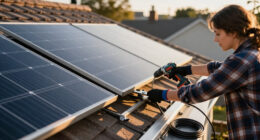
Solar panels generate energy; they do not automatically provide power during a grid outage. A conventional grid-tied solar array usually shuts down when the grid fails to protect utility workers. Outage operation requires equipment specifically designed for backup, commonly including a compatible inverter, battery storage, transfer controls and a protected-loads panel or other approved configuration.
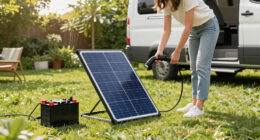
For portable systems, solar panels can extend runtime by replacing some of the energy used each day. Charging performance depends on sunlight, season, shade, panel orientation, temperature and the station’s solar-input limits. Check the permitted voltage and current range before connecting panels. Compatible connectors alone do not prove electrical compatibility.
Solar production and household consumption rarely align perfectly. Daytime generation may be strong while critical demand continues overnight. Battery capacity bridges that timing gap, while deliberate load management reduces the storage and panel capacity required.
Build a Layered Home-Energy Plan
One device does not have to serve every need. A layered system can be more flexible:
- A small battery or uninterruptible power supply keeps networking equipment running through brief interruptions.
- A portable power station supports electronics, medical equipment and selected appliances without indoor combustion.
- Solar panels replenish batteries when conditions allow.
- A portable generator supplies larger loads or recharges batteries during prolonged outages.
- A standby generator provides automatic support for selected circuits or broader household demand.
This approach also encourages prioritization. During an outage, operate essential loads first, avoid running several high-draw appliances together and recharge devices when energy is available. A written load schedule can prevent accidental overloads and conserve fuel or battery capacity.
Create Your Household Power Inventory
Walk through the home and record every item you might need. Note running watts, starting watts where relevant, daily operating hours and whether the load is essential, useful or optional. Include equipment that is easy to overlook: internet hardware, furnace controls, chargers, powered recliners, aquarium systems, garage access, septic equipment and well pumps.
Then group devices into circuits or portable connections. Decide which loads must operate simultaneously and which can take turns. This distinction can dramatically reduce required output. A microwave, coffee maker and toaster may each be manageable individually but unnecessarily demanding when used together.
Plan for Installation, Maintenance and Emergencies
Backup equipment needs preparation before the lights go out. Charge batteries on a routine schedule, install firmware updates when appropriate, inspect cables and store accessories together. Exercise generators according to their manuals, manage fuel safely and keep maintenance records. Test the complete setup with normal household loads under controlled conditions.
Label transfer equipment and essential circuits clearly. Keep operating instructions where household members can find them, and make sure more than one person understands startup, shutdown and emergency procedures. Include extension-cord routing, weather protection and carbon-monoxide response in the plan.
Finally, revisit the system whenever household needs change. A new medical device, well pump, electric appliance or home office can alter both output and runtime requirements. The most dependable home-energy plan is not simply the largest system available; it is one built around measured loads, safe connections, realistic recharge options and clear priorities.
Fall Picks
fall essentials
As an affiliate, we earn on qualifying purchases.