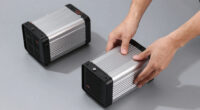
To keep peace in your neighborhood, choose a quiet generator with low decibel levels, ideally comparable to a conversation or background music. Place it on a vibration-isolated pad, away from windows and neighbor’s yards, and consider soundproof barriers or enclosures. Regular maintenance and proper scheduling help minimize noise, while complying with local regulations ensures harmony. If you want to learn more about effective noise reduction tips, keep exploring how you can enjoy reliable power without disturbing your community.

Get backup power and energy gear delivered free — and shop member deals
- Fast, free delivery on millions of items
- Access to Prime Big Deal Days deals on October 6–7
- Prime Video, Amazon Music and more included
Key Takeaways
- Select generators labeled as “quiet” with low decibel ratings, ideally comparable to background music or conversation.
- Install the generator at least 15-20 feet from structures and neighboring yards to minimize sound transmission.
- Use sound barriers, fences, shrubs, or soundproof enclosures to absorb and block operational noise.
- Regular maintenance of mufflers and exhaust systems reduces mechanical noise and ensures quieter operation.
- Comply with local noise regulations and operate the generator during appropriate hours to maintain neighborhood harmony.

When choosing a generator for your neighborhood, prioritizing noise levels is vital to maintain peace and good relations with your neighbors. A loud generator can quickly become a source of frustration, especially in quiet residential areas. To minimize disturbances, focus on noise reduction strategies during your selection process. Look for models specifically designed for low noise output, often labeled as “quiet generators.” These units typically operate at decibel levels comparable to a normal conversation or background music, making them less intrusive. Additionally, consider the generator’s size and power capacity; a smaller, appropriately sized unit is generally quieter than a larger, more powerful one.
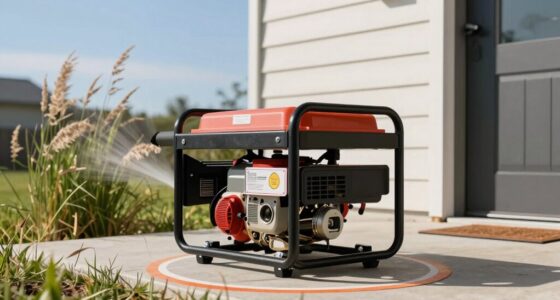
Once you’ve selected a quieter generator, paying attention to installation tips can further reduce noise impact. Proper placement is key—set the generator on a solid, level surface away from windows, porches, and neighbor’s yards. Positioning it at least 15 to 20 feet from structures helps dampen sound transmission. Using barriers such as fences, shrubs, or sound-absorbing panels around the unit can also considerably cut down noise levels. These barriers work by blocking direct sound waves and absorbing some of the noise, making the operation less noticeable to those nearby. Incorporating soundproofing techniques can enhance the effectiveness of these barriers and further diminish noise disturbances. Regular maintenance, such as checking mufflers and exhaust systems, is also essential to prevent unnecessary noise caused by mechanical issues. Implementing noise mitigation strategies can significantly improve the overall quietness of your generator setup.
Another vital installation tip is to guarantee the generator is well-maintained. Regular servicing keeps it running smoothly and quietly, preventing unnecessary noise caused by mechanical issues. Check mufflers and exhaust systems frequently, as these are primary sources of noise. Installing the generator on a vibration-isolated pad can prevent vibrations from amplifying sound transmission through the ground or structure. Furthermore, consider installing a sound enclosure or canopy designed specifically for generators. These enclosures are made to contain noise while allowing proper ventilation to prevent overheating. Being aware of noise ordinances in your area and adhering to them can help ensure your generator operation remains compliant and respectful to neighbors. You should also be mindful of the time of operation. Running the generator during late-night hours or early mornings can disturb neighbors, even if the unit is relatively quiet. Communicating with your neighbors about your generator’s operation schedule can foster good relations and help address any concerns proactively. Considering neighborhood noise regulations during your planning can help you avoid potential issues and maintain harmony in your community.
quiet residential generator low decibel
As an affiliate, we earn on qualifying purchases.
As an affiliate, we earn on qualifying purchases.
Frequently Asked Questions
What Are the Best Locations to Install a Quiet Generator?
You should install your quiet generator away from bedrooms and main living areas to minimize noise levels. Place it on a stable, elevated surface, like a concrete pad, to reduce vibration and sound transmission. Follow installation tips like shielding it with soundproof barriers and avoiding enclosed spaces. Positioning it at least 10-20 feet from your home guarantees safety and quiet operation, keeping your neighborhood peaceful during outages.
How Often Should I Perform Maintenance on My Quiet Generator?
You should perform maintenance on your quiet generator every 6 to 12 months, depending on usage and manufacturer recommendations. Regular maintenance helps optimize your generator’s fuel efficiency and guarantees it runs smoothly during outages. Check the oil, filters, and spark plugs routinely, and follow the maintenance schedule outlined in your user manual. Staying consistent with these checks will extend your generator’s lifespan and keep it ready when you need it most.
Can a Quiet Generator Run on Alternative Fuels?
Yes, a quiet generator can run on alternative fuels like propane or natural gas. These fuel types often produce fewer emissions and meet stricter emission standards, making them more environmentally friendly. When choosing an alternative fuel, confirm your generator is compatible and that you comply with local regulations. Regular maintenance helps optimize performance and guarantees your generator runs smoothly on any fuel type you select.
What Are the Safety Precautions for Operating a Generator in a Neighborhood?
Your safety depends on following strict precautions when operating a generator in your neighborhood. Never run it indoors or in enclosed spaces to prevent deadly carbon monoxide risks, which can be more dangerous than a wildfire. Keep noise levels low to minimize generator noise disturbances, and always place the generator on a flat, dry surface away from windows and vents. Regularly inspect and maintain your unit to guarantee safe, reliable operation.
How Do I Calculate the Power Capacity Needed for My Home?
To determine your home’s power capacity, start with a load calculation by listing all appliances and devices you want to run during a power outage. Add up their wattages to find your total power demand. Focus on essential items first, then include optional ones. This way, you guarantee your generator provides enough power without overload, keeping your home running smoothly and safely during outages.
generator soundproof enclosure for home use
As an affiliate, we earn on qualifying purchases.
As an affiliate, we earn on qualifying purchases.
Conclusion
So, next time your generator hums through the night, remember—the quietest ones are the loudest in disguise. Ironically, by choosing a silent model, you might just become the neighborhood’s favorite—until you crank it up for a power outage. But hey, who needs peace and quiet anyway? Embrace the irony and enjoy your reliable, low-noise generator. After all, a quiet neighborhood might just be a quieter life—until your generator becomes the new neighborhood chatter!
vibration-isolated generator pad
As an affiliate, we earn on qualifying purchases.
As an affiliate, we earn on qualifying purchases.
As an affiliate, we earn on qualifying purchases.
Fall Picks
fall essentials
As an affiliate, we earn on qualifying purchases.