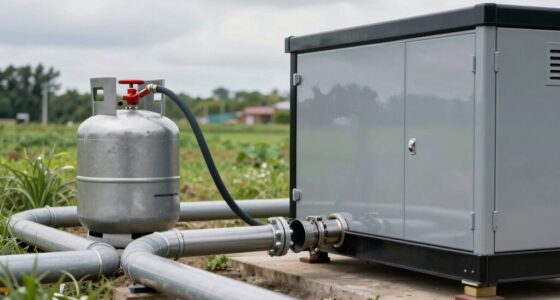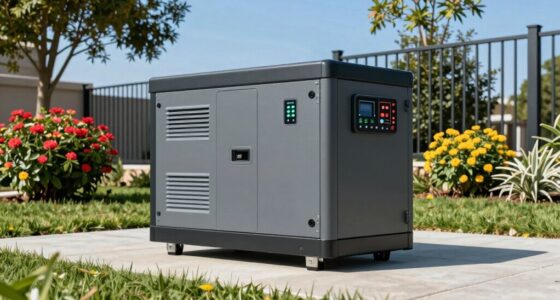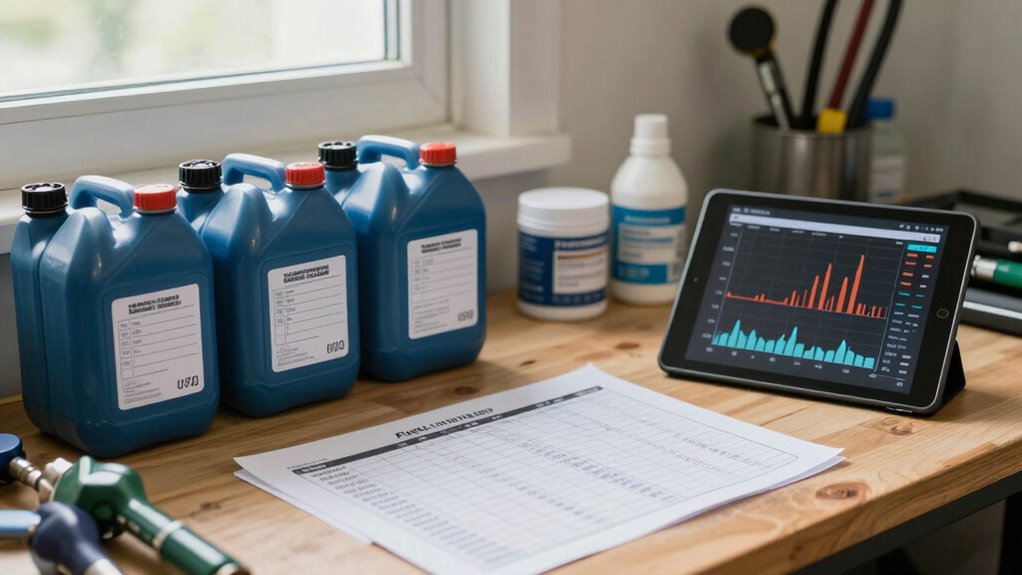

To make generator fuel planning manageable, start by accurately evaluating your energy needs to avoid waste or shortages. Develop a clear fueling schedule and keep detailed records of consumption and maintenance to spot patterns and improve efficiency. Store fuel safely and in compliance with regulations, checking regularly for quality and leaks. Break down your plans into simple, manageable steps to stay organized and confident. Keep learning how to refine your approach, so your generator runs smoothly even during extended outages.
Key Takeaways
- Break down fuel planning into small, scheduled tasks to reduce overwhelm and increase confidence.
- Use clear documentation and templates to organize fuel records and schedules.
- Set realistic, flexible goals for fuel storage and refueling routines.
- Prioritize safety protocols to simplify handling and prevent accidents.
- Regularly review and adjust plans based on fuel consumption data and operational needs.

Planning generator fuel planning might seem overwhelming at first, but breaking it into manageable steps can make the process much easier. When you focus on small, clear tasks, you’ll find it less intimidating and more straightforward to guarantee you have enough fuel for your needs. Start by evaluating your power requirements—know exactly how much energy your generator needs to run efficiently during the expected operational period. This helps you avoid overestimating, which can lead to unnecessary fuel consumption, or underestimating, risking power outages. Remember, fuel efficiency isn’t just about saving money; it’s also about optimizing your resources and reducing environmental impact. Look for ways to improve efficiency, like choosing the right size generator and maintaining it properly, so it runs smoothly and consumes less fuel.
Start by assessing your power needs to ensure efficient, safe, and eco-friendly generator fuel planning.
Next, plan your fuel storage carefully. It’s essential to have a safe, accessible place to store your fuel that complies with safety protocols. Gasoline and diesel are flammable, so guarantee your storage containers are approved, clearly labeled, and kept away from heat sources or ignition points. Regularly check your storage for leaks or deterioration and rotate your fuel stock to avoid contamination or spoilage. Knowing how much fuel you need over a specific period allows you to buy in appropriate quantities, preventing waste and ensuring you have enough on hand for emergencies. Additionally, understanding fuel storage safety guidelines is crucial to prevent accidents and ensure compliance with regulations. Regularly reviewing safety standards can help you stay current and avoid costly mistakes. Incorporating proper documentation of your fuel consumption and storage can also help you identify inefficiencies and improve your planning process. Staying aware of fuel quality standards can further ensure the fuel you store remains effective and safe to use. Being familiar with fuel testing methods can also help confirm that your stored fuel remains in good condition over time.
Creating a fueling schedule is another key step. Determine when and how often you’ll refuel, especially during extended outages. This plan helps you avoid running out unexpectedly and keeps your generator operating at peak performance. If you’re working in a team or managing multiple generators, clear communication about fueling times and procedures will ensure safety protocols are followed, reducing risks of accidents or spills. Always follow safety protocols when handling fuel—wear protective gear, work in well-ventilated areas, and have fire extinguishers nearby. Incorporating proper handling procedures into your routine can significantly reduce risks and improve efficiency.
Finally, don’t forget to document your fuel planning process. Keep records of fuel consumption, refueling dates, and maintenance activities. This documentation helps you identify patterns, optimize your fuel efficiency, and prepare better for future needs. Staying organized and attentive to safety protocols ensures your generator runs reliably and safely, making your fuel planning feel more manageable. By breaking down the process into these steps, you’ll gain confidence and control, turning what once seemed intimidating into a routine part of your operation.

Garvee Slim 15 Gallon Gas Can, Fuel Tank Container with LE Fluid Transfer Manual 10 FT Siphon Pump, Portable Diesel Gas Storage Caddy Wheels for ATV, Weeder, Boat, Tractor, Snow Blower,Generator
HEAVY-DUTY CONSTRUCTION: Molded as one piece from industrial-grade HDPE material, this fuel can features excellent corrosion resistance, impact…
As an affiliate, we earn on qualifying purchases.
As an affiliate, we earn on qualifying purchases.
Frequently Asked Questions
What Are Common Mistakes in Generator Fuel Planning?
A common mistake in generator fuel planning is neglecting fuel quality, which can cause engine issues and downtime. You might also overlook storage capacity, leading to shortages during extended use. Failing to monitor fuel levels regularly or assuming your current supply will suffice can cause disruptions. To avoid these mistakes, make sure you select high-quality fuel, plan storage carefully, and keep an eye on fuel levels, especially during prolonged operations.
How Often Should Fuel Levels Be Checked?
You should check fuel levels at least once a week through consistent fuel monitoring. Regular inspections help you identify any discrepancies early and guarantee your storage is optimized, preventing shortages or overstocking. During these checks, verify fuel quality and storage conditions to maintain efficiency. Keeping a routine fosters better storage management, reduces the risk of unexpected outages, and makes your generator fuel planning more manageable and reliable over time.
What Safety Precautions Are Needed During Fuel Handling?
During fuel handling, you need to wear protective gear like gloves and safety goggles, and guarantee your fuel container is secure and in good condition. Keep safety signage visible to remind everyone of hazards. Always handle fuel in well-ventilated areas, avoid open flames, and never smoke nearby. Properly store fuel containers upright and away from heat sources to prevent spills and accidents, ensuring a safe environment for everyone involved.
How Can Fuel Theft Be Prevented?
To prevent fuel theft, you should treat your fuel like a priceless treasure—because, honestly, it is. Implement strict security measures like surveillance cameras, locked storage, and access controls. Regularly monitor fuel levels and keep detailed logs. By doing so, you create a fortress that thieves find too risky to breach. Remember, theft prevention isn’t just about security measures; it’s about protecting your resources from sneaky hands.
What Are the Environmental Considerations for Fuel Storage?
You should consider the environmental impact of your fuel storage by ensuring it complies with storage regulations to prevent leaks and spills. Use proper containment systems like secondary tanks, and store fuel away from water sources and sensitive areas. Regularly inspect tanks for corrosion or damage, and follow local guidelines to minimize environmental risks, safeguarding ecosystems and complying with legal requirements.

FOI LABORATORIES Premium Diesel Fuel Test Kit – Accurate Water & Contamination Testing | Easy-to-Use Fuel Quality Checker for Diesel Tanks, Generators, and Equipment
Accurate Detection in Seconds: Identify water contamination quickly, ensuring diesel quality and protecting your engine.
As an affiliate, we earn on qualifying purchases.
As an affiliate, we earn on qualifying purchases.
Conclusion
Think of your generator fuel planning as tending a garden—you’ll need regular attention and careful planning to see it flourish. By breaking down the process into small, manageable tasks, you prevent overwhelm and keep everything running smoothly. Remember, each step you take is like watering a seed; over time, it grows into a well-maintained system that supports you when you need it most. Stay organized, stay proactive, and watch your efforts bloom into confidence.

The Northern Resilience Log: A Technical Manual for Zone 3/4 Property Management
As an affiliate, we earn on qualifying purchases.
As an affiliate, we earn on qualifying purchases.
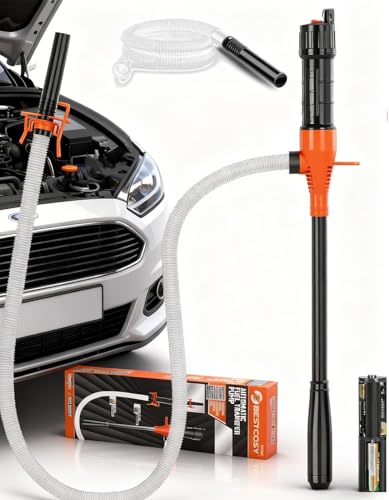
Portable Fuel Transfer Pump with 47" Hose-High Flow Hand Fuel Pump, Battery Powered Siphon Pump for Gasoline Mechanical Fuel Pumps Universal Fit for Gasoline, Vehicles, Fuel,Water Transfer(Amber)
【Portable Electric Pump】:This transfer pump With a battery-powered design, this gas siphon pump is perfect for on-the-go fuel…
As an affiliate, we earn on qualifying purchases.
As an affiliate, we earn on qualifying purchases.