To guarantee everyday comfort during emergencies, store at least one gallon of water per person per day for drinking, hygiene, and basic cooking. Consider your family’s size, activity level, and climate—hotter weather increases your needs. Regularly check, rotate, and replenish your supplies to keep water fresh and safe. By planning carefully, you’ll have enough to stay healthy and comfortable until normal supplies return. Learn more about tailoring your water storage to your needs below.
Key Takeaways
- Aim for at least 1 gallon (about 3.8 liters) per person daily for drinking, cooking, and hygiene to ensure comfort.
- Adjust storage based on activity level, climate, and individual needs, increasing quantities in hot weather or for active lifestyles.
- Include extra water reserves for infants, elderly, or health conditions requiring additional hydration.
- Store enough water to cover at least 3 days to a week of normal usage for ongoing comfort during disruptions.
- Use proper containers and rotate supplies regularly to maintain water quality and ensure continuous availability.
Understanding Basic Water Needs for Everyday Comfort
To stay comfortable in everyday life, you need a reliable supply of clean water for basic activities like drinking, cooking, and personal hygiene. Water purification is essential to guarantee safety, especially if your supply becomes compromised. Emergency filtration devices can quickly remove contaminants, making unclean water safe to use. Knowing how much water you need daily helps you plan your storage effectively. For drinking and hygiene, aim for at least a gallon per person per day. Remember, water quality is critical—use proper purification methods when sourcing from uncertain supplies. Understanding water quality standards and how to meet them is vital for maintaining health and safety. Additionally, being aware of contaminant removal techniques can help ensure your water remains safe during emergencies. Proper storage methods also play a crucial role in preserving water quality over time. Regular water testing can help you monitor and maintain safe water supplies. By understanding these basic needs, you’ll be better prepared to maintain comfort and health, even during disruptions. Having a plan for emergency filtration ensures you can always access safe water, no matter the situation. Investing in advanced purification technology can further enhance your ability to keep water safe in prolonged emergencies.
Calculating Water for Drinking and Hydration
To guarantee you’re well-hydrated, you need to calculate your daily water intake based on your activity level and environment. Hot weather increases your hydration needs, so you might need more than usual. Don’t forget to take into account any special water requirements if you have health conditions or specific circumstances. Additionally, understanding water storage guidelines ensures you have a sufficient supply during emergencies or outdoor activities. Proper water quality is also vital to ensure the stored water remains safe and drinkable over time. Moreover, considering sustainable water management practices can help you conserve resources while maintaining your water supply. Being aware of alarm clocks can help you maintain a consistent schedule for hydration and daily routines, especially when adjusting to new routines or environments. Incorporating support breakfast options can also help you start your day with proper hydration and nutrition, promoting overall well-being.
Daily Water Intake Needs
Understanding your daily water intake needs is essential for staying properly hydrated. Most adults require about 2 to 3 liters of water daily, but this varies based on activity levels, climate, and health. To meet these needs, consider how water filtration and purification methods fit into your routine. If you’re using untreated water sources, you’ll need reliable water purification techniques to make it safe for drinking. Properly calculating your intake ensures you consume enough water without overdoing it, which can lead to other issues. Keep track of your consumption and adjust for factors like exercise or hot weather. By understanding your specific needs and maintaining access to clean water, you can stay well-hydrated and healthy, reducing the risk of dehydration and related health problems.
Hydration in Hot Weather
When the weather turns hot, your hydration needs increase as your body loses more water through sweating. To stay properly hydrated, you must account for this extra loss by drinking more water and ensuring it’s clean. Use water filtration systems to purify water from natural sources when supplies run low. Store water in portable containers that are easy to carry, so you can hydrate on the go. Consider these tips:
- Keep an emergency supply of filtered drinking water in portable containers.
- Calculate your increased water needs based on activity level and heat exposure.
- Regularly check and refill your containers to prevent dehydration during hot days.
- Incorporate Free Floating techniques into your backyard setup to create a relaxing environment, encouraging regular hydration and outdoor enjoyment.
- Being aware of water quality and potential contaminants is essential for safe hydration in outdoor settings. Additionally, understanding technological integration in water management can help optimize purification and storage solutions. Staying informed about water testing methods can further ensure your stored water remains safe and free from harmful substances.
Proper planning helps you stay hydrated, comfortable, and safe without risking dehydration or consuming contaminated water.
Special Water Requirements
How much water you need for proper hydration depends on several factors, including your age, weight, activity level, and environmental conditions. In emergency situations, you should store enough water to meet your unique needs, which may be higher if you’re physically active or exposed to extreme heat. Special water requirements also include ensuring access to safe drinking water through water purification methods, like boiling or filters, especially if your emergency water supply is contaminated. Always have a plan to supplement stored water with purification options, so you’re prepared for different scenarios. Remember, staying hydrated isn’t just about quantity but also about quality. Proper hydration helps maintain your health during emergencies, making water purification essential for your stored supply.
Water Usage for Cooking and Food Preparation

Cooking and food preparation can quickly use up a significant amount of water, so it’s important to plan accordingly. Your cooking water is essential for cleaning produce, boiling ingredients, and preparing meals efficiently. To estimate your needs, consider how much water you’ll use daily for food prep. Keep in mind that washing fruits and vegetables, boiling pasta, or steaming vegetables all require water. Additionally, creating a study plan to track your water usage for food prep can help ensure you store enough for daily needs. Being mindful of water conservation during food preparation can also contribute to more sustainable water storage practices. Incorporating proper hydration practices can further optimize your water usage and promote overall well-being. Understanding net worth and other financial factors can help you plan your water storage budget effectively. Planning ahead for global coffee culture or other beverage needs can also influence your overall water storage requirements.
Maintaining Hygiene During Emergencies
Maintaining good hygiene during emergencies is vital to prevent illness and keep yourself and your family healthy. You need enough water for basic sanitation, including handwashing, bathing, and cleaning wounds. To guarantee water safety, consider water purification methods such as boiling or using purification tablets, especially if your supply is questionable. Proper emergency sanitation also involves setting up designated areas for waste disposal to avoid contamination. Keeping hands clean reduces the spread of germs, so wash regularly with the stored water. If water is scarce, prioritize hygiene activities that prevent infection. Remember, maintaining hygiene isn’t just about comfort; it’s essential for health during crises. Efficient water use and proper sanitation help you stay safe and minimize exposure to illness. Additionally, understanding all water parks features can inspire family-friendly ways to enjoy water safely when conditions permit. Ensuring your water storage capacity aligns with your household needs can greatly improve your emergency preparedness and hygiene practices. Being aware of water conservation techniques can help you extend your supplies during prolonged emergencies, and practicing water-saving habits can make a significant difference. Incorporating water quality monitoring can further ensure the safety of your stored water and prevent potential health risks.
Storage Tips for Long-Term Water Supply
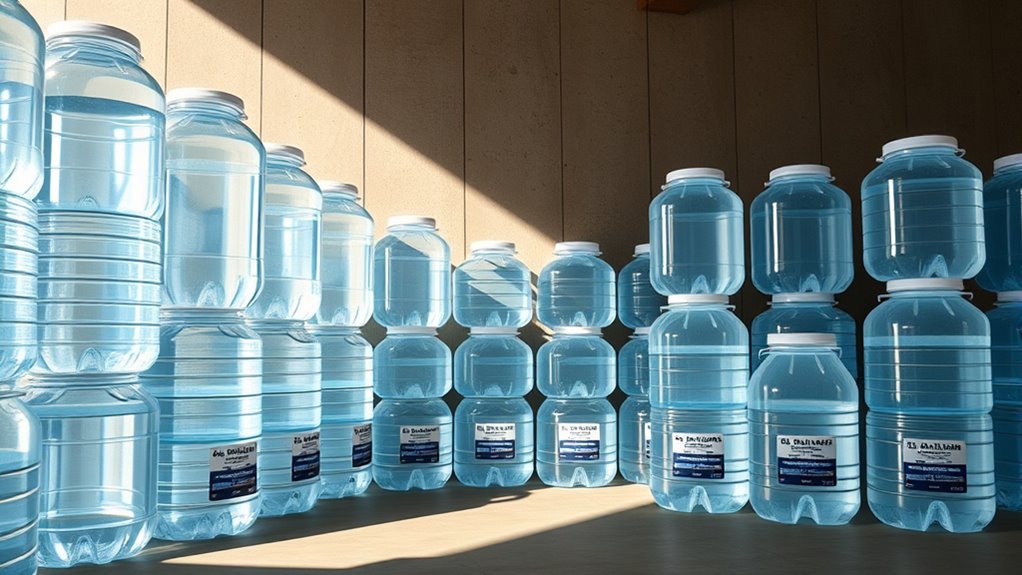
Choosing the right containers is essential for storing water long-term; opt for food-grade, BPA-free options to prevent contamination. You should also establish a rotation schedule to use and replenish your supply regularly, ensuring water stays fresh. Remember to replace containers as needed to maintain the safety and quality of your stored water. Incorporating simple storage strategies can help you keep your water supply organized and accessible during emergencies. Additionally, understanding the weight of your storage containers can assist in planning for safe transport and placement, especially considering the cultural diversity of different regions and their specific needs. Incorporating connected home fitness concepts can also inspire innovative ways to organize and monitor your supplies efficiently.
Proper Container Selection
Selecting the right containers is essential for ensuring your long-term water supply stays safe and clean. You want container materials that won’t leach chemicals or degrade over time, such as food-grade plastic or glass. Container sizes also matter; larger bottles (about 5 gallons) are convenient for storage and dispensing, while smaller ones are easier to handle.
Key tips include:
- Choose food-grade containers specifically designed for water storage
- Use durable materials that won’t crack or break easily
- Opt for sizes that fit your storage space and handling capacity
Rotation and Replacement
Once you’ve stored your water in quality containers, it’s important to keep it fresh and safe over time. Regular rotation helps prevent stagnation and spoilage. Every six to twelve months, check your stored water and replace it if needed. If you notice any cloudiness, odor, or discoloration, perform water purification or emergency filtration before use. To extend shelf life, consider adding water preservatives or storing in dark, cool areas. Remember, even stored water can become unsafe without proper maintenance. Using emergency filtration devices can help if you need to purify questionable water. Consistent rotation ensures your supply remains fresh, safe, and ready when you need it, giving you confidence in your long-term storage plan.
Adjusting Water Quantities for Family Size and Special Needs
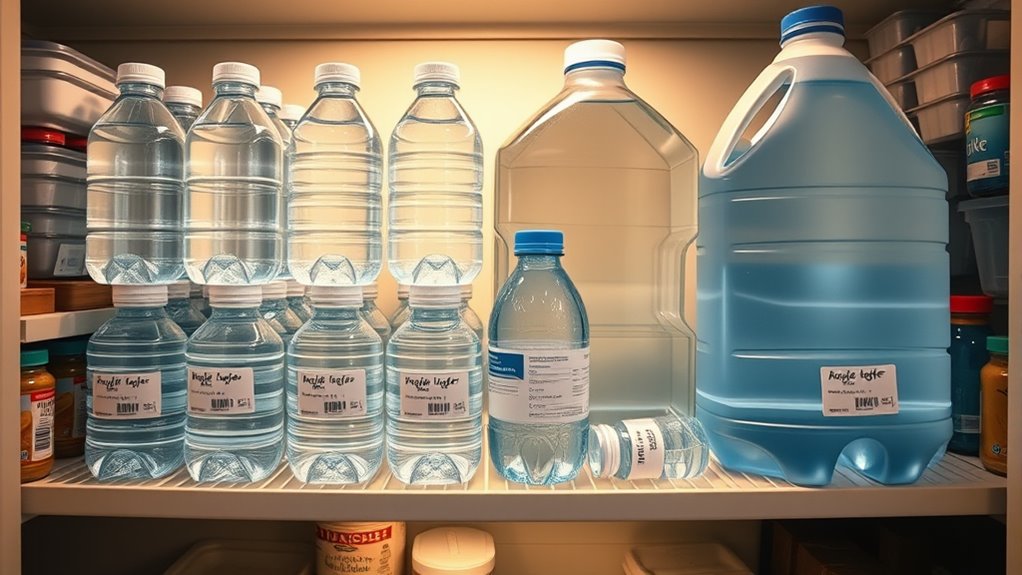
Adjusting water quantities is essential to make certain your family has enough for daily needs and emergencies. Your family size directly influences how much water you should store, but don’t forget about special needs that may require additional supplies. Tailoring your reserve guarantees everyone stays healthy and comfortable. Consider these key points:
- Calculate daily water needs based on family size and age groups
- Increase supplies if someone has health conditions or special needs
- Keep extra water for infants, elderly, or those with medical requirements
Strategies for Monitoring and Rotating Your Water Reserve

To guarantee your water supply remains safe and reliable, it’s essential to regularly monitor and rotate your reserve. Conduct water testing periodically to check for signs of contamination or deterioration. Use test strips or kits to detect bacteria, pH levels, and chemical impurities, ensuring your water stays safe for consumption. Rotate your stored water every six months to prevent stagnation and spoilage. When doing so, replace older water with fresh supplies, and sanitize containers thoroughly before refilling. This routine helps prevent contamination and maintains water quality. Keep a log of testing results and rotation dates to stay organized. By actively monitoring and rotating your water reserve, you safeguard your health and ensure a dependable supply when you need it most.
Frequently Asked Questions
How Long Can Stored Water Typically Last Before Needing Replacement?
Stored water generally lasts about six months before needing replacement, depending on storage conditions. You should regularly check the water’s quality, looking for changes in smell, taste, or clarity. Properly sealed and stored in a cool, dark place, water stays fresh longer. To guarantee safety, rotate your supply every six months and consider using water preservatives or treatment methods if storage conditions aren’t ideal.
What Types of Containers Are Safest for Long-Term Water Storage?
You should choose reusable bottles or BPA-free containers for long-term water storage. These containers are safest because they don’t leach harmful chemicals into your water. Make sure they’re made of durable, food-grade materials and have airtight seals to prevent contamination. Regularly clean and replace them to keep your stored water fresh and safe for extended periods. Avoid containers that are cracked or porous, as they can harbor bacteria.
Can Stored Water Become Unsafe Without Proper Treatment or Filtration?
Don’t let your guard down—stored water can become unsafe if neglected. Water contamination can occur through bacteria, algae, or chemical leaks, making filtration methods essential. Without proper treatment, your stored water might harbor pathogens or toxins. To stay safe, regularly purify your water using reliable filtration methods like charcoal filters or boiling. Staying vigilant keeps your water clean and your health intact, because an ounce of prevention is worth a pound of cure.
How Do Climate and Season Affect Water Storage Needs?
Climate variations and seasonal fluctuations considerably influence your water storage needs. During hot, dry seasons, you’ll require more water to stay comfortable and hydrated, while cooler months may reduce your needs. In areas with unpredictable weather, it’s wise to store extra water as climate shifts can cause shortages or contamination risks. Adjust your storage accordingly, ensuring you always have enough for comfort and emergencies throughout different seasons.
Are There Specific Water Needs for Pets and Plants During Emergencies?
During emergencies, you need to prioritize pet hydration and plant watering. Make certain you store extra water specifically for your pets, providing enough for drinking and basic needs. For plants, keep a reserve for watering to prevent damage or loss. By doing this, you’re actively safeguarding your pets’ health and maintaining your garden’s vitality, making sure everyone and everything stays healthy and comfortable during stressful times.
Conclusion
By understanding your daily water needs, you create a safety net that aligns with life’s unpredictable moments. Sometimes, it’s the small, overlooked supplies that make all the difference during a crisis. As you plan and adjust your storage, you’ll find that comfort isn’t just about survival—it’s about being prepared for the unexpected. When the right amount of water is ready, you’ll notice how even the smallest efforts can turn uncertainty into confidence.