
Water storage containers are crucial for your everyday preparedness because they guarantee you’ll always have access to safe drinking water during emergencies or disruptions. By choosing durable, food-grade containers with secure lids, you prevent contamination and spoilage. Regular inspection and proper storage extend water’s safety and freshness. Incorporating these containers into your routine helps you stay ready for unexpected situations. If you want to learn how to maximize their effectiveness, keep exploring how these containers can work for you.

Get backup power and energy gear delivered free — and shop member deals
- Fast, free delivery on millions of items
- Access to Prime Big Deal Days deals on October 6–7
- Prime Video, Amazon Music and more included
Key Takeaways
- They ensure a reliable supply of safe drinking water during daily emergencies or disruptions.
- Durable containers support long-term water storage, reducing the need for frequent replenishment.
- Properly maintained containers prevent contamination, safeguarding health in everyday preparedness.
- Easy-to-use containers encourage regular water storage habits for household readiness.
- Incorporating water storage into preparedness plans enhances resilience against environmental or utility failures.

Having an adequate supply of clean water is essential for emergency preparedness, especially when disruptions to public water systems occur. Water storage containers are a vital part of your preparedness plan because they guarantee you have access to safe drinking water when needed most. Whether for emergency hydration or everyday use, the right containers can make a significant difference. You want containers that are durable enough to withstand rough handling and environmental conditions, ensuring your stored water remains safe and uncontaminated over time. Choosing the proper container means considering its material, shape, and capacity, all of which contribute to its overall durability and ease of use.
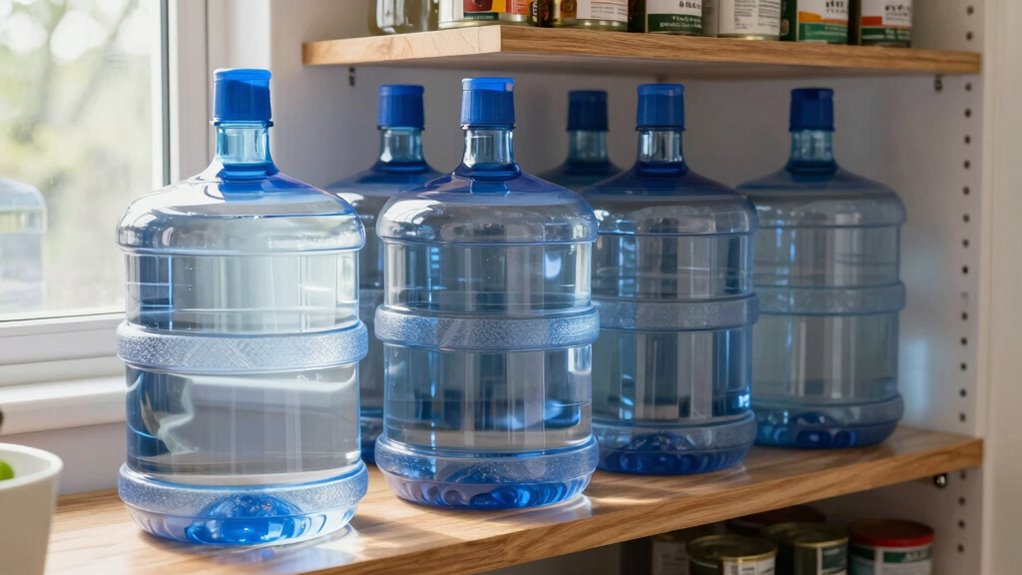
Container durability is crucial because it determines how well your water supply withstands transportation, stacking, and potential accidents. Heavy-duty plastics like food-grade polyethylene are popular options due to their resistance to cracking, impact, and UV damage. These containers can usually be reused multiple times, making them a cost-effective choice for long-term storage. Avoid flimsy or non-food-grade plastics, as they might degrade or leach chemicals into your water, compromising safety. Additionally, a sturdy container with a secure lid helps prevent contamination, pests, and accidental spills, which are all critical factors in maintaining a reliable water reserve. Material safety is an important consideration when selecting containers to ensure the water remains uncontaminated over time. Properly storing water in safe and reliable containers guarantees its quality and usability during emergencies. Regularly inspecting your containers for signs of wear and preventing contamination is also essential to maintain water safety over time. Using appropriate storage techniques can further extend the shelf life of your water supply and ensure it remains potable. Implementing proper storage conditions can help prevent algae growth and bacterial contamination, keeping your water fresh for longer periods.
food grade water storage containers
As an affiliate, we earn on qualifying purchases.
As an affiliate, we earn on qualifying purchases.
Frequently Asked Questions
How Do I Choose the Right Size Water Container for My Needs?
To choose the right size water container, consider your daily or weekly water needs and storage space. Think about container placement—ensure it’s accessible and stable—while maintaining seal integrity to prevent leaks and contamination. If you’re planning for emergencies, opt for larger containers or multiple units. Smaller containers are perfect for daily use or limited space. Balancing your water consumption, storage area, and container security will help you select the ideal size for your needs.
What Materials Are Safest for Long-Term Water Storage?
You should choose containers made from food-grade plastics like high-density polyethylene (HDPE) or polypropylene, which are safe for long-term water storage. These materials resist leaching and support water purification efforts. Regular container maintenance, like cleaning with mild soap and sanitizing with a diluted bleach solution, helps prevent bacteria growth. Avoid containers made from recycled or non-food-grade plastics, as they can compromise water safety over time.
How Often Should I Rotate Stored Water?
Don’t let your water supply go stale; aim to rotate stored water every 6 to 12 months. Regular water purification and container maintenance keep your supply safe and fresh. When you swap out old water, you prevent bacteria buildup and guarantee readiness in emergencies. Treat stored water with a bit of bleach or use purification tablets, and clean containers thoroughly before refilling. Staying proactive keeps your water safe and reliable when you need it most.
Can Water Containers Be Reused Safely?
Yes, water containers can be reused safely if you choose durable containers designed for multiple uses. Make sure to clean them thoroughly with soap and water before refilling to guarantee safe emergency hydration. Check the container’s durability regularly for cracks or leaks, as damaged containers can harbor bacteria or spoil water. Proper maintenance extends the life of your water storage, ensuring reliable access during emergencies.
What Are Common Mistakes to Avoid With Water Storage?
You should avoid common mistakes like using containers that aren’t durable or designed for water storage. Poor container durability can lead to leaks or cracks, risking water contamination. Also, don’t neglect cleaning your containers regularly; bacteria and mold can grow if ignored. Always use food-grade materials and store water in a cool, dark place to prevent contamination. Properly maintaining your containers guarantees safe, clean water when you need it most.
heavy-duty water storage barrels
As an affiliate, we earn on qualifying purchases.
As an affiliate, we earn on qualifying purchases.
Conclusion
Storing water is a crucial part of your preparedness plan, ensuring you’re ready for emergencies. Did you know that the average person needs at least a gallon of water daily? That means a simple 55-gallon drum can supply a family of four for over two weeks. By choosing the right containers and planning ahead, you’ll stay hydrated and resilient when it matters most. Don’t wait—start building your water storage today to secure your peace of mind.
reusable water storage bottles with secure lids
As an affiliate, we earn on qualifying purchases.
As an affiliate, we earn on qualifying purchases.
long-term water storage containers
As an affiliate, we earn on qualifying purchases.
As an affiliate, we earn on qualifying purchases.
Evergreen bestsellers Picks
bestsellers
As an affiliate, we earn on qualifying purchases.