Your freezer can keep your food safe longer during a blackout by using ice packs and proper organization. Filling it with pre-stored ice packs creates a cold buffer that slows temperature rise. Keeping the door closed and monitoring the temperature helps prevent spoilage. A full freezer can hold food safely for about 48 hours, especially if you’ve prepared in advance. Want some proven tips to extend your freezer’s protection even further? Keep going for more expert advice.
Listen free for 30 days with Audible
Thousands of audiobooks and originals — cancel anytime.
As an affiliate, we earn on qualifying purchases.
Key Takeaways
- A full, well-organized freezer can keep foods frozen for up to 48 hours during a blackout.
- Pre-stored ice packs act as thermal buffers, prolonging cold temperatures and food safety.
- Keeping the freezer door closed minimizes cold air loss and maintains low internal temperatures.
- Monitoring temperature helps ensure foods stay below 40°F, preventing spoilage and bacterial growth.
- Proper planning and organization allow you to prioritize and preserve perishable foods effectively.
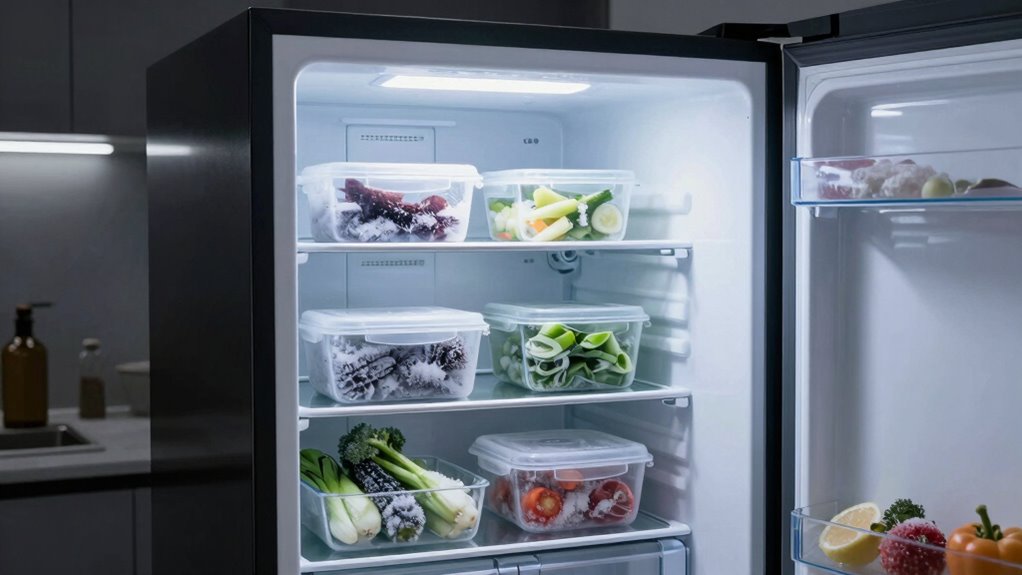
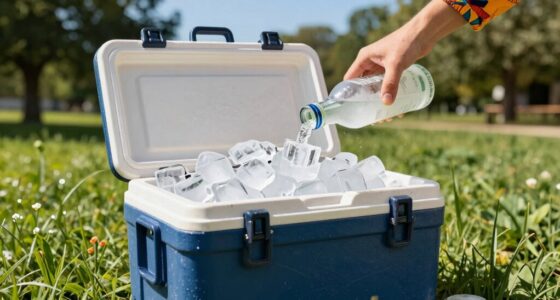
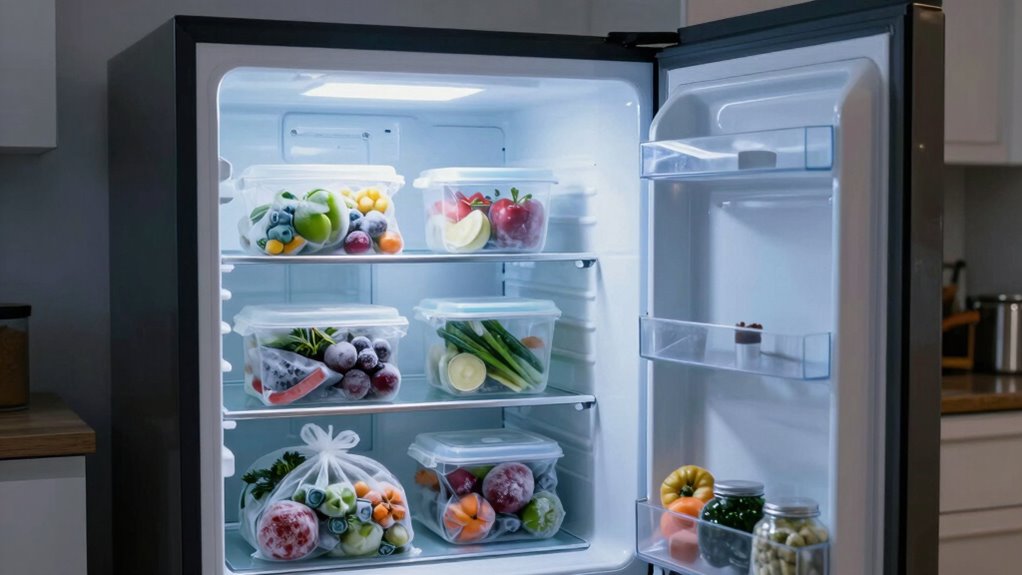
When a blackout hits, your freezer can become a crucial tool in preserving your food, but only if you’re prepared. Knowing how to make the most of your freezer during an outage can prevent spoilage and reduce waste. One of the simplest yet most effective strategies is to maximize ice pack storage. By filling your freezer with ice packs or frozen water bottles beforehand, you create a cold buffer that helps keep the internal temperature low longer. These ice packs act as thermal anchors, slowing down the warming process and maintaining the safety of your perishable items. If you don’t already have a stockpile, it’s wise to invest in reusable ice packs and keep them frozen in advance. During a blackout, adding these to your freezer can buy you precious extra hours of cold storage. Additionally, understanding the importance of temperature control is key to food safety during outages. Maintaining a consistent freezer temperature is essential for food safety, especially during power interruptions. Regularly monitoring the internal temperature with a thermometer can help you promptly identify if the food remains safe.
Equally important is following food safety guidelines to determine what remains safe to eat during and after the outage. The U.S. Food and Drug Administration recommends that a full freezer can keep foods frozen for approximately 48 hours if unopened, and for about 24 hours if half-full. To maximize safety, avoid opening the freezer door unless absolutely necessary. Every time you open it, you let out cold air, which accelerates temperature rise. Keeping it closed helps preserve the cold environment longer, especially if you’ve stored ice packs earlier. Proper food safety practices during outages can significantly reduce the risk of consuming unsafe foods. When the power returns, check the condition of your frozen foods. If they still contain ice crystals or feel frozen solid, they are generally safe to refreeze or consume. If foods are warm or have thawed significantly, discard them to avoid foodborne illnesses.
In addition, organizing your freezer contents before a blackout can help you quickly assess what’s still safe later on. Group items based on whether they’re perishable or more durable, and consider labeling items that need to be consumed first once power is restored. Keeping a thermometer inside your freezer is also a smart move; it provides an instant reading of the internal temperature, making it easier to decide whether foods are safe. Remember, the goal is to keep the temperature below 40°F (4°C) to prevent bacterial growth. Proper storage and proactive planning are essential for maintaining food safety during unexpected power outages. By proactively storing ice packs and adhering to food safety guidelines, you’re considerably increasing your chances of preserving your food through the blackout, reducing waste, and safeguarding your health.
As an affiliate, we earn on qualifying purchases.
Frequently Asked Questions
How Long Can Food Stay Safe in a Freezer During a Blackout?
During a blackout, your freezer can keep food safe for about 48 hours if full and unopened, thanks to food preservation principles. If you’re prepared with emergency planning, you can extend this time by keeping the door closed as much as possible. A full freezer retains cold longer, helping prevent spoilage. Remember, once power returns, check food for signs of thawing or spoilage before consuming.
Should I Open the Freezer Door During a Power Outage?
Think of your freezer as a fortress guarding your food treasure. During a power outage, you should avoid opening the door unless necessary. Each time you open it, heat sneaks in, shortening the cold storage’s lifespan. Proper freezer maintenance and emergency preparedness mean keeping the door sealed tight, preserving your food’s safety and quality longer. Act wisely, and your freezer’s fortress will protect your bounty when it counts most.
Can I Refreeze Thawed Food After a Blackout?
Yes, you can refreeze thawed food after a blackout if it remains at 40°F or below, ensuring thawing safety. If the food has been above this temperature for more than two hours, it’s safer to discard it. Proper food refreezing prevents bacteria growth and maintains quality. Always check for signs of spoilage before refreezing, and when in doubt, play it safe to avoid foodborne illnesses.
What Signs Indicate Frozen Food Has Spoiled?
You’ll know frozen food has spoiled if you notice signs of spoilage like an off smell, discoloration, or a slimy texture. Also, check the freezer temperature; if it’s risen above 0°F (-18°C), the food may not be safe anymore. When in doubt, discard any food that shows these signs to prevent foodborne illnesses. Always keep an eye on your freezer’s temperature during outages.
How Can I Organize My Freezer for Emergencies?
Think of your freezer as a safety vault. To organize it for emergencies, keep essentials like ice cubes, frozen veggies, and meats at the front for quick access. Use clear containers or labels to identify contents easily. Regularly check freezer safety, ensuring it’s at the right temperature. This way, when a blackout hits, your frozen food stays safe longer, and you’re ready to handle the situation confidently.
As an affiliate, we earn on qualifying purchases.
Conclusion
In a blackout, your freezer can be a powerful ally. For instance, imagine you’re stuck without power for two days—your frozen leftovers stay safe and solid, saving you money and food waste. Just remember to keep the door closed and use frozen water bottles to help maintain the cold. Next time, you’ll confidently rely on your freezer’s resilience, knowing it can protect your essentials longer than you think. Your smart storage can truly make a difference.
As an affiliate, we earn on qualifying purchases.
frozen water bottles for emergency
As an affiliate, we earn on qualifying purchases.
As an affiliate, we earn on qualifying purchases.
College move-in / dorm season Picks
dorm essentials
As an affiliate, we earn on qualifying purchases.