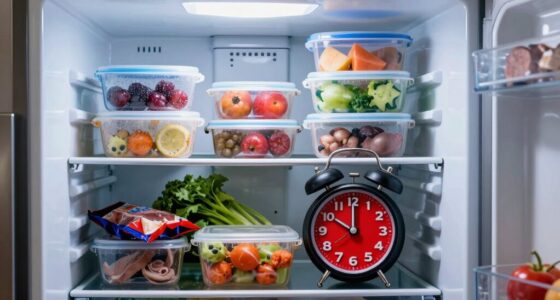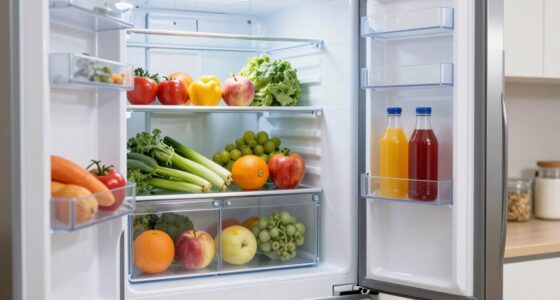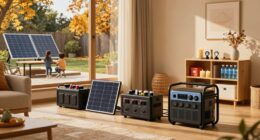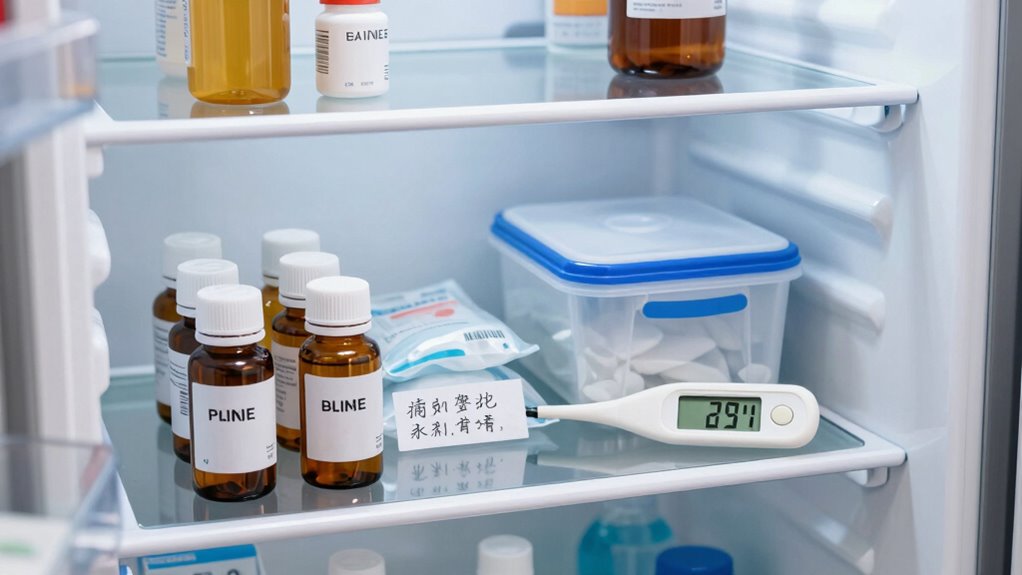
To safeguard refrigerated medications during an outage, keep the fridge door closed as much as possible to maintain cool temperatures. Use cool packs, ice, or portable coolers to provide extra insulation if the power stays out longer. Regularly check the temperature with a thermometer and transfer medications to coolers if temperatures rise. Make sure you have a backup power source ready, like a generator or battery. Staying prepared guarantees your medications stay effective—discover more ways to stay safe during outages.

Get backup power and energy gear delivered free — and shop member deals
- Fast, free delivery on millions of items
- Access to Prime Big Deal Days deals on October 6–7
- Prime Video, Amazon Music and more included
Key Takeaways
- Store refrigerated medications in a well-insulated cooler with ice packs during outages.
- Keep refrigerator doors closed as much as possible to maintain temperature.
- Use a thermometer to monitor medication temperatures frequently.
- Transfer medications to a cooler if the fridge temperature exceeds safe limits.
- Prepare backup power sources, such as generators or portable batteries, in advance.
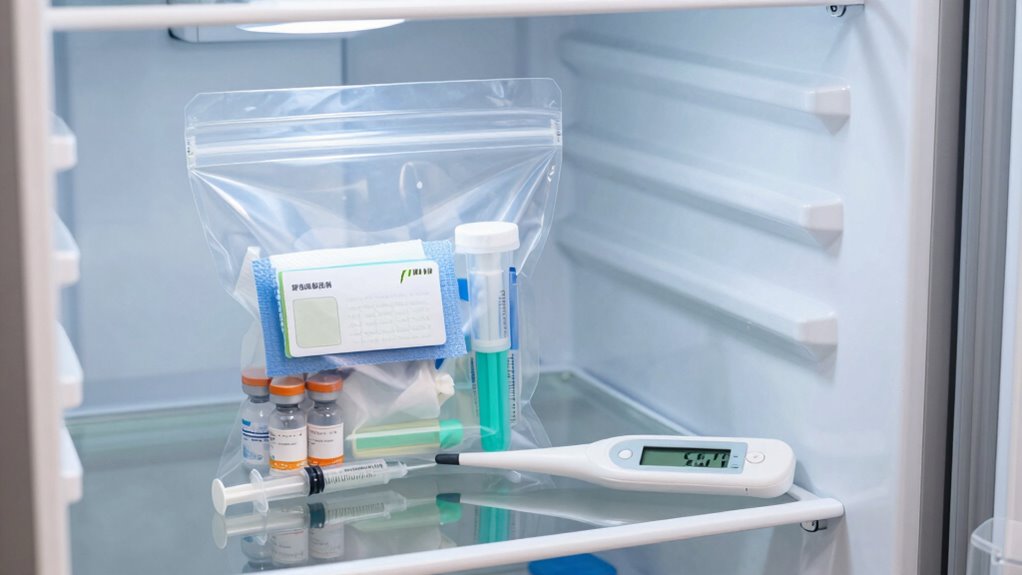
When power outages occur, refrigerated medications can quickly become unsafe if not managed properly. It’s essential to prepare ahead of time to ensure your medications stay effective and safe to use. The first step is assembling an emergency kit that includes all the necessary supplies to handle power interruptions. This kit should contain a thermometer to monitor temperature, cool packs, and a reliable power backup solution. Having these items on hand means you’re ready to respond quickly when the lights go out, preventing your medications from spoiling.
Prepare an emergency kit with thermometer, cool packs, and backup power to protect refrigerated medications during outages.
A key component of your preparation is securing a dependable power backup. This can be a generator, uninterruptible power supply (UPS), or portable battery pack designed to keep your refrigerator running during outages. Choose a power backup that matches your refrigerator’s wattage requirements and ensures continuous operation. Regularly test and maintain your backup system so it’s always ready when needed. Remember, a generator needs fuel, so keep an adequate supply stored safely, and follow all safety guidelines for operation. If you rely on a UPS or portable battery, make sure it’s fully charged and capable of sustaining your refrigerator for the duration of typical outages in your area. Understanding power backup options is vital for effective outage preparedness.
During an outage, it’s crucial to keep your refrigerator door closed as much as possible. Every time you open it, cold air escapes, and the internal temperature rises, risking spoilage of your medications. When you suspect a prolonged outage, check your emergency kit for cool packs or ice. Placing these around your medications can help maintain a safe temperature temporarily. Additionally, proper medication storage can help you make better decisions during emergencies. Proper storage practices, including knowing which medications are refrigerated and which are stable at room temperature, can significantly impact your response. If you have a thermometer, monitor the temperature frequently. If it exceeds the recommended range, you need to act quickly—either by transferring medications to a cooler with ice packs or seeking alternatives. Being aware of storage guidelines ensures you handle the situation appropriately to preserve your medications.
Timing is critical, so stay informed about the outage status through alerts or local updates. If you know the power will be out for an extended period, consider moving your medications to a cooler with ice, especially if your refrigerator cannot be powered continuously. Always follow the storage instructions provided with your medications; some require refrigeration, while others are stable at room temperature. Being proactive and prepared with an emergency kit and reliable power backup means you’re better equipped to keep your refrigerated medications safe during outages, protecting both your health and well-being.
refrigerator thermometer for medications
As an affiliate, we earn on qualifying purchases.
As an affiliate, we earn on qualifying purchases.
Frequently Asked Questions
How Long Can Refrigerated Medications Stay Safe Without Power?
Refrigerated medications typically stay safe for about 24 hours without power if you keep the fridge door closed. To guarantee proper medication storage during a power outage, use a cooler with ice packs for extended periods. Keep track of the time, and if the temperature rises above recommended levels, consult your healthcare provider. Power outage preparedness helps protect your medications, maintaining their effectiveness and your health.
What Are the Best Emergency Storage Solutions for Medications?
Did you know that over 60% of people overlook emergency planning for medications? To guarantee medication safety, invest in portable coolers with ice packs for temperature control. Consider insulated bags and battery-powered mini-fridges for longer outages. Keep a list of essential medications, their storage needs, and emergency contacts. Proper storage solutions are crucial for effective emergency planning, helping you maintain medication efficacy and safety during power outages.
Can Medications Be Safely Refrozen After a Power Outage?
You shouldn’t refreeze medications after a power outage. Once they’ve thawed, their effectiveness can decrease, and some may become unsafe. Check your medication labeling and storage instructions before making any decision. Keep an emergency kit with a thermometer to monitor temperature. If medications have been above 40°F for more than a few hours, discard them. Proper storage helps guarantee your medications stay effective and safe during outages.
Are There Specific Medications More Sensitive to Temperature Changes?
Some medications are more sensitive to temperature changes, especially those with clear labeling indicating refrigeration requirements. You should use proper storage containers to maintain consistent temperatures. Don’t assume all medications tolerate temperature fluctuations; check labels carefully. If uncertain, consult your healthcare provider or pharmacist. Proper labeling and storage help keep your medications effective, especially during outages, ensuring you get the full benefit without risking compromised treatment.
How Can I Tell if My Refrigerated Medication Has Deteriorated?
You can tell if your refrigerated medication has deteriorated by checking the medication labels for storage instructions and expiration dates. Look for changes in color, consistency, or smell, which can indicate spoilage. Use a thermometer to monitor storage temperature regularly; if it has been outside the recommended range, your medication may be compromised. When in doubt, consult your pharmacist or healthcare provider to verify safety.
cool packs for medication storage
As an affiliate, we earn on qualifying purchases.
As an affiliate, we earn on qualifying purchases.
Conclusion
Remember, keeping refrigerated medications safe during an outage is like tending a delicate garden—you must stay vigilant and prepared. Stock extra supplies, keep your fridge closed as much as possible, and know how to handle power interruptions. By planning ahead, you’re steering clear of chaos and ensuring your medications stay effective. Stay proactive; your health depends on it. With a little effort, you’ll weather the storm and keep your well-being afloat.
portable battery backup for refrigerator
As an affiliate, we earn on qualifying purchases.
As an affiliate, we earn on qualifying purchases.
medication cooler with ice packs
As an affiliate, we earn on qualifying purchases.
As an affiliate, we earn on qualifying purchases.
Fall Picks
fall essentials
As an affiliate, we earn on qualifying purchases.