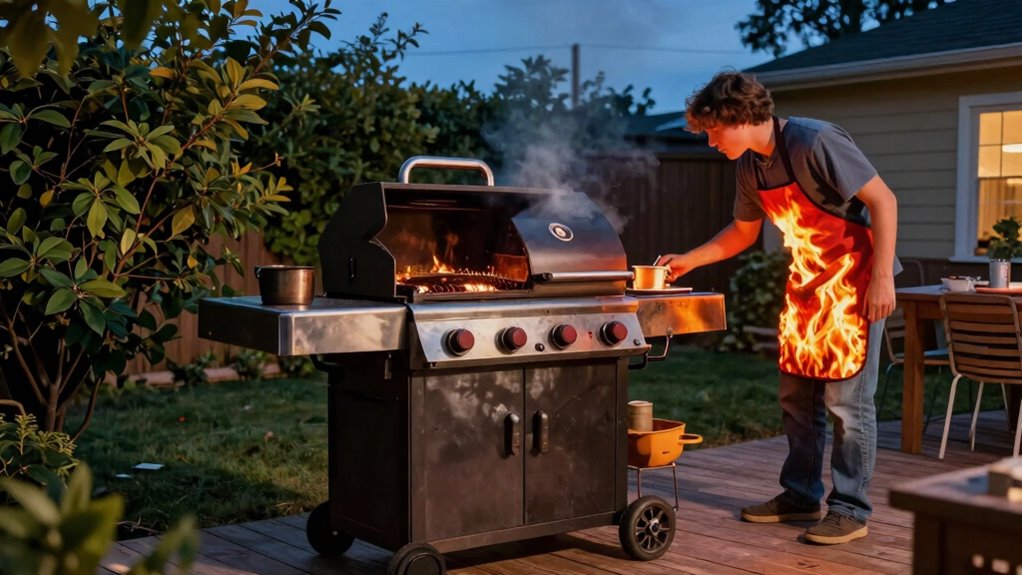
During outages, avoid placing your grill too close to your home or on balconies, as this creates serious fire and carbon monoxide risks. Using charcoal or gas grills indoors or on enclosed spaces can lead to poisoning or fires, especially if the area isn’t properly ventilated or maintained. Ensuring safe placement, regular inspections, and attentive fire management are key. To learn more about staying safe while grilling during outages, continue exploring essential tips and precautions.
Key Takeaways
- Never place grills on patios or balconies close to the home or overhangs to prevent fire spread.
- Avoid indoor use of charcoal or gas grills to prevent dangerous carbon monoxide buildup.
- Maintain at least 10 feet distance from structures, trees, and flammable materials when outdoor grilling.
- Regularly inspect and clean grills to prevent grease fires and check for gas leaks before use.
- Stay vigilant during outages by monitoring weather conditions and keeping fire extinguishers nearby.

AmzBoom 2-Pack Fire Extinguisher for Home, Kitchen, Car, and Grill with Mounting Bracket– Extinguishing Spray, Compact A, B, C, K – Eco-Friendly, Prevents Reignition.
Simple, Fast Activation:Take control with an easy-to-use design—just press, aim, and spray. Each extinguisher Emergency Survival Kits includes…
As an affiliate, we earn on qualifying purchases.
As an affiliate, we earn on qualifying purchases.
Recognizing the Risks of Indoor and Patio Grilling During Power Outages
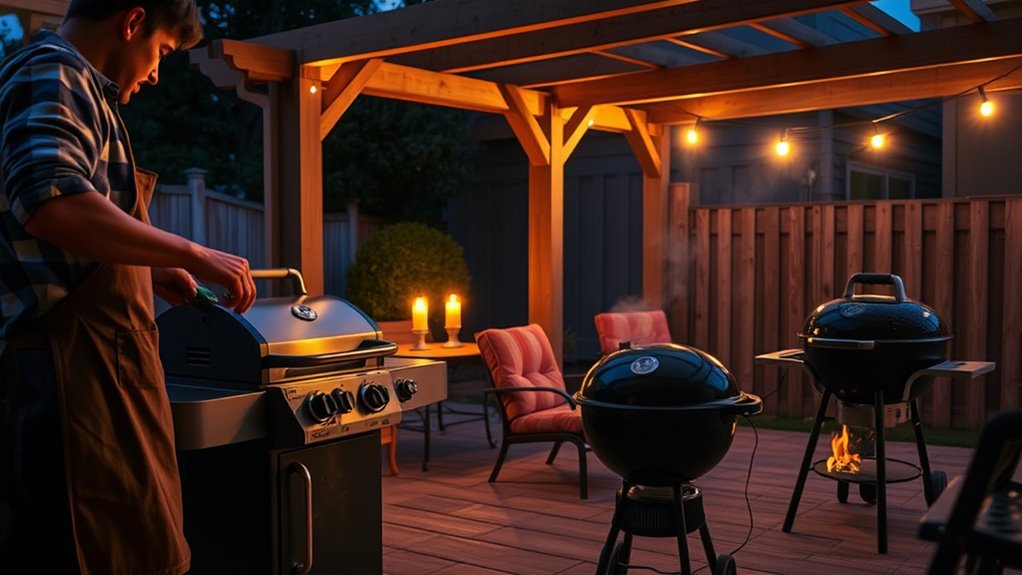
During power outages, many people turn to grilling as a backup cooking method, but it’s essential to recognize the associated risks. Indoor grilling with charcoal or gas grills can lead to dangerous carbon monoxide buildup, which is deadly in enclosed spaces. Never operate propane grills indoors; doing so can cause gas leaks and fires. Even outside, patio or balcony grilling can be hazardous if placed too close to structures, eaves, or overhanging branches, increasing fire risk. Many fires start on decks or balconies, especially when grills are too close to the home. Additionally, failing to clean grills properly can lead to grease fires. Always make sure grills are used outdoors, well away from structures, and maintained regularly to avoid preventable accidents. Proper grill placement is crucial for minimizing fire hazards during outdoor cooking, especially when considering fire safety guidelines and best practices. To further reduce risks, ensure you are aware of outdoor grilling safety measures before lighting your grill. Recognizing the importance of proper maintenance can significantly cut down on fire and health hazards associated with grilling.

BBsecure Stove Knob Covers – 5 Pack Heat Resistant Gas Stove Knob Covers with Child Proof Lock & 3M Strong Adhesive, Oil-Proof Oven Knob Covers with Clear Transparent Design, Pet-Friendly
【Dual-Button Child Safety Lock】BBsecure stove knob covers feature a dual-button safety lock that is effortless for adults but…
As an affiliate, we earn on qualifying purchases.
As an affiliate, we earn on qualifying purchases.
Why Keeping Your Grill Properly Located Matters

Placing your grill in the right spot can greatly reduce fire hazards and keep your family safe. Always position it outdoors, away from structures, overhangs, and flammable materials like dry leaves or wood. Keep it at least 10 feet from your home, deck railings, and trees. Avoid placing it on balconies or close to open windows, as these areas increase the risk of fire spreading. Ensure the surface is stable and level to prevent tipping. Never move or operate your grill in windy conditions, which can blow sparks and cause fires. Proper placement minimizes the chance of accidental fires and injuries. Regularly check the area around your grill to maintain a safe environment, especially during power outages when emergency response might take longer. Additionally, being aware of caregiver support resources can help you stay prepared for emergencies and ensure safety for all involved. Incorporating fire safety measures, such as keeping a fire extinguisher nearby, further enhances your safety precautions. Moreover, understanding sauna safety and cold‑plunge maintenance can help prevent health hazards related to outdoor heating and cooling equipment. Knowing how to properly manage outdoor heat sources also helps prevent thermal hazards that could pose risks during outages or emergencies. Being conscious of outdoor electrical safety can help you avoid dangerous situations when using outdoor appliances and equipment.

PT520A Natural Gas Detector, Gas Leak Detector with 17-Inch Gooseneck, Locating The Source Like Propane, Methane, and Butane for Home and RV (Includes Battery x3) – Orange
Effective Gas Leak Detector: The TOPTES PT520A natural gas detector detects leaks of methane, propane, natural gas, LPG,…
As an affiliate, we earn on qualifying purchases.
As an affiliate, we earn on qualifying purchases.
The Dangers of Using Grills Indoors and on Balconies
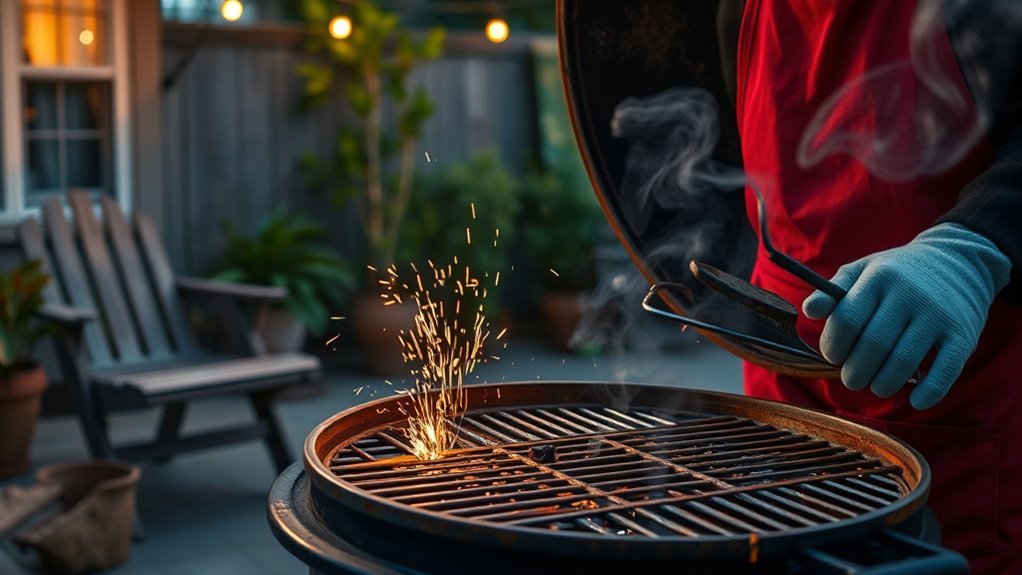
Using grills indoors or on balconies poses serious safety risks that can lead to fires and carbon monoxide poisoning. Charcoal or gas grills produce dangerous fumes, and indoor use can cause lethal carbon monoxide buildup. Even on balconies, fire spread risk increases if you’re too close to the home or overhanging structures. Proper placement is essential. Additionally, understanding unexplained phenomena can help you recognize hazards that may be overlooked during emergencies.

Fire Starter 72Pcs – Extra Long 12min Natural Fire Starters for Grill, Fireplace, Camping & Survival Kit | Waterproof, Odorless, Safe for BBQ/Pizza Oven/Chimney (Indoor & Outdoor)
🔥【Premium All-Natural & Eco-Friendly】Our fire starters are handwoven from 100% natural pine wood and food-grade wax,. Zero chemicals,…
As an affiliate, we earn on qualifying purchases.
As an affiliate, we earn on qualifying purchases.
Essential Maintenance Checks to Prevent Fires
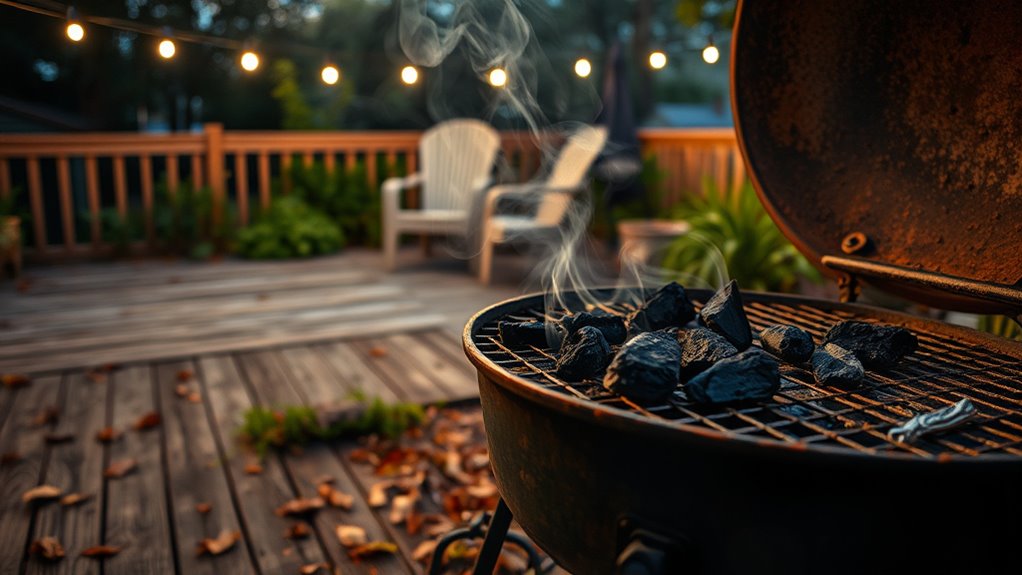
Before firing up your grill, make sure to inspect the hose for leaks or damage, as gas escapes can cause fires. Regularly clean grease buildup to prevent flare-ups and keep your grill safer. Also, check for cracks or other damage on the grill components to avoid malfunctions during use. Incorporating nanotechnology-enabled sensors can enhance safety by providing real-time monitoring of gas leaks and structural integrity. These advanced sensors utilize real-time data collection to alert you immediately if issues arise, greatly reducing potential hazards. Regular maintenance and attention to detail are key to ensuring your outdoor cooking experience remains safe and enjoyable. Understanding deep-sky imaging principles can inspire innovative safety features for outdoor equipment. Additionally, implementing preventative measures such as installing flame detectors can further reduce fire risks during grilling.
Inspect Hose for Leaks
How can you prevent a fire from starting in the first place? Regularly inspecting your hose for leaks is key. Leaking hoses can release gas, creating a dangerous buildup that could ignite unexpectedly. To check, turn on the gas and apply a soap-water solution along the hose. Watch for bubbles, which indicate leaks. Also, look for cracks, brittleness, holes, or kinks that could compromise safety. Ensuring your equipment is well-maintained aligns with electric bike safety practices, emphasizing the importance of routine checks to prevent hazards.
Clean Grease Buildup Regularly
Regularly cleaning grease and fat buildup on your grill helps prevent fires caused by flare-ups and blockages. Grease can ignite abruptly, spreading flames and risking property damage. To keep your grill safe, follow these maintenance steps:
- Remove grease from grease trays and drip pans after each use.
- Scrub grates with a wire brush to eliminate grease and food debris.
- Wipe down the interior surfaces with a damp cloth to remove residual grease.
- Check for grease leaks or blockages in the hoses and connections.
- Routine maintenance checks can help identify potential hazards before they lead to fires.
- Ensuring proper airflow around the grill enhances performance and reduces the risk of heat buildup that could ignite grease. Additionally, understanding the predictive validity of safety measures can help prioritize maintenance tasks effectively.
- Incorporating preventive maintenance routines reduces the likelihood of grease-related hazards over time.
Consistent cleaning reduces fire hazards considerably. A clean grill not only minimizes flare-ups but also extends the lifespan of your equipment. Make grease removal part of your regular grilling routine, especially during outages or prolonged inactivity.
Check for Cracks or Damage
Inspecting your grill for cracks, rust, or other damage is a crucial step in preventing fires. Cracks in the firebox or burner tubes can leak heat or gas, increasing fire risk. Rust can weaken metal components, causing parts to break or malfunction during use. Check hoses and connections for leaks, brittleness, or holes—any damage here can lead to gas leaks and potential explosions. Ensure the lid, grates, and panels are intact and free of corrosion. Damaged or worn parts should be replaced immediately before grilling. Regular inspections help catch issues early, reducing the chance of flare-ups or fires. Maintaining your grill’s safety features ensures proper function and reduces hazards. Always turn off the gas supply and disconnect the tank if you notice damage, and schedule professional repairs if needed. Staying vigilant keeps your grilling safe during outages. Incorporating visual and auditory cues from speech therapy techniques can aid in recognizing and addressing potential hazards more effectively. Additionally, understanding outdoor appliance safety guidelines can further prevent accidents. Proper maintenance and quick identification of wear and tear can significantly mitigate the risk of fire hazards, ensuring safer outdoor cooking experiences.
Timing Your Grill Use Safely During Peak Hours
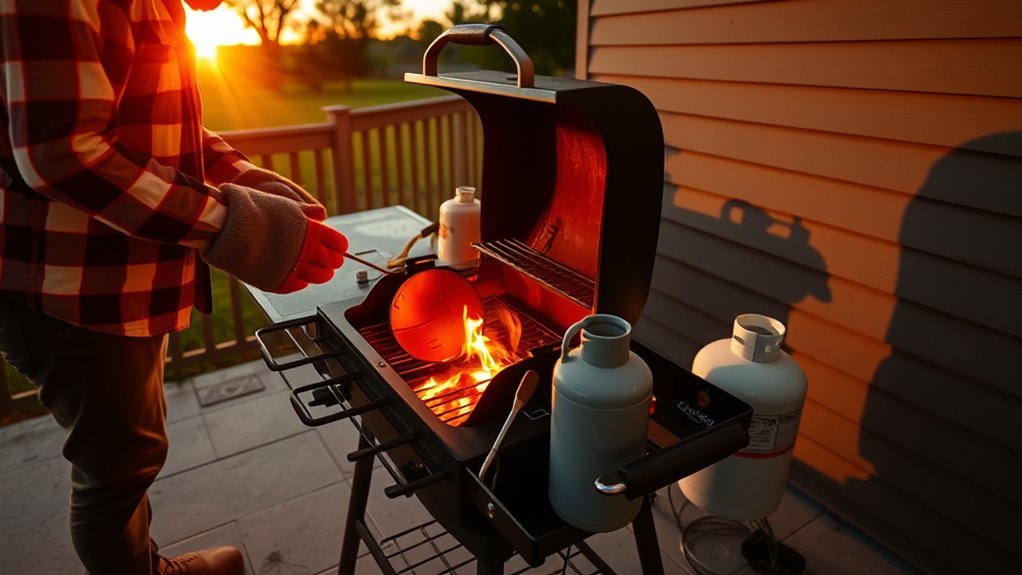
Peak grilling hours typically occur between 5 and 8 p.m., with the highest activity around 6 to 7 p.m. During this time, grilling fires are more likely to happen if you’re not cautious. To stay safe, follow these tips:
- Start early or late to avoid peak times when grills are busiest.
- Stay alert during peak hours; never leave your grill unattended.
- Monitor flame control carefully, especially when adjusting or adding fuel.
- Limit distractions to ensure you respond quickly if flames flare or problems arise.
Timing your grilling session outside of peak hours reduces the risk of accidents and allows you to focus on safe grilling practices. Remember, staying vigilant is key to preventing fires during busy periods.
Safe Practices for Attending and Extinguishing Fires
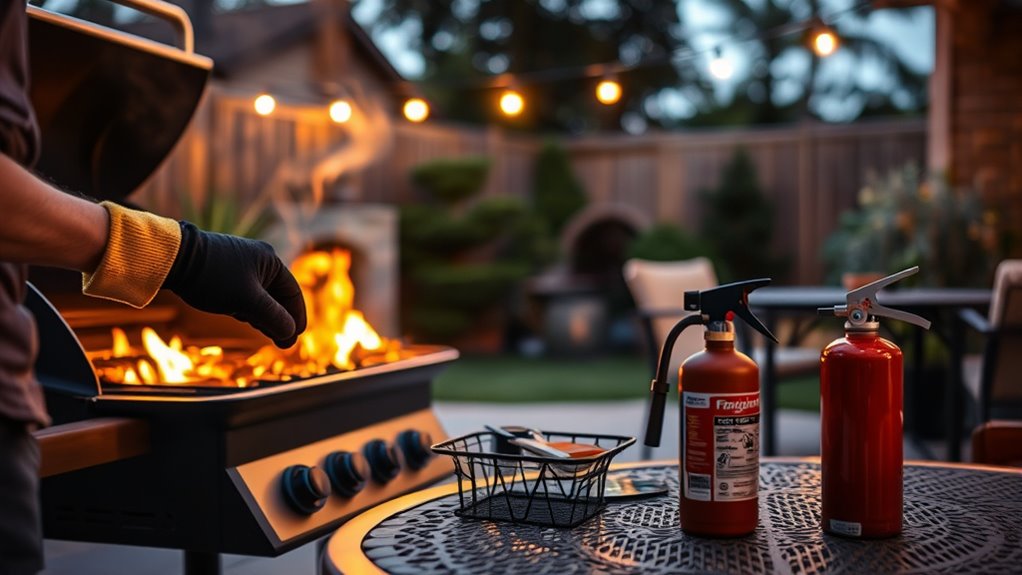
When attending a grill fire, stay calm and keep a safe distance to prevent burns or inhalation of smoke. Use the right extinguishing method, like a fire extinguisher or baking soda, to put out flames quickly and safely. Always know how to extinguish different types of fires and never leave a fire unattended until it’s fully out.
Proper Fire Attending Techniques
Attending to a fire safely requires quick, confident action to prevent it from spreading or worsening. You need to stay calm and focus on the task at hand. Here are essential fire attending techniques:
- Keep a safe distance—stand back to avoid burns or smoke inhalation.
- Use the right extinguisher—choose a Class B or multipurpose extinguisher for grease or gas fires.
- Aim at the base—direct the extinguisher’s nozzle at the fire’s base for effective suppression.
- Move in a sweeping motion—cover the entire fire area without stopping until it’s out.
Never attempt to fight a large or uncontrollable fire on your own. If it’s too big, evacuate immediately and call emergency services.
Effective Fire Extinguishing Methods
Effective fire extinguishing methods are essential for preventing small fires from escalating into major hazards. When a fire starts, stay calm and assess the situation quickly. If you can safely reach a fire extinguisher, remember the PASS technique: Pull the pin, Aim at the base of the fire, Squeeze the handle, and Sweep side to side. For small fires caused by grease or flammable liquids, use a Class K or ABC extinguisher. Never use water on grease fires; it can spread flames. If the fire is too large or uncontrollable, evacuate immediately and call emergency services. Keep a fire extinguisher nearby during grilling, and ensure everyone in your household knows how to use it. Acting swiftly and correctly can prevent serious injuries or property damage.
How to Prepare and Respond in Power Outage Situations

Power outages can strike unexpectedly, disrupting your daily routine and creating safety hazards, especially during extreme weather events. To prepare and respond effectively, you need a plan.
Here are four essential steps:
- Stock up on non-perishable food, water, batteries, and a flashlight to stay safe and comfortable.
- Keep your cell phone charged and have a portable charger ready for communication.
- Avoid using grills indoors or near open windows to prevent fire and carbon monoxide risks.
- Stay informed by monitoring weather alerts and utility company updates.
During an outage, stay calm and avoid opening your fridge or freezer unnecessarily to preserve food. Use candles safely, and never leave them unattended. Preparedness guarantees safety and minimizes inconvenience.
Frequently Asked Questions
What Are Common Signs My Grill Needs Maintenance?
You should check your grill regularly for signs it needs maintenance. Look for rust, cracks in hoses, or leaks when you spray soapy water on gas lines—bubbles signal leaks. Keep an eye out for grease buildup, which can cause fires. verify burners ignite properly and that the ignition system works smoothly. If you notice any irregular flames, uneven heat, or strange smells, it’s time to give your grill a thorough inspection and clean.
How Far Should My Grill Be From Structures?
You should keep your grill at least 10 feet away from structures like your home, deck railings, eaves, and overhanging branches. Maintaining this distance helps prevent fires from spreading if a flare-up occurs. Always place your grill on a flat, stable surface outdoors, away from combustible materials. This safety measure reduces the risk of accidental fires and keeps everyone safe during your grilling sessions.
Can I Use My Grill if the Power Is Out?
You absolutely shouldn’t use your grill during a power outage—it’s a recipe for disaster. Even if the lights are out, the danger remains high. Gas leaks, carbon monoxide buildup, and fire hazards are all invisible threats waiting to strike. Keep your family safe by waiting until power restores and conditions are safe. Never take shortcuts with grilling safety; it’s not worth risking your home or lives.
What Should I Do if My Grill Catches Fire?
If your grill catches fire, stay calm and act quickly. Turn off the gas supply if possible, and use a fire extinguisher rated for grease or gas fires to smother the flames. Never use water, as it can spread the fire. If the fire worsens or you can’t control it, evacuate immediately and call 911. Keep a fire extinguisher nearby and stay safe by acting promptly.
Are There Safer Alternatives to Outdoor Grilling During Outages?
During outages, think of safer cooking options as your guiding stars. Use a portable electric or indoor grill in a well-ventilated area, away from overhangs and flammable objects. Never use charcoal or propane indoors, as they pose serious risks. Opt for a quick-to-clean microwave or prepared meals, turning your outage frustrations into safe, delicious alternatives. Your safety shines brighter than any flame when you choose wisely.
Conclusion
Remember, safety should always be your top priority, especially during a power outage. Avoid the temptation to grill indoors or on balconies—think of it as your modern-day torch-bearing ancestor, but with far less fire and more caution. Regularly check your equipment, stay alert during peak hours, and have a plan ready if fires break out. By practicing these precautions, you’ll keep your home safe and your backyard a true paradise, not a fiery pit.