
If you open your fridge too often, you risk letting warm air in, which raises the internal temperature and promotes bacteria growth. Keeping door openings short and infrequent helps maintain a stable, cold environment below 5°C, keeping your food safer. Overpacking can also restrict airflow, making temperature fluctuations worse. To keep food fresh longer, focus on minimizing door openings and ensuring good airflow. If you want to learn more, you’re in the right spot.
Key Takeaways
- Limit door openings to reduce warm air entering, maintaining consistent internal temperature.
- Gather all items before opening to minimize the number and duration of fridge door openings.
- Keep frequently used foods at the front for quick access, avoiding unnecessary openings.
- Close the door promptly after use to prevent temperature fluctuations and bacterial growth.
- Regularly monitor and set the thermostat below 5°C to ensure food stays at a safe, stable temperature.

Jackery Portable Power Station Explorer 300, 293Wh Backup Lithium Battery, Solar Generator for Outdoors Camping Travel Hunting Blackout (Solar Panel Optional)
SPEED UP YOUR RECHARGEABILITY: It takes only 2 hours to recharge 80% battery of the power station through...
As an affiliate, we earn on qualifying purchases.
How Frequently Do We Open the Fridge?
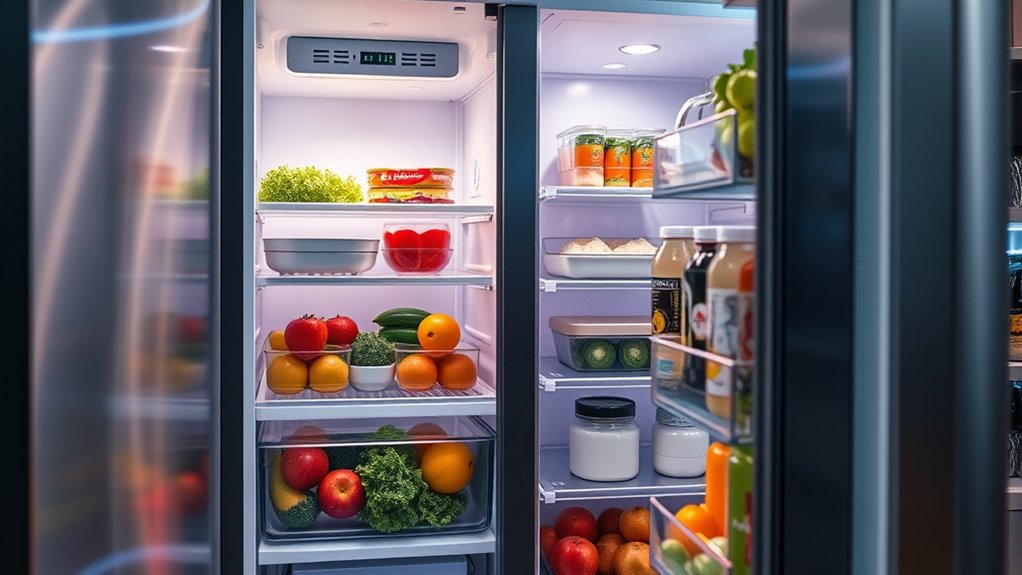
How often do you open your fridge throughout the day? On average, people open their fridge about 14.6 times in 24 hours, often to grab snacks, drinks, or ingredients. Some open it less than 10 times daily, while others do so over 20 times. Each time you open the door, warm air rushes in, causing the internal temperature to rise temporarily. This fluctuation can impact food safety, especially if the door is opened frequently or for long periods. Your habits matter—quickly grabbing what you need helps keep temperatures stable. Remember, every door opening introduces warm air that can elevate the fridge’s temperature, risking food spoilage and bacterial growth. Being mindful of how often you open your fridge can help maintain safe temperatures and preserve your food longer. Additionally, understanding temperature fluctuations caused by frequent door openings can aid in better managing your fridge’s environment. Proper temperature control is essential for preventing foodborne illnesses and extending the freshness of stored items. Maintaining a consistent temperature minimizes warm air intrusion, which is crucial for food safety and quality. Keeping the fridge door closed as much as possible reduces energy consumption and helps maintain optimal storage conditions. Practicing mindful opening habits can also help reduce energy costs and prolong the lifespan of your appliance.

Anker SOLIX C1000 Gen 2 Portable Power Station, 2,000W (Peak 3,000W) Solar Generator, Full Charge in 49 Min, 1,024Wh LiFePO4 Battery for Home Backup, Power Outages, and Camping (Optional Solar Panel)
49 Min UltraFast Recharging: With upgraded HyperFlash tech, fully recharge at 1,600W—for outage prepping, camping trips, or tailgating...
As an affiliate, we earn on qualifying purchases.
The Impact of Door-Opening Duration on Food Safety
The duration of each time you keep the fridge door open directly affects the internal temperature and, consequently, food safety. When you open the door for longer periods, warm air enters, causing the temperature inside to rise. Even a few seconds can increase the temperature enough to boost bacteria growth on perishable foods. Longer openings, like leaving the door open for 30 seconds or more, can markedly raise internal temperatures, sometimes above the safe threshold of 5°C. This creates a higher risk of food spoilage and foodborne illnesses. To keep food safe, aim to minimize door-open duration. Close the door quickly after retrieving or storing items, and avoid unnecessary prolonged openings. Proper door management helps maintain a consistent, safe temperature inside your fridge. Additionally, using a thermometer can help monitor internal temperatures and ensure they stay within safe limits. Food safety practices are essential for preventing contamination and spoilage by maintaining a stable internal temperature. Maintaining a stable internal temperature is essential for food preservation and overall safety.

Jackery Explorer 1000 v2 Portable Power Station,1070Wh LiFePO4 Battery,1500W AC/100W USB-C Output, 1 Hr Fast Charge, Solar Generator for Camping,Emergency, RV, Off-Grid Living(Solar Panel Optional)
Powerful yet Compact: Boasting a 1,500W AC output and a 3,000W surge peak, the Solar Generator 1000 V2...
As an affiliate, we earn on qualifying purchases.
Understanding Temperature Fluctuations Inside Your Refrigerator
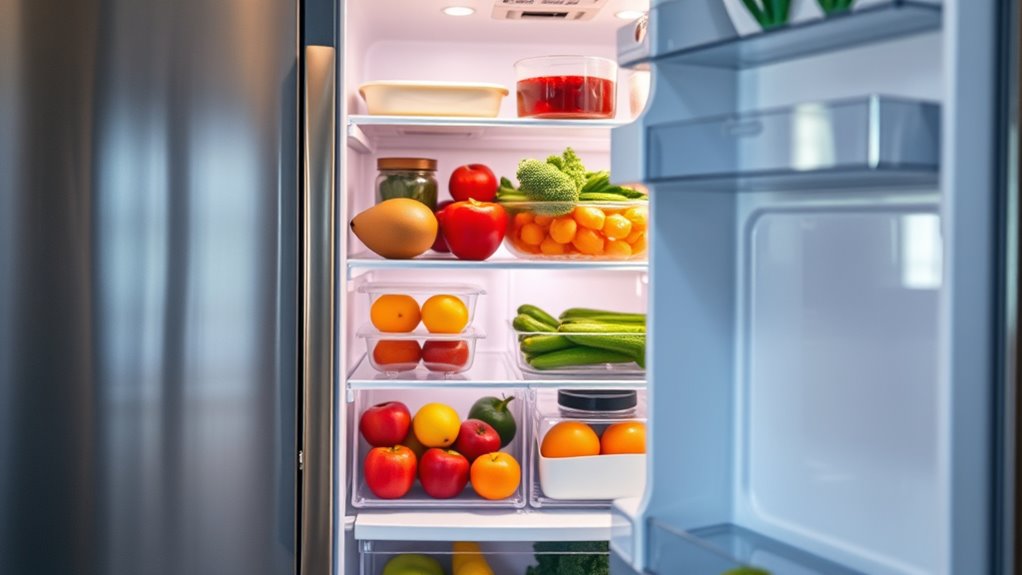
Understanding temperature fluctuations inside your refrigerator is essential for keeping food safe and fresh. Every time you open the door, warm air enters, causing the internal temperature to rise. Frequent or prolonged openings amplify these fluctuations, making it harder to maintain a consistent, safe temperature. Even small changes can create zones where bacteria grow more quickly, especially if the temperature rises above 5°C. Factors like how often you open the door, ambient room temperature, and how full the fridge is influence these fluctuations. Without a thermometer, you might not realize your fridge isn’t operating at the correct temperature. Monitoring and minimizing temperature swings help ensure your food stays within safe limits, reducing the risk of foodborne illnesses and spoilage. Incorporating a smart temperature monitor can provide real-time alerts and help maintain optimal conditions automatically. Additionally, understanding the performance of your refrigerator, including its ability to maintain consistent temperatures, is vital for food safety. Regularly cleaning the condenser coils can also improve refrigeration efficiency, ensuring the appliance operates at its best and minimizes temperature fluctuations. Recognizing authenticity in appliance features can also ensure you’re investing in reliable and effective refrigeration technology. Being aware of the temperature control mechanisms can further help in maintaining the desired internal environment.

BLUETTI Elite 30 V2 Portable Power Station 600W (Power Lifting 1500W), 288Wh LiFePO4 Battery with 10ms UPS, Emergency Backup Power for Home Blackout/Winter Storm, Solar Generator for Camping/Road Trip
[288Wh On-the-Go Power] - Only 9.4 lbs lightweight, carry it anywhere during storms! 288Wh capacity meets daily &...
As an affiliate, we earn on qualifying purchases.
Why Maintaining the Right Temperature Matters

Keeping your fridge at the right temperature is essential for food safety and quality. When you set your thermostat correctly and avoid frequent temperature changes, you help prevent bacteria from growing. Staying below 5°C ensures your food stays fresh and safe to eat. Proper temperature control is key to maintaining food freshness and preventing spoilage. Additionally, monitoring volatility risks in your fridge’s temperature can help you avoid unexpected temperature fluctuations that compromise food safety. Regularly inspecting your thermal insulation can also help maintain consistent internal temperatures and improve energy efficiency.
Proper Thermostat Settings
Maintaining the right thermostat setting in your refrigerator is essential for keeping food safe and fresh. Experts recommend setting your fridge at or below 5°C (41°F), ideally around 4°C (39°F), to inhibit bacterial growth. When your thermostat is too high, temperatures rise above safe thresholds, creating conditions for bacteria like Salmonella and Listeria to multiply. Conversely, setting it too low can cause freezing of perishable items, damaging textures and flavors. Many households unknowingly keep their fridges too warm, increasing food spoilage risks. Using a thermometer helps you monitor the actual temperature, ensuring your fridge stays within the safe range. Proper thermostat settings create an environment that slows microbial growth, extending food safety and freshness. Adjust your thermostat as needed to maintain consistent, safe temperatures.
Impact of Temperature Fluctuations
Temperature fluctuations in your refrigerator can substantially impact food safety because even brief periods of higher temperatures allow bacteria to multiply rapidly. When your fridge’s temperature rises above 5°C, pathogens like Salmonella and Listeria grow faster, increasing the risk of foodborne illness. Frequent door openings and overpacking can cause these temperature swings, creating zones where bacteria thrive. Studies show many household fridges operate above recommended temperatures, sometimes reaching 10°C or higher. These fluctuations also compromise food quality, causing spoilage and waste. Maintaining a steady temperature below 4°C slows bacterial growth, keeping your food safer longer. Using a thermometer helps monitor fluctuations, so you can adjust settings or habits to prevent dangerous temperature spikes and protect your health. Additionally, understanding temperature stability can help you implement better practices for food storage. Consistent temperature control is essential for herbal preservation, ensuring your remedies remain effective and safe over time. Regularly verifying your fridge’s temperature with a reliable thermometer is a simple yet effective way to maintain food safety standards and prevent spoilage.
The Risks of Overpacking Your Refrigerator
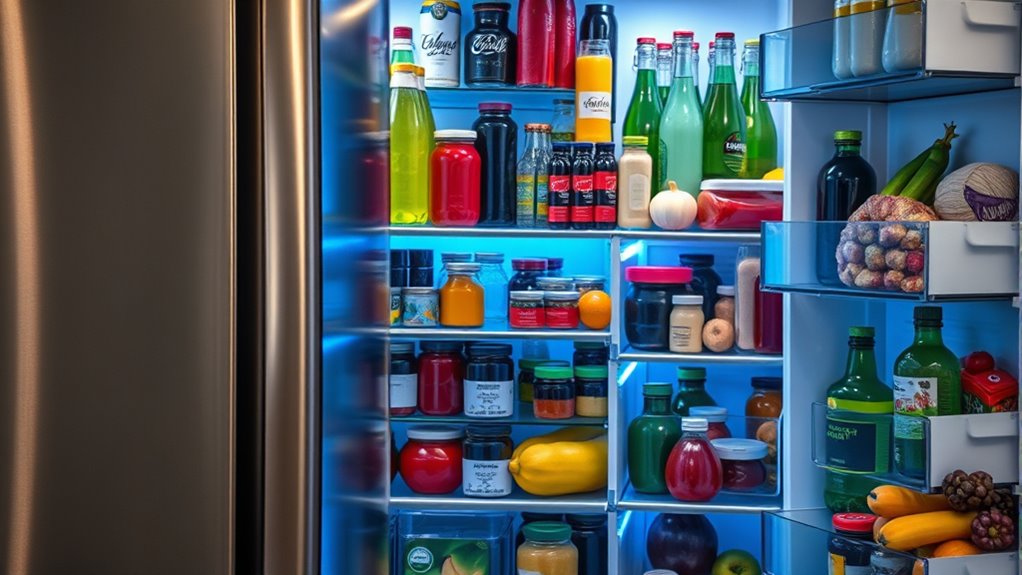
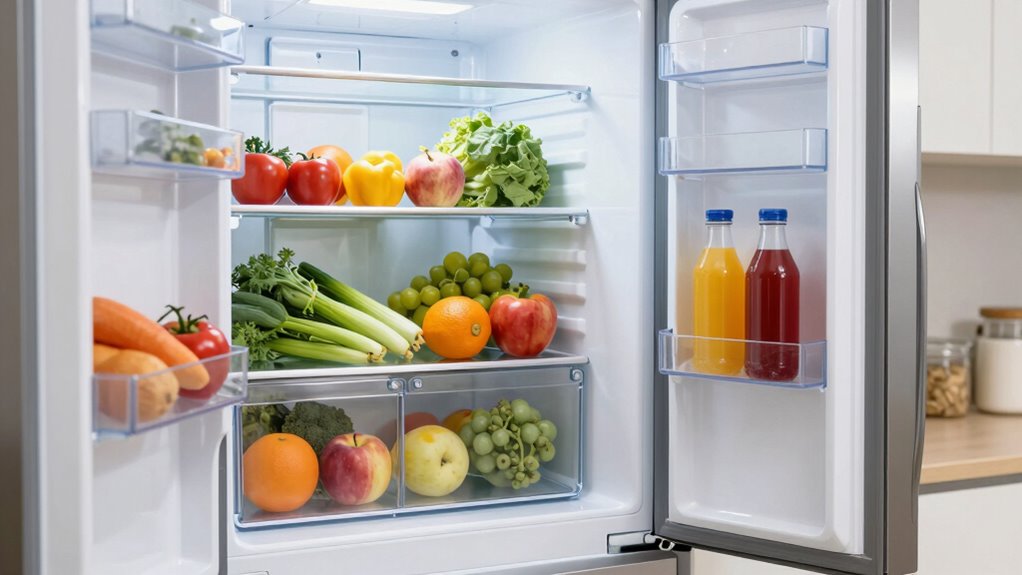
Overpacking your refrigerator can substantially elevate the risk of foodborne illnesses by disrupting its ideal cooling function. When you cram too much inside, airflow becomes restricted, preventing cold air from circulating evenly. This causes temperature fluctuations, especially in the center of the fridge, where temperatures may rise above safe levels. Overpacked shelves make it harder to maintain a consistent, below 5°C environment, ideal for slowing bacterial growth. Additionally, overcrowding increases the likelihood of cross-contamination as raw and cooked foods are stored too close together. It also takes longer to locate and access food, leading to more frequent door openings and further temperature instability. To keep food safer, avoid overloading your fridge and guarantee proper airflow and organization.
Practical Tips to Reduce Unnecessary Door Openings
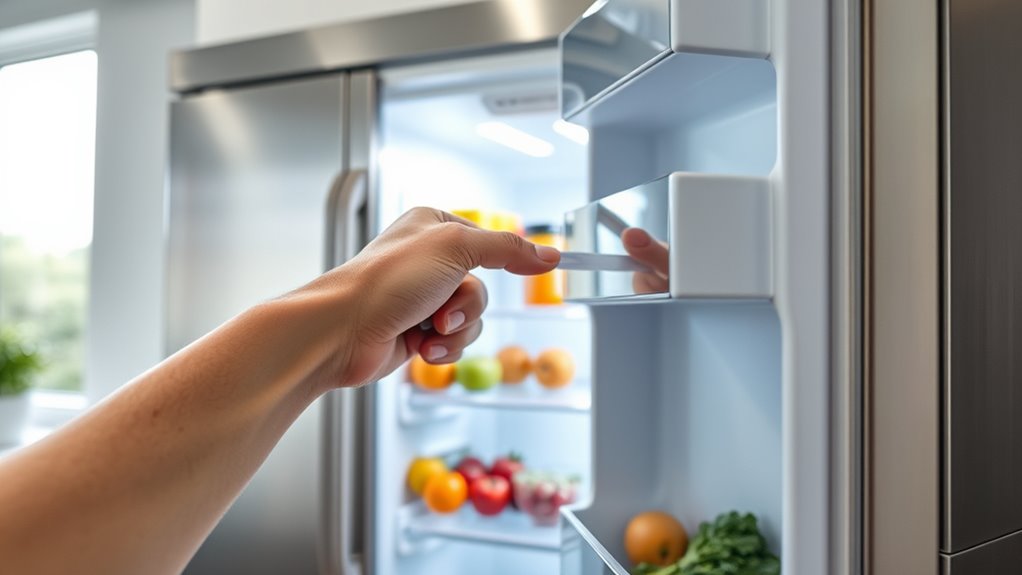
Reducing the number of times you open your fridge door is one of the most effective ways to keep its interior at a safe temperature. Plan ahead by gathering everything you need before opening the door, so you avoid multiple trips. Keep a list nearby to check what’s inside without opening repeatedly. Use clear storage bins to quickly locate items and minimize door openings. When retrieving food, open the door only as long as necessary—avoid leaving it open longer than needed. Consider organizing your fridge so frequently used items are front and center. Additionally, avoid overloading the door with items that can block airflow or cause frequent openings. These small adjustments help maintain consistent temperatures, reducing bacteria growth and keeping your food safer. Proper airflow management inside your fridge is essential for consistent temperature control. Ensuring proper air circulation within your fridge helps prevent hotspots and temperature fluctuations. Regularly checking and maintaining your fridge’s air vents can further improve efficiency and food safety, helping to prevent spoilage and contamination. Implementing these organization strategies can also make it easier to access items quickly and reduce unnecessary door openings.
Monitoring Your Fridge’s Temperature for Better Food Safety
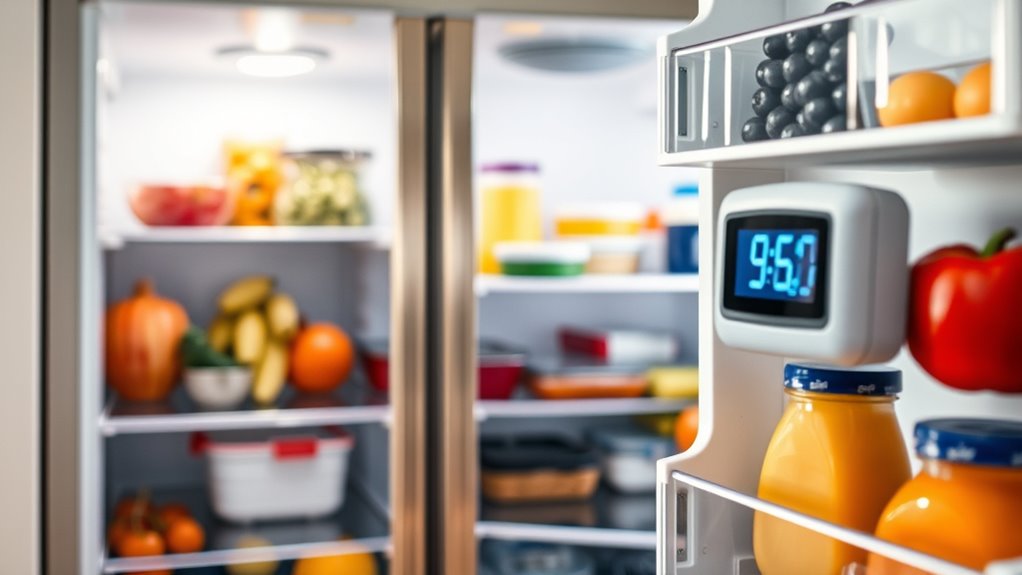
To guarantee your fridge keeps food safe, regularly monitoring its internal temperature is essential. You should check it at least once a week with a reliable thermometer placed in the middle of the fridge, not near the door. Here are three key tips:
Regularly check your fridge’s temperature weekly with a reliable thermometer to keep food safe.
- Maintain consistent temperatures below 5°C (41°F) to slow bacterial growth.
- Adjust the thermostat as needed to keep the temperature steady, especially during seasonal changes.
- Record and monitor readings to identify temperature fluctuations and prevent unsafe conditions.
Keeping an eye on your fridge’s temperature helps prevent dangerous bacteria from thriving. If you notice it’s consistently above 5°C, you’ll know it’s time to troubleshoot or replace the thermostat. Regular checks assure your food stays safer longer.
Frequently Asked Questions
How Does Ambient Temperature Influence Refrigerator Temperature Stability?
Ambient temperature directly influences your refrigerator’s temperature stability. When the surrounding environment is warmer, your fridge works harder to maintain a safe internal temperature, often leading to fluctuations or increases beyond recommended levels. Conversely, cooler ambient temperatures help your fridge stay consistent and efficient. You should monitor both your fridge’s thermostat and room temperature, especially during seasonal changes, to ensure foods stay safely chilled and bacteria growth stays in check.
What Role Does Refrigerator Age Play in Temperature Regulation?
You might imagine your fridge as a trusty old guardian; its age can influence how well it keeps things cool. Over time, worn-out components like the thermostat may struggle to maintain steady temperatures, causing fluctuations. Even if your fridge looks fine, an aging unit might run less efficiently, risking warmer spots. Regular maintenance and considering an upgrade guarantee your food stays fresh and safe, no matter how long you’ve had it.
Can Specific Food Types Affect Overall Refrigerator Temperature?
Yes, specific food types can influence your refrigerator’s overall temperature. When you store large quantities of bulky items or foods that emit moisture, like fruits and vegetables, they can raise humidity levels and cause temperature fluctuations. Overpacking or unevenly distributing foods can block airflow, leading to warmer spots. To keep your fridge at a safe temperature, organize foods properly, avoid overfilling, and guarantee good airflow around all items.
How Does Overpacking Increase Cross-Contamination Risks?
Overpacking your fridge increases cross-contamination risks because it blocks airflow, causing uneven cooling and temperature fluctuations. When shelves are crammed, cold air can’t circulate properly, creating warm spots where bacteria thrive. This environment encourages harmful microbes to grow and spread between foods. To keep your food safer, avoid overloading, leave space for air to circulate, and maintain consistent temperatures below 5°C, reducing contamination chances.
Are There Optimal Door-Opening Practices to Minimize Temperature Spikes?
To minimize temperature spikes, open your fridge only when necessary and keep door openings brief, ideally under 10 seconds. Plan ahead to take all needed items in one go, reducing the frequency of door openings. Avoid overpacking, which can restrict airflow and cause uneven cooling. Also, set your thermostat to 4°C or below, and consider installing a thermometer to monitor temperatures regularly for ideal food safety.
Conclusion
Just like Icarus risking the sun, repeatedly opening your fridge can cause your food to falter. By keeping door openings in check and maintaining a steady temperature, you safeguard your supplies and avoid unnecessary risks. Remember, resilience isn’t just about strength—it’s about consistency. So, be mindful of your habits, and let your fridge’s cool stability be your shield against spoilage, ensuring your food stays fresh and safe for longer.