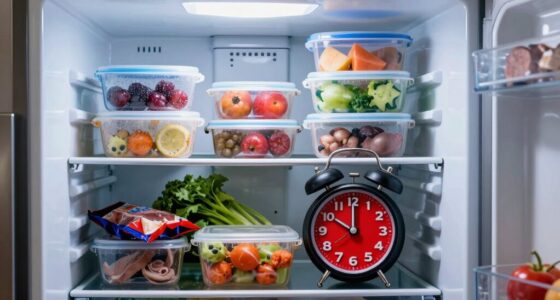
Freezer alarms and temperature monitors help you spot temperature rises quickly, preventing food from thawing and spoiling. They enable you to react fast, reducing waste and health risks from contaminated food. Regular maintenance and calibration make certain these alarms are reliable, keeping your food safe and compliant with standards. When combined with emergency protocols, they give you peace of mind and better control of your food storage. Continue exploring to discover how to maximize your food safety strategies.
Key Takeaways
- They provide rapid alerts to temperature deviations, enabling quick corrective actions before food spoilage occurs.
- Continuous monitoring helps identify equipment issues early, reducing the risk of unsafe storage conditions.
- Alarms support compliance with food safety standards and industry regulations.
- Real-time data and remote alerts enhance proactive management and response efforts.
- Prompt notifications help prevent health risks associated with contaminated or spoiled food.
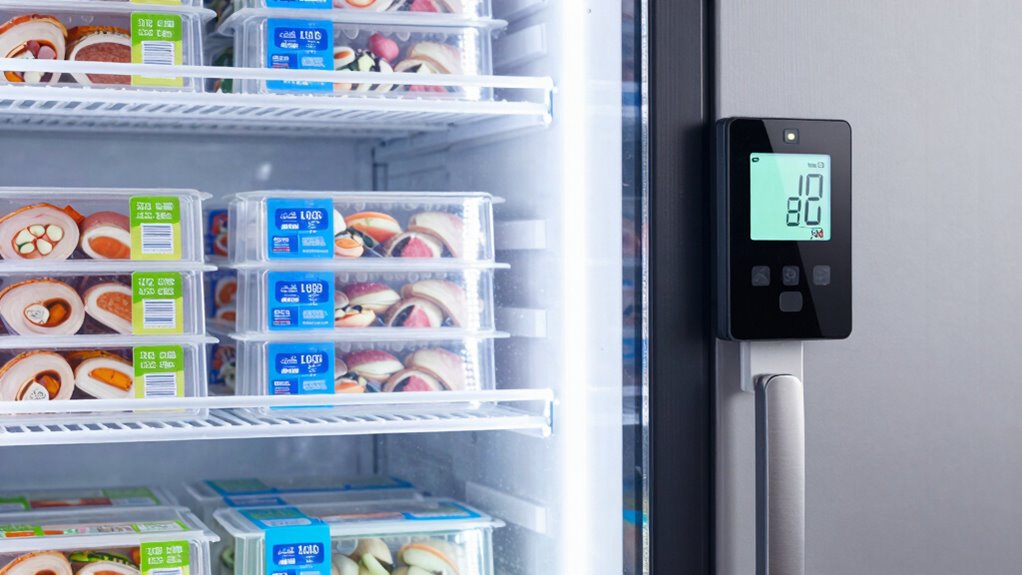
Have you ever wondered what could happen to your frozen food if your freezer stops working unexpectedly? It’s a stressful situation that can lead to food spoilage, waste, and potential health risks. That’s where freezer alarms and temperature monitors come in—they act as your first line of defense, alerting you immediately if something goes wrong. When your freezer’s temperature rises above safe levels, these devices sound alarms, giving you the chance to respond quickly. This rapid notification is essential in preventing food from thawing completely, which can compromise its safety and quality.
Implementing effective freezer alarms supports your emergency protocols. Instead of discovering spoiled food after the fact, you’re warned early enough to take action—whether that means moving items to a backup freezer, adjusting the temperature, or calling for professional repairs. These alarms are especially valuable during power outages or equipment malfunctions, where temperature fluctuations are common. By integrating these systems into your routine, you’re actively enhancing your food safety measures and reducing the risk of contamination.
Early alerts from freezer alarms enable quick action, protecting food during outages and preventing contamination.
Equally important is regular equipment maintenance. Freezer alarms are most effective when paired with consistent upkeep of your appliances. Regular inspections help you identify potential issues before they escalate, such as faulty thermostats, worn-out seals, or refrigerant leaks. Proper maintenance guarantees that your equipment functions efficiently, making alarms more dependable and reducing false alarms or missed alerts. Staying on top of equipment upkeep creates a more trustworthy safety environment for your food storage. Additionally, understanding temperature monitoring helps you better interpret alarm alerts and ensure your food remains within safe ranges. Proper calibration of sensors further enhances the accuracy of these devices, preventing false alarms or overlooked issues. Incorporating sensor accuracy into your maintenance routine can significantly improve alarm reliability. Furthermore, adopting advanced monitoring technology can provide real-time data and remote alerts, increasing your ability to respond swiftly regardless of your location.
Furthermore, these alarms help you adhere to food safety standards and regulations. Many health departments and industry guidelines require temperature monitoring and prompt response protocols. By investing in reliable alarms and monitors, you’re not only protecting your customers or family but also demonstrating a commitment to best practices. Regularly reviewing safety protocols and staying informed about new standards ensures continuous compliance and optimal food safety management. Over time, this proactive approach minimizes the risk of legal liabilities and reputational damage associated with foodborne illnesses caused by improper storage.
In the end, freezer alarms and temperature monitors serve as essential tools that support your overall food safety strategy. They give you peace of mind, knowing that you’ll be alerted immediately if your equipment falters. When combined with regular equipment maintenance and well-defined emergency protocols, these devices help you act swiftly to preserve food quality and safety. Staying vigilant with these technologies isn’t just about protecting your food—it’s about safeguarding health, maintaining compliance, and preventing costly losses.
As an affiliate, we earn on qualifying purchases.
Frequently Asked Questions
How Do Freezer Alarms Alert You During Power Outages?
During power outages, freezer alarms trigger Power outage alerts by monitoring temperature fluctuations. When they detect a rise in temperature, they activate a loud alarm, alerting you immediately. You can then take action to prevent food spoilage. Regular alarm maintenance guarantees the system functions correctly, so you stay informed even during unexpected outages. This proactive approach helps you protect your inventory and maintain food safety efficiently.
Are Freezer Temperature Monitors Compatible With Smart Home Systems?
Did you know 85% of smart home users prefer devices with smart integration? Freezer temperature monitors often support this feature, allowing you to connect them with your smart home system. This lets you customize alerts, monitor temperatures remotely, and automate responses. Compatibility varies, so check the product specs. With user customization, you can set alerts tailored to your needs, ensuring your frozen foods stay safe and your system is seamlessly integrated.
What Is the Ideal Temperature Range for Freezer Safety?
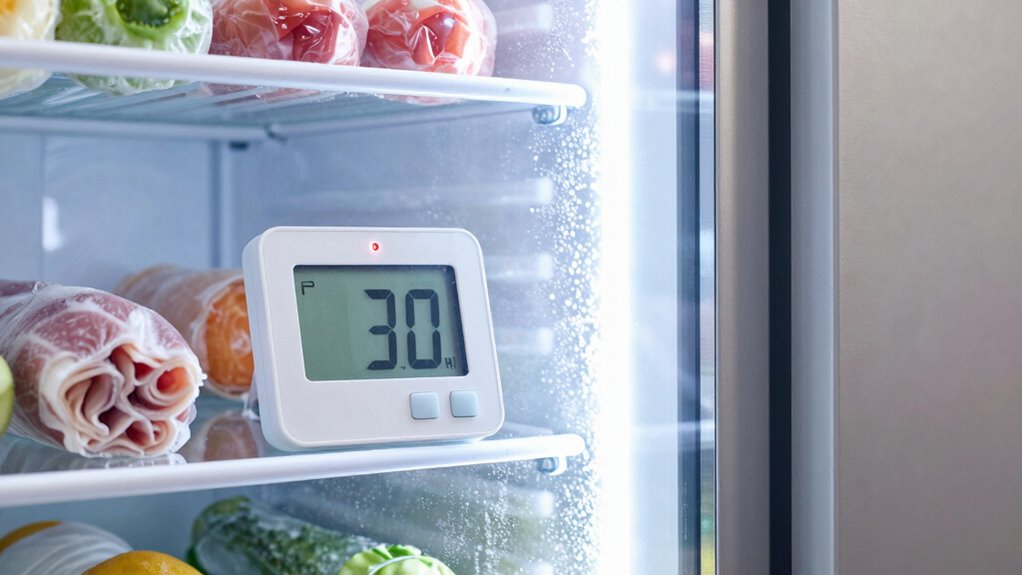
The ideal temperature range for freezer safety is between -18°C and -20°C (0°F to -4°F). Maintaining this range guarantees optimal storage and prevents bacteria growth, keeping food safe and fresh. Temperature consistency is vital, so your freezer should stay within this range consistently. Use freezer alarms and temperature monitors to alert you if temperatures fluctuate outside this safe zone, helping you preserve food quality and avoid spoilage.
How Often Should Freezer Alarms Be Tested for Reliability?
You should test your freezer alarms monthly to guarantee they’re reliable. Coincidentally, regular alarm calibration and proper alarm placement are key to consistent performance. When testing, check that the alarms activate at the correct temperature and are positioned where they can be heard or seen easily. This routine helps catch potential issues early, ensuring your food stays safe and your freezer operates effectively.
Can These Alarms Prevent Food Spoilage Proactively?
Yes, freezer alarms can proactively prevent spoilage by alerting you immediately when temperatures drift outside safe ranges. You guarantee alarm accuracy through regular testing, which helps catch issues early. This way, you can take swift action to fix problems before food spoils, reducing waste and maintaining safety. Relying on accurate alarms gives you peace of mind, knowing you’re actively protecting your inventory from spoilage and contamination.
As an affiliate, we earn on qualifying purchases.
Conclusion
Using freezer alarms and temperature monitors considerably boosts food safety by alerting you to potential issues before they become serious. Studies show that 60% of foodborne illnesses are linked to improper storage temperatures. With these devices, you can catch temperature fluctuations early, preventing spoilage and contamination. Investing in reliable alarms isn’t just about protecting your food—it’s about safeguarding your health and avoiding costly waste. Stay vigilant, stay safe, and keep your food fresh with these smart solutions.
remote temperature sensor for freezer
As an affiliate, we earn on qualifying purchases.
As an affiliate, we earn on qualifying purchases.
As an affiliate, we earn on qualifying purchases.