Flickering power and transient electrical issues can damage your cold chain and cause false temperature readings. Believing that a quick cooling or “reset the clock” approach makes foods safe again is a dangerous myth. If foods have stayed above 41°F (5°C) for over four hours, they are unsafe regardless of subsequent cooling. To prevent risks, you need to follow proper protocols and understand how power disruptions impact food safety—more details coming up.
Key Takeaways
- Foods above 41°F (5°C) for over four hours cannot be safely “reset” by cooling; discard to prevent foodborne illness.
- Flickering power can cause false temperature readings, risking undetected temperature excursions and unsafe food conditions.
- Power outages or fluctuations may damage sensors, compromising monitoring accuracy and cold chain integrity.
- Do not rely solely on subsequent cooling; bacterial growth during initial temperature abuse makes food unsafe.
- Maintain proper documentation and use backup sensors to ensure accurate temperature tracking during power disturbances.

GoveeLife WiFi Refrigerator Thermometer with Alarm, Wireless Digital Freezer Temperature Gauge with App, 2 Years Free Data Export, for Home Kitchen Fridge Hot Tub 2 Pack(Only Support 2.4G Wi-Fi)
Smart 3-Way Alerts & Remote Temperature Monitoring:Get instant app notifications, email alerts, and buzzer alarms when temperatures exceed…
As an affiliate, we earn on qualifying purchases.
As an affiliate, we earn on qualifying purchases.
Understanding Cold-Chain Failures and Their Impacts
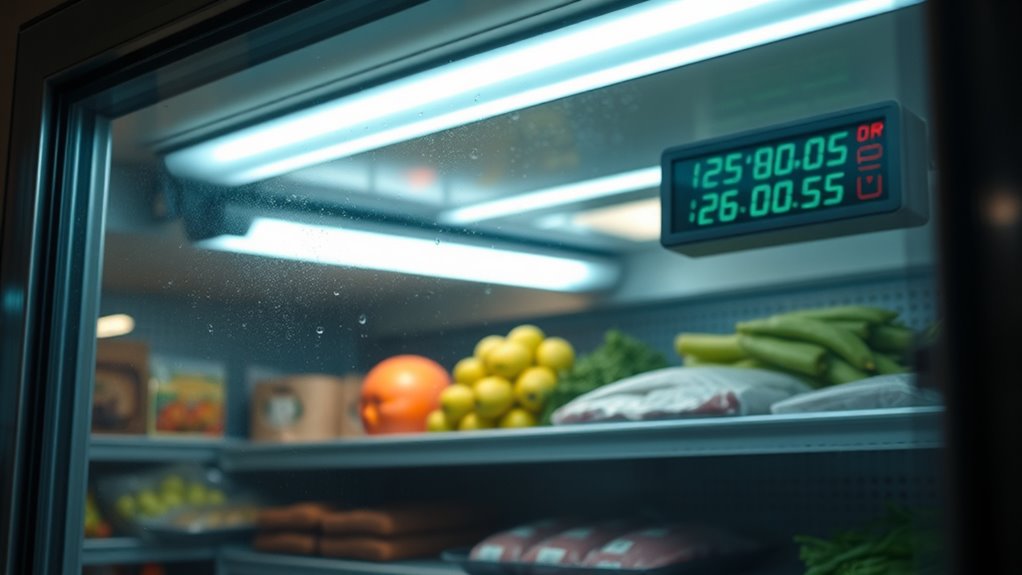
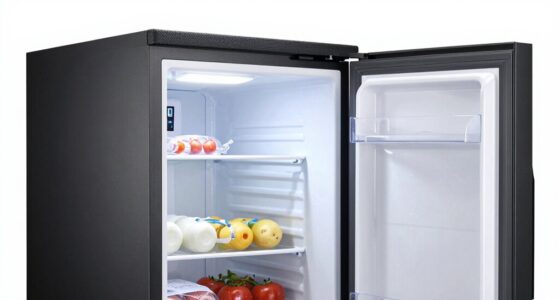
Cold-chain failures occur when power outages or electrical issues disrupt refrigeration and freezing equipment, allowing temperatures to rise above safe limits. When this happens, perishable foods can thaw, creating ideal conditions for bacterial growth and increasing foodborne illness risks. Refrigerators that exceed 41°F (5°C) for four hours or more jeopardize product safety, often leading to disposal. Freezer temperature rises can cause thawing, but some regulations permit refreezing if surface temps stay below certain thresholds; still, many retailers discard thawed inventory. Weather-related and grid outages have become more frequent, raising the chances of cold-chain breaches. The consequences are significant: commercial losses, product recalls, and increased consumer hesitation. Maintaining continuous cold storage is critical to prevent contamination, spoilage, and costly operational disruptions. Modern kitchen technology can help monitor and manage cold storage environments more effectively, reducing the risk of failures and ensuring safety. Additionally, implementing reliable monitoring systems can provide real-time alerts and help prevent unnoticed temperature excursions. Ensuring power backup solutions are in place is essential to sustain cold storage during outages and maintain food safety standards. Furthermore, understanding and addressing cold-chain integrity is vital for safeguarding perishable goods and consumer health. The integration of temperature control devices with smart technology offers an additional layer of security, helping to maintain consistent storage conditions even during unexpected disruptions.
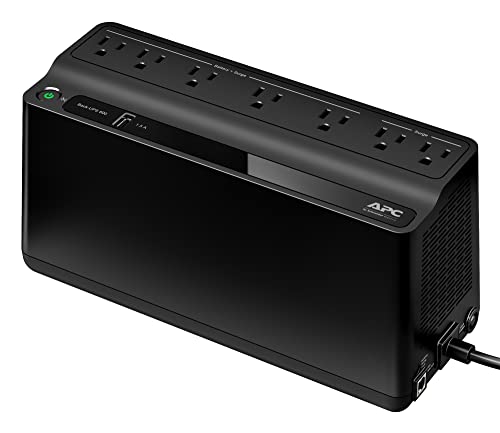
APC UPS 600VA / 330W UPS Battery Backup & Surge Protector, 7 Outlets (NEMA 5-15R), USB Charging Port, BE600M1 Uninterruptible Power Supply for Computers, Wi-Fi Routers, and Home Office Electronics
600VA / 330W RELIABLE BACKUP POWER: Supplies short‑term battery power during outages to maintain internet connectivity and allow…
As an affiliate, we earn on qualifying purchases.
As an affiliate, we earn on qualifying purchases.
The Myth of “Resetting the Clock” After Power Outages

Many businesses and consumers mistakenly believe they can simply “reset the clock” after power is restored, treating previously unsafe food as safe once temperatures return to acceptable levels. This myth ignores the fact that food exposed to unsafe temperatures for over four hours remains risky, regardless of subsequent cooling. To avoid dangerous assumptions, remember:
- Once core temperatures exceed 41°F (5°C) for four hours or more, the food is unsafe, even if it cools later.
- Rapid cooling methods don’t undo prior temperature abuse or bacterial growth.
- Documentation and proper disposal are required; “resetting” can lead to regulatory violations.
- Power restoration doesn’t guarantee food safety—proper protocols must be followed to assess and manage cold-chain breaches.
- Temperature monitoring technology can help monitor storage conditions in real-time, ensuring temperature control and safety compliance.
- Recognizing temperature abuse early can prevent foodborne illnesses and reduce food waste.
- Ignoring these guidelines can result in foodborne illness and compliance issues.
- Regular maintenance of refrigeration units, such as cleaning and filter checks, can prevent unexpected failures and ensure consistent temperature control.

Tzone Bluetooth Temperature Data Logger USB Low Temp Recorder with Probe,Digital Freezer Thermometer Logger with Auto Report,Temperature Sensor for Refrigerator Lab Cold Chain Transportation Monitor
BLUETOOTH TEMPERATURE DATA LOGGER– Bluetooth connection(4.0 or above), supports reading temperature values, setting parameters, download reports and so…
As an affiliate, we earn on qualifying purchases.
As an affiliate, we earn on qualifying purchases.
Proper Protocols for Temperature Recovery and Food Safety
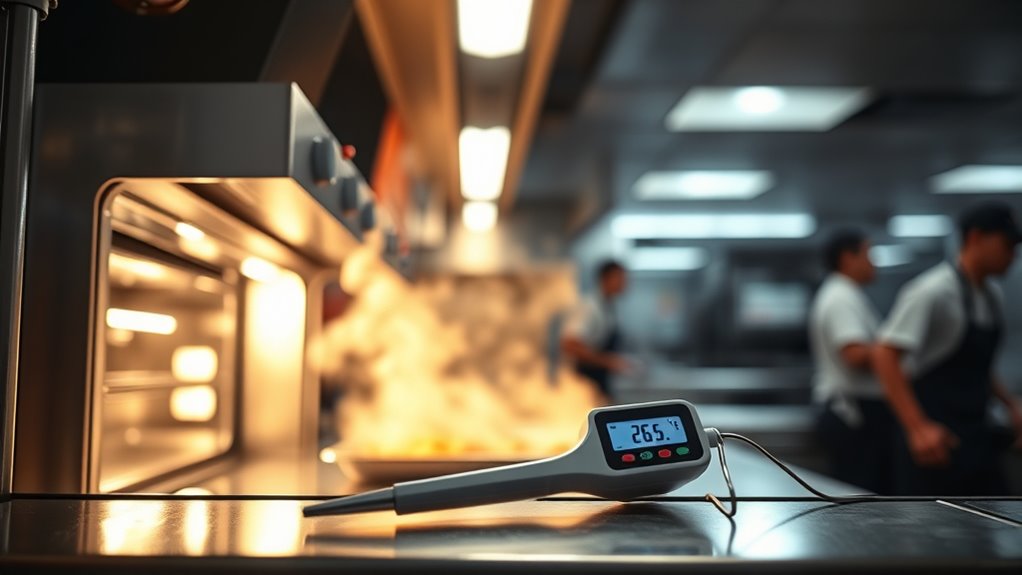
When a temperature breach occurs, following proper recovery protocols is essential to guarantee food safety and regulatory compliance. First, verify the actual core temperature using calibrated, reliable thermometers. If perishable foods have been above 41°F (5°C) for four hours or more, discard them—don’t rely on “resetting the clock.” For foods that are still within safe time limits, quickly cool them using ice baths or smaller portions to reduce temperature and limit bacterial growth. Document all actions and maintain detailed records to support compliance and traceability. Proper temperature recovery techniques can help prevent bacterial proliferation during power outages and ensure food remains safe for consumption. Implementing proper temperature monitoring can further enhance your response and safeguard public health. Additionally, understanding temperature recovery processes can optimize food safety efforts during power outages. Regularly reviewing food safety protocols ensures that staff are prepared to handle temperature breaches effectively. Using proper cooling methods can accelerate temperature reduction and minimize risks associated with improper cooling. Remember, rapid, documented response helps protect public health and meets regulatory standards while minimizing economic losses.

Freezer Meter Food Safety Thermometer, Traceable Temperature Monitor Without Wires or Batteries
FreezerMeter is the safest and easiest way to monitor the temperature of your food – according to the…
As an affiliate, we earn on qualifying purchases.
As an affiliate, we earn on qualifying purchases.
Risks Associated With Re-Refreezing Thawed Foods
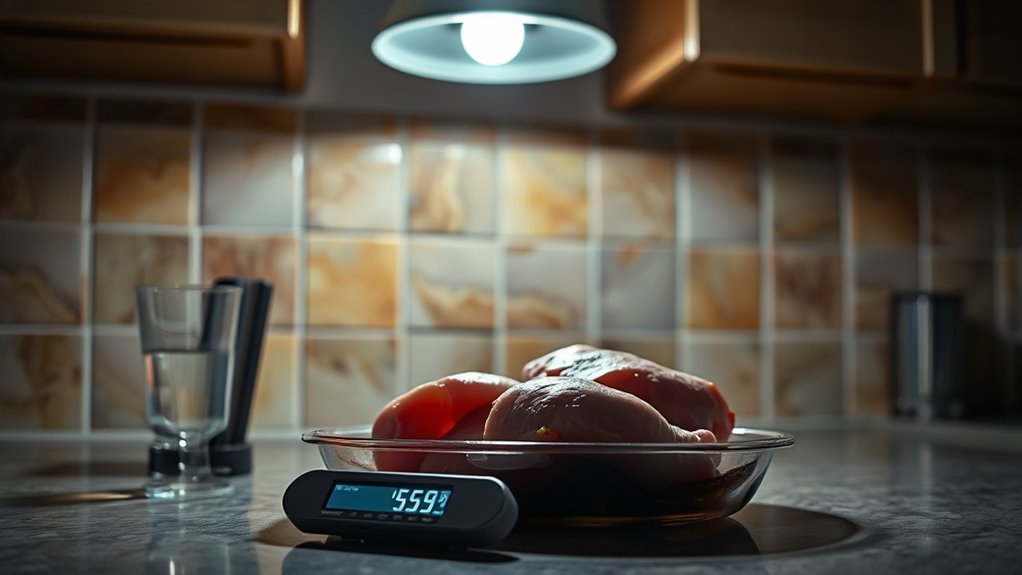
Refreezing thawed foods can pose significant food safety risks because it may allow bacteria to proliferate during the thawing process, especially if proper temperature controls weren’t maintained. When you refreeze food without confirming it stayed within safe temperature limits, you risk microbial growth that can cause foodborne illness. Additionally, refreezing can compromise food quality, affecting texture and flavor. Here are key risks to contemplate:
- Bacteria multiplication during thawing, increasing pathogen load.
- Potential for unsafe food if core temperatures exceeded safe zones.
- Loss of quality due to ice crystal formation damaging cell structures.
- Regulatory violations if proper documentation and procedures aren’t followed.
Always verify that foods have remained within safe temperature ranges before refreezing, and discard if in doubt.
Power Quality Issues: Flicker, Transients, and Equipment Reliability
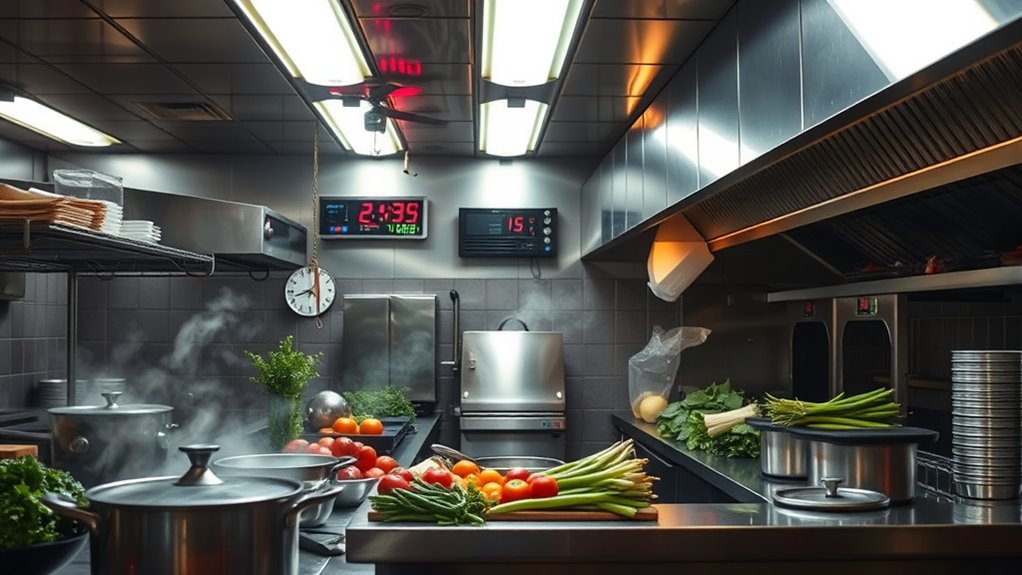
Flickering lights and power transients can disrupt your food safety systems by causing equipment malfunctions or false readings. These power quality issues may trip sensors, shut down control systems, or damage crucial machinery, increasing the risk of undetected temperature excursions. Addressing lighting flicker and transient disturbances is essential to maintaining reliable operations and ensuring food safety. Implementing power quality management tools can help identify and mitigate these issues before they impact critical processes. Additionally, understanding lighting flicker sources and their impact on sensitive equipment is vital for comprehensive mitigation strategies. Recognizing the voltage fluctuations that cause flicker is key to developing effective solutions for maintaining stable power conditions. Regular monitoring of power stability can further help prevent unexpected disruptions and protect critical food safety infrastructure. Incorporating power quality monitoring systems enables proactive detection of disturbances, minimizing downtime and safeguarding product integrity.
Lighting Flicker Effects
Lighting flicker caused by power quality issues can disrupt operations in food storage and processing environments by impairing visibility and worker comfort. Flickering lights can lead to eye strain, reduce focus, and cause fatigue, increasing the risk of errors during critical tasks. Additionally, flicker can trigger false alarms in sensor systems or cause control devices to malfunction. Here are key effects to contemplate:
- Reduced visibility: Flickering hampers your ability to spot temperature deviations or contamination.
- Worker discomfort: Frequent flicker can lead to headaches or eye strain, decreasing productivity.
- Sensor interference: Flicker may cause sensors and control systems to trip or produce inaccurate data.
- Equipment stress: Persistent flicker can accelerate deterioration in lighting fixtures and control electronics, risking system failures.
- Impact on smart automation: Flickering lights can interfere with local automation routines and cross-platform integrations that rely on stable lighting signals. Recognizing and mitigating power quality issues like flicker is essential for maintaining consistent and reliable operations. For example, persistent flicker can also strain the electrical infrastructure, leading to broader system vulnerabilities. Furthermore, addressing flicker can help prevent equipment downtime and ensure continuous process flow.
Addressing flicker improves both safety and operational reliability.
Equipment Disruption Risks
Power quality issues like flicker, transients, and harmonics can profoundly undermine the reliability of your food storage and processing equipment. Voltage fluctuations and transient surges can trip sensors, PLCs, and control systems, causing unplanned shutdowns or incorrect readings. These disruptions may lead to temperature control failures, risking unsafe food and regulatory noncompliance. Flickering lights often indicate underlying power instability that can damage sensitive equipment over time. Harmonics and transients contribute to equipment wear, increasing the likelihood of breakdowns during critical periods. Without proper mitigation—such as surge protectors, harmonic filters, and UPS systems—you risk equipment damage, data loss, and process interruptions. Maintaining stable power quality is essential to guarantee continuous operation, accurate monitoring, and safeguarding food safety standards. Power quality issues like flicker can also lead to long-term equipment degradation if not properly managed, emphasizing the importance of power stability for equipment longevity.
How Lighting and Power Fluctuations Affect Monitoring Systems
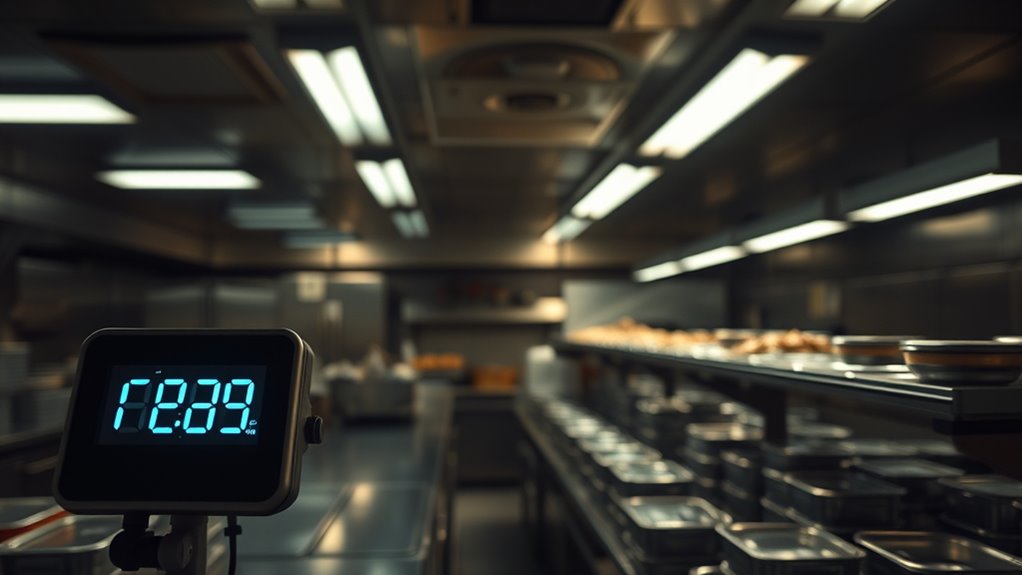
When voltage fluctuations and transient disturbances occur, they can disrupt the operation of monitoring systems critical to cold-chain management. These power issues can cause sensor errors, data gaps, and false alarms that compromise food safety. You need to be aware of how lighting flicker and power surges impact your equipment:
- Power surges can trip sensors, losing temperature data and creating blind spots.
- Flickering lights indicate voltage instability, which can affect sensor accuracy.
- Transients and harmonics can damage control electronics, increasing failure risk.
- Unstable power can cause false temperature readings, leading to improper product disposition.
These disruptions not only threaten data integrity but also make it harder to verify compliance and respond swiftly during outages. Maintaining stable power is vital to ensure reliable monitoring and protect your cold chain.
Ensuring Data Integrity During Power Interruptions

Maintaining data integrity during power interruptions is essential to guarantee accurate cold-chain monitoring and compliance. You need reliable, battery-backed data loggers and redundant sensors to prevent data loss when the power goes out. Regular calibration and validation verify sensors remain accurate, especially after outages or transient events. Remote alert systems must have backup power sources like UPS units to transmit alarms promptly, preventing delays in response. Protecting equipment from power surges and harmonics with surge protectors and voltage regulators minimizes false readings and equipment damage. Documenting temperature excursions, outages, and corrective actions creates a clear record for audits and liability defense. By prioritizing robust data systems and backup strategies, you ensure continuous monitoring, uphold safety standards, and reduce the risk of regulatory violations during flickering or lost power events.
Strategies for Effective Cold-Chain Contingency Planning
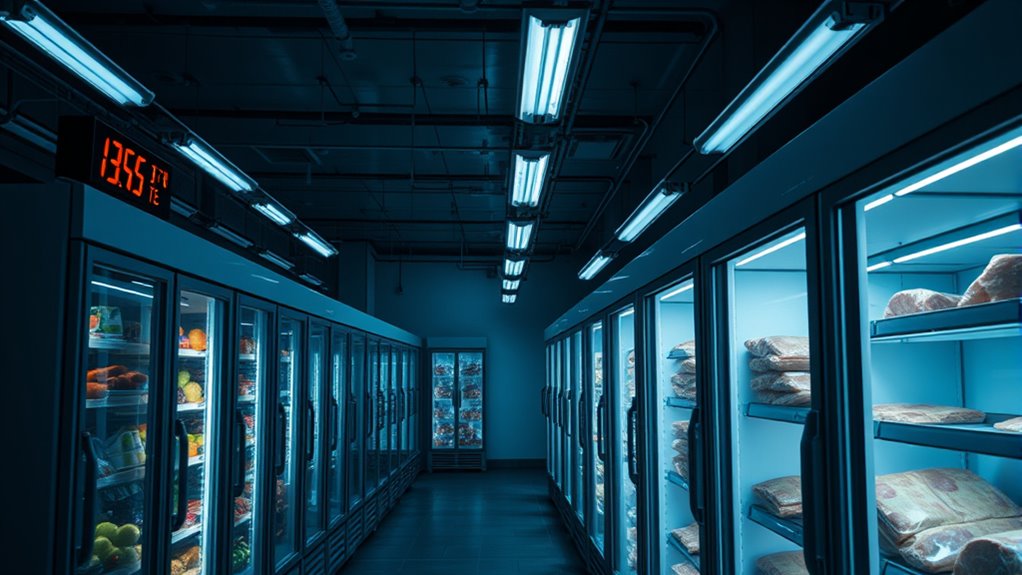
Effective cold-chain contingency planning involves developing clear, actionable strategies to maintain food safety during power disruptions. You need to prepare for outages by implementing practical measures that minimize risks. Here are four key strategies:
- Establish Backup Power Sources: Use generators and UPS systems for critical refrigeration and monitoring equipment to prevent temperature excursions.
- Pre-Position Supplies: Keep ice, gel packs, and insulated containers ready to extend safe holding times during outages.
- Define Disposition Protocols: Create strict SOPs for discarding perishable foods after 4 hours above 41°F, avoiding “reset the clock” practices.
- Maintain Equipment and Data Integrity: Regularly calibrate sensors, use redundant data loggers, and ensure alarms are powered by backup systems for reliable monitoring.
Implementing these strategies helps you protect food safety and stay compliant during unpredictable power issues.
Regulatory Guidance and Best Practices for Outage Management

Regulatory guidance provides essential standards for managing cold-chain disruptions during power outages, ensuring food safety and compliance. You should follow established time–temperature limits, such as discarding perishable foods left above 41°F (5°C) for four or more hours, to prevent bacterial growth. Documentation of temperature checks and corrective actions is critical for evidence during audits, especially under FSMA regulations. Best practices include implementing backup power systems, like generators and UPS, to maintain continuous monitoring and control. Regular calibration of sensors and reliable data logging support traceability. Training staff on proper procedures during outages, including rapid cooling and proper disposal, reduces risks. Staying aligned with USDA, FoodSafety.gov, and local regulations helps you manage cold-chain breaches effectively and avoid regulatory penalties.
Investing in Infrastructure to Minimize Power-Related Food Safety Risks
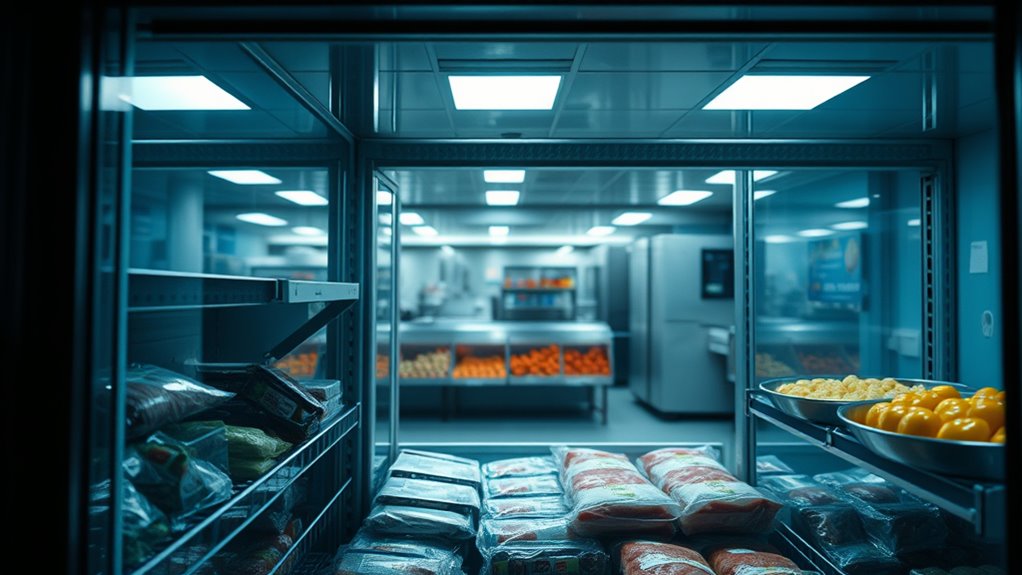
To reduce power-related food safety risks, you need to invest in critical infrastructure like power-quality equipment upgrades and reliable backup power systems. Proper staff training and clear SOPs guarantee your team responds quickly and correctly during outages. These measures help maintain cold-chain integrity and protect your business from costly failures.
Power-Quality Equipment Upgrades
Investing in power-quality equipment is essential for maintaining food safety during outages and electrical disturbances. Upgrading your infrastructure reduces the risk of equipment failures, false readings, and cold-chain breaches. Consider these key improvements:
- Voltage Regulators and Harmonic Filters – Stabilize voltage and minimize transient surges that cause flicker and equipment stress.
- Surge Protectors – Shield sensitive sensors, PLCs, and control systems from voltage spikes that can trigger false alarms or shutdowns.
- Uninterruptible Power Supplies (UPS) – Ensure continuous power to critical monitoring and safety devices during outages, preventing data loss.
- Phase Correction Equipment – Balance power loads, reduce flicker, and improve the reliability of lighting and process controls.
These upgrades help maintain consistent operations, protect equipment, and ensure accurate temperature monitoring, safeguarding your cold chain and food safety.
Backup Power Solutions
Power outages pose a significant risk to food safety because they can cause temperature excursions, equipment failures, and data gaps that compromise cold-chain integrity. Investing in backup power solutions guarantees critical systems stay operational during outages, reducing the chance of unsafe temperature rises. Generators provide reliable emergency power for refrigeration units, sensors, and monitoring systems, while UPS units keep control systems and data loggers functioning long enough for safe shutdowns or restorations. Properly sized and maintained backup systems prevent transient power issues, minimize equipment damage, and maintain accurate temperature records. Additionally, power-quality equipment like voltage regulators and harmonic filters can reduce flicker and protect sensitive electronics. These investments help sustain cold-chain safety, ensure regulatory compliance, and prevent costly product losses during power disruptions.
Staff Training & SOPs
Effective staff training and well-defined standard operating procedures (SOPs) are essential for minimizing food safety risks during power outages. You need clear, actionable steps to handle cold-chain breaches and equipment failures confidently. Here are key focus areas:
- Disposal protocols: Train staff to discard perishable foods after 4 hours above 41°F and avoid the “reset the clock” myth.
- Temperature monitoring: Ensure everyone knows how to read and document temperature data, using backup sensors if needed.
- Emergency procedures: Establish quick response plans for power failures, including rapid cooling, ice pack use, and contingency plans.
- Communication: Maintain clear lines for reporting issues promptly to prevent unsafe products from reaching consumers.
Consistent training guarantees compliance, reduces errors, and safeguards public health.
Frequently Asked Questions
How Does Power Flicker Specifically Impact Temperature Monitoring Device Accuracy?
Power flicker can cause temperature monitoring devices to give false readings or lose calibration temporarily. When voltage fluctuations occur, sensors and telemetry systems may malfunction or register inaccurate data, making it harder to detect actual temperature excursions. This can lead to undetected cold-chain breaches, increasing food safety risks. To prevent this, you should use reliable backup power sources, regular calibration, and data validation methods to guarantee monitoring accuracy during power fluctuations.
What Are the Best Backup Systems to Ensure Continuous Temperature Data During Outages?
Think of your backup systems as a safety net catching every fall. You should install uninterruptible power supplies (UPS) for critical temperature monitoring devices, ensuring they keep running even during outages. Pair this with battery-backed data loggers and redundant sensors to maintain continuous data flow. Regularly test and maintain these systems, so when power flickers, your data stays steady, like a lighthouse guiding you through stormy seas.
Can Lighting Flicker Directly Cause Microbial Growth in Stored Foods?
Lighting flicker itself doesn’t directly cause microbial growth in stored foods. However, it can impair your equipment’s performance by causing sensor errors or system trips, leading to undetected temperature excursions. These unnoticed temperature breaches can create conditions favorable for microbial growth. So, while flicker isn’t a microbial catalyst, it can indirectly increase food safety risks by disrupting monitoring and control systems, emphasizing the need for power quality management.
How Often Should Calibration Be Performed After Power Disturbances to Maintain Compliance?
You should perform calibration immediately after power disturbances and then follow your regular calibration schedule, typically every 3 to 6 months. Power fluctuations can cause sensor drift or damage, impacting accuracy. Regular calibration guarantees your temperature monitoring remains reliable, helping you stay compliant with regulations. Keep detailed records of calibration activities, especially after disturbances, to prove compliance and ensure food safety throughout your cold chain operations.
What Are the Legal Consequences of Improper “Reset the Clock” Practices?
If you practice improper “reset the clock,” you risk regulatory enforcement actions, fines, and legal liability. Authorities may view this as non-compliance with food safety laws, especially if it leads to foodborne illnesses or outbreaks. You could also face lawsuits from consumers or partners if unsafe food causes harm. Maintaining proper documentation and following regulations helps safeguard you legally and ensures consumer safety.
Conclusion
Remember, when power flickers or fails, you can’t just reset the clock and hope for the best. Proper protocols, reliable infrastructure, and contingency plans are essential to keep food safe and maintain data integrity. Are you prepared to address the hidden risks behind power interruptions? By understanding these challenges and acting proactively, you can safeguard your cold chain and ensure consumer safety—even when the lights go out.