After a power outage, it’s important to run a rinse-only cycle to prevent odors and bacteria buildup. Power outages can leave moisture and food debris inside your dishwasher, creating a breeding ground for germs. Running a quick rinse helps clear residual water and debris, keeping everything hygienic and smelling fresh. If you want to know how to reset your dishwasher and ensure it’s safe and clean after an outage, just keep exploring the steps involved.
Key Takeaways
- Run a rinse-only cycle immediately after power is restored to remove residual water and debris.
- Wipe down interior surfaces and door seals with hot, soapy water to eliminate bacteria and odors.
- Remove and clean the filter and drain to prevent clogs and microbial growth.
- Sanitize metal utensils and porous items with boiling water or bleach solutions before reuse.
- Ensure all items are thoroughly dry before placing them back inside the dishwasher.

BLUETTI Elite 100 V2 Portable Power Station, 1024Wh LFP Battery Backup w/ 4 1800W AC Ports (3600W Surge), 35% Smaller, Fast Charge and UPS Solar Generator for Camping, Road Trip, Outages, Home Backup
[Power 11 Devices] - With a 1024Wh capacity, Elite 100 V2 portable power station delivers 1800W AC output...
As an affiliate, we earn on qualifying purchases.
Understanding How Power Outages Affect Your Dishwasher

Power outages can disrupt your dishwasher’s normal operation and leave you with unresolved issues. When the power goes out, your dishwasher stops mid-cycle, but it retains its memory of the settings. Once power is restored, the control panel usually lights up briefly, showing a red “power” message and blinking START LED. Mechanical models typically resume automatically unless you turn off the control, while electronic models restart unless you cancel the cycle. During an outage, wash settings are paused at the interruption point. When power returns, you need to open the door and press START to resume, or cancel if needed. Knowing how your dishwasher reacts helps you manage interruptions effectively and prevents potential problems like odors or bacteria buildup. Incorporating connected appliances into your home can also help monitor and troubleshoot such issues more efficiently. Additionally, understanding your dishwasher’s reset procedures can save time and avoid unnecessary service calls. Recognizing the importance of proper drainage after an outage ensures that residual water doesn’t cause odors or bacteria growth inside your appliance.

Jackery HomePower 3000 Portable Power Station with 2X 200W Solar Panels, 3600W (Surge 7200W) Output, 3072Wh LFP Battery Solar Generator, Essential Backup for Home Use, Power Outage, RV, Emergencies
Essential Home Backup: With a robust 3600W output (7200W surge) and a 3072Wh capacity, the Jackery HomePower 3000...
As an affiliate, we earn on qualifying purchases.
Recognizing When Your Dishwasher Needs a Reset

If your dishwasher’s control panel stays unresponsive or displays error messages after a power outage, it’s a sign you might need to reset it. When cycles won’t start or the machine seems frozen, resetting can often fix the issue. Recognizing these signs helps you determine when a simple reset is all it takes to get your dishwasher back in action. Additionally, understanding energy-efficient solutions can help improve your appliance’s performance and longevity. For example, selecting the right cleaning cycles can prevent buildup and reduce energy use over time. Being aware of power outage safety tips ensures you handle resets safely and effectively.
Unresponsive Control Panel
When your dishwasher’s control panel becomes unresponsive, it can disrupt your entire cleaning routine. You might press buttons, but nothing happens, leaving you unsure how to proceed. This often indicates a need for a reset or troubleshooting. First, turn off the dishwasher and unplug it from the power source. Wait at least 30 seconds to allow any residual charge to dissipate. If your model has a reset button, press it; otherwise, plug the unit back in and see if the control panel responds. Sometimes, a simple power cycle restores functionality. If the panel remains unresponsive, perform a control panel reset following your manufacturer’s instructions. This process can often resolve digital glitches that cause unresponsiveness, ensuring your dishwasher is ready for its next cycle. Additionally, consulting your troubleshooting guide can help identify model-specific reset procedures. Recognizing digital glitch symptoms early can save you time and prevent further issues. Being aware of electronic malfunctions and how they affect your appliances can help you troubleshoot more effectively. Regular maintenance and being attentive to error codes can also aid in diagnosing underlying problems before they worsen.
Persistent Error Messages
Persistent error messages on your dishwasher can indicate underlying issues that simple resets might resolve. If you see blinking lights, unusual codes, or the control panel remains unresponsive, a reset might be necessary. First, consult your user manual for specific error codes. Sometimes, these messages signal a stuck cycle or electronic glitch. Performing a reset can clear the error and restore normal operation.
| Error Type | Recommended Action |
|---|---|
| Blinking LEDs or Error Codes | Unplug the dishwasher, wait 1 minute, then plug back in. |
| Unresponsive Control Panel | Reset by pressing and holding specific buttons as per manual. |
| Persistent Error Messages | Turn off, unplug, wait, then reset controls. |
Cycle Won’t Start
Sometimes, despite selecting the desired cycle and pressing start, your dishwasher refuses to begin. This often happens after a power outage or interruption. You might see the control panel lights flicker or the display show an error message. To fix this, try resetting the dishwasher. Turn off the power by unplugging it or switching off the circuit breaker. Wait at least 30 seconds, then restore power. If your model has a reset button, press it. For digital controls, select a different cycle or press and hold the start button for a few seconds. Sometimes, the dishwasher needs a manual reset to clear any glitches. After resetting, press start again. If it still won’t start, check for any tripped circuit breakers or blown fuses. Additionally, essential oils for dishwasher maintenance can help prevent odors and keep the appliance smelling fresh after outages. Regularly using air purifier maintenance techniques can also ensure your kitchen remains free of lingering smells and airborne contaminants. Properly maintaining your appliance, including understanding electric power generation with bike generators, can contribute to overall household efficiency.

Jackery Portable Power Station Explorer 300, 293Wh Backup Lithium Battery, Solar Generator for Outdoors Camping Travel Hunting Blackout (Solar Panel Optional)
SPEED UP YOUR RECHARGEABILITY: It takes only 2 hours to recharge 80% battery of the power station through...
As an affiliate, we earn on qualifying purchases.
The Importance of Running a Rinse-Only Cycle After Power Loss

After a power outage, running a rinse-only cycle is essential to prevent bacterial growth on your dishes. It also helps eliminate leftover food residues and guarantees your dishes stay hygienic. Taking this quick step keeps your dishwasher and your family safe from potential contamination.
Prevents Bacterial Growth
Running a rinse-only cycle after a power outage is essential because it helps prevent bacterial growth on your dishes. When power is interrupted, water can stagnate, creating an ideal environment for bacteria to thrive. Without rinsing, leftover food particles and moisture remain on dishes, increasing the risk of microbial development. Bacteria multiply rapidly in damp conditions, especially if dishes are stored before bacteria can be eliminated. Running a quick rinse clears residual water and food debris, reducing the chances of bacteria settling. This simple step helps maintain hygiene and safeguards your health. By thoroughly rinsing dishes after power restoration, you prevent the buildup of harmful microbes, ensuring your dishes stay clean, safe, and odor-free before moving on to a full wash cycle.
Eliminates Food Residue
Completing a rinse-only cycle after a power outage helps remove remaining food particles that may have been left behind. When the power cuts mid-cycle, some food debris can stick to dishes or settle at the bottom. If not rinsed away, these residues can dry and harden, making cleaning more difficult later. Running a quick rinse flushes away loose food scraps and prevents them from adhering to surfaces. This step also reduces the risk of odors caused by dried food and stagnant water. By thoroughly rinsing dishes immediately after power is restored, you prevent food residues from becoming a breeding ground for bacteria. This simple action ensures your dishes stay cleaner, fresher, and ready for a full cycle, maintaining overall hygiene and preventing future issues.
Maintains Dish Hygiene
Running a rinse-only cycle immediately after a power outage is essential for maintaining dish hygiene and preventing bacterial growth. Power interruptions can leave dishes wet and contaminated with residual food particles, creating an ideal environment for bacteria and odors. By running a quick rinse, you remove leftover debris and stagnant water, reducing the risk of microbial proliferation. This step also helps clear any residual detergent or food residues that may have settled during the outage. Ensuring your dishes are properly rinsed minimizes the chance of unpleasant smells and cross-contamination when you resume cleaning. It’s a simple yet effective way to uphold hygiene standards, especially after interruptions. Taking this proactive step helps keep your dishes safe, clean, and odor-free before completing the full wash cycle. Additionally, temperature control during this rinse can help eliminate lingering bacteria and ensure thorough sanitation.

BLUETTI Elite 30 V2 Portable Power Station 600W (Power Lifting 1500W), 288Wh LiFePO4 Battery with 10ms UPS, Emergency Backup Power for Home Blackout/Winter Storm, Solar Generator for Camping/Road Trip
[288Wh On-the-Go Power] - Only 9.4 lbs lightweight, carry it anywhere during storms! 288Wh capacity meets daily &...
As an affiliate, we earn on qualifying purchases.
Step-by-Step Guide to Resetting Your Dishwasher Safely
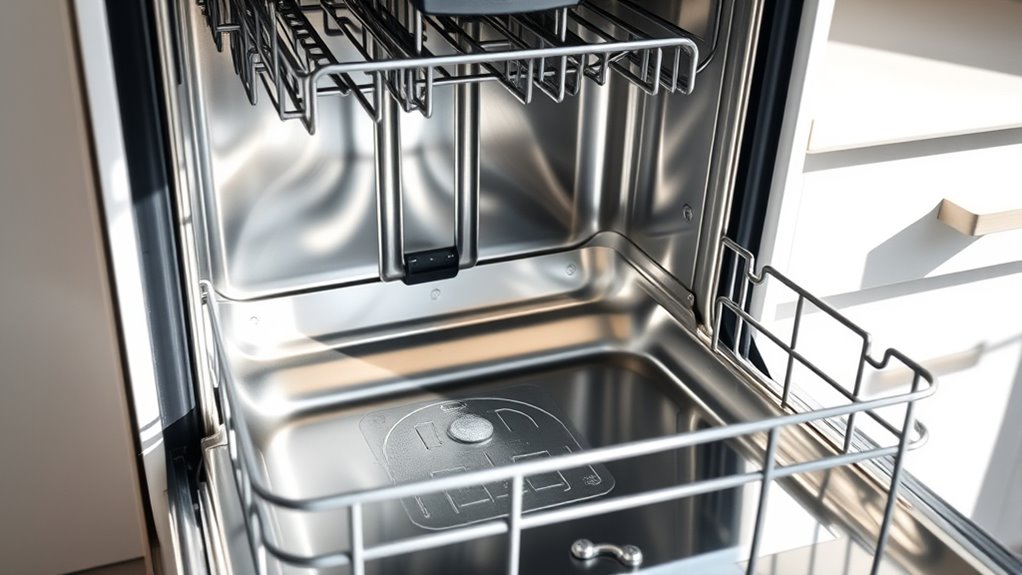
If your dishwasher experienced a power outage, resetting it safely is vital to guarantee proper operation and hygiene. Follow these steps to reset your dishwasher correctly:
- Turn off the dishwasher and unplug it from the power outlet to ensure safety.
- Check your circuit breaker and reset it if needed, then plug the dishwasher back in.
- Turn the dishwasher on, select a short cycle or rinse-only option, and start it. Observe if it runs smoothly without errors.
- If the controls are unresponsive, perform a control panel reset by pressing and holding specific buttons (refer to your model’s manual). Always verify that the dishwasher completes the cycle properly before loading dishes again. Proper resetting prevents residual bacteria and odors. Additionally, ensuring your dishwasher’s filtration system is clean helps eliminate odors and maintain hygiene after outages. Regular maintenance, such as cleaning filters and seals, further supports hygiene and odor prevention. Incorporating proper cleaning techniques can also prolong the lifespan of your appliance and improve overall performance. Regularly inspecting and cleaning the drainage system is also crucial for preventing odors and ensuring efficient operation. To enhance air quality within your kitchen, consider using an air purifier that can help reduce airborne contaminants and odors from appliances.
Why Not All Cycles Resume Automatically After an Outage

Not all dishwasher cycles resume automatically after a power outage because different models and control systems handle interruptions uniquely. Mechanical dishwashers often restart automatically unless you turn off the power, while electronic models typically pause and require manual intervention to continue. Some units retain the cycle’s memory and pick up where they left off once power is restored, but others need you to reset or restart the cycle manually. This variation depends on the control circuitry and programming. Additionally, certain newer models may display an alert or require a specific reset procedure before resuming. Knowing your dishwasher’s type helps determine whether it will automatically continue or if you need to intervene. Always check your user manual to understand your specific model’s behavior after an outage. Understanding control systems can help you better anticipate how your dishwasher will respond in such situations. It’s also helpful to familiarize yourself with reset procedures specific to your appliance to avoid lingering odors or bacteria buildup. Being aware of the cycle memory features can also inform you whether your dishwasher will resume from the same point or need a manual restart. Moreover, understanding power interruption handling in your model can prevent potential damage or malfunctions. Recognizing the risk of bacterial growth in residual water and food debris emphasizes the importance of prompt and proper cycle resumption.
The Risks of Ignoring Proper Post-Outage Cleanup

Ignoring proper post-outage cleanup can lead to serious health and safety risks. If you skip cleaning your dishwasher and dishes afterward, bacteria and mold can grow unnoticed, causing foul odors and potential illnesses. Stagnant water and leftover food residues become breeding grounds for harmful microbes. Additionally, unclean dishes contaminated with bacteria can lead to foodborne illnesses when you reuse them. To prevent these issues, it’s essential to follow a simple cleaning routine after an outage. Here are three key risks: 1. Bacterial and mold growth from residual moisture. 2. Unpleasant odors that are difficult to eliminate later. 3. Increased risk of foodborne illness from contaminated dishes. Failing to clean and sanitize after an outage compromises hygiene, making your dishwasher and dishes unsafe for use. Always prioritize proper cleanup to protect your health and extend your appliance’s lifespan.
How to Properly Clean and Sanitize Your Dishwasher and Dishes

After a power outage, it’s essential to thoroughly clean and sanitize your dishwasher and dishes to prevent bacteria buildup and odors. Start by removing all dishes and wiping down the interior with hot, soapy water. Use the table below to guide your cleaning process:
| Item | Cleaning Method | Sanitizing Technique |
|---|---|---|
| Metal pans, dishes | Wash with hot, soapy water | Boil or soak in bleach solution |
| Utensils | Scrub thoroughly, rinse well | Submerge in bleach mix for 15 min |
| Countertops | Wipe with soap, rinse, sanitize with bleach | Wipe and air dry |
| Porous items | Discard if contacting contaminants | Not recommended for porous items |
| Surfaces | Clean, rinse, then sanitize with bleach | Air dry after sanitizing |
Ensure everything is dry before reuse to maintain hygiene.
Tips for Ensuring Your Dishes Are Safe and Odor-Free

To keep your dishes safe and odor-free after a power outage, focus on proper cleaning and thorough drying. First, run a rinse-only cycle immediately to remove leftover food and water, preventing bacteria growth. Next, inspect dishes for any food residues or moisture and wipe them dry with a clean towel. Finally, make certain dishes are completely dry before storing to prevent mold and odors.
Here are three tips:
- Run a quick rinse or wash cycle after power restoration.
- Wipe and air-dry dishes thoroughly before stacking.
- Check for lingering moisture and clean any spots promptly.
Preventing Future Problems: Best Practices for Power Outages
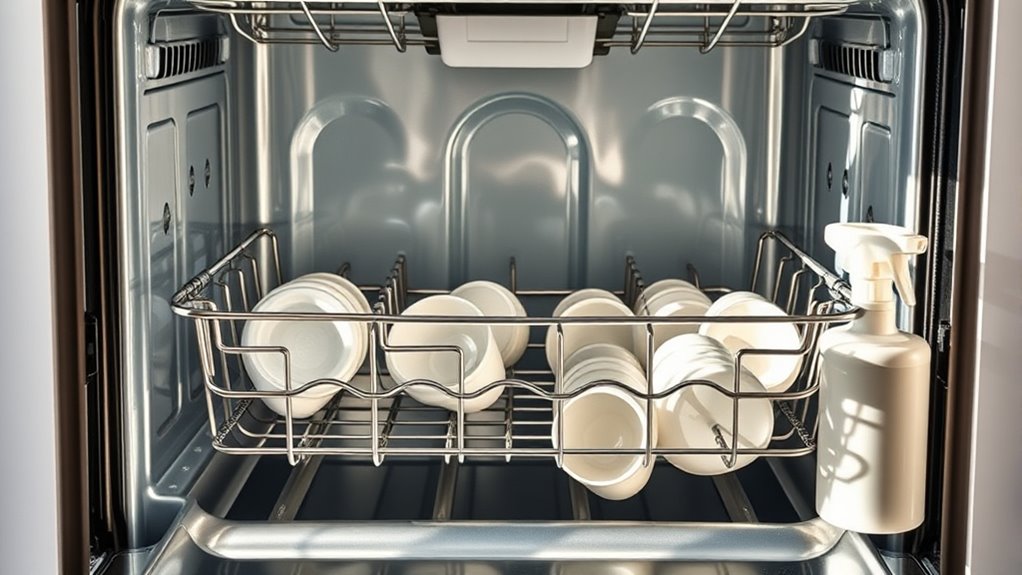
Power outages can disrupt your dishwasher’s performance and risk contaminated dishes if you’re not prepared. To prevent issues, always check the control panel for any error messages after power returns. Reset the dishwasher if needed, and run a quick rinse cycle to clear residual water and debris. Turn off and unplug the unit before inspecting or resetting circuit breakers to ensure safety. Avoid restarting a cycle immediately; instead, wait until the system resets. Regularly clean and sanitize the dishwasher to prevent bacteria buildup, especially after outages. Keep an eye on the control panel for blinking lights or error messages. By following these practices, you reduce the risk of odors, bacteria, and malfunction, ensuring your dishwasher operates smoothly and your dishes stay safe.
Frequently Asked Questions
Can I Skip the Rinse Cycle After a Power Outage?
You shouldn’t skip the rinse cycle after a power outage. Running a rinse-only cycle helps eliminate residual food, water, and bacteria from your dishes, preventing odors and microbial growth. It also clears out stagnant water left from interrupted cycles. Even if your dishwasher seems clean, doing a quick rinse ensures your dishes are hygienic and safe to use, reducing the risk of bacteria and unpleasant smells developing later.
How Do I Know if My Dishwasher Needs a Reset?
If your dishwasher acts like a stubborn mule refusing to cooperate, it needs a reset. You’ll notice unresponsive buttons, error messages, or cycles that won’t start despite your efforts. To fix this, turn off and unplug it, wait a few minutes, then plug it back in. Select a quick cycle to see if it responds. If problems persist, a full reset or professional help might be necessary.
What Are Signs of Bacteria or Odors in My Dishwasher?
You’ll notice bacteria or odors in your dishwasher if you detect a musty or sour smell when opening it. Lingering food particles, especially on dishes or in the seal area, can cause bacterial growth. You might also see slimy residue or mold around door seals and filters. These signs indicate it’s time to clean, sanitize, and run a rinse cycle to eliminate bacteria and freshen your dishwasher.
Is It Safe to Open the Dishwasher During a Cycle After an Outage?
Sure, go ahead and open your dishwasher mid-cycle after an outage—what’s the worst that could happen? Actually, it’s safe to do so, but beware: you might disrupt the process, leave dishes half-cleaned, or invite bacteria and odors. If you must, open it carefully, resume the cycle promptly, and run a rinse afterward to keep things hygienic. Better yet, follow the rinse rule for peace of mind.
How Often Should I Sanitize My Dishwasher to Prevent Smells?
You should sanitize your dishwasher at least once a month to prevent smells and bacteria buildup. After heavy use or if you notice odors, do it more frequently. Run a cleaning cycle with a dishwasher cleaner or hot vinegar solution to remove residue and mold. Regularly check and clean filters, seals, and spray arms. Keeping your dishwasher clean helps ensure fresh-smelling dishes and maintains hygiene.
Conclusion
Did you know that over 60% of households experience appliance issues after power outages? By following the “rinse rule” and properly resetting your dishwasher, you can prevent odors and bacteria buildup. Taking these simple steps safeguards your health and prolongs your appliance’s lifespan. Don’t ignore post-outage cleanup—your family’s safety depends on it. Stay proactive and keep your dishwasher clean and odor-free, ensuring your dishes are always safe to enjoy.