If you don’t have hot water, you can still sanitize dishes effectively by using a chemical sanitizer like a bleach solution—mix 1 tablespoon of unscented bleach per gallon of cool water, soak the dishes for one minute, then air-dry. Mechanical cleaning with scrubbing and thorough rinsing also helps remove debris and germs. For added safety, heat sanitization is possible by immersing items in water at 170°F for at least 30 seconds. Keep exploring to learn more tips for safe, hassle-free dish sanitation.
Play games included with Prime
Start a Prime free trial and play with Amazon Luna on your devices.
As an affiliate, we earn on qualifying purchases.
Key Takeaways
- Use chemical sanitizers like a bleach solution (1 tablespoon per gallon of cool water) for a 1-minute soak, then air-dry.
- Rinse dishes thoroughly with cold water after cleaning to remove debris and loosen residues.
- Heat items in water at 170°F (77°C) for at least 30 seconds or boil small items for effective sanitation.
- Employ a three-basin method: wash, rinse, and sanitize, reusing rinse water if free of debris.
- Ensure proper drying and storage in a clean, ventilated area to prevent recontamination.
Understanding Sanitization Without Hot Water
When hot water isn’t available, sanitizing dishes relies on chemical and heat methods that effectively diminish harmful pathogens. Chemical sanitizers, like unscented household bleach, are a common choice. You can use a solution of 1 tablespoon of bleach per gallon of cool water for a 1-minute soak, then air-dry. It’s essential to test the sanitizing solution with chlorine test strips to ensure proper concentration. Avoid mixing bleach with ammonia or acids, as this creates toxic gases. Heat methods, such as immersing items in water at 170°F (77°C) for at least 30 seconds, also work well. When hot water isn’t an option, combining thorough washing with chemical sanitizers provides a reliable way to keep your dishes safe and pathogen-free. Additionally, ensuring proper airflow around the unit can help maintain the effectiveness of sanitization processes in your cleaning routine. Incorporating knowledge of contrast ratio can help you understand how visual clarity impacts the effectiveness of your cleaning setup, especially in well-lit environments. Understanding temperature control is also essential for optimizing heat-based sanitization methods and ensuring safety during the process. Being aware of fuel storage safety measures can prevent potential hazards when using heat or chemical sanitizers during your cleaning routine. Proper lighting conditions can further enhance your ability to spot remaining contaminants after sanitization.
Effective Cold Water Cleaning Techniques
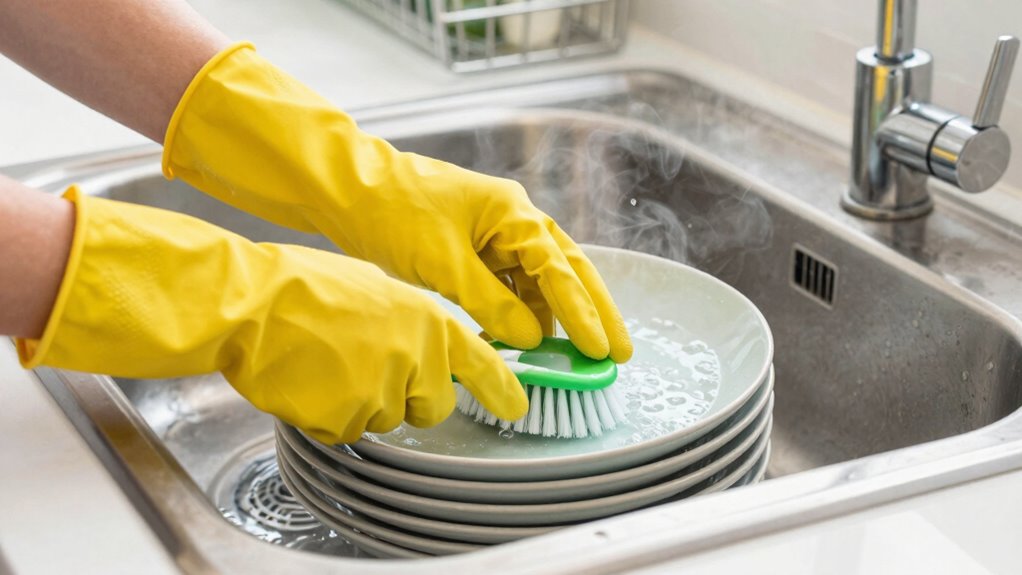
Even without hot water, you can effectively clean dishes by focusing on mechanical removal of soils and utilizing proper rinsing techniques. Start by scraping off food debris with a sturdy brush or scraper, ensuring stubborn residues are loosened. Use cold water to rinse each item thoroughly, directing the stream to remove loose soils and residues. For added cleaning power, you can use a mild dish soap during the washing stage if available, but mechanical action is key. After washing and rinsing, dip items in a sanitized bleach solution or cold water with a proper disinfectant for one minute to reduce bacteria. Incorporating proper cleaning techniques can further improve sanitation and effectiveness. Using effective rinsing methods helps ensure all soils and cleaning agents are thoroughly removed. Additionally, paying attention to safe handling practices helps prevent recontamination. Incorporating proper sanitizing techniques can enhance overall cleanliness and safety. To maximize sanitation, consider using proper drying methods, such as air drying or using clean towels, to prevent bacteria transfer. Finally, air-dry dishes completely to prevent recontamination. Proper technique combined with effective sanitizing ensures your dishes are clean and safe, even without hot water.
Using Bleach Solutions Safely and Correctly

Using bleach solutions safely and correctly is essential to guarantee effective sanitization without risking health hazards. Always use unscented household chlorine bleach at 1 tablespoon per gallon of cool water, and test the solution with chlorine test strips before use. Wear gloves and eye protection to prevent skin and eye irritation. Never mix bleach with ammonia or acids, as toxic gases form. After soaking dishes for 1 minute, air-dry completely. Use the table below to understand proper handling and safety:
| Step | Safety Tip |
|---|---|
| Test | Verify solution strength with test strips |
| Protect | Wear gloves and eye protection |
| Dispose | Properly discard used solutions |
Following these steps ensures safe, effective sanitization. Incorporating proper chemical handling practices further minimizes risks during sanitation procedures.
Mechanical Cleaning Methods When Water Is Limited
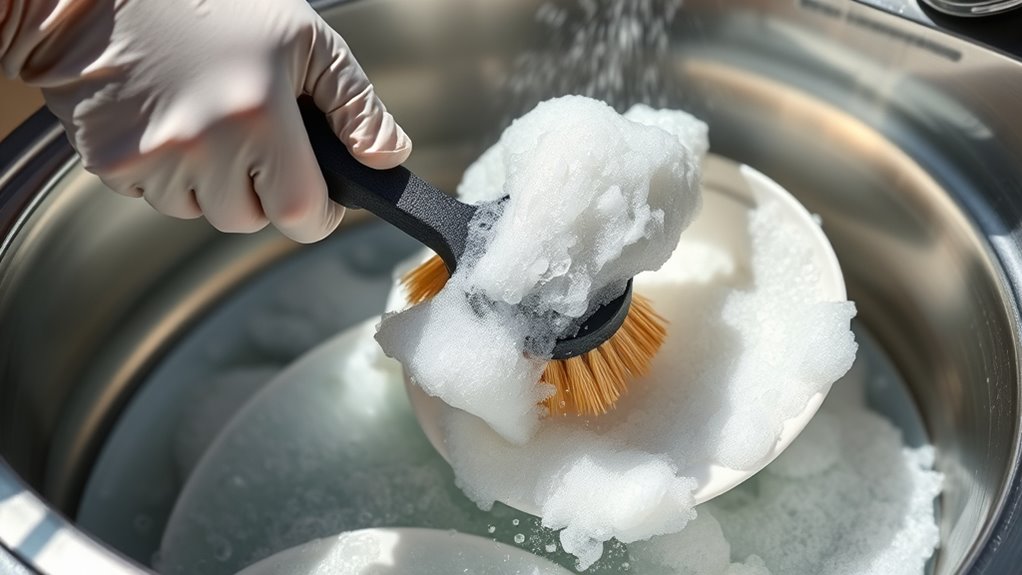
When water is limited, start by pre-soaking dishes to loosen stuck-on debris. Use scraping and brushing to remove soils effectively before sanitizing, as mechanical cleaning reduces the need for excessive water. These methods guarantee your dishes are cleaner and safer, even without large water supplies. Incorporating hygiene practices can further improve sanitation outcomes when water is scarce. To enhance cleaning efficiency, employing essential oils for antimicrobial properties can provide natural disinfection support in addition to mechanical methods. Using proper drying techniques helps prevent bacterial growth and ensures thorough sanitation.
Pre-Soaking to Loosen Debris
Pre-soaking dishes helps loosen stubborn food debris, making mechanical cleaning more effective when water is limited. This step reduces the need for vigorous scrubbing and minimizes water use. To maximize effectiveness, follow these tips:
- Fill a basin with cold or lukewarm water, depending on the type of debris.
- Submerge heavily soiled items, especially pots and pans, for 10-15 minutes.
- Use a gentle scrub brush or sponge to loosen dried-on food after soaking.
- Discard soaking water after each batch to prevent cross-contamination and reuse only if free of solids.
Pre-soaking helps break down residue, so your subsequent cleaning requires less water and effort. It’s an efficient way to prepare dishes for sanitizing even when hot water isn’t available.
Scraping and Brushing Effectively
Scraping and brushing are essential mechanical cleaning methods that effectively remove food residues when water is limited. Start by using a sturdy scraper or a brush to dislodge stuck-on particles from dishes, pots, and utensils. Use firm, deliberate motions to lift debris without spreading it further. Focus on corners, crevices, and textured surfaces where food often accumulates. For delicate items, opt for softer brushes to prevent damage. Be thorough but gentle to avoid scratching or warping materials. After scraping and brushing, rinse the items with a minimal amount of water to wash away loosened debris. This mechanical prep reduces the soil load, making subsequent sanitizing steps more effective and conserving water. Proper scraping and brushing lay a strong foundation for safe, effective dish sanitation when water is scarce. Incorporating proper technique and understanding surface material properties enhances the cleaning process and ensures better hygiene outcomes. Additionally, using tools designed for specific mechanic shop tasks can improve cleaning efficiency and longevity of dishware. Being mindful of water conservation strategies during cleaning helps maximize limited resources while maintaining hygiene.
Mechanical Cleaning for Sanitization
Mechanical cleaning is an essential step in sanitizing dishes when water is limited, as it physically removes soil and food residues that can harbor bacteria. To maximize effectiveness, follow these steps:
- Scrape off large food particles using a spoon or scraper.
- Brush or scrub surfaces thoroughly with a stiff brush or abrasive pad.
- Soak heavily soiled items in a vinegar or baking soda solution to loosen residues.
- Rinse with clean water, focusing on removing loosened debris.
- Ensuring proper contaminant removal during mechanical cleaning enhances overall sanitation effectiveness.
Additionally, effective cleaning techniques help prevent the buildup of residues that can shield bacteria from sanitization efforts. Proper exfoliation of the skin surface can also aid in removing stubborn residues, making sanitation more thorough.
This process reduces the load of contaminants, making subsequent sanitizing more effective. Mechanical cleaning alone helps prevent bacterial growth and cross-contamination, especially when water or heat options are limited. Combining physical removal with chemical or heat sanitation guarantees your dishes are safe to use.
Best Practices for Rinsing and Drying
After rinsing your dishes, make sure to air-dry them completely to prevent bacteria growth. Use clean, dry racks or hang items in a well-ventilated area away from contaminants. Always handle sanitized items with clean gloves or tongs to avoid recontamination and keep cross-contact to a minimum. Incorporating simple, effective routines can help maintain a safer and more organized kitchen environment. Additionally, proper drying techniques can further reduce the risk of bacteria lingering on surfaces. Ensuring that your sanitation practices align with biography insights can enhance overall food safety.
Proper Air-Drying Techniques
Proper air-drying is essential to maintain the safety and cleanliness of your dishes after sanitizing. To guarantee effective drying, follow these best practices:
- Use clean, dry dish racks or draining mats positioned above the sink to allow water to drip off.
- Place items with the open sides facing downward to promote proper airflow and drainage.
- Leave dishes uncovered in a well-ventilated area to facilitate thorough drying and prevent moisture buildup.
- Avoid towel drying, which can reintroduce bacteria or contaminants onto sanitized surfaces.
Ensure your drying area is clean and free of dust or pests. Allow enough time for dishes to air-dry completely before storing, reducing the risk of bacterial growth.
Cross-Contamination Prevention
Careful rinsing and drying help prevent cross-contamination and keep your dishes safe after sanitizing. Use clean tongs or gloves to remove items from the sanitizer, avoiding direct hand contact. Allow dishes to air-dry completely; towel drying can reintroduce germs. Store sanitized items in a clean, dry area above floor level and away from chemicals. Replace or disinfect sponges, brushes, and towels regularly—boiling, microwaving, or bleaching work well. Keep raw-food utensils separate from ready-to-eat items during washing and storage to prevent cross-contamination. Train household members on proper handling and hand hygiene to maintain sanitation. Following these practices minimizes the risk of transferring bacteria, ensuring your dishes remain safe and hygienic after the cleaning process.
Alternative Heat-Based Sanitizing Options
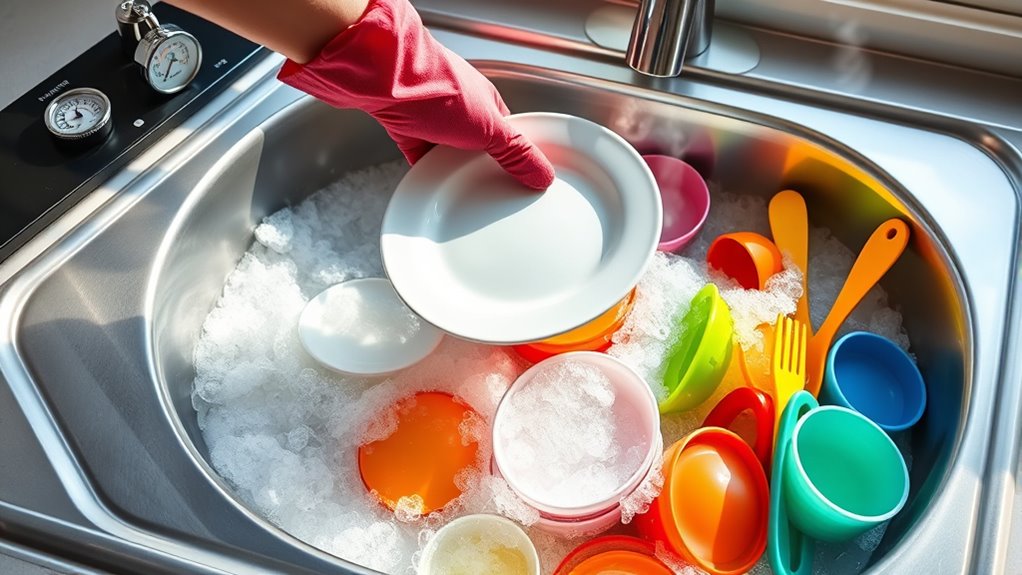
When hot water isn’t available, alternative heat-based sanitizing methods can effectively diminish pathogens on dishes and utensils. You can:
- Submerge items in water heated to at least 170°F (77°C) for 30 seconds or more to kill germs.
- Boil small items like silverware or baby bottles for 1–5 minutes, ensuring thorough disinfection.
- Use a dishwasher’s high-heat or sanitize cycle, which reaches temperatures validated for pathogen reduction.
- Verify water temperature with a thermometer during heat sanitizing to ensure proper exposure, then let items air-dry completely.
These methods rely on sustained high heat to sanitize effectively. Always confirm temperature and time to ensure safety, and avoid towel drying to prevent recontamination.
Minimizing Water Use With Efficient Workflow Strategies
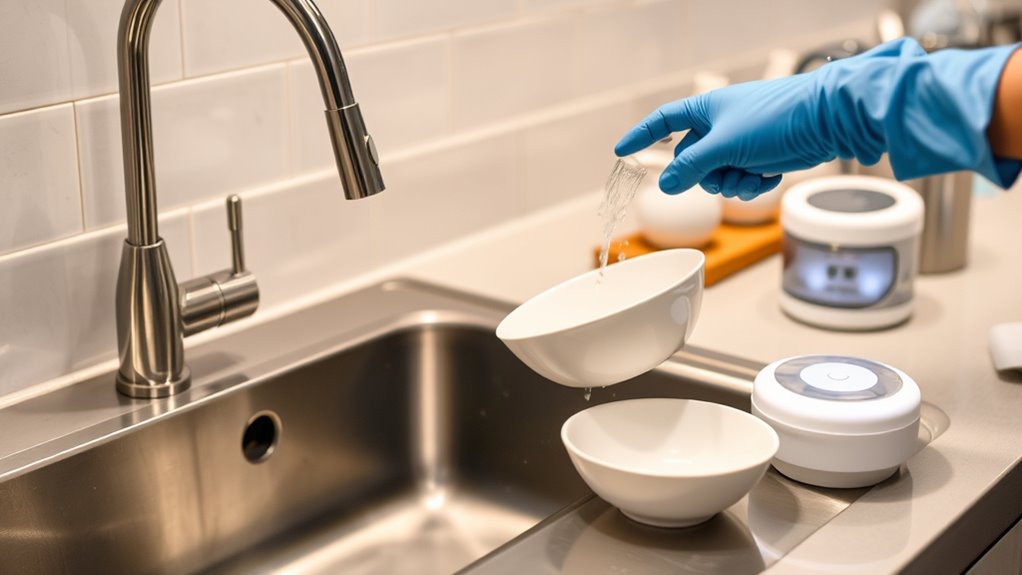
Implementing efficient workflow strategies can substantially reduce water consumption during dish sanitation without compromising safety. Start by batch-washing items with similar soil levels to limit water use and speed up the process. Use a three-basin method: wash with soap and warm water, rinse with clear water, then sanitize with a diluted bleach solution or hot-water soak. Reuse rinse water for pre-rinsing future loads if it’s free of debris, disposing of it after heavy loads. Employ minimal-flow rinsing techniques, directing short streams or basin rinses instead of running tap water continuously. Scrape or soak stubborn soils before washing, reducing the need for multiple rinses. These strategies help conserve water while maintaining effective sanitation, ensuring your dishes are safe and clean.
Handling Special Items and Sensitive Materials
Handling special items and sensitive materials requires extra caution to prevent damage and guarantee safety. You must choose appropriate methods to avoid warping, degradation, or contamination.
- For plastics that can’t tolerate high heat, opt for a bleach dip (1 tablespoon per gallon of water) for 1 minute, then air-dry.
- Use boiling water for non-greasy, heat-tolerant items like baby bottles or small utensils, boiling for 1–3 minutes.
- When cleaning delicate or porous materials, avoid harsh chemicals; instead, thoroughly scrub and air-dry to prevent chemical residues.
- Store sanitized items in a clean, dry area above floor level, away from chemicals, to prevent recontamination.
Always verify material tolerances and follow manufacturer guidance to protect your items and ensure safety.
Tips for Maintaining a Safe and Hygienic Kitchen Environment
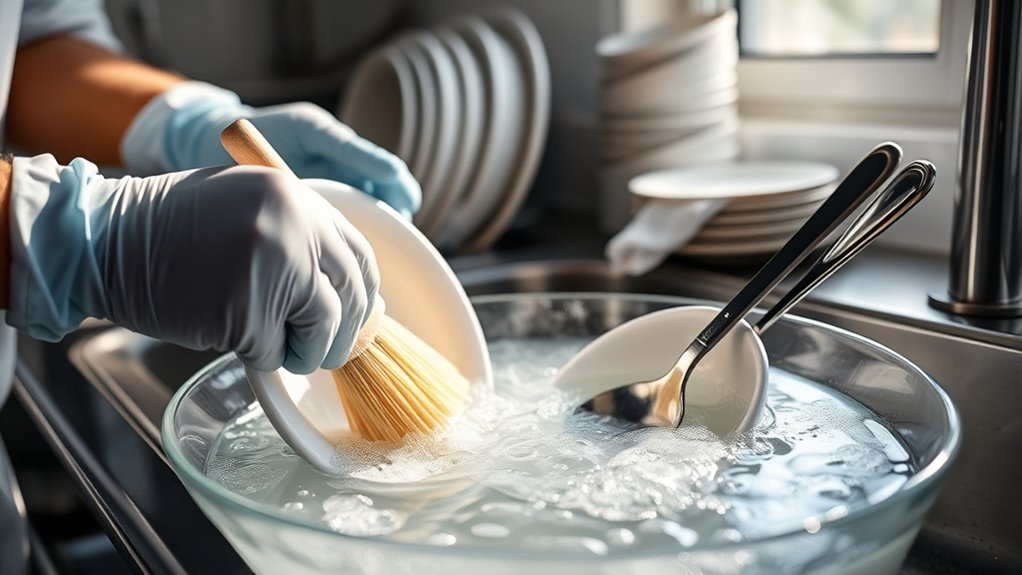
Maintaining a clean and organized kitchen is key to preventing cross-contamination and ensuring food safety. Regularly sanitize countertops, cutting boards, and utensils, especially after preparing raw meat or seafood. Store raw items separate from cooked or ready-to-eat foods to avoid cross-contact. Use designated containers for different ingredients, and clean them thoroughly between uses. Keep dishcloths, sponges, and brushes clean by disinfecting or replacing them frequently. Guarantee proper hand hygiene by washing hands thoroughly before and after handling food, and after touching raw items or cleaning chemicals. Maintain good ventilation to reduce chemical buildup and odors. Keep a schedule for routine cleaning tasks, and always follow safe sanitizing procedures to prevent bacterial growth and protect household health.
Frequently Asked Questions
How Can I Tell if My Bleach Solution Is Properly Sanitized?
You can tell if your bleach solution is properly sanitized by testing its concentration with chlorine test strips. Dip the strip into the solution and compare the color change to the chart provided. The ideal strength is about 50-100 ppm. If it matches, your solution is effective. Remember to prepare fresh solutions regularly, especially if it’s been sitting for a while or after use.
Are There Any Foods or Utensils I Should Avoid Rinsing With Cold Water?
You should avoid rinsing raw meat, poultry, or seafood with cold water—these foods carry dangerous bacteria that cold water can’t eliminate. Using cold water on these items risks cross-contamination, spreading pathogens like wildfire through your kitchen. Likewise, don’t rinse produce with cold water if it’s heavily soiled; instead, scrub or soak to remove dirt safely. Keep these foods separate from utensils or dishes that will be used for ready-to-eat foods.
Can I Reuse Rinse Water for Multiple Cleaning Cycles Safely?
You can reuse rinse water for multiple cleaning cycles if it’s free of food solids and not visibly contaminated. Reusing water helps conserve resources but always dispose of it after heavy loads or when it becomes cloudy or greasy. Use clean basins and avoid cross-contamination by only reusing water within the same batch. Regularly change the rinse water to maintain hygiene and prevent the spread of bacteria.
What Are the Safest Alternatives for Sanitizing Plastics Without Heat?
Imagine reaching for your plastic utensils, feeling confident they’re sanitized without heat. You should use a food-safe quaternary ammonium (quat) sanitizer, following the manufacturer’s directions for contact time and rinsing. Alternatively, a diluted bleach solution—1 tablespoon per gallon of cool water—works effectively for plastic surfaces. Always test the solution’s strength with test strips and wear gloves to protect your skin. This guarantees your plastics are safe and properly sanitized.
How Often Should I Disinfect Cleaning Tools Like Sponges and Brushes?
You should disinfect your sponges and brushes weekly to prevent bacteria buildup. After each use, rinse them thoroughly and squeeze out excess water. Disinfect by boiling, microwaving when damp and microwave-safe, or soaking in a bleach solution (1 tablespoon per gallon of water) for at least 5 minutes. Replace tools every few months or sooner if they show signs of wear or persistent odors. Regular disinfection keeps your cleaning tools safe and effective.
Conclusion
Even without hot water, you can keep your dishes safe and clean by following these methods. Use cold water wisely, apply proper disinfectants, and employ mechanical cleaning when needed. Remember, a well-organized workflow and attention to detail make all the difference—think of it as your modern-day tavern’s secret to a spotless feast. Stay diligent, keep safety top of mind, and your kitchen will remain a bastion of hygiene, no matter the water temperature.
NFL season / tailgating Picks
team gear
As an affiliate, we earn on qualifying purchases.