When a boil water advisory is issued after an outage, it means your tap water may be contaminated with harmful bacteria, viruses, or protozoa, and you must boil water for at least one minute before using it for cooking, drinking, or cleaning. You should discard ice made from tap water, sanitize surfaces, and avoid using untreated water until authorities confirm safety. Understanding these steps helps keep your kitchen safe—continue exploring for detailed guidance on managing water safety effectively.
Key Takeaways
- A boil water advisory signals potential contamination, requiring boiling water for cooking, cleaning, and drinking until lifted by authorities.
- During advisories, discard ice made from tap water and use bottled or commercially produced ice.
- Sanitize all food contact surfaces and ensure equipment is thoroughly cleaned and disinfected before reuse.
- Operate dishwashers at proper temperatures and flush water lines for 15–30 minutes to restore safe water supply.
- Staff must follow strict hygiene practices, including handwashing with approved water and proper handling of produce and utensils.

Chefman Electric Kettle, 1.8L 1500W, Hot Water Boiler, Removable Lid for Easy Cleaning, Auto Shut Off, Boil-Dry Protection, Stainless Steel Filter, BPA Free, Borosilicate Glass Electric Tea Kettle
Fast Boiling: Experience rapid boiling with this 1500W electric kettle. Get hot water in just 3 minutes, perfect…
As an affiliate, we earn on qualifying purchases.
As an affiliate, we earn on qualifying purchases.
Understanding the Purpose of Boil Water Advisories
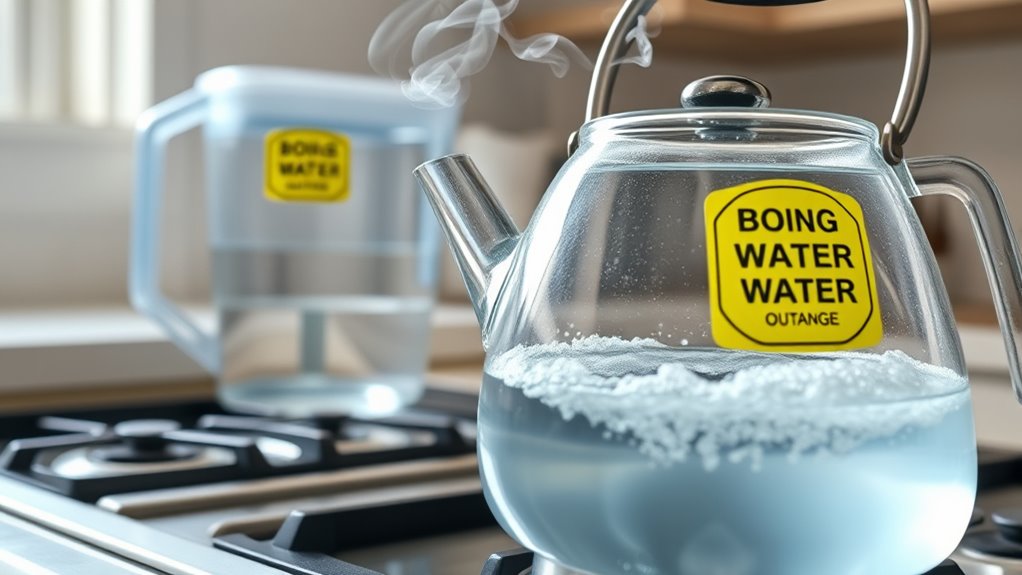
Boil water advisories are issued to protect public health when there’s a suspicion or confirmation that the drinking water supply is contaminated with harmful microorganisms. These advisories aim to prevent illness caused by bacteria, viruses, and protozoa like E. coli, Giardia, or Cryptosporidium. When a contamination risk exists, authorities require you to boil water before use to eliminate pathogens. The goal is to guarantee safe drinking, cooking, and cleaning practices until the water supply is deemed safe again. This prevents waterborne outbreaks and protects vulnerable populations. Understanding the purpose of these advisories helps you follow proper safety measures and avoid health risks during outages. They serve as a critical step in maintaining public health during water system disruptions. Implementing innovative solutions like energy-efficient cloud servers can support more resilient water infrastructure systems to prevent such issues. Additionally, incorporating water treatment technologies can enhance the safety and reliability of municipal water supplies, especially through natural filtration and sustainable practices. Proper maintenance and regular testing of water sources are essential to prevent the need for boil water advisories altogether.

Pure Life Purified Water Bottles, 24 Pack – Still Bottled Water Enhanced with Minerals for a Crisp Taste, Plastic Bottles – 8 Fl Oz
Refreshing Taste: Every bottle of Pure Life Water is enhanced with minerals for a refreshing taste that makes…
As an affiliate, we earn on qualifying purchases.
As an affiliate, we earn on qualifying purchases.
Recognizing When a Water Supply Is Contaminated
How can you tell if your water supply is contaminated? You should look for signs like strange odors, discoloration, or cloudiness. If water appears murky or has a foul smell, it may be contaminated. Sometimes, you might notice floating particles or sediment even after running the tap. In addition, if local health authorities issue a warning or advisories, it’s a clear sign to be cautious. Here are four key indicators:
- Unusual color, such as brown or green tint
- Foul or chemical smell
- Cloudiness or floating debris
- Official advisories or alerts from authorities
Trust your senses and stay informed—contaminated water poses health risks, so recognize these signs early and follow guidance accordingly. Being aware of water contamination risks can help you act swiftly to protect your health. Additionally, understanding water quality standards can help you better assess safety.

PURELL Foodservice Surface Sanitizer Refill, 1 Gallon (4341-04)
Great tools at a great price
As an affiliate, we earn on qualifying purchases.
As an affiliate, we earn on qualifying purchases.
Immediate Safety Measures for Food Preparation
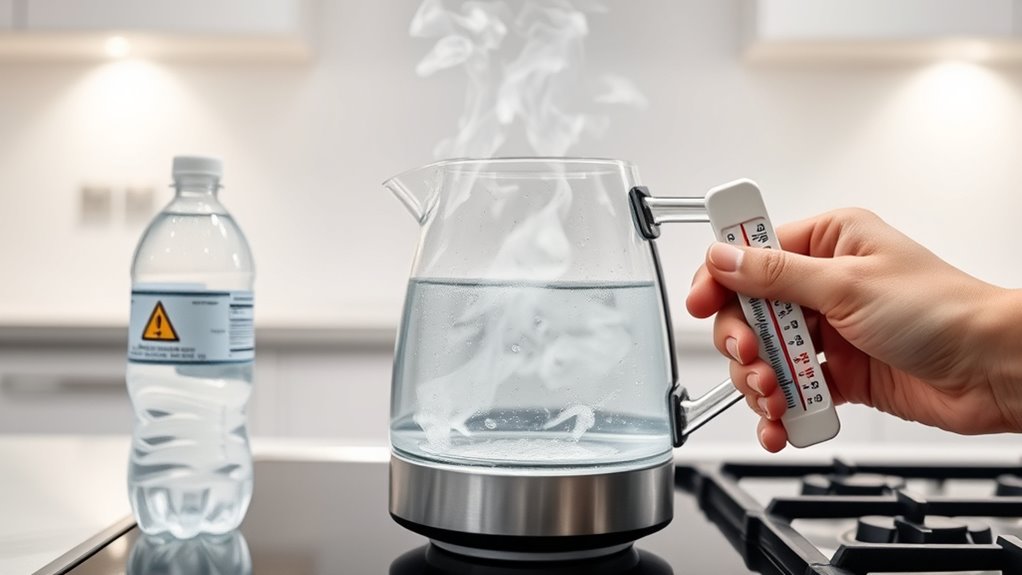
During a boil water advisory, you should always use boiled or bottled water for food preparation to prevent contamination. Make certain to sanitize all food contact surfaces thoroughly before cooking or serving. These steps help protect your customers and ensure safe handling of food during a water safety crisis. Additionally, understanding filtration systems can help you better manage water safety and maintain a healthier kitchen environment. For added protection, consider using air purifiers to reduce airborne contaminants that might enter your kitchen during such events.
Use Boiled or Bottled Water
When a boil water advisory is in effect, using boiled or bottled water is the safest way to guarantee your food preparation remains free from microbiological contaminants. To minimize risks, follow these key practices:
- Use water that has been boiled to a rolling boil for at least 1 minute (or 3 minutes at high elevation) before cooking or preparing beverages.
- Only use bottled water for drinking, washing produce, or making ice.
- Discard all tap water used for ice production and switch to commercially produced ice.
- Wash produce with boiled or bottled water if fresh options are necessary.
Following these steps helps prevent pathogen exposure and keeps your kitchen safe during a water outage. Always verify local guidance for specific instructions.
Sanitize Food Contact Surfaces
After ensuring all food and produce are prepared with boiled or bottled water, it is crucial to focus on sanitizing food contact surfaces. You should thoroughly clean countertops, cutting boards, utensils, and equipment with soap and hot water first. Then, sanitize these surfaces using a solution of approved sanitizer or a diluted bleach solution (1 tablespoon of bleach per gallon of water). Make sure to let the sanitizer sit for the recommended contact time before wiping or air-drying. This process eliminates any remaining pathogens that could contaminate food. Proper sanitation prevents cross-contamination and keeps your kitchen safe until regular water quality is restored and the advisory is lifted. Proper sanitation is essential for maintaining a safe food preparation environment during water outages. Don’t forget to sanitize small tools, appliances, and sinks used during food prep.
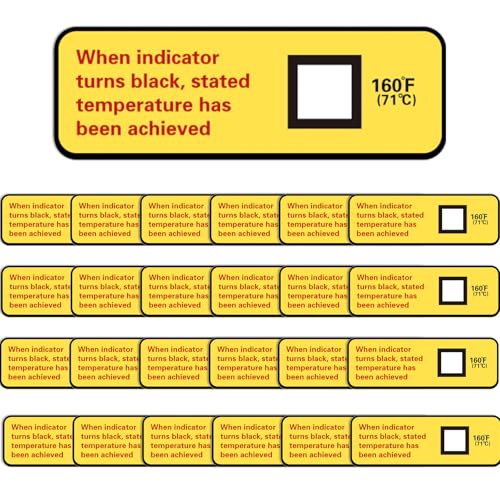
Copkim 48 Count Dishwasher Temperature Test Strips 160℉/71℃ Bulk Heat Test Labels for Commercial Home Dishwashers Waterproof Adhesive Stickers
Abundant Supply for Daily Needs: each pack of our dishwasher temperature test strips comes with 48 dishwasher heat…
As an affiliate, we earn on qualifying purchases.
As an affiliate, we earn on qualifying purchases.
Proper Handling of Ice, Produce, and Ready-to-Eat Items

Proper handling of ice, produce, and ready-to-eat (RTE) items is crucial during a boil water advisory to prevent cross-contamination and guarantee food safety. You should always use commercially prepared, prepackaged, or frozen produce when possible. If fresh produce is necessary, wash it with boiled or bottled water that has cooled. For ice, discard all existing ice and avoid making new ice with tap water; instead, use ice from an approved source. When handling RTE foods, ensure they haven’t come into contact with contaminated water.
- Use prewashed or sanitized produce and ice from approved sources.
- Wash fresh produce with boiled or bottled water.
- Discard all existing ice and avoid making new ice with tap water.
- Avoid preparing RTE items that can’t be cooked to eliminate pathogens.
Adjustments to Dishwashing and Equipment Use

During a boil water advisory, dishwashing and equipment use require immediate adjustments to prevent contamination. Only operate dishwashers if they meet the required final rinse temperature of at least 165°F or are connected to an approved potable water source. Avoid low-temperature chemical sanitizers unless your system is approved and verified. Before resuming use, verify sanitizing rinse temperatures and thoroughly clean water-contact parts like filters and lines. Hand-wash sinks, dispensers, and spray bottles must be sanitized with boiled or approved water before reuse. Appliances that use tap water, such as ice machines and beverage dispensers, should be shut off, flushed, and sanitized prior to operation. Discard any items that contact untreated water, and follow local health instructions for plumbing flushing and system disinfection. Proper appliance maintenance can help prevent contamination risks during advisories. Regularly inspecting and maintaining water supply systems ensures safe operation and reduces potential hazards. Additionally, verifying the navigation and mapping of your water systems can help identify vulnerabilities and improve safety protocols. Implementing system monitoring procedures can further enhance detection of contamination risks early on.
Maintaining Hygiene and Staff Practices During Advisories
During a boil water advisory, it’s crucial to follow proper handwashing procedures to prevent contamination. You should also make sure staff are trained and aware of the updated protocols to maintain a safe environment. Additionally, using equipment safely and correctly helps minimize risks and keeps your operation compliant. Implementing hygiene standards can further reduce the chance of microbial contamination during advisories. Regular staff training on auditory processing can help ensure that communication remains clear and effective, especially in noisy or stressful situations.
Proper Handwashing Procedures
When a boil water advisory is in effect, maintaining hand hygiene becomes more critical than ever to prevent contamination. You must guarantee staff thoroughly wash hands with approved water, soap, or alcohol-based sanitizer if water isn’t safe. Follow these key steps:
- Use boiled or bottled water for handwashing whenever possible.
- Wash hands for at least 20 seconds, covering all surfaces.
- Use sanitizer only if hands are visibly clean and approved for use during advisories.
- Avoid touching surfaces or items unnecessarily after washing until hands are dry and protected.
- Be aware that wave and wind conditions can impact water safety and the effectiveness of advisories.
Staff Training and Awareness
Effective staff training and heightened awareness are essential for maintaining hygiene and proper practices during a boil water advisory. You need to guarantee everyone understands the importance of using approved water sources and follows proper hand hygiene protocols. Train staff to recognize contaminated water sources and to avoid contact with tap water for food preparation, cleaning, and sanitation. Communicate procedures clearly, such as sanitizing appliances, using disposable utensils, and verifying water safety before resuming operations. Staff should also be familiar with posting advisory notices and following local health authority instructions. Regular reminders and refresher training help prevent lapses that could compromise safety. By staying informed and vigilant, your team can effectively minimize risks and uphold hygiene standards during water advisories.
Safe Use of Equipment
Maintaining proper hygiene and sanitation of equipment is essential to prevent contamination during a boil water advisory. You must guarantee all water-contact surfaces are thoroughly cleaned and sanitized with boiled or approved water before use. This reduces the risk of spreading bacteria or viruses. To stay compliant, consider these steps:
- Sanitize all utensils, cutting boards, and surfaces with boiled or bottled water.
- Shut off or isolate appliances that use tap water, like ice machines and coffee makers, until they’re properly sanitized.
- Use disposable plates, cups, and utensils to minimize cross-contamination.
- Regularly disinfect sinks, spray bottles, and water lines following manufacturer instructions.
Steps to Flushing and Restoring Water Systems

To restore water systems after a boil water advisory, you need to follow a systematic flushing process to guarantee contaminants are removed and water quality is safe for use. Start by opening all faucets, including those in restrooms and outdoor spigots, and run cold water for at least 15–30 minutes or until the water appears clear. This helps flush out any residual contaminants in the pipes. Disinfect affected appliances, like coffee machines and ice makers, following manufacturer instructions before reuse. Sanitize sinks, spray bottles, and other water-contact surfaces with boiled or approved water. Confirm with your local health authority that water tests show safety before resuming normal operations. Proper flushing and sanitation are critical to ensure your water system is fully restored and safe. Additionally, consider inspecting your backup water supply systems to ensure they are ready for future outages. Regular maintenance of your water filtration systems can also help prevent contamination issues during service disruptions. It is also helpful to maintain water quality through periodic testing, especially after outages or system repairs. Incorporating smart home water sensors can provide real-time alerts and support ongoing water safety monitoring.
Verifying Water Safety Before Resuming Operations
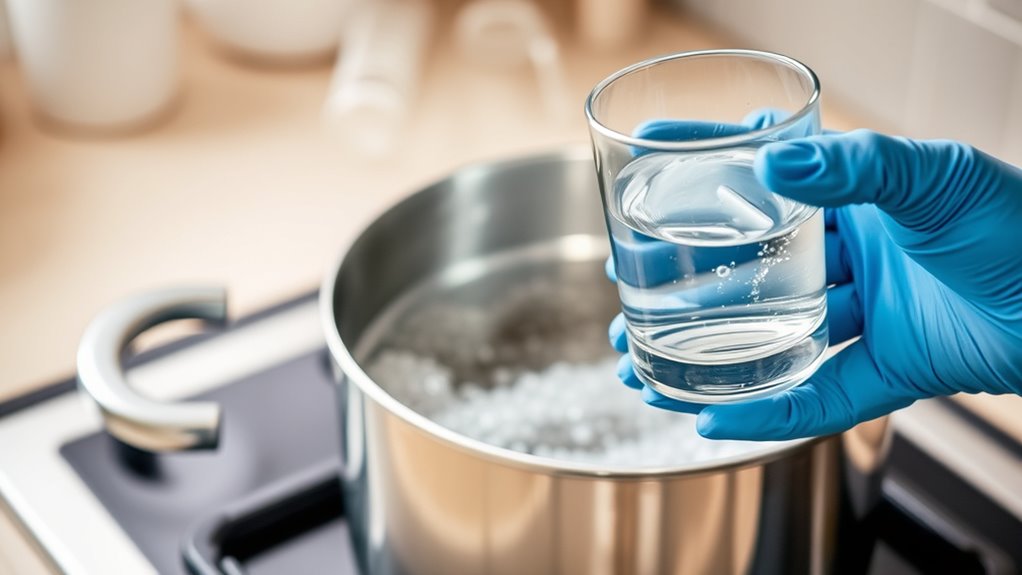
Before resuming operations, you need to verify that the water is safe through proper flushing protocols, which typically involve running each faucet for at least 15–30 minutes. You must also confirm disinfection and complete testing to guarantee no harmful microbes remain, and obtain official clearance from local health authorities. Keeping thorough documentation of these steps is essential to demonstrate compliance and ensure public safety. Additionally, understanding the importance of proper water testing methods is crucial for accurate assessment of water safety after outages. Employing appropriate sampling techniques helps ensure the reliability of the testing results and the overall safety of your water supply. Recognizing the significance of net worth and financial independence in related fields can also inform your approach to managing water safety programs.
Flushing Protocols and Duration
Flushing protocols are essential steps to guarantee water safety after a boil water advisory is lifted. Proper flushing clears residual contaminants and verifies water quality. To ensure thorough flushing, follow these key steps:
- Run each cold water faucet for at least 15–30 minutes or until water appears clear.
- Flush all relevant appliances, including coffee machines, ice makers, and beverage lines.
- Sanitize sinks, spray bottles, and water-contact surfaces with boiled or approved water before reuse.
- Confirm with local health authorities that flushing is complete and safe before resuming normal operations.
These steps help eliminate lingering bacteria or debris, reduce the risk of cross-contamination, and restore confidence in your water supply, ensuring safe kitchen practices.
Disinfection and Testing Procedures
How can you be sure the water is safe to use again after a boil water advisory? You must follow disinfection and testing protocols. First, disinfect affected systems with chlorination or other approved methods, ensuring proper contact time. Then, collect water samples for bacteriological testing, verifying no harmful pathogens remain. Local health authorities typically specify testing procedures and acceptable negative results before lifting the advisory. Confirm that appliances like dishwashers, coffee machines, and beverage lines are thoroughly sanitized and flushed. Use the table below to guide disinfection and testing steps:
| Step | Action |
|---|---|
| Disinfection | Chlorinate water system, maintain contact time |
| Sampling | Collect water samples from multiple points |
| Testing | Send samples to an accredited lab |
| Results | Await negative bacteriological report |
| Final Confirmation | Obtain clearance before resuming use |
Documentation and Clearance Steps
To verify water is safe for use after a boil water advisory, you need to obtain official clearance from the relevant health authority or water utility. This guarantees the water has been properly tested and disinfected, confirming it’s free of harmful microbes.
You should follow these steps:
- Request and review written confirmation or official notice indicating the advisory has been lifted.
- Confirm that the water utility or health department has performed required testing, including negative bacteriological results.
- Verify that the distribution system has been disinfected and flushed according to local guidelines.
- Document all communication, testing reports, and clearance notices for recordkeeping and compliance purposes.
Only after completing these steps should you resume normal water use in your kitchen.
Communicating With Customers and Staff About Water Safety
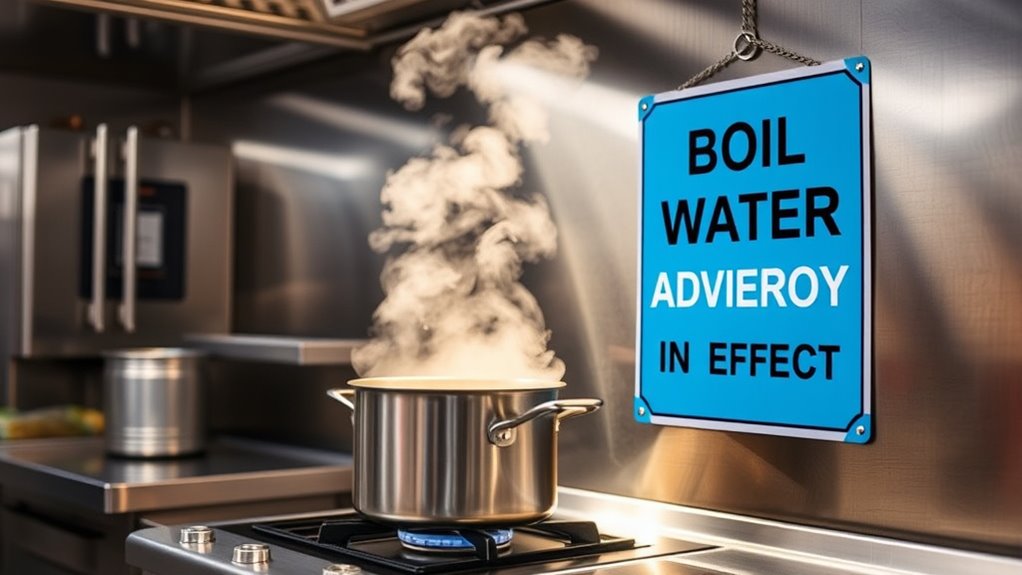
Effective communication is essential during a boil water advisory to guarantee both staff and customers understand the situation and follow safety protocols. You should promptly inform staff about the advisory, providing clear instructions on water use restrictions and sanitation procedures. Post visible notices in key areas, such as entrances and kitchens, to alert customers and staff of the water safety status. Train employees on proper hygiene, appliance shutdowns, and safe food handling during the advisory. Maintain open channels for updates from local health authorities and relay any changes promptly. Transparency builds trust and ensures everyone adheres to safety measures, reducing risks of contamination. Consistent, accurate messaging helps prevent accidental contact with unsafe water and supports a swift, organized response.
Legal Responsibilities and Recordkeeping During Water Outages
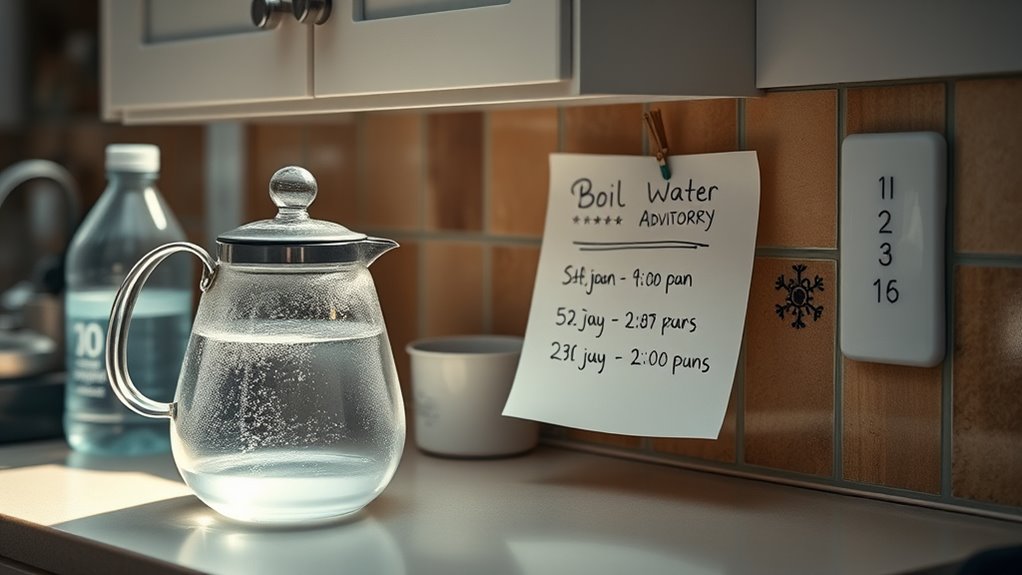
During a water outage, you are legally required to document all actions taken to guarantee compliance with local health regulations and protect your business from liability. Proper recordkeeping ensures you can demonstrate adherence to safety protocols and facilitate inspections. You should track:
- All staff notifications, training, and communication regarding water safety measures.
- Details of appliance shutdowns, sanitization, and flushing procedures performed.
- Dates, times, and results of water testing and clearance from health authorities.
- Any modifications made to menu items or operations due to water safety concerns.
Maintaining detailed records helps verify that you followed proper procedures, supports regulatory reviews, and minimizes legal risks. Staying organized and transparent safeguards your reputation and ensures quick recovery post-outage.
Frequently Asked Questions
How Long Does a Typical Boil Water Advisory Usually Last?
A typical boil water advisory usually lasts from a few hours to several days, depending on the extent of the contamination and repair efforts. You should follow local health authority instructions, which may include flushing and disinfecting your plumbing and appliances. Wait for official clearance before resuming normal water use. Keep in mind that the duration varies, so stay updated through official sources until they confirm your water is safe again.
Can I Use My Existing Water Filtration System During an Advisory?
Think of your filtration system as a sturdy umbrella in a storm. During a boil water advisory, it’s best not to depend on it alone. Many filters don’t eliminate all microbiological hazards, so using the system might give a false sense of security. Instead, use bottled water or boil tap water for cooking and drinking. Keep your staff informed and follow local health guidance to ensure everyone stays safe.
Are There Specific Certifications to Look for in Point-Of-Use Water Treatment Devices?
You should look for point-of-use water treatment devices certified by NSF International or the Water Quality Association (WQA). Certifications like NSF/ANSI Standard 53 or 58 guarantee the device effectively reduces microbiological contaminants and other hazards. Always check that the certification is current and specific to microbiological safety, as not all filters meet these standards. Using certified devices helps maintain water safety during advisories and ensures compliance with health regulations.
What Are the Legal Liabilities if My Kitchen Fails to Comply?
If your kitchen fails to comply with a boil water advisory, you risk legal liabilities like fines, penalties, or even closure, depending on local health regulations. You could also face lawsuits if someone gets sick from contaminated food or drinks. Non-compliance damages your reputation and may lead to costly legal actions. To avoid this, follow all official guidance, document your actions, and obtain clearance before resuming normal operations.
How Can I Ensure Staff Are Properly Trained on Emergency Water Safety Procedures?
Train your team thoroughly to tackle water safety during advisories by emphasizing education, engagement, and enforcement. Conduct clear, consistent training sessions on emergency protocols, including proper hand hygiene, utensil sanitation, and appliance adjustments. Reinforce routines with regular refreshers and role-playing scenarios. Use visual aids and checklists to boost understanding, ensuring everyone knows how to respond swiftly, safely, and securely, minimizing risks and maintaining compliance during water emergencies.
Conclusion
When a boil water advisory hits, your quick actions safeguard your customers and staff. Do you know exactly how to handle food and water safely during this time? Staying informed and following proper procedures guarantees everyone stays safe and your business remains compliant. Remember, taking swift, smart steps now can prevent bigger issues later. Are you ready to confidently manage water outages and keep your kitchen safe?