
During a power outage, keep your baby’s formula and breastmilk safe by stockpiling non-perishable foods and preparing a manual cooler with ice packs and frozen bottles to maintain cold temperatures. Use insulated containers and limit how often you open them. Always monitor milk for signs of spoilage through smell, appearance, and temperature. Having extra bottles and a plan to communicate with emergency services helps guarantee your baby’s safety. Continue exploring ways to stay prepared and protected.
Key Takeaways
- Keep breastmilk and formula chilled using insulated containers with ice packs to prevent bacterial growth.
- Store breastmilk in pre-cleaned, airtight bottles and label with date for proper rotation.
- Regularly monitor milk temperature with a thermometer to ensure it stays within safe limits (98-100°F).
- Avoid opening storage containers frequently to maintain consistent cold temperatures.
- Discard any milk that smells off, shows clumping, or exceeds safe temperature ranges to ensure safety.

Jackery Portable Power Station Explorer 300, 293Wh Backup Lithium Battery, Solar Generator for Outdoors Camping Travel Hunting Blackout (Solar Panel Optional)
SPEED UP YOUR RECHARGEABILITY: It takes only 2 hours to recharge 80% battery of the power station through...
As an affiliate, we earn on qualifying purchases.
Stock Up on Non-Perishable Baby Food Options

Since power outages can happen unexpectedly, it’s essential to have a supply of non-perishable baby food options on hand. These nutritious options ensure your baby continues to receive essential nutrients even when fresh food isn’t available. Look for products with clear, intact packaging essentials to prevent spoilage and contamination. Choose items like shelf-stable jars, pouches, or dry foods that don’t require refrigeration. Make sure to check expiration dates regularly and store them in a cool, dry place. Having a variety of options can also help you meet your baby’s dietary needs during an emergency. Properly stockpiling these foods guarantees that, no matter what, your little one stays nourished and safe until regular supplies are restored. Incorporating energy-efficient storage solutions can also help preserve your emergency supplies longer. Additionally, understanding food safety practices for stored items can prevent spoilage and ensure your baby’s meals remain safe. Using proper storage techniques can further extend the shelf life of your supplies and maintain their nutritional quality. Being aware of air quality during storage can help prevent mold or bacterial growth that could compromise the safety of stored foods. Developing a cybersecurity plan for your digital data can also help protect your personal information during emergencies.

Anker SOLIX C1000 Gen 2 Portable Power Station, 2,000W (Peak 3,000W) Solar Generator, Full Charge in 49 Min, 1,024Wh LiFePO4 Battery for Home Backup, Power Outages, and Camping (Optional Solar Panel)
49 Min UltraFast Recharging: With upgraded HyperFlash tech, fully recharge at 1,600W—for outage prepping, camping trips, or tailgating...
As an affiliate, we earn on qualifying purchases.
Prepare a Manual Cooler for Breastmilk and Formula Storage
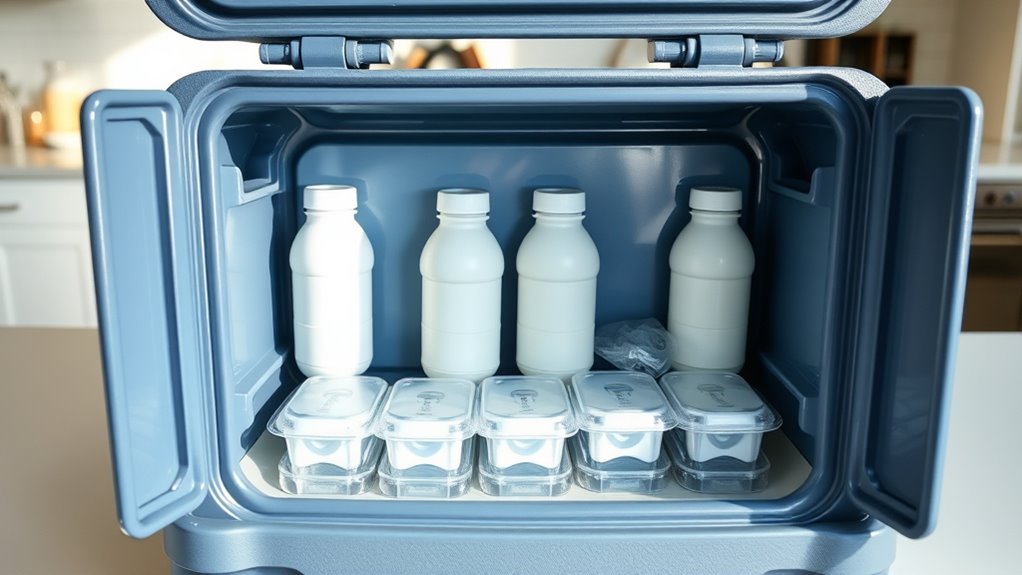
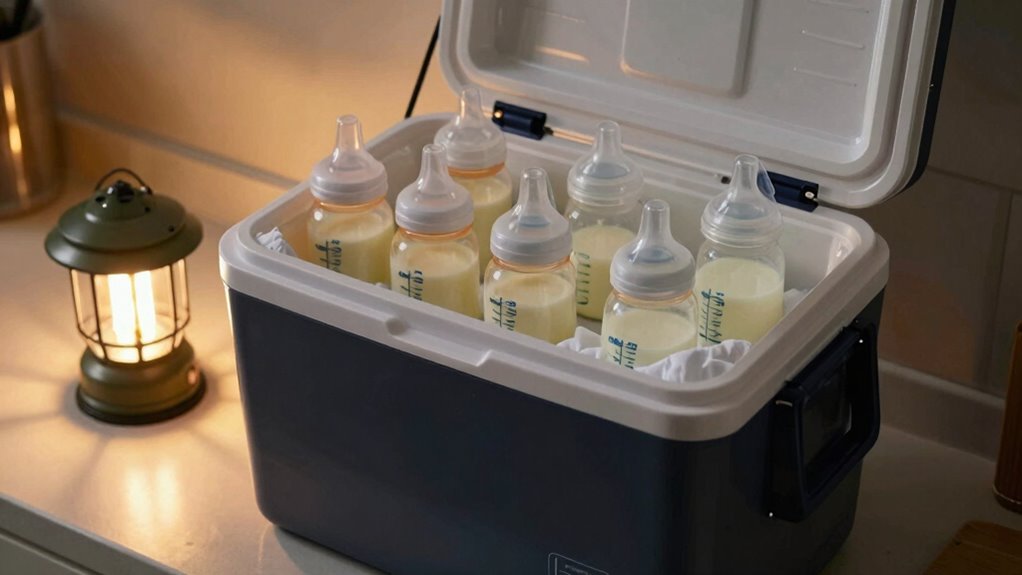
You should prepare a manual cooler to keep breastmilk and formula safe during a power outage. Use insulated containers and pack them with ice packs to maintain a cold temperature. Label and organize everything clearly so you can quickly find what you need when time is critical. Ensuring proper water temperature control is essential to prevent bacterial growth and keep the milk safe. Additionally, regularly check the ice packs and replace them as needed to sustain the proper cooling temperature for the duration of the outage. Remember that temperature monitoring helps ensure the milk remains within a safe range throughout the emergency. Incorporating essential oils like eucalyptus or lavender can also promote a calming environment during stressful situations. Using proper storage techniques can further extend the safe storage time for breastmilk and formula during extended outages.
Use Insulated Containers
Using an insulated container is an effective way to keep your baby’s formula and breastmilk safe during a power outage. It helps maintain proper temperatures, supporting hydration safety and emergency preparedness. To make the most of your container, consider these tips:
- Pre-chill the insulated container with cold water before filling.
- Pack it with pre-frozen bottles or ice packs to keep liquids cold.
- Keep the lid tightly sealed to prevent temperature fluctuations.
- Store the container in a cool, shaded area away from direct sunlight.
- Incorporate connected equipment like smart temperature monitors to track milk safety in real-time.
- Regularly check the temperature of stored milk to ensure it remains within safe limits, especially if you are relying on temperature regulation devices. Proper insulation techniques further enhance temperature stability during extended outages.
- Using a reliable insulation method can help extend the time your milk stays at a safe temperature. Incorporating backup power sources can provide additional peace of mind during prolonged outages.
This simple step ensures your baby’s milk stays at a safe temperature, reducing spoilage risks. An insulated container is a reliable tool in your emergency kit, helping you safeguard your baby’s hydration safety through power outages.
Pack With Ice Packs
Packing your cooler with ice packs is an essential step to keep breastmilk and formula cold during a power outage. Proper ice pack placement ensures even cooling and maintains a consistent temperature, which is critical for safety. Place the ice packs around the stored milk or formula, covering them completely to maximize contact and cooling efficiency. Remember to check the cooler regularly and replace melted or warm ice packs to maintain cold temperatures. Cooler maintenance is important; keep the lid tightly closed to prevent temperature fluctuations and minimize exposure to warm air. Avoid overpacking, which can restrict airflow and reduce cooling effectiveness. Consistent use of well-placed ice packs and proper cooler care helps preserve the quality of your baby’s milk until power is restored. Additionally, using butter as a source of fat in your diet can support overall health, including maintaining energy levels during emergencies. Including traditional Indigenous wellness practices like herbal remedies and natural therapies can also help boost your resilience during such events. Moreover, consider keeping a small, portable vacuum device to assist in maintaining cleanliness and hygiene around your stored supplies. Proper storage techniques are crucial to prevent bacterial growth and spoilage during outages, and staying informed about security zone measures can help you protect your supplies from theft or tampering during emergencies.
Label and Organize
Labeling and organizing your manual cooler is crucial for quick access and ensuring the safety of your baby’s milk during a power outage. Proper storage labeling helps you identify which bottles or containers are freshest and prevents mix-ups. To stay organized, consider these steps:
- Use waterproof markers to clearly label each container with the date and type of milk.
- Arrange bottles by age, placing the newest at the back for easy rotation.
- Create designated sections for breastmilk and formula to avoid cross-contamination.
- Keep a checklist inside the cooler to track how many supplies you’ve stored.
- Regularly check the temperature of the cooler to ensure it remains within safe storage guidelines.
- Incorporate label organization techniques to streamline access and reduce the risk of errors during emergencies.
- Consider using portable smart temperature monitors to receive alerts if the cooler’s temperature rises outside safe ranges, ensuring your milk stays safe.
- Remember that proper storage practices help maintain the quality of your baby’s milk and reduce the risk of spoilage during unexpected outages.
- Utilizing vetted brands for storage containers or coolers can enhance reliability and safety during emergencies.
Effective label organization minimizes confusion and speeds up feeding times, giving you peace of mind during emergencies. Proper storage labeling ensures your baby’s milk remains safe and accessible when you need it most.

Jackery Solar Generator 1000 v2 with 200W Solar Panel,1070Wh Portable Power Station LiFePO4 Battery,1500W AC/100W USB-C Output, 1Hr Fast Charge for Outdoor,Off-Grid Living,RV,Emergency
Powerful yet Compact: Boasting a 1,500W AC output and a 3,000W surge peak, the Solar Generator 1000 V2...
As an affiliate, we earn on qualifying purchases.
Use Ice Packs and Frozen Items to Keep Milk Cold

Place ice packs around your milk inside an insulated container to maintain a consistent cold temperature. Keep frozen items solid to prevent thawing and use proper placement of ice packs for maximum cooling. This approach helps guarantee your baby’s milk stays safe until power is restored. Additionally, ensuring the ice packs are regularly checked and replenished as needed can help maintain optimal temperature conditions. Regularly monitoring the temperature and battery backup availability can prevent bacterial growth in stored milk. Be mindful of ear wax odor as a sign of potential issues, and proper cooling can help prevent bacterial growth in stored milk.
Proper Ice Pack Placement
To keep baby formula and breastmilk cold during a power outage, proper ice pack placement is essential. Correct placement guarantees even cooling and maintains safe temperatures. Here’s how to organize your cooler effectively:
- Place ice packs along the sides and bottom of your cooler to maximize contact.
- Arrange milk bottles or containers in the center, away from direct contact with ice packs.
- Keep the lid tightly closed to preserve cold air and prevent temperature fluctuations.
- Regularly check the ice packs and replenish or refreeze as needed to maintain consistent cold temperatures.
Good cooler organization and strategic ice pack placement help prevent warm spots and keep your milk safe. This approach ensures your milk stays cold and ready for use during a power outage.
Use Insulated Containers
Using insulated containers is one of the most effective ways to keep baby milk cold during a power outage. Fill them with ice packs or frozen items to maintain a consistent cold temperature, which helps preserve the breastfeeding benefits and guarantees formula safety. Insulated containers prevent warm air from reaching the milk, slowing bacterial growth and spoilage. Place the containers in a cool, shaded area to maximize their effectiveness. Remember, the longer the milk stays cold, the safer it remains for your baby. Avoid opening the container frequently, as this introduces warm air. Using quality insulated containers provides a reliable solution when power outages threaten the freshness of breastmilk and formula, giving you peace of mind that your baby’s nutrition stays protected.
Keep Frozen Items Frozen
Keeping your frozen items, like ice packs and frozen bottles, solid during a power outage is essential for maintaining the safety of your baby’s milk. To do this effectively:
- Use sturdy storage containers to organize your frozen food and bottles.
- Place ice packs and frozen bottles at the top of your freezer to keep the temperature consistent.
- Keep the freezer door closed as much as possible to preserve the cold.
- Fill empty space with crumpled paper or additional frozen items to prevent temperature fluctuations.

BLUETTI Elite 30 V2 Portable Power Station 600W (Power Lifting 1500W), 288Wh LiFePO4 Battery with 10ms UPS, Emergency Backup Power for Home Blackout/Winter Storm, Solar Generator for Camping/Road Trip
[288Wh On-the-Go Power] - Only 9.4 lbs lightweight, carry it anywhere during storms! 288Wh capacity meets daily &...
As an affiliate, we earn on qualifying purchases.
Keep Extra Bottles and Nipples Readily Available
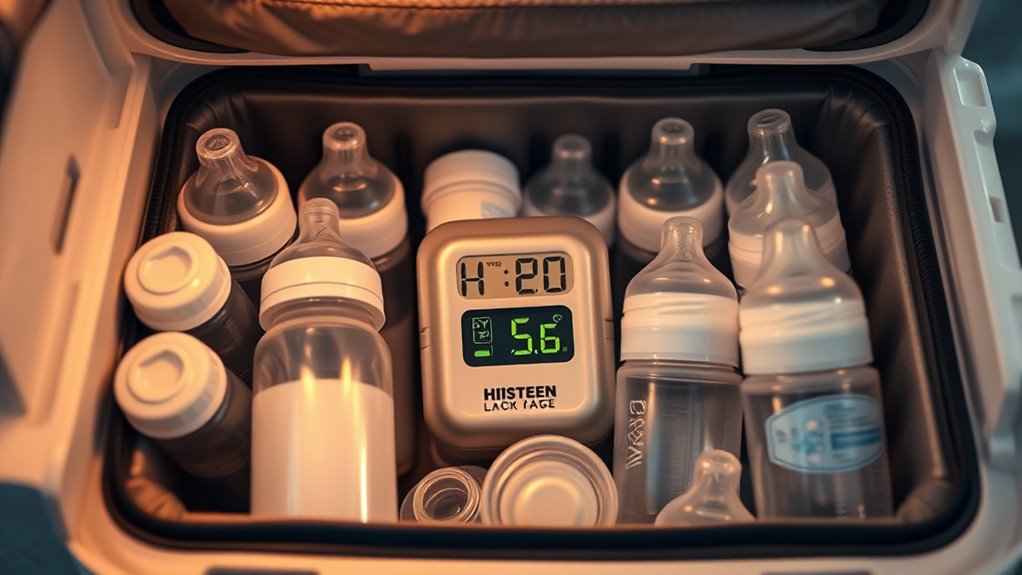
Having extra bottles and nipples on hand makes certain you’re prepared for any unexpected power outage. Stock up on extra bottles so you can quickly assemble feeding supplies if your usual ones become contaminated or lost. Keep nipple storage clean and organized in a designated container to prevent damage or contamination. Having spare bottles means you won’t have to wash and sterilize immediately, saving time and ensuring your baby’s feeding isn’t interrupted. Store these extras in a cool, dry place to maintain their integrity. Regularly check and replace worn or damaged bottles and nipples. Being prepared with extra bottles and well-maintained nipple storage helps you stay ahead of emergencies, ensuring your baby always has safe, clean feeding options during a power outage.
Practice Safe Handling and Storage of Prepared Milk
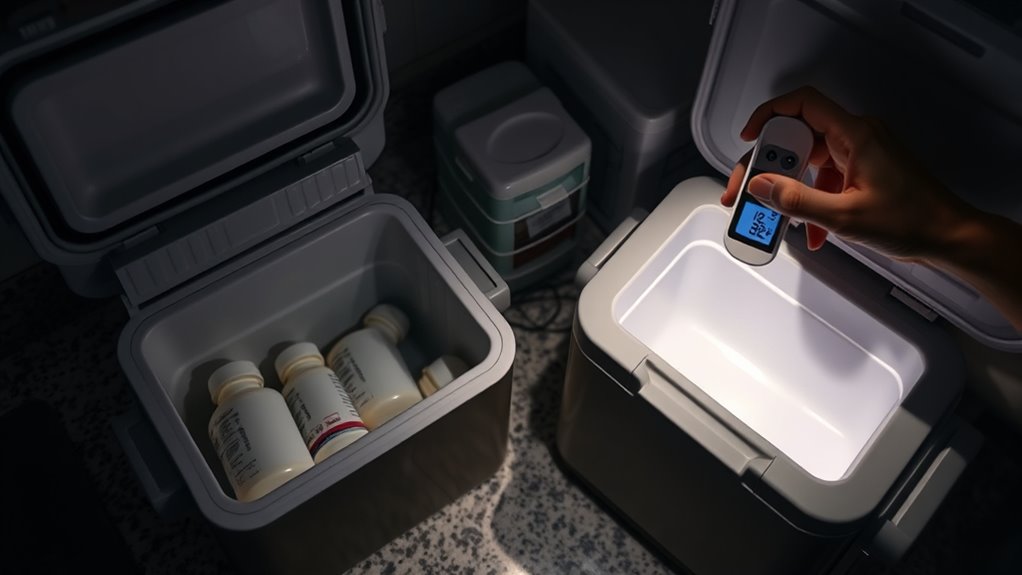
Make sure you store prepared milk in an insulated container to maintain the right temperature. Keeping the milk at a safe, consistent temperature prevents harmful bacteria growth. Regularly check the storage conditions to guarantee your baby’s milk stays fresh and safe to feed.
Store in Insulated Container
To maintain the safety and freshness of prepared milk during a power outage, placing it in an insulated container is vital. This helps keep the milk at a safe temperature and prevents spoilage. When using insulated containers, consider these steps:
- Fill the container with ice packs or cold packs to keep the milk chilled.
- Ensure the container is tightly sealed to prevent leaks and contamination.
- Regularly monitor the temperature with a thermometer or built-in temperature monitoring device.
- Keep the container in a cool, shaded place away from direct sunlight.
Keep at Safe Temperatures
Wondering how to guarantee the milk stays safe during a power outage? The key is consistent temperature monitoring to assure safe storage. Keep prepared milk at the right temperature—below 40°F (4°C)—to prevent bacterial growth. If you’re using refrigerated milk, transfer it to an insulated container with ice packs to maintain a cold environment. Avoid letting the milk sit at room temperature for more than two hours. Check the temperature regularly with a thermometer to confirm it stays within safe limits. If the milk warms up beyond 40°F, discard it to keep your baby safe. Proper temperature monitoring and safe storage practices help you protect your baby from potential health risks during a power outage.
Know How to Thaw Frozen Breastmilk Safely
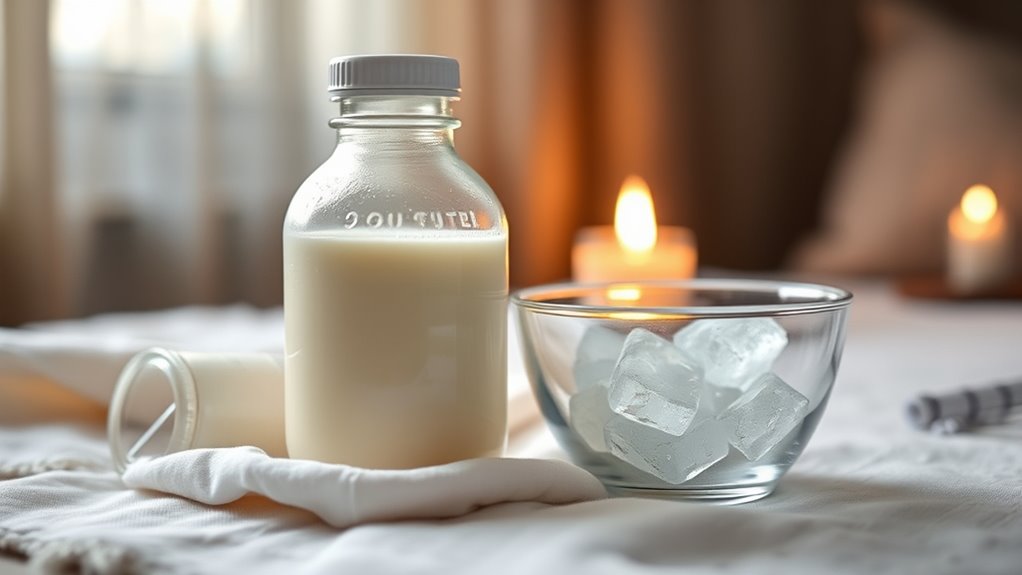
When thawing frozen breastmilk, it’s important to do so securely to preserve its nutrients and prevent bacteria growth. Proper thawing guarantees effective breastmilk preservation and maintains its quality.
Here are steps to help you thaw safely:
- Transfer the frozen breastmilk from the freezer to the refrigerator and let it thaw gradually, usually overnight.
- Avoid thawing at room temperature for extended periods to prevent bacteria growth.
- If needed, thaw in a bowl of warm water, but never use a microwave, as it can create hot spots and damage nutrients.
- Once thawed, gently swirl the milk to mix layers, avoiding vigorous shaking.
Following these tips ensures you’re thawing safely and maintaining the quality of your breastmilk.
Use Alternative Methods to Warm Baby Milk

After safely thawing breastmilk, you might need to warm it before feeding your baby, especially during a power outage when typical electric warmers aren’t available. To avoid overheating, use alternative methods for breastmilk warming or formula heating. Place the container in a bowl of warm water, ensuring the water isn’t too hot. Never microwave breastmilk, as it creates hot spots and destroys nutrients. Use the table below to compare methods:
| Method | Pros | Cons |
|---|---|---|
| Warm water bath | Gentle, even heating | Slightly slower |
| Hand-held warmer | Portable, quick heating | Risk of overheating |
| Warm towel | No equipment needed | Less precise |
| Hot water in sink | Easy, accessible | Monitor temperature closely |
Monitor Temperature and Check for Signs of Spoilage

To guarantee your baby’s milk is safe to feed, always monitor its temperature before offering it. Proper temperature monitoring helps prevent burns and ensures the milk isn’t too cold or warm. Additionally, check for signs of spoilage to avoid potential health risks.
Here are key steps:
- Use a clean thermometer to verify the milk’s temperature; it should be around body temperature (98-100°F).
- Smell the milk; sour or off odors indicate spoilage detection.
- Look for changes in color or consistency, such as clumping or separation.
- Test a small amount on your wrist for a safe temperature and to check for any unusual tastes or smells.
Consistent temperature monitoring and spoilage detection are essential to keeping your baby safe during power outages.
Communicate With Emergency Services for Support
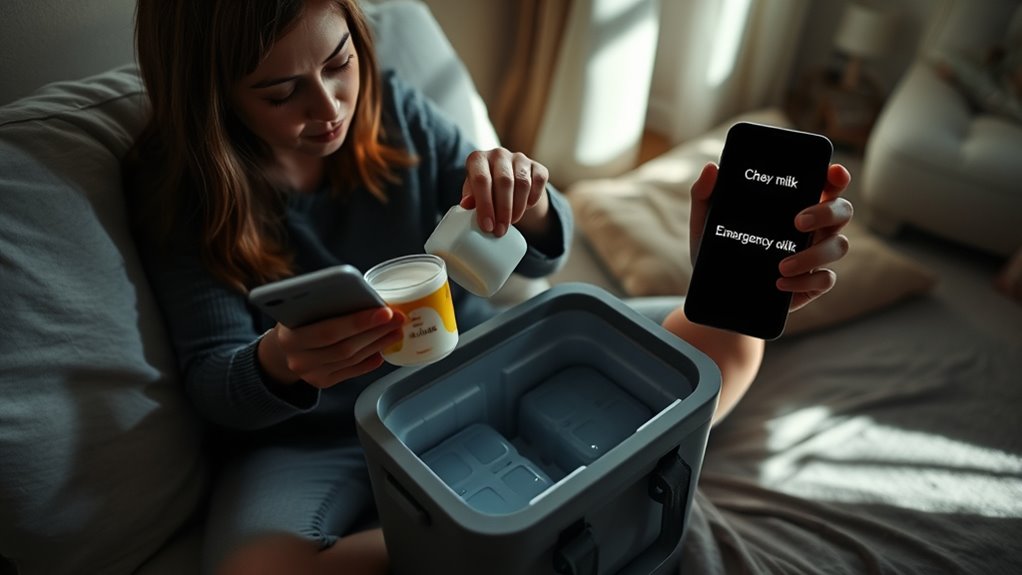
During a power outage, reaching out to emergency services can provide crucial support and guidance for maintaining your baby’s safety. Effective emergency communication ensures you get timely advice on alternative feeding methods or local resources. Keep your phone charged and have emergency contact numbers readily accessible. When you call, clearly explain your situation and ask about support coordination options, such as nearby shelters, cooling centers, or community aid programs. Emergency services can also advise on safe storage of breastmilk or formula during the outage. Staying connected helps you access essential information quickly, reducing stress and ensuring your baby’s needs are prioritized. Remember, maintaining open lines of communication with authorities is indispensable for receiving the support you need during these challenging situations.
Develop a Power Outage Emergency Plan for Your Baby

Creating a thorough power outage emergency plan for your baby is essential to guarantee their safety and well-being. Start by preparing an emergency kit with enough formula, breastmilk storage supplies, and batteries-powered lighting. Next, establish clear communication planning with family, neighbors, and emergency services so you can quickly get help if needed. Consider these steps:
- Identify a safe, cool storage spot for breastmilk and formula.
- Stock up on supplies like bottles, formula, and a manual pump.
- Create a contact list for local emergency resources.
- Practice your plan regularly to ensure everyone knows their role.
Frequently Asked Questions
How Long Can I Store Breastmilk Safely During a Power Outage?
During a power outage, you can typically safely store breastmilk at room temperature for up to 4 hours. If your refrigerator stays cold (below 40°F), breastmilk can last 24 hours, but no longer. To guarantee safety, follow storage guidelines and maintain proper temperature control. Keep the milk in an insulated cooler with ice packs if the power’s out longer, and always check the milk’s smell and appearance before feeding.
Can I Refreeze Thawed Breastmilk or Formula?
Think of refreezing breastmilk like a box of vintage records—you don’t want to shuffle it around too much. Once breastmilk or formula has thawed, you shouldn’t refreeze it, as this can compromise safety and quality. For formula safety, discard any leftovers after feeding. If your power’s out, keep milk cold with ice packs, but avoid refreezing thawed milk to keep your baby safe and healthy.
Are There Specific Signs Indicating Milk Has Spoiled After a Power Outage?
You’ll want to watch for milk spoilage signs after a power outage. Spoiled milk indicators include a sour smell, a change in texture, or a lumpy appearance. If the milk has an off odor, discoloration, or tastes sour, discard it immediately. Trust your senses—if anything seems off, it’s safest to throw it out. Always check for these spoilage signs before feeding to ensure your baby’s safety.
What Are the Best Portable Options for Warming Baby Milk Without Electricity?
You can use portable warmers or thermal bottles to warm baby milk without electricity. Portable warmers are compact and designed to keep milk at the right temperature on the go, while thermal bottles can hold warm water that you can utilize to gently heat the milk. Always test the milk temperature before feeding to ensure it’s safe for your baby. These options provide convenient, safe warmth during power outages.
How Can I Ensure My Baby’s Safety if I Lose Access to Clean Water During an Outage?
Imagine your baby’s health as a delicate garden needing constant care. During an outage, prioritize water safety by boiling water for at least a minute before using it for milk storage or feeding. Store clean, boiled water in sealed containers, and use it promptly. Always check milk for signs of spoilage, and rely on pre-prepared, sealed supplies when possible. Your vigilance keeps your baby’s world safe and thriving.
Conclusion
By staying prepared, you’ll keep your baby’s milk safe and sound, even when the lights go out. Think of your emergency plan as a lifeline, guiding you through the darkness with confidence. With these tips, you’re not just protecting your little one’s nutrition—you’re ensuring their comfort and safety shine brighter than any power outage. Stay vigilant and ready, and you’ll navigate any blackout with the calm of a steady lighthouse in stormy seas.