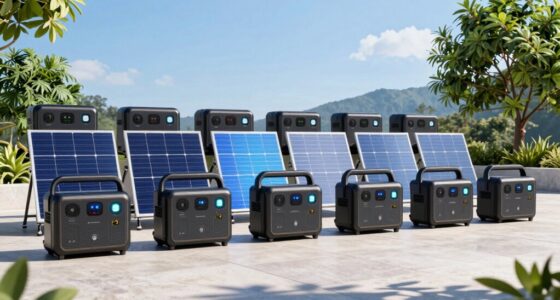
For backup power, my best overall pick is the Jackery Explorer 300: its 292Wh capacity and power-station format make it more useful for multiple devices than a phone-focused bank. The Anker SOLIX C300 is another standout for buyers who want a compact station, while the Jackery Solar Generator 1000 v2 pairs a much larger battery with a 200W panel for longer outages. The key tradeoff is that small solar power banks are portable but offer limited backup, while power stations can run more devices but take more room and need a suitable panel for meaningful solar recharging. Solar charging on a small bank is generally a slow supplement, not a dependable way to refill it quickly. Continue reading for the full breakdown of all 15 options and how to match capacity, ports, and charging needs to your backup plan.

Get backup power and energy gear delivered free with Prime
- Fast, free delivery on millions of items
- Prime Video, Amazon Music and more included
- Member-only deals all year
Complete the kit


Key Takeaways
- The 292Wh class is the most balanced size in this lineup: Jackery Explorer 300, EnginStar 300W, and Anker SOLIX C300 all suit light device backup, but differ in output and usability.
- Bundled solar changes the backup proposition: Jackery Solar Generator 1000 v2 and Apowking include panels, while most listed options require a separate panel or rely on slow built-in solar charging.
- Phone-oriented power banks and power stations solve different problems: the BLAVOR and high-capacity handheld banks are easier to carry, but do not replace AC-equipped stations for larger devices.
- Capacity alone does not define runtime: the 88Wh MARBERO, 640Wh LIBRIDS C600, and 2,010Wh Anker SOLIX S2000 represent very different loads, portability demands, and recharge needs.
- LiFePO4 appears in the larger Jackery models: those options favor longer-term backup planning, while smaller handheld banks are simpler for keeping phones and other USB devices powered.
| Jackery Explorer 300 Portable Power Station, 292Wh |  | Best Compact Power Station for Backup | Capacity: 292Wh | Battery chemistry: LiFePO4 | Weight: 7.5 lbs | VIEW LATEST PRICE | See Our Full Breakdown |
| 49,800mAh Solar Power Bank with Wireless Charging, 22.5W Fast Charging, Built-In Cables and LED Flashlights |  | Best for Multi-Cable Convenience | Battery capacity: 49,800mAh | Battery type: Lithium-polymer | Charging methods: USB-C, Lightning, Micro USB, wireless, and solar | VIEW LATEST PRICE | See Our Full Breakdown |
| YELOMIN 38,800mAh Solar Power Bank with USB-C, Three Output Ports, and Dual LED Flashlights |  | Best Lightweight Trail Backup | Battery capacity: 38,800mAh | Weight: 9.9 oz | Dimensions: 5.9 × 2.95 × 0.98 in | VIEW LATEST PRICE | See Our Full Breakdown |
| Jackery Solar Generator 1000 v2 with 200W Solar Panel, 1024Wh LiFePO4 Battery |  | Best for Extended Home Backup | Battery capacity: 1,024Wh | Battery type: LiFePO4 (LFP) | Solar panel: 200W included | VIEW LATEST PRICE | See Our Full Breakdown |
| BLAVOR 20,000mAh Solar Power Bank with Wireless Charging |  | Best for Built-In Charging Convenience | Battery capacity: 20,000mAh | Maximum output power: 20W | Charging ports: 3: USB-C, USB-A, and iOS | VIEW LATEST PRICE | See Our Full Breakdown |
| BLAVOR 10,000mAh Solar Power Bank with 20W USB-C and Wireless Charging |  | Best Compact Backup Power Bank | Battery capacity: 10,000mAh | USB-C output: Up to 20W | Wireless charging: Qi compatible | VIEW LATEST PRICE | See Our Full Breakdown |
| EnginStar 300W Portable Power Station, 296Wh |  | Best Value for Basic AC Backup | Capacity: 296Wh | AC output: 300W | AC outlets: 2 pure sine wave, 110V | VIEW LATEST PRICE | See Our Full Breakdown |
| Anker SOLIX C300 Portable Power Station, 288Wh |  | Best Premium Compact Power Station | Battery capacity: 288Wh | Battery chemistry: LiFePO4 | Running output: 300W | VIEW LATEST PRICE | See Our Full Breakdown |
| 38800mAh Solar Power Bank with 22.5W USB-C Fast Charging, Four Built-In Cables, and Dual LED Flashlights |  | Best for Group Phone Backup | Battery capacity: 38,800mAh | Fast-charging output: 22.5W | Connectors: USB-A, USB-C, Lightning, Micro USB | VIEW LATEST PRICE | See Our Full Breakdown |
| MARBERO Portable Power Station, 88Wh, 120W Surge, 24,000mAh |  | Best for Small Loads and Emergency Lighting | Capacity: 88Wh, 24,000mAh | Running wattage: 80W | Maximum surge power: 120W | VIEW LATEST PRICE | See Our Full Breakdown |
| Apowking 100W Portable Power Station with 40W Solar Panel |  | Best Lightweight Solar Kit | Capacity: 146Wh / 39,600mAh | Running output: 100W | Peak output: 200W | VIEW LATEST PRICE | See Our Full Breakdown |
| Anker SOLIX C1000 Gen 2 Portable Power Station, 1,024Wh LiFePO4 Battery |  | Best for Fast Home Backup | Battery capacity: 1,024Wh | Battery type: LiFePO4 | Continuous output: 2,000W | VIEW LATEST PRICE | See Our Full Breakdown |
| BLAVOR 10,000mAh Solar Power Bank with Wireless Charging |  | Best Pocket Backup for Phones | Battery capacity: 10,000mAh | Battery type: Lithium-cobalt | USB-C output: 20W | VIEW LATEST PRICE | See Our Full Breakdown |
| LIBRIDS C600 Portable Power Station, 640Wh, 600W |  | Best Mid-Size Outage Backup | Battery capacity: 640Wh | Battery type: LiFePO4 | Surge output: 1,200W | VIEW LATEST PRICE | See Our Full Breakdown |
| Anker SOLIX S2000 Portable Power Station, 2,010Wh, 1,500W |  | Best High-Capacity Solar Backup | Battery capacity: 2,010Wh | Battery type: LiFePO4 | Continuous output: 1,500W | VIEW LATEST PRICE | See Our Full Breakdown |
| solar power banks for backup | Weight | Battery capacity | Dimensions |
|---|---|---|---|
| Jackery Explorer 300 Portable | 7.5 lbs | — | — |
| 49,800mAh Solar Power Bank wit | — | 49,800mAh | — |
| YELOMIN 38,800mAh Solar Power | 9.9 oz | 38,800mAh | 5.9 × 2.95 × 0.98 in |
| Jackery Solar Generator 1000 v | 23.4 lbs | 1,024Wh | — |
| BLAVOR 20,000mAh Solar Power B | — | 20,000mAh | 1.5 × 3.85 × 7.28 in |
| BLAVOR 10,000mAh Solar Power B | 9.3 oz | 10,000mAh | 5.91 × 3.07 × 0.87 in |
| EnginStar 300W Portable Power | 3.6kg | — | — |
| Anker SOLIX C300 Portable Powe | 4.13kg | 288Wh | — |
| 38800mAh Solar Power Bank with | — | 38,800mAh | 6.3 × 3.07 × 1.38 in |
| MARBERO Portable Power Station | 3.2 lb (1.04kg, as listed) | — | 6.5 × 4.6 × 3.1 in |
| Apowking 100W Portable Power S | 3.3 lb | — | 7.5 × 3.7 × 6.1 in |
| Anker SOLIX C1000 Gen 2 Portab | 11.3kg | 1,024Wh | — |
| BLAVOR 10,000mAh Solar Power B | 9.3 ounces | 10,000mAh | 5.91 × 3.07 × 0.87 in |
| LIBRIDS C600 Portable Power St | 16.3 lb | 640Wh | — |
| Anker SOLIX S2000 Portable Pow | 35.7 lb | 2,010Wh | 8.19 × 11.1 × 12.7 in |
More Details on Our Top Picks
Jackery Explorer 300 Portable Power Station, 292Wh
The Jackery Explorer 300 is the step up for buyers who need backup power for more than phones but do not want to haul a large station. Its 292Wh capacity, two AC outlets, and 100W USB-C output can support several small devices, while its 7.5-pound weight makes it easier to move than the 23.4-pound Jackery Solar Generator 1000 v2. The long-life LiFePO4 battery is rated for more than 4,000 cycles before reaching 70% capacity, a useful advantage for a station kept in regular rotation. The tradeoff is modest output: 300W limits which appliances it can run, and the solar panel is sold separately. Compared with the phone-focused BLAVOR 20,000mAh, this is much more capable for household backup, but less convenient to carry on a day hike.
Pros:- Light 7.5-pound design with an integrated carry handle
- Two AC outlets plus USB-C, USB-A, and car-port outputs
- LiFePO4 battery rated for over 4,000 charge cycles
- Supports solar charging with compatible Jackery panels
Cons:- 300W rated output rules out many larger appliances
- Solar panel is not included
- Its 292Wh capacity is better for short outages than extended household backup
Best for: Campers and apartment dwellers who want a light station for phones, laptops, lights, and other low-wattage essentials.
Not ideal for: Buyers who need to run high-wattage appliances or want a ready-to-use solar setup without purchasing a compatible panel separately.
- Capacity:292Wh
- Battery chemistry:LiFePO4
- Weight:7.5 lbs
- Peak surge output:600W
- Ports:2 AC outlets, 1 USB-C PD, 2 USB-A, 1 car port
- USB-C output:100W
- Solar charging:About 80% in 2.8 hours with a 100W panel or 7.5 hours with a 40W panel
- Solar panel:Not included
Our verdict“Choose the Explorer 300 for portable, repeated backup of small electronics and low-wattage gear, not for running major appliances.”
49,800mAh Solar Power Bank with Wireless Charging, 22.5W Fast Charging, Built-In Cables and LED Flashlights
This 49,800mAh power bank suits groups carrying a mix of phones and cable types: built-in USB-C, Lightning, and Micro USB leads reduce the chance of leaving a charging cord behind, while wireless charging adds another option. Its dual LED lights include steady, SOS, and strobe modes, giving it a useful role in a small emergency kit. Compared with the lighter YELOMIN S1008D, this model adds wireless charging and more built-in cable variety, but the solar function is still a fallback rather than a dependable way to refill it quickly. The listed solar recharge time is 18–24 hours of sunlight, so routine USB charging is the practical plan. It is also a phone-scale backup, not a substitute for the AC outlets and larger battery in the Jackery Explorer 300.
Pros:- Built-in USB-C, Lightning, and Micro USB cables reduce packing needs
- Supports wireless charging as well as wired charging
- Dual LED lights provide steady, SOS, and strobe modes
- Described as shockproof, sandproof, rainproof, and splashproof
Cons:- Solar recharge is listed at 18–24 hours of sunlight
- Wireless charging sleeps if a device is not placed on it within 30 seconds
- No AC output for appliances or devices that need a wall-style outlet
Best for: Travelers or households with several phone types who want one compact backup bank with built-in cables and emergency lighting.
Not ideal for: People relying on sunlight for regular recharging or needing AC power for a laptop or household device.
- Battery capacity:49,800mAh
- Battery type:Lithium-polymer
- Charging methods:USB-C, Lightning, Micro USB, wireless, and solar
- Maximum fast-charge output:Up to 22.5W
- Solar recharge time:18–24 hours of sunlight
- Ports:1
- Flashlight:Dual LED lights with standard, SOS, and strobe modes; illumination up to 15 meters
- Outdoor protection:Described as shockproof, sandproof, rainproof, and splashproof
Our verdict“Pick this for cable-flexible phone backup and emergency lighting, but plan to recharge it from USB rather than relying on its small solar panel.”
YELOMIN 38,800mAh Solar Power Bank with USB-C, Three Output Ports, and Dual LED Flashlights
At 9.9 ounces, the YELOMIN S1008D is the easiest option here to tuck into a daypack as phone backup. It has two USB-A outputs, a USB-C input/output, and dual lights with steady, SOS, and strobe settings; the carabiner and port covers suit outdoor carry. Its role is narrower than the BLAVOR 20,000mAh: YELOMIN favors a simple, light wired setup, while BLAVOR adds wireless charging and built-in cables. The key limitation is solar recovery. The panel is described as supplemental emergency charging, and a full refill may take dozens of hours of effective sun or longer. For backup, that means it can help extend a trip or top up a phone, but USB charging should do the main replenishing. It cannot match the Jackery Explorer 300 for AC-powered gear.
Pros:- Lightweight 9.9-ounce body fits easily in a daypack
- Three outputs, including USB-C input/output
- Dual LED lights offer steady, SOS, and strobe modes
- Carabiner and protective port covers suit outdoor carry
Cons:- Solar charging is slow and intended only as supplemental backup
- A full solar recharge may take dozens of hours of effective sunlight or longer
- No wireless charging or AC outlet
Best for: Hikers and travelers who want a lightweight phone backup bank with basic lighting and multiple wired outputs.
Not ideal for: Buyers who need reliable solar replenishment, wireless charging, or AC power for larger electronics.
- Battery capacity:38,800mAh
- Weight:9.9 oz
- Dimensions:5.9 × 2.95 × 0.98 in
- Ports:2 USB-A outputs and 1 USB-C input/output
- Output current:2.4A
- Voltage:3.7V
- Flashlight modes:Steady, SOS, and strobe
- Included accessory:Carabiner
- Warranty:12 months
Our verdict“Choose YELOMIN for lightweight, wired phone backup on the trail, provided you will recharge it by USB when dependable power is available.”
Jackery Solar Generator 1000 v2 with 200W Solar Panel, 1024Wh LiFePO4 Battery
For backup that needs to reach beyond phones and lights, the Jackery Solar Generator 1000 v2 brings a 1,024Wh battery, a bundled 200W panel, and 1,500W AC output. That makes it a stronger fit for several household essentials or camping appliances than the Explorer 300, whose 300W output and 292Wh capacity suit smaller loads. The 10ms UPS switchover can help keep compatible connected equipment powered through a brief interruption, and the LiFePO4 battery is rated to retain over 70% capacity after 4,000 cycles. The tradeoffs are weight and setup: at 23.4 pounds it is less grab-and-go, and the station and panel ship separately. The advertised 50-minute full recharge also requires emergency charging in the app; listed default charging times vary between 1.25 and 1.7 hours.
Pros:- 1,024Wh LiFePO4 battery provides far more backup than phone-sized banks
- 1,500W AC output and 3,000W surge peak support a wider range of devices
- 200W solar panel is included in the package
- 10ms UPS switchover and app-controlled charging modes add backup flexibility
Cons:- At 23.4 pounds, it is substantially heavier than the Explorer 300
- Station and solar panel are shipped separately
- The 50-minute full recharge requires emergency charging in the app, and default-time listings conflict
Best for: Households and campers who need substantial battery backup, AC power for larger devices, and a solar panel included in the package.
Not ideal for: Day hikers or buyers who need a very light, simple phone bank; its capacity and output come with a much heavier setup.
- Battery capacity:1,024Wh
- Battery type:LiFePO4 (LFP)
- Solar panel:200W included
- AC output:1,500W
- Surge peak:3,000W
- Ports:2 USB-C, 1 USB-A, 1 DC car port, 2 pure sine wave AC ports
- UPS switchover:10ms
- Weight:23.4 lbs
- Battery lifespan:Over 70% capacity after 4,000 charge cycles
Our verdict“Choose this Jackery when backup capacity and AC appliance support matter more than low carry weight or a simple one-box setup.”
BLAVOR 20,000mAh Solar Power Bank with Wireless Charging
The BLAVOR combines a 20,000mAh battery with four built-in cables, three ports, and Qi-compatible wireless charging, including support for Apple Watch. That makes it a convenient personal backup bank for someone who carries several small devices but would rather not pack a cable pouch. Compared with the YELOMIN S1008D, BLAVOR offers wireless charging and a broader set of built-in leads, while YELOMIN is lighter at 9.9 ounces and more direct as a basic wired bank. BLAVOR also adds a flashlight, camping light, compass, thermometer, and carabiner for outdoor use. Its 20W maximum output is modest, and the solar charging rate is not specified, so I would treat sunlight as a possible top-up rather than count on it to refill the battery. It is not a replacement for the AC output and capacity of either Jackery station.
Pros:- Four built-in cables and three ports support several device connections
- Qi-compatible wireless charging supports phones and Apple Watch
- Includes a flashlight, camping light, compass, thermometer, and carabiner
- IPX5 water resistance and protective shell materials suit outdoor carry
Cons:- 20W maximum output may be slow for devices that benefit from higher wattage
- Solar charging rate is not specified
- 20,000mAh capacity is for personal electronics, not extended appliance backup
Best for: Travelers and campers who want one cable-equipped bank for a phone, watch, and other small devices, plus basic outdoor accessories.
Not ideal for: Buyers who need fast high-wattage charging, dependable solar recharge timing, or power for AC appliances.
- Battery capacity:20,000mAh
- Maximum output power:20W
- Charging ports:3: USB-C, USB-A, and iOS
- Built-in cables:4: 2 USB-C, 1 iOS, and 1 USB-A
- Wireless charging:Qi-compatible for phones and Apple Watch
- Water resistance:IPX5
- Dimensions:1.5 × 3.85 × 7.28 in
- Additional features:Flashlight, camping light, red indicator light, compass, thermometer, carabiner, and rope
- Safety protections:Overcharge, over-discharge, over-current, and short-circuit protection
Our verdict“Pick BLAVOR for convenient multi-device phone and watch backup with outdoor extras, not for fast charging or dependable solar recharging.”
BLAVOR 10,000mAh Solar Power Bank with 20W USB-C and Wireless Charging
I’d choose the BLAVOR 10,000mAh when backup means topping up a phone or small device without carrying a power station. Its 20W USB-C output and Qi charging give it more flexible charging options than the larger 38,800mAh power bank in this lineup, while its pocket-size format is easier to keep on hand. IPX5 water resistance, dual flashlights, and a compass carabiner add useful outdoor touches. The tradeoff is capacity: 10,000mAh can run short on a longer trip or when several devices need repeated charging. Solar charging performance and recharge time are not specified, so I would treat the panel as a possible emergency supplement rather than a dependable way to refill the battery. Choose a wall or USB recharge plan for backup you can count on.
Pros:- Qi wireless charging and USB-C output up to 20W support flexible phone charging.
- Three output ports allow several devices to connect at once.
- IPX5-rated case and dust- and shock-resistant features suit outdoor carry.
- Dual flashlights and a compass carabiner add emergency utility.
Cons:- The 10,000mAh capacity may require another recharge on extended trips.
- Solar charging performance and solar recharge time are not provided.
Best for: Day hikers and commuters who want a compact phone backup with wireless charging and a light.
Not ideal for: Multi-day campers or anyone backing up several devices, since 10,000mAh is limited and solar recharge performance is unspecified.
- Battery capacity:10,000mAh
- USB-C output:Up to 20W
- Wireless charging:Qi compatible
- Ports:3
- Water resistance:IPX5
- Weight:9.3 oz
- Dimensions:5.91 × 3.07 × 0.87 in
- Battery charge time:4 hours
Our verdict“Pick this BLAVOR for pocketable phone backup and useful outdoor extras, but choose a higher-capacity option for extended outages or group use.”
EnginStar 300W Portable Power Station, 296Wh
The EnginStar 296Wh is a practical step up from phone-sized banks when backup needs include small AC appliances, thanks to two pure sine wave outlets and 300W of output. It offers nearly the same stored energy as the Anker SOLIX C300, but its solar input accepts a compatible 12–25V panel rather than relying on a particular panel recommendation. The tradeoff is a more modest feature set: the USB-C output is 18W, and maximum AC output is 300W, so it is not suited to high-draw appliances. Its stated 80% wall recharge in two hours gives a useful recovery target, though the solar panel is not included. I’d rank it as a straightforward backup station for basic loads, not as a substitute for the much larger-capacity stations elsewhere in this roundup.
Pros:- 296Wh capacity and two 110V pure sine wave outlets support small AC loads.
- Can recharge from a compatible solar panel, wall outlet, or 12V car socket.
- Digital display and built-in protections help monitor operation and guard against common electrical faults.
- Reaches 80% charge in a stated two hours from a wall outlet.
Cons:- The compatible solar panel is not included.
- 300W AC output rules out higher-draw appliances.
- 18W USB-C output is less capable than the Anker SOLIX C300’s high-output USB-C ports.
Best for: Campers and households wanting a modest-capacity station for phones, lights, and compatible low-wattage AC devices.
Not ideal for: Buyers who need to run high-wattage appliances or want a solar panel included in the package.
- Capacity:296Wh
- AC output:300W
- AC outlets:2 pure sine wave, 110V
- USB-C output:18W
- Solar input:Compatible 12–25V solar panel; panel not included
- Recharge methods:Solar panel, wall outlet, or 12V car socket
- Weight:3.6kg
- Recharge time:80% in 2 hours
Our verdict“Choose the EnginStar for basic AC backup and flexible recharge methods, provided its 300W limit and separate solar-panel purchase fit your plan.”
Anker SOLIX C300 Portable Power Station, 288Wh
For a compact station that may see regular use, I’d favor the Anker SOLIX C300 over the EnginStar 300W station for its LiFePO4 battery, eight ports, and stated 3,000-cycle design life. Both provide 300W of running output and similar capacity, but the C300 adds a 600W surge rating and high-output USB-C ports, which give compatible devices more charging flexibility. Its stated 80% AC recharge in 50 minutes is also far quicker than the EnginStar’s two-hour figure. The cost in portability is that it weighs 4.13kg, and solar compatibility needs attention: not every panel works, and several Anker panels are specifically excluded. The solar panel is not listed as included, either. I’d select it for frequent backup and mixed devices, while occasional users may find the simpler EnginStar sufficient.
Pros:- LiFePO4 battery is designed for 3,000 cycles.
- Eight ports include three AC outlets and multiple USB-C connections.
- 300W running output with 600W surge capacity supports a range of smaller devices.
- AC charging reaches 80% in a stated 50 minutes.
Cons:- At 4.13kg, it is heavier than a pocket power bank and not ideal for long carries.
- Solar panel compatibility is limited; several Anker panels and other 5V/3A USB-C panels are excluded.
- The solar panel is not listed among the included components.
Best for: Frequent campers and home-backup users who want a compact station with long-cycle-life battery chemistry and varied device outputs.
Not ideal for: Buyers seeking a lightweight handheld bank, an included solar panel, or plug-and-play compatibility with excluded Anker panels.
- Battery capacity:288Wh
- Battery chemistry:LiFePO4
- Running output:300W
- Surge output:600W
- Charging ports:8 total
- USB-C output:Two ports up to 140W each; one up to 15W
- AC recharge time:80% in 50 minutes
- Weight:4.13kg
- Noise level:25dB at 3.3ft
Our verdict“Choose the C300 over the EnginStar for frequent use, faster wall recharging, and broader port options, if its weight and panel compatibility suit your setup.”
38800mAh Solar Power Bank with 22.5W USB-C Fast Charging, Four Built-In Cables, and Dual LED Flashlights
This 38,800mAh power bank is the phone-and-small-device choice for groups who would rather not pack a separate cable for every connection. Four built-in cables and support for up to six devices at once make it more convenient for shared backup than the smaller BLAVOR 10,000mAh, especially when several phones need a top-up. Its IP65 rating and dual flashlights with SOS and strobe modes add useful emergency features. The main limitation is what the solar claim means in practice: the description says solar charging is slow and dependent on sunlight, so I would not rely on it to refill the bank quickly during an outage. It also lacks the AC outlets of the EnginStar and Anker SOLIX C300. I’d pick it for USB-device backup and shared charging, not for powering household equipment.
Pros:- 38,800mAh capacity gives it more phone-backup headroom than the 10,000mAh BLAVOR.
- Four built-in cables reduce the need to carry separate charging cords.
- Can charge up to six devices at once.
- IP65-rated design and dual flashlights with steady, SOS, and strobe modes suit emergency kits.
Cons:- Solar recharging is slow and depends on sunlight intensity and panel exposure.
- No AC outlets are listed, limiting it to compatible USB-powered devices.
- Its larger capacity and built-in cables make it less pocketable than the compact BLAVOR.
Best for: Families, small groups, and travelers who need one USB-focused backup bank with built-in cables for several devices.
Not ideal for: Anyone needing AC power for appliances or dependable rapid solar recharging during a prolonged outage.
- Battery capacity:38,800mAh
- Fast-charging output:22.5W
- Connectors:USB-A, USB-C, Lightning, Micro USB
- Ports:4
- Simultaneous device capacity:Up to 6 devices
- Recharge methods:Wall outlet and solar panel
- Dimensions:6.3 × 3.07 × 1.38 in
Our verdict“Choose this bank for shared phone and USB-device backup with fewer loose cables, but select a power station for AC appliances.”
MARBERO Portable Power Station, 88Wh, 120W Surge, 24,000mAh
The MARBERO 88Wh station sits between a phone power bank and the larger EnginStar or Anker SOLIX C300: it adds AC and car outputs without the weight and capacity of a full 300W-class station. Its 80W running limit suits small electronics and low-draw gear, while eight output ports let it serve several devices at once. The built-in three-level light and SOS mode are useful during a blackout. For solar backup, though, the compatible 30W or 60W MARBERO panel is separate, and the listed accessories do not include one. Its capacity is also far below the EnginStar’s 296Wh, so it is better for short outages or a compact emergency kit than sustained use. I’d choose it when portability and lighting matter more than long runtimes.
Pros:- Eight output ports cover AC, USB, USB-C PD, and car DC connections.
- Compact body with an ergonomic handle is easier to carry than larger stations.
- Three brightness levels and SOS mode provide built-in emergency lighting.
- Battery management includes short-circuit and overload protection with automatic shutoff.
Cons:- 80W running output limits the appliances it can power.
- 88Wh capacity is much lower than the EnginStar 296Wh and Anker SOLIX C300 288Wh.
- Solar charging requires a compatible MARBERO panel that is not included in the listed accessories.
Best for: Apartment dwellers and car campers who want a compact station for phones, lights, and other low-wattage devices.
Not ideal for: Buyers who need long runtimes, appliances above 80W, or a solar panel included with the station.
- Capacity:88Wh, 24,000mAh
- Running wattage:80W
- Maximum surge power:120W
- Output ports:8
- Solar charging:Compatible 30W or 60W MARBERO panel
- Dimensions:6.5 × 4.6 × 3.1 in
- Weight:3.2 lb (1.04kg, as listed)
- Lighting:Three brightness levels and SOS flashing mode
Our verdict“Pick the MARBERO for portable backup of low-wattage devices and emergency lighting, not for extended outages or larger appliances.”
Apowking 100W Portable Power Station with 40W Solar Panel
I’d choose the Apowking when portability and an included panel matter more than powering appliances. At 3.3 lb, it’s far easier to carry than the LIBRIDS C600 or either larger Anker station, and its 40W monocrystalline panel gives you a way to replenish the battery when you’re away from an outlet. The 146Wh capacity and 100W continuous output suit phones, lights, and other modest loads, but they rule out many higher-draw appliances and limit how long devices can run. Its seven outputs and SOS-capable dual lights add useful backup functions without much bulk. Unlike the Anker SOLIX C1000 Gen 2, it is not a home-outage solution: the battery is much smaller, and solar recovery depends on good light. I’d favor it for lightweight trips and basic emergency charging, not sustained household backup.
Pros:- 40W monocrystalline solar panel is included, so solar recharging is part of the kit.
- At 3.3 lb, it is much easier to carry than the larger LIBRIDS and Anker stations.
- Seven outputs accommodate several small devices.
- Dual flashlights include strobe and SOS modes for emergency signaling.
Cons:- 146Wh capacity is modest for running devices for extended periods.
- 100W continuous output excludes many household appliances.
- The included panel’s output depends on sunlight, so recharging can be slow or inconsistent.
Best for: Campers and travelers who want a lightweight power station with a solar panel included for phones, lights, and other low-wattage devices.
Not ideal for: Households needing to run appliances through a long outage, or buyers whose devices draw more than 100W continuously.
- Capacity:146Wh / 39,600mAh
- Running output:100W
- Peak output:200W
- Solar panel:40W monocrystalline; 20.5% cell efficiency
- AC outlets:2 × 110V
- USB outputs:USB-A: 5V/3.1A; USB-C: 5V/3A, 9V/2A
- Weight:3.3 lb
- Dimensions:7.5 × 3.7 × 6.1 in
Our verdict“Pick the Apowking for portable, low-wattage backup with an included panel, but choose a larger station for appliances or longer outages.”
Anker SOLIX C1000 Gen 2 Portable Power Station, 1,024Wh LiFePO4 Battery
For backup that reaches beyond phones and lights, I’d put the Anker SOLIX C1000 Gen 2 ahead of compact units like the Apowking. Its 1,024Wh battery and 2,000W continuous output give it a much broader job range, while the under-10ms UPS switchover is aimed at keeping compatible equipment powered through a brief interruption. LiFePO4 chemistry and a stated 4,000-cycle life also make it a stronger fit for repeat use than small portable banks. Solar input reaches 600W, but the panel is not included, so buyers must source compatible solar equipment separately. This unit is also far heavier than the Apowking, and its fastest AC charging and TOU controls rely on the Anker app. Compared with the LIBRIDS C600, it offers more capacity and output, but takes up a larger role in both storage and planning.
Pros:- 1,024Wh capacity and 2,000W continuous output suit a wider range of backup loads than compact stations.
- UPS switchover under 10ms can help keep compatible equipment running during brief outages.
- LiFePO4 battery is designed to retain at least 80% capacity after 4,000 cycles.
- Supports up to 600W solar input and fast AC recharging.
Cons:- At 11.3kg, it is less convenient to move than the Apowking or smaller power banks.
- Solar panel is not included, adding a separate purchase and compatibility step.
- HyperFlash charging and TOU mode require the Anker app.
Best for: Households that want a substantial rechargeable backup for electronics and compatible appliances, plus UPS support for sensitive equipment.
Not ideal for: Backpackers and buyers seeking a complete solar kit out of the box; the station is heavy and the solar panel is separate.
- Battery capacity:1,024Wh
- Battery type:LiFePO4
- Continuous output:2,000W
- Peak output:3,000W
- Solar input:Up to 600W, 60V maximum
- AC recharge time:49 minutes at 1,600W
- UPS switchover:Under 10ms
- Weight:11.3kg
- Battery cycle life:At least 80% capacity after 4,000 cycles
Our verdict“Choose the C1000 Gen 2 for high-output outage backup and UPS support if you can accommodate its weight and arrange a separate solar panel.”
BLAVOR 10,000mAh Solar Power Bank with Wireless Charging
The BLAVOR is the most pocketable choice here for keeping a phone topped up, not a substitute for a power station. Its 10,000mAh capacity, 20W USB-C output, and Qi wireless charging make it useful when carrying cables is inconvenient; three ports can serve multiple small devices. The IPX5-rated, dustproof, and shockproof construction is better suited to outdoor handling than the larger Anker SOLIX C1000 Gen 2, though that station can power much more than personal electronics. BLAVOR’s solar feature needs a cautious reading: the supplied data does not specify solar input or recharge time, so I would treat sunlight as a possible supplement rather than count on it for dependable replenishment. Compared with the Apowking, this is lighter and simpler for phones, but it lacks a stated AC output and has far less stored energy.
Pros:- Compact 9.3-ounce design is easy to carry in a day bag.
- Combines 20W USB-C output with Qi wireless charging.
- Three ports support charging up to three devices simultaneously.
- IPX5-rated, dustproof, and shockproof construction suits outdoor carry.
Cons:- 10,000mAh capacity is suited to personal electronics, not extended backup.
- Solar input and solar recharge time are not specified.
- The listed battery recharge time is seven hours.
Best for: Hikers and day-trippers who need a compact phone backup with wired and wireless charging options.
Not ideal for: People preparing to power appliances or relying on solar as a predictable way to recharge; capacity and solar performance details are limited.
- Battery capacity:10,000mAh
- Battery type:Lithium-cobalt
- USB-C output:20W
- Wireless charging:Qi compatible
- Ports:3
- Water resistance:IPX5
- Weight:9.3 ounces
- Dimensions:5.91 × 3.07 × 0.87 in
Our verdict“Choose this BLAVOR for portable phone backup and charging flexibility, not as a dependable solar or appliance-power solution.”
LIBRIDS C600 Portable Power Station, 640Wh, 600W
The LIBRIDS C600 sits between the small Apowking and the much larger Anker SOLIX C1000 Gen 2: it has enough capacity for more than phone-only backup, without stepping up to a 1,024Wh unit. Its 640Wh LiFePO4 battery, 600W rated output, and four AC outlets make it a practical match for several moderate loads, while 1,200W surge capacity gives some devices room for startup demand. The 10ms UPS switching and pure sine wave output add value for compatible sensitive electronics during an outage. It can recharge from a wall outlet, solar, car port, or generator, but no solar panel is listed as included; buyers need to plan for that separately. At 16.3 lb, it is portable by handle, not a carefree backpack choice. Its lower output and capacity also limit it compared with the C1000.
Pros:- 640Wh capacity offers substantially more stored energy than pocket power banks.
- Four AC outlets and 600W rated output support several compatible devices.
- LiFePO4 battery is rated for more than 4,000 cycles while retaining over 80% capacity.
- Can recharge from AC, solar, car port, or gas generator.
Cons:- 600W rated output rules out many high-draw appliances.
- At 16.3 lb, it is heavier to carry than the Apowking or phone-sized banks.
- A solar panel is not listed among the included components.
Best for: Campers and households seeking a mid-size station for several electronics or moderate backup loads, with multiple recharge options.
Not ideal for: Buyers who need to run high-wattage appliances for long periods or want an included solar panel and minimal carrying weight.
- Battery capacity:640Wh
- Battery type:LiFePO4
- Surge output:1,200W
- Output ports:8 total, including 4 AC outlets
- UPS switching:10ms
- Recharge methods:AC wall outlet, solar panel via XT60, car charging port, gas generator
- Full recharge time:As little as 1.5 hours
- Weight:16.3 lb
Our verdict“Pick the C600 for a useful middle ground of capacity, AC outlets, and UPS support, provided 600W output meets your backup needs.”
Anker SOLIX S2000 Portable Power Station, 2,010Wh, 1,500W
For buyers who put stored energy ahead of easy carrying, the Anker SOLIX S2000 offers the largest stated battery in this group: 2,010Wh, paired with 1,500W continuous output and 3,000W peak output. That makes it better suited to longer backup windows and a wider set of appliances than the LIBRIDS C600, though the C600 is lighter and has a higher stated continuous wattage. The S2000 accepts up to 400W of solar input and supports several other charging methods, but the solar panels are not listed as included. Its eight outlets and under-10ms UPS switchover broaden its role beyond camping. At 35.7 lb, it is a substantial piece of gear, and runtime will depend on the connected load and conditions. I would also note that the listed specifications give conflicting cycle-life figures, so I would not use a specific cycle count to rank it.
Pros:- 2,010Wh capacity provides more stored energy than the other stations in this batch.
- 1,500W continuous and 3,000W peak output cover a broad range of compatible devices.
- Supports up to 400W solar input and several other charging methods.
- Eight outlets and UPS switchover under 10ms add flexibility for backup use.
Cons:- At 35.7 lb, it is much less convenient to transport than the C600 or Apowking.
- No 12V DC port is listed.
- Solar panels are not listed as included, and actual runtime varies with load and conditions.
Best for: Households or vehicle campers prioritizing long runtime and multiple charging options over frequent lifting and carrying.
Not ideal for: Backpackers, buyers needing a lightweight station, or anyone requiring a dedicated 12V DC port.
- Battery capacity:2,010Wh
- Battery type:LiFePO4
- Continuous output:1,500W
- Peak output:3,000W
- Solar input:Up to 400W
- Outlets:8
- UPS switchover:Under 10ms
- Weight:35.7 lb
- Dimensions:8.19 × 11.1 × 12.7 in
Our verdict“Choose the S2000 when long backup runtime and high capacity matter more than weight, but plan separately for solar panels and check your DC-port needs.”
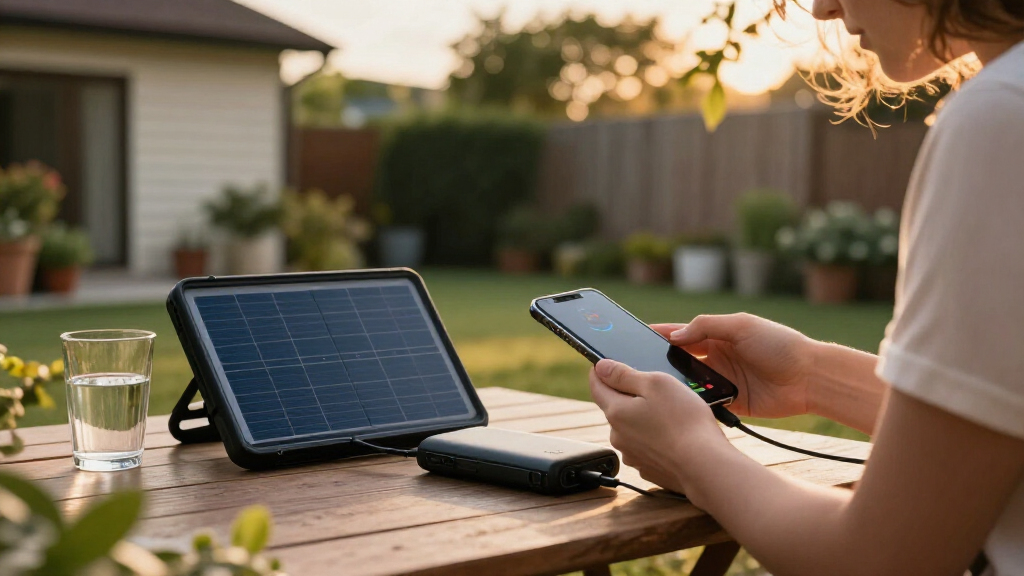
How We Picked
I ranked these solar power banks for backup by how well each format can support a realistic outage plan, not by capacity alone. I compared usable battery capacity, output options, solar-panel inclusion, portability, and the kinds of devices each product can plausibly support. A phone bank can be the right backup for communication and light, but it should not rank ahead of a station just because its advertised milliamp-hour figure looks large.
The ordering favors versatility and clear backup utility. The Jackery Explorer 300 leads as a middle-ground station; compact stations follow for buyers prioritizing portability, while larger capacity models rank higher for extended outages or heavier loads but lower for ease of transport. Handheld banks are grouped by their usefulness for USB-device backup, with distinctions drawn from capacity claims, charging speed, wireless charging, and built-in cables. I also account for the practical limits of solar charging: bundled panels offer a more usable route to recharging than expecting a small built-in panel to restore a bank quickly. Product specifications alone cannot predict real runtime, which varies by device draw, conditions, and conversion losses.
Factors to Consider When Choosing Solar Power Banks For Backup
Choosing backup power starts with deciding what must stay on and for how long. I would plan around the devices and charging windows you actually have, rather than treating a large capacity number or a solar label as a guarantee of outage coverage.
1. List Loads Before Comparing Capacity
Write down each device you may need to power, its wattage, and the hours you expect to use it. A phone, headlamp, and tablet can fit a very different backup plan from a router, fan, or medical device. Add a margin for conversion losses and the fact that batteries rarely deliver every advertised watt-hour to a connected load. Do not assume a power bank’s milliamp-hour figure can be compared directly with a station’s watt-hour rating; they use different reference voltages. If you need AC power, confirm both the station’s continuous output and any startup surge requirements. This simple load estimate can prevent buying a larger, heavier unit that still lacks the right output.
2. Treat Solar Recharging as a Separate Plan
A product described as solar-powered may have a tiny built-in panel, a compatible panel sold separately, or a full panel included in the package. These arrangements are not interchangeable: small panels may help top up a phone bank in sustained sunlight but can take a long time to refill it. For an outage lasting several days, check the station’s supported solar input, panel compatibility, and whether the panel’s output matches the battery’s charging needs. Shade, clouds, panel angle, and short winter days can all reduce energy collection. A larger battery without a realistic recharge plan may only postpone the point when backup power runs out. I would treat solar as replenishment and keep another charging option where possible.
3. Match Output Ports to Your Devices
USB-A and USB-C ports are enough for many personal electronics, but they do not substitute for AC outlets when a device uses a wall plug. Check USB-C wattage as well as port count: a port that charges a phone quickly may not meet a laptop’s needs. Built-in cables reduce what you need to pack, though they can limit replacement choices if a cable wears out. Wireless charging is handy for compatible phones, but it can be less efficient than a direct cable connection. For mixed household backup, count how many devices must run at once and check whether the advertised output is shared across ports. Choosing around actual connectors avoids carrying adapters or finding that only one essential device can charge at a time.
4. Balance Runtime Against Weight and Storage
More capacity helps during a longer outage, but it usually means a larger object to store, carry, and recharge. A handheld bank can travel in a day bag and keep communication devices going; a power station is better suited to a vehicle, campsite, or fixed home backup spot. Consider where the unit will live between emergencies, since a bulky station that is awkward to move may be less useful when power fails. Also check whether its weight and shape suit the route from storage to where you need electricity. If you expect to move backup gear on foot, prioritize portability and a small load list. If it will stay in one place, capacity and output may matter more than compactness.
5. Choose Battery Chemistry and Maintenance for Your Time Horizon
Battery chemistry can matter when a station is intended for repeated use over years, not just occasional phone charging. LiFePO4 models in this roundup are positioned for longer-term cycle life, but that does not remove the need to follow the maker’s storage and charging guidance. Check how the product should be stored, how often its charge should be checked, and whether it can remain connected to a panel or device safely. A backup battery left discharged for long stretches may not be ready when needed. Smaller power banks are easier to maintain, but their capacity and output limit the jobs they can handle. For emergency readiness, include a calendar reminder to inspect and recharge stored equipment.
6. Pay More Only for a Clear Backup Benefit
A larger station is worth choosing when its extra capacity, output, or solar-input capability supports loads you have identified. It is harder to justify a heavy high-capacity unit if your plan only covers phones and a light. On the other hand, choosing a small bank for a laptop or multi-day outage can create a false sense of readiness. Bundled panels can simplify matching components, but check whether their size and output suit the refill time you need. Compare complete systems, including compatible panels and cables, rather than judging the battery alone. My rule is to pay for extra capacity or output only when it solves a specific runtime or device problem.
Frequently Asked Questions
Can a small solar power bank keep my phone charged during a multi-day outage?
It can help, but I would not rely on its built-in solar panel as the only way to recharge it. Small panels collect limited energy, and clouds, shade, and short daylight hours can make replenishment slow. Start with the bank’s stored capacity and estimate how many phone charges you need, allowing for charging losses. If you expect an outage to last several days, conserve phone power and consider a separate compatible panel or a larger station with a practical solar input. A small bank is best treated as a portable reserve rather than an endless source of power.
Should I buy a power bank or a portable power station for home backup?
Choose a handheld power bank if your priority is keeping phones, earbuds, or other USB devices running and you need something easy to carry. A portable power station makes more sense when you need AC outlets, higher output, or enough capacity for multiple devices over a longer period. Before buying, identify whether your essential equipment uses USB, USB-C, or a wall plug and check its power draw. A station is not automatically the better choice if you only need emergency phone charging, since it takes more space and needs a larger recharge plan. Match the format to your load list instead of choosing by the largest capacity number.
Is a bundled solar panel enough to recharge a station during an outage?
A bundled panel gives you a compatible starting point, but it does not promise a full recharge in a particular number of hours. Actual charging depends on the panel’s output, sunlight, angle, shade, weather, and the station’s solar input limits. Compare the panel rating with the station’s supported input and think about how much energy you need to collect each day. A panel may restore some power while you use the station, but heavier loads can consume energy faster than the panel replaces it. For dependable planning, reduce demand and keep a backup charging route when one is available.
How much capacity do I need to run a laptop or small appliance?
Start with the device’s wattage and the number of hours you expect to use it, then add room for conversion losses and other connected devices. A laptop that draws modest power for a short work session is a different load from a fan or appliance that runs continuously. Check that the station has the correct outlet and enough continuous output, including any extra surge needed when equipment starts. The product’s capacity rating is not the same as guaranteed runtime at the wall outlet. If the device is essential, verify its power requirements against the station specifications before relying on it for an outage.
Is LiFePO4 worth choosing for backup power that may sit unused?
LiFePO4 can be appealing for a station expected to cycle regularly over a long service life, as the chemistry is associated with a high cycle-life design. That does not make a stored battery maintenance-free or automatically ready after months without attention. Follow the manufacturer’s guidance for storage charge, temperature, and periodic checks. If your backup plan is limited to occasional phone charging, a smaller conventional bank may be simpler and easier to store. I would favor LiFePO4 when the station’s capacity and repeated-use role justify the larger investment in a long-term backup setup.
Conclusion
For most buyers who want one versatile backup unit, I recommend the Jackery Explorer 300 as the best overall balance of capacity and portability. For a compact station alternative, the Anker SOLIX C300 suits buyers who put a premium on a smaller station format; the best value depends on whether you need a station or only USB charging, so compare the EnginStar 300W with the handheld options around your actual device list. Beginners who only need to keep phones and small electronics charged can start with a BLAVOR 10,000mAh bank, while the Jackery Solar Generator 1000 v2 is the stronger premium pick for buyers who want substantial capacity with a bundled panel. For longer or heavier backup needs, look at the Anker SOLIX C1000 Gen 2, LIBRIDS C600, or Anker SOLIX S2000 according to your load and portability limits. I would choose a handheld bank for personal devices, a mid-size station for modest outage support, and a larger station only when its output and capacity solve a specific power need.