
When power flickers, unplug your most vulnerable electronics first, like computers, routers, and medical devices, since they lack built-in protection. Look for signs like flickering lights or devices restarting unexpectedly. Use surge protectors with proper grounding for less sensitive equipment, but always unplug critical devices directly when instability occurs. Ensuring your setup is protected and knowing what to disconnect can prevent damage—discover more tips to keep your electronics safe during power fluctuations.
Key Takeaways
- Unplug critical devices like computers, routers, and medical equipment immediately during flickers to prevent damage from voltage dips or surges.
- Focus on electronics without built-in surge protection, especially sensitive or vulnerable devices.
- Use surge protectors with proper grounding for less critical equipment, but unplug high-value electronics for maximum safety.
- Prioritize unplugging devices connected to power strips or daisy-chained outlets to prevent overload and protect connected electronics.
- After flickers, inspect devices for irregularities, and replace or test surge protectors and UPS units to ensure ongoing protection.
Recognizing the Signs of Power Fluctuations

Have you noticed your electronic devices suddenly flickering or turning off unexpectedly? These are clear signs of voltage irregularities, which often cause power fluctuations. Flicker detection is key to recognizing when your power supply isn’t stable. If your lights dim or brighten intermittently, or if devices restart without warning, it indicates unstable voltage levels. You might also hear buzzing sounds from appliances or see screens flicker on your electronics. These signs suggest your electrical system isn’t providing a steady current, increasing the risk of damage. Paying attention to these warning signals helps you act quickly and protect your devices. Recognizing the early signs of power fluctuations is essential in preventing more serious issues and ensuring your electronics stay safe during voltage irregularities. Additionally, understanding power fluctuation causes can help you take proactive measures to prevent damage. Being aware of voltage stability issues can also guide you in choosing the right protective devices to safeguard your electronics. Regularly inspecting your electrical system and using voltage stabilizers can further minimize risks associated with power fluctuations. Monitoring for signs of voltage instability allows you to respond promptly and avoid costly repairs. Staying informed about electrical system maintenance can help you maintain consistent power quality and extend the lifespan of your devices.
Prioritizing Critical Devices for Unplugging

During a power flicker or outage, it’s crucial to quickly identify and unplug your most vital devices to prevent damage. Start with electronics that lack built-in voltage stabilization or power conditioning. These devices are most vulnerable to voltage spikes and dips, which can cause immediate harm. Prioritize unplugging computers, routers, medical equipment, and any sensitive electronics first. If you have surge protectors, ensure they’re properly rated to handle flickers, but don’t rely solely on them—unplug critical devices directly for added safety. Remember, power conditioning devices help stabilize voltage and filter out electrical noise, offering extra protection. Acting swiftly to disconnect these devices minimizes the risk of damage from fluctuating power levels and preserves your equipment’s longevity during electrical disturbances. Additionally, understanding the importance of Gold IRA markets can help you make informed investment decisions during uncertain times. Being aware of electrical safety tips can further enhance your protection measures in these situations. Recognizing the thermal behavior of your electronics can also guide you in managing heat-related issues during power fluctuations. Implementing proper power management strategies can significantly reduce the risk of equipment failure during unexpected power interruptions.
Protecting Sensitive Electronics With Surge Protectors
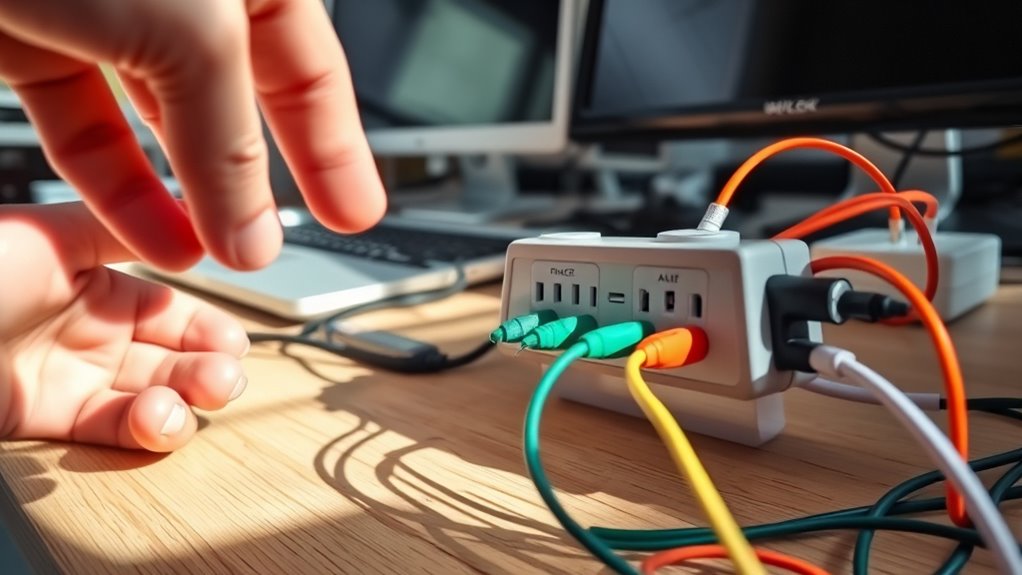
Surge protectors are essential tools for shielding sensitive electronics from damaging voltage spikes caused by power flickers and outages. To maximize protection, consider grounding methods, as proper grounding helps safely dissipate excess voltage. Different surge protector types, such as basic strip models and advanced whole-house systems, offer varying levels of security. For sensitive devices like computers or medical equipment, choose surge protectors with robust clamping voltage and higher joule ratings. Confirm they’re properly grounded according to manufacturer instructions, whether through grounding rods or grounded outlets. Proper electrical grounding is crucial for ensuring surge protectors function effectively, as inadequate grounding can compromise their ability to divert excess voltage safely. This prevents voltage surges from reaching your electronics and causing damage. Additionally, understanding electrical circuit grounding and proper installation practices can further enhance safety. When selecting surge protectors, always verify they meet established safety standards and are properly installed to ensure optimal performance. By selecting the right surge protector types and ensuring correct grounding, you create a reliable barrier against the unpredictable power fluctuations that can harm your valuable electronics.
Steps to Safeguard Your Home Entertainment System
To protect your home entertainment system from power flickers, start by plugging your devices into surge protectors designed specifically for high-energy spikes. These protectors help maintain voltage stability, preventing sudden voltage fluctuations from damaging your equipment. Make sure your surge protector can handle the power load of your devices to avoid circuit overload, which can cause interruptions or damage. Keep all components connected to the same surge protector to ensure consistent protection. Avoid daisy-chaining multiple power strips, as this can increase the risk of overload. Regularly inspect your surge protectors for damage or wear, replacing them as needed. Proper surge protector use is crucial for safeguarding your electronics against power fluctuations, especially considering the importance of electrical safety in protecting sensitive equipment. Using surge protectors with clamping voltage ratings appropriate for your devices adds an extra layer of defense. Additionally, choosing surge protectors with response time capabilities can ensure faster protection during unexpected voltage surges. Properly understanding power fluctuation causes and effects can help you better prepare your home’s electrical setup. Taking these steps helps safeguard your entertainment system against the unpredictable effects of power flickers, preserving clarity and functionality.
Using Uninterruptible Power Supplies (UPS) Effectively
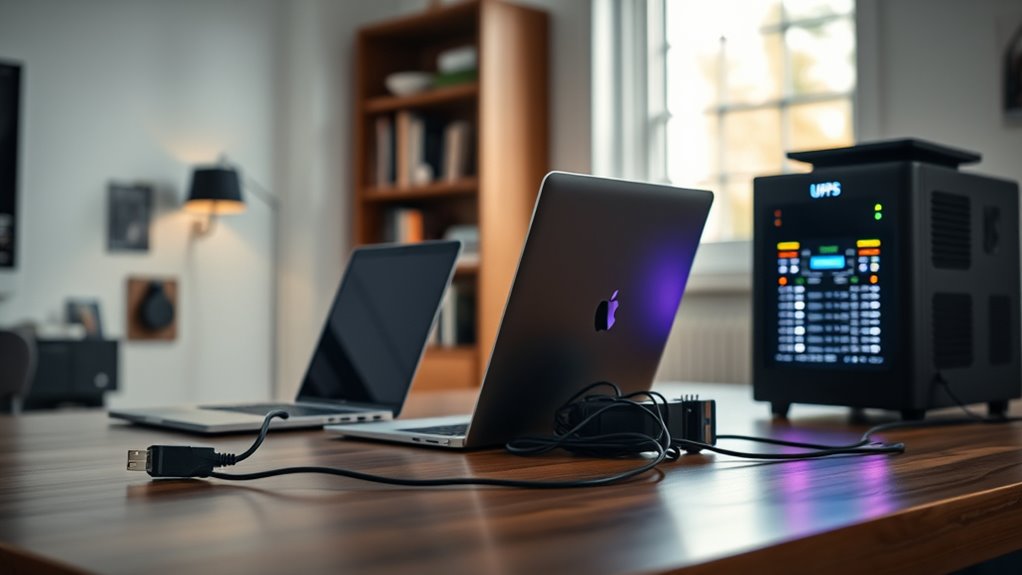
To use your UPS effectively, start by choosing the right one that matches your device’s power needs. Make sure to connect only critical equipment to maximize backup time, and perform regular maintenance checks to keep it in top shape. This will help prevent power surges from damaging your electronics during outages. Additionally, consider integrating smart home automation to monitor power status and receive alerts during outages, enhancing your overall protection. Incorporating home theater components that are sensitive to power fluctuations can further safeguard your entertainment setup. Being aware of wave and wind conditions can also help you prepare your electronics for unexpected power issues caused by weather, especially when combined with surge protection measures.
Proper UPS Selection
Choosing the right UPS is essential for protecting your electronics during power fluctuations. Start by evaluating your devices’ power needs and selecting a battery backup system that provides sufficient runtime. Look for models with enough outlets to support all critical equipment and ensure they include built-in power conditioners to filter out surges and noise. Consider the UPS’s capacity, measured in VA or watts, to match your devices’ demands without overloading. Features like automatic voltage regulation can help maintain steady power, preventing damage from voltage spikes or dips. Opt for reputable brands that offer reliable battery backups and easy maintenance. Proper UPS selection ensures your electronics stay protected, even during flickers or outages, and prolongs their lifespan.
Connect Critical Devices
Once you’ve selected the right UPS for your needs, it’s important to connect your critical devices properly to maximize protection. Start by plugging essential electronics—like your computer, router, and external drives—directly into the UPS outlets. This ensures they receive consistent power and are shielded from power surges. Make sure the UPS is properly grounded; an effective electrical grounding system reduces the risk of electrical faults and enhances safety. Avoid daisy-chaining multiple power strips or connecting non-critical devices to the UPS, as this can overload the unit and compromise its protection. Confirm that your critical devices are firmly plugged in and that the UPS is positioned in a well-ventilated area. Proper connection safeguards your electronics from power fluctuations and ensures reliable operation during outages. Additionally, reviewing industry standards can help you stay informed about the latest in backup power solutions, including advancements in power management technology. Staying updated on emerging trends can help optimize your backup power setup and enhance overall reliability.
Regular Maintenance Checks
Regular maintenance checks are essential to guarantee your UPS functions reliably when you need it most. Regularly inspect and perform battery maintenance to ensure your backup power is ready during outages. Check for corrosion, ensure connections are tight, and replace batteries as recommended by the manufacturer. Wiring inspections are equally important—look for frayed or loose wires that could cause malfunctions or safety hazards. Keeping your UPS in top shape minimizes downtime and protects your electronics effectively. To stay ahead, consider these maintenance tasks:
- Test the battery health periodically
- Tighten and secure all wiring connections
- Replace batteries before they fail
Additionally, understanding the importance of proper appliance safety practices can prevent potential hazards during power fluctuations. Incorporating preventive maintenance routines can further enhance the longevity and reliability of your UPS system.
Post-Event Checks and Preventive Measures
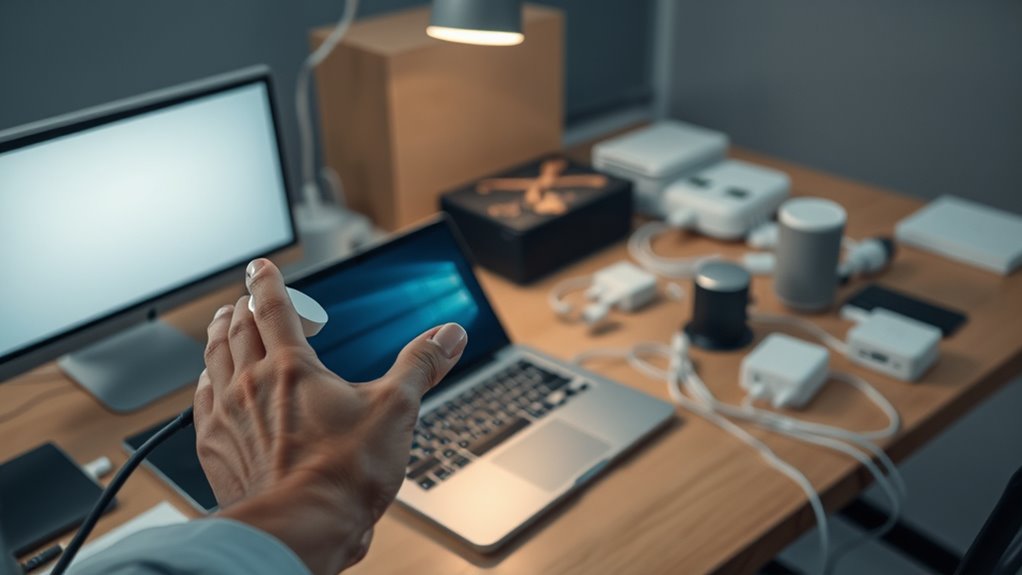
After a power flicker, conducting thorough checks on your electronics to identify any potential damage is vital. Begin by inspecting devices for unusual noises, overheating, or malfunctions. Verify that grounding techniques are properly maintained to prevent electrical shock or further damage. If you notice any irregularities, unplug the affected equipment immediately. Test surge suppression devices to guarantee they function correctly, as they protect your electronics from voltage spikes. Consider resetting surge protectors and replacing any that have absorbed a surge. Additionally, check your power strips and outlets for damage. Regularly updating your surge suppression equipment and ensuring proper grounding reduces future risks. Taking these preventive measures helps safeguard your electronics and maintains their longevity after power fluctuations.
Frequently Asked Questions
How Often Should I Test My Surge Protectors and UPS Systems?
You should test your surge protectors and UPS systems at least once every six months. Regular surge protector maintenance guarantees they function properly, while UPS testing frequency helps verify backup power readiness. During these tests, check for any physical damage, listen for unusual sounds, and perform a power outage simulation if possible. Staying consistent with these checks keeps your electronics protected and ensures your backup systems are ready when needed.
Can Power Flickers Cause Permanent Damage to Electronics?
Power flickers can cause serious damage, like frying your electronics’ delicate circuits! While rare, repeated flickers can weaken surge protection and disrupt electrical grounding, risking permanent harm. To stay safe, always use high-quality surge protectors and guarantee your system’s grounding is solid. Regularly test your surge protection and UPS systems to catch issues early, so flickers don’t turn into costly repairs. Protect your devices before it’s too late!
What Are the Signs That a Device Needs Replacement After a Power Surge?
If your device shows unusual indicator lights or if you notice physical damage like burnt smell, scorched components, or cracks, it likely needs replacing after a power surge. These signs indicate internal damage that might not be visible but can cause future failure. Don’t ignore any irregularities—replace the device promptly to prevent potential hazards or further damage. Always test your electronics carefully after a power surge.
Are There Specific Electronics More Vulnerable During Power Fluctuations?
Imagine fragile glassware trembling on a table—your vulnerable appliances and sensitive equipment face similar risks during power fluctuations. Devices like computers, TVs, and routers are more susceptible because they contain delicate circuits easily damaged by sudden surges or dips. Keep these electronics unplugged or use surge protectors to shield them. By doing so, you prevent costly repairs and guarantee your essential gadgets stay safe amid unpredictable power changes.
How Can I Prevent Power Flickers From Affecting My Smart Home Devices?
To prevent power flickers from affecting your smart home devices, you should install surge protectors on all sensitive electronics and prioritize power stability. Use surge protectors with your smart devices to guard against voltage spikes. Additionally, consider investing in a whole-home surge protector or uninterruptible power supply (UPS). These measures help maintain consistent power flow, shield your devices from fluctuations, and keep your smart home functioning smoothly during power issues.
Conclusion
So, next time your power flickers, don’t just stand there like a deer in headlights. Unplug your most precious gadgets first, because who needs a TV or laptop after a surprise lightning show? Protect your electronics, or you might be the proud owner of a very expensive paperweight collection. Remember, a little prep goes a long way—unless you’re aiming for that “modern art” look with melted devices. Stay smart, stay safe!